

UbiOps Overview
UbiOps is a comprehensive software platform designed to simplify and accelerate the deployment, management, and scaling of AI and machine learning models. It empowers organizations to run their 'Private AI' on their own terms, whether on-premise, in a hybrid setup, or across multiple cloud providers. By abstracting away the underlying engineering complexity of technologies like Kubernetes, UbiOps allows AI teams to focus on building and iterating on their models, significantly reducing time-to-market and ensuring robust compliance and governance. It's a battle-tested solution used in critical sectors like healthcare and the public sector, providing a reliable and scalable backbone for production-grade AI.
How to use UbiOps
Getting started with UbiOps is a structured process designed for both new and advanced users:
- Sign Up: Create a free UbiOps account on their website to access the platform.
- Choose Your Interface: Interact with the platform in a way that suits your workflow. You can use the user-friendly WebApp for visual management, the Python Client Library for programmatic integration into your scripts, the powerful Command Line Interface (CLI) for terminal-based operations, or the REST API for custom integrations.
- Define an Environment: Create a reusable 'Environment' by specifying the necessary libraries, packages, and dependencies for your code (e.g., Python version, PyTorch, TensorFlow). UbiOps will build a container image for you, ensuring consistency.
- Deploy Your Model: Package your AI model or data processing script into a 'Deployment'. UbiOps automatically containerizes the code and exposes it as a secure, scalable microservice with its own API endpoint. You can manage multiple versions of each deployment.
- Build Pipelines: For complex workflows, use the 'Pipelines' feature. This allows you to chain multiple deployments together, orchestrating the flow of data between different models or processing steps to build a complete dataflow.
- Train Models: Utilize the 'Training' feature to run and manage model training jobs. Define an 'Experiment' with your desired hardware (including GPUs) and execute multiple 'Training Runs' in parallel to efficiently test different parameters and find the best model.
- Run & Scale: Send requests to your deployment or pipeline APIs to process data. UbiOps handles request queuing, load balancing, and automatic scaling based on demand, ensuring your application is always responsive.
Core Features of UbiOps
- Unified Model Serving & Orchestration: Deploy models as versioned, scalable microservices with automatic API generation. Build complex, multi-step workflows (Pipelines) to connect models and data processing tasks seamlessly.
- Flexible Infrastructure Support: Run AI workloads anywhere—on-premise servers, private cloud, public clouds (AWS, Azure, GCP), or a hybrid combination. It supports Kubernetes, Virtual Machines, and even bare metal infrastructure.
- Integrated Model Training: A dedicated environment for running, managing, and tracking model training experiments. Scale training jobs on powerful hardware, including various GPU types, and manage artifacts with ease.
- Environment Management: Define and reuse container environments with specific libraries and dependencies, ensuring perfect consistency between development, testing, and production.
- Advanced Governance & Security: Features for version management, job scheduling, detailed monitoring, and robust security protocols to ensure compliance and full control over your AI assets.
- Multiple Interaction Methods: Full platform functionality is accessible through a WebApp, Python Client Library, REST API, and CLI, catering to different user preferences and enabling powerful automation.
Use Cases for UbiOps
UbiOps is versatile and can be applied to a wide range of AI applications:
- Generative AI Deployment: Deploy and serve large language models (LLMs) and other generative models for applications like chatbots, content creation, and code generation.
- Computer Vision: Run image and video analysis models for object detection, image classification, and facial recognition in production environments.
- Predictive Analytics: Deploy classical machine learning models for forecasting, fraud detection, and customer churn prediction.
- Data Processing Pipelines: Create automated workflows for data cleaning, transformation, and feature engineering as a precursor to model inference.
- Hybrid Cloud MLOps: Ideal for organizations that need to process sensitive data on-premise while leveraging the scalability of the public cloud for less sensitive tasks.
Advantages of UbiOps
UbiOps offers significant advantages for AI teams:
- Accelerated Time-to-Market: Drastically reduces the time and engineering effort required to move AI models from a laptop to a production-grade, scalable service.
- Infrastructure Agnostic: Avoids vendor lock-in by providing the freedom to run AI on any hardware or cloud provider, giving you full control.
- Simplified MLOps: Abstracts away complex infrastructure management (like Kubernetes), allowing data scientists to be more self-sufficient and focus on model development.
- Scalability and Reliability: Built to handle production workloads with automatic scaling, request handling, and high availability, ensuring robust performance.
- Enhanced Security & Compliance: Perfect for 'Private AI' initiatives, ensuring data stays within your control and meets strict regulatory requirements.
Pricing and Plans
UbiOps offers a flexible pricing structure to suit different needs, from individual developers to large enterprises. While specific prices should be checked on the official website, the plans generally follow this structure:
- Free Plan: A generous free tier for individuals and small projects, allowing users to explore the platform's core features with certain usage limits.
- Professional Plan: A paid plan for professionals and small teams needing more compute resources, higher request volumes, and additional features.
- Business Plan: Designed for growing businesses, offering more capacity, advanced features, and dedicated support.
- Enterprise Plan: A custom plan for large organizations with specific requirements for on-premise/private cloud deployment, advanced security, custom integrations, and premium support. Interested parties are encouraged to book a call for a custom quote.
Traffic
Latest traffic
Status
Monthly traffic trend
- 2025-9: 9.4K
- 2026-1: 18.2K
- 2026-2: 13.6K
- 2026-3: 18.0K
- 2026-4: 21.3K
- 2026-5: 13.8K
Geography
Top 5 countries / regions
- 🇳🇱Netherlands83.8%
- 🇺🇸United States9.4%
- 🇮🇳India4.1%
- 🇩🇪Germany1.5%
- 🇬🇧United Kingdom1.2%
Traffic sources
| Source type | Percentage |
|---|---|
Direct | 81.0% |
Email | 17.4% |
Referral | 1.6% |
Top keywords
| Keyword | Cost per click |
|---|---|
| machine learning operations (mlops) what does it mean in documentation | $0.00 |
| mondomonger deepfake | $0.00 |
| onnx cpu vs gpu | $0.00 |
| ubiops | $0.00 |
| ubi platform api docs | $0.00 |
UbiOps Alternatives

Lightning AI
Lightning AI is a cloud platform designed to build, train, and deploy AI models at scale. It combines the popular open-source PyTorch Lightning framework with Lightning AI Studio, a collaborative, browser-based environment with zero setup. Access powerful GPUs, scale from a laptop to the cloud seamlessly, and accelerate your entire AI development workflow.
Platform As A Service (Paas)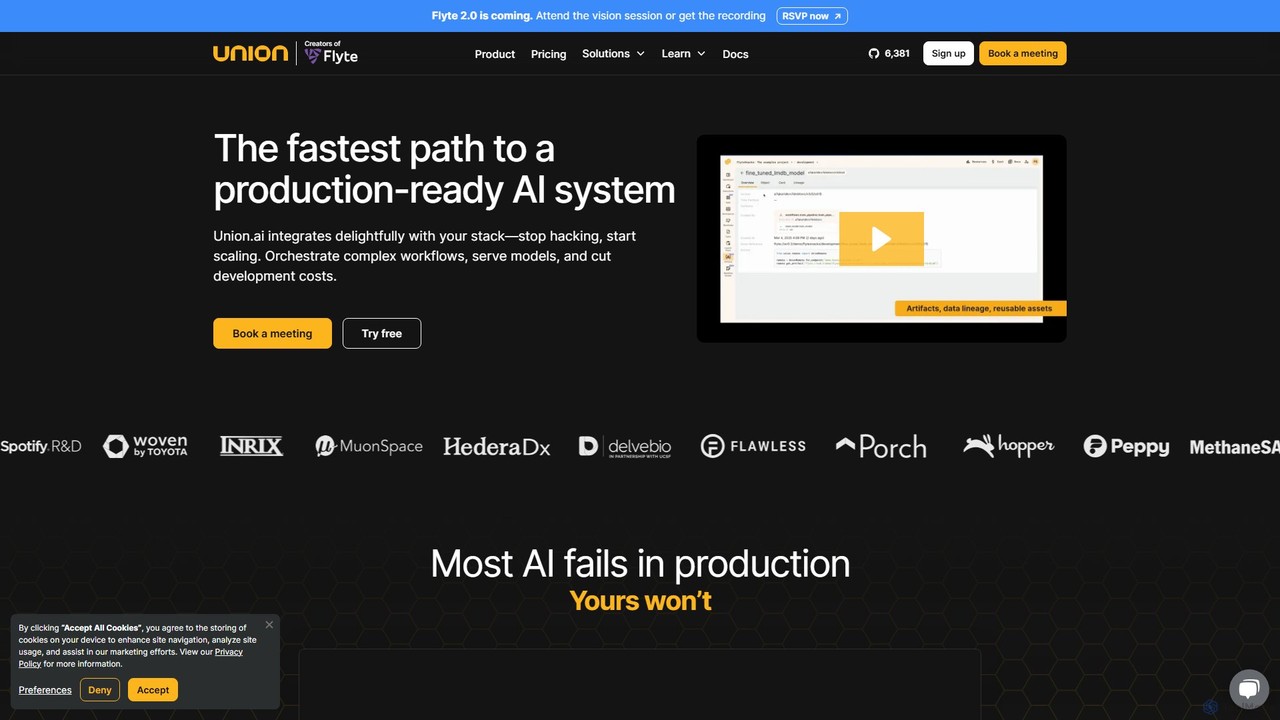
Union.ai
Union.ai is an enterprise-grade, production-ready platform for orchestrating complex AI and machine learning workflows. Built on the open-source Flyte, it empowers teams to build, serve, and scale compound AI systems with unparalleled performance and efficiency. It bridges the data-ML gap, optimizes cloud costs with features like scale-to-zero, and enhances developer velocity through a seamless, integrated experience.
Orchestration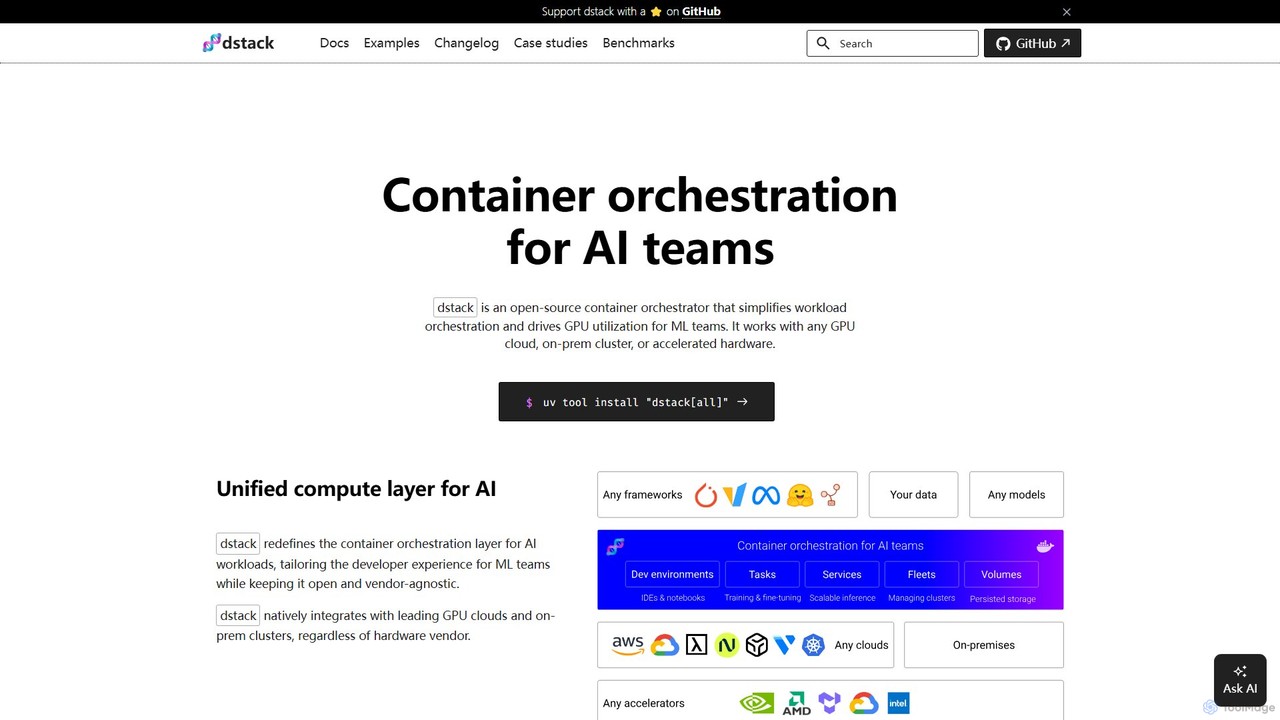
dstack
dstack is an open-source container orchestrator designed for AI and ML teams. It simplifies workload orchestration and maximizes GPU utilization across any cloud provider, on-premise cluster, or accelerated hardware. It provides a unified compute layer, streamlining development, training, and model deployment.
Orchestration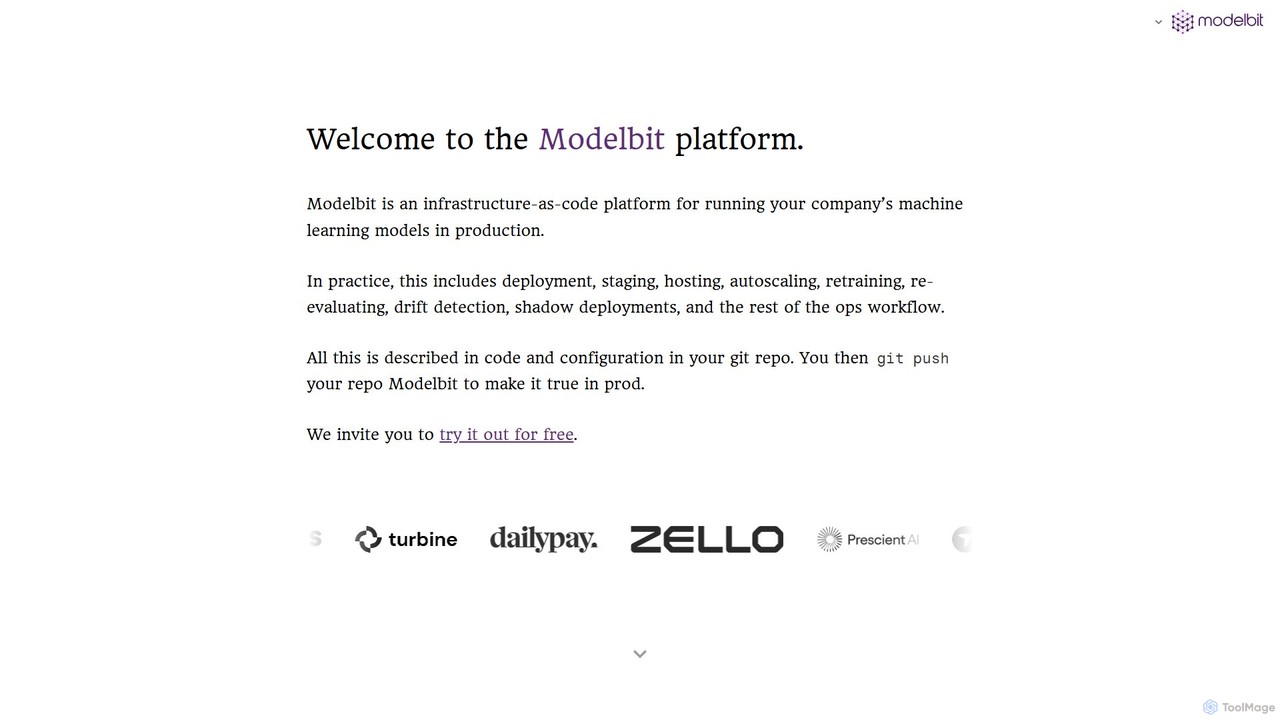
Modelbit
Modelbit is an MLOps platform for deploying machine learning models directly from Python notebooks to production. It provides an infrastructure-as-code workflow, enabling data scientists to deploy, host, scale, and manage models with a single line of code and a git push.
Mlops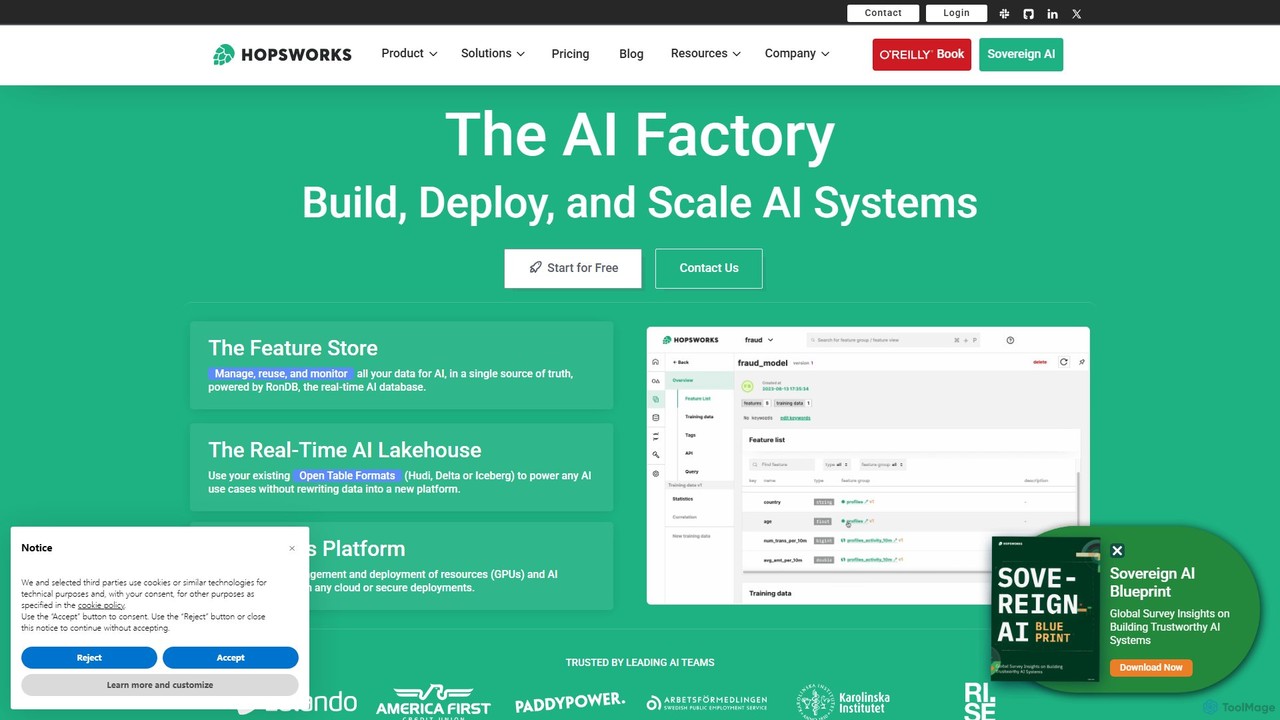
Hopsworks
Hopsworks is a real-time AI Lakehouse and the industry's most advanced Feature Store. It's designed for MLOps, unifying data and compute to build and operate reliable, real-time AI systems. It supports any framework, cloud, or on-premises environment, enabling faster model development and significant cost reduction.
DatabaseUbiOps Categories
UbiOps Embed Widget
Copy this embed code to place the badge on your blog, article, or product site and send readers directly to this ToolMage detail page.

Related AI tools
Lightning AI
Lightning AI is a cloud platform designed to build, train, and deploy AI models at scale. It combines the popular open-source PyTorch Lightning framework with Lightning AI Studio, a collaborative, browser-based environment with zero setup. Access powerful GPUs, scale from a laptop to the cloud seamlessly, and accelerate your entire AI development workflow.
Platform As A Service (Paas)Union.ai
Union.ai is an enterprise-grade, production-ready platform for orchestrating complex AI and machine learning workflows. Built on the open-source Flyte, it empowers teams to build, serve, and scale compound AI systems with unparalleled performance and efficiency. It bridges the data-ML gap, optimizes cloud costs with features like scale-to-zero, and enhances developer velocity through a seamless, integrated experience.
Orchestrationdstack
dstack is an open-source container orchestrator designed for AI and ML teams. It simplifies workload orchestration and maximizes GPU utilization across any cloud provider, on-premise cluster, or accelerated hardware. It provides a unified compute layer, streamlining development, training, and model deployment.
OrchestrationModelbit
Modelbit is an MLOps platform for deploying machine learning models directly from Python notebooks to production. It provides an infrastructure-as-code workflow, enabling data scientists to deploy, host, scale, and manage models with a single line of code and a git push.
Mlops
Supervised.co
Supervised.co is an end-to-end platform for building, training, and deploying supervised machine learning models. It simplifies the MLOps lifecycle with integrated data annotation, automated model training, and one-click API deployment, empowering teams to create high-performance AI solutions efficiently.
Data Annotation
MLflow
MLflow is an open-source platform for managing the end-to-end machine learning lifecycle. It enables developers and data scientists to track experiments, package code into reproducible runs, version and share models, and deploy them to production, supporting both traditional ML and modern GenAI applications.
Data Science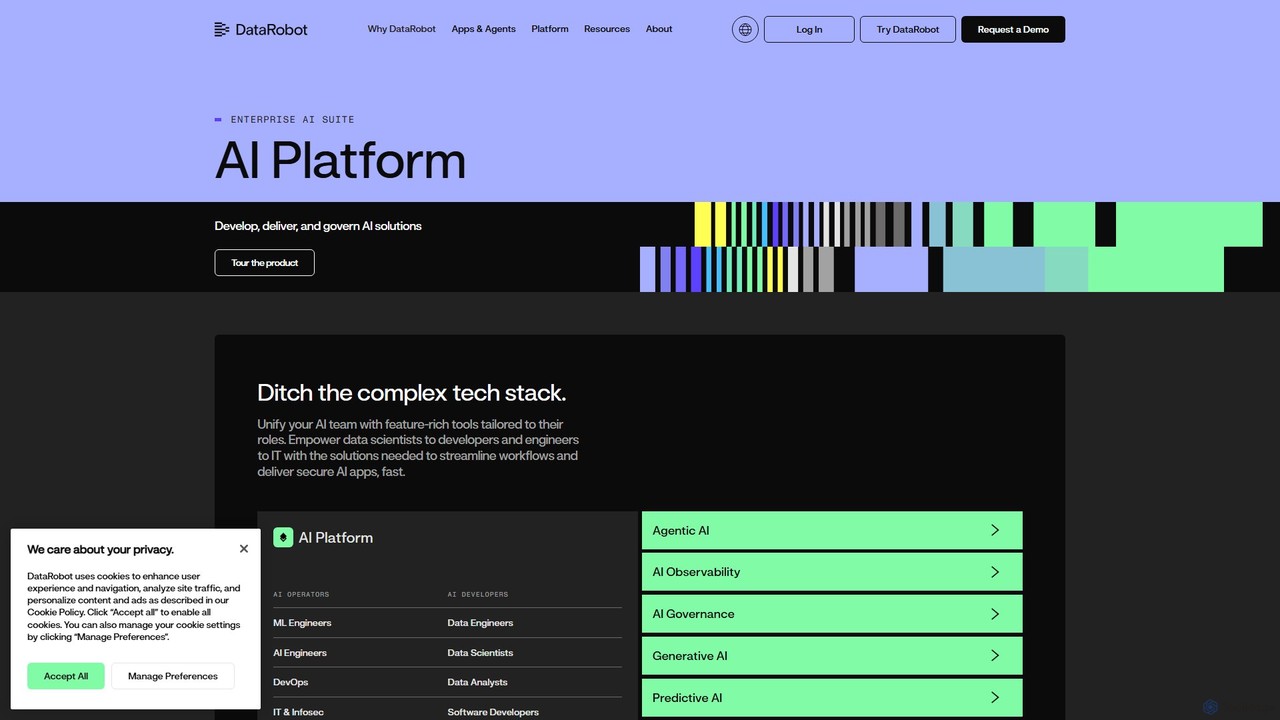
DataRobot AI Platform (formerly Algorithmia)
DataRobot AI Platform, which has integrated Algorithmia's powerful MLOps technology, is an end-to-end enterprise solution for the entire AI lifecycle. It enables organizations to rapidly build, deploy, manage, and govern machine learning models and generative AI applications at scale, accelerating the journey from data to value.
Enterprise Solutions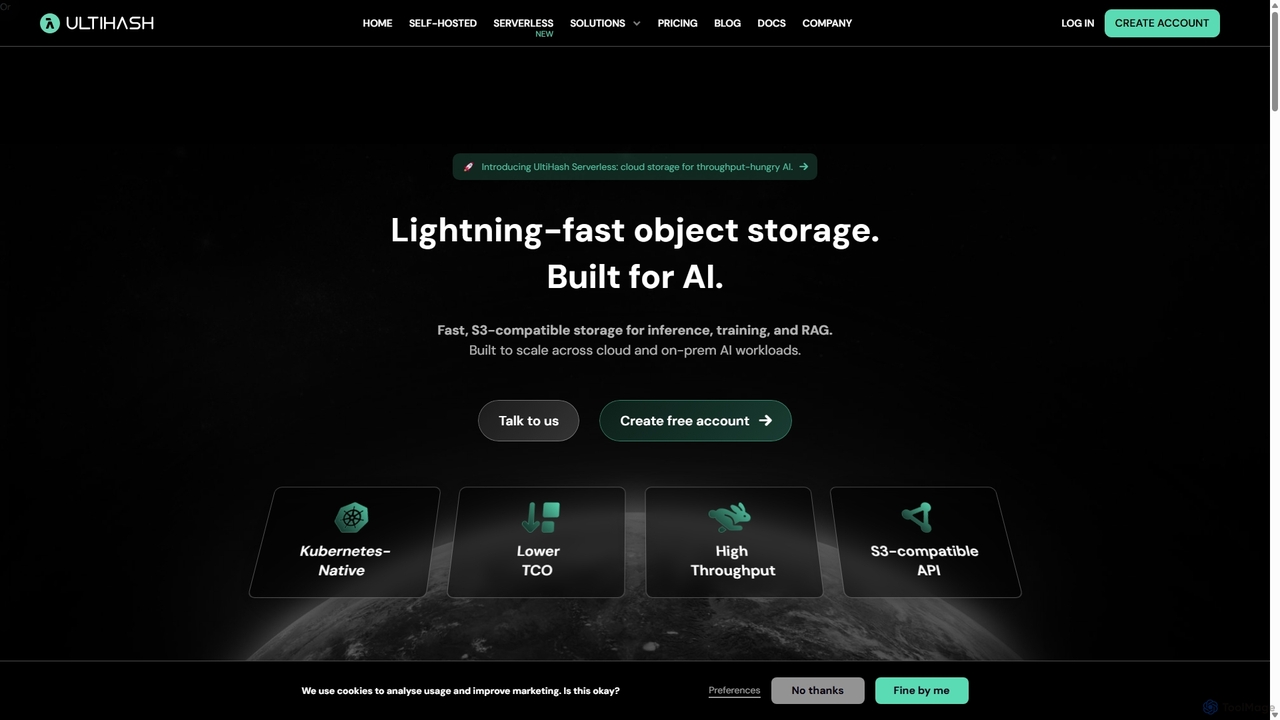
UltiHash
UltiHash is a high-performance, Kubernetes-native object storage platform specifically built for AI and big data workloads. It offers lightning-fast data access, significant cost savings through advanced byte-level deduplication, and flexible deployment across cloud, on-premises, or hybrid environments. Its S3-compatible API ensures seamless integration with existing data stacks and AI workflows.
Machine Learning Operations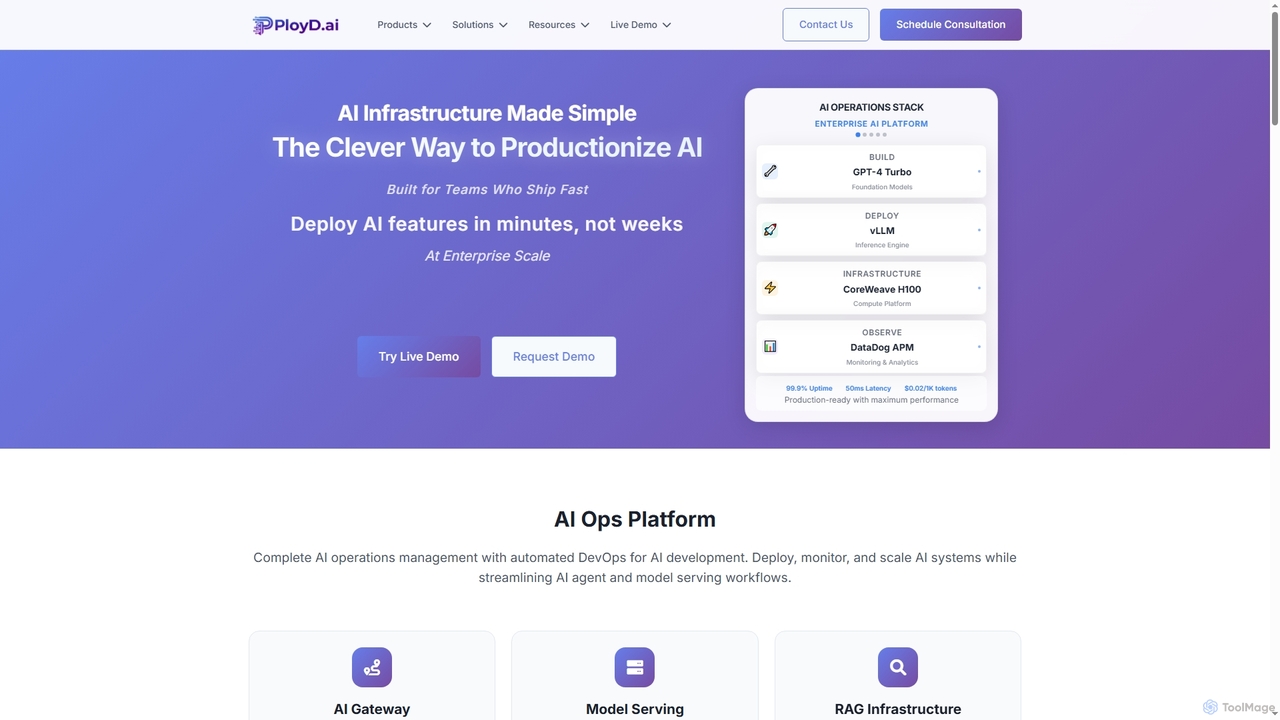
PloyD
PloyD is an enterprise AI operations platform designed to streamline the productionization of AI models and applications. It tackles common challenges like developer velocity bottlenecks, infrastructure complexity, team efficiency, and security compliance, enabling organizations to deploy, manage, and scale AI solutions with confidence and speed.
Rag Systems
ai-rnd.com
An integrated platform for AI research and development, providing a unified workspace, pre-trained models, and one-click deployment to accelerate the entire AI lifecycle. Ideal for developers, researchers, and enterprises.
Data ManagementHopsworks
Hopsworks is a real-time AI Lakehouse and the industry's most advanced Feature Store. It's designed for MLOps, unifying data and compute to build and operate reliable, real-time AI systems. It supports any framework, cloud, or on-premises environment, enabling faster model development and significant cost reduction.
Database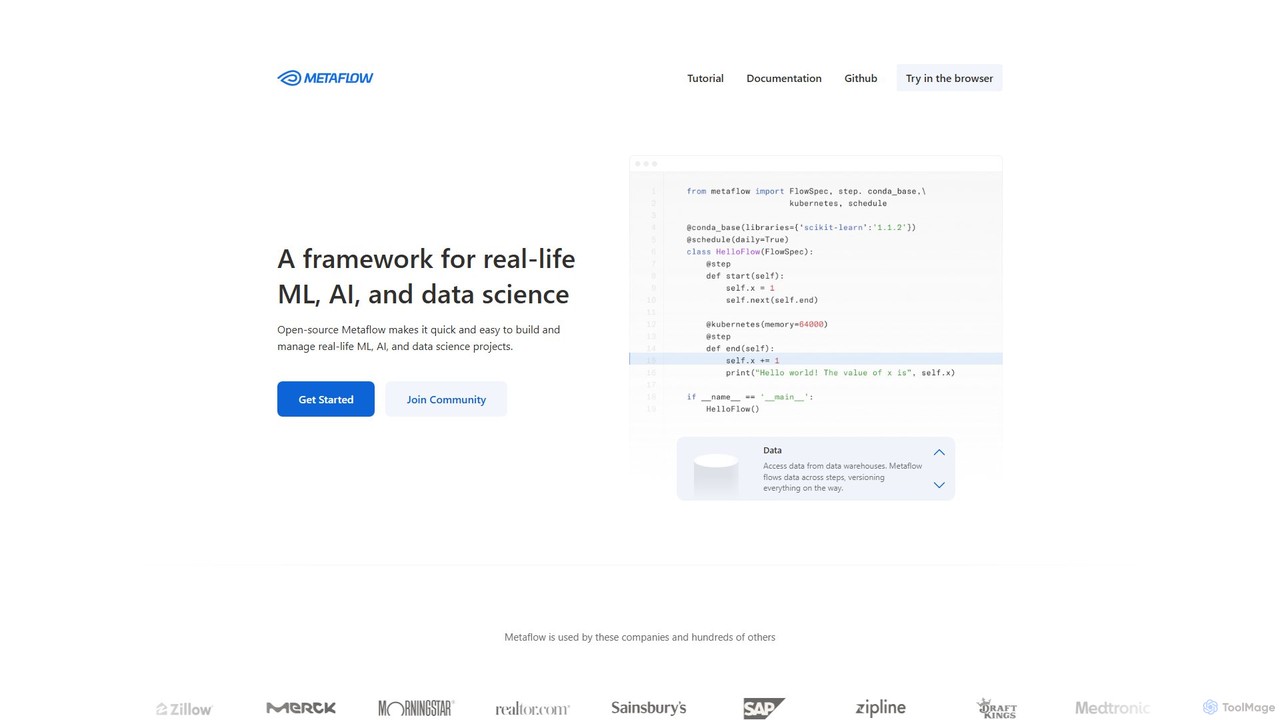
Metaflow
A human-centric Python framework, originally from Netflix, for building and managing real-life data science, ML, and AI projects. It simplifies workflow orchestration, data management, and model deployment, enabling rapid prototyping and scalable production pipelines.
Mlops
Neural Vault
Neural Vault is a secure, centralized platform for AI developers and MLOps teams to store, version, manage, and deploy machine learning models. It streamlines the model lifecycle, enhances collaboration, and ensures the security and reproducibility of AI projects.
Storage
Google Cloud
Google Cloud is a comprehensive suite of cloud computing services that provides infrastructure, platform, and serverless environments. It excels in AI/ML with Vertex AI and Gemini, data analytics with BigQuery, and offers scalable, secure infrastructure for businesses of all sizes, from startups to global enterprises.
Machine Learning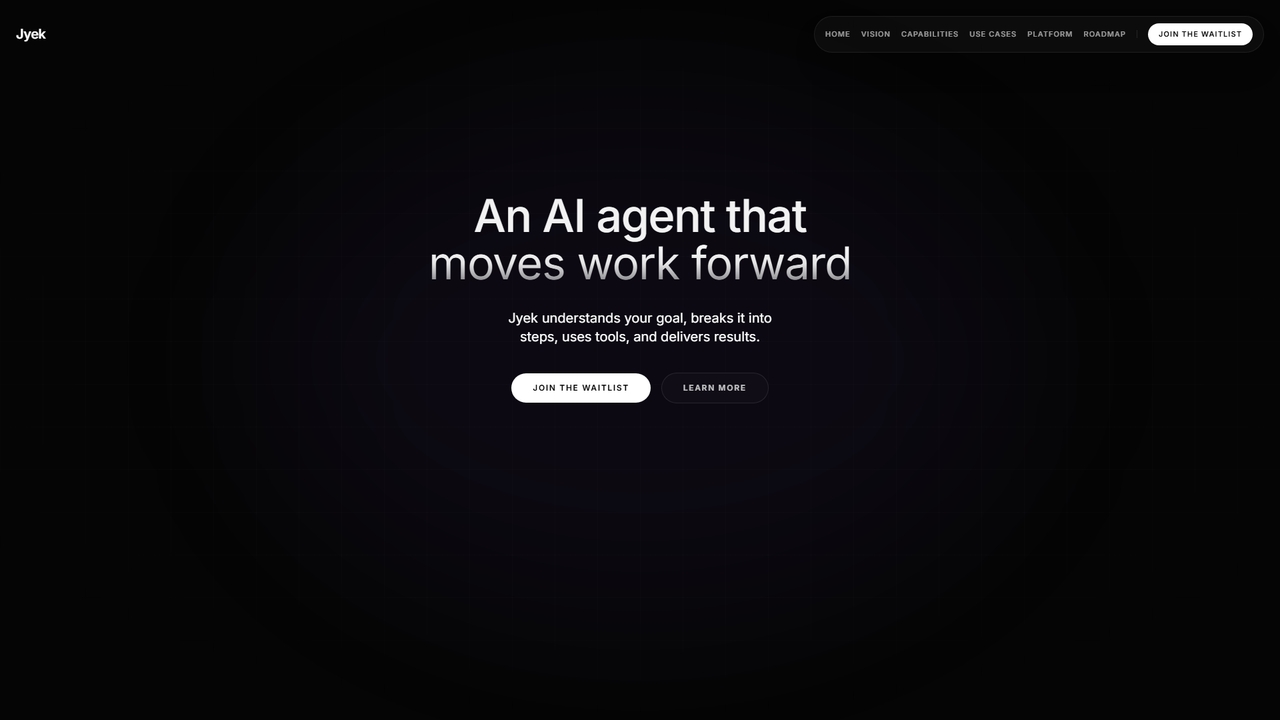
Jyek
Jyek is an AI agent platform that understands objectives, creates execution plans, uses tools, and delivers verifiable results for complex, multi-step tasks.
Automation
UbiOps Comments (0)
Sign in to comment.
Sign inNo comments yet.