Google Cloud
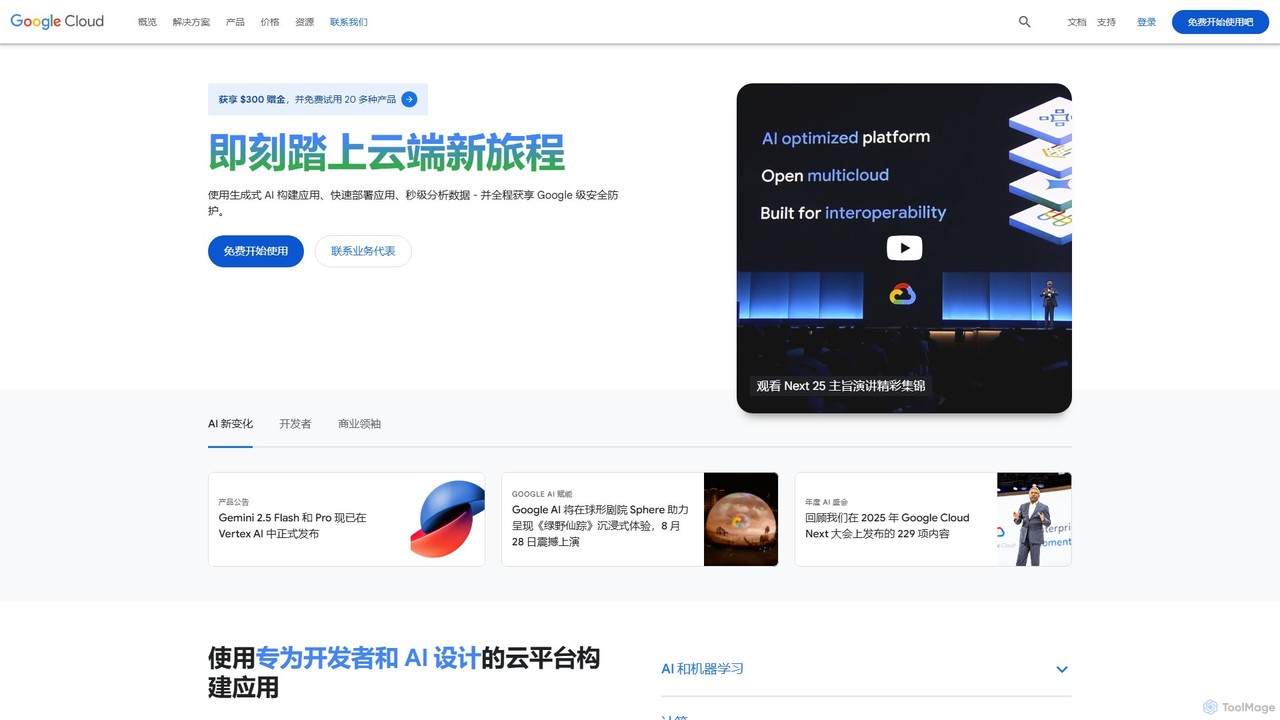
Google Cloud is a comprehensive suite of cloud computing services that provides infrastructure, platform, and serverless environments. It …
Google Cloud is a comprehensive suite of cloud computing services that provides infrastructure, platform, and serverless environments. It excels in AI/ML with Vertex AI and Gemini, data analytics with BigQuery, and offers scalable, secure infrastructure for businesses of all sizes, from startups to global enterprises.
AWS
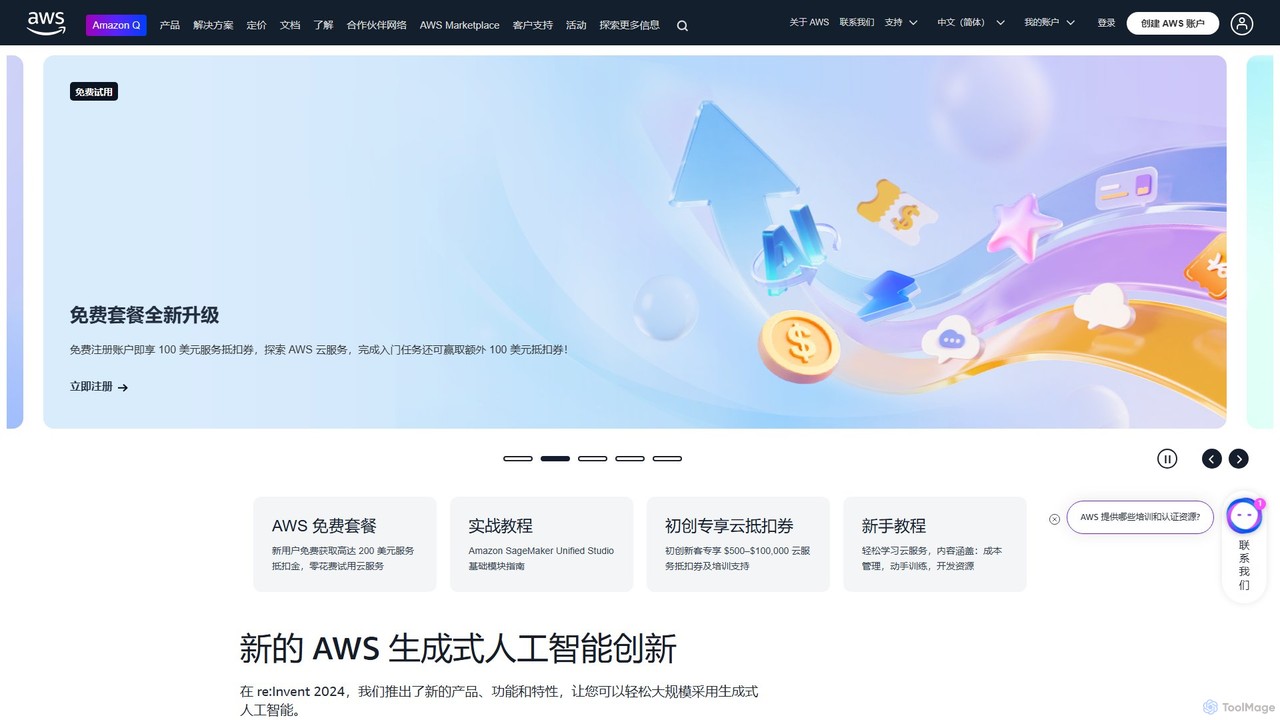
Amazon Web Services (AWS) is the world's most comprehensive and broadly adopted cloud platform, offering over 200 fully …
Amazon Web Services (AWS) is the world's most comprehensive and broadly adopted cloud platform, offering over 200 fully featured services from data centers globally. It provides a vast suite of AI and machine learning tools, including Amazon Bedrock for building generative AI applications with leading foundation models, Amazon SageMaker for the complete ML lifecycle, and the powerful Amazon Nova models for advanced text, image, and video generation.
About Machine Learning
Machine Learning platforms are specialized tools designed for developers and data scientists to build, train, and deploy predictive models. These platforms provide a comprehensive environment that streamlines the entire machine learning lifecycle, from data preparation to model monitoring in production. They enable the creation of sophisticated applications that can forecast trends, classify data, and identify anomalies with high accuracy. This makes them essential for businesses seeking to leverage data for automated decision-making and intelligent insights.
Core Features
- Model Training & Tuning: Provides algorithms and automated tools for training models and optimizing their hyperparameters.
- Data Preprocessing: Offers functionalities for cleaning, transforming, and preparing datasets for model training.
- Feature Engineering: Includes tools to create and select the most relevant variables (features) from raw data.
- Model Deployment (MLOps): Facilitates the integration and deployment of trained models into production applications.
- Performance Monitoring: Tracks model accuracy, drift, and other key metrics after deployment to ensure reliability.
Use Cases
Machine Learning platforms are widely used across various industries. In finance, they are used to build fraud detection systems and algorithmic trading models. E-commerce companies utilize them to create personalized product recommendation engines and predict customer churn. In healthcare, these platforms help in diagnosing diseases from medical images and predicting patient outcomes.
How to Choose
When selecting a Machine Learning platform, consider the range of supported algorithms and frameworks (e.g., TensorFlow, PyTorch). Evaluate its scalability to handle large datasets and its MLOps capabilities for seamless deployment and management. Also, assess the ease of integration with your existing data infrastructure and the level of technical expertise required to use the platform effectively.
Machine LearningUse Cases
Develop a Customer Churn Prediction Model
A data science team at a subscription-based service company uses a machine learning platform to predict which customers are likely to cancel their subscriptions. They upload historical customer data, use the platform's preprocessing tools to clean the data, and apply feature engineering to identify key churn indicators. The team then trains several classification models (like Logistic Regression or Gradient Boosting) and uses the platform's tools to select the best-performing one. The final model is deployed via an API, allowing the marketing team to proactively target at-risk customers with retention offers, reducing overall churn rate.
Create a Product Recommendation Engine
An e-commerce company's engineering team leverages a machine learning platform to build a personalized recommendation system. They feed user browsing history and purchase data into the platform. Using collaborative filtering algorithms available on the platform, they train a model that predicts products a user is likely to be interested in. The model is then deployed and integrated into the website's homepage and product pages, displaying tailored recommendations in real-time. This leads to increased user engagement, higher conversion rates, and a significant uplift in average order value.
Automate Image Classification for Quality Control
A manufacturing company aims to automate its quality control process on the production line. Using a machine learning platform, their engineers upload thousands of images of their products, labeling them as 'pass' or 'fail'. They use a pre-trained computer vision model from the platform's library and fine-tune it with their specific dataset. The resulting model can classify new product images with high accuracy. This model is deployed on a device near the conveyor belt, automatically flagging defective items and significantly reducing manual inspection time and human error.
Build a Financial Fraud Detection System
A fintech company's ML team uses a platform to build a real-time fraud detection model. They stream transaction data into the platform, which includes features like transaction amount, location, and time. The team trains an anomaly detection model that learns the pattern of normal transactions. Once deployed, the model scores every new transaction in real-time. If a transaction's score exceeds a certain threshold, it is flagged as potentially fraudulent and an alert is sent for manual review. This system helps prevent financial losses and protects customer accounts from unauthorized activity.
Train a Model for Sentiment Analysis
A market research firm needs to analyze thousands of customer reviews from social media. Using a machine learning platform with NLP capabilities, analysts upload the text data. They use the platform's text processing tools to clean and tokenize the reviews. They then train a sentiment analysis model, classifying each review as positive, negative, or neutral. The platform's MLOps features allow them to easily deploy this model and create a dashboard that visualizes sentiment trends over time, providing the firm with valuable insights into public perception of their clients' brands.
Optimize Supply Chain with Predictive Analytics
A large retail corporation uses a machine learning platform to forecast demand for its products. Data scientists integrate historical sales data, promotional calendars, and external factors like weather forecasts into the platform. They build and train a time-series forecasting model to predict future sales for each product at each store. The deployed model provides accurate demand forecasts, allowing the logistics team to optimize inventory levels, reduce stockouts, and minimize overstocking costs. This data-driven approach improves the overall efficiency of the supply chain.