


MLflow Overview
MLflow is a comprehensive open-source platform designed to streamline the entire machine learning lifecycle, from experimentation to deployment and management. Developed by the creators of Apache Spark and trusted by thousands of organizations, MLflow provides a robust framework for building production-ready AI applications with confidence. It caters to both traditional machine learning workflows and the rapidly evolving landscape of Generative AI (GenAI) applications and agents.
The platform is built on an open interface, allowing it to work with any ML library, algorithm, deployment tool, or language. This flexibility makes it a central hub for MLOps, ensuring that teams can maintain their preferred tools while benefiting from standardized lifecycle management. MLflow is structured around four primary components: Tracking, Projects, Models, and the Model Registry, which together provide a cohesive solution for managing complexity in AI development.
How to use MLflow
Getting started with MLflow is straightforward, with options for both local self-hosting and managed cloud services.
1. Installation: Begin by installing MLflow using pip: pip install mlflow.
2. Integration: Integrate MLflow into your training code. You can use the powerful one-line autologging feature for popular frameworks like PyTorch, TensorFlow, and scikit-learn (e.g., mlflow.pytorch.autolog()). This automatically captures metrics, parameters, models, and other artifacts. For more granular control, you can use manual logging APIs like mlflow.log_param(), mlflow.log_metric(), and mlflow.log_artifact().
3. Run Experiments: Execute your training script. MLflow will automatically log all the specified information into a local directory (mlruns) or a remote tracking server.
4. Visualize Results: Launch the MLflow UI by running mlflow ui in your terminal. This web-based interface allows you to compare the performance of different runs, visualize metrics, and inspect artifacts.
5. Package and Register Models: Once you've identified the best model, use MLflow to package it in a standard format. You can then register it with the MLflow Model Registry to manage its versions, stages (e.g., Staging, Production), and annotations.
6. Deploy: Deploy the versioned model from the registry to various production environments, including cloud platforms, Kubernetes, or local REST servers.
Core Features of MLflow
- MLflow Tracking: An API and UI for logging parameters, code versions, metrics, and artifacts when running machine learning code. It allows for detailed comparison and visualization of experiment results.
- MLflow Projects: A standard format for packaging reusable data science code. Each project is a directory with code or a Git repository, and uses a descriptor file to specify its dependencies and how to run the code.
- MLflow Models: A standard format for packaging machine learning models that can be used in a variety of downstream tools — for example, real-time serving through a REST API or batch inference on Apache Spark.
- MLflow Model Registry: A centralized model store to collaboratively manage the full lifecycle of an MLflow Model, including model versioning, stage transitions (from staging to production), and annotations.
- GenAI & LLM Tooling: Specialized features for GenAI, including end-to-end tracking for LLM chains and agents, prompt engineering management, observability, and evaluation frameworks.
- Extensive Integrations: Seamlessly integrates with over 25 popular frameworks and tools, including PyTorch, TensorFlow, Keras, scikit-learn, XGBoost, LangChain, LlamaIndex, OpenAI, and Hugging Face.
Use Cases for MLflow
MLflow's versatility makes it suitable for a wide range of AI applications:
- Computer Vision: Tracking CNN architectures, data augmentation pipelines, and transfer learning experiments for image classification and object detection.
- Natural Language Processing (NLP): Logging transformer architectures, tokenization strategies, and fine-tuning experiments for large language models (LLMs), chatbots, and text analysis.
- Time Series Forecasting: Monitoring LSTM, GRU, and Transformer models for financial prediction, demand forecasting, and anomaly detection.
- Reinforcement Learning: Tracking agent performance, reward functions, and policy evolution in game AI and robotics.
- GenAI Application Development: Building, debugging, and monitoring complex agent-based systems and RAG (Retrieval-Augmented Generation) pipelines with full traceability.
- Collaborative Research: Enabling teams to share detailed experiment results, model artifacts, and reproducible environments to accelerate research and development.
Advantages of MLflow
MLflow offers significant advantages for individuals and teams building AI systems:
- Open Source and Community-Driven: Being an open-source project under the Linux Foundation, it benefits from a vibrant community, ensuring continuous improvement and broad adoption.
- Framework Agnostic: Its open architecture prevents vendor lock-in and allows integration with virtually any machine learning tool or library.
- End-to-End Management: It is one of the few platforms that covers the entire ML lifecycle, from initial experimentation to production monitoring.
- Enhanced Reproducibility: By capturing the exact code, data, and environment, MLflow ensures that experiments are fully reproducible, which is critical for scientific rigor and regulatory compliance.
- Scalability and Flexibility: It scales from a single user on a laptop to large enterprise-wide deployments and offers both self-hosted and managed hosting options to fit different needs.
Pricing and Plans
MLflow is fundamentally a free and open-source tool with a flexible deployment model:
- Self-hosted (Open Source): The core MLflow platform is available under the Apache 2.0 license. It is completely free to download, use, and modify. Users have full control over their infrastructure and are responsible for setup and maintenance. Support is provided by the community.
- Managed Hosting (Freemium): For users who prefer a hassle-free experience, a free and fully managed version of MLflow is offered by Databricks, the original creators of the tool. This option eliminates the need for setup and maintenance, allowing teams to get started instantly. Advanced enterprise features and support are available through Databricks' commercial plans.
Traffic
Latest traffic
Status
Monthly traffic trend
- 2025-9: 233.2K
- 2026-1: 245.2K
- 2026-2: 254.1K
- 2026-3: 238.4K
- 2026-4: 234.3K
- 2026-5: 233.0K
Geography
Top 5 countries / regions
- 🇺🇸United States33.3%
- 🇮🇳India29.4%
- 🇻🇳Vietnam16.6%
- 🇩🇪Germany10.9%
- 🇮🇩Indonesia9.8%
Traffic sources
| Source type | Percentage |
|---|---|
Direct | 75.0% |
Referral | 22.9% |
Email | 2.1% |
Top keywords
| Keyword | Cost per click |
|---|---|
| how to load models form mlflow | $0.00 |
| ml flow | $4.49 |
| mlflow | $1.58 |
| mlfow | $0.00 |
| optuna and mlflow | $0.00 |
MLflow Videos on YouTube


DELTAFORGE TECHNOLOGY INC
Data Science Basics



MLflow

MLflow Alternatives

Weights & Biases
Weights & Biases is the leading MLOps platform for developers to build better models faster. It helps machine learning teams track experiments, version datasets, manage model lifecycles, and collaborate seamlessly. Ideal for everything from academic research to enterprise-level AI development.
Visualization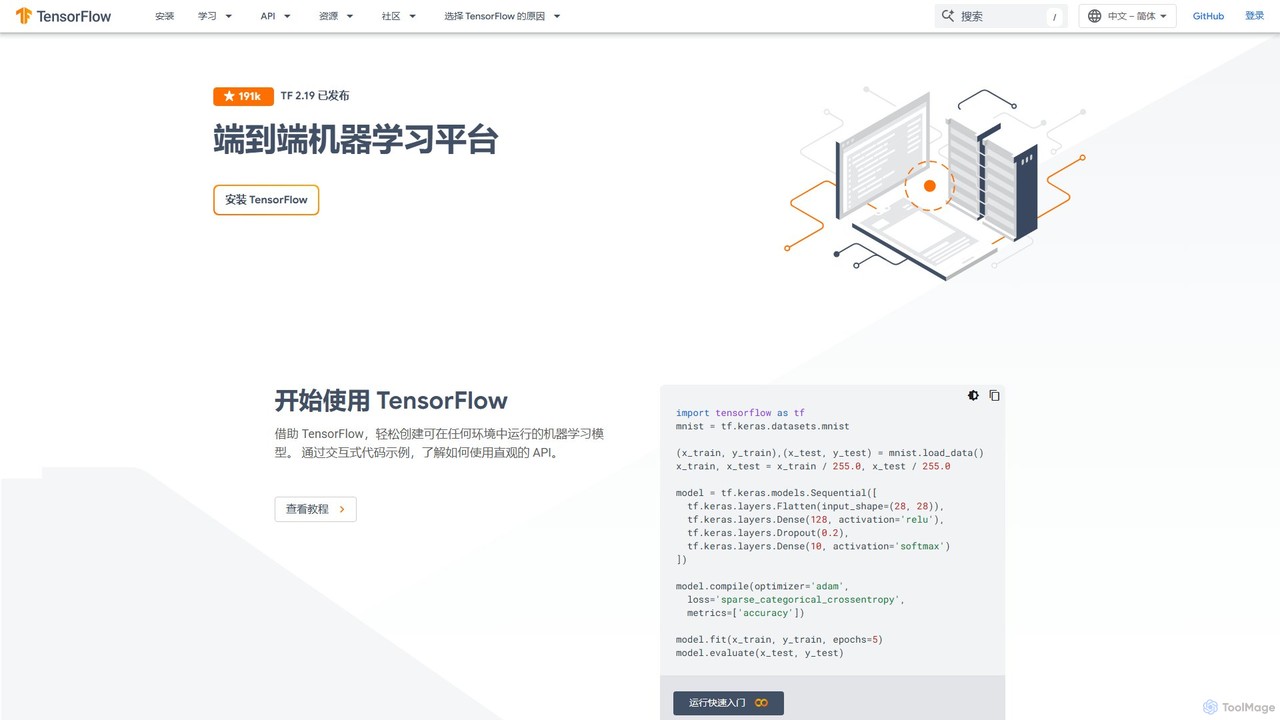
TensorFlow
TensorFlow is an end-to-end open-source platform for machine learning developed by Google. It provides a comprehensive, flexible ecosystem of tools, libraries, and community resources that lets researchers and developers build and deploy ML-powered applications. From beginners to experts, TensorFlow offers intuitive high-level APIs for easy model building and powerful low-level APIs for advanced research, enabling deployment across servers, edge devices, and browsers.
Frameworks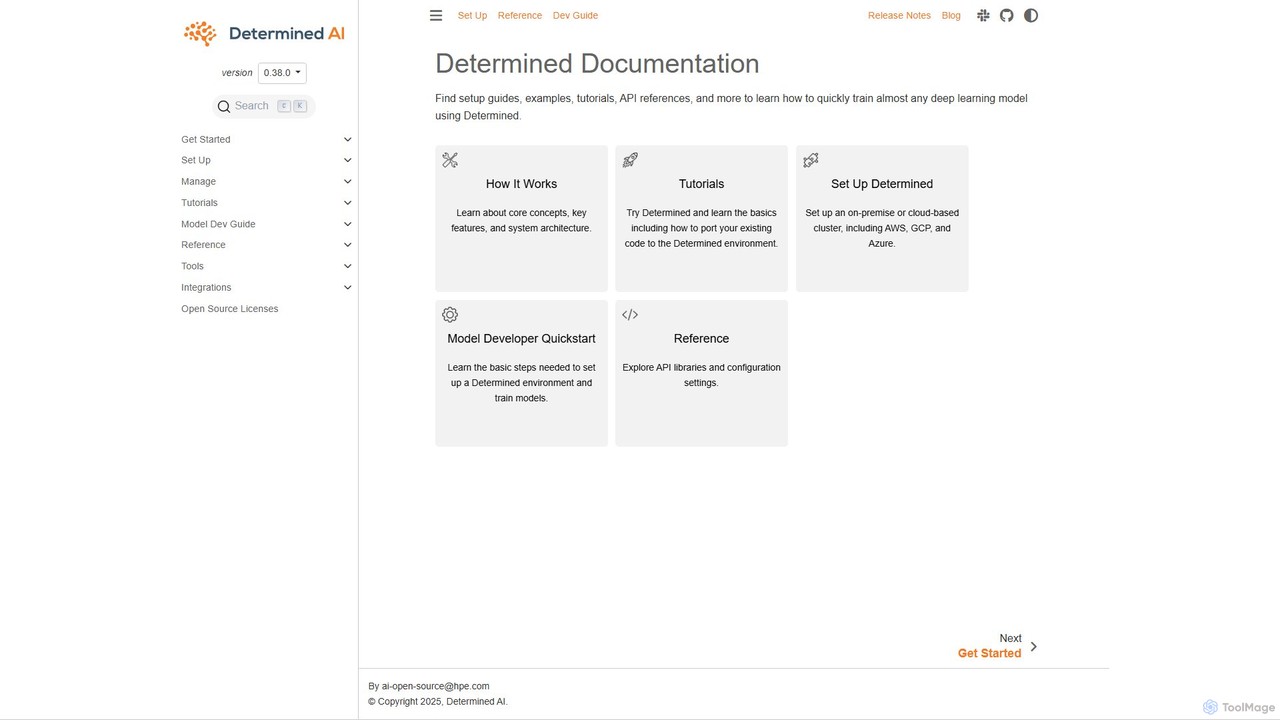
Determined AI
Determined AI is an open-source deep learning training platform that simplifies and accelerates model development. It offers integrated tools for hyperparameter tuning, distributed training, and experiment tracking, enabling data scientists to train better models faster and more efficiently.
Data Science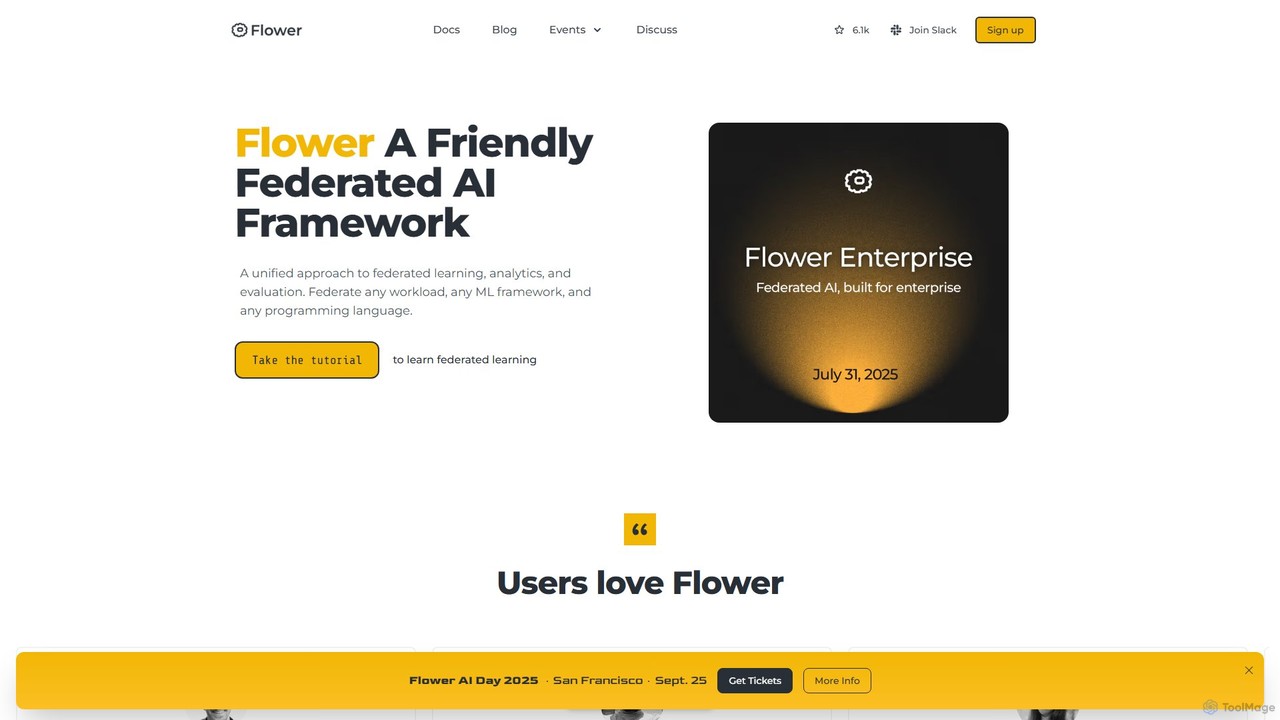
Flower
Flower is a friendly, open-source framework for federated learning, analytics, and evaluation. It enables training AI models on decentralized data across various devices and platforms without compromising privacy, supporting numerous ML frameworks like PyTorch, TensorFlow, and Hugging Face.
Frameworks
cometcore
CometCore is an end-to-end MLOps platform designed for AI developers and data science teams. It streamlines the entire machine learning lifecycle, from experiment tracking and hyperparameter optimization to model versioning and production monitoring. By providing a centralized hub for collaboration and reproducibility, CometCore accelerates the development and deployment of robust, high-performance AI models.
Data ScienceMLflow Categories
MLflow Embed Widget
Copy this embed code to place the badge on your blog, article, or product site and send readers directly to this ToolMage detail page.

Related AI tools
Weights & Biases
Weights & Biases is the leading MLOps platform for developers to build better models faster. It helps machine learning teams track experiments, version datasets, manage model lifecycles, and collaborate seamlessly. Ideal for everything from academic research to enterprise-level AI development.
VisualizationDetermined AI
Determined AI is an open-source deep learning training platform that simplifies and accelerates model development. It offers integrated tools for hyperparameter tuning, distributed training, and experiment tracking, enabling data scientists to train better models faster and more efficiently.
Data ScienceFlower
Flower is a friendly, open-source framework for federated learning, analytics, and evaluation. It enables training AI models on decentralized data across various devices and platforms without compromising privacy, supporting numerous ML frameworks like PyTorch, TensorFlow, and Hugging Face.
Frameworkscometcore
CometCore is an end-to-end MLOps platform designed for AI developers and data science teams. It streamlines the entire machine learning lifecycle, from experiment tracking and hyperparameter optimization to model versioning and production monitoring. By providing a centralized hub for collaboration and reproducibility, CometCore accelerates the development and deployment of robust, high-performance AI models.
Data Science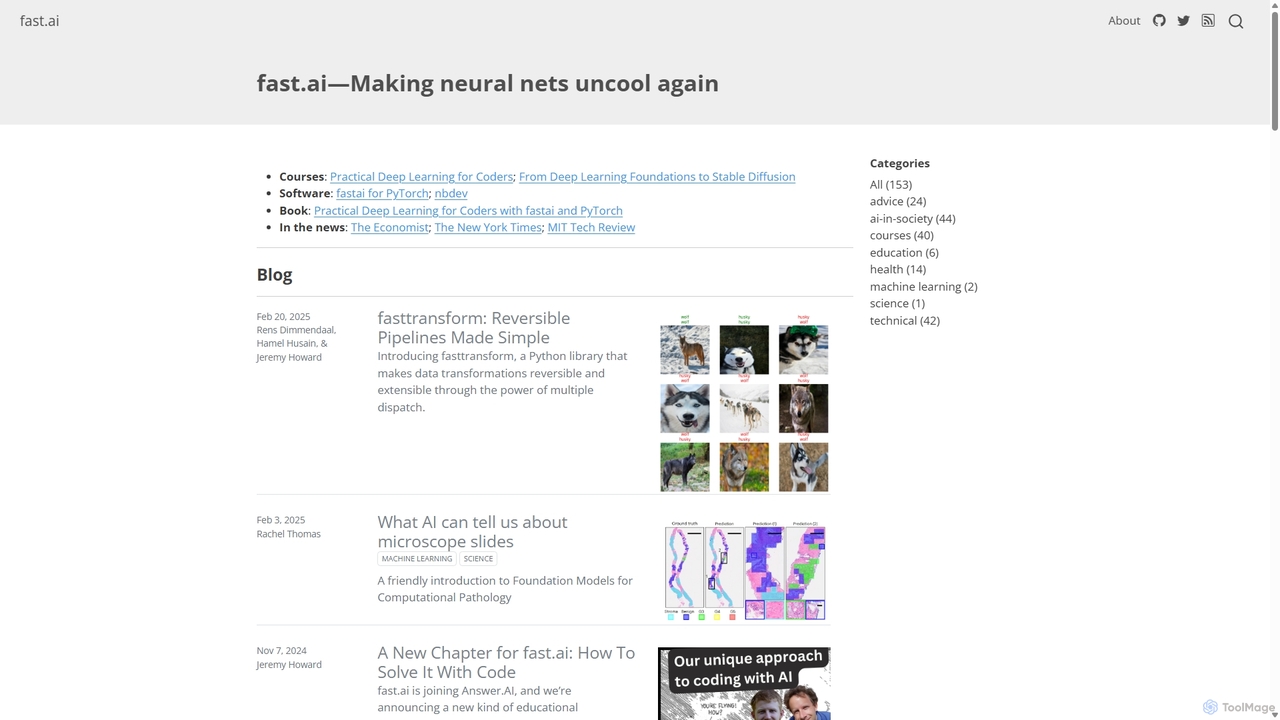
Fast.ai
Fast.ai is a research institute dedicated to making deep learning accessible to everyone. It offers free courses, an open-source software library (fastai), cutting-edge research, and a vibrant community, empowering coders of all backgrounds to become deep learning practitioners.
Machine Learning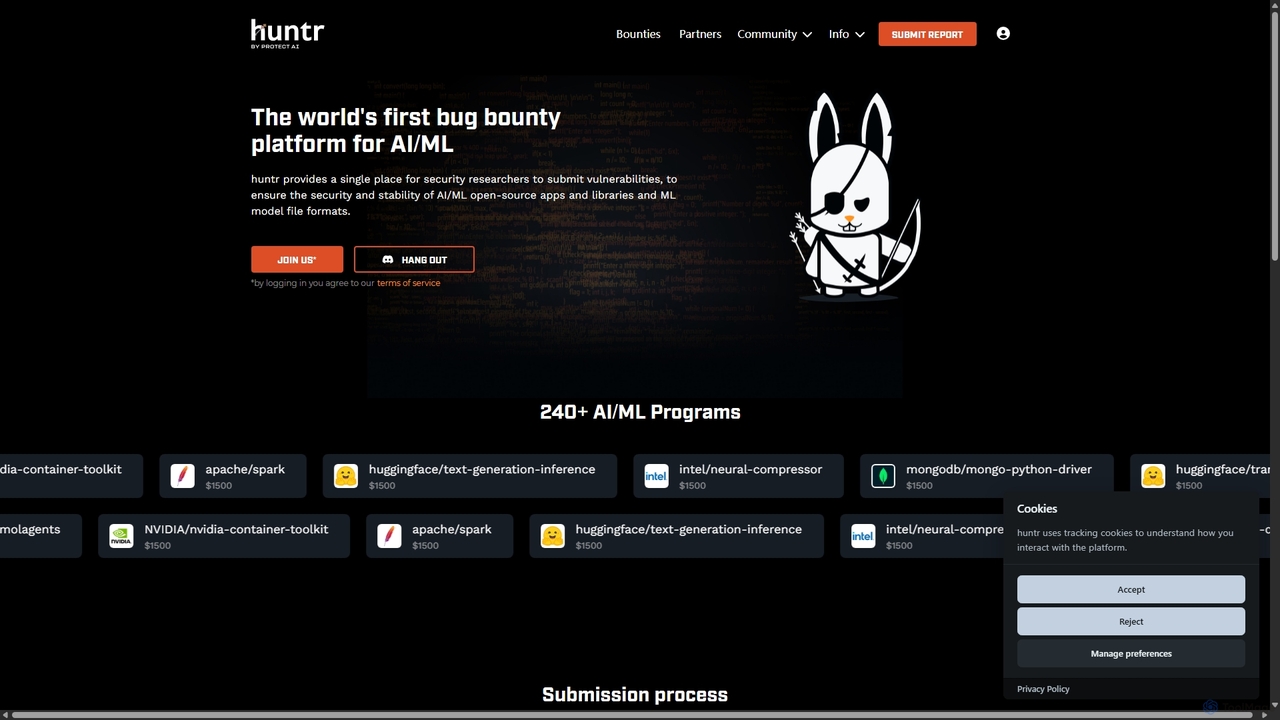
Huntr
Huntr is the world's first bug bounty platform dedicated to securing the AI/ML ecosystem. It connects security researchers with open-source AI projects, enabling them to discover and report vulnerabilities in AI applications, libraries, and model file formats. Researchers earn financial rewards for validated findings, helping to ensure the safety and stability of critical AI technologies like PyTorch, TensorFlow, and Hugging Face Transformers.
Mlops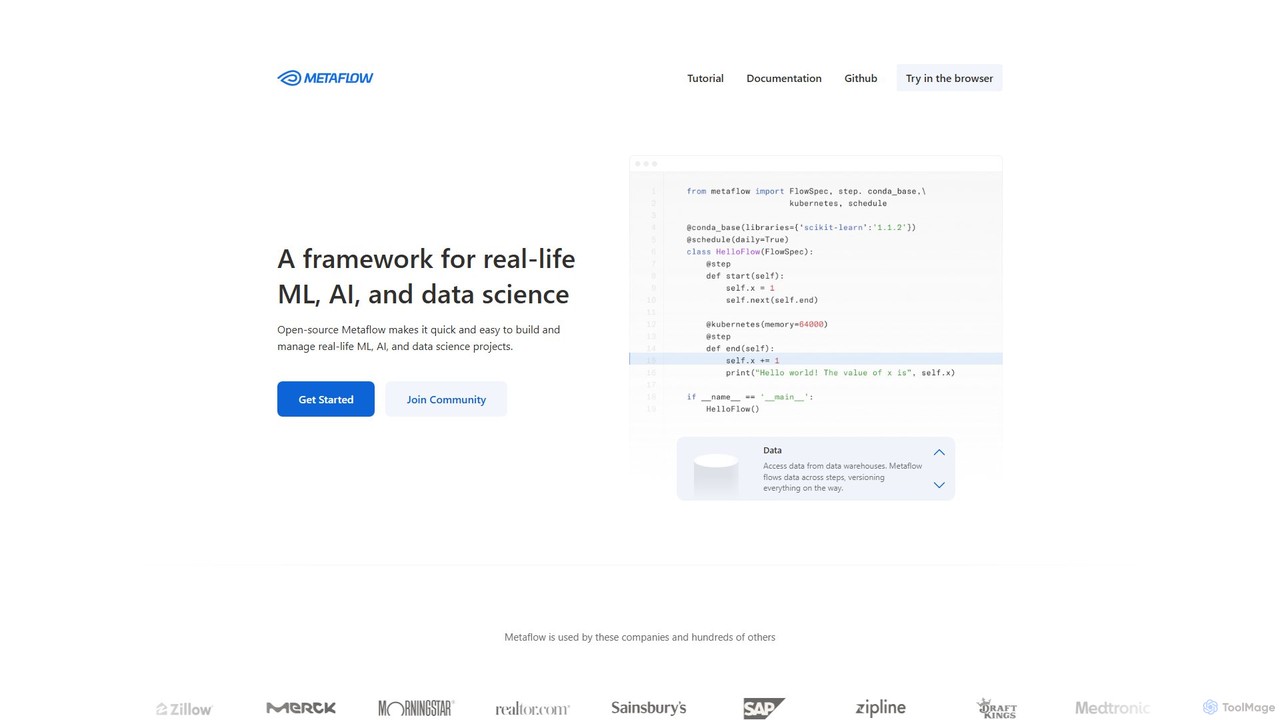
Metaflow
A human-centric Python framework, originally from Netflix, for building and managing real-life data science, ML, and AI projects. It simplifies workflow orchestration, data management, and model deployment, enabling rapid prototyping and scalable production pipelines.
Mlops
ai-rnd.com
An integrated platform for AI research and development, providing a unified workspace, pre-trained models, and one-click deployment to accelerate the entire AI lifecycle. Ideal for developers, researchers, and enterprises.
Data Management
hyperficient
hyperficient is an open-source AI tool for developers and ML engineers that automates the search for the most efficient fine-tuning strategies for neural networks. It significantly reduces computational costs, GPU time, and manual effort, enabling optimal model performance on limited resources.
Libraries
OctoAI
OctoAI is a high-performance compute platform for developers to run, tune, and scale generative AI models efficiently. It offers optimized, production-ready API endpoints for popular open-source models like Llama, Mixtral, and Stable Diffusion. By focusing on deep system optimizations, OctoAI provides faster inference speeds and lower costs, enabling businesses to build and deploy scalable AI applications without managing complex infrastructure.
Api
Jyek
Jyek is an AI agent platform that understands objectives, creates execution plans, uses tools, and delivers verifiable results for complex, multi-step tasks.
Automation
Supervised.co
Supervised.co is an end-to-end platform for building, training, and deploying supervised machine learning models. It simplifies the MLOps lifecycle with integrated data annotation, automated model training, and one-click API deployment, empowering teams to create high-performance AI solutions efficiently.
Data Annotation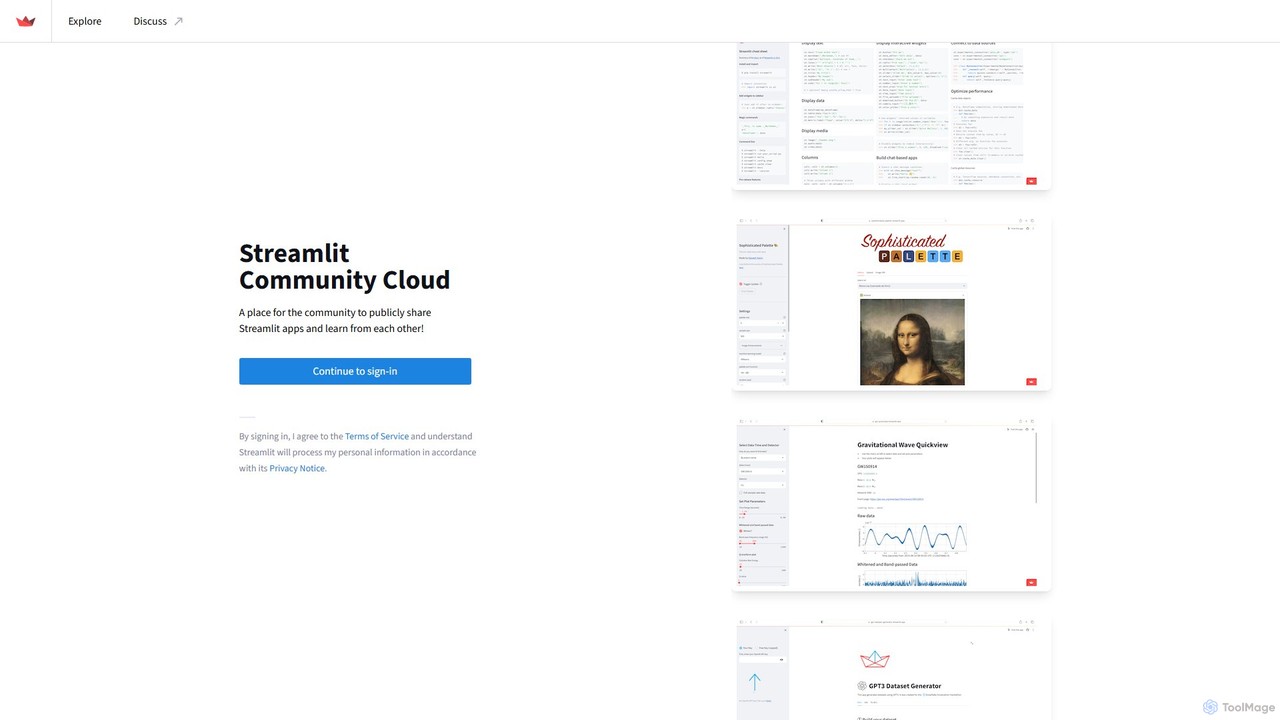
Streamlit
Streamlit is an open-source Python framework that enables developers and data scientists to build and share beautiful, custom web apps for machine learning and data science in minutes. The Streamlit Community Cloud provides a free platform to deploy, manage, and share these public applications with the world, fostering a collaborative environment for innovation.
Data Visualization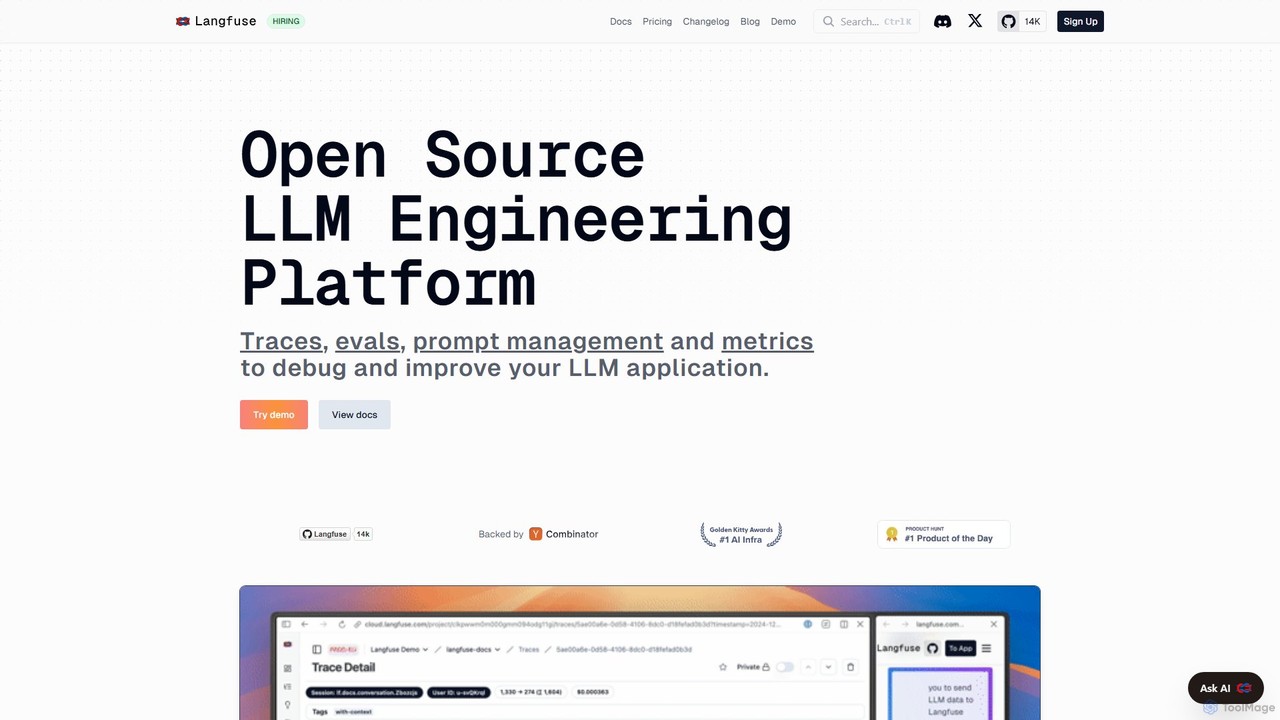
Langfuse
Langfuse is an open-source LLM engineering platform that provides comprehensive tools for debugging, evaluating, and improving LLM applications. It offers features like tracing, prompt management, evaluation frameworks, and metrics to streamline the entire development lifecycle for teams building with large language models.
Analytics
Lightning AI
Lightning AI is a cloud platform designed to build, train, and deploy AI models at scale. It combines the popular open-source PyTorch Lightning framework with Lightning AI Studio, a collaborative, browser-based environment with zero setup. Access powerful GPUs, scale from a laptop to the cloud seamlessly, and accelerate your entire AI development workflow.
Platform As A Service (Paas)
MLflow Comments (0)
Sign in to comment.
Sign inNo comments yet.