ToolMage
Sign in

Best 70 Cloud Computing AI tools

Popular Cloud Computing AI tools include AWS, Groq, Ansible Collaborative, Spaceship, CircleCI, Together AI, Firebase Studio, Lightning AI, SiliconFlow, and novita.ai, helping you work more efficiently.

InstaVM
Freemium

InstaVM

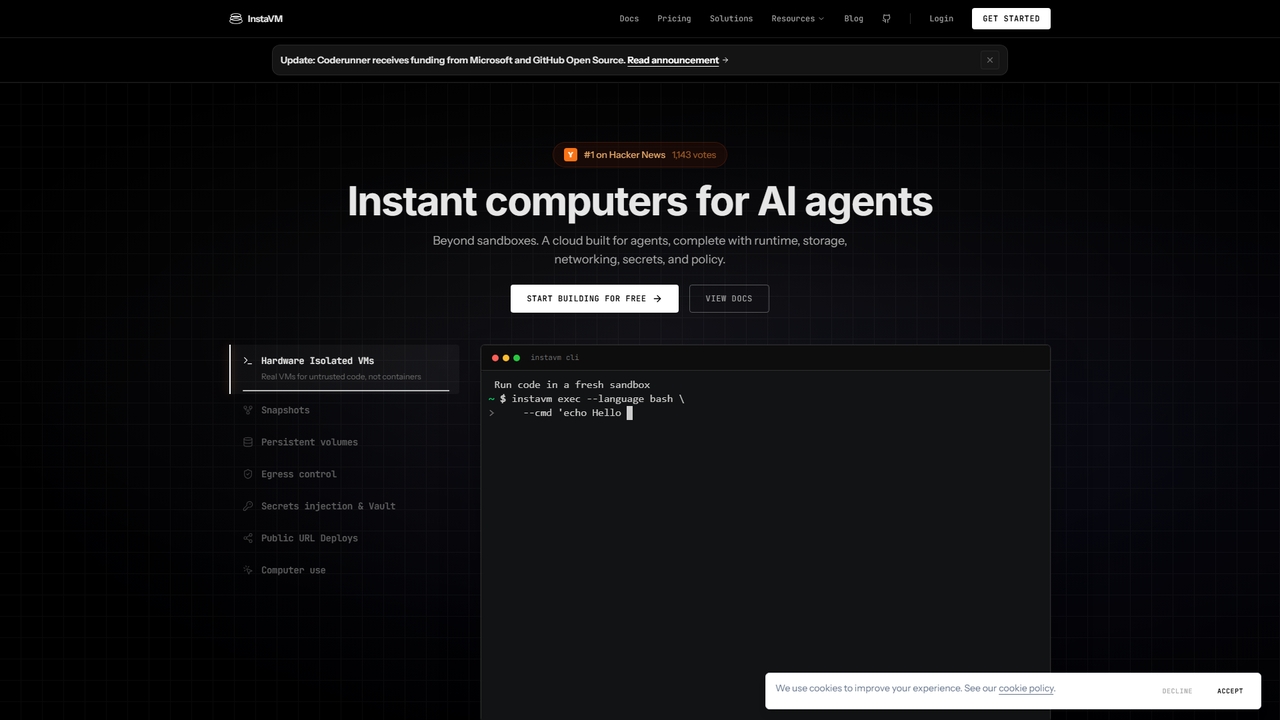
InstaVM is a production-grade sandbox built for AI agents, offering hardware-isolated virtual machines with persistent state, secure networking, and secret management. It provides a complete Linux environment for safely executing untrusted code from agents, with sub-200ms cold starts and seamless deployment.

Virtual Machines
Visits 9.3KFavorites 36Likes 40
Infros
Freemium

Infros

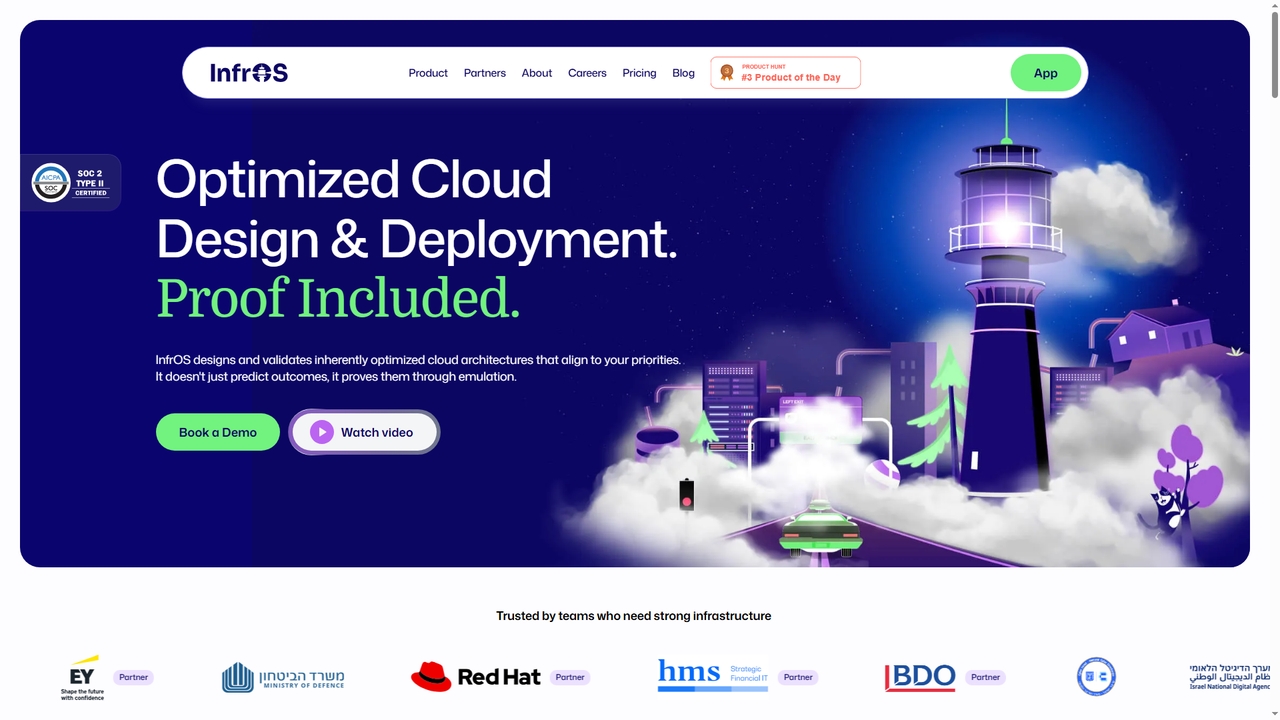
Infros is an AI-powered IT Infrastructure Operating System that designs, validates, and deploys optimized cloud architectures. It uses emulation to prove performance and cost outcomes before deployment, helping teams eliminate technical debt and reduce cloud spend by an average of 43%.

Finops
Visits 6.3KFavorites 44Likes 30
Dcompute
Paid

Dcompute

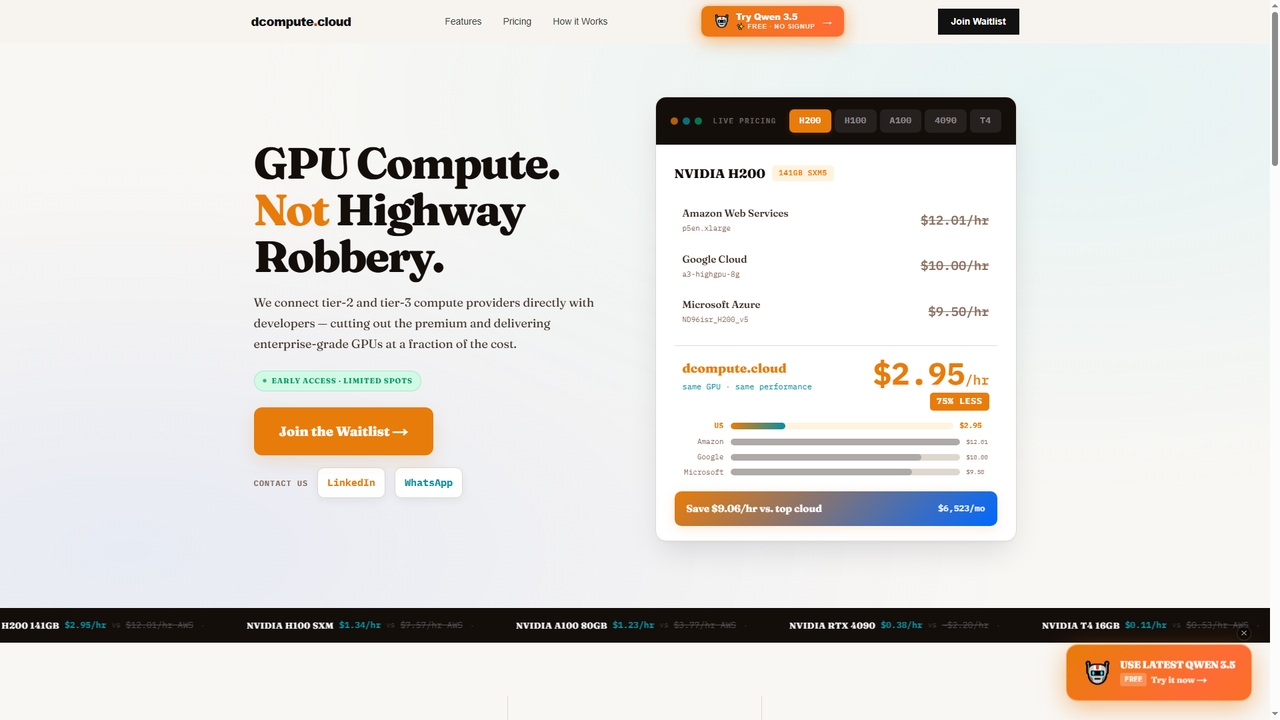
Dcompute is a decentralized GPU compute marketplace that connects developers directly with tier-2 and tier-3 data center providers. It offers enterprise-grade NVIDIA GPUs (H200, H100, A100, RTX 4090, T4) at a fraction of the cost of major cloud providers, promising up to 90% savings. The platform features instant deployment, a unified API/dashboard, full orchestration, and pure pay-as-you-go billing per second with no minimums.

Gpu
Visits 6.5KFavorites 21Likes 34
Oncompute
Freemium

Oncompute

Oncompute is a decentralized, peer-to-peer (P2P) GPU compute network. It connects users needing AI/ML compute power with providers of idle GPUs, offering a pay-per-use model directly from integrated development environments like VS Code. It aims to provide more affordable and accessible compute resources for containerized workloads.

Distributed Systems
Visits 6.4KFavorites 29Likes 24
MACH-AI
Freemium

MACH-AI

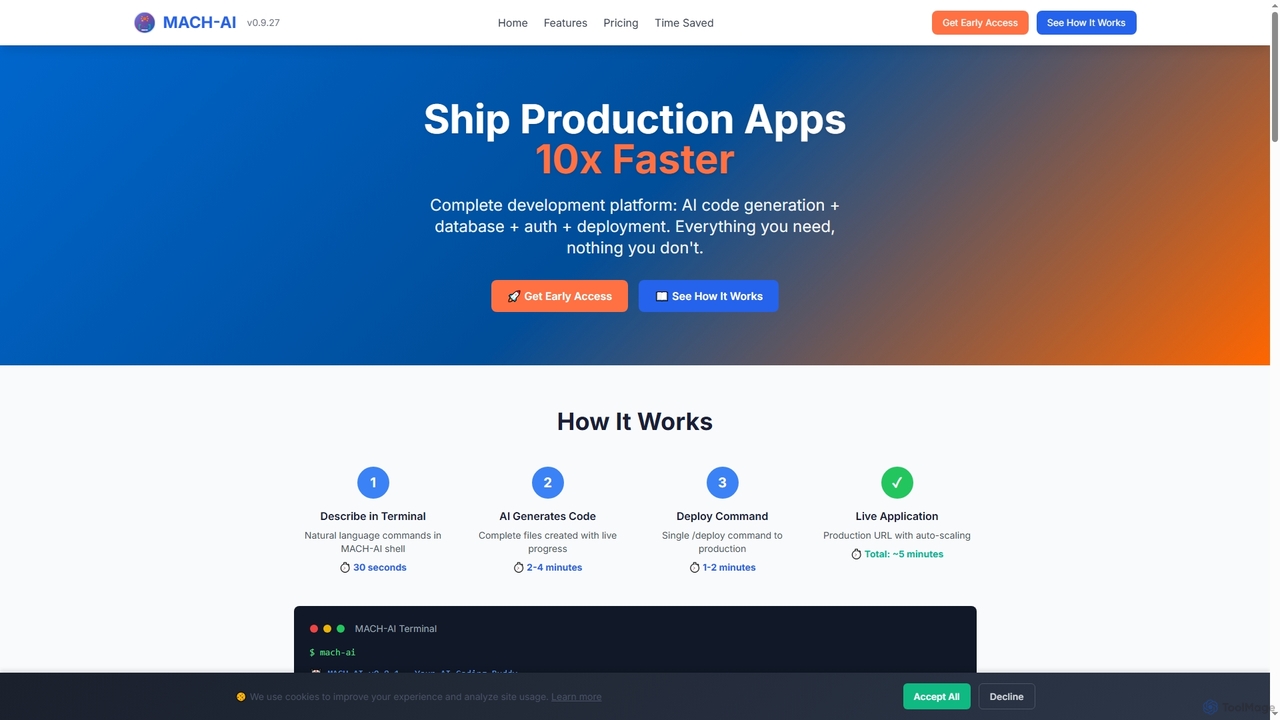
MACH-AI is an AI coding assistant and complete development platform that transforms concepts into production-ready cloud applications in minutes. It integrates AI code generation, built-in database, authentication, and one-command deployment, enabling developers to build and launch scalable web applications 10x faster across Python, JavaScript, and TypeScript.

Application Deployment
Visits 7.7KFavorites 54Likes 57
ClusterEye

ClusterEye

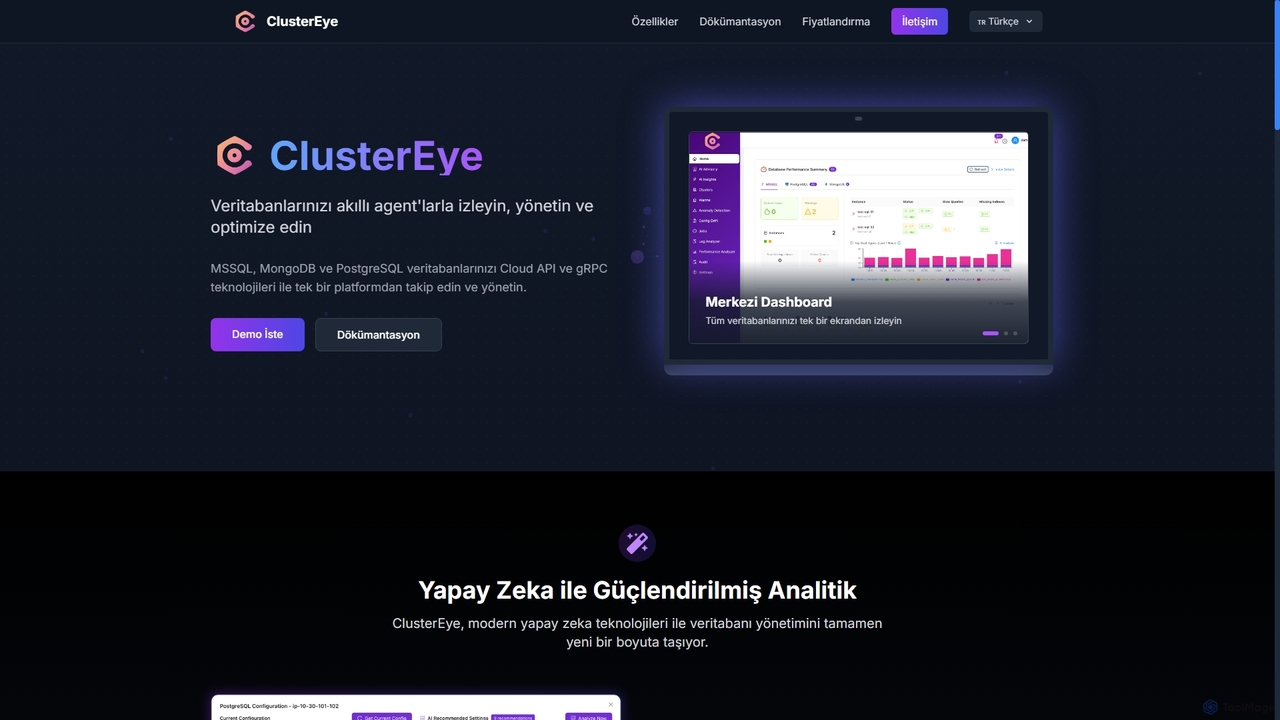
ClusterEye is an AI-powered database monitoring and management platform designed to optimize the performance and stability of MSSQL, MongoDB, and PostgreSQL databases. It uses intelligent agents and advanced AI analytics to provide real-time insights, proactive problem detection, and automated optimization recommendations, simplifying complex database operations.

Database As A Service
Visits 6.4KFavorites 49Likes 52
Trigma

Trigma

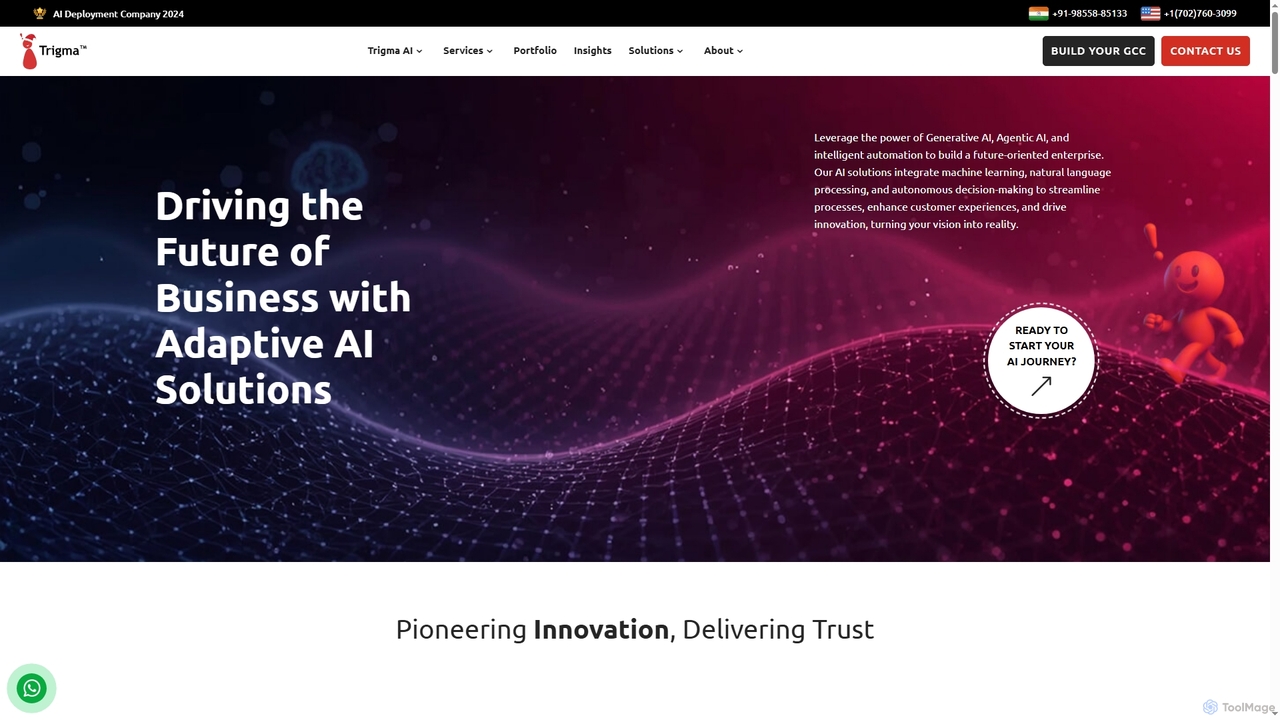
Trigma is a global AI development company specializing in custom AI and tech solutions for businesses. They leverage Generative AI, Agentic AI, machine learning, and natural language processing to create adaptive solutions that streamline processes, enhance customer experiences, and drive innovation across various industries, from healthcare to real estate.

Agentic Ai
Visits 14.4KFavorites 47Likes 43
AutoRail

AutoRail

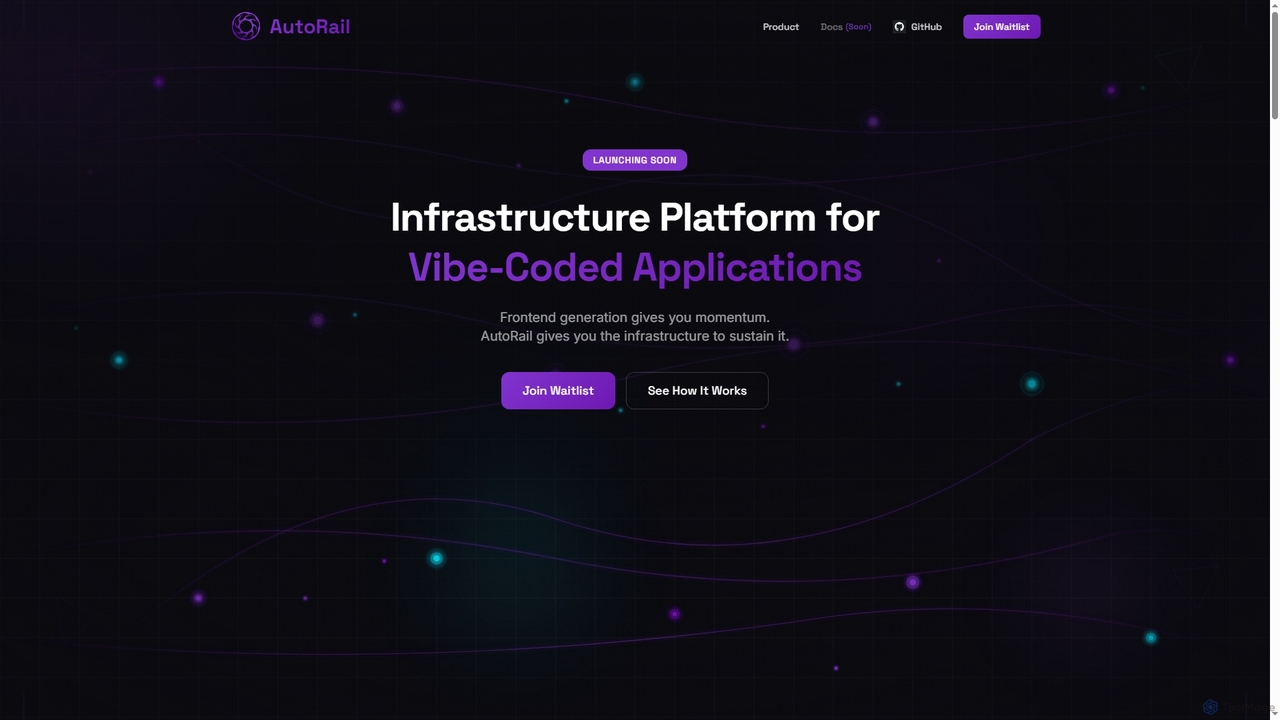
AutoRail is an infrastructure platform designed to transform "vibe-coded" prototypes into production-ready applications. It automatically provisions essential backend primitives like stateful memory, workflow orchestration, and auto-scaling, bridging the critical gap between rapid frontend development and robust, scalable production systems without manual configuration.

Ai Infrastructure
Visits 6.4KFavorites 64Likes 67
Nexlayer
Freemium

Nexlayer

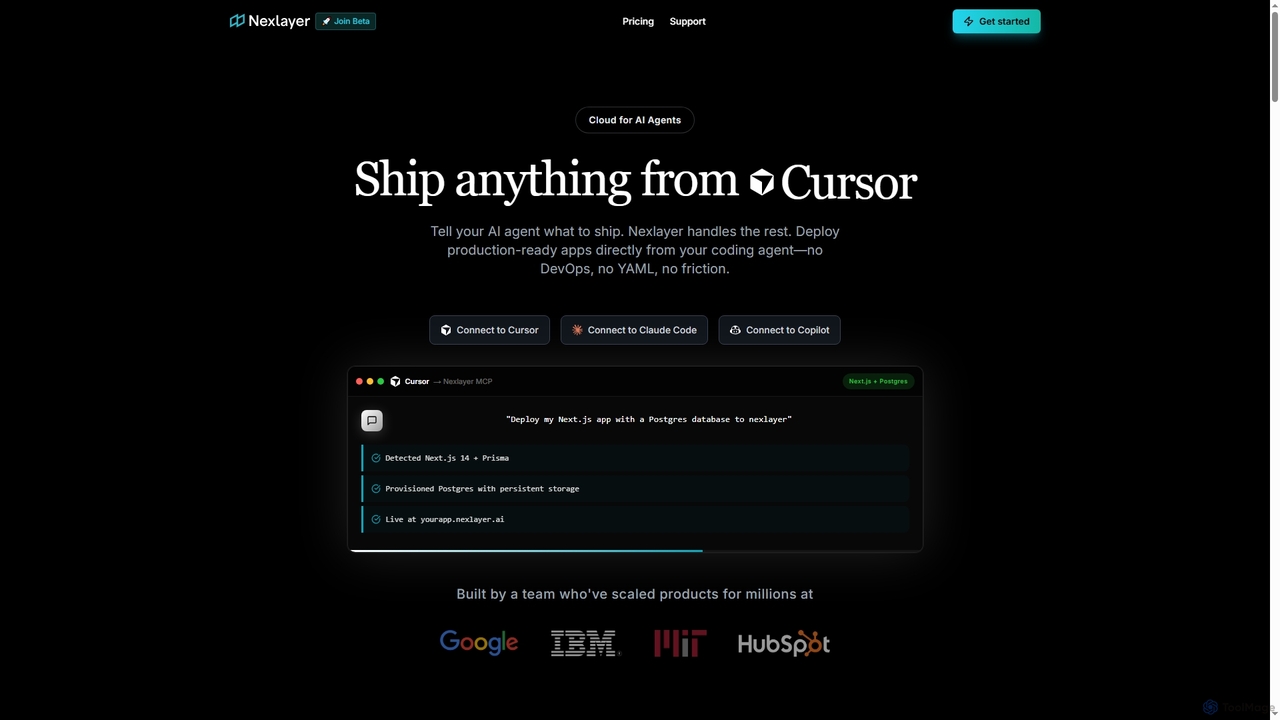
Nexlayer is the first agent-native cloud platform designed to empower AI coding agents to deploy production-ready applications swiftly. It automates complex infrastructure, enabling developers and founders to ship full-stack apps, APIs, and databases in minutes without DevOps overhead.

Application Development
Visits 7.3KFavorites 68Likes 53
Agentfield
Free

Agentfield

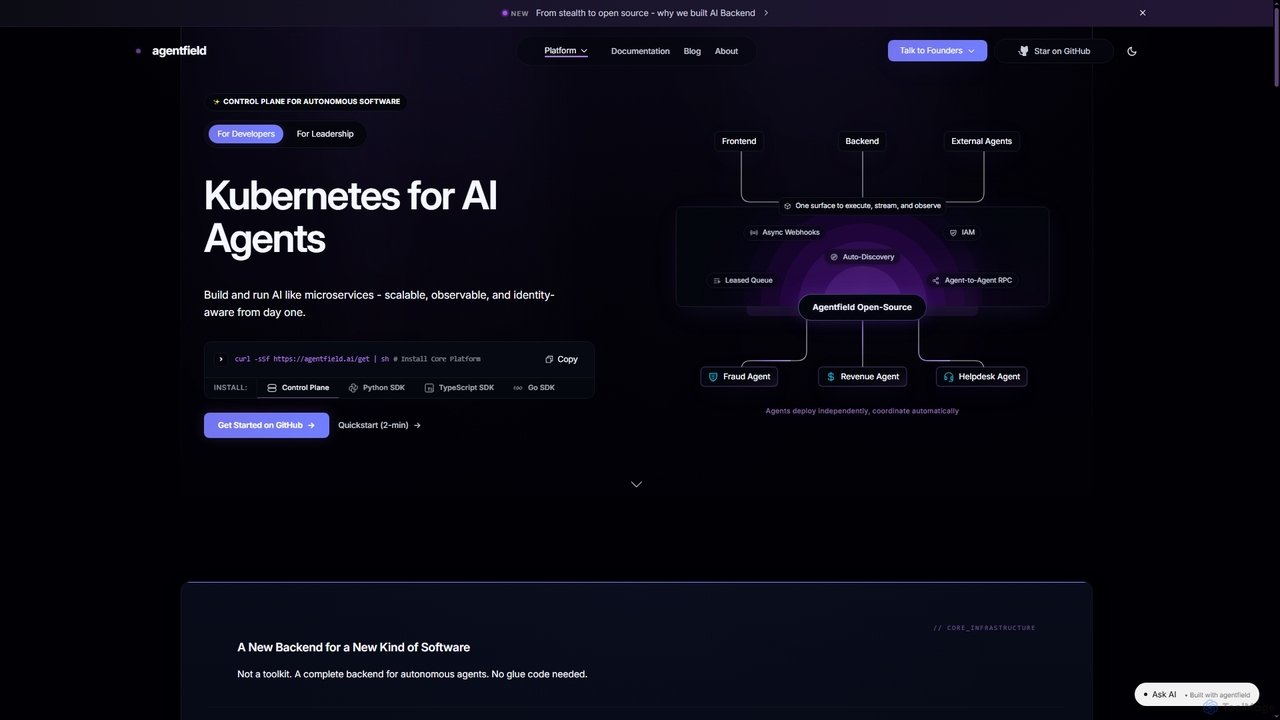
Agentfield is an open-source control plane designed for building and running autonomous AI agents as scalable, observable, and identity-aware microservices. It provides Kubernetes-like orchestration, cryptographic identity management, and production-ready infrastructure to bridge the gap between AI prototypes and robust, trustworthy production deployments.

Orchestration
Visits 25.4KFavorites 82Likes 80
Infragate
Paid

Infragate

Infragate is an AI infrastructure platform designed to help developers build and run Model-Context-Protocol (MCP) servers rapidly. It simplifies connecting diverse data sources, deploying AI tools, and managing scalable, secure AI workflows without complex operations.

Infrastructure
Visits 6.3KFavorites 121Likes 126
NeocloudX
Paid

NeocloudX

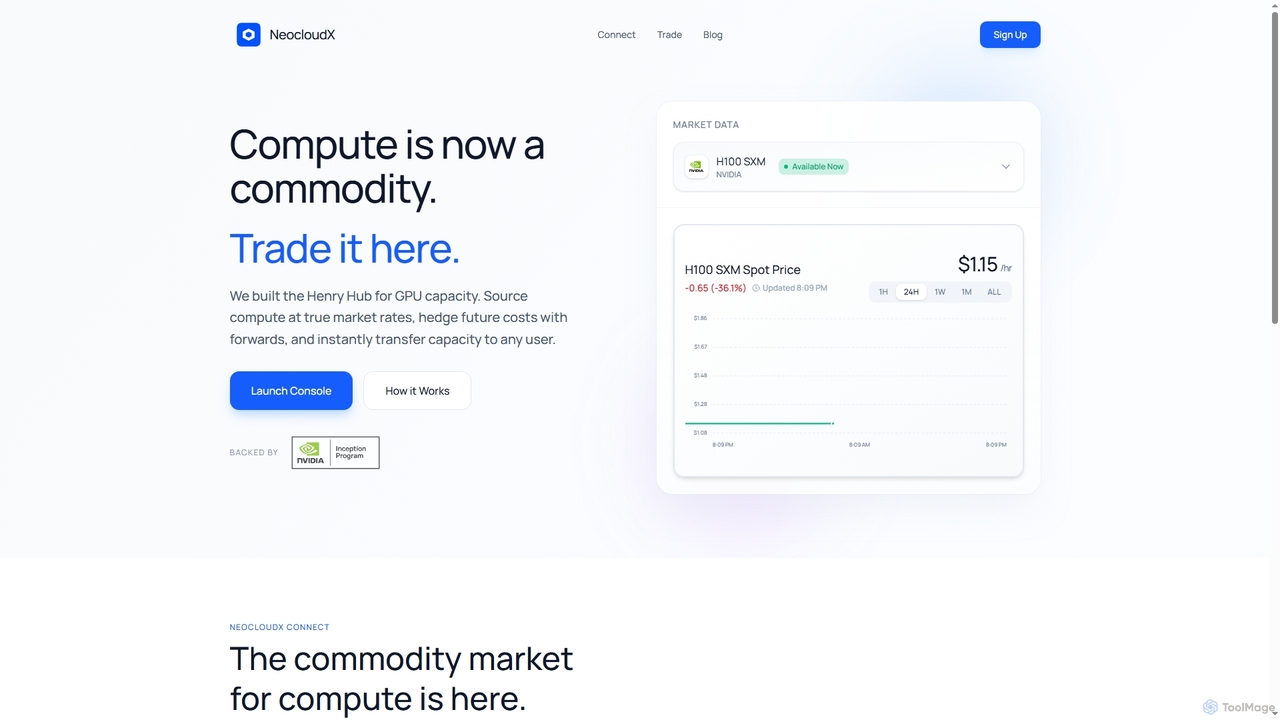
NeocloudX is an innovative marketplace that commoditizes GPU compute capacity, allowing users to buy, sell, and trade high-performance computing resources like NVIDIA H100 SXM GPUs at true market rates. It offers instant access to bare metal performance via a browser-based console, enabling significant cost savings compared to traditional cloud providers.

Machine Learning Infrastructure
Visits 6.4KFavorites 129Likes 112
Greyhound
Freemium

Greyhound

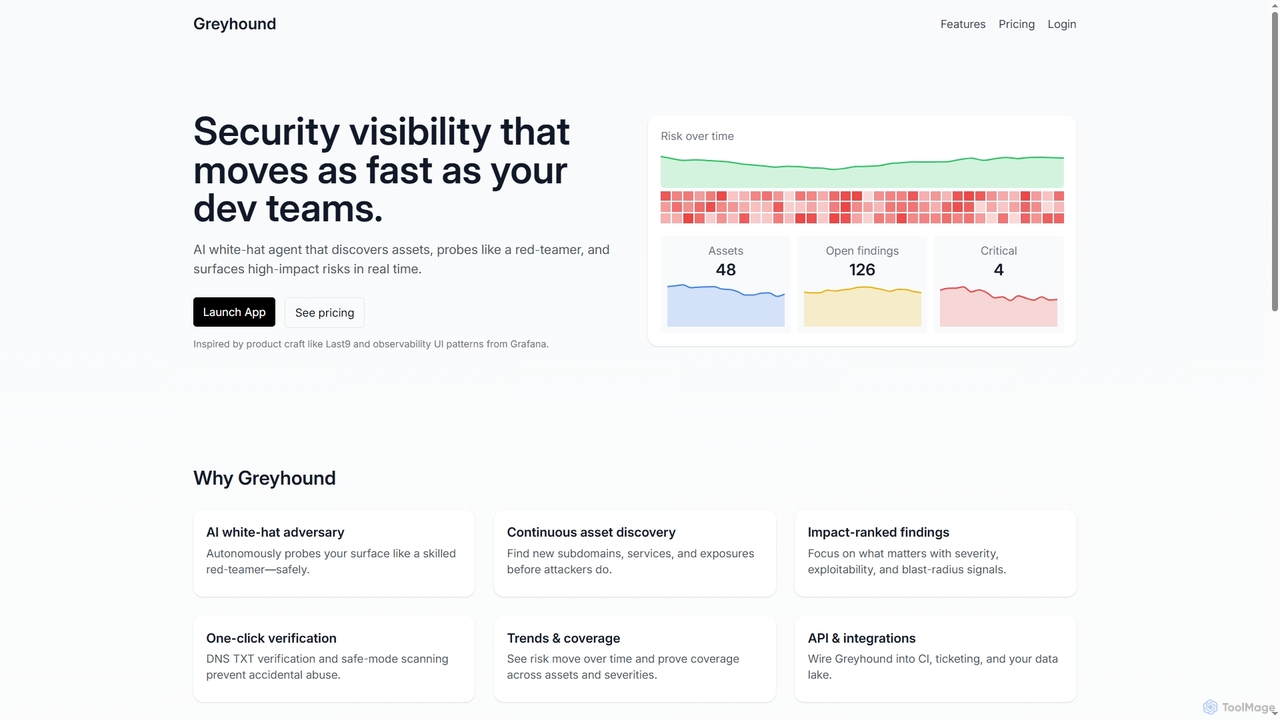
Greyhound is an AI-powered security platform that provides continuous scanning for web and cloud assets. It emulates a skilled attacker to autonomously discover assets, identify vulnerabilities, and provide impact-ranked findings with clear remediation steps, helping teams focus on critical risks.

Cloud Security
Visits 6.3KFavorites 132Likes 120
Mayson
Freemium

Mayson

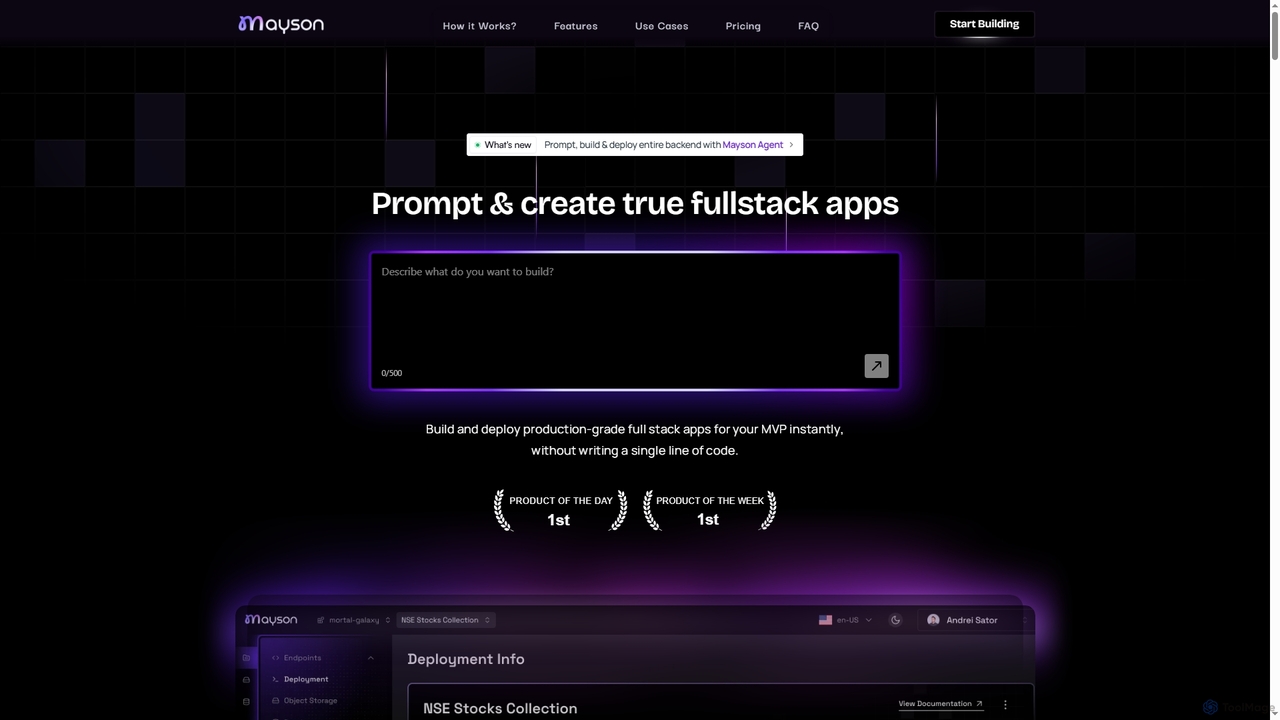
Mayson is a no-code Backend-as-a-Service (BaaS) platform that empowers developers and teams to build, deploy, and scale production-grade full-stack applications instantly. It eliminates the need for manual API development, offering a streamlined process to create robust backends with enterprise-grade security and no vendor lock-in.

Baas
Visits 12.4KFavorites 104Likes 93
Dank
Freemium

Dank

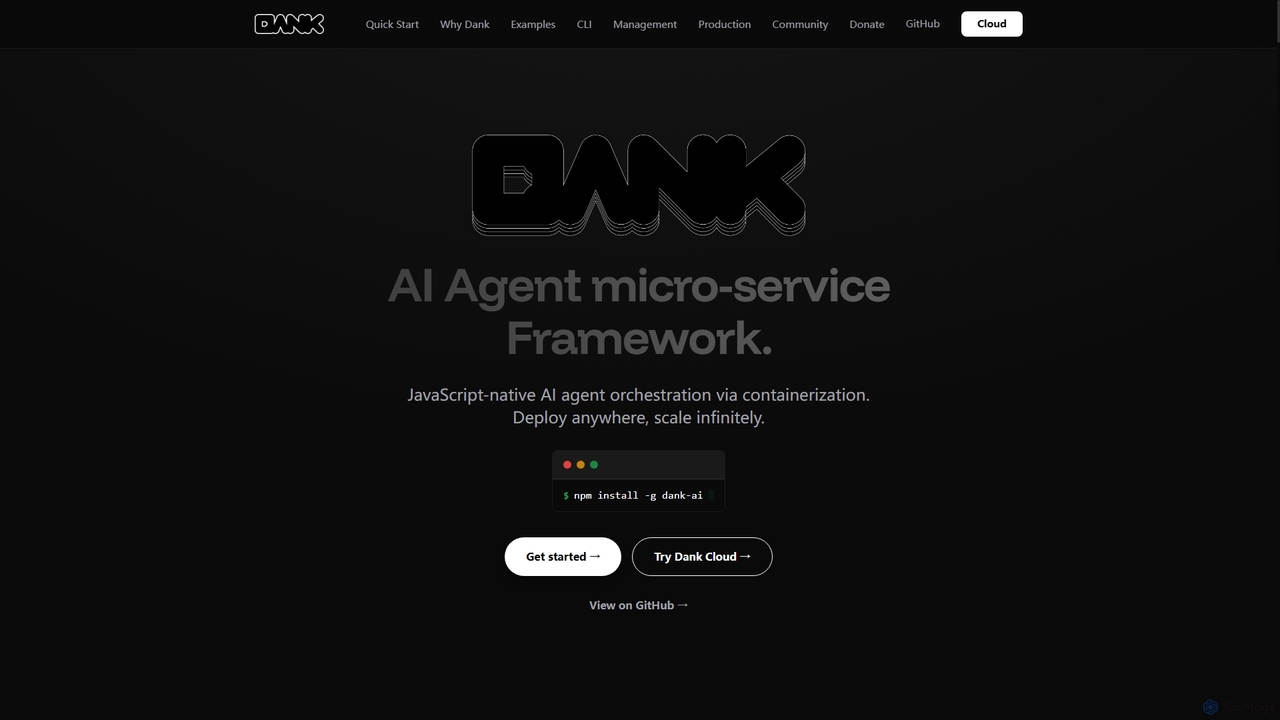
Dank is a JavaScript-native, open-source framework for orchestrating and deploying containerized AI agents. It enables developers to build, manage, and scale multiple AI agents as microservices across any cloud infrastructure, simplifying complex AI deployments with Docker-native architecture and real-time monitoring.

Agent Frameworks
Visits 6.3KFavorites 151Likes 159
Raven
Freemium

Raven

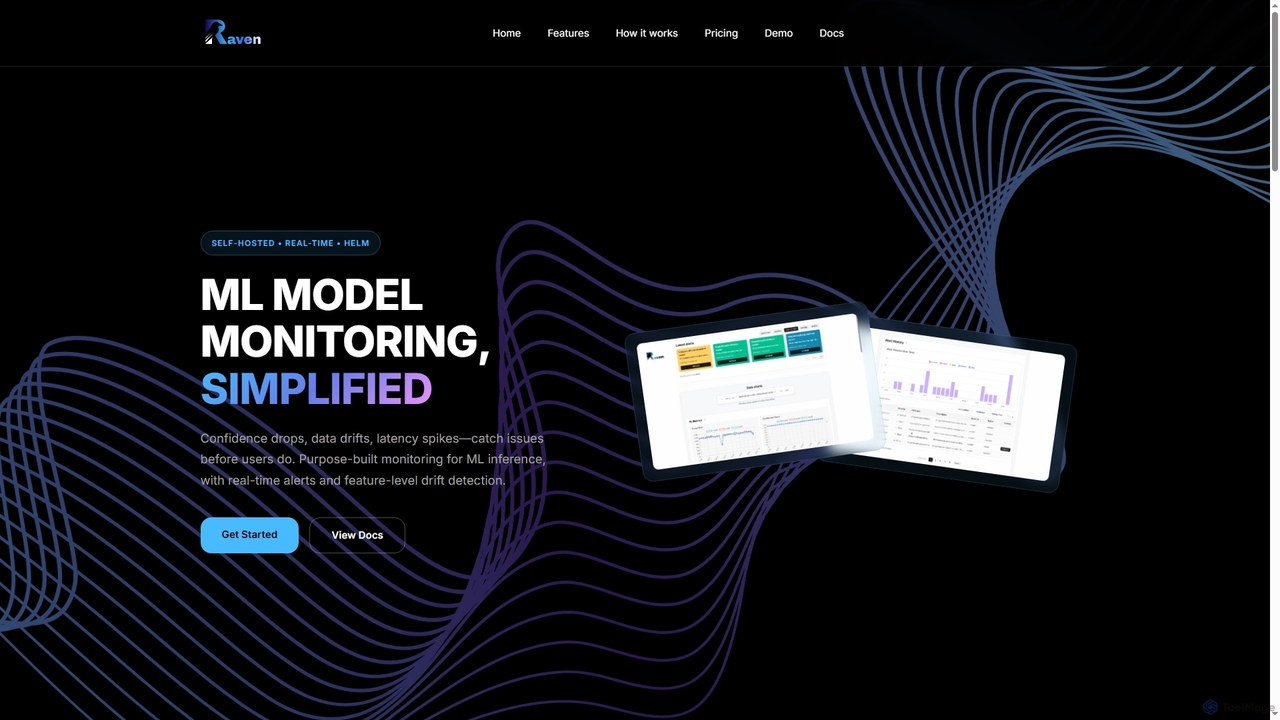
Raven is a self-hosted, real-time ML model monitoring platform designed to simplify observability for AI pipelines. It detects data drift, latency spikes, and confidence drops, providing instant alerts to ensure model reliability and performance in production environments.

Kubernetes Tools
Visits 6.5KFavorites 135Likes 136
Carpathian
Paid

Carpathian

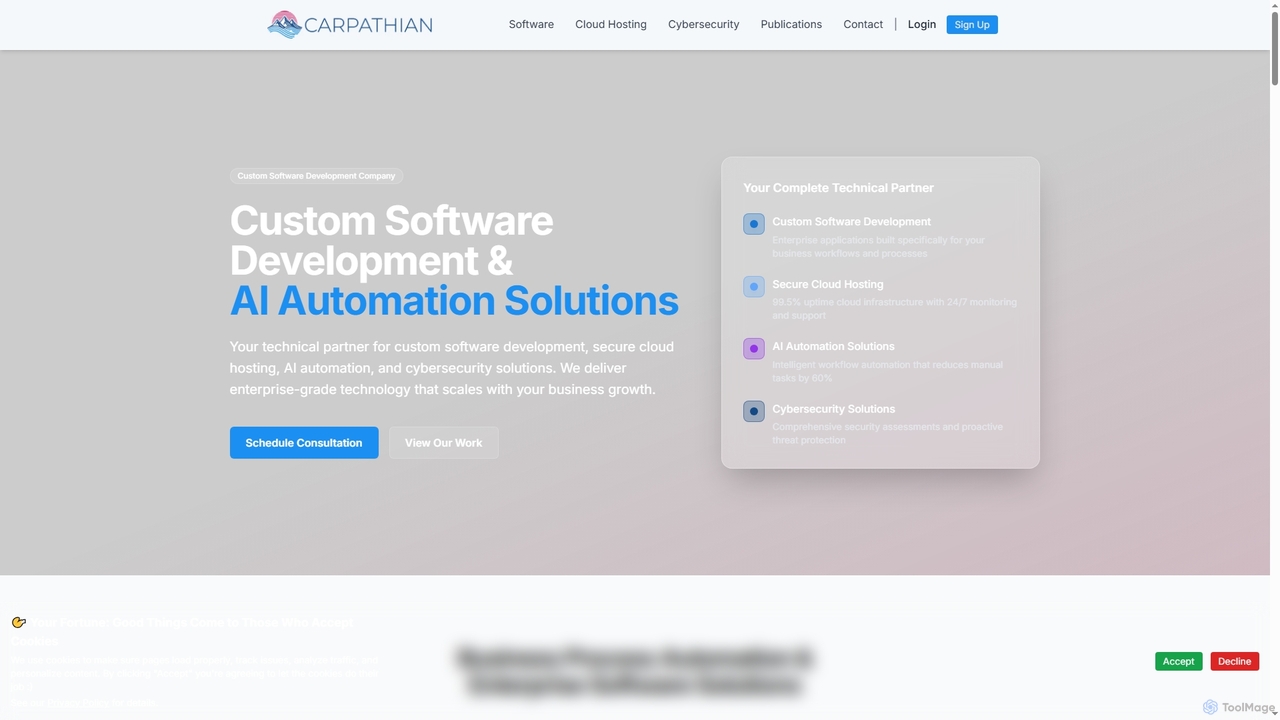
Carpathian is a comprehensive technical partner specializing in custom software development, AI automation solutions, secure cloud hosting, and robust cybersecurity services. They deliver enterprise-grade technology designed to scale with business growth, reduce manual tasks, enhance efficiency, and protect digital assets.

Machine Learning Operations
Visits 6.6KFavorites 134Likes 157
Market01

Market01

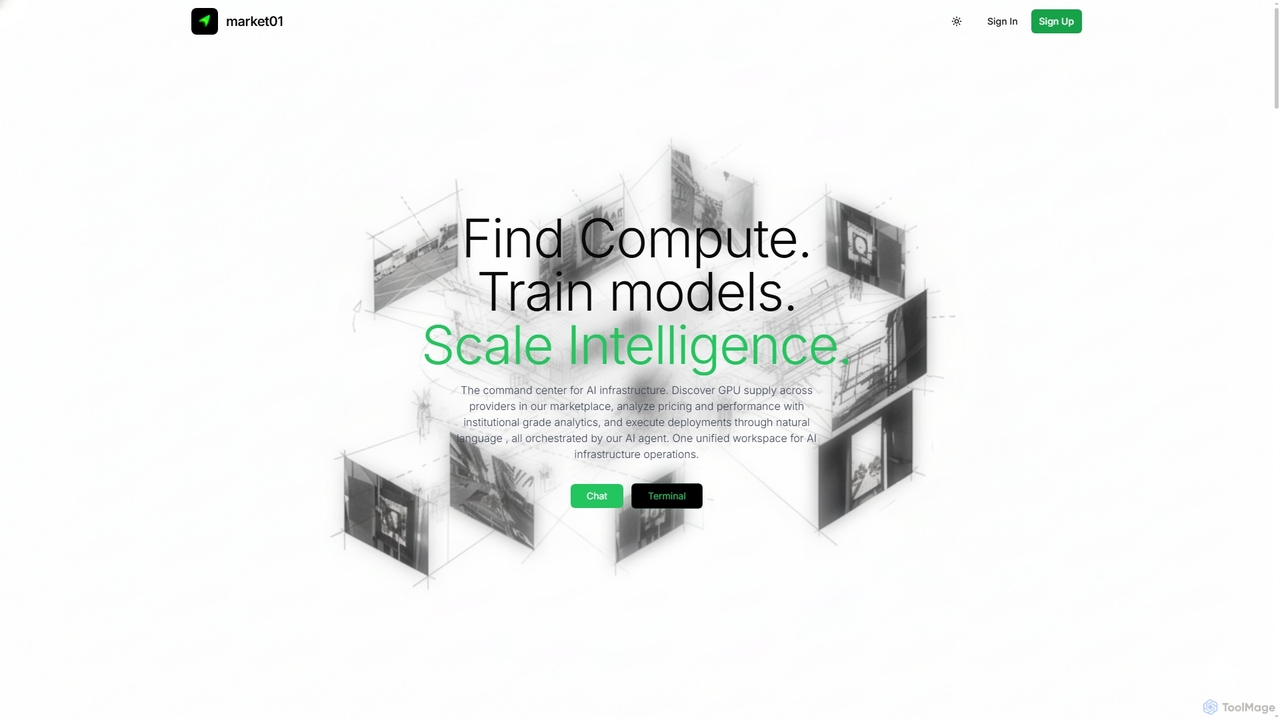
Market01 is an AI infrastructure command center that unifies GPU compute discovery, analysis, and deployment across multiple providers. It leverages an AI agent and natural language interface, Telos Chat, to simplify operations for training models and scaling intelligence.

Infrastructure Management
Visits 6.4KFavorites 144Likes 143
TestNeo
Freemium

TestNeo

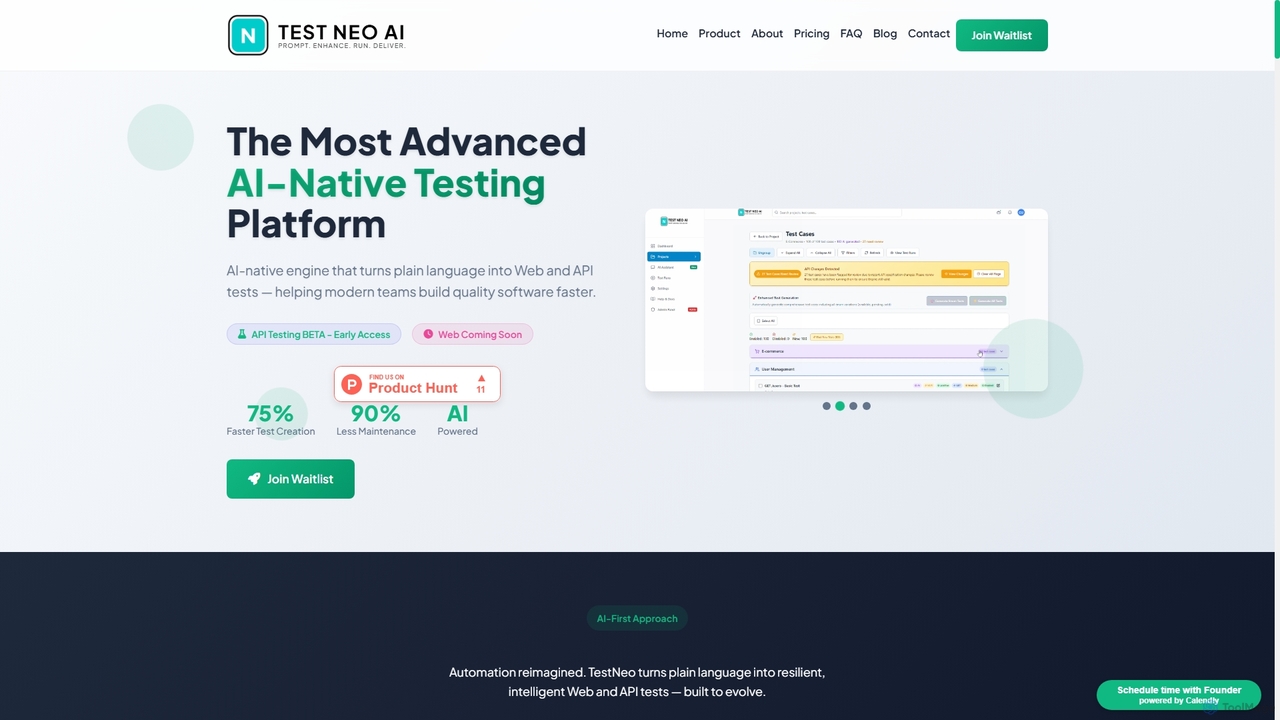
TestNeo is an AI-powered test automation platform that transforms natural language inputs into executable test scripts. It streamlines the testing process by eliminating manual scripting, offering self-healing automation, intelligent reporting, and seamless cloud execution. Designed for both technical and non-technical users, TestNeo accelerates API and performance testing, ensuring robust software quality with minimal effort.

Natural Language Processing
Visits 7.7KFavorites 183Likes 159
Runexo
Freemium

Runexo

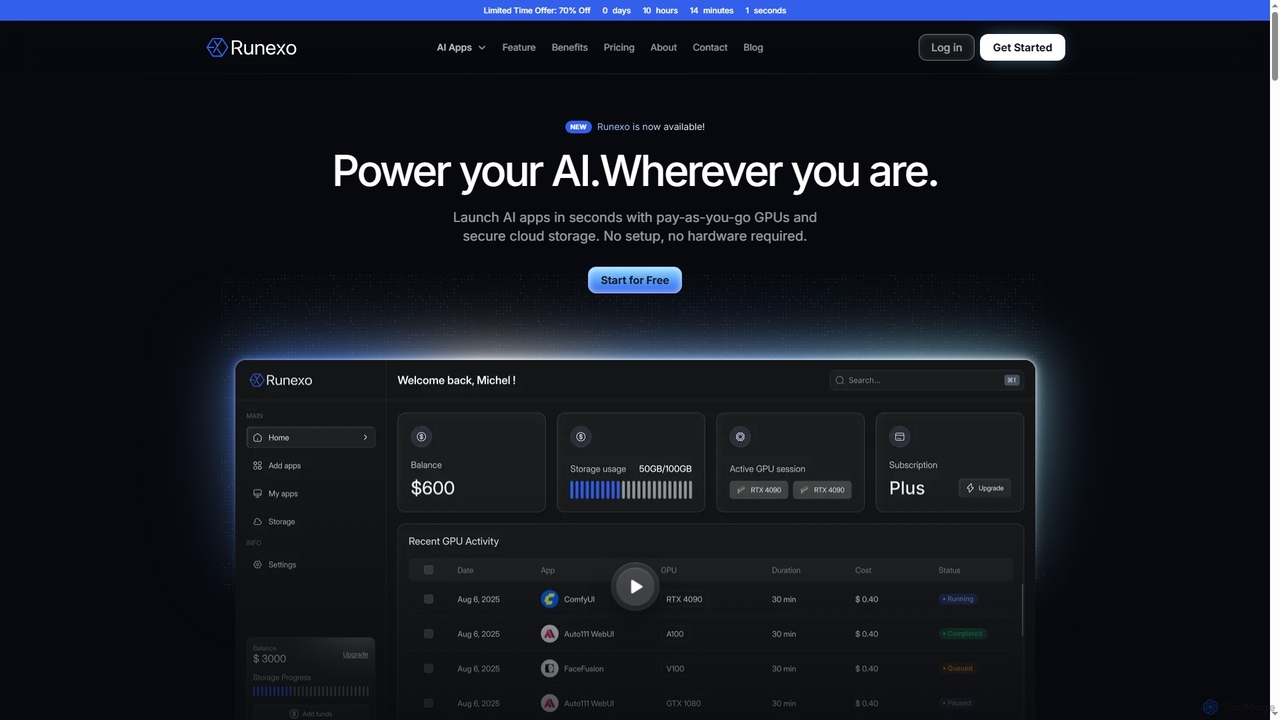
Runexo is a cloud GPU platform designed to empower AI development, training, and inference. It offers instant access to high-performance, pay-as-you-go GPUs and secure cloud storage, enabling developers, researchers, and enterprises to launch AI applications like Stable Diffusion, ComfyUI, and Fooocus in seconds without setup or hardware requirements.

Gpu As A Service
Visits 6.5KFavorites 137Likes 135
Yamify

Yamify

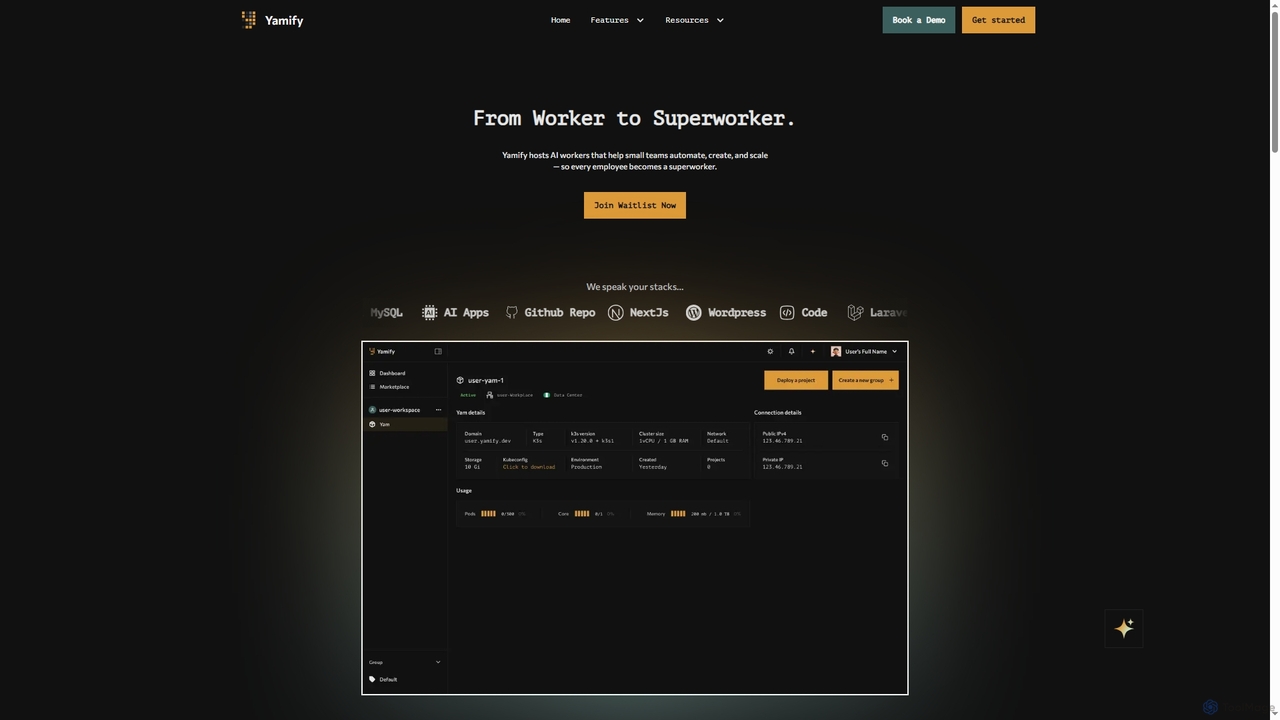
Yamify is a cloud platform that hosts AI workers to help small teams automate, create, and scale applications. It simplifies Kubernetes deployment and management, allowing users to launch and manage apps in a private cloud environment without writing YAML.

Paas
Visits 6.7KFavorites 88Likes 105
XMOX
Paid

XMOX

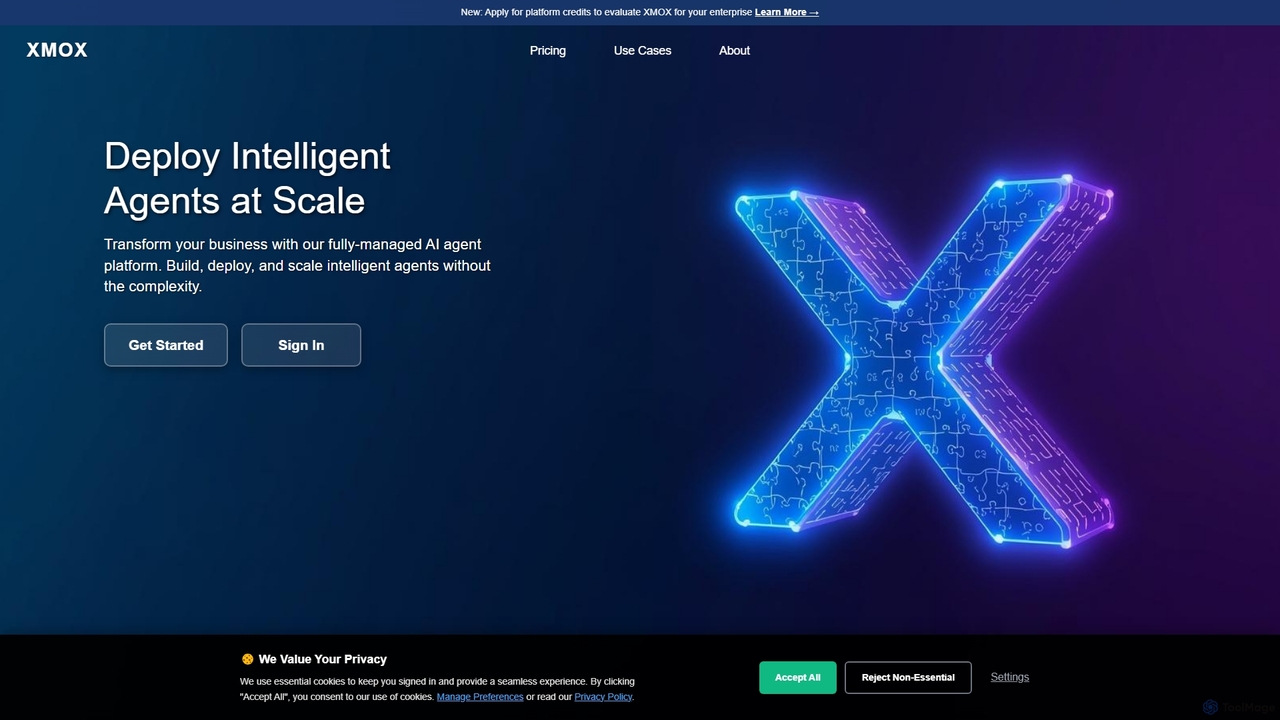
XMOX is a leading managed AI agents platform that provides enterprise-grade infrastructure and services for deploying, scaling, and managing intelligent agents. It eliminates operational complexity, allowing businesses to harness the power of multi-modal AI agents—including language, code, and voice—with advanced RAG integration, zero-touch operations, and intelligent auto-scaling.

Platform As A Service
Visits 6.4KFavorites 136Likes 109
BrainHost
Paid

BrainHost

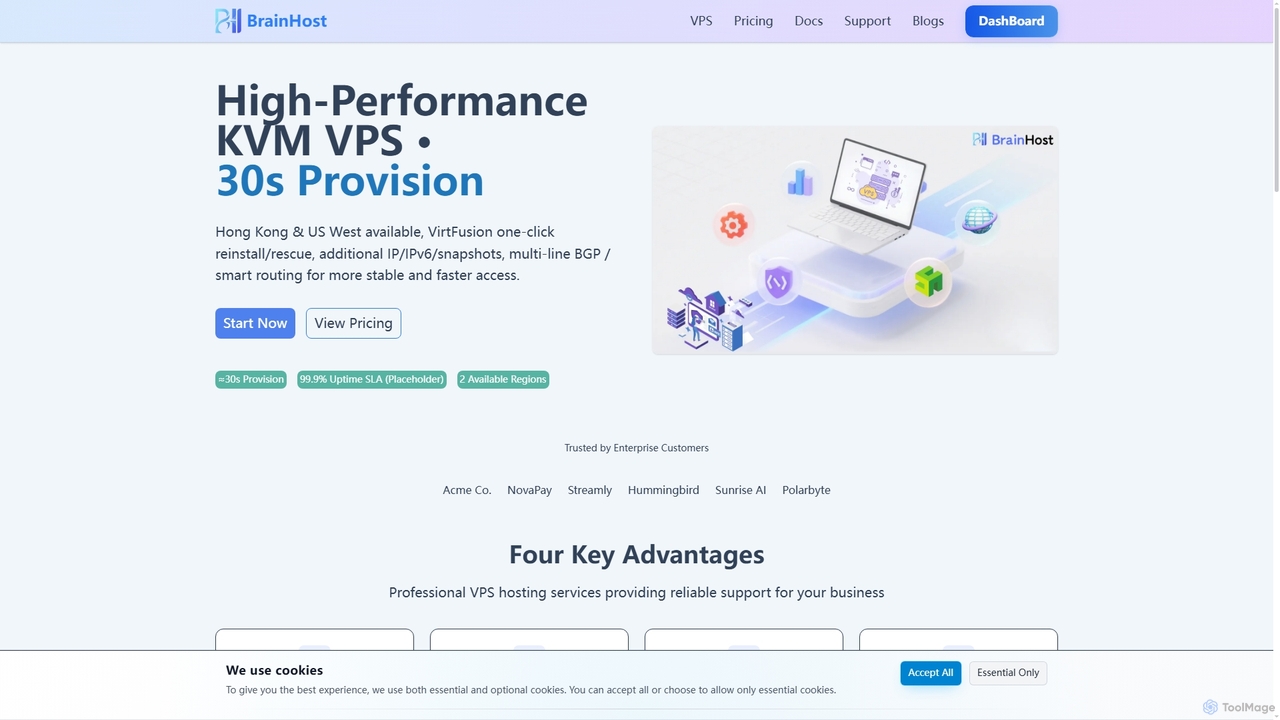
BrainHost offers high-performance KVM VPS hosting with NVMe storage, designed for speed and reliability. Featuring 30-second provisioning, global data centers in Hong Kong and US West, and the intuitive VirtFusion control panel, it provides a robust infrastructure for websites, e-commerce, AI inference, and gaming applications. Flexible scaling and advanced network routing ensure stable and fast access worldwide.

Vps Hosting
Visits 9.9KFavorites 134Likes 144
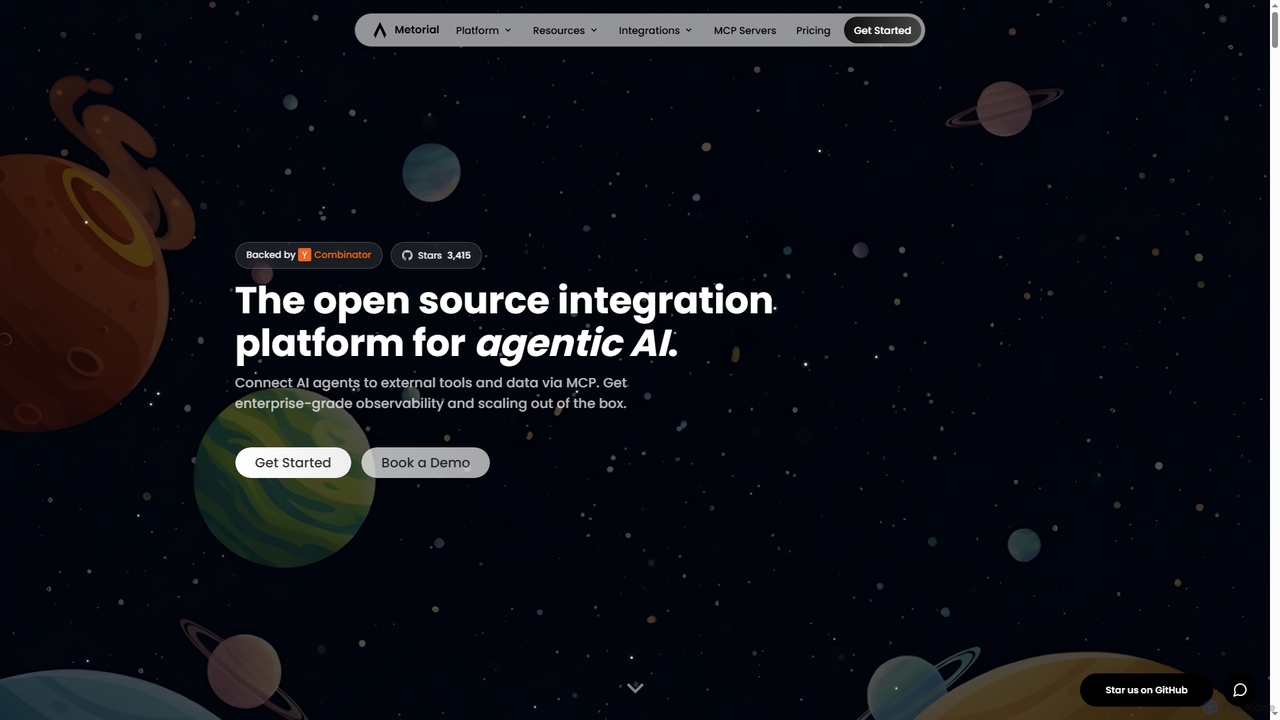
Metorial
Freemium

Metorial

Metorial is an integration platform for AI agents, enabling developers to quickly build, deploy, and monitor powerful agentic AI applications. It provides seamless connections to hundreds of tools, data sources, and APIs via its serverless Model Context Protocol (MCP) platform, offering robust SDKs, observability, and enterprise-grade security for scalable AI solutions.

Agentic Ai
Visits 14.1KFavorites 139Likes 146

About Cloud Computing

Cloud Computing refers to the on-demand delivery of computing services—including servers, storage, databases, networking, software, and analytics—over the Internet. This model allows organizations to consume computing resources as a utility, paying only for what they use, rather than owning and maintaining physical data centers. It provides unparalleled flexibility, scalability, and cost-efficiency, enabling businesses to innovate faster and operate globally.

Core Features

  • Infrastructure as a Service (IaaS): Provides virtualized computing resources over the internet, including virtual machines, storage, and networks.
  • Platform as a Service (PaaS): Offers a complete development and deployment environment in the cloud, with resources for application development, testing, and hosting.
  • Software as a Service (SaaS): Delivers ready-to-use applications over the internet, managed entirely by a third-party vendor.
  • Scalability & Elasticity: Automatically adjusts computing resources up or down based on demand, ensuring optimal performance and cost.
  • Global Accessibility: Resources and applications can be accessed from anywhere with an internet connection, facilitating remote work and global operations.

Use Cases

Cloud computing is widely adopted across various sectors for diverse needs. Businesses leverage it for hosting websites and web applications, ensuring high availability and performance even during traffic spikes. It also supports big data analytics, allowing organizations to process and analyze vast datasets to extract valuable insights for strategic decision-making. Furthermore, it provides robust infrastructure for disaster recovery and backup solutions, safeguarding critical data and ensuring business continuity.

How to Choose

Selecting the right cloud computing solution involves evaluating several key factors. Consider your specific workload requirements, such as processing power, storage needs, and network bandwidth. Assess the level of control and management you require, choosing between IaaS, PaaS, or SaaS models. Evaluate security features, compliance certifications, and data residency options to meet regulatory demands. Finally, compare pricing models, support services, and vendor lock-in risks to ensure long-term cost-effectiveness and flexibility.

Featured tool rankings

Cloud Computing use cases

1

Hosting Web Applications and Websites

Developers and businesses utilize cloud computing to host scalable web applications and dynamic websites. By leveraging cloud servers and databases, they can ensure high availability, rapid deployment, and automatic scaling to handle varying user traffic, reducing infrastructure management overhead.

2

Big Data Analytics and Machine Learning

Data scientists and analysts employ cloud platforms for processing and analyzing massive datasets. Cloud computing provides elastic compute power and specialized services (like managed Hadoop or Spark clusters, GPU instances) to run complex machine learning models and extract insights efficiently, without large upfront hardware investments.

3

Disaster Recovery and Data Backup

Enterprises implement cloud-based solutions for robust disaster recovery and data backup strategies. Critical data and applications are replicated to secure, geographically dispersed cloud data centers, ensuring business continuity and rapid recovery in case of local outages or data loss events.

4

Software Development and Testing Environments

Development teams use cloud computing to provision on-demand development, testing, and staging environments. This enables rapid iteration, parallel development, and consistent environments across teams, accelerating the software development lifecycle and reducing hardware procurement delays.

5

Internet of Things (IoT) Data Ingestion and Processing

Organizations managing IoT devices rely on cloud computing to ingest, store, and process vast streams of data generated by sensors and connected devices. Cloud platforms offer scalable messaging queues, data lakes, and real-time analytics services to derive actionable insights from IoT data.

6

Enterprise Resource Planning (ERP) and Customer Relationship Management (CRM) Hosting

Businesses migrate their core ERP and CRM systems to the cloud to enhance accessibility, reduce maintenance costs, and improve scalability. Cloud hosting ensures these critical business applications are always available, performant, and securely managed by cloud providers, allowing companies to focus on their core operations.

Cloud Computing FAQ

What is Cloud Computing?

Cloud Computing is the on-demand delivery of computing services—including servers, storage, databases, networking, software, and analytics—over the Internet. Instead of owning and maintaining physical computing infrastructure, you can access these resources from a cloud provider like AWS, Azure, or Google Cloud, paying only for what you use. This model offers significant benefits in terms of flexibility, scalability, and cost-efficiency for businesses and individuals.

How does Cloud Computing work?

Cloud computing works by pooling vast amounts of computing resources (servers, storage, network) in large data centers owned by cloud providers. When you use cloud services, you access these virtualized resources over the internet. The provider manages the underlying physical infrastructure, while you consume services like virtual machines (IaaS), development platforms (PaaS), or ready-to-use applications (SaaS) on demand. This abstraction allows users to focus on their applications and data, not the hardware.

What are the main types of Cloud Computing services?

The three main types of Cloud Computing services are Infrastructure as a Service (IaaS), Platform as a Service (PaaS), and Software as a Service (SaaS). IaaS provides fundamental computing resources like virtual machines and storage. PaaS offers a complete environment for developing, running, and managing applications. SaaS delivers fully functional applications over the internet, ready for end-users. Each type offers different levels of management and flexibility.
What are the benefits of using Cloud Computing?

The benefits of Cloud Computing include significant cost savings by eliminating the need for large upfront hardware investments and reducing operational expenses. It offers immense scalability and elasticity, allowing resources to be adjusted instantly based on demand. Cloud services also provide enhanced reliability, global accessibility, and robust security measures managed by expert providers, enabling businesses to focus on innovation rather than infrastructure maintenance.

Is Cloud Computing secure?

Cloud computing can be highly secure, often more so than on-premises solutions, due to the extensive security investments made by major cloud providers. They employ advanced security technologies, strict compliance standards, and dedicated security teams. However, security is a shared responsibility: providers secure the "cloud itself," while users are responsible for securing their data and applications "in the cloud," including proper configuration, access management, and data encryption.