
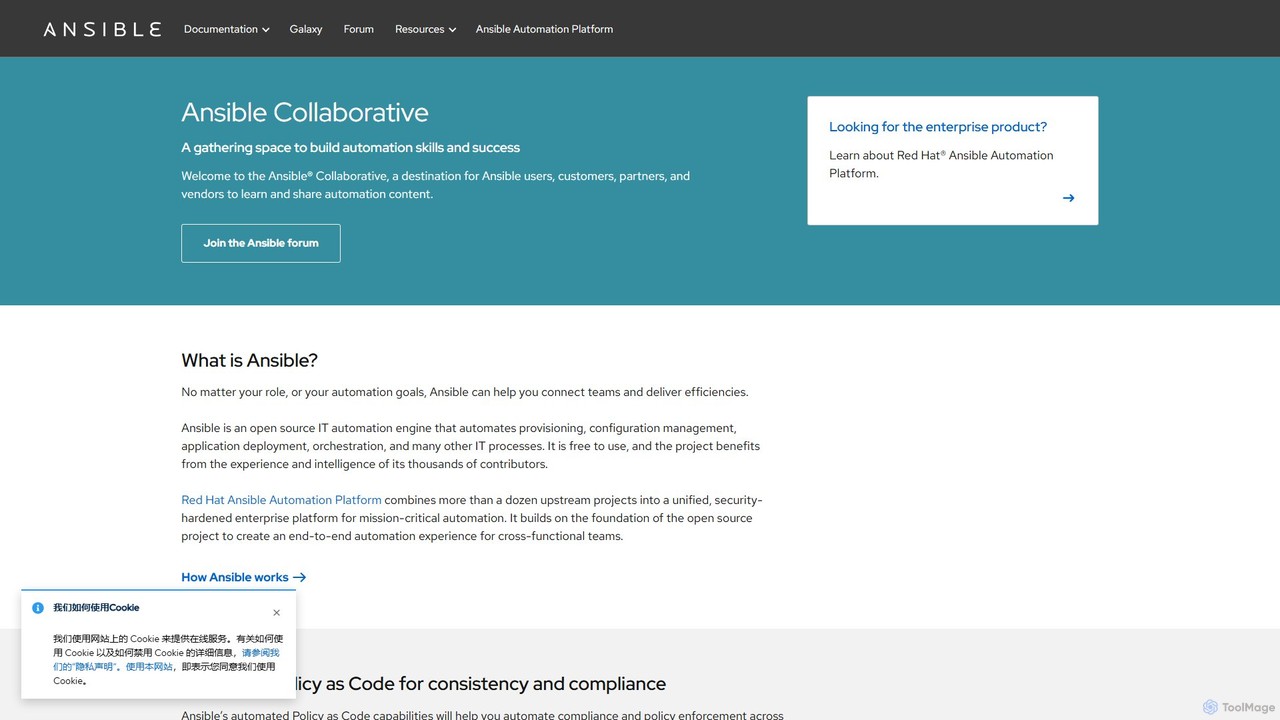
Ansible Collaborative Overview
Ansible Collaborative is the official gathering space for the entire Ansible community, including users, customers, partners, and developers. It serves as a comprehensive resource hub designed to help individuals and organizations build their automation skills and achieve success. At its core, Ansible is a powerful open-source IT automation engine that simplifies and accelerates processes like application deployment, configuration management, cloud provisioning, and intra-service orchestration. It is renowned for its simplicity, using human-readable YAML for its playbooks, and its agentless architecture, which eliminates the need to install any client software on managed nodes.
The Collaborative brings together all the essential elements of the Ansible ecosystem. This includes extensive documentation, interactive learning labs, a vibrant community forum for support and discussion, and Ansible Galaxy, a vast repository of pre-packaged automation content known as collections and roles. This ecosystem is built upon Ansible Core, the foundational programming language and framework, and is extended by powerful tools like Event-Driven Ansible for scalable, responsive automation and various developer tools for creating and testing content.
For organizations looking to scale their automation efforts, Ansible Collaborative also serves as the gateway to the Red Hat Ansible Automation Platform. This enterprise-grade platform builds on the open-source foundation, adding enhanced security, full technical support, and advanced capabilities like generative AI (via Ansible Lightspeed with IBM watsonx Code Assistant) and sophisticated analytics to create a unified, end-to-end automation solution for cross-functional teams.
How to use Ansible Collaborative
Getting started with Ansible is a structured process facilitated by the resources in the Collaborative:
- Learn the Basics: Begin with the 'Introduction to Ansible' documentation and interactive labs. These resources provide a hands-on experience to understand fundamental concepts like inventories, modules, and playbooks.
- Write Your First Playbook: Use what you've learned to create a simple Ansible Playbook. Playbooks are YAML files that describe the desired state of your systems.
- Leverage Community Content: Explore Ansible Galaxy to find pre-built 'collections' and 'roles' for common tasks, such as managing a web server, configuring a database, or provisioning cloud infrastructure. This significantly accelerates your automation projects.
- Build and Test: Utilize developer tools like 'ansible-builder' to create consistent automation execution environments and 'ansible-navigator' to run and troubleshoot your playbooks.
- Engage with the Community: Join the Ansible forum to ask questions, share your solutions, and collaborate with thousands of other users and experts.
- Scale with the Platform: When ready, explore the Red Hat Ansible Automation Platform to implement enterprise-wide, event-driven, and AI-powered automation.
Core Features of Ansible Collaborative
- Agentless Architecture: Ansible communicates over standard SSH (for Linux/Unix) and WinRM (for Windows), requiring no agents to be installed on managed systems, which simplifies management and enhances security.
- Human-Readable Automation (YAML): Ansible Playbooks are written in YAML, a simple and declarative data serialization language that is easy for both humans and machines to understand.
- Ansible Galaxy: A central repository for discovering, reusing, and sharing Ansible content. It hosts thousands of collections that provide ready-to-use automation for a wide range of technologies.
- Event-Driven Ansible: A key capability (fully featured in the Ansible Automation Platform) that allows you to create rulebooks to automatically trigger automation tasks in response to events from monitoring tools, ticket systems, and other IT services.
- Policy as Code: Automate and enforce compliance and security policies across your entire IT infrastructure, ensuring consistency and reducing manual audit efforts.
- Extensibility and Integrations: A massive ecosystem of modules and collections allows Ansible to integrate with and automate virtually any technology, including cloud providers (AWS, Azure, Google Cloud), networking devices, security tools, and container platforms (Kubernetes, OpenShift).
- Generative AI Integration: The Red Hat Ansible Automation Platform integrates with Ansible Lightspeed, which uses generative AI to help developers write Ansible Playbooks more efficiently by converting natural language prompts into YAML code.
Use Cases for Ansible Collaborative
Ansible is versatile and can be applied across numerous IT domains:
- Provisioning: Automate the creation of servers, virtual machines, cloud instances, and network devices.
- Configuration Management: Ensure that systems are configured consistently and that their state does not drift from the desired baseline.
- Application Deployment: Define and manage the entire lifecycle of an application, from deploying code to managing updates and rollbacks.
- Continuous Delivery (CI/CD): Integrate Ansible into CI/CD pipelines to automate the build, testing, and deployment phases of software development.
- Security Automation: Automate security tasks like applying patches, configuring firewalls, managing user access, and responding to security incidents.
- Orchestration: Coordinate complex workflows that span multiple systems, services, and teams, such as orchestrating a multi-tier application deployment.
Advantages of Ansible Collaborative
The primary advantages of using Ansible and its collaborative ecosystem include:
- Simplicity and Ease of Use: The human-readable nature of YAML lowers the barrier to entry for automation.
- Powerful and Flexible: Capable of handling everything from simple tasks to complex, multi-tier orchestrations.
- Strong Community Support: Access to a vast, active community provides a wealth of shared knowledge, best practices, and pre-built automation content.
- Increased Productivity: Automating repetitive tasks frees up IT teams to focus on strategic initiatives and innovation.
- Improved Reliability and Consistency: Automation reduces the risk of human error, leading to more stable and predictable IT environments.
- Enterprise-Ready Path: Provides a clear and seamless migration path from open-source Ansible to the fully supported, security-hardened Red Hat Ansible Automation Platform.
Pricing and Plans
Ansible follows a freemium model:
- Ansible (Open Source Project): The core Ansible automation engine and associated community tools are completely free and open source. You can download, use, and modify them without any cost.
- Ansible Collaborative: Access to the community hub, including forums, documentation, and Ansible Galaxy, is free for everyone.
- Red Hat Ansible Automation Platform: This is the commercial, enterprise-grade offering. It is sold on a subscription basis, which includes technical support, certified content, and advanced features like Event-Driven Ansible, analytics, and generative AI. Pricing is available upon request by contacting the Red Hat sales team.
Traffic
Latest traffic
Status
Monthly traffic trend
- 2026-1: 3.6M
- 2026-2: 3.5M
- 2026-3: 4.0M
- 2026-4: 3.5M
- 2026-5: 3.5M
Geography
Top 5 countries / regions
- 🇺🇸United States49.5%
- 🇮🇳India26.6%
- 🇯🇵Japan11.6%
- 🇩🇪Germany6.3%
- 🇰🇷South Korea6.0%
Traffic sources
| Source type | Percentage |
|---|---|
Direct | 72.0% |
Referral | 22.1% |
Email | 5.9% |
Top keywords
| Keyword | Cost per click |
|---|---|
| cve-2026-31431 | $0.00 |
| linux | $1.34 |
| red hat | $3.01 |
| redhat | $2.60 |
| tmux | $1.72 |
Ansible Collaborative Alternatives
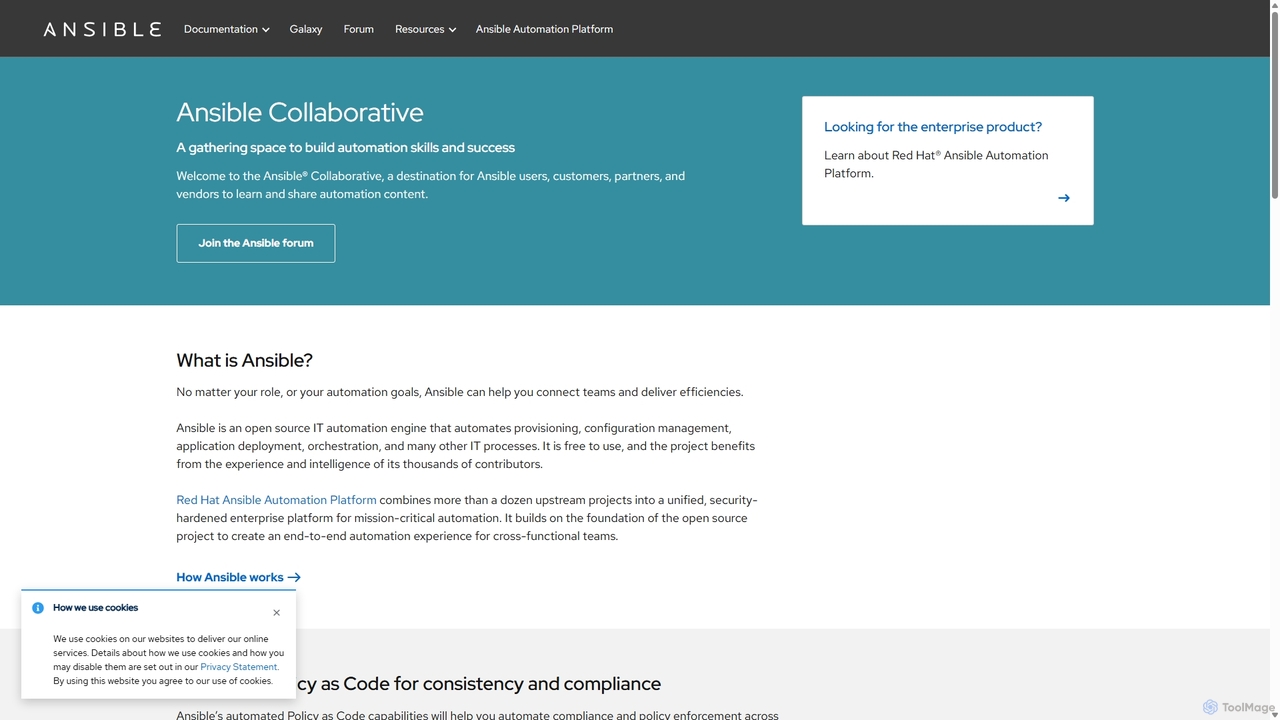
Ansible
Ansible is a powerful open-source IT automation engine that simplifies application deployment, configuration management, and orchestration. Using human-readable YAML, it automates complex IT processes without requiring agents on managed nodes, making it simple, efficient, and secure for DevOps, system administrators, and developers.
Devops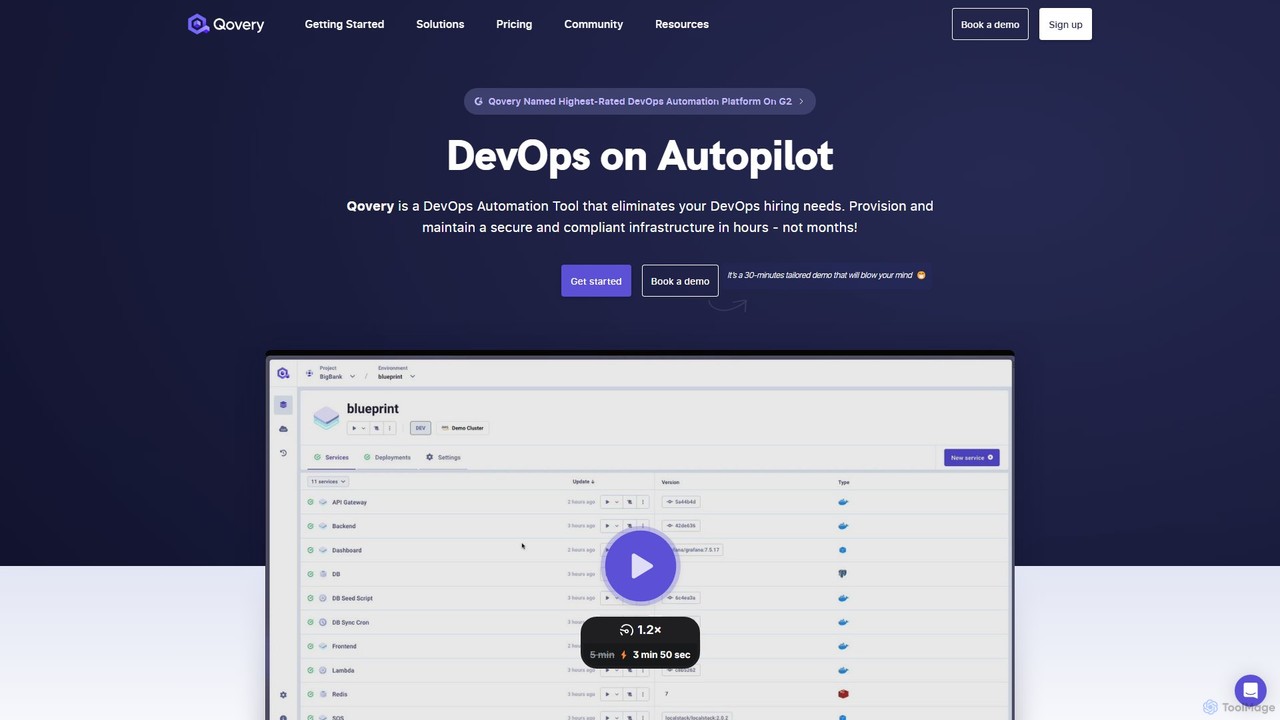
Qovery
Qovery is a DevOps Automation Platform that provides self-service infrastructure for developers. It automates environment provisioning, accelerates deployment cycles, and optimizes cloud costs on AWS, Azure, and GCP, eliminating the need for extensive DevOps hiring.
Infrastructure As Code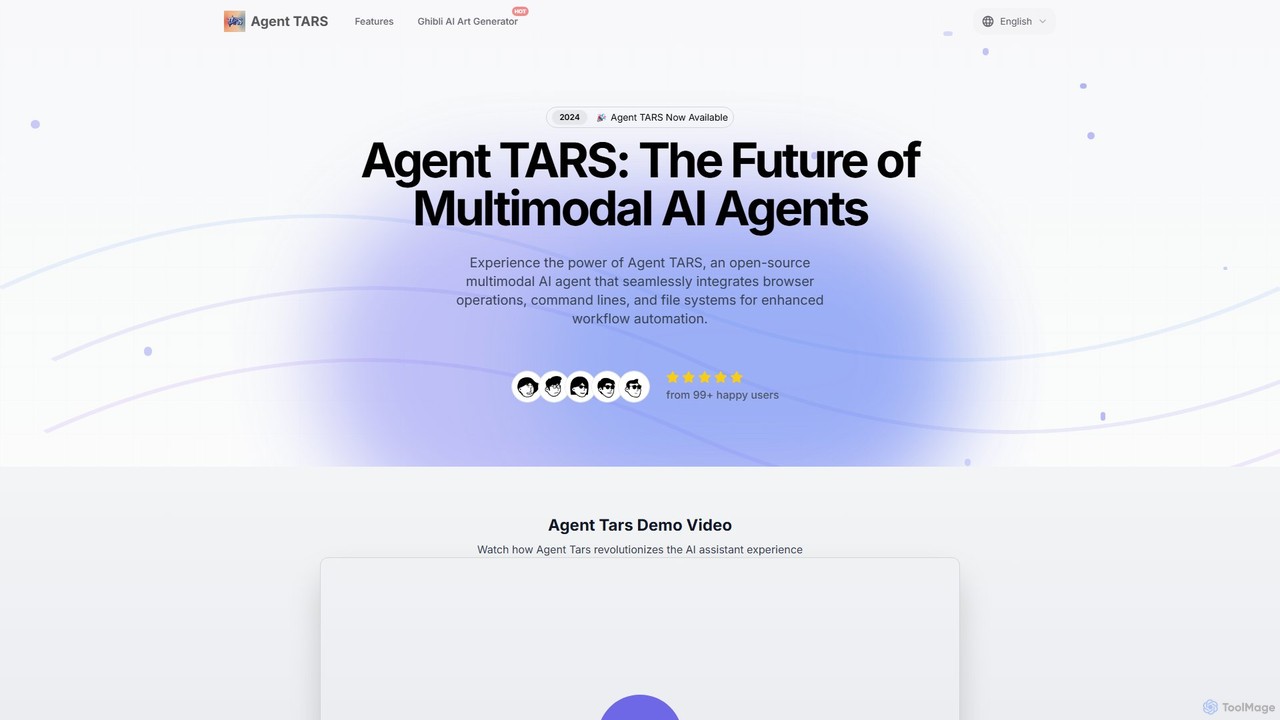
Agent TARS
Agent TARS is a powerful, open-source multimodal AI agent designed for developers and teams. It automates complex workflows by seamlessly integrating browser operations, command-line interfaces, and file systems. Leveraging visual interpretation and sophisticated reasoning, it efficiently handles diverse tasks, from advanced browser automation to intricate tool integrations, boosting productivity and streamlining development processes.
Autonomous Agent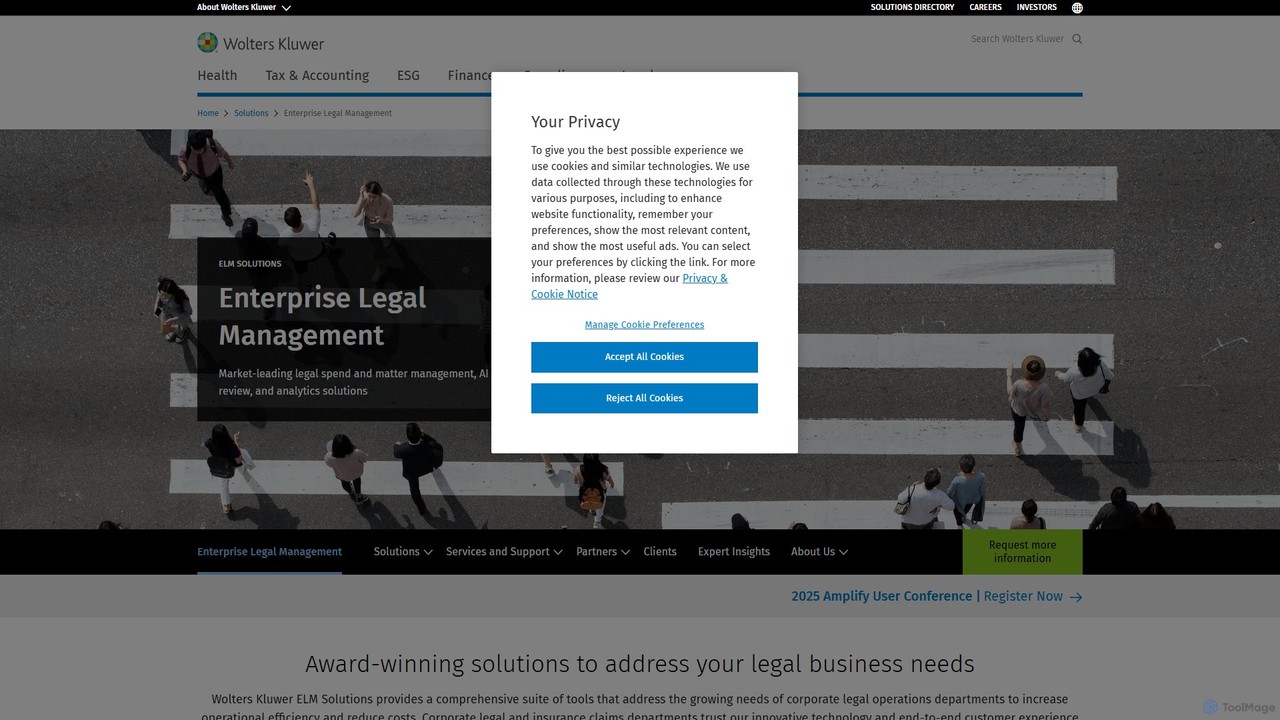
Wolters Kluwer ELM Solutions
An AI-powered Enterprise Legal Management (ELM) platform for corporate legal departments. It streamlines matter management, controls legal spend with intelligent e-billing, and provides data-driven insights to mitigate risk and optimize legal operations.
Enterprise Resource Planning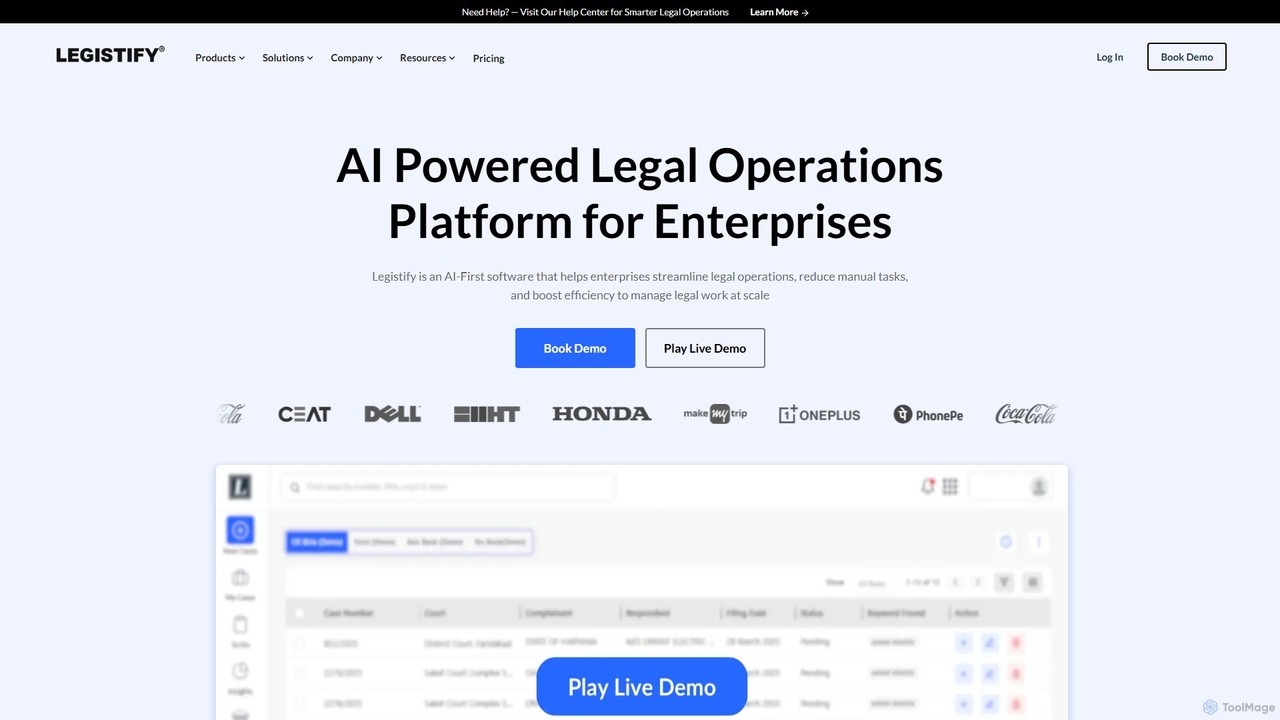
Legistify
Legistify is an AI-powered, end-to-end legal operations software for modern teams. It streamlines contract lifecycle management, litigation, intellectual property protection, and legal notices through a unified platform called LegisTrak, enhancing efficiency and reducing risk.
Enterprise SoftwareAnsible Collaborative Categories
Ansible Collaborative Embed Widget
Copy this embed code to place the badge on your blog, article, or product site and send readers directly to this ToolMage detail page.

Related AI tools
Ansible
Ansible is a powerful open-source IT automation engine that simplifies application deployment, configuration management, and orchestration. Using human-readable YAML, it automates complex IT processes without requiring agents on managed nodes, making it simple, efficient, and secure for DevOps, system administrators, and developers.
Devops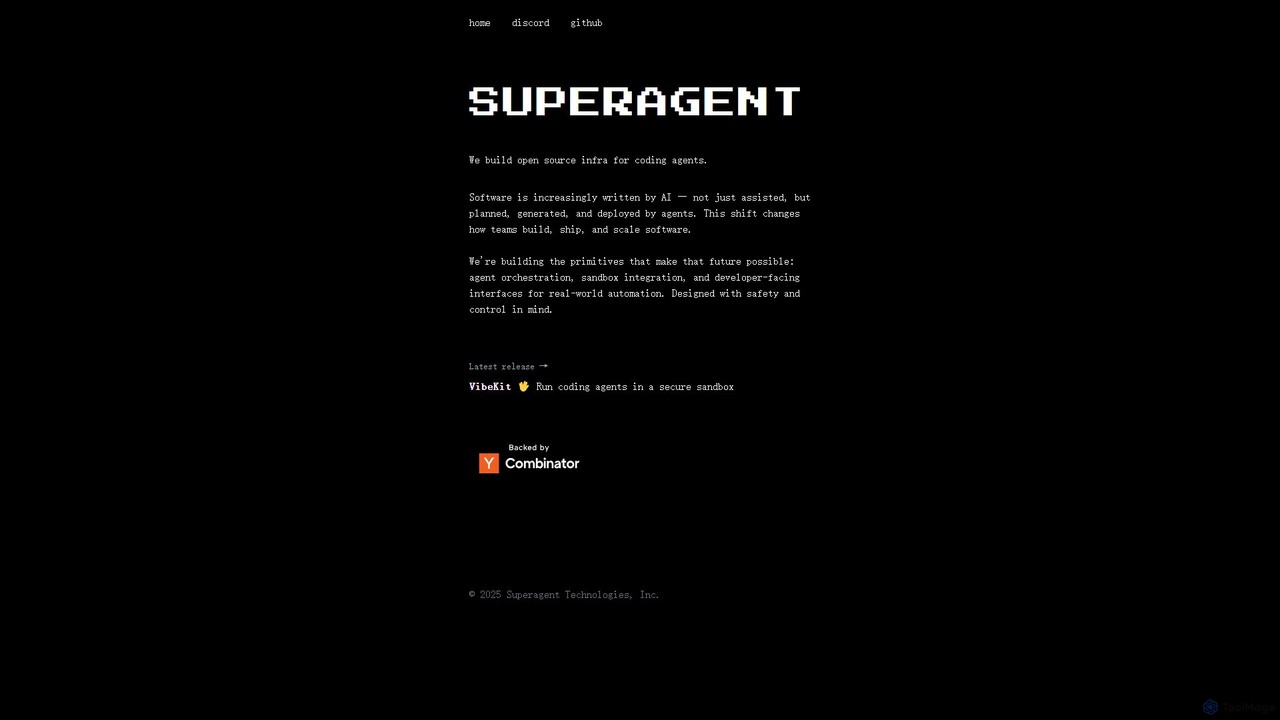
Superagent
Superagent is an open-source infrastructure for building, managing, and deploying autonomous AI coding agents. Designed for developers, it provides the essential primitives like agent orchestration, secure sandbox integration (VibeKit), and developer-friendly interfaces. This framework empowers teams to automate complex software development tasks, from feature generation and bug fixing to CI/CD management, shifting software creation into a new, AI-driven era with a strong emphasis on safety and control.
Orchestration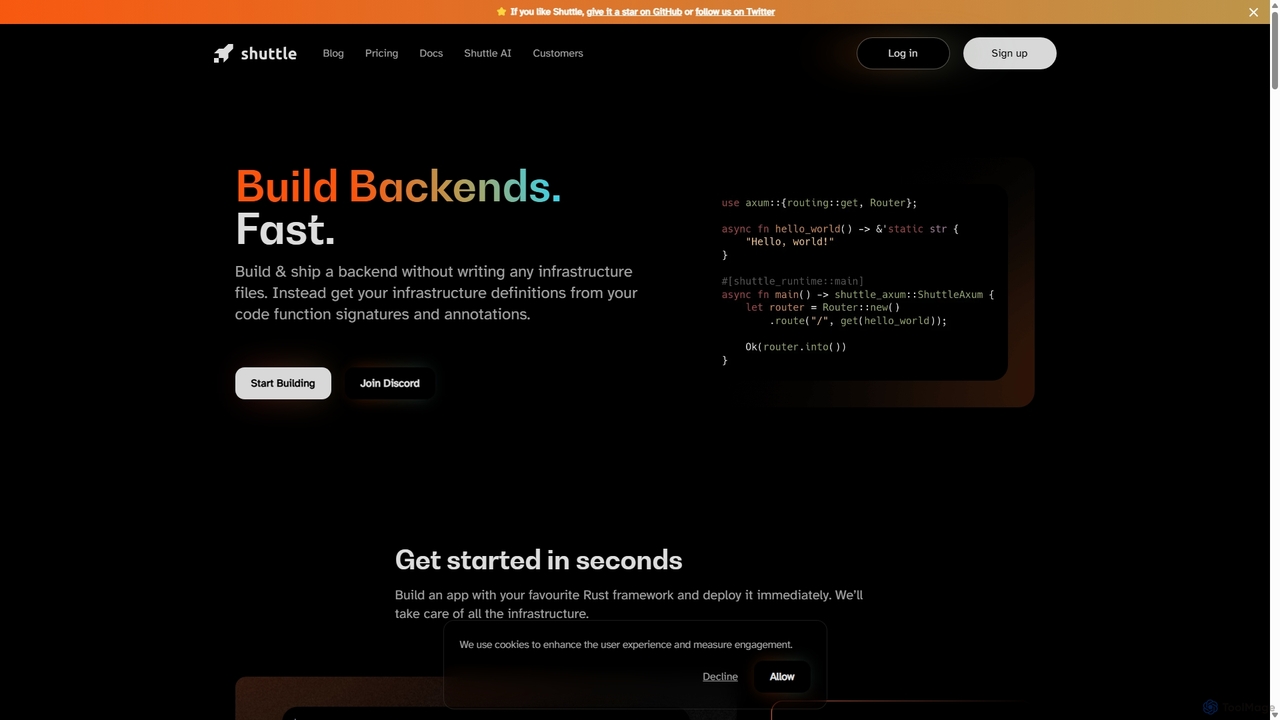
Shuttle
Shuttle is an open-source cloud platform designed to accelerate backend development in Rust. It eliminates infrastructure management by allowing developers to provision resources like databases and secrets directly within their code using simple annotations. Focus on building your application, and let Shuttle handle the deployment and scaling.
Backend Development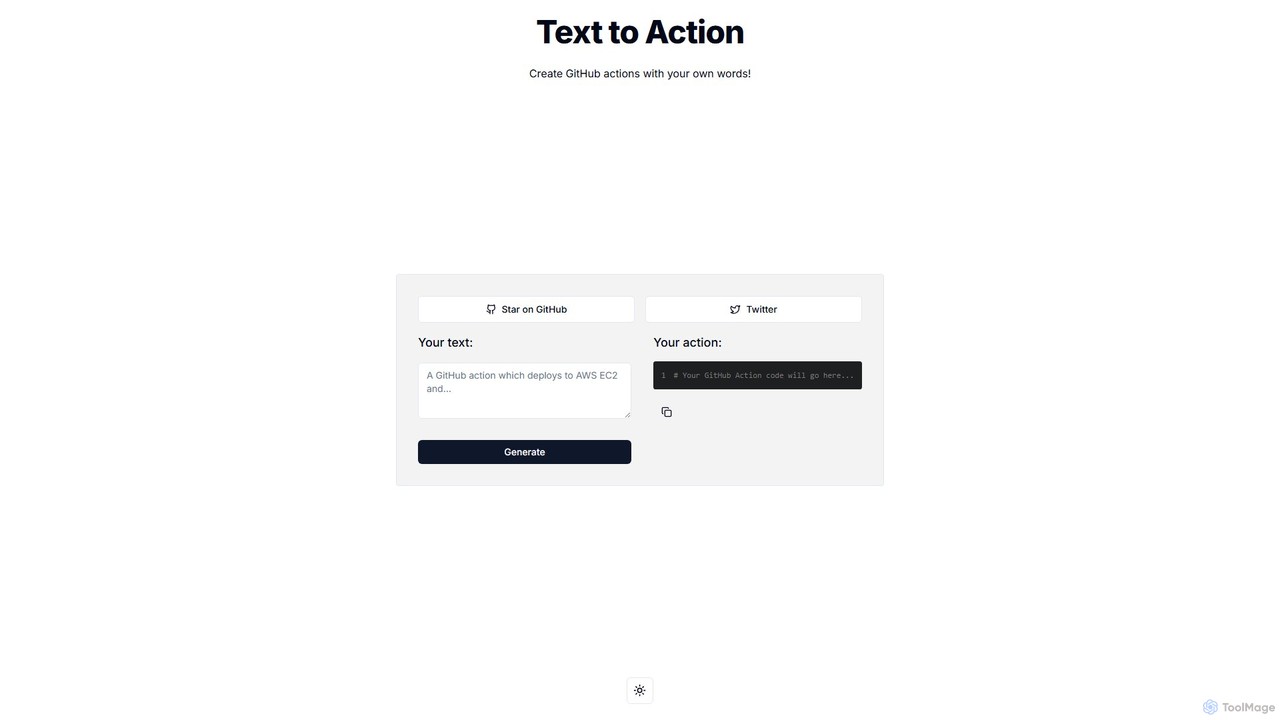
Text to Action
Text to Action is an AI-powered tool that translates natural language descriptions into functional GitHub Actions code. Simply describe your desired workflow in plain English, and the tool will generate the corresponding YAML configuration file, streamlining the CI/CD and automation process for developers.
Ci CdQovery
Qovery is a DevOps Automation Platform that provides self-service infrastructure for developers. It automates environment provisioning, accelerates deployment cycles, and optimizes cloud costs on AWS, Azure, and GCP, eliminating the need for extensive DevOps hiring.
Infrastructure As CodeAgent TARS
Agent TARS is a powerful, open-source multimodal AI agent designed for developers and teams. It automates complex workflows by seamlessly integrating browser operations, command-line interfaces, and file systems. Leveraging visual interpretation and sophisticated reasoning, it efficiently handles diverse tasks, from advanced browser automation to intricate tool integrations, boosting productivity and streamlining development processes.
Autonomous Agent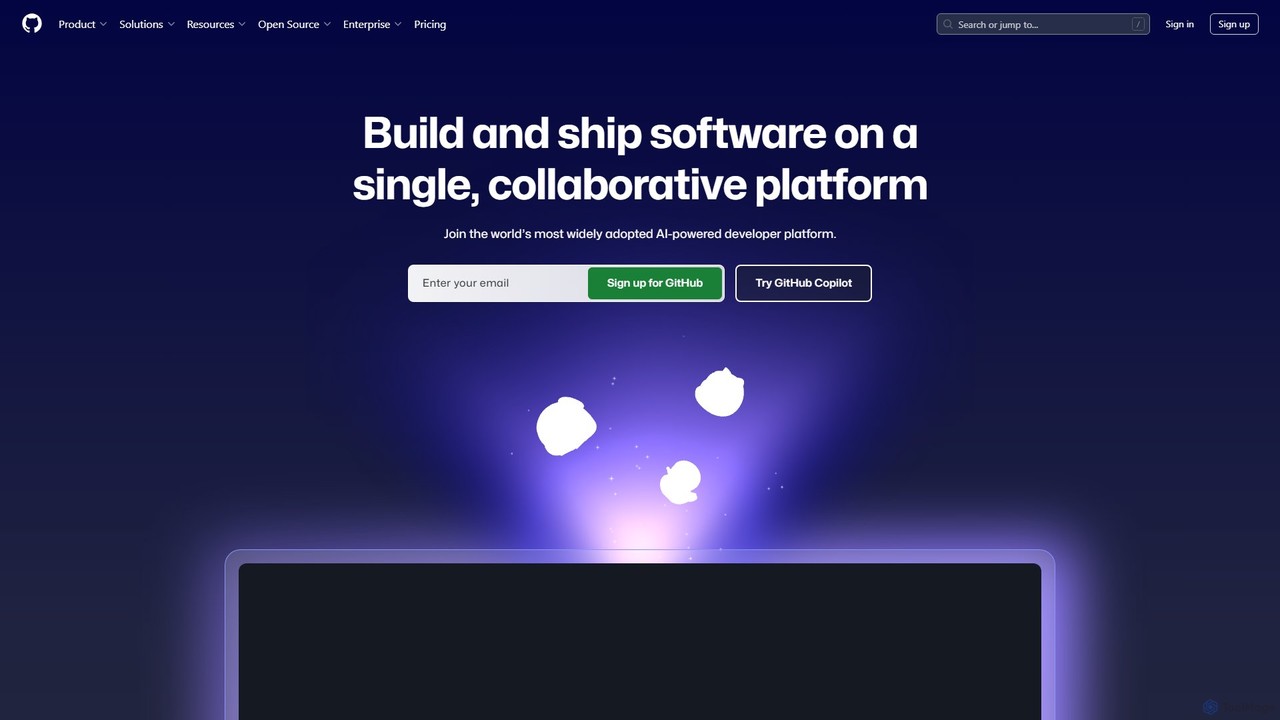
GitHub
GitHub is the world's leading AI-powered developer platform for building, shipping, and maintaining software. It provides Git-based version control, collaborative tools, and a complete DevOps lifecycle, supercharged by GitHub Copilot, an advanced AI code assistant that accelerates development and enhances code quality.
Code Assistant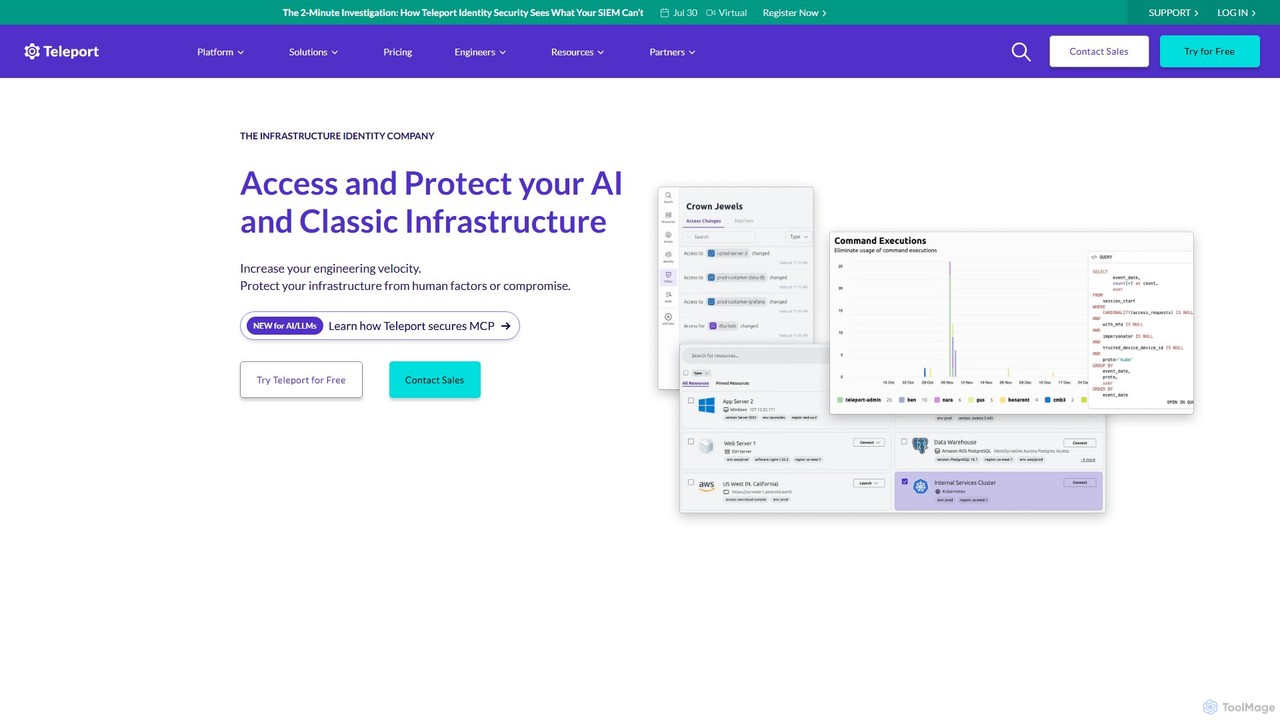
goteleport
goteleport is an identity-native infrastructure access platform that provides secure, zero-trust access to servers, applications, and data. It unifies identity, access, and policy for humans, machines, and AI agents, eliminating credentials and reducing the attack surface while improving engineering productivity.
Infrastructure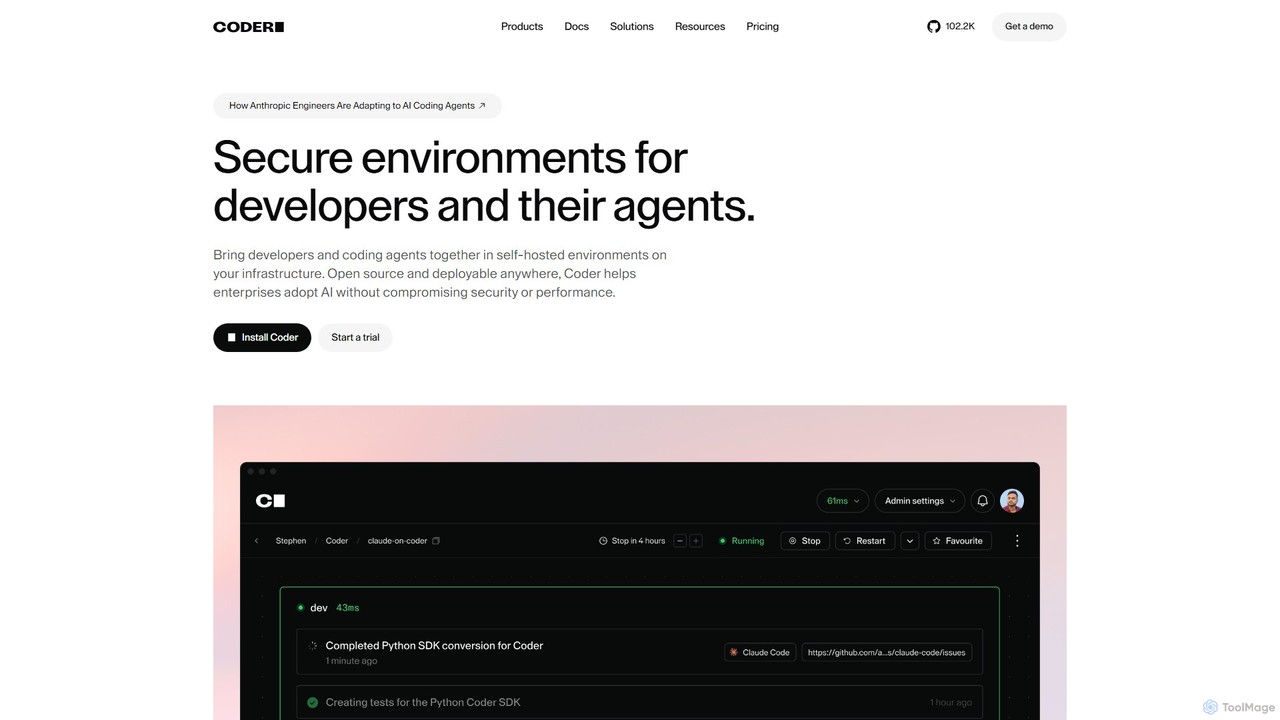
Coder
Coder is a self-hosted, open-source platform for creating secure and scalable Cloud Development Environments (CDEs). It empowers enterprises to manage developer and AI agent workspaces on their own infrastructure, ensuring consistency, accelerating onboarding, and maintaining full control over security and compliance.
Developer Tools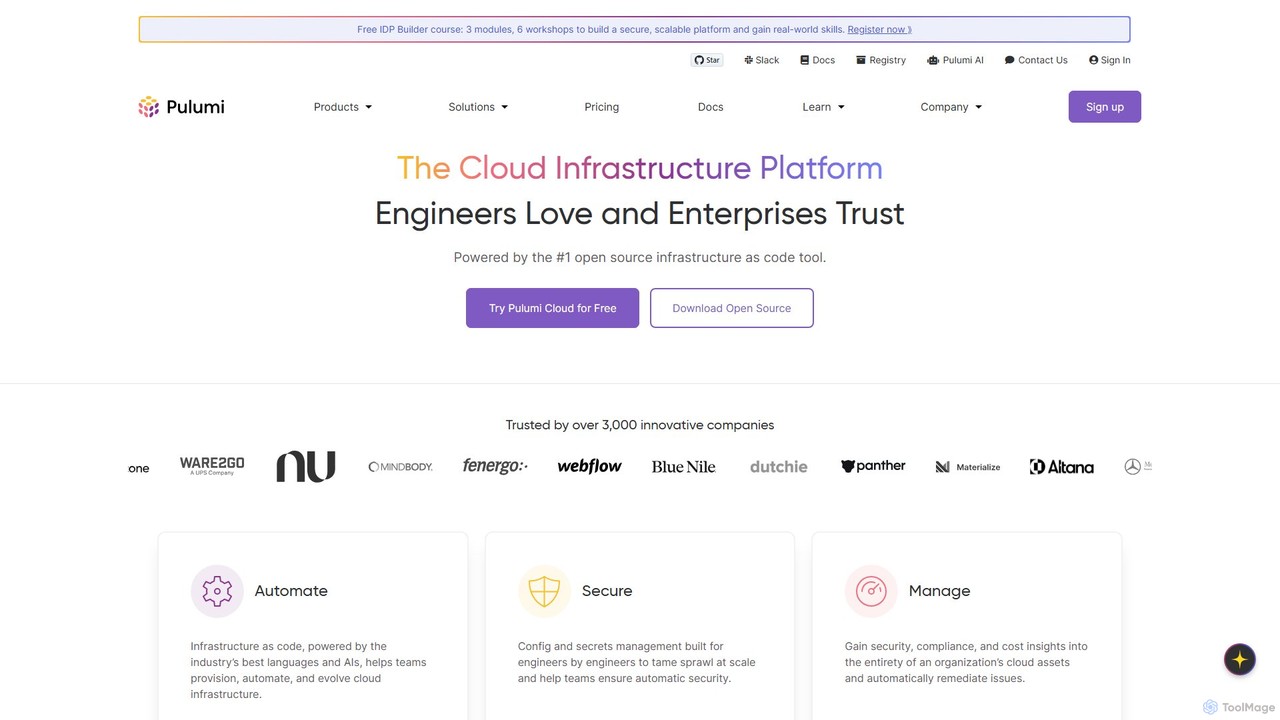
Pulumi
Pulumi is a universal Infrastructure as Code (IaC) platform that allows developers and infrastructure teams to build, deploy, and manage cloud infrastructure using familiar programming languages like Python, TypeScript, Go, and C#. It integrates AI to enhance security, compliance, and operational efficiency.
Management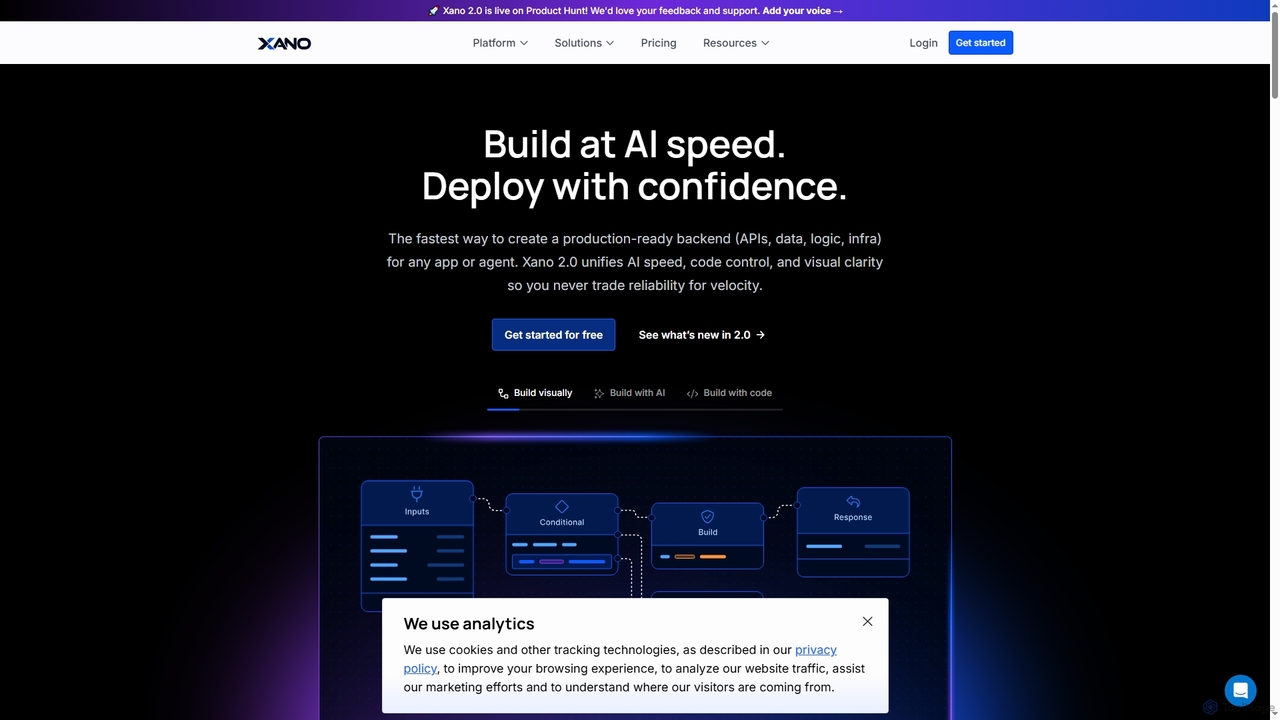
Xano
Xano is a scalable no-code backend platform that empowers developers and teams to build production-ready applications and AI agents at speed. It provides a unified solution for APIs, a managed Postgres database, visual logic, and auto-scaling infrastructure, eliminating the need for complex DevOps.
Agent Building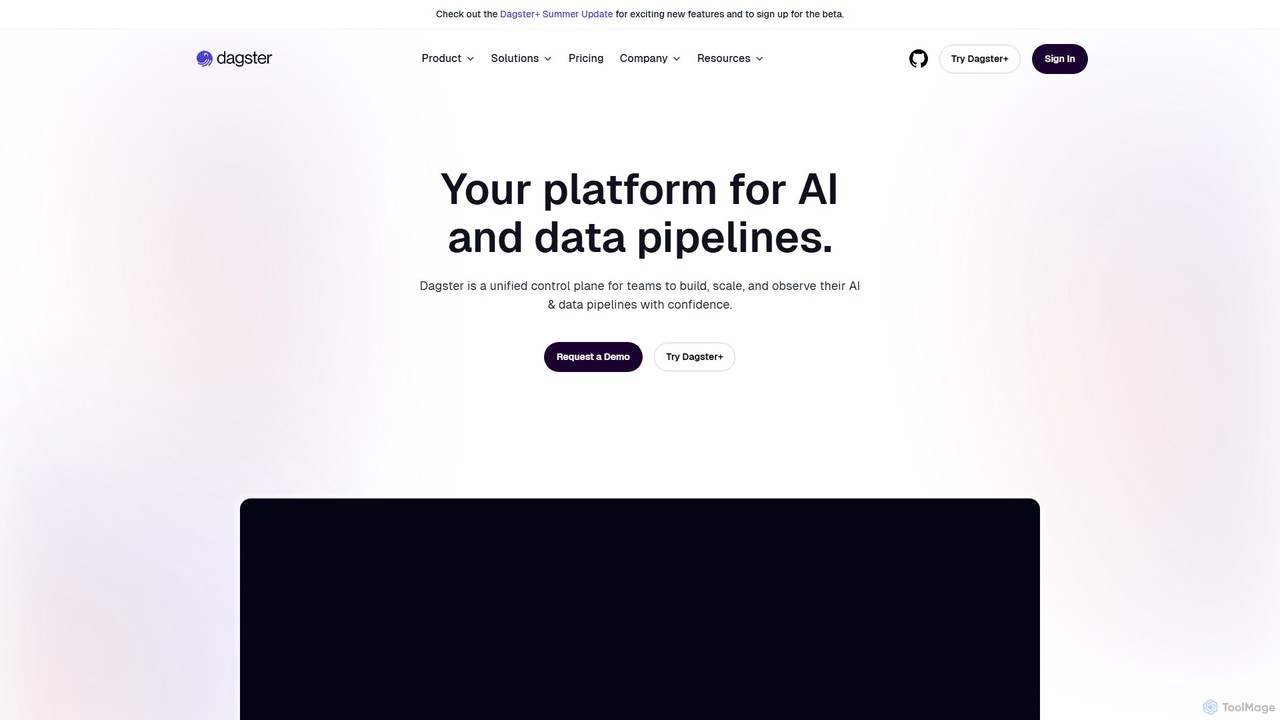
Dagster
Dagster is a modern, open-source data orchestrator designed for building, scaling, and observing AI and data pipelines. It acts as a unified control plane, allowing teams to model data assets, track lineage, and ensure data quality with confidence. By integrating software engineering best practices like local testing and reusable components, Dagster helps data engineers and ML teams ship products faster and more reliably.
Machine Learning Operations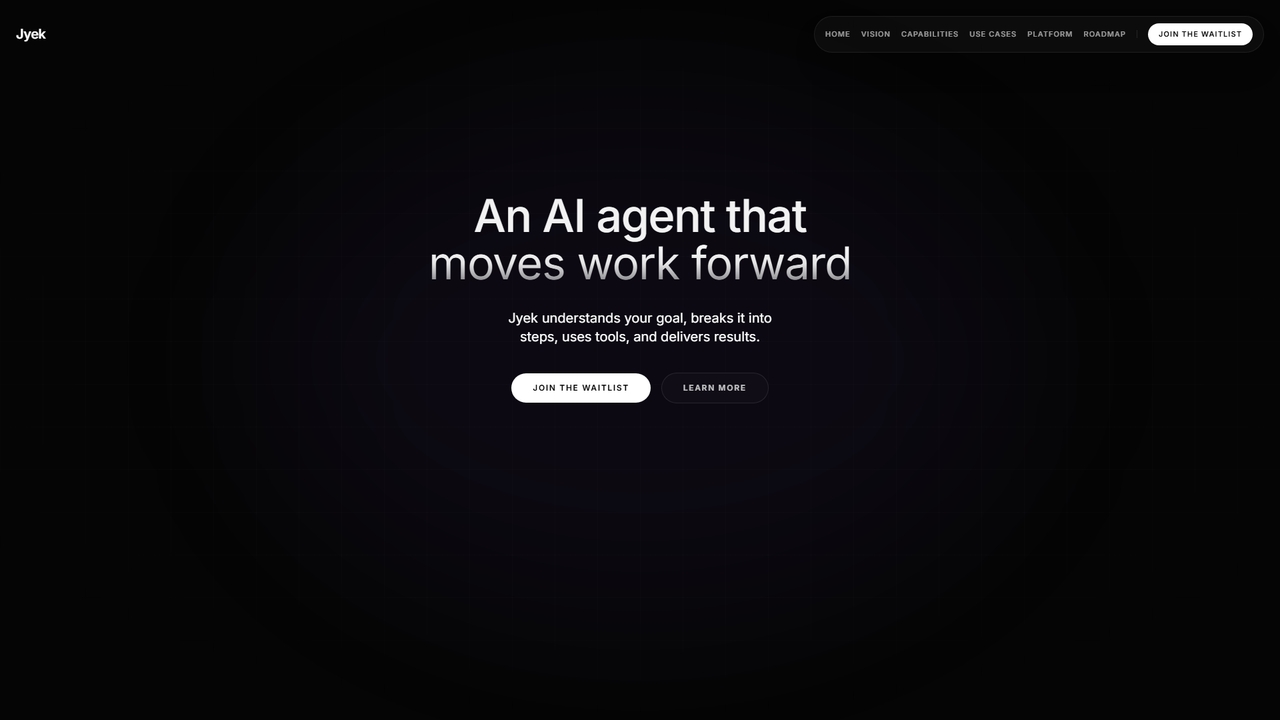
Jyek
Jyek is an AI agent platform that understands objectives, creates execution plans, uses tools, and delivers verifiable results for complex, multi-step tasks.
Automation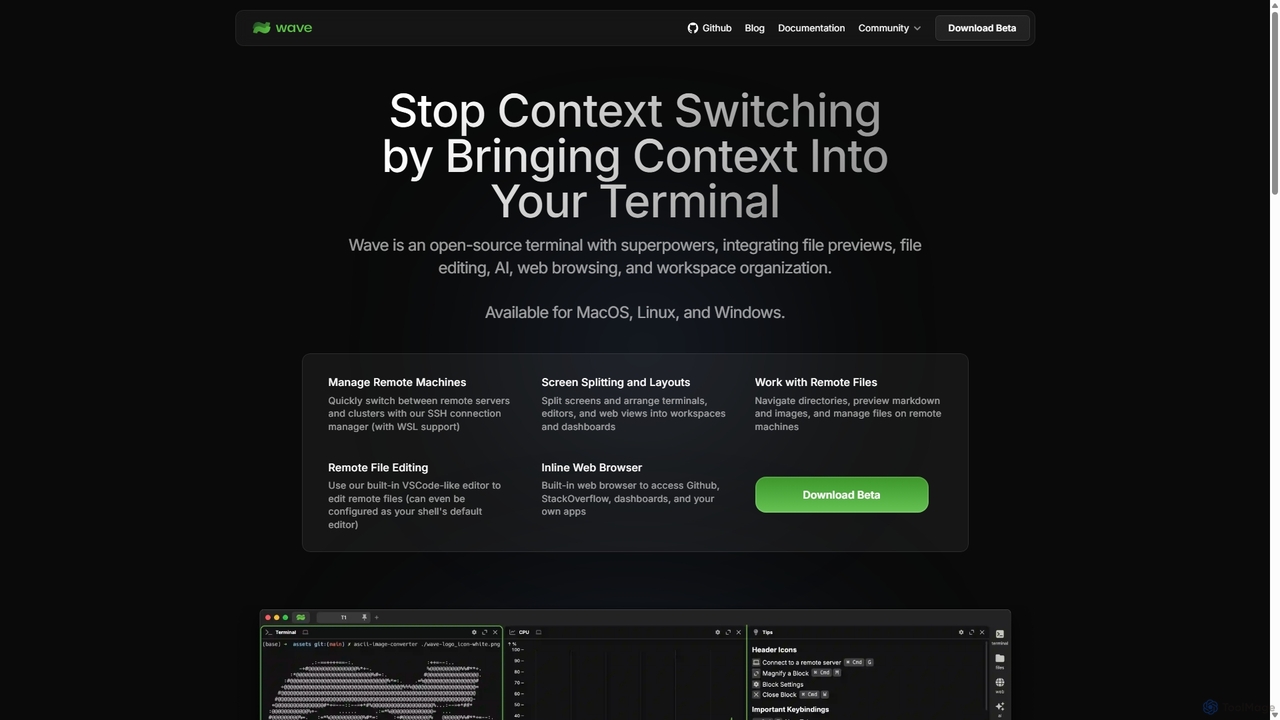
Waveterm
Waveterm is an open-source, modern terminal designed for developers and DevOps engineers. It enhances the command-line experience by integrating AI-powered assistance, a VSCode-like editor, inline file previews, a web browser, and customizable dashboards. This all-in-one workspace reduces context switching and boosts productivity across macOS, Windows, and Linux.
Code Assistant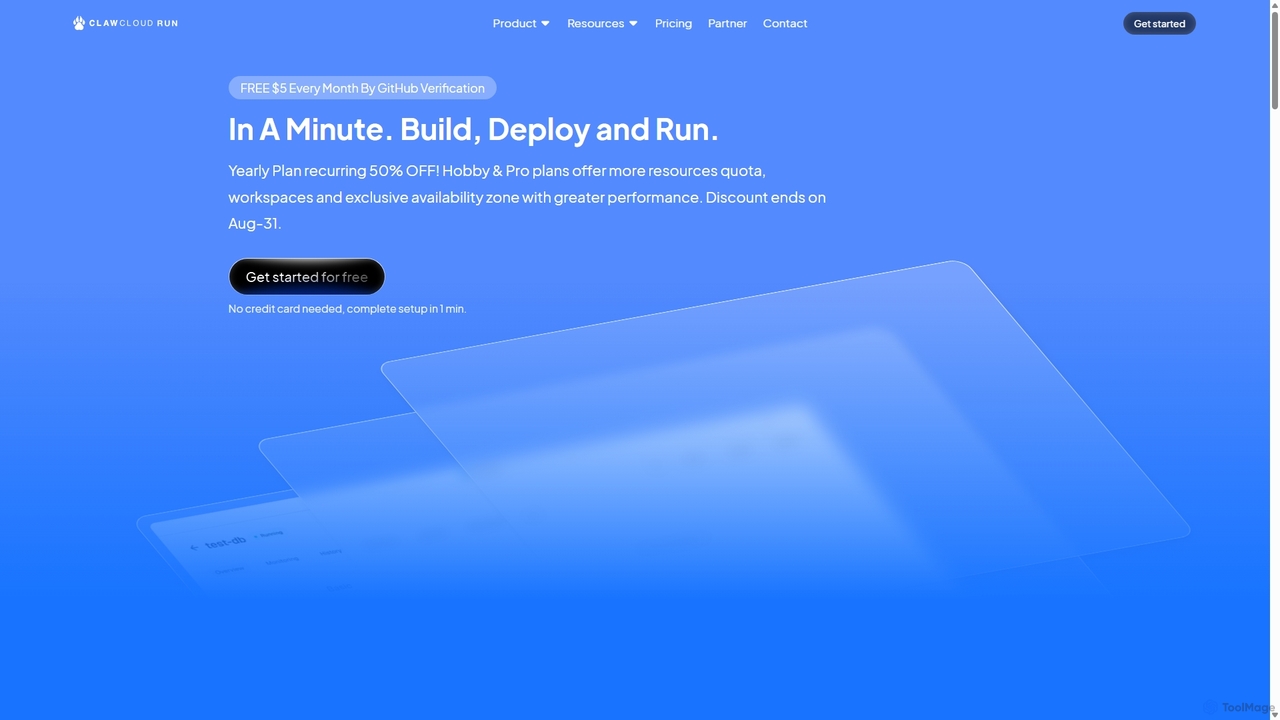
ClawCloud Run
ClawCloud Run is a cloud-native development platform designed to simplify the application lifecycle. It enables developers to build, deploy, manage, and run applications in a unified cloud environment without writing complex YAML files. Featuring a visual canvas, one-click templates, and integrated database management, it accelerates the go-to-market process.
Platform As A Service
Ansible Collaborative Comments (0)
Sign in to comment.
Sign inNo comments yet.