cloudnein
cloudnein is an AI-powered cloud management platform designed to optimize costs, enhance security, and automate operations for AWS, …
cloudnein is an AI-powered cloud management platform designed to optimize costs, enhance security, and automate operations for AWS, GCP, and Azure. It provides intelligent recommendations and proactive insights to help businesses manage their cloud infrastructure efficiently and securely.
Pulumi
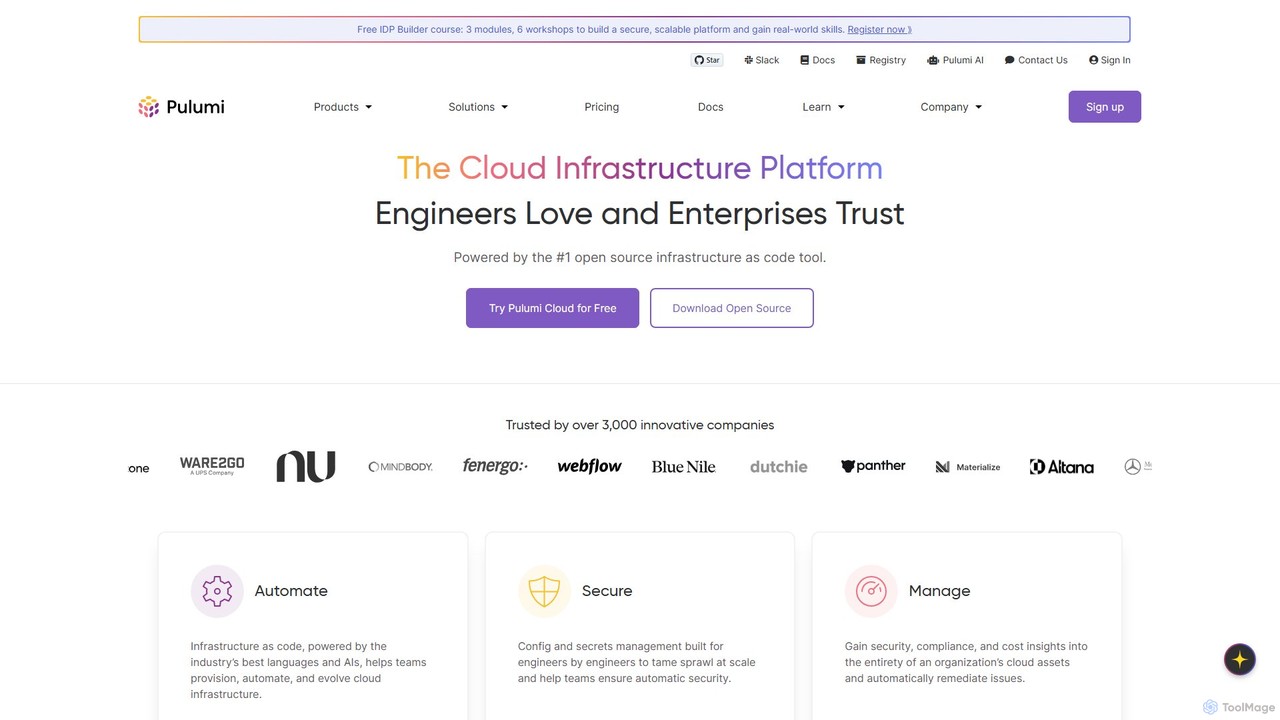
Pulumi is a universal Infrastructure as Code (IaC) platform that allows developers and infrastructure teams to build, deploy, …
Pulumi is a universal Infrastructure as Code (IaC) platform that allows developers and infrastructure teams to build, deploy, and manage cloud infrastructure using familiar programming languages like Python, TypeScript, Go, and C#. It integrates AI to enhance security, compliance, and operational efficiency.
Qubinets
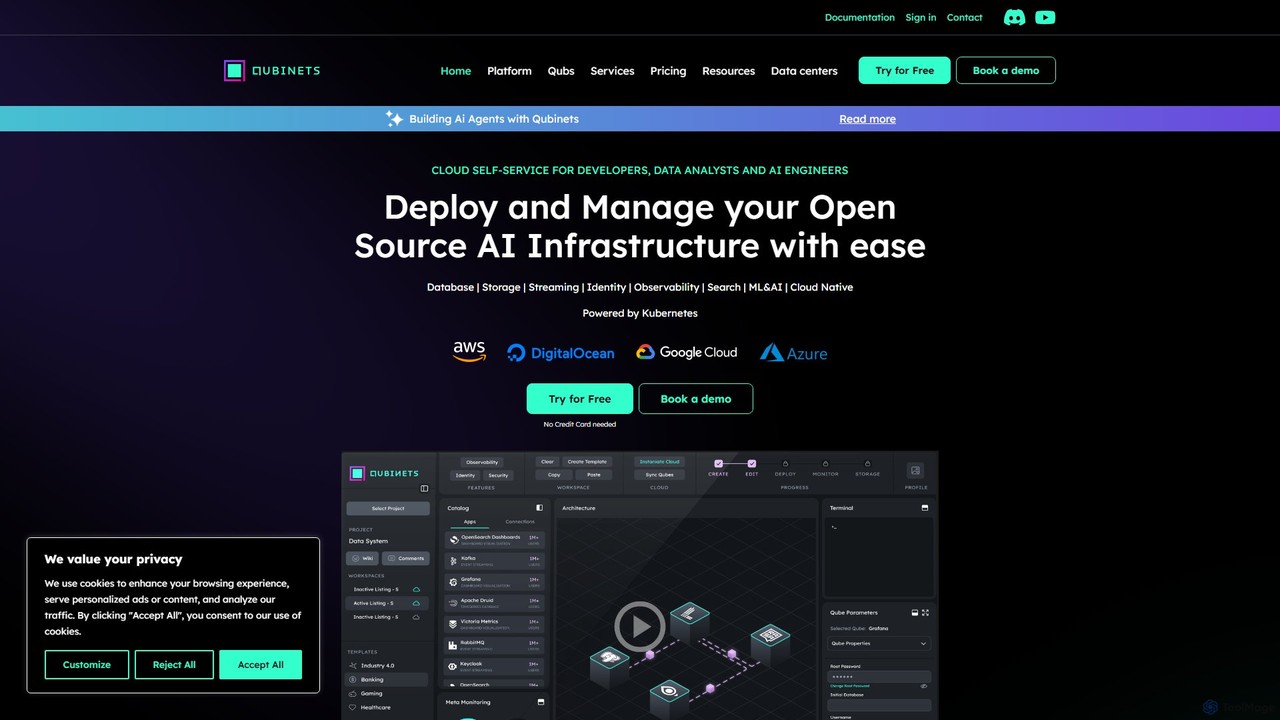
Qubinets is an AI-powered, self-service platform for developers, data analysts, and AI engineers. It simplifies and accelerates the …
Qubinets is an AI-powered, self-service platform for developers, data analysts, and AI engineers. It simplifies and accelerates the deployment and management of open-source AI and data infrastructure on any cloud (AWS, Azure, GCP, DigitalOcean) using a Kubernetes-based, no-code UI. Focus on building applications, not on complex configurations.
About Management
AI Cloud Management tools are platforms designed to automate and optimize the administration of cloud computing resources. Leveraging AI and machine learning, these tools analyze usage patterns, predict costs, and automate operational tasks across single or multi-cloud environments. Their primary value lies in enhancing efficiency, controlling spending, and strengthening security for complex cloud infrastructures. This makes them a critical component for any organization scaling its operations within the broader cloud computing ecosystem.
Core Features
- Cost Optimization: Uses AI to identify idle resources, recommend rightsizing, and automate cost-saving actions like scheduling shutdowns.
- Performance Monitoring: Provides unified dashboards to track application and infrastructure health, using anomaly detection to predict potential issues.
- Security & Compliance Automation: Continuously scans for misconfigurations, enforces security policies, and automates compliance reporting against standards like GDPR or HIPAA.
- Automated Provisioning: Simplifies the deployment and scaling of cloud resources based on predefined templates and policies, supporting Infrastructure as Code (IaC).
Use Cases
These tools are essential for organizations managing multi-cloud or hybrid cloud environments. They are widely used by DevOps teams to streamline CI/CD pipelines, FinOps specialists to enforce budget controls, and IT administrators to maintain governance and security across distributed cloud assets.
How to Choose
When selecting a tool, consider its multi-cloud support (AWS, Azure, GCP), the depth of its cost optimization features, its integration capabilities with existing DevOps tools (like Jenkins or Terraform), and the sophistication of its automation and policy enforcement engine. Also, evaluate the user interface for clarity and ease of use.
ManagementUse Cases
Automating Multi-Cloud Cost Optimization
A FinOps team manages infrastructure across AWS, Azure, and GCP. They use an AI Cloud Management tool to gain a unified view of all spending. The tool's AI engine continuously analyzes usage and identifies overprovisioned virtual machines and idle storage volumes. Based on these recommendations, the team configures automated policies to downsize resources during off-peak hours and terminate unutilized assets after a set period, resulting in a significant reduction in their monthly cloud bill without manual intervention.
Centralized Security Policy Enforcement
A security administrator for a financial services company needs to ensure all cloud storage buckets are encrypted and not publicly accessible. Instead of manually checking hundreds of accounts across different cloud providers, they use a management platform. They define a single policy: 'All storage buckets must have server-side encryption enabled and block public access'. The tool automatically scans all cloud environments, flags non-compliant resources, and can be configured to auto-remediate these issues, ensuring continuous compliance.
Streamlining DevOps CI/CD Workflows
A DevOps team uses a cloud management tool integrated with their CI/CD pipeline (e.g., Jenkins). When a developer commits new code, a webhook triggers the management tool to automatically provision a temporary, isolated testing environment in the cloud. The tool uses a predefined template to ensure consistency. After the automated tests are completed, the tool reports the results back to the pipeline and automatically decommissions the environment, optimizing resource usage and accelerating the development cycle.
Unified Performance Monitoring and Anomaly Detection
An IT operations manager oversees a critical e-commerce application deployed across multiple cloud services. They use a cloud management platform to get a single-pane-of-glass view of performance metrics like CPU utilization, latency, and error rates from all services. The platform's AI model, trained on historical data, detects an unusual spike in database latency that deviates from the normal pattern. It sends an alert to the team before it impacts users, allowing for proactive investigation and resolution.
Automated Compliance Reporting for Regulated Industries
A compliance officer in a healthcare organization must regularly prove adherence to HIPAA standards. Using a cloud management tool, they select a pre-built HIPAA compliance policy pack. The tool continuously monitors their cloud environment against hundreds of HIPAA controls. On a monthly basis, the officer generates a comprehensive, automated report that details the compliance status of every resource, highlights any violations, and provides an audit trail of all remediation actions taken, simplifying the audit process significantly.
Enforcing Resource Tagging and Governance at Scale
A cloud architect in a large enterprise needs to ensure all new cloud resources are tagged with 'Owner', 'Project', and 'CostCenter' for accurate cost allocation. They configure a governance policy in their cloud management tool that prevents the creation of any resource missing these tags. When a developer tries to launch an untagged virtual machine, the action is blocked, and they receive a notification explaining the tagging requirement. This proactive enforcement maintains a clean and well-governed cloud environment from the start.