ToolMage
Sign in

Best 21 Infrastructure AI tools for Developer Tools

Popular Infrastructure AI tools in Developer Tools include NVIDIA, Modal, novita.ai, Daytona, e2b, goteleport, FriendliAI, Anyscale, Blaxel, and Langbase, helping you work more efficiently.

MailX
Free

MailX

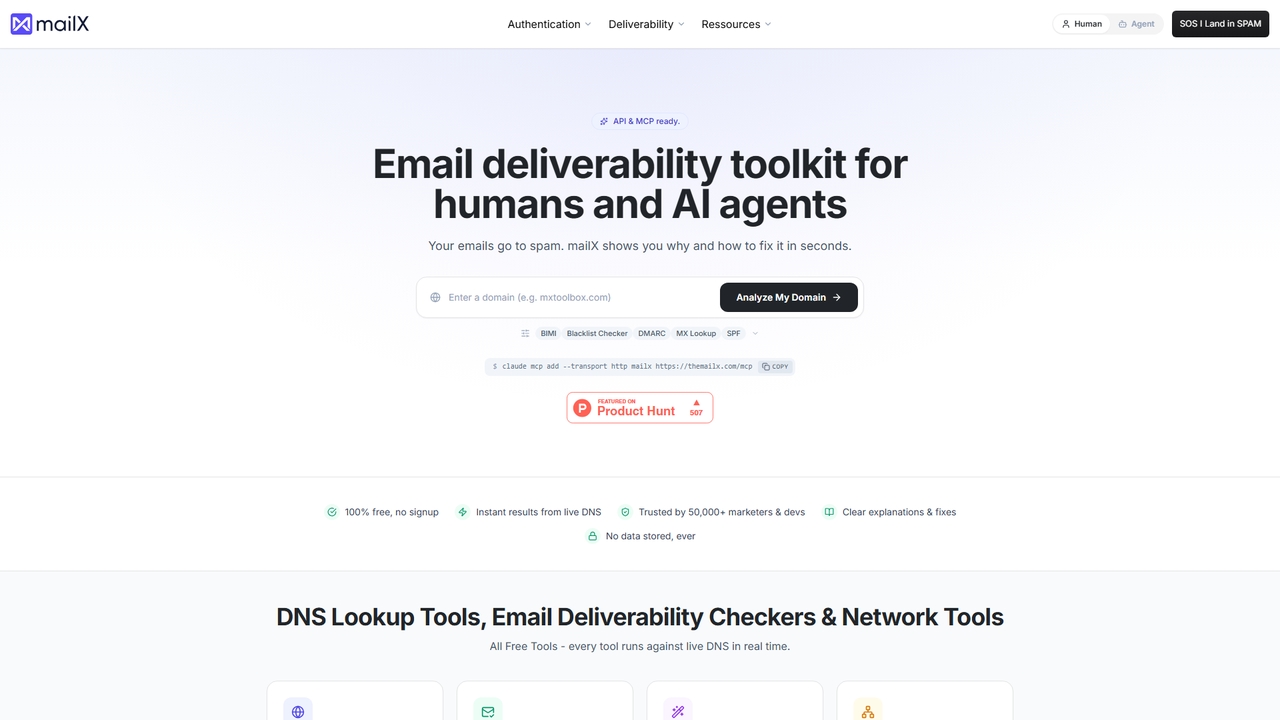
MailX is a free, comprehensive email deliverability toolkit that helps diagnose why emails go to spam and provides actionable fixes. It analyzes DNS records, email authentication (SPF, DKIM, DMARC), blacklist status, and SMTP/IMAP configuration in seconds.

Infrastructure
Visits 5.2KFavorites 5Likes 5
Dcompute
Paid

Dcompute

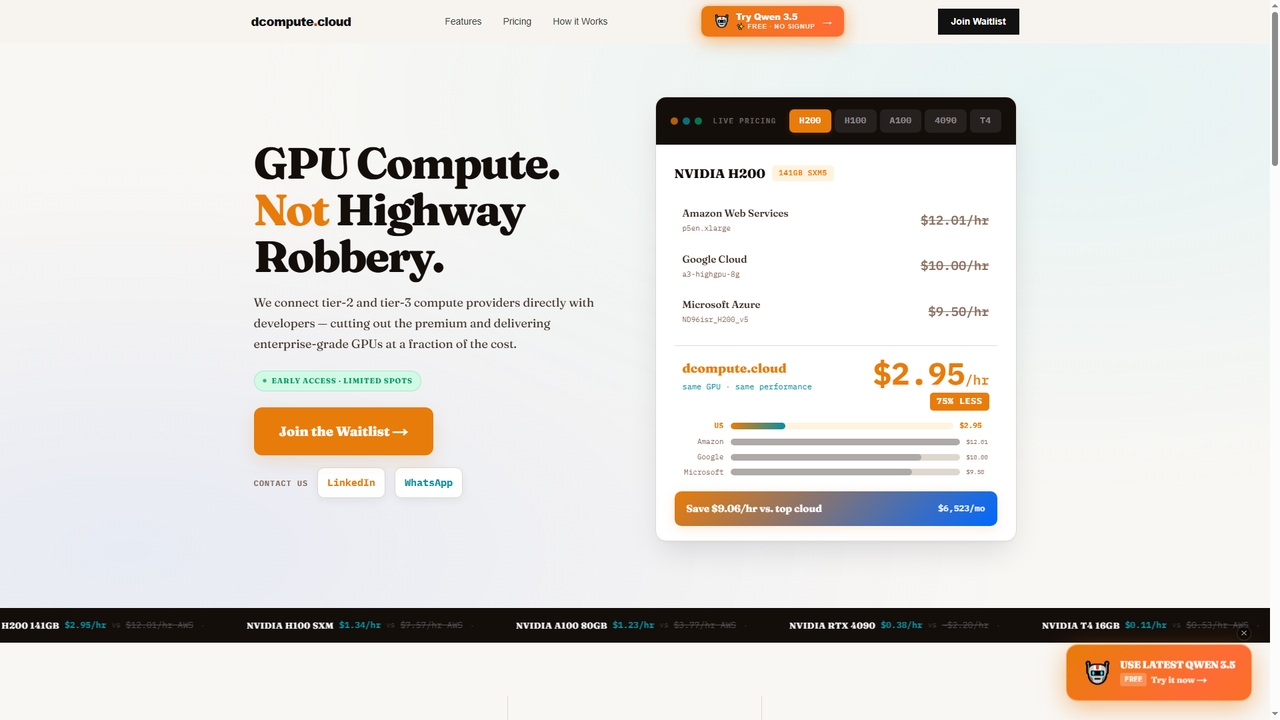
Dcompute is a decentralized GPU compute marketplace that connects developers directly with tier-2 and tier-3 data center providers. It offers enterprise-grade NVIDIA GPUs (H200, H100, A100, RTX 4090, T4) at a fraction of the cost of major cloud providers, promising up to 90% savings. The platform features instant deployment, a unified API/dashboard, full orchestration, and pure pay-as-you-go billing per second with no minimums.

Gpu
Visits 3.4KFavorites 3Likes 5
Nexlayer
Freemium

Nexlayer

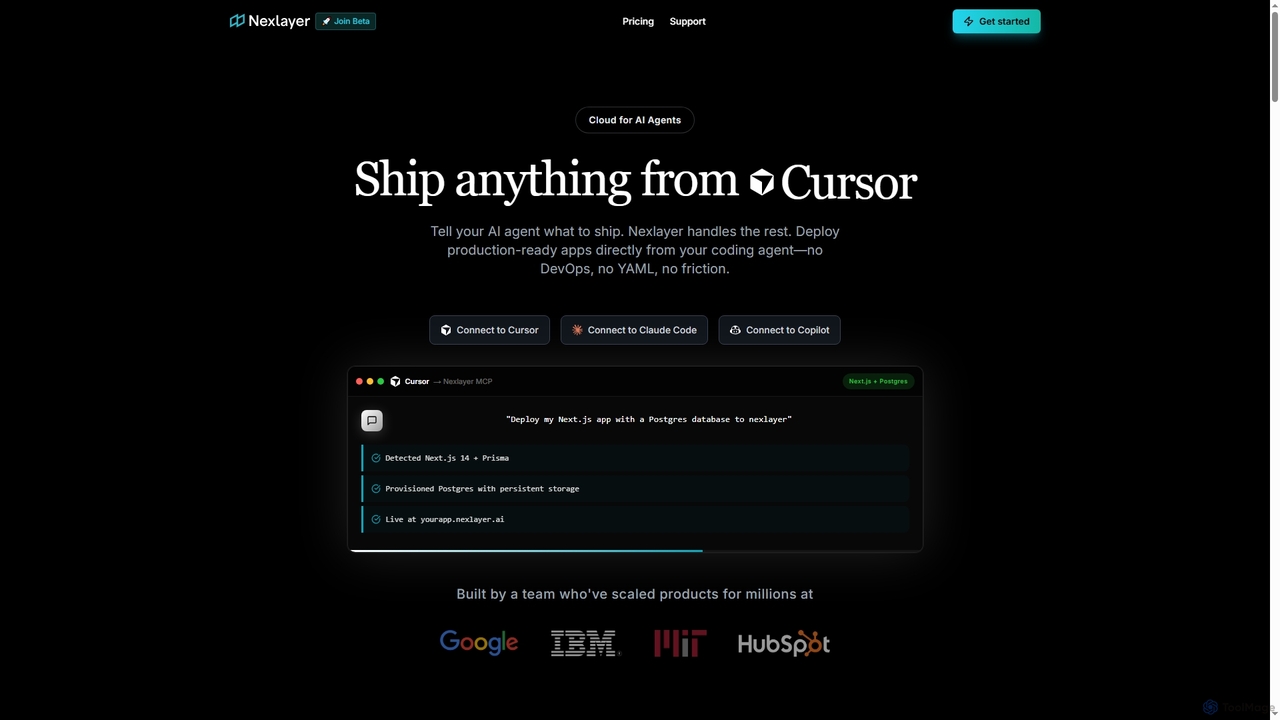
Nexlayer is the first agent-native cloud platform designed to empower AI coding agents to deploy production-ready applications swiftly. It automates complex infrastructure, enabling developers and founders to ship full-stack apps, APIs, and databases in minutes without DevOps overhead.

Application Development
Visits 4.3KFavorites 38Likes 29
Lattice
Paid

Lattice

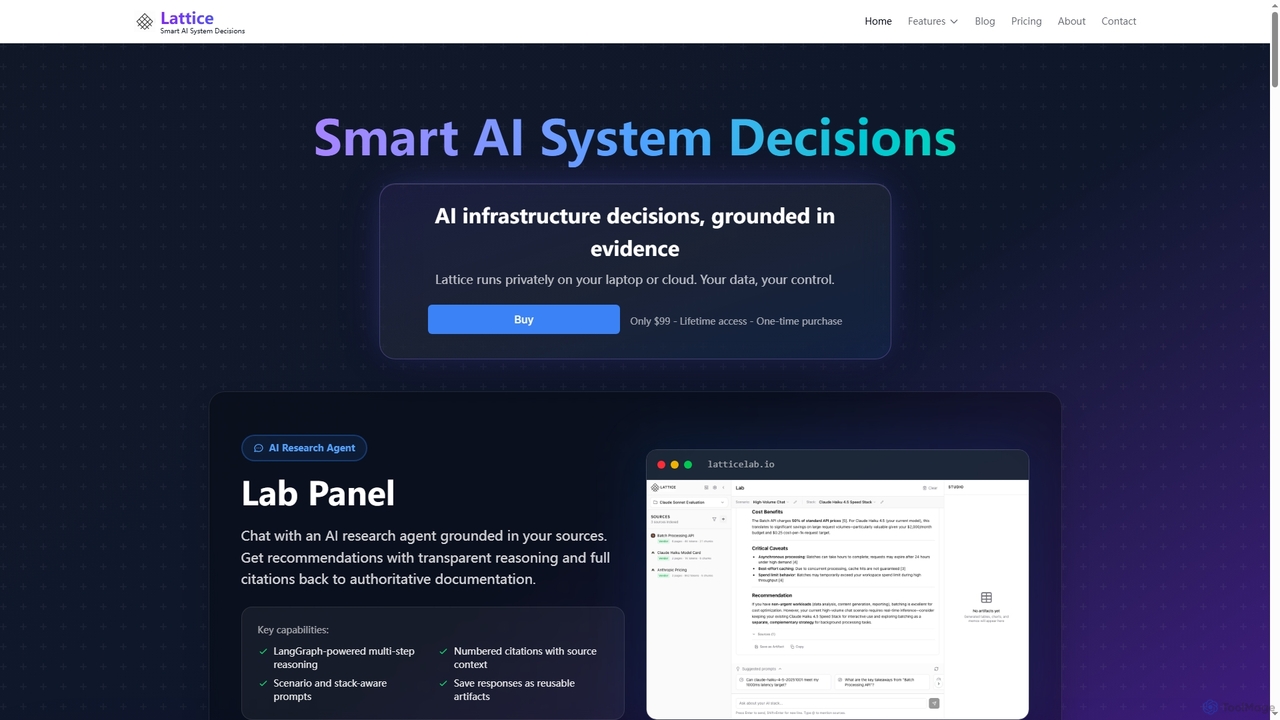
Lattice is a private AI research assistant designed for engineers and technical leaders to make evidence-based AI infrastructure decisions. It runs locally on your device, analyzing your documents, vendor specs, and pricing to provide recommendations with verifiable citations, streamlining complex research.

Decision Making
Visits 6.3KFavorites 82Likes 90
DoubleCloud
Paid

DoubleCloud

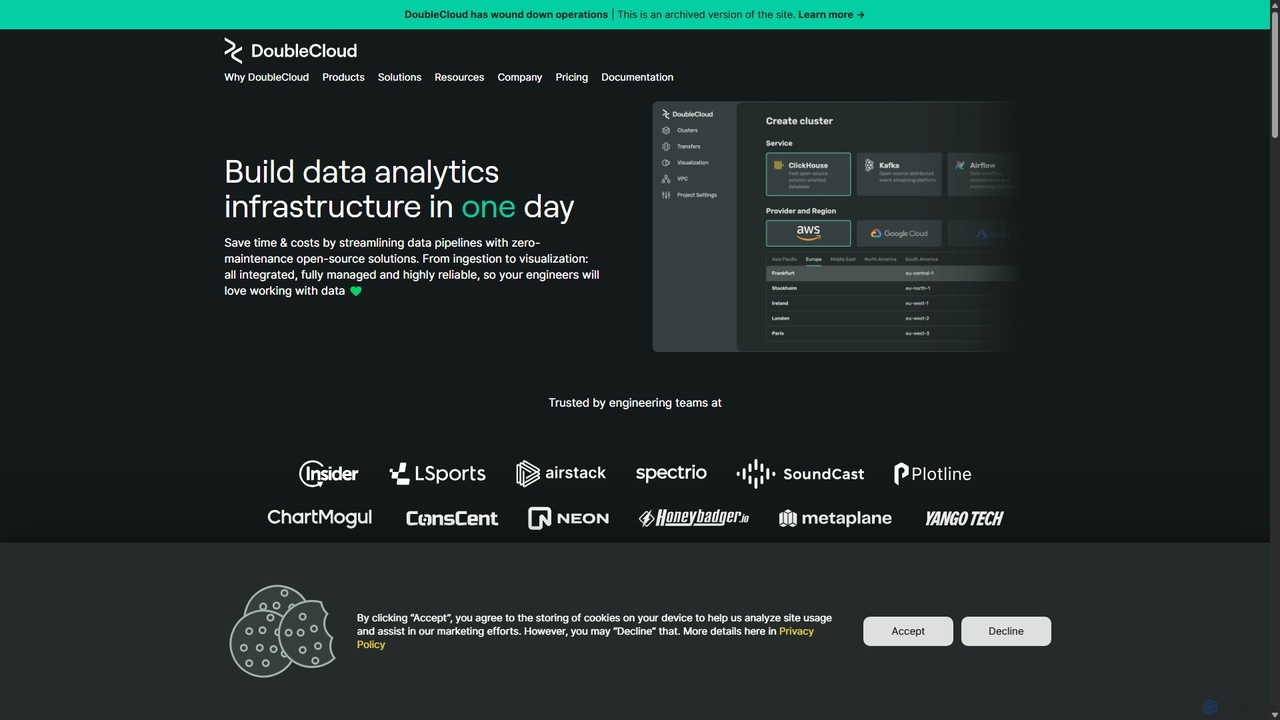
DoubleCloud was a fully managed platform for building high-performance data analytics infrastructure. It offered managed open-source services like ClickHouse, Kafka, and Airflow, along with tools for data integration and real-time visualization. Designed for engineers, it automated maintenance tasks to accelerate product development. Please note: DoubleCloud has ceased operations.

3D
Visits 10.3KFavorites 89Likes 94
Avian
Paid

Avian

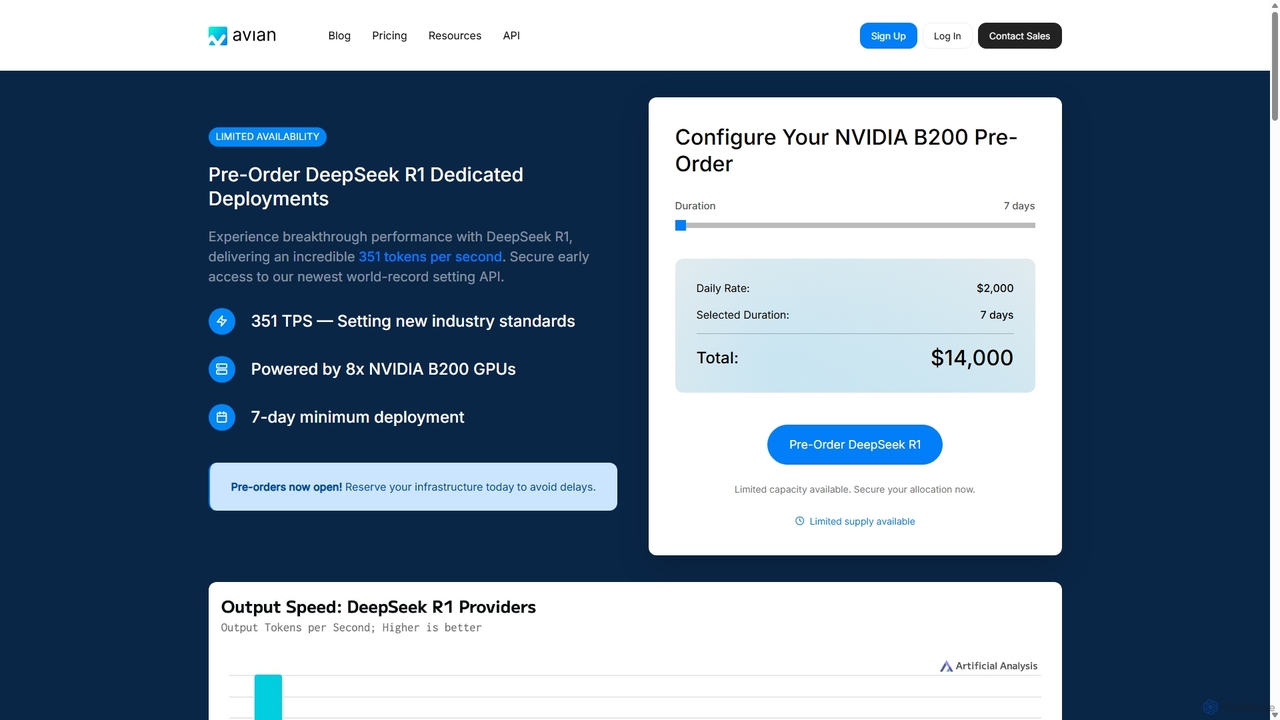
Avian is a high-performance AI inference platform offering world-record speeds for large language models (LLMs). It provides both a serverless API for popular models and dedicated GPU deployments for custom models from HuggingFace. Designed for scalability and production workloads, Avian delivers 3-10x faster inference speeds than the industry average, with enterprise-grade security and competitive pricing.

Model Deployment
Visits 11.7KFavorites 89Likes 83
Blaxel
Freemium

Blaxel

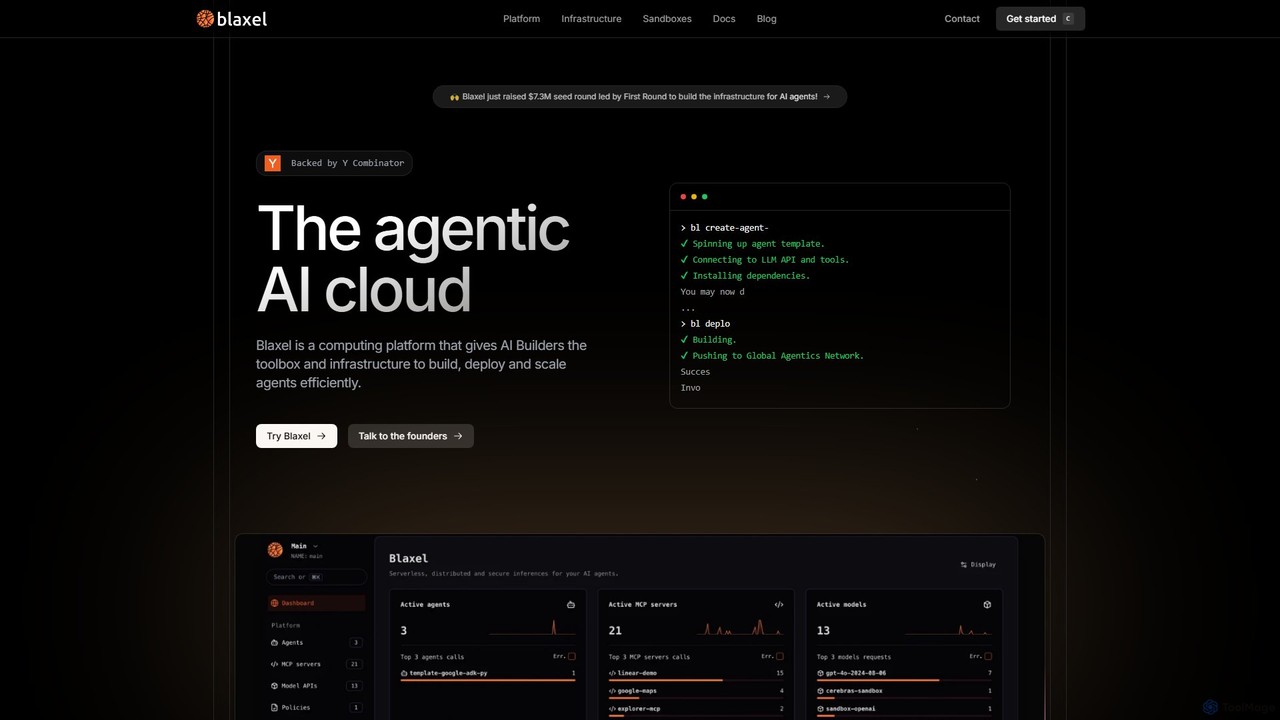
Blaxel is a serverless computing platform designed for AI developers, providing the infrastructure and tools to build, deploy, and scale agentic AI applications efficiently. It offers sandboxed VMs, a unified LLM gateway, and deep observability.

Cloud Computing
Visits 64.3KFavorites 118Likes 105
Daytona
Freemium

Daytona

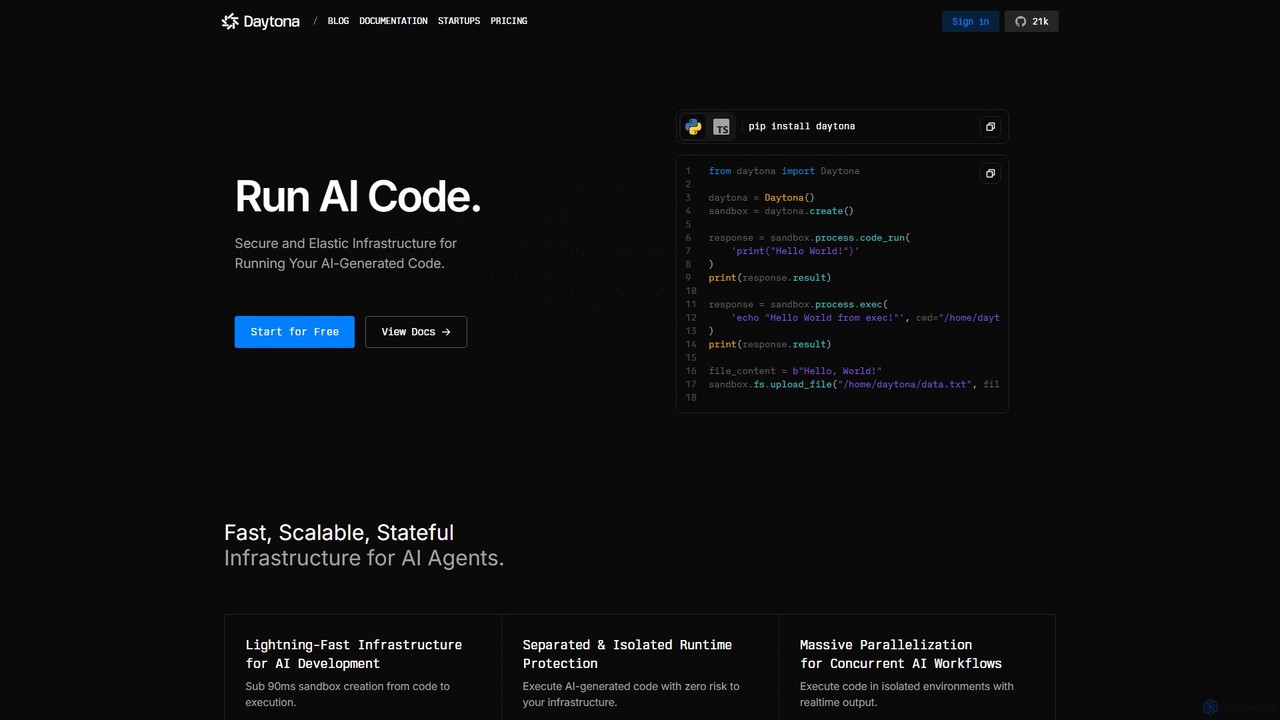
Daytona is a secure, elastic, and high-performance runtime environment designed for executing AI-generated code. It provides isolated sandboxes for AI agents, data analysis, and scalable evaluations, enabling developers to run untrusted code with zero risk to their infrastructure. It's built for speed, scalability, and stateful, long-running tasks.

Runtime Environment
Visits 258.2KFavorites 93Likes 95
FriendliAI
Freemium

FriendliAI

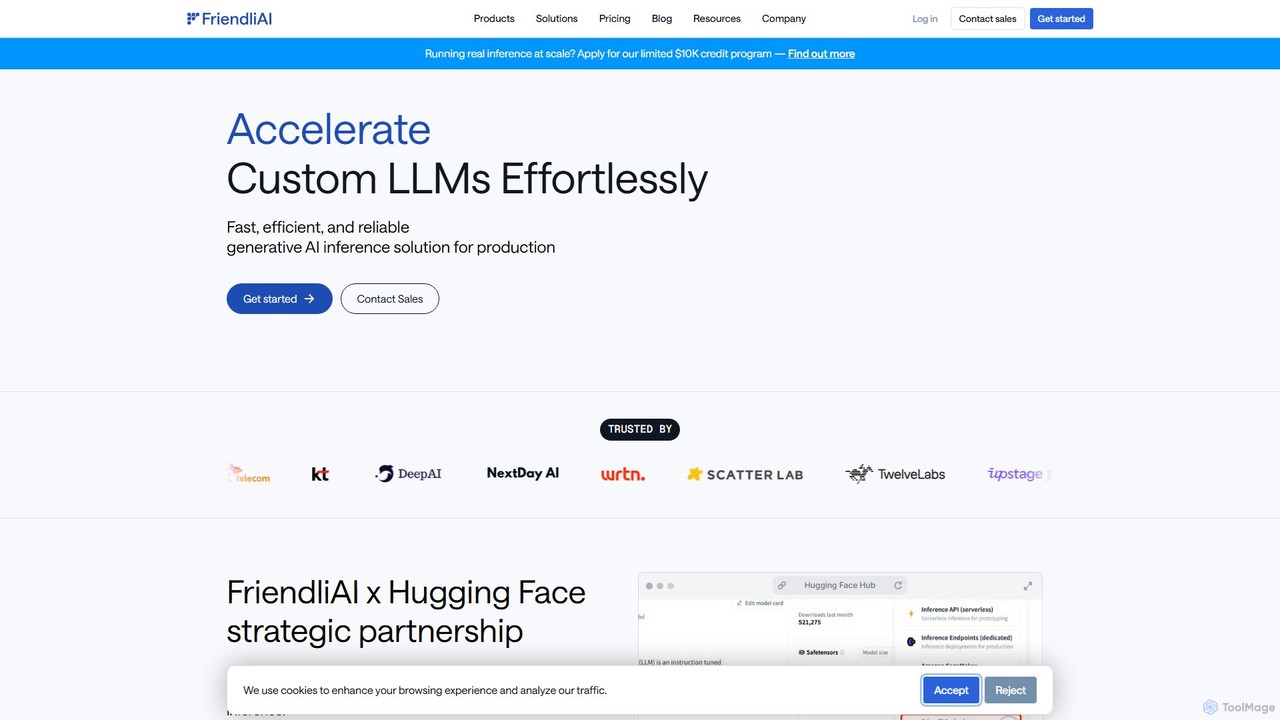
FriendliAI is a generative AI infrastructure platform designed to accelerate and optimize AI model inference. It offers high-performance, cost-effective solutions for deploying, serving, and scaling large language and multimodal models in production, with flexible options for dedicated, serverless, or on-premise environments.

Deployment
Visits 86.5KFavorites 122Likes 119
Scrapybara
Freemium

Scrapybara

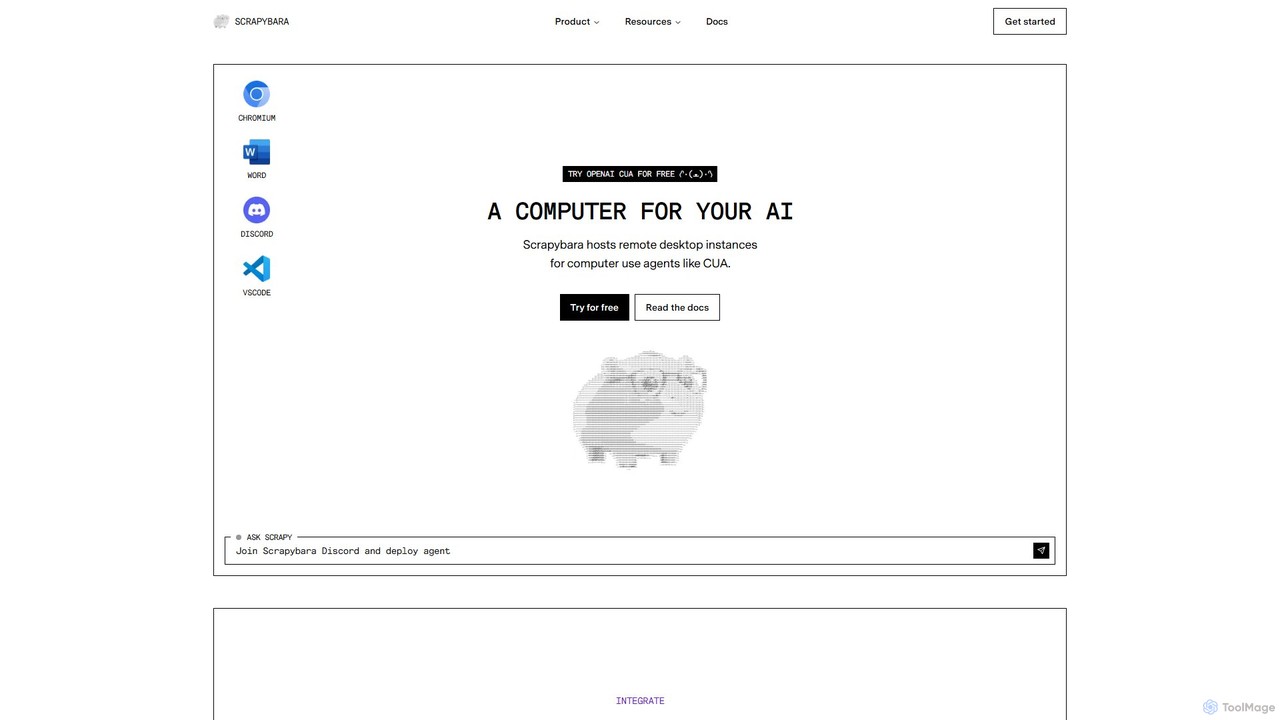
Scrapybara is a developer platform providing cloud-based virtual desktops for AI agents. It enables the creation and scaling of agents that perform complex computer tasks by interacting with graphical user interfaces (GUIs) like a human. It offers instant, scalable desktop instances (Ubuntu, Windows) with SDKs for Python and TypeScript, supporting models like OpenAI's CUA.

Robotic Process Automation
Visits 11.5KFavorites 123Likes 141
Meteron
Freemium

Meteron

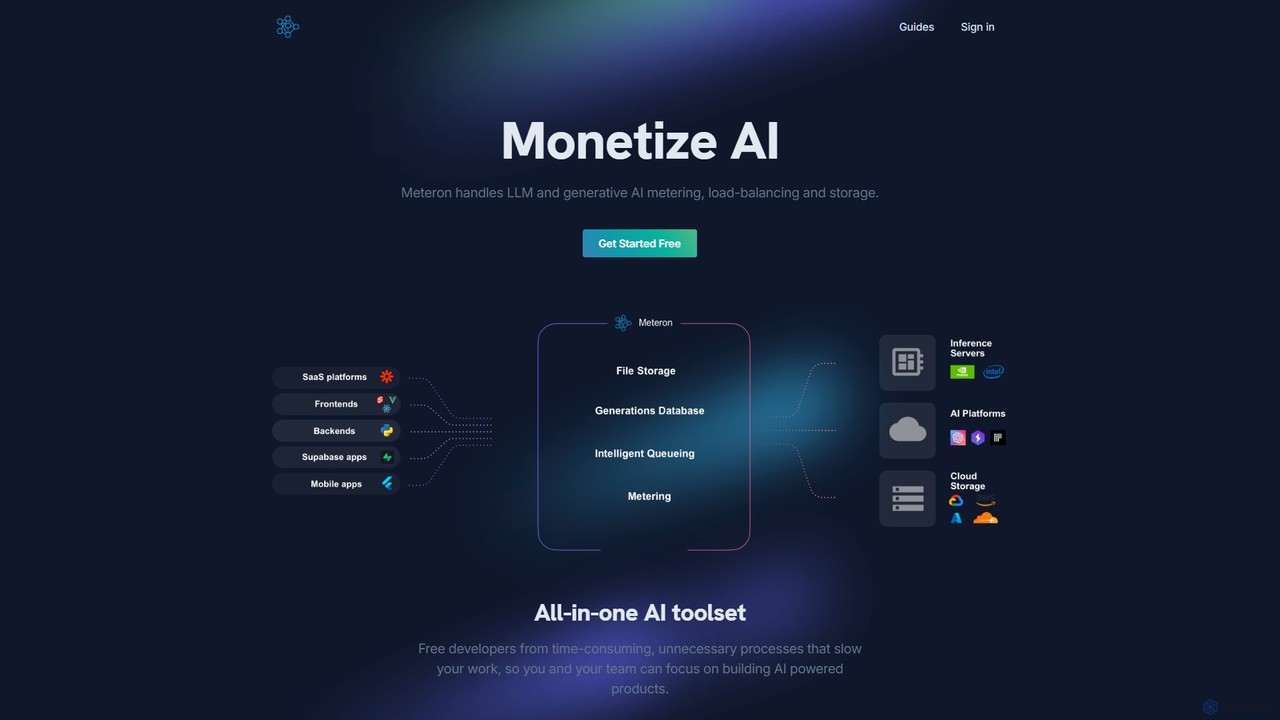
Meteron is an all-in-one developer platform that simplifies building and scaling AI applications. It provides tools for metering, load balancing, and cloud storage, enabling developers to monetize their AI models (like LLMs and image generators) and manage infrastructure with ease. By handling complex backend processes, Meteron allows creators to launch AI-powered products faster.

Monetization
Visits 5.2KFavorites 111Likes 126
NVIDIA
Freemium

NVIDIA

NVIDIA is a global leader in artificial intelligence computing, providing a full-stack platform of hardware, software, and services. Its solutions power everything from gaming and professional graphics with GeForce and RTX GPUs to advanced AI, data science, and high-performance computing in data centers and the cloud.

Infrastructure
Visits 39MFavorites 88Likes 84
Anyscale
Freemium

Anyscale

Anyscale is a fully-managed compute platform for scaling AI and Python workloads. Built on the open-source Ray framework by its original creators, it empowers developers to build, run, and scale distributed applications, from LLM training to data processing, with optimized performance and cost-efficiency on any cloud.

Mlops
Visits 76.1KFavorites 97Likes 108
Qubinets
Freemium

Qubinets

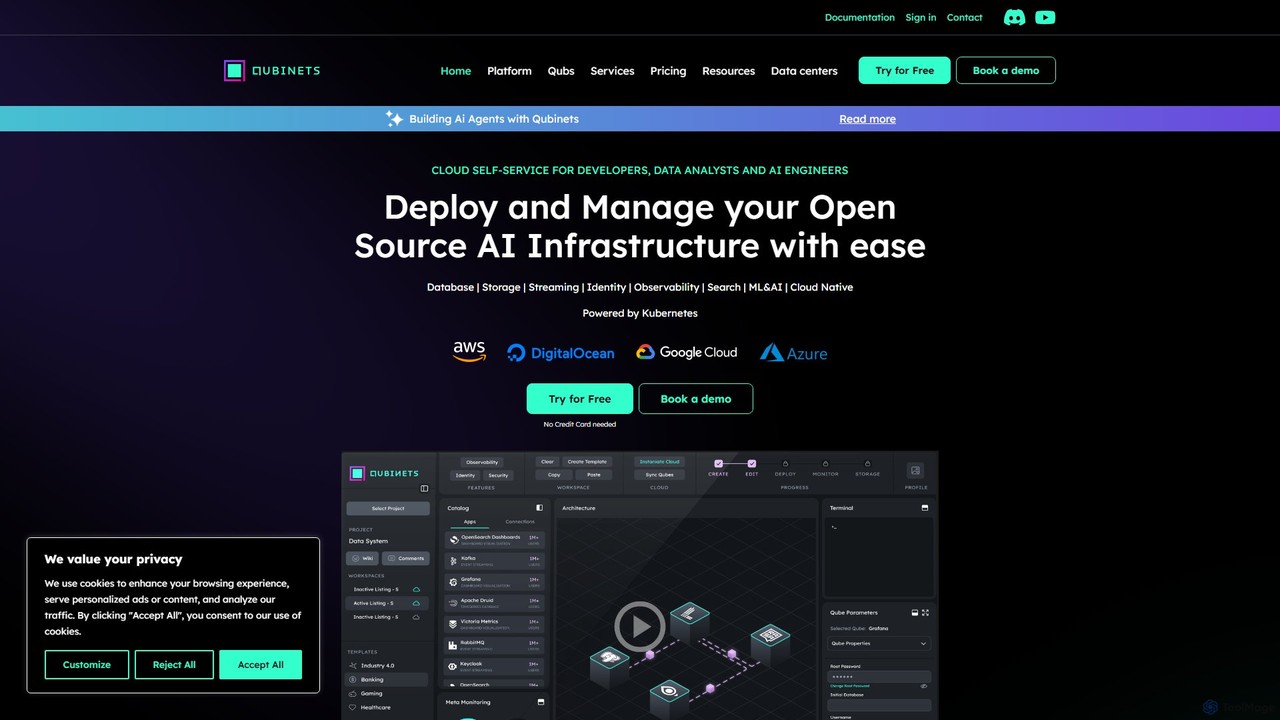
Qubinets is an AI-powered, self-service platform for developers, data analysts, and AI engineers. It simplifies and accelerates the deployment and management of open-source AI and data infrastructure on any cloud (AWS, Azure, GCP, DigitalOcean) using a Kubernetes-based, no-code UI. Focus on building applications, not on complex configurations.

Mlops
Visits 7.9KFavorites 101Likes 109
e2b
Freemium

e2b

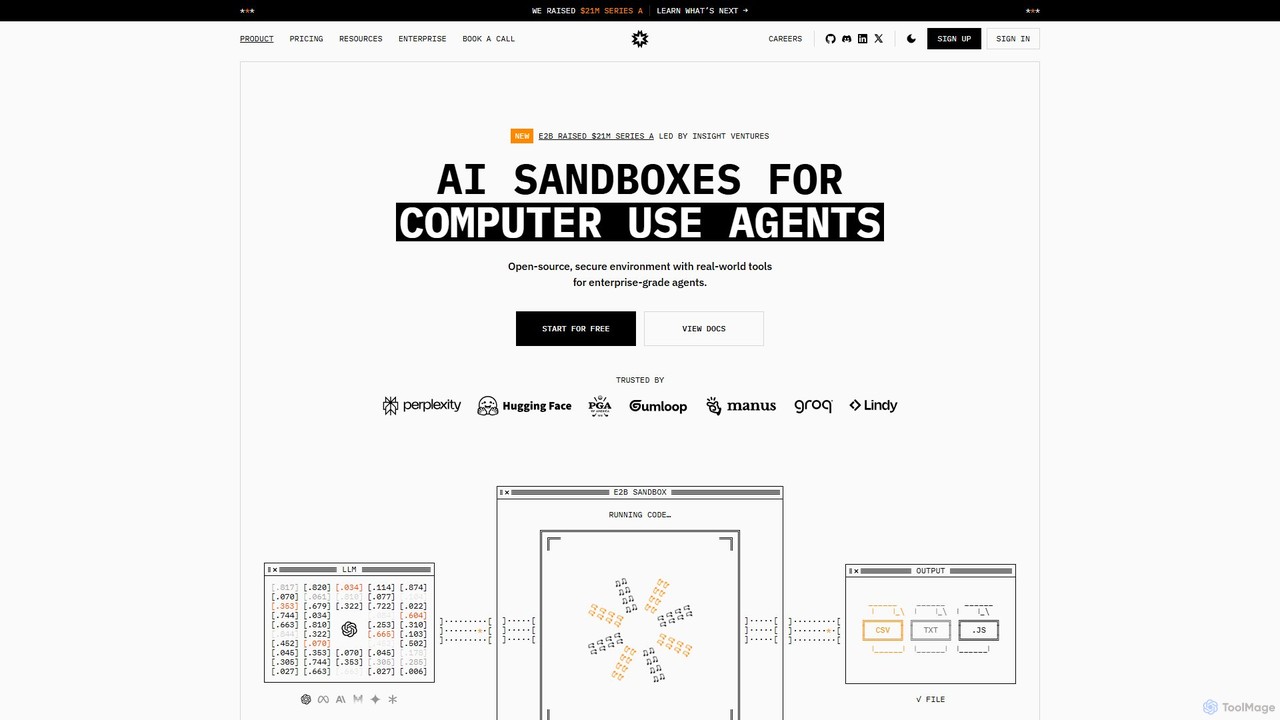
e2b is a cloud platform for developers, providing secure, scalable AI sandboxes for running AI-generated code. It enables the creation of powerful AI agents for tasks like data analysis, code execution, and deep research by offering isolated, high-performance environments with full tool access, compatible with any LLM.

Data Analysis
Visits 226.8KFavorites 114Likes 109
goteleport
Freemium

goteleport

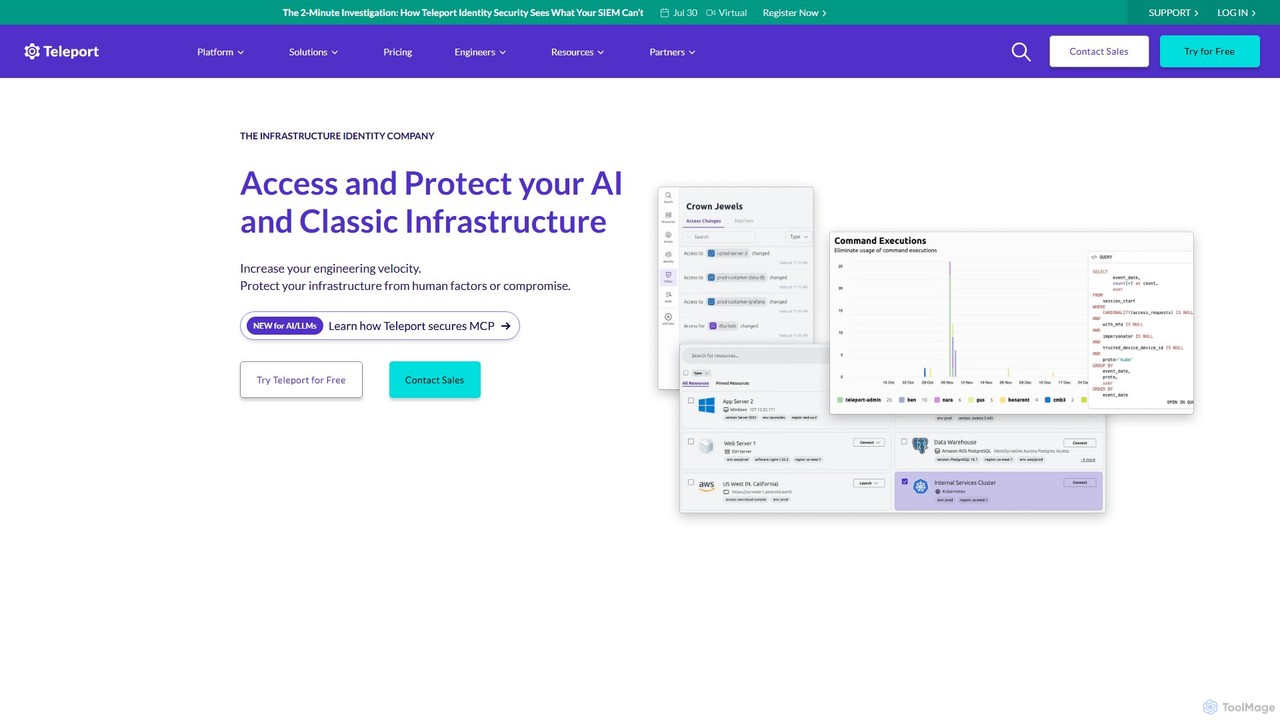
goteleport is an identity-native infrastructure access platform that provides secure, zero-trust access to servers, applications, and data. It unifies identity, access, and policy for humans, machines, and AI agents, eliminating credentials and reducing the attack surface while improving engineering productivity.

Infrastructure
Visits 213.9KFavorites 106Likes 107
Modal
Freemium

Modal

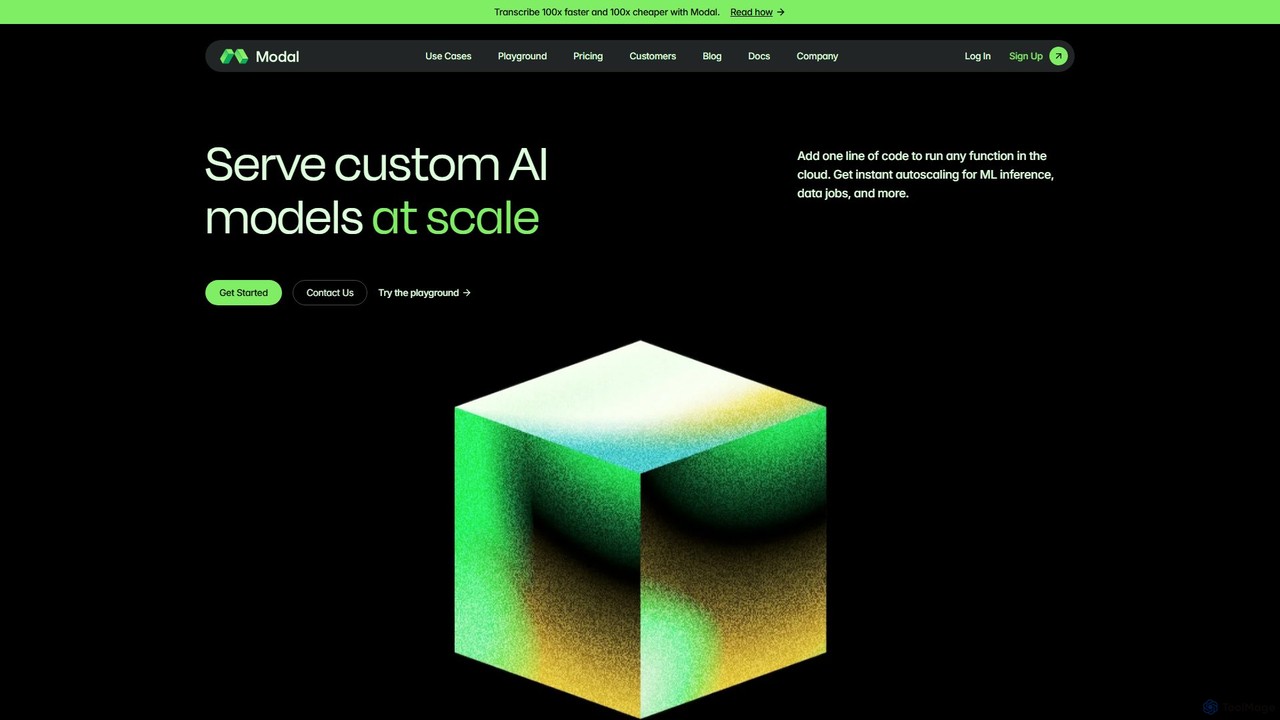
Modal is a high-performance, serverless infrastructure platform for AI and ML developers. It allows you to run Python functions in the cloud with a single line of code, providing instant access to GPUs, automatic scaling from zero to thousands of containers, and pay-per-second pricing. Eliminate infrastructure overhead and focus on building and deploying compute-intensive applications like generative AI, batch processing, and data analysis.

Model Deployment
Visits 992KFavorites 133Likes 119
Langbase
Freemium

Langbase

Langbase is a serverless developer platform designed for building, deploying, and scaling AI agents. It provides a unified infrastructure with features like composable AI agents (Pipes), long-term memory (RAG), and a single API for over 250 LLMs, empowering any developer to create powerful AI applications with an exceptional developer experience.

Infrastructure
Visits 30.7KFavorites 98Likes 111
Granica
Paid

Granica

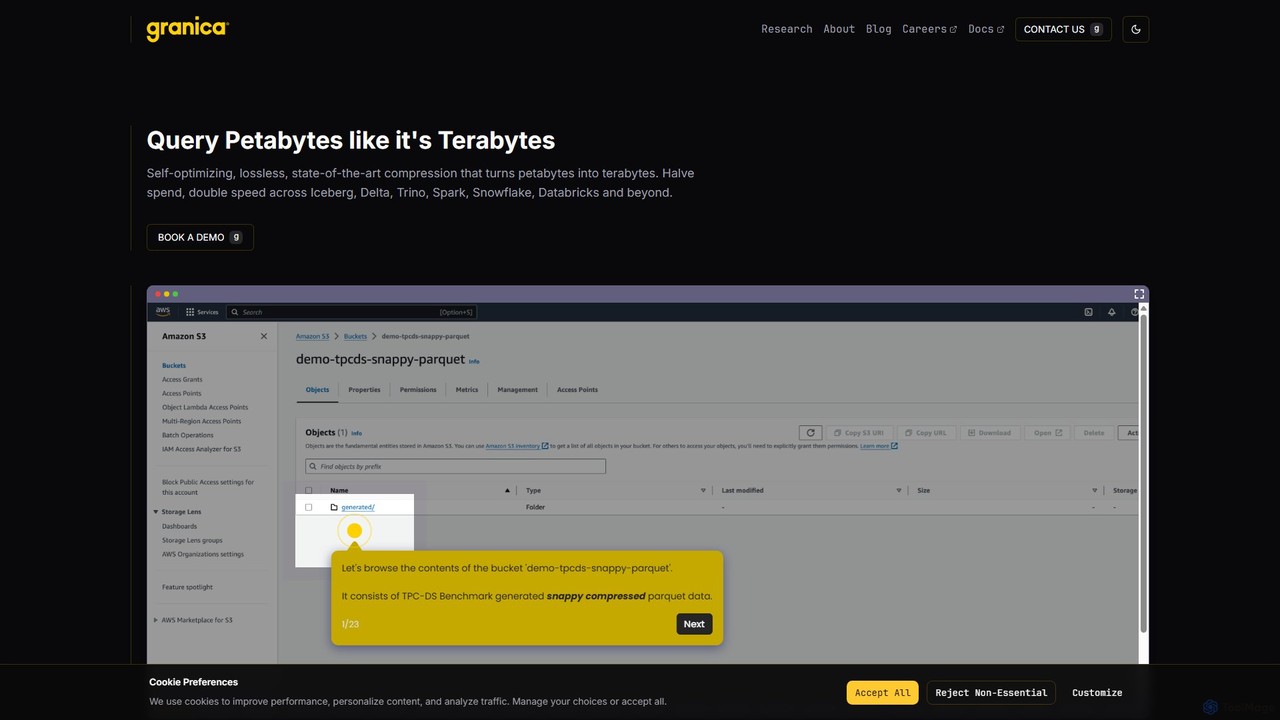
Granica is an AI-powered data infrastructure platform that provides self-optimizing, lossless compression for petabyte-scale data lakes. It dramatically reduces cloud storage and compute costs while accelerating query performance across platforms like Snowflake, Databricks, Spark, and more.

Cost Management
Visits 9.4KFavorites 127Likes 124
TAHO
Freemium

TAHO

TAHO is a high-performance compute framework designed to replace complex orchestrators like Kubernetes. It doubles your compute efficiency without increasing hardware costs by eliminating overhead and enabling microsecond cold starts. Ideal for AI/ML, edge computing, and high-throughput workloads, TAHO integrates seamlessly with your existing infrastructure, offering a faster, cheaper, and simpler solution for scaling demanding applications on cloud, on-prem, or hybrid environments.

Model Deployment
Visits 4.8KFavorites 106Likes 89
novita.ai
Freemium

novita.ai

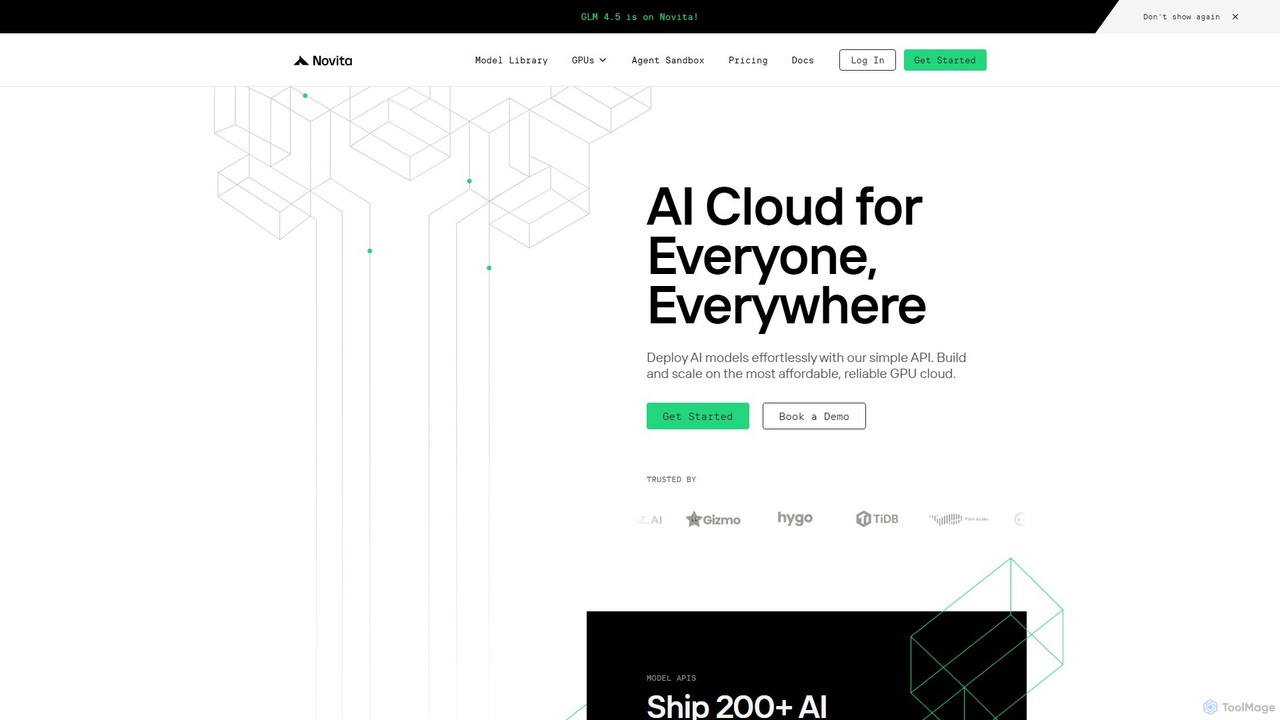
Novita AI is a developer-centric cloud platform offering affordable, scalable access to over 200 AI models via simple APIs. It provides serverless GPUs, dedicated GPU instances, and custom model deployment, enabling developers to build and scale AI applications without managing infrastructure.

Gpu
Visits 322KFavorites 130Likes 137

About Infrastructure

AI Infrastructure tools provide the foundational platforms, APIs, and services for building, deploying, and managing machine learning models at scale. They abstract away the complexities of hardware management, resource scaling, and MLOps pipelines, forming the critical backend for production-grade AI applications. This allows developer teams to focus on model development and application logic instead of managing complex underlying systems. These platforms often integrate specialized components like scalable model serving endpoints and vector databases.

Core Features

  • Model Deployment & Serving: Provides optimized, scalable API endpoints for serving models to handle real-time inference requests with low latency.
  • MLOps Automation: Automates the machine learning lifecycle, including experiment tracking, model versioning, CI/CD for models, and performance monitoring.
  • Scalable Compute Management: Offers on-demand access to and orchestration of specialized hardware like GPUs and TPUs required for model training and inference.
  • Vector Database Services: Includes managed databases designed to efficiently store, index, and query high-dimensional vector embeddings for semantic search and RAG applications.
  • Data & Model Registries: Centralized systems for versioning datasets, managing trained models, and tracking their lineage and metadata.

Use Cases

AI Infrastructure is essential for ML engineers, data science teams, and DevOps specialists in technology companies and research institutions. It is used to productionize large language models for chatbots, build real-time recommendation engines for e-commerce, deploy computer vision models for industrial automation, and power semantic search features in enterprise applications.

How to Choose

When selecting an AI Infrastructure tool, evaluate its scalability and performance to meet your traffic demands. Check for compatibility with your preferred ML frameworks (e.g., PyTorch, TensorFlow). Assess the comprehensiveness of its MLOps features for automation and monitoring. Finally, compare pricing models (pay-as-you-go vs. subscription) and consider the balance between ease of use for rapid deployment and the flexibility required for custom workflows.

Featured tool rankings

Infrastructure use cases

1

Deploying LLMs for Enterprise Applications

An enterprise development team uses an AI infrastructure platform to deploy a fine-tuned large language model (LLM) as a secure, private API. The platform manages GPU allocation, auto-scaling for fluctuating query loads, and provides logging for performance monitoring. This enables the company to integrate advanced natural language understanding into its internal knowledge base and customer support systems without needing a dedicated team to manage the underlying hardware and deployment complexities.

2

Building a Real-Time Recommendation Engine

An e-commerce company leverages a model serving infrastructure to host its machine learning models for product recommendations. The platform ensures low-latency inference, serving personalized suggestions to millions of users in real-time. It also facilitates A/B testing of different recommendation algorithms by allowing the team to easily deploy and route traffic between multiple model versions, optimizing for user engagement and conversion rates.

3

Automating Computer Vision Model Lifecycles

A manufacturing firm implements an MLOps platform to manage its computer vision models for quality control. The system automates the entire workflow: new product images trigger a retraining pipeline, the best-performing model is automatically registered, and it's deployed to edge devices on the factory floor with zero downtime. This continuous deployment cycle ensures the defect detection system adapts quickly to new product variations, improving accuracy and reducing manual oversight.

4

Powering Semantic Search with Vector Databases

A legal tech startup integrates a managed vector database from an AI infrastructure provider to power its core search feature. The service handles the complex task of indexing millions of legal document embeddings. This allows their application to perform semantic searches, finding conceptually related case law and precedents based on user queries, a task impossible with traditional keyword-based search engines. The managed service ensures high availability and fast query performance.

5

Scaling Generative AI Services for Creators

A content creation platform uses a scalable inference infrastructure to offer generative AI features like text-to-image and article summarization to its users. The infrastructure automatically provisions and scales GPU resources based on real-time demand, ensuring a smooth user experience even during peak hours. By offloading the complexity of serving multiple large models, the company can focus on improving the user interface and adding new creative features.

6

Accelerating AI Research and Experimentation

A university research lab uses an AI infrastructure platform to streamline its experimentation process. The platform provides a centralized dashboard for tracking hundreds of training runs, comparing model metrics, and versioning datasets. Researchers can easily provision GPU clusters for intensive training tasks and share pre-trained models and results through a central registry. This collaborative environment significantly accelerates the pace of discovery and publication.

Infrastructure FAQ

What are AI Infrastructure tools?

AI Infrastructure tools are specialized platforms and services that provide the foundational layer for developing, deploying, and operating machine learning models in production. They go beyond general cloud services by offering features specifically for the ML lifecycle, such as automated model deployment, MLOps pipelines, scalable inference servers, and experiment tracking. Their primary goal is to simplify and accelerate the process of turning a trained model into a reliable, scalable application.

How do I choose the right AI Infrastructure platform?

To choose the right platform, consider these factors:

  • Scalability: Can the platform handle your expected inference traffic and data volume?
  • Framework Support: Does it natively support your ML frameworks like PyTorch, TensorFlow, or JAX?
  • MLOps Features: Evaluate its capabilities for automation, monitoring, versioning, and experiment tracking.
  • Deployment Options: Does it support cloud, on-premise, or edge deployments?
  • Cost and Pricing Model: Understand the cost structure—is it usage-based, subscription, or a hybrid model that fits your budget?
What is the difference between AI Infrastructure and general Cloud Infrastructure (IaaS)?

General Cloud Infrastructure (IaaS), like Amazon EC2 or Google Compute Engine, provides raw computing resources such as virtual machines, storage, and networking. AI Infrastructure is a specialized Platform-as-a-Service (PaaS) or Software-as-a-Service (SaaS) built on top of IaaS. It abstracts away the low-level setup and provides ready-to-use tools for ML-specific tasks, such as one-click model deployment, automated scaling of inference servers, and integrated MLOps workflows. In short, IaaS gives you the hardware; AI Infrastructure gives you the ML-optimized environment.

What are the key components of a modern AI Infrastructure stack?

A modern AI Infrastructure stack typically includes several key components working together. These often consist of: a data platform for processing and versioning data; an experiment tracking system (e.g., MLflow); a model registry for storing trained models; a compute orchestration layer (often using Kubernetes); a model serving framework (e.g., KServe, Triton Inference Server) for efficient inference; and monitoring tools to track model performance and system health in production.

Who are the primary users of AI Infrastructure tools?

The primary users are technical professionals involved in building and deploying AI products. This includes Machine Learning Engineers, who focus on productionizing models; Data Scientists, who use it to experiment and deploy their work; and DevOps or MLOps Engineers, who are responsible for maintaining the reliability, scalability, and automation of the entire ML system. Application developers also interact with these tools via APIs to integrate AI features into their software.