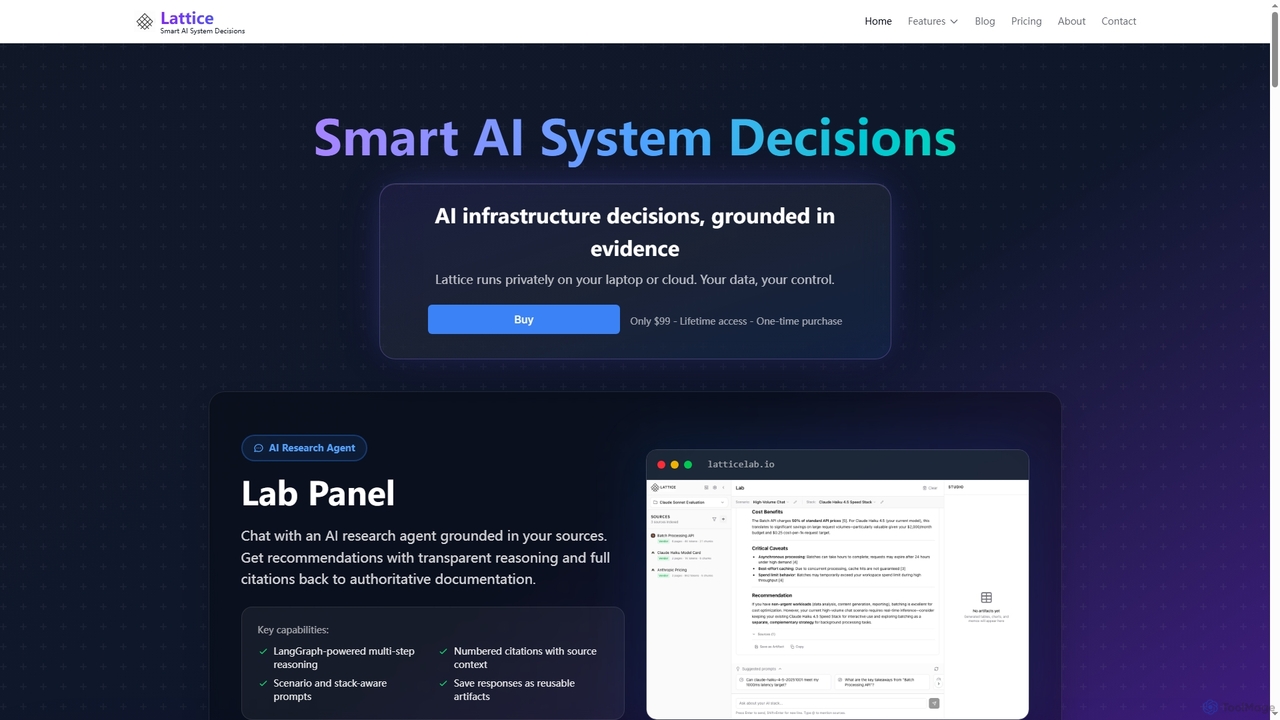
Decision Making tools are AI-powered solutions designed to assist individuals and organizations in making more informed, data-driven choices. These tools leverage advanced analytics, predictive modeling, and cognitive algorithms to process complex information, identify patterns, and forecast potential outcomes. They transform vast datasets into actionable insights, reducing human bias and significantly improving the speed and accuracy of strategic and operational decisions.
Core Features
- Predictive Analytics: Forecast future trends and probabilities based on historical data.
- Scenario Planning: Simulate various potential outcomes under different conditions to evaluate strategies.
- Risk Assessment: Identify, analyze, and quantify potential risks associated with different choices.
- Cognitive Bias Detection: Help users recognize and mitigate common human biases in their decision processes.
- Recommendation Engines: Provide data-backed suggestions for optimal actions or choices.
Applicable Scenarios
These tools are invaluable across various sectors, from corporate strategy to individual financial planning. Business leaders use them for market entry decisions, investment managers for portfolio optimization, and healthcare professionals for treatment path selection. They empower users to navigate uncertainty with greater confidence, ensuring choices are grounded in robust data analysis rather than intuition alone.
How to Choose
When selecting an AI Decision Making tool, consider its data integration capabilities with your existing systems, the transparency and explainability (XAI) of its models, and its ability to handle the complexity and volume of your data. Evaluate the level of customization offered, the user interface's intuitiveness, and its compliance with relevant industry regulations. Prioritize tools that offer clear insights and support your specific decision-making workflows.