ToolMage
Sign in

Best 1 Ai Chatbot AI tools for Ai Tools

Popular Ai Chatbot AI tools in Ai Tools include phind-ai, helping you work more efficiently.

phind-ai
Freemium

phind-ai

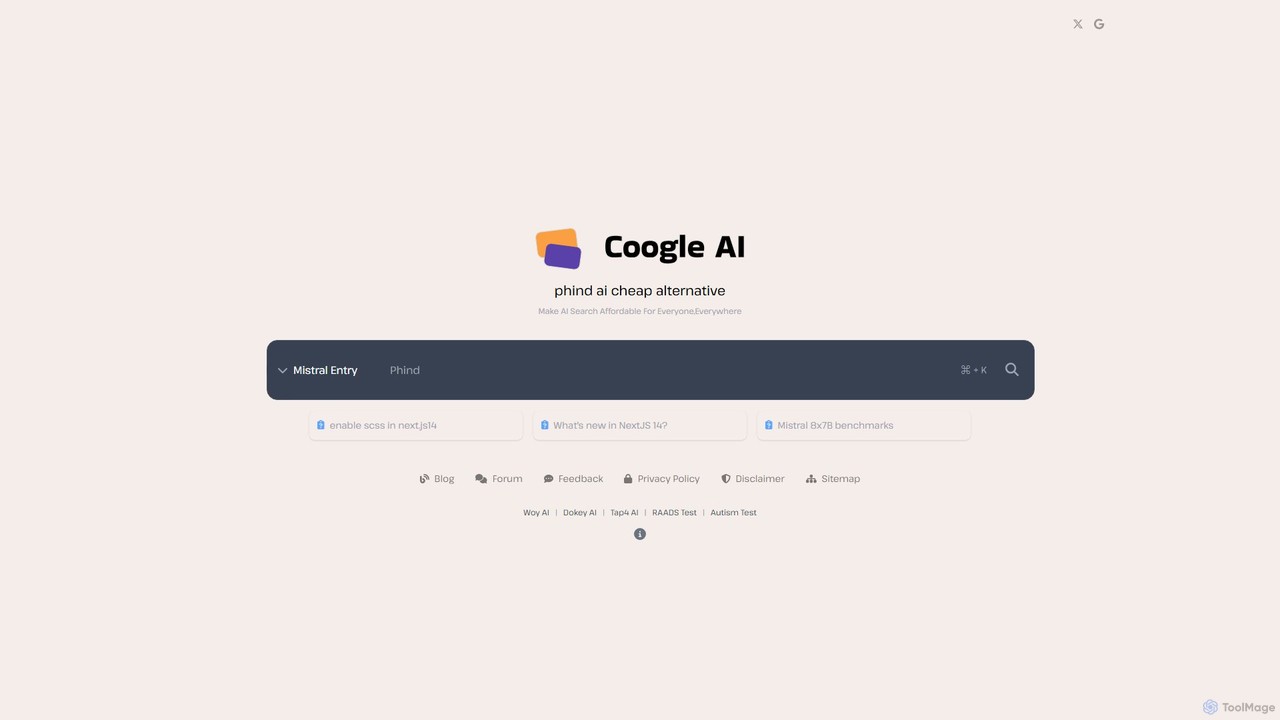
phind-ai is an AI-powered search engine designed for developers, offering affordable access to multiple advanced language models like Mistral, Llama, and Qwen. It provides instant, accurate answers to technical questions, generates code, and assists with debugging, positioning itself as a cost-effective alternative in the AI developer tool space.

Ai Chatbot
Visits 7KFavorites 123Likes 124

About Ai Chatbot

AI Chatbots are AI-powered tools designed to simulate human conversation through text or voice interfaces. These tools leverage advanced Natural Language Processing (NLP) and machine learning to understand user intent, process queries, and generate relevant responses. They provide automated, intelligent interactions across various platforms, enhancing customer service, streamlining information access, and supporting content generation.

Core Features

  • Natural Language Understanding (NLU): Interprets complex human language, including slang, jargon, and varied sentence structures, to grasp user intent.
  • Contextual Awareness: Maintains conversation history and context across interactions, allowing for more fluid and personalized dialogues.
  • Multilingual Support: Capable of understanding and responding in multiple languages, catering to a global user base.
  • Integration Capabilities: Seamlessly connects with CRM systems, knowledge bases, and other business applications to access and provide comprehensive information.
  • Generative AI Responses: Utilizes large language models to create original, coherent, and contextually appropriate text, moving beyond pre-scripted answers.

Applicable Scenarios

AI Chatbots are widely adopted in customer service for 24/7 support, handling FAQs, and guiding users through processes. Marketing and sales teams use them for lead qualification, personalized product recommendations, and engaging website visitors. Internally, they serve as intelligent assistants for employees, providing quick access to company policies, IT support, or HR information.

How to Choose

When selecting an AI Chatbot, evaluate its NLU accuracy and ability to understand diverse user queries. Consider its integration capabilities with your existing tech stack (CRM, helpdesk, etc.) and the ease of customization for your specific business needs. Assess scalability to handle fluctuating user volumes and review data privacy and security protocols to ensure compliance.

Ai Chatbot use cases

1

Automating 24/7 Customer Support

E-commerce businesses and service providers can deploy AI Chatbots to handle routine customer inquiries around the clock. The chatbot can answer FAQs, provide order status updates, troubleshoot common issues, and guide users to relevant resources, significantly reducing response times and freeing up human agents for more complex tasks. This ensures continuous support and improves customer satisfaction.

2

Lead Generation and Qualification for Sales Teams

Marketing and sales professionals can utilize AI Chatbots on websites or social media to engage visitors, ask qualifying questions, and gather contact information. The chatbot can identify potential leads based on their responses, provide relevant product information, and even schedule appointments with sales representatives, effectively streamlining the lead nurturing process and improving conversion rates.

3

Internal Knowledge Base and HR Assistant

Large organizations can deploy AI Chatbots as an internal assistant for employees. These chatbots can provide instant answers to common HR questions (e.g., leave policies, benefits), IT support queries (e.g., password resets, software installation guides), or access to company policies and procedures. This reduces the workload on HR and IT departments and empowers employees with self-service information retrieval.

4

Personalized Product Recommendations and Shopping Assistance

Retailers and e-commerce platforms can integrate AI Chatbots to offer personalized shopping experiences. The chatbot can ask about customer preferences, browsing history, and budget to recommend suitable products, compare items, and answer specific questions about features or availability. This enhances the online shopping journey, leading to higher engagement and increased sales conversions.

5

Content Generation and Brainstorming for Creators

Content creators, marketers, and writers can leverage AI Chatbots as a creative assistant. By providing prompts or initial ideas, the chatbot can generate article outlines, social media captions, email drafts, or even brainstorm new content topics. This accelerates the content creation process, helps overcome writer's block, and provides diverse perspectives for creative projects.

6

Language Learning and Tutoring Support

Students and language learners can use AI Chatbots as a personalized tutor or practice partner. The chatbot can engage in conversational practice, explain grammar rules, provide vocabulary definitions, and even offer feedback on pronunciation or sentence structure. This offers an accessible and non-judgmental environment for improving language skills or understanding complex academic subjects.

Ai Chatbot FAQ

What are AI Chatbots?

AI Chatbots are software programs that simulate human conversation using artificial intelligence. They leverage Natural Language Processing (NLP) and machine learning to understand user input, interpret intent, and generate relevant, human-like responses. Unlike traditional rule-based chatbots, AI Chatbots can learn from interactions, adapt to new information, and handle more complex, nuanced conversations across various applications like customer service, sales, and information retrieval.

How do AI Chatbots differ from traditional rule-based chatbots?

The primary difference lies in their intelligence and flexibility. Traditional rule-based chatbots operate on predefined scripts and keywords; they can only respond to specific questions or commands they've been programmed for. AI Chatbots, however, use NLP and machine learning to understand the context and intent behind varied user inputs, even if the exact phrasing isn't in their database. This allows them to engage in more natural, dynamic conversations, learn from interactions, and handle complex queries that go beyond simple FAQs, offering a more human-like and adaptable experience.

What are the key benefits of implementing an AI Chatbot for businesses?

Implementing an AI Chatbot offers several key benefits for businesses. Firstly, it provides 24/7 customer support, ensuring constant availability and immediate responses, which significantly improves customer satisfaction. Secondly, it automates routine tasks, reducing the workload on human staff and allowing them to focus on more complex issues, leading to increased operational efficiency. Thirdly, AI Chatbots can gather valuable customer data and insights, helping businesses understand preferences and improve services. Lastly, they can scale easily to handle high volumes of inquiries without additional staffing costs, making them a cost-effective solution for growth.

How can I choose the right AI Chatbot for my business needs?

Choosing the right AI Chatbot involves evaluating several factors. First, assess its Natural Language Understanding (NLU) capabilities to ensure it accurately interprets user intent. Second, consider its integration with your existing systems (CRM, helpdesk, etc.) for seamless data flow. Third, look for customization options to tailor its responses and personality to your brand. Fourth, evaluate its scalability to handle future growth in user interactions. Finally, review the vendor's support, pricing model, and data security measures to ensure it aligns with your budget and compliance requirements.

What are the potential limitations or challenges of AI Chatbots?

While powerful, AI Chatbots do have limitations. They can sometimes struggle with highly complex, ambiguous, or emotionally charged queries, potentially leading to frustration if they can't fully understand user intent. Training data quality is crucial; biased or insufficient data can lead to inaccurate or unfair responses. Integration with legacy systems can be challenging, and ongoing maintenance, fine-tuning, and monitoring are required to ensure optimal performance and prevent drift in their understanding. Data privacy and security are also significant concerns that need careful management.