Baseten
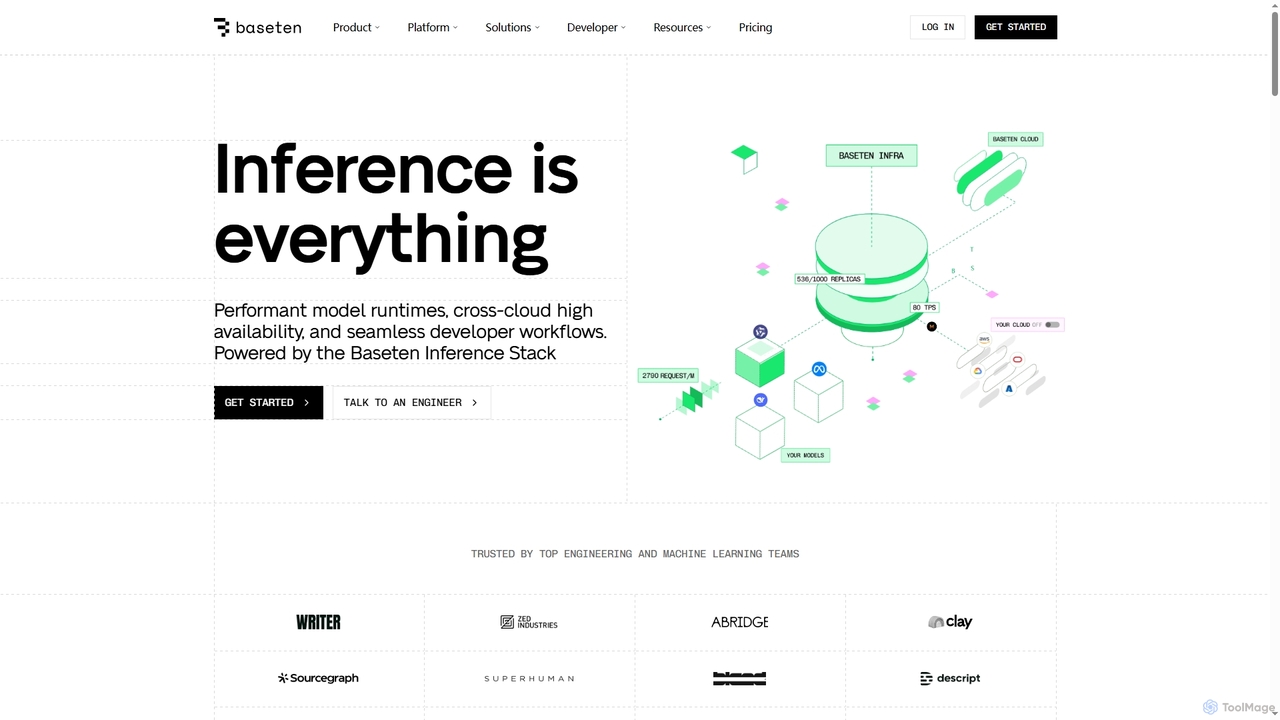
Baseten is a production-grade inference platform for deploying, scaling, and managing AI models. It offers high-performance runtimes, seamless …
Baseten is a production-grade inference platform for deploying, scaling, and managing AI models. It offers high-performance runtimes, seamless developer workflows, and flexible deployment options (cloud, self-hosted, hybrid). Ideal for engineering and ML teams building mission-critical AI applications.
Tensorfuse
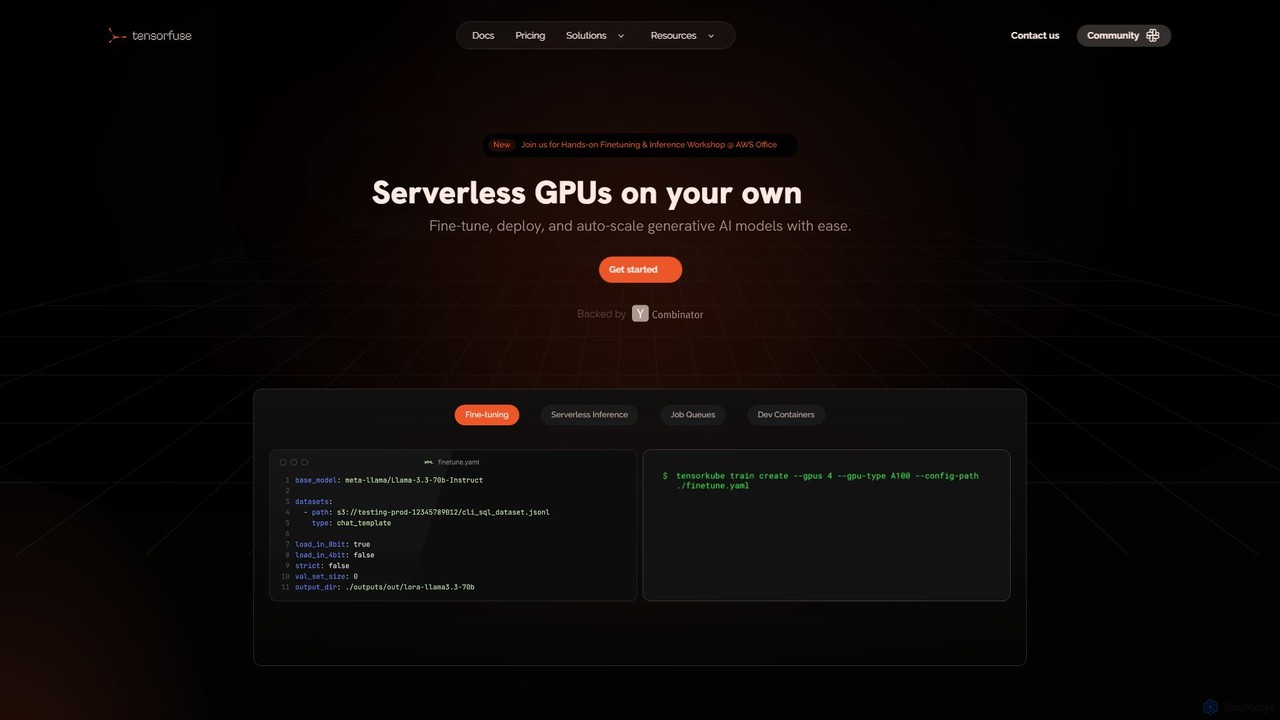
Tensorfuse is a serverless GPU platform that allows developers to fine-tune, deploy, and auto-scale generative AI models on …
Tensorfuse is a serverless GPU platform that allows developers to fine-tune, deploy, and auto-scale generative AI models on their own AWS cloud. It simplifies infrastructure management, offering features like serverless inference, job queues, and dev containers to accelerate development, reduce costs, and eliminate DevOps overhead.
FriendliAI
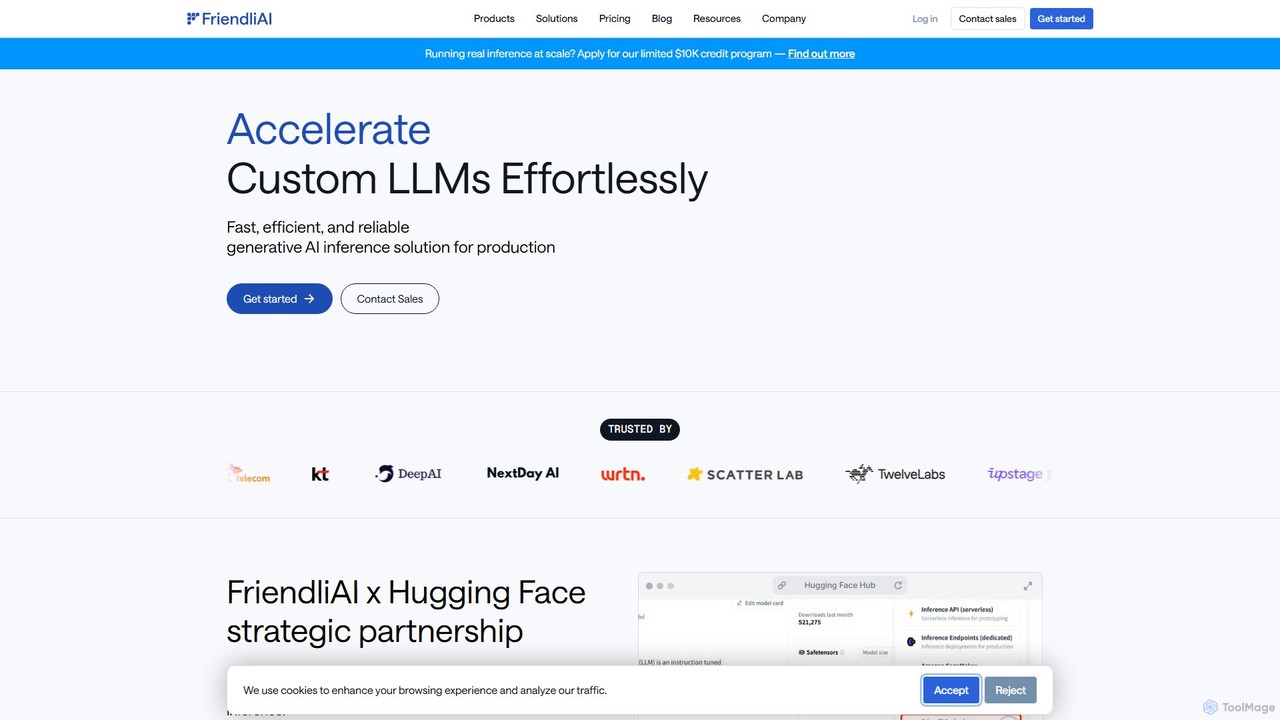
FriendliAI is a generative AI infrastructure platform designed to accelerate and optimize AI model inference. It offers high-performance, …
FriendliAI is a generative AI infrastructure platform designed to accelerate and optimize AI model inference. It offers high-performance, cost-effective solutions for deploying, serving, and scaling large language and multimodal models in production, with flexible options for dedicated, serverless, or on-premise environments.
Myple
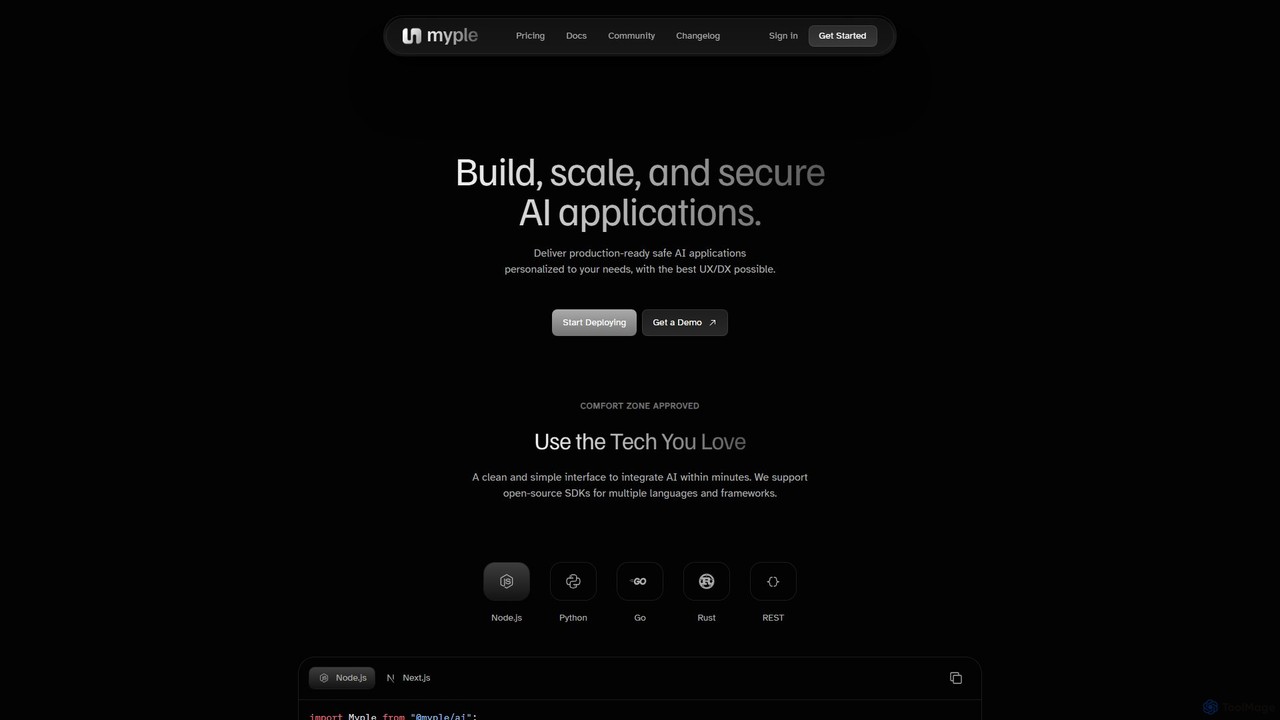
Myple is a comprehensive platform for developers to build, scale, and secure production-ready AI applications. It offers a …
Myple is a comprehensive platform for developers to build, scale, and secure production-ready AI applications. It offers a suite of tools including open-source SDKs, a powerful CLI, customizable templates, and integrations with popular services. With features like vector storage, agent tool management, and robust security, Myple streamlines the entire AI development lifecycle, from initial build to deployment and monitoring, enabling teams to deliver personalized AI experiences with an excellent developer experience (DX).
About Deployment
AI Deployment tools are specialized platforms and services designed to transition trained artificial intelligence models from development environments into production, making them accessible and operational for real-world applications. These tools streamline the complex process of packaging, integrating, and managing AI models, ensuring they can perform inference efficiently and reliably at scale. They bridge the critical gap between model creation and practical value delivery, enabling organizations to leverage their AI investments effectively.
Core Features
- Model Packaging & Containerization: Encapsulating models with their dependencies into portable units like Docker containers for consistent execution.
- API Endpoint Generation: Automatically creating and managing RESTful or gRPC APIs to allow applications to interact with deployed models.
- Scalability & Load Balancing: Dynamically adjusting resources to handle varying inference loads and distributing requests efficiently across multiple model instances.
- Performance Monitoring & Logging: Tracking model latency, throughput, resource utilization, and logging inference requests for analysis and debugging.
- Model Versioning & Rollback: Managing different iterations of a model, enabling seamless updates and the ability to revert to previous versions if issues arise.
Applicable Scenarios
AI Deployment tools are crucial for MLOps teams and data scientists who need to operationalize their models. They are used by enterprises integrating AI into existing software, startups launching AI-powered products, and developers making machine learning capabilities available via APIs. Typical scenarios include deploying recommendation engines, fraud detection systems, natural language processing models, and computer vision applications into production environments.
How to Choose
When selecting an AI Deployment tool, consider its integration capabilities with your existing MLOps pipeline and infrastructure, the level of scalability and performance required for your use cases, and the robustness of its monitoring and management features. Evaluate the ease of use for developers, the support for various model frameworks, and the overall cost-effectiveness, including pricing models for inference and resource consumption. Security, compliance, and data governance features are also paramount.

DeploymentUse Cases
Automated API Endpoint Creation for New Models
A data science team has developed a new predictive analytics model. Using an AI deployment tool, they can automatically package the model and expose it as a secure, scalable RESTful API endpoint within minutes. This allows application developers to easily integrate the model's predictions into their front-end applications without needing deep machine learning expertise, accelerating time-to-market for new features.
Scalable Inference for High-Traffic E-commerce Recommendations
An e-commerce platform needs to provide real-time product recommendations to millions of users daily. An AI deployment solution enables them to deploy their recommendation engine with auto-scaling capabilities. During peak shopping seasons, the system automatically provisions more resources to handle increased inference requests, ensuring low latency and a seamless user experience, then scales down during off-peak hours to optimize costs.
Real-time Fraud Detection Model Integration in Financial Services
A financial institution requires immediate fraud detection for every transaction. An AI deployment tool facilitates the integration of a trained fraud detection model directly into their transaction processing pipeline. The model receives transaction data in real-time, performs inference, and returns a risk score, allowing the system to flag suspicious activities instantly and prevent fraudulent transactions before they are completed.
A/B Testing of Different AI Model Versions for Marketing Campaigns
A marketing team wants to compare the effectiveness of two different AI models for personalizing ad content. An AI deployment platform allows them to deploy both Model A and Model B simultaneously, routing a percentage of user traffic to each. This enables controlled A/B testing in a live production environment, gathering real-world performance metrics to determine which model delivers better engagement and conversion rates before a full rollout.
Edge AI Model Deployment for Industrial IoT Devices
An industrial manufacturing company uses computer vision models for quality control on production lines, requiring low latency and offline capabilities. An AI deployment tool helps optimize and deploy these models directly onto edge devices (e.g., smart cameras, embedded systems) on the factory floor. This enables real-time anomaly detection without relying on cloud connectivity, improving operational efficiency and reducing bandwidth costs.
Continuous Integration/Continuous Deployment (CI/CD) for MLOps Pipelines
An MLOps team aims for rapid iteration and deployment of their machine learning models. An AI deployment solution integrates seamlessly into their CI/CD pipeline. Whenever a new model version is trained and validated, the deployment tool automatically packages it, runs automated tests, and deploys it to production, potentially with canary releases or blue/green deployments, ensuring a robust and efficient model lifecycle management.