Ai Model Best in category 1 results Large Language Models AI Tool

Popular AI tools in the Large Language Models field of Ai Model include Forefront, etc., helping you quickly improve efficiency.

Forefront

Forefront

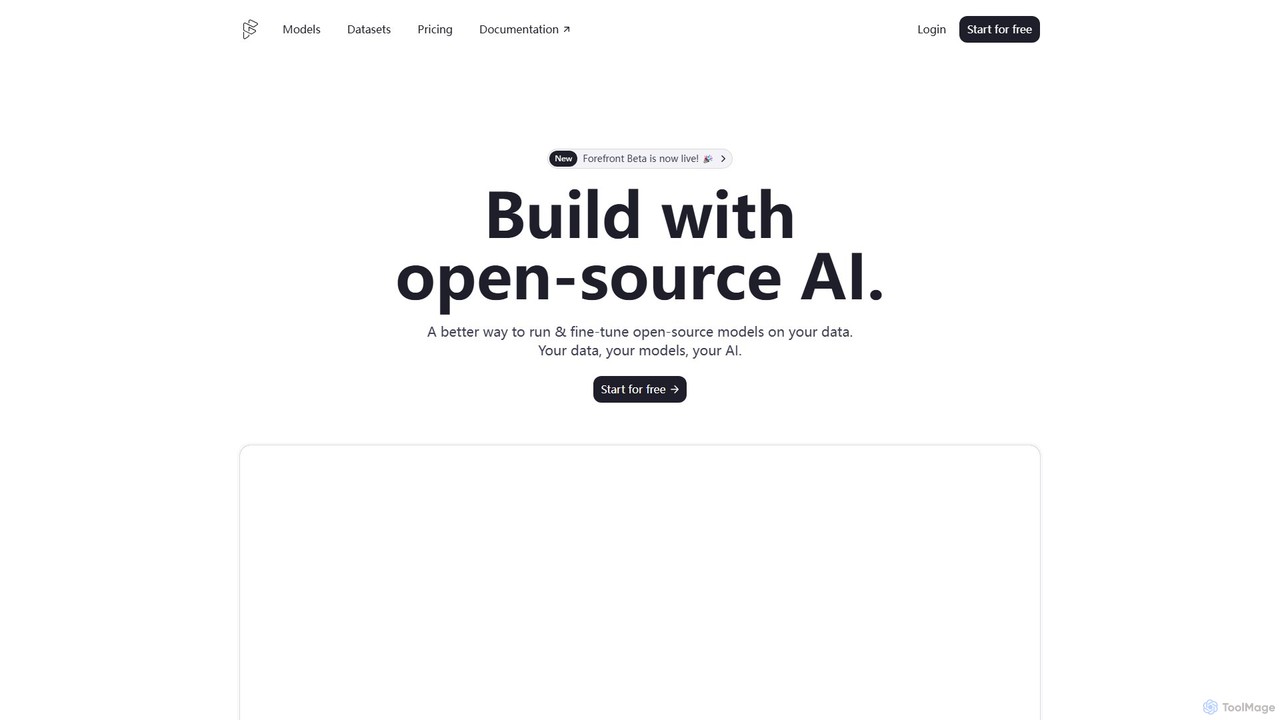
Forefront is a developer platform for building with open-source AI. It simplifies running, fine-tuning, and deploying large language …

49.2K

About Large Language Models

Large Language Models (LLMs) are a class of AI models designed to understand, generate, and interact with human language at a massive scale. Built on deep learning architectures like Transformers and trained on vast datasets of text and code, they can recognize context, nuance, and complex relationships in language. This enables them to perform a wide range of tasks, from writing articles and generating code to answering questions and translating languages. Their primary value lies in their versatility and ability to perform tasks with minimal specific training, a capability known as few-shot learning.

Core Features

  • Natural Language Understanding (NLU): Comprehending user intent, sentiment, and context from text inputs.
  • Advanced Text Generation: Creating coherent, contextually relevant, and stylistically varied text, from emails to creative stories.
  • In-Context Learning: Adapting to new tasks based on a few examples provided in the prompt, without needing to be retrained.
  • Code Generation & Interpretation: Writing, debugging, and explaining code across multiple programming languages.
  • Multilingual Processing: Understanding and generating text in a wide array of human languages.

Applicable Scenarios

LLMs are utilized across various sectors. In software development, they serve as coding assistants. In marketing, they automate the creation of ad copy and social media content. Customer service teams use them to power intelligent chatbots that can handle complex queries, while researchers and analysts use them to summarize long documents and extract key insights.

Selection Criteria

When choosing an LLM, consider the model's performance on tasks relevant to your needs (e.g., creative writing vs. logical reasoning). Evaluate its API accessibility, documentation quality, and ease of integration. Also, compare pricing models (per-token costs vs. subscriptions) and assess whether you require fine-tuning capabilities to train the model on your own data for specialized applications.

Large Language ModelsUse Cases

1

Automated Content Creation for Marketing

A marketing team uses a Large Language Model to accelerate its content pipeline. By providing a brief outline or a set of keywords, the team can generate multiple drafts for blog posts, social media updates, and email newsletters. The LLM helps overcome writer's block and produces varied copy for A/B testing ad campaigns. This process reduces the time spent on initial drafting by up to 70%, allowing marketers to focus on strategy, editing, and optimizing content for specific audiences.

2

Intelligent Customer Support Chatbot

An e-commerce company integrates an LLM API to power its customer support chatbot. Unlike rule-based bots, this LLM-powered agent can understand complex, conversational queries about order status, product details, and return policies. It can access a knowledge base to provide accurate, context-aware answers in real-time. This frees up human agents to handle more complex issues, improves customer satisfaction with 24/7 instant support, and reduces operational costs.

3

Code Generation and Debugging for Developers

A software developer uses an LLM as a coding assistant. When starting a new function, they describe the desired logic in plain English, and the model generates a code snippet in Python or JavaScript. Later, when encountering a cryptic error message, they paste the error and relevant code into the LLM. The model explains the likely cause of the error and suggests several potential fixes. This significantly reduces time spent on boilerplate coding and troubleshooting, allowing the developer to focus on higher-level architecture and logic.

4

Summarization of Long Documents for Research

A legal analyst needs to review dozens of lengthy court rulings and research papers for a case. Instead of reading each document in its entirety, they use an LLM to generate concise summaries. The model is prompted to extract key arguments, precedents cited, and the final verdict. This allows the analyst to quickly identify the most relevant documents for in-depth review, saving hours of reading time per day and ensuring no critical information is overlooked in a high-volume information environment.

5

Personalized Email Campaign Generation

An e-commerce marketer wants to create highly personalized email campaigns. They use an LLM connected to their customer data platform. For each customer segment, the LLM generates unique email subject lines and body copy that reference past purchases, browsing history, and expressed interests. For example, it can draft an email for a customer who bought running shoes, suggesting new socks and highlighting local running trails. This level of personalization significantly increases open rates and conversions compared to generic, template-based emails.

6

Language Translation and Content Localization

A global software company needs to translate its user documentation and marketing website into ten languages. Instead of relying solely on manual translation, which is slow and expensive, they use an LLM for the initial translation pass. The model is capable of understanding technical jargon and cultural nuances better than traditional machine translation services. Human translators then review and refine the output, ensuring high quality and consistency. This hybrid approach cuts translation project timelines by half and significantly reduces costs.

Large Language ModelsFrequently Asked Questions