

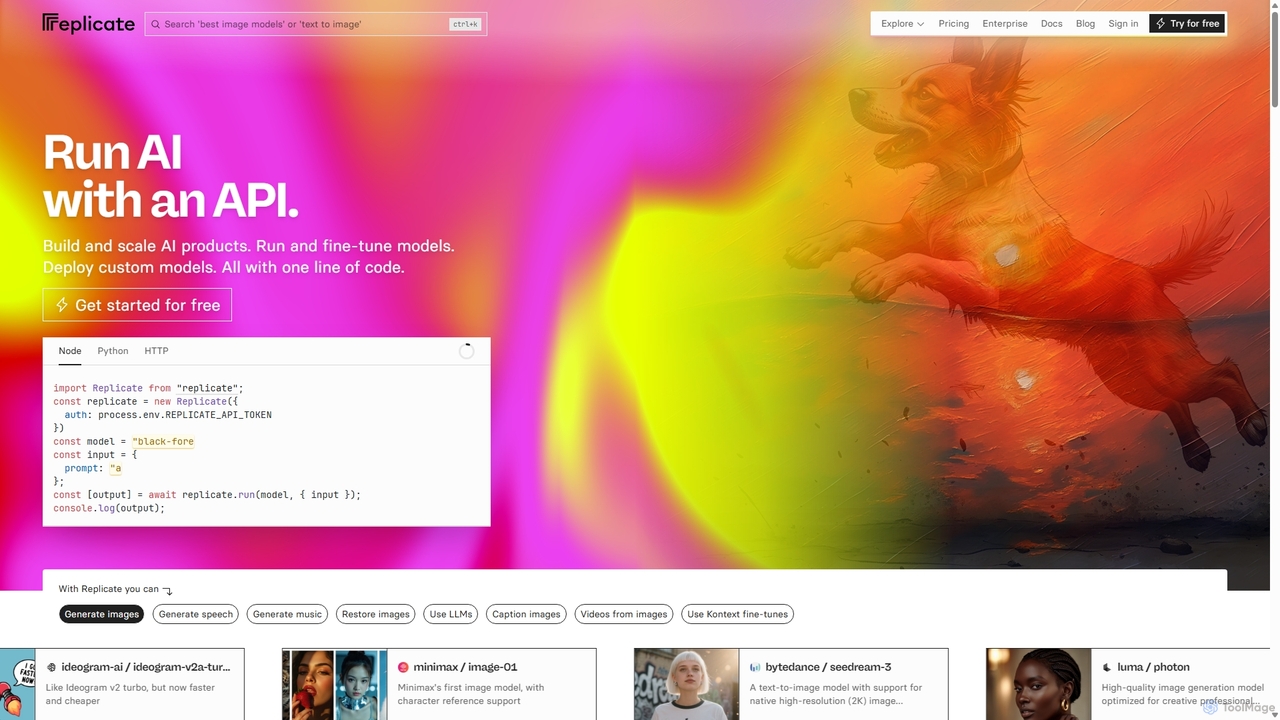
Replicate Overview
Replicate is a cloud platform designed to democratize access to artificial intelligence, making it simple for any software developer to run, fine-tune, and deploy machine learning models. Its core mission is to remove the immense complexity traditionally associated with ML infrastructure management. Instead of wrestling with API servers, CUDA drivers, GPU provisioning, and dependency management, developers can leverage Replicate's powerful API to integrate cutting-edge AI models into their applications with just a few lines of code. The platform hosts thousands of open-source models from the community, covering a vast range of applications from image and video generation to text analysis and audio processing.
How to use Replicate
Getting started with Replicate is designed to be straightforward, catering to different levels of complexity.
1. Run Existing Models: The simplest way to use Replicate is by running one of the thousands of pre-existing models available in its public library. This can be achieved with a single API call. For example, in Python, you can generate an image with a model like FLUX Dev:import Replicate
output = Replicate.run(
"black-forest-labs/flux-dev",
input={
"prompt": "An astronaut riding a rainbow unicorn, cinematic, dramatic"
}
)
print(output)
This abstracts away all the backend complexity, allowing developers to focus on their application logic.
2. Fine-Tune Models: For more specific tasks, you can fine-tune existing models with your own data. This is particularly useful for creating models that recognize a specific person, object, or artistic style. The process involves creating a training job via the API, providing your dataset (e.g., a zip file of images) and a trigger word. Replicate handles the training process and creates a new, custom model version for you to use.
3. Deploy Custom Models: If you have your own machine learning model, you can deploy it on Replicate's infrastructure. This is done using Cog, Replicate's open-source tool for packaging ML models into standard, reproducible containers. You define your model's environment in a cog.yaml file (specifying Python version, packages, GPU requirements) and its prediction interface in a predict.py file. After testing locally with cog predict, you can push the container to Replicate with cog push, and it instantly becomes available via the same simple API as public models.
Core Features of Replicate
- Extensive Model Library: Access thousands of open-source and proprietary AI models for image generation (SDXL, FLUX), video generation (Veo 2, Wan 2.1), large language models (Claude 3.7, DeepSeek-R1), and more.
- Simple, Unified API: A single, consistent API to run, train, and deploy any model, regardless of its underlying framework.
- Custom Model Deployment: Use the open-source
Cogtool to package and deploy your own models, giving you full control and flexibility. - Fine-Tuning Capabilities: Easily adapt and specialize pre-trained models with your own datasets to improve performance on specific tasks.
- Automatic Scalability: The platform automatically scales infrastructure up to handle traffic spikes and scales down to zero when there's no activity, ensuring you never pay for idle resources.
- Pay-Per-Use Pricing: You are only billed for the actual compute time your code is running, measured by the second. This makes it highly cost-effective for projects of all sizes.
- Diverse Hardware Options: Access a wide range of hardware, from cost-effective CPUs to high-performance GPUs like the Nvidia T4, A100, L40S, and H100, available in single and multi-GPU configurations.
- Robust Tooling: Includes features for logging, monitoring, and webhooks to keep track of model performance and integrate seamlessly with your workflows.
Use Cases for Replicate
Replicate's versatility makes it suitable for a wide array of applications:
- AI-Powered Web & Mobile Apps: Developers can build applications with features like AI-generated avatars, text summarization, image upscaling, or style transfer.
- Creative Tools: Build platforms for artists and designers to generate unique images, videos, or music based on text prompts.
- Automation & Bots: Create Discord or Slack bots that can generate images, answer questions, or perform other AI-driven tasks for a community.
- E-commerce: Generate product photos in different settings, write compelling product descriptions, or power recommendation engines.
- Enterprise Solutions: Deploy custom, private models for internal use cases like data analysis, document processing, or specialized content creation, with enterprise-grade support and SLAs.
Advantages of Replicate
The primary advantage of Replicate is its radical simplification of MLOps. It abstracts away the difficult parts of deploying machine learning models at scale.
- Accessibility: Empowers any software developer, not just ML experts, to build with AI.
- Cost-Efficiency: The pay-per-second, scale-to-zero model eliminates the high cost of maintaining idle, expensive GPU servers.
- Speed to Market: Teams can deploy a new AI feature in a day and scale it to millions of users without building a dedicated ML infrastructure team.
- Reliability & Performance: Built by a team with deep experience in infrastructure (from places like Docker, Heroku, and GitHub), ensuring a fast and reliable platform.
- Community & Open Source: Fosters a strong community around open-source AI, with thousands of shared models and the open-source
Cogtool.
Pricing and Plans
Replicate operates on a transparent, pay-as-you-go pricing model. You only pay for the compute resources you use, billed by the second.
- Hardware-Based Pricing: The cost varies depending on the hardware used. Examples include:
- CPU: Starting from $0.000025/sec
- Nvidia T4 GPU: $0.000225/sec
- Nvidia L40S GPU: $0.000975/sec
- Nvidia A100 (80GB) GPU: $0.001400/sec
- Nvidia H100 GPU: $0.001525/sec - Model-Specific Pricing: Some proprietary or optimized models are billed per unit of work, such as:
- Claude 3.7 Sonnet: $0.015 / thousand output tokens & $3.00 / million input tokens.
- FLUX 1.1 Pro: $0.04 / output image. - Private Models: When deploying your own models, you pay for the time the dedicated hardware instance is online, including setup and idle time, unless it's a 'fast booting fine-tune'.
- Enterprise Plans: For larger teams with complex needs, Replicate offers enterprise plans that include dedicated support, higher GPU limits, volume discounts, and performance SLAs.
Traffic
Latest traffic
Status
Monthly traffic trend
- 2025-9: 1.8M
- 2026-1: 1.5M
- 2026-2: 1.3M
- 2026-3: 1.5M
- 2026-4: 1.3M
- 2026-5: 1.3M
Geography
Top 5 countries / regions
- 🇺🇸United States37.4%
- 🇮🇳India27.7%
- 🇨🇳China13.5%
- 🇬🇧United Kingdom11.6%
- 🇩🇪Germany9.7%
Traffic sources
| Source type | Percentage |
|---|---|
Direct | 92.9% |
Referral | 5.5% |
Email | 1.6% |
Top keywords
| Keyword | Cost per click |
|---|---|
| real-esrgan | $0.94 |
| replicate | $2.07 |
| replicate ai | $2.29 |
| replicate api | $3.65 |
| veo 3 | $0.70 |
Replicate Videos on YouTube

AI Survival Tales

Vivendo de Saas

The Next Signal

Mike Murphy | AI Handyman



5minAI | AI Agents
Replicate Alternatives

LangDrive
LangDrive is a developer-centric platform offering a unified API to fine-tune, manage, and deploy open-source Large Language Models (LLMs). It simplifies the complex MLOps pipeline, enabling businesses to create powerful, custom AI models for specialized tasks with greater control over data and costs.
Api Management
AIGoMarket
AIGoMarket is an Edge AI Foundry and marketplace designed to democratize edge AI development. It enables creators to upload and monetize their optimized AI models, while providing developers with a platform to discover, license, and deploy high-performance AI solutions for various edge devices and applications.
Model Marketplace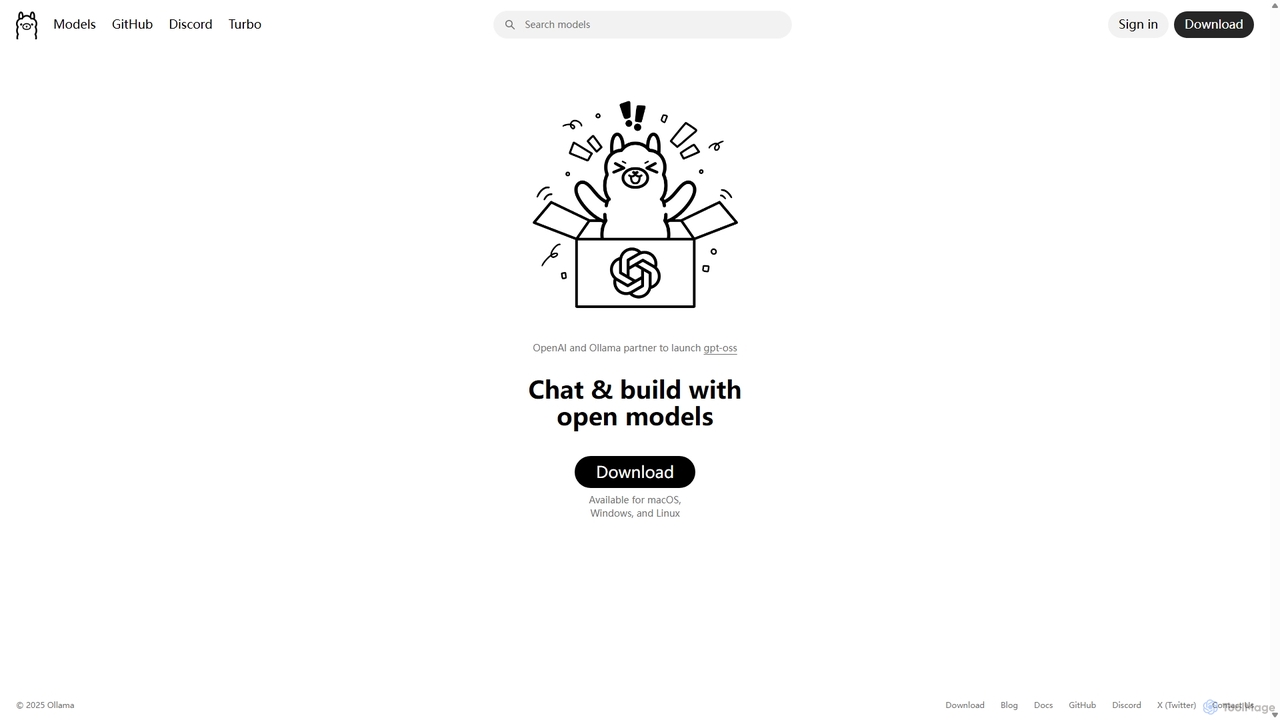
Ollama
Ollama is a powerful open-source framework for running large language models (LLMs) like Llama 3, Mistral, and Gemma locally on your own hardware. Available for macOS, Windows, and Linux, it simplifies the setup and management of open-source models, enabling private, offline, and cost-effective AI development and usage.
Machine Learning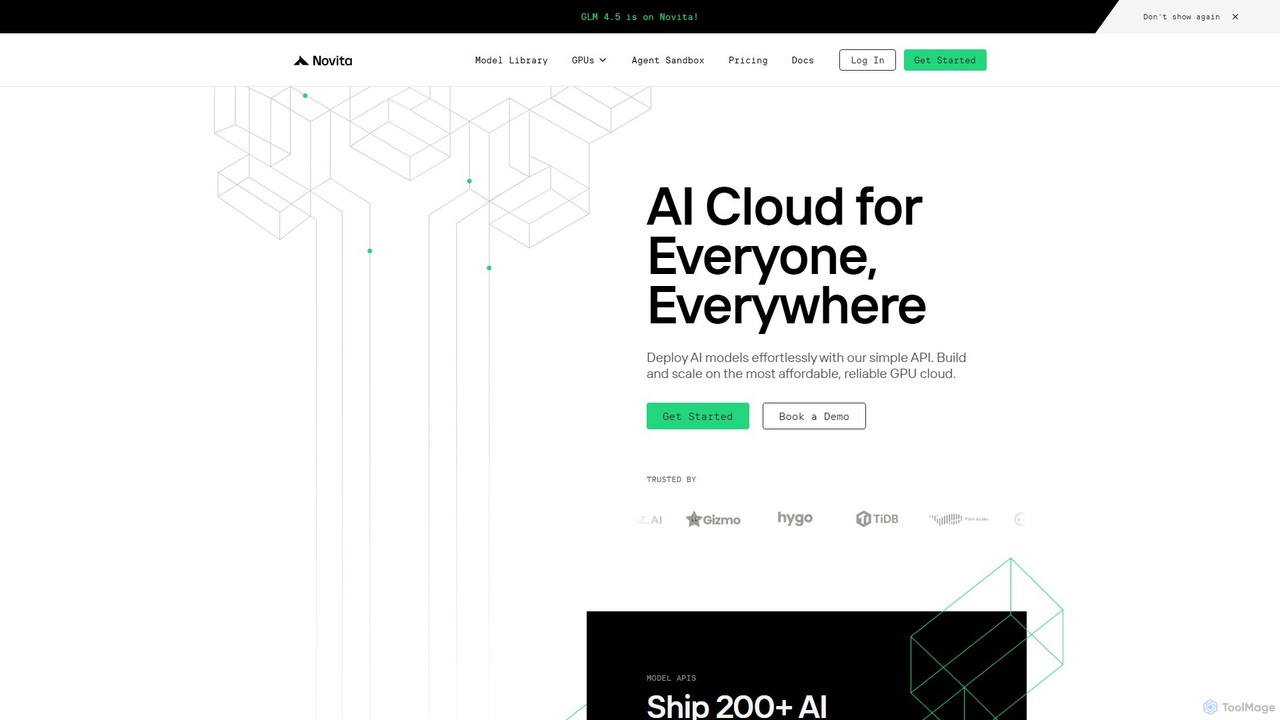
novita.ai
Novita AI is a developer-centric cloud platform offering affordable, scalable access to over 200 AI models via simple APIs. It provides serverless GPUs, dedicated GPU instances, and custom model deployment, enabling developers to build and scale AI applications without managing infrastructure.
Gpu
Baseten
Baseten is a production-grade inference platform for deploying, scaling, and managing AI models. It offers high-performance runtimes, seamless developer workflows, and flexible deployment options (cloud, self-hosted, hybrid). Ideal for engineering and ML teams building mission-critical AI applications.
DeploymentReplicate Categories
Replicate Jobs
Replicate Embed Widget
Copy this embed code to place the badge on your blog, article, or product site and send readers directly to this ToolMage detail page.

Related AI tools
LangDrive
LangDrive is a developer-centric platform offering a unified API to fine-tune, manage, and deploy open-source Large Language Models (LLMs). It simplifies the complex MLOps pipeline, enabling businesses to create powerful, custom AI models for specialized tasks with greater control over data and costs.
Api Managementnovita.ai
Novita AI is a developer-centric cloud platform offering affordable, scalable access to over 200 AI models via simple APIs. It provides serverless GPUs, dedicated GPU instances, and custom model deployment, enabling developers to build and scale AI applications without managing infrastructure.
Gpu
Jyek
Jyek is an AI agent platform that understands objectives, creates execution plans, uses tools, and delivers verifiable results for complex, multi-step tasks.
AutomationAIGoMarket
AIGoMarket is an Edge AI Foundry and marketplace designed to democratize edge AI development. It enables creators to upload and monetize their optimized AI models, while providing developers with a platform to discover, license, and deploy high-performance AI solutions for various edge devices and applications.
Model Marketplace
SiliconFlow
SiliconFlow is a unified AI infrastructure platform designed for high-performance inference of Large Language Models (LLMs) and multimodal models. It provides developers and enterprises with scalable, cost-effective, and flexible deployment options, including serverless APIs, reserved GPUs, and fine-tuning capabilities, all accessible through a single, OpenAI-compatible API.
Ai & Machine Learning
OpenAI
OpenAI is a leading AI research and deployment company dedicated to ensuring that artificial general intelligence (AGI) benefits all of humanity. It develops state-of-the-art models like GPT-5, ChatGPT for conversational AI, Sora for text-to-video, and DALL-E for image generation. Through its robust API platform, OpenAI empowers developers and businesses to integrate powerful AI capabilities into their applications, driving innovation across various industries.
Image GenerationOllama
Ollama is a powerful open-source framework for running large language models (LLMs) like Llama 3, Mistral, and Gemma locally on your own hardware. Available for macOS, Windows, and Linux, it simplifies the setup and management of open-source models, enabling private, offline, and cost-effective AI development and usage.
Machine LearningBaseten
Baseten is a production-grade inference platform for deploying, scaling, and managing AI models. It offers high-performance runtimes, seamless developer workflows, and flexible deployment options (cloud, self-hosted, hybrid). Ideal for engineering and ML teams building mission-critical AI applications.
Deployment
GenAI List
GenAI List is a comprehensive online directory dedicated to tracking, exploring, and comparing generative AI models. It serves as an essential guide to the rapidly evolving AI landscape, featuring thousands of models from various organizations. Users can discover new releases, filter by type, openness, and capabilities, and gain insights into practitioner opinions.
Model Discovery
Google AI for Developers
A comprehensive platform by Google providing developers with access to cutting-edge AI models like Gemini, Imagen, and Veo via API, alongside the open-source Gemma models. It includes tools like Google AI Studio for prototyping, AI Edge for on-device deployment, and integrated code assistance to build innovative applications and streamline development workflows responsibly.
Large Language Models
DistributeAI
DistributeAI is a decentralized AI supercomputer platform that provides developers with scalable, low-cost access to a vast library of open-source AI models. It enables building and deploying AI applications through a developer-friendly API and SDK, while also allowing users to monetize their idle computing power by contributing to the global network.
Inference
Runexo
Runexo is a cloud GPU platform designed to empower AI development, training, and inference. It offers instant access to high-performance, pay-as-you-go GPUs and secure cloud storage, enabling developers, researchers, and enterprises to launch AI applications like Stable Diffusion, ComfyUI, and Fooocus in seconds without setup or hardware requirements.
Gpu As A Service
Shakespeare
Shakespeare is an open-source AI builder designed for developers to create custom AI applications. It provides a platform to select and utilize various AI models, enabling the rapid development and deployment of intelligent solutions.
Ai Development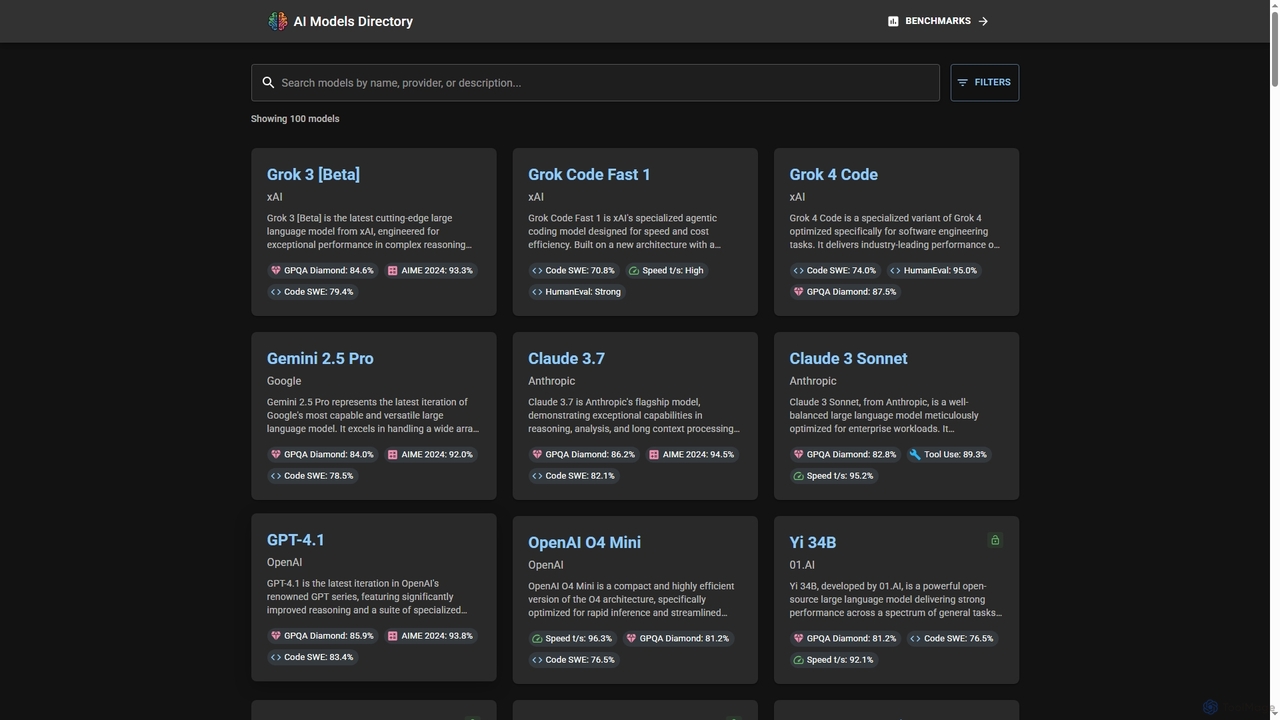
LLM Models
LLM Models is a comprehensive online directory and comparison platform for large language models and foundation models. It provides detailed technical specifications, benchmark performance, and feature comparisons to help developers, researchers, and businesses select the most suitable AI models for their needs.
Model Directory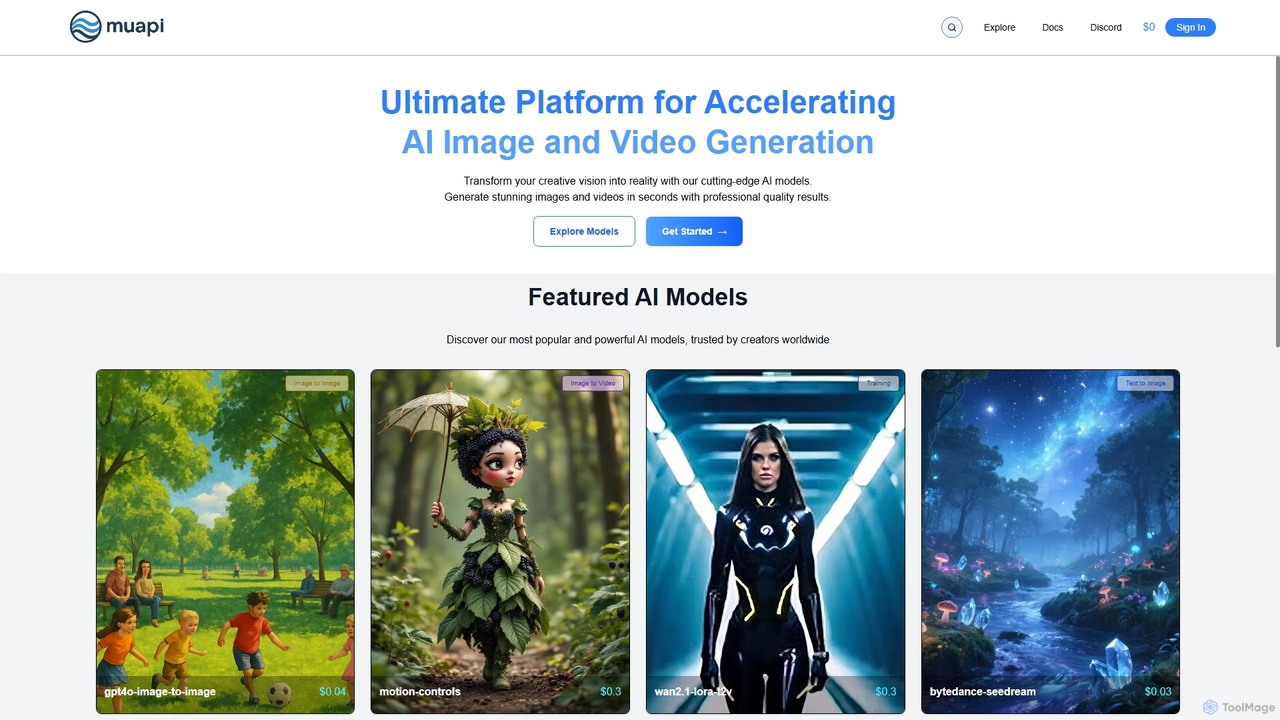
Muapi
Muapi is a powerful API platform designed to accelerate AI image and video generation. It provides developers and creators with unified access to a diverse range of cutting-edge AI models. With Muapi, you can easily integrate functionalities like text-to-video, image-to-video, consistent character generation, and style transfer into your applications. The platform simplifies the development process, offering a single API endpoint for multiple advanced generative AI tasks, backed by a clear, pay-as-you-go pricing structure.
Api
Replicate Comments (0)
Sign in to comment.
Sign inNo comments yet.