Replicate
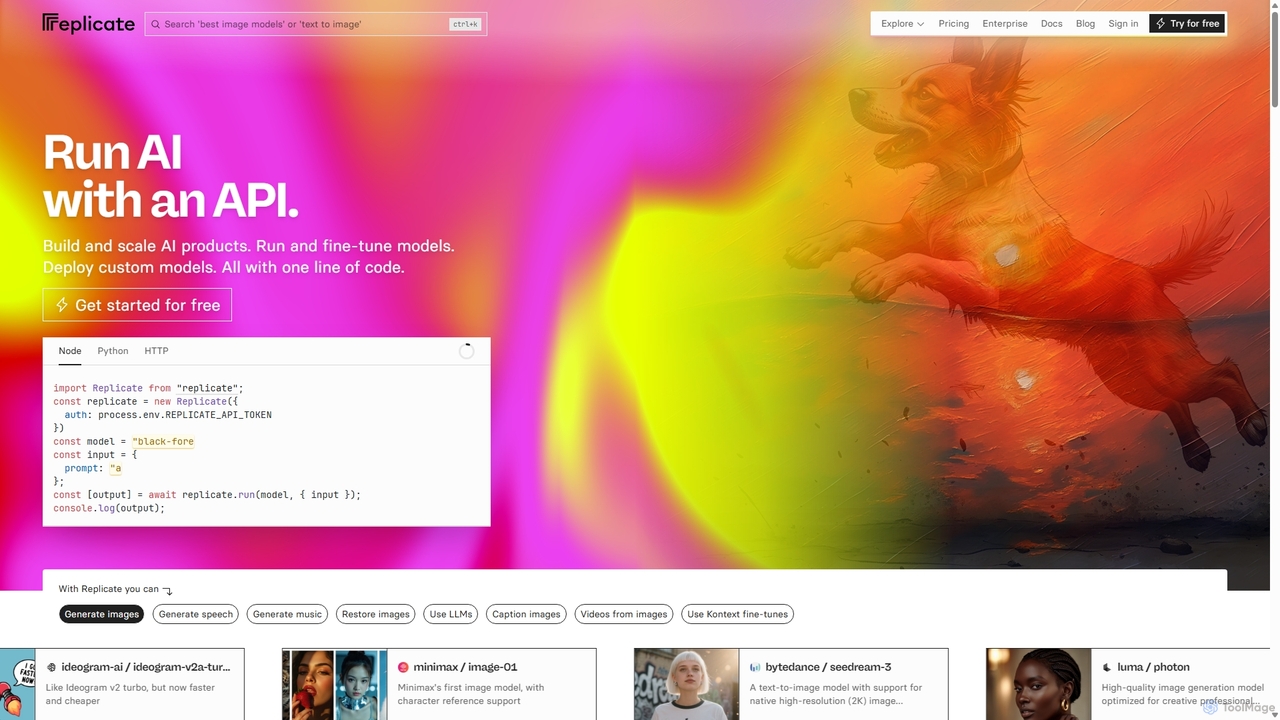
Replicate is a cloud platform for developers to run, fine-tune, and deploy AI models via a simple API. …
Replicate is a cloud platform for developers to run, fine-tune, and deploy AI models via a simple API. It eliminates the need for managing complex infrastructure, offering access to thousands of models with pay-per-use pricing and automatic scaling.
Substrate
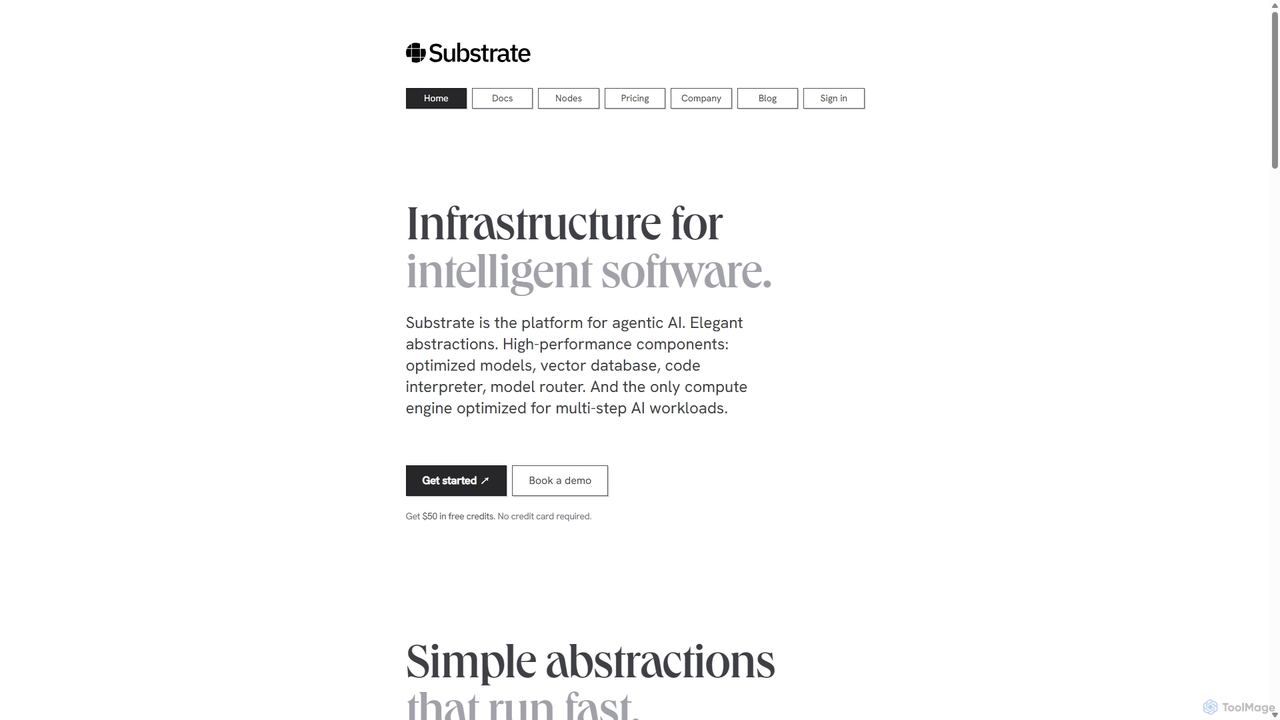
Substrate is a developer platform for building high-performance, agentic AI applications. It provides elegant SDKs, a comprehensive library …
Substrate is a developer platform for building high-performance, agentic AI applications. It provides elegant SDKs, a comprehensive library of optimized models, and a unique compute engine that orchestrates complex, multi-step AI workflows for maximum speed and efficiency.
Forefront
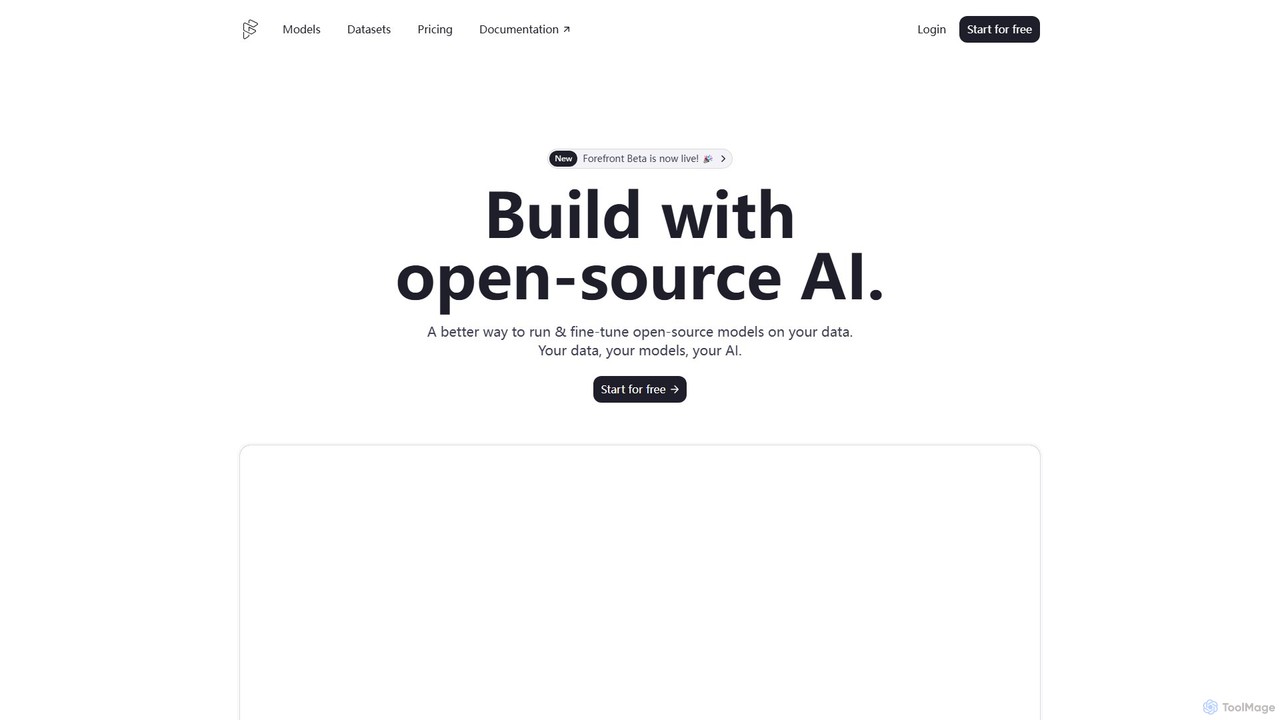
Forefront is a developer platform for building with open-source AI. It simplifies running, fine-tuning, and deploying large language …
Forefront is a developer platform for building with open-source AI. It simplifies running, fine-tuning, and deploying large language models (LLMs) on your private data, providing a scalable, secure, and cost-effective alternative to closed-source platforms. Own your data, your models, and your AI.
Supabase
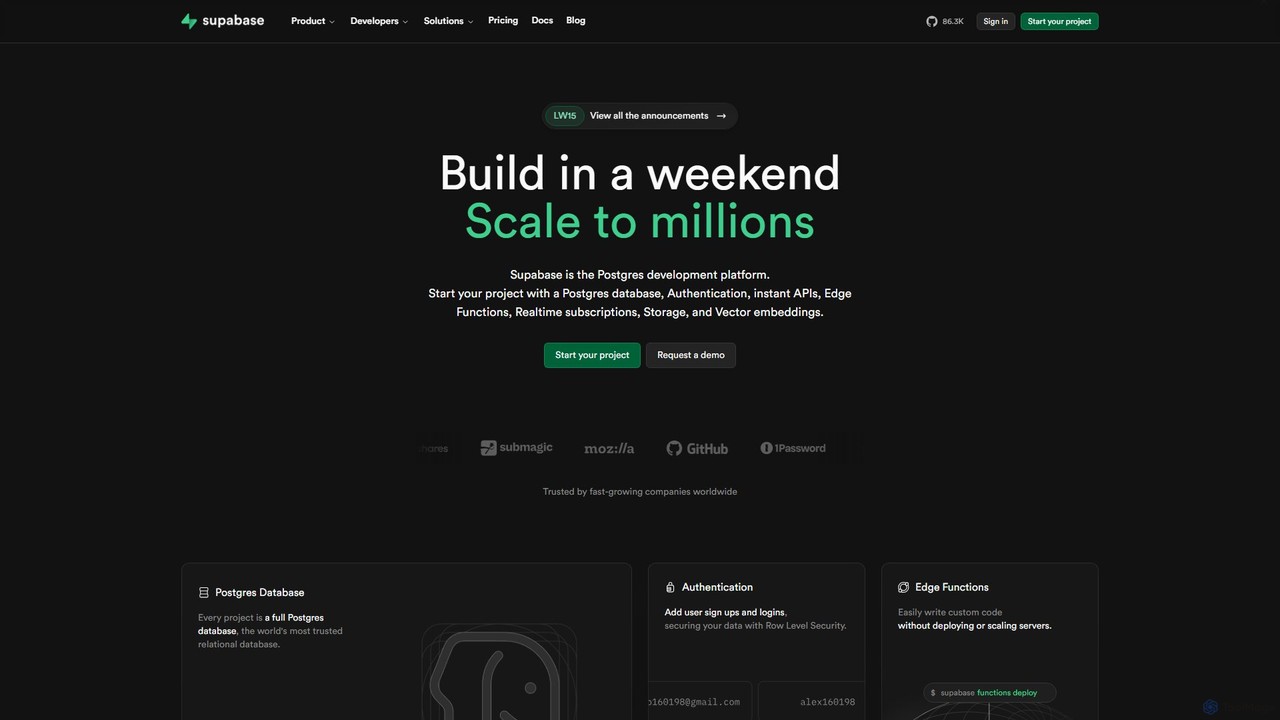
Supabase is an open-source Firebase alternative, providing a complete backend solution built on Postgres. It offers a suite …
Supabase is an open-source Firebase alternative, providing a complete backend solution built on Postgres. It offers a suite of tools including a database, authentication, instant APIs, edge functions, real-time subscriptions, storage, and vector embeddings to accelerate application development from prototype to production.
About Platform As A Service
Platform as a Service (PaaS) is a cloud computing model that provides a complete environment for developing, testing, delivering, and managing software applications. These platforms abstract away the underlying infrastructure, allowing developers to focus solely on writing code and managing their applications. By offering pre-configured components like operating systems, databases, and development tools, PaaS significantly accelerates the application lifecycle. This approach combines the control of custom development with the convenience of a managed service.
Core Features
- Managed Infrastructure: The provider manages servers, storage, networking, and virtualization, freeing users from infrastructure maintenance.
- Development Frameworks: Offers built-in support for various programming languages, frameworks, and tools to streamline the development process.
- Application Lifecycle Management: Includes integrated tools for building, testing, deploying, scaling, and updating applications within a unified environment.
- Integrated Services: Provides easy access to databases, messaging queues, AI/ML services, and other essential application components.
Use Cases
PaaS is widely used by development teams for building web and mobile applications, creating and managing APIs, and running analytics or business intelligence applications. It is particularly beneficial for organizations adopting Agile and DevOps methodologies, as it facilitates rapid iteration and continuous deployment cycles without the burden of infrastructure management.
How to Choose
When selecting a PaaS solution, consider the supported programming languages and frameworks to ensure compatibility with your tech stack. Evaluate the platform's scalability options and pricing model to match your expected growth and budget. Also, assess the ecosystem of integrated services and the ease of integration with third-party tools, such as CI/CD pipelines and monitoring systems.
Platform As A ServiceUse Cases
Rapid Web Application Prototyping
A startup team needs to build and launch a Minimum Viable Product (MVP) quickly to test a market hypothesis. Instead of spending weeks setting up servers, databases, and deployment pipelines, they use a PaaS. The platform provides a ready-to-use environment with their preferred programming language (e.g., Python with Django). Developers can push code directly from their Git repository, and the PaaS handles the build, deployment, and scaling automatically. This allows the team to go from idea to a live prototype in days, not months, focusing their limited resources on feature development and user feedback.
Developing and Managing Scalable APIs
An enterprise company wants to expose its internal data and services through a set of secure and scalable APIs for partners and mobile applications. Using a PaaS, their development team can build these APIs without managing the underlying gateway infrastructure. The platform offers built-in features for API key management, rate limiting, authentication, and monitoring. As API traffic grows, the PaaS automatically scales the resources to handle the load, ensuring high availability and consistent performance without manual intervention from the DevOps team.
Streamlining DevOps with CI/CD Pipelines
A DevOps team aims to automate their software delivery process from code commit to production deployment. They leverage a PaaS that integrates seamlessly with their source control system (like GitHub) and testing frameworks. When a developer commits new code, it automatically triggers a build process on the PaaS. The platform then runs automated tests in a staging environment. If all tests pass, the new version is deployed to production with zero downtime. This CI/CD (Continuous Integration/Continuous Deployment) workflow, managed by the PaaS, reduces manual errors and accelerates release cycles.
Hosting a Scalable Mobile App Backend
A mobile game developer is launching a new game and anticipates unpredictable user traffic, especially during marketing campaigns. They choose a PaaS to host the game's backend services, including user authentication, leaderboards, and in-app purchases. The PaaS's auto-scaling feature is critical; it automatically provisions more resources when player activity spikes and scales down during off-peak hours to save costs. This elasticity ensures a smooth player experience without the need for a dedicated team to constantly monitor and adjust server capacity.
Building a Business Intelligence (BI) Platform
A data analytics team needs to build a custom BI dashboard to provide real-time insights to business stakeholders. They use a PaaS to deploy their data processing application. The platform allows them to easily connect to various data sources, such as managed databases and data warehouses, also offered by the cloud provider. They can focus on writing the analytics logic and designing the user interface, while the PaaS handles the runtime environment, security, and scalability, ensuring the dashboard remains responsive even when processing large volumes of data.
Developing Internet of Things (IoT) Applications
An IoT company needs a platform to ingest, process, and analyze data streams from thousands of connected sensors in the field. They build their IoT application on a PaaS. This allows them to leverage managed services like message queues for reliable data ingestion and serverless functions for real-time data processing. The development team can focus on the application logic—such as detecting anomalies or triggering alerts—without the complexity of managing a distributed, high-throughput data pipeline infrastructure.