Muapi
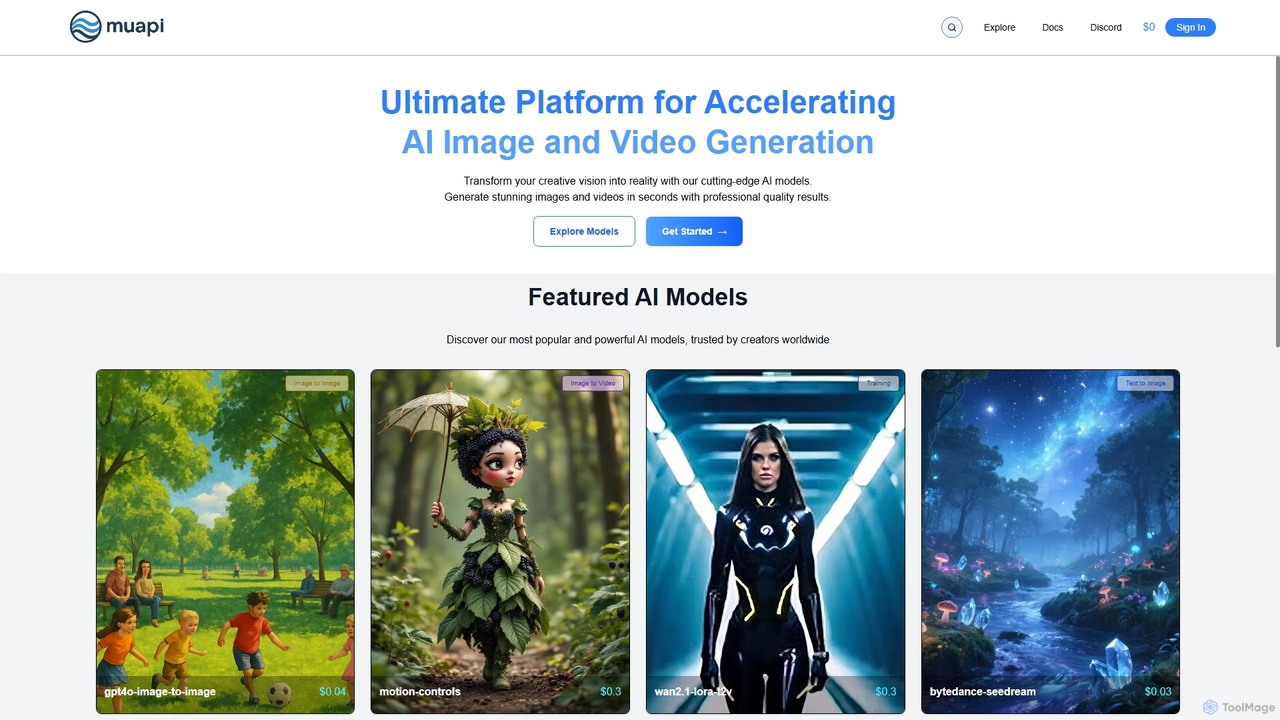
Muapi is a powerful API platform designed to accelerate AI image and video generation. It provides developers and …
Muapi is a powerful API platform designed to accelerate AI image and video generation. It provides developers and creators with unified access to a diverse range of cutting-edge AI models. With Muapi, you can easily integrate functionalities like text-to-video, image-to-video, consistent character generation, and style transfer into your applications. The platform simplifies the development process, offering a single API endpoint for multiple advanced generative AI tasks, backed by a clear, pay-as-you-go pricing structure.
Thesys
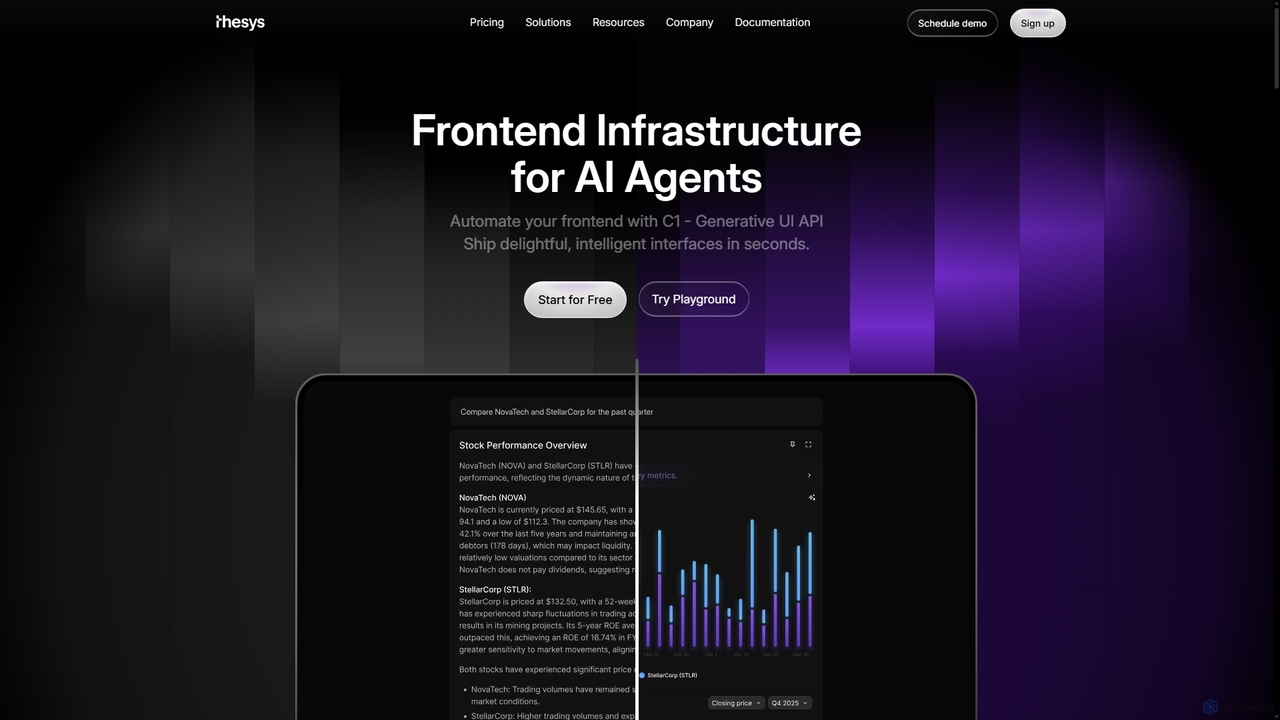
Thesys provides C1, a Generative UI API that transforms LLM responses into dynamic, interactive user interfaces in real-time. …
Thesys provides C1, a Generative UI API that transforms LLM responses into dynamic, interactive user interfaces in real-time. Designed for developers building AI agents and applications, it automates frontend development by converting text outputs into live UI components like forms, charts, and tables. This allows for the creation of adaptive, engaging, and intelligent interfaces without the limitations of hardcoded UI, accelerating AI product development.
Avatar SDK
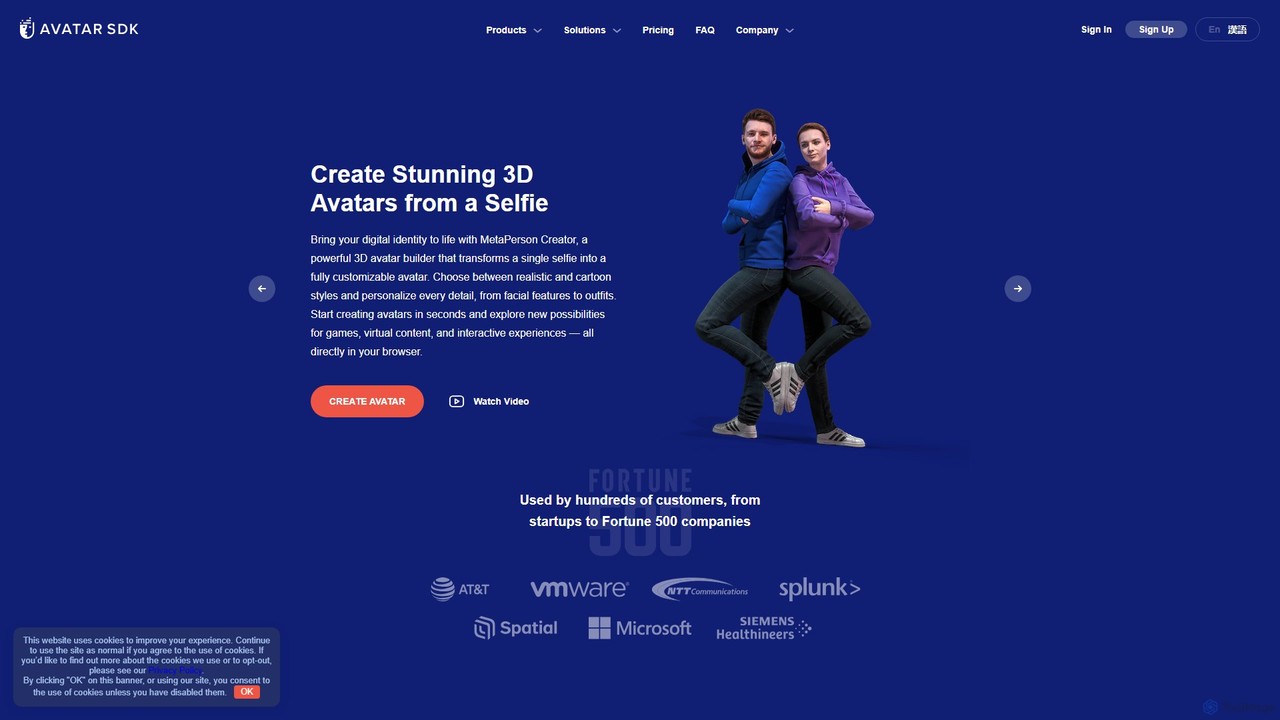
An advanced AI-powered Software Development Kit (SDK) for creating realistic and customizable 3D avatars from a single 2D …
An advanced AI-powered Software Development Kit (SDK) for creating realistic and customizable 3D avatars from a single 2D photo. Ideal for games, metaverses, and virtual communication applications.
Neurelo
Neurelo was an innovative AI-powered Backend-as-a-Service (BaaS) platform designed to drastically simplify and accelerate backend development. It automatically …
Neurelo was an innovative AI-powered Backend-as-a-Service (BaaS) platform designed to drastically simplify and accelerate backend development. It automatically generated production-ready REST and GraphQL APIs from a database schema, empowering developers to build scalable applications in a fraction of the time by handling database management, migrations, and API creation.
Mechanix
Mechanix provides developers with a hosted API for powerful tools like Web Search, Summarization, and Code Execution. It …
Mechanix provides developers with a hosted API for powerful tools like Web Search, Summarization, and Code Execution. It simplifies the integration of complex functionalities into AI-powered or standard applications, acting as a managed, scalable alternative to self-hosted solutions like LangChain Tools.
unremot
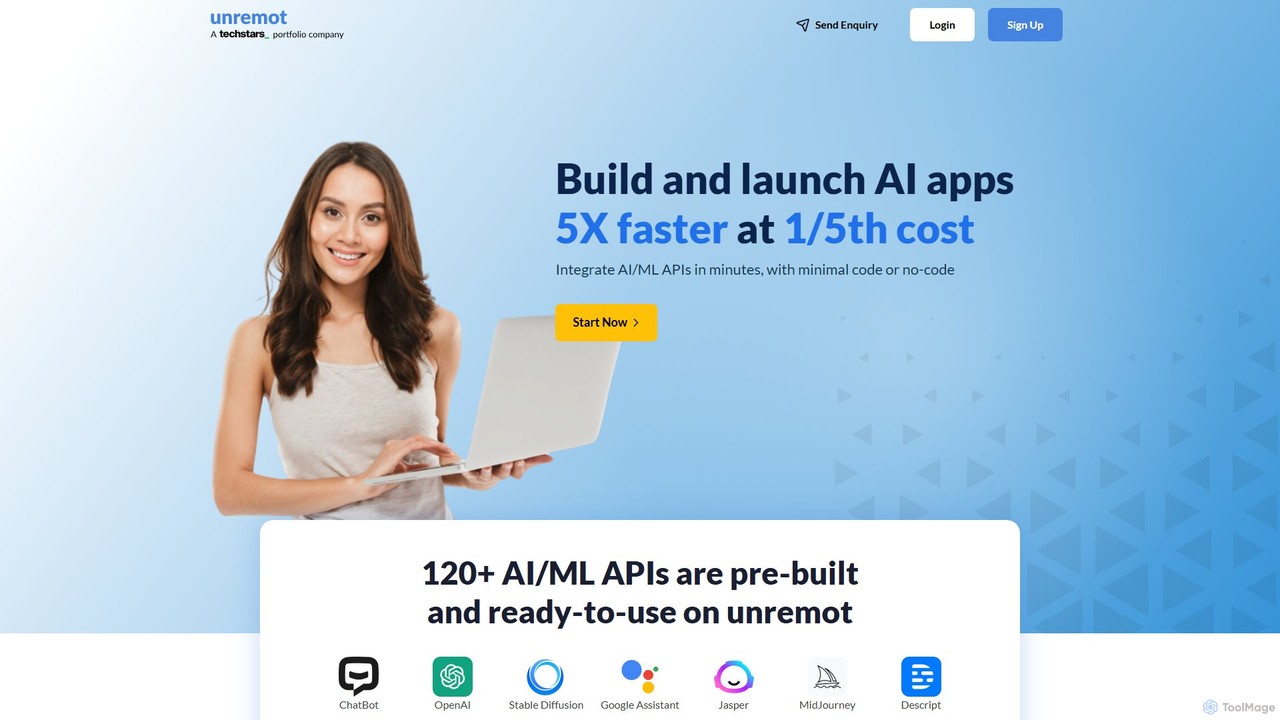
unremot is a development platform designed to accelerate the creation and deployment of AI applications. It provides access …
unremot is a development platform designed to accelerate the creation and deployment of AI applications. It provides access to over 120 pre-built AI/ML APIs from leading providers like OpenAI and Google, enabling developers to integrate advanced AI features in minutes with minimal or no code. This significantly reduces development time and costs, making it an ideal solution for startups and businesses aiming for rapid innovation.
Backmesh
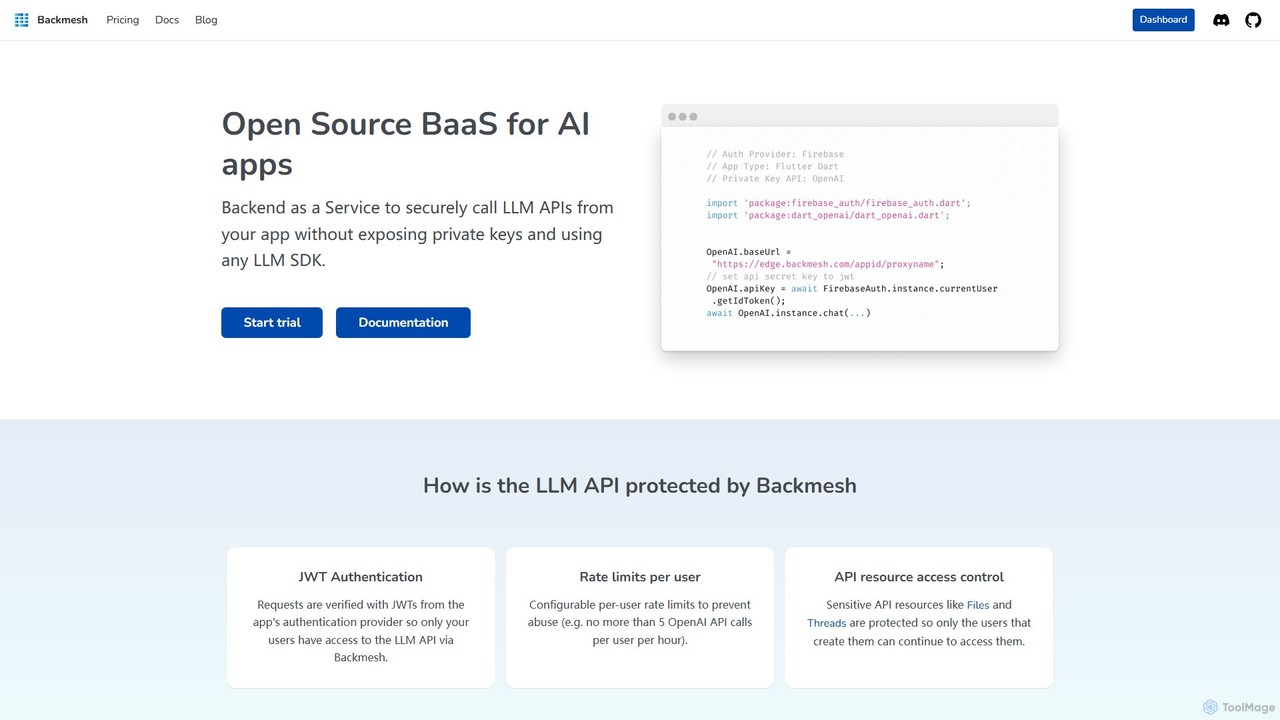
Backmesh is an open-source Backend as a Service (BaaS) designed for AI applications. It acts as a secure …
Backmesh is an open-source Backend as a Service (BaaS) designed for AI applications. It acts as a secure LLM API Gatekeeper, allowing developers to call LLM APIs like OpenAI and Gemini directly from web or mobile apps without exposing private keys. It offers features like JWT authentication, per-user rate limiting, and built-in analytics to manage and monitor API usage effectively.
BuildShip
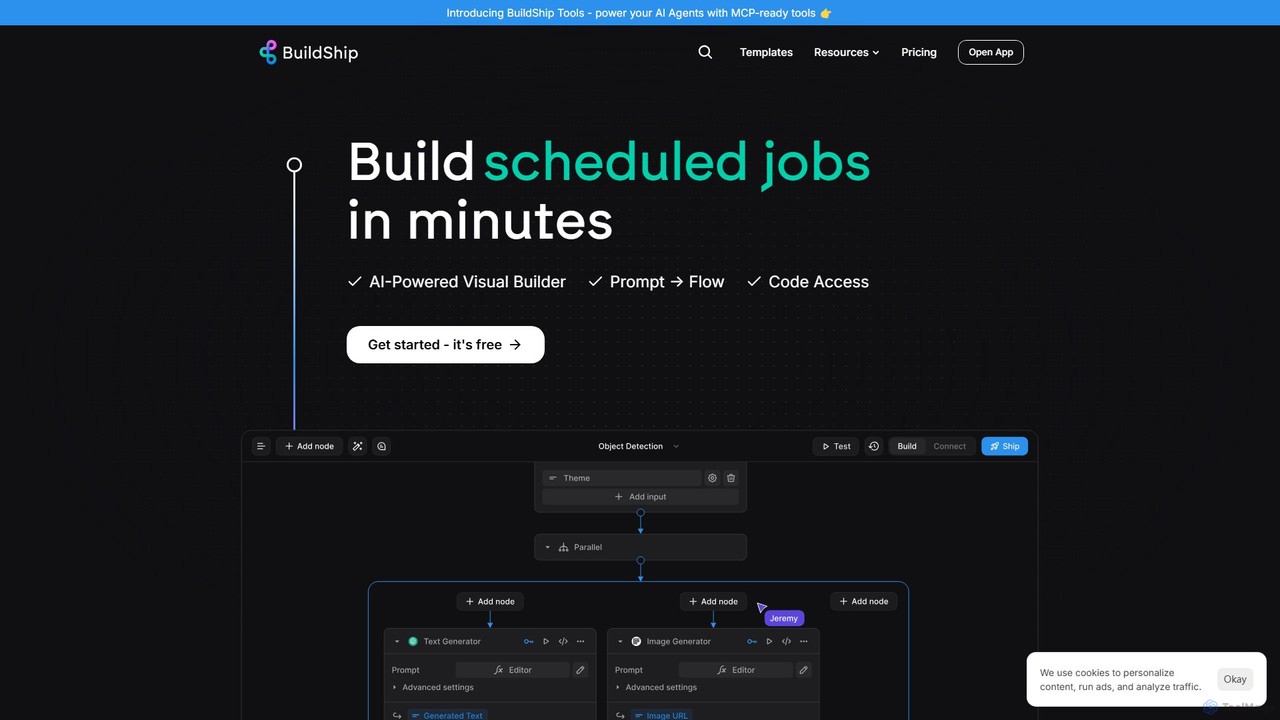
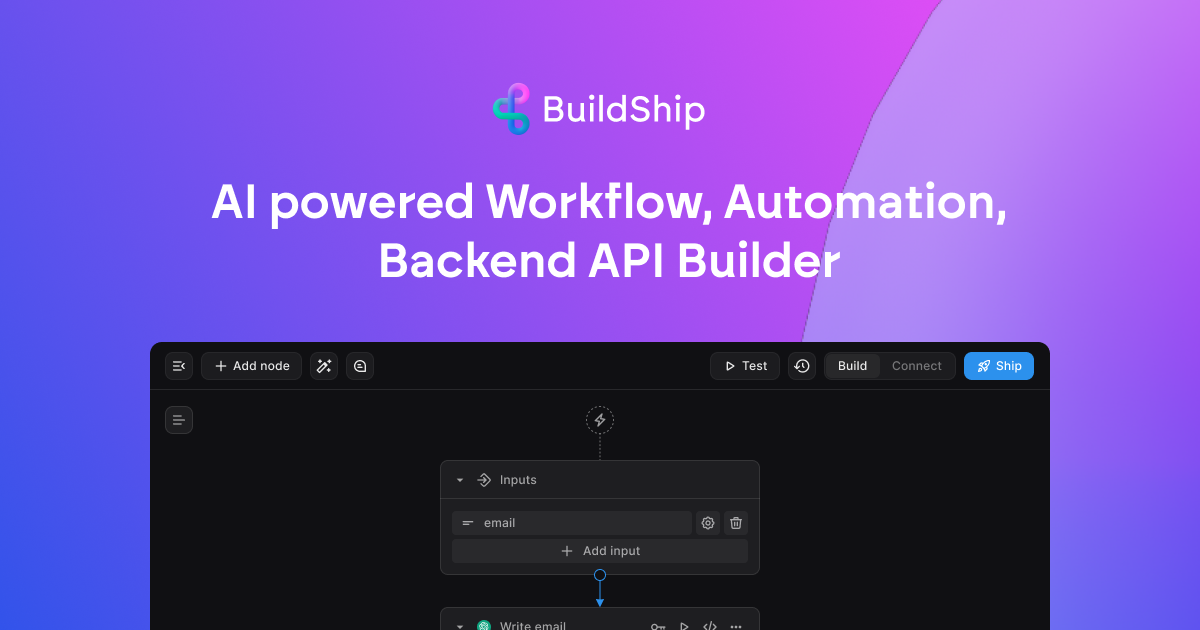
BuildShip is a low-code, AI-powered platform for visually building backend workflows, APIs, and scheduled jobs. Connect any AI …
BuildShip is a low-code, AI-powered platform for visually building backend workflows, APIs, and scheduled jobs. Connect any AI model, database, or tool using a drag-and-drop interface or natural language prompts. Go from idea to a scalable, production-ready backend in minutes, with the flexibility to use JavaScript/TypeScript for advanced customization. Ideal for developers and creators alike.
AnyAPI
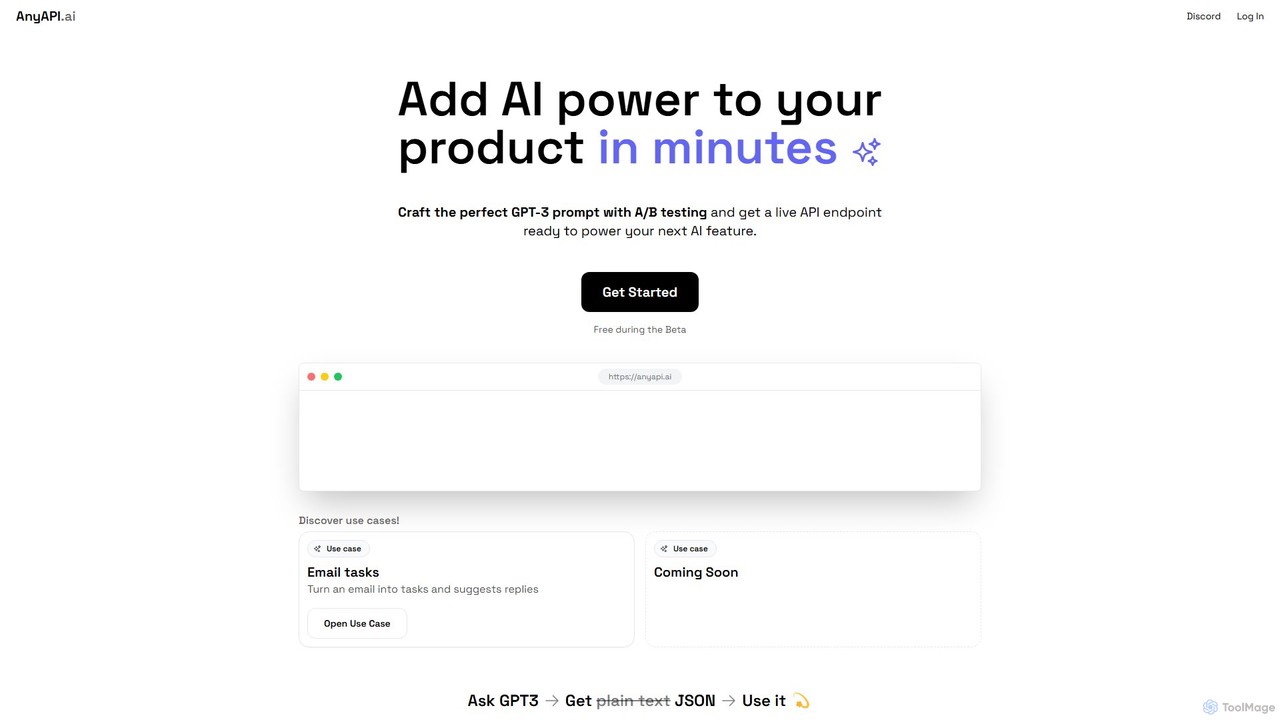
AnyAPI is a developer platform that enables you to add AI features to your product in minutes. It …
AnyAPI is a developer platform that enables you to add AI features to your product in minutes. It provides tools for crafting and A/B testing GPT-3 prompts, and instantly generates a live API endpoint for seamless integration. Simplify your AI development workflow and deploy powerful features without managing complex infrastructure.
Superflows
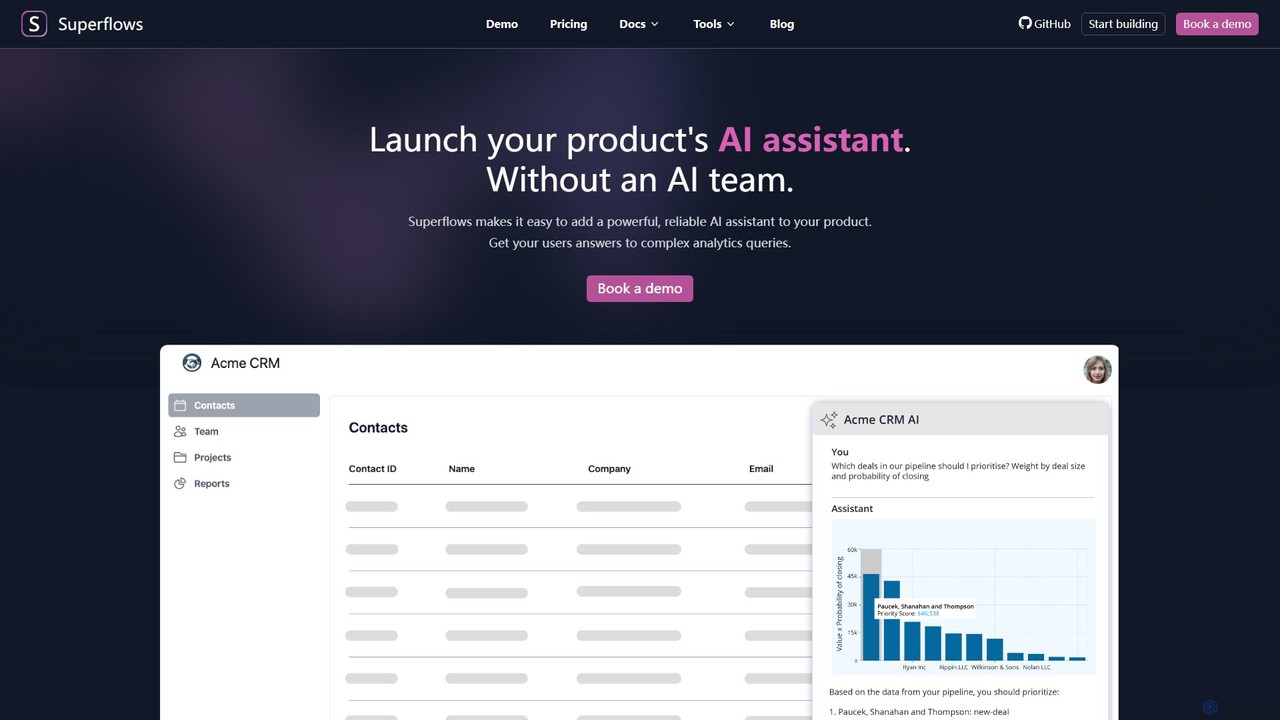
Superflows allows SaaS companies to easily embed a powerful, reliable AI assistant into their product. This AI copilot …
Superflows allows SaaS companies to easily embed a powerful, reliable AI assistant into their product. This AI copilot can handle complex analytics, perform actions, and provide documentation support, all without requiring an in-house AI team.
Scade.pro
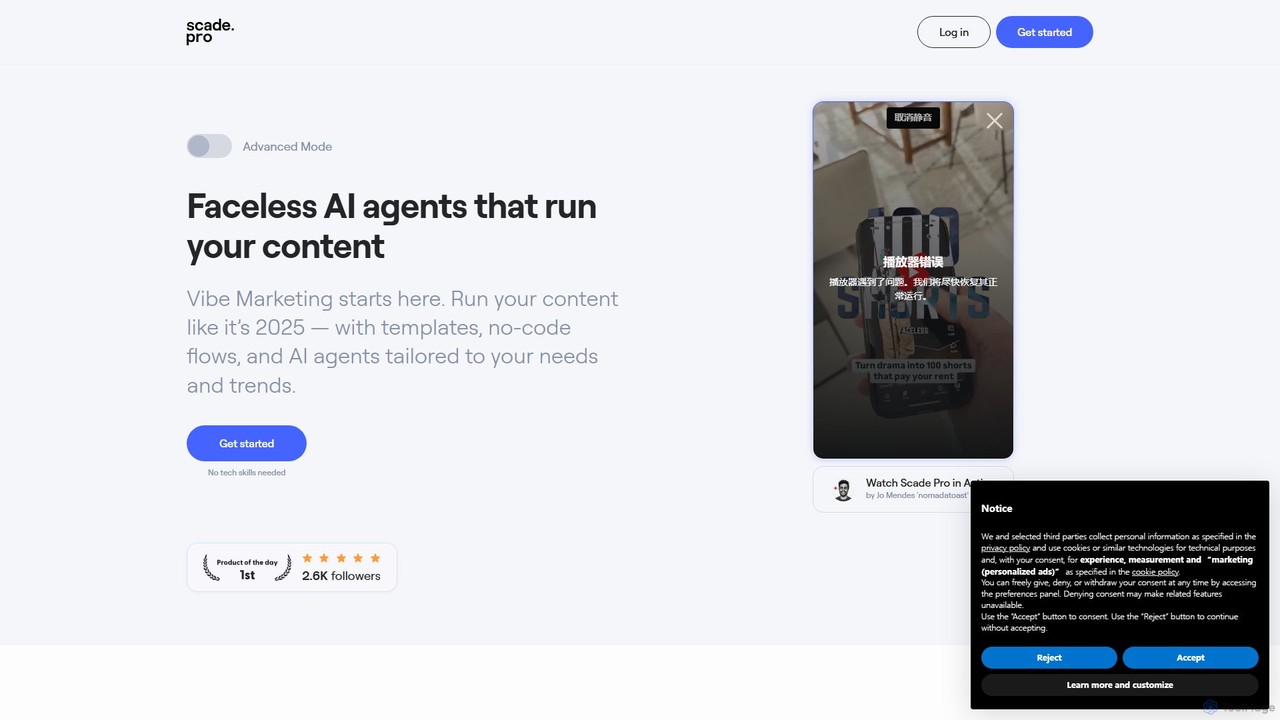
Scade.pro is a unified AI integration platform that simplifies access to various AI models through a single API. …
Scade.pro is a unified AI integration platform that simplifies access to various AI models through a single API. It empowers developers and no-coders to rapidly build and deploy AI features without managing multiple APIs, keys, or billing systems.
About Api
AI APIs are application programming interfaces that provide developers with programmatic access to pre-trained artificial intelligence models. These tools function as a bridge, allowing any application to leverage complex AI capabilities like natural language processing or computer vision without requiring the developer to build or maintain the underlying models. The primary value of AI APIs is to accelerate development and enable the seamless integration of advanced intelligence into new or existing software products. They offer a scalable and cost-effective way to implement sophisticated AI features.
Core Features
- Pre-trained Model Access: Provides direct access to sophisticated, ready-to-use AI models for tasks such as text generation, image analysis, and speech recognition.
- Scalable Endpoints: Offers managed, high-availability infrastructure that automatically scales to handle fluctuating request volumes.
- Standardized Protocols: Utilizes common web protocols like REST or gRPC, ensuring easy integration with most programming languages and platforms.
- Usage-Based Pricing: Features flexible pricing models, often pay-as-you-go, which lowers the barrier to entry for experimenting with and deploying AI.
- Comprehensive Documentation & SDKs: Includes detailed developer guides, code samples, and software development kits (SDKs) to simplify implementation.
Applicable Scenarios
AI APIs are primarily used by software developers, data scientists, and tech companies to build AI-powered features. Common scenarios include integrating a chatbot into a customer service portal, adding content moderation capabilities to a social media app, or embedding real-time translation features into a communication platform. They are essential for rapid prototyping and for businesses looking to add AI functionality without investing in a dedicated machine learning team.
Selection Criteria
When choosing an AI API, consider the specific function it performs—ensure it matches your use case (e.g., sentiment analysis vs. object detection). Evaluate its performance, including latency, accuracy, and uptime SLAs. Analyze the pricing structure for cost-effectiveness at scale. Finally, assess the quality of the developer documentation, the availability of SDKs for your preferred language, and the level of technical support provided.
ApiUse Cases
Automating Customer Support with a Chatbot API
A growing e-commerce company integrates a conversational AI API into its website's live chat widget. Instead of hiring more support agents, developers use the API to build a chatbot that can understand natural language queries. The bot accesses the company's knowledge base to instantly answer common questions about shipping, returns, and product specifications 24/7. For complex issues, the API is programmed to seamlessly hand over the conversation to a human agent, providing the agent with the full chat history. This reduces customer wait times and frees up human agents to focus on high-value interactions.
Enhancing Content Moderation with Vision APIs
A user-generated content platform is struggling with the volume of image and video uploads that require manual review. Their development team integrates a computer vision API that specializes in content safety. Now, every new upload is automatically sent to the API for analysis. The API returns scores for various categories like violence, adult content, and hate symbols. Content that scores above a certain threshold is automatically flagged and hidden pending human review, while safe content is approved instantly. This automates over 95% of the moderation workload, allowing the platform to scale safely and protect its community.
Generating Marketing Copy at Scale with an LLM API
A digital marketing agency needs to create hundreds of unique ad variations for a client's campaign across different platforms. Manually writing this copy is time-consuming. They build an internal tool that uses a large language model (LLM) API. Marketers input key product features, target audience, and a desired tone of voice. The tool sends this information as a prompt to the API, which returns dozens of creative headlines, body texts, and calls-to-action. This allows the team to A/B test a much wider range of copy, optimizing campaign performance and saving hundreds of hours of creative work.
Intelligent Document Processing for Invoices
A finance department processes thousands of supplier invoices each month, requiring manual data entry into their accounting software. To automate this, they use a Document AI API that combines Optical Character Recognition (OCR) with Natural Language Understanding. An application is built to automatically upload scanned invoices to the API. The API reads the document, identifies and extracts key-value pairs like 'Invoice Number', 'Due Date', and 'Total Amount', and returns the data in a structured JSON format. This structured data is then automatically ingested into the accounting system, reducing manual errors by over 90% and accelerating payment cycles.
Adding Voice Control to an IoT Application
A developer of a smart home mobile app wants to allow users to control their lights and thermostats with voice commands. Instead of building a complex speech recognition system from scratch, they integrate two AI APIs: a Speech-to-Text API and a Natural Language Understanding (NLU) API. When a user speaks a command like 'Set the living room to 22 degrees', the app sends the audio to the Speech-to-Text API. The resulting text is then sent to the NLU API, which extracts the intent ('set_temperature') and entities ('living_room', '22_degrees'). The app uses this structured data to execute the correct action, providing a modern, hands-free user experience.
Personalizing E-commerce Recommendations
An online fashion retailer wants to increase sales by showing customers more relevant products. Their development team uses a recommendation engine API. They send user activity data—such as products viewed, items added to cart, and past purchases—to the API endpoint. In real-time, the API processes this data using a collaborative filtering model and returns a list of personalized product IDs. The retailer's website then displays these recommended products on the homepage and product pages. This leads to a significant increase in user engagement, conversion rates, and average order value by creating a more tailored shopping experience.