ToolMage
Sign in

Best 2 Ai Agent AI tools for Development

Popular Ai Agent AI tools in Development include Dify and Fine, helping you work more efficiently.

Freemium

Dify

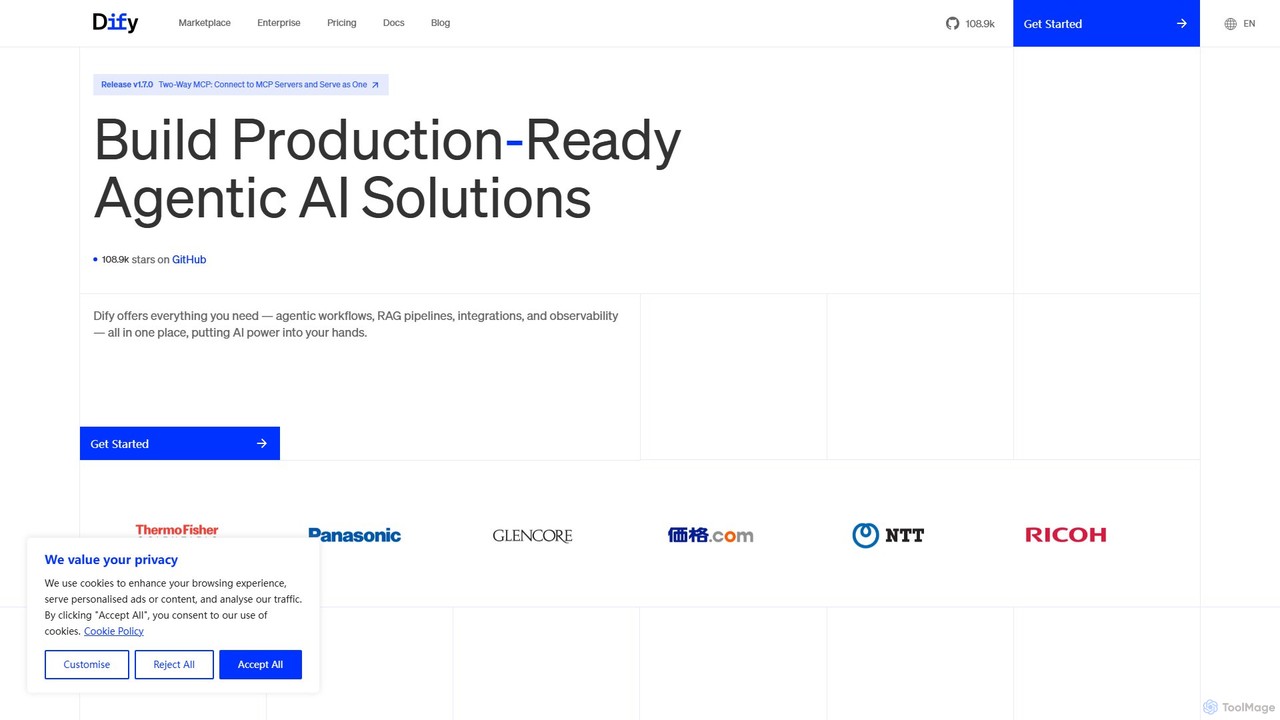
Dify is an open-source, low-code AI development platform for building and operating production-ready generative AI applications. It enables the creation of AI agents and workflows powered by RAG pipelines, extensive model support, and full observability, simplifying the entire development lifecycle from idea to deployment.

Ai Agent
Visits 1.1MFavorites 76Likes 78
Freemium

Fine

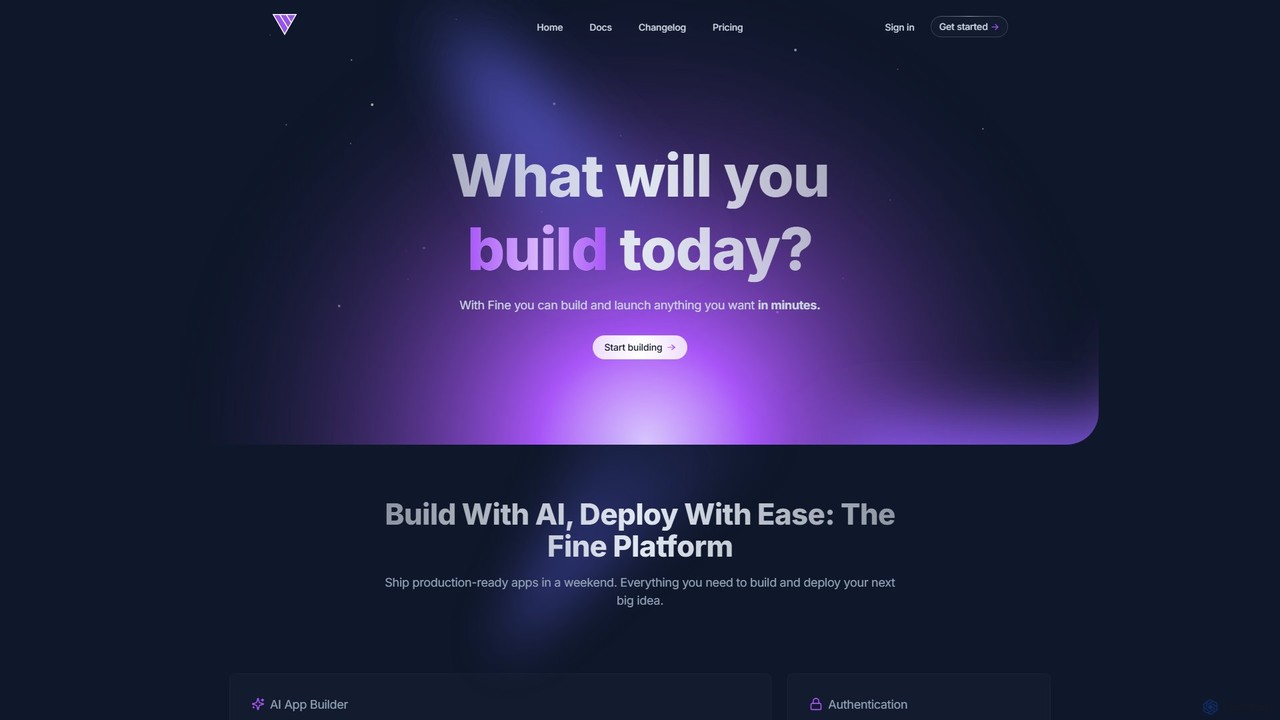
Fine is an AI-powered software development platform that enables anyone to build and deploy full-stack web applications using natural language. It leverages autonomous AI agents to handle everything from frontend UI to backend logic, database, and deployment, turning ideas into production-ready apps in minutes.

Ai Agent
Visits 3.9KFavorites 85Likes 102

About Ai Agent

AI Agents are a class of autonomous software programs designed to perceive their environment, make decisions, and take actions to achieve specific goals. Unlike simple scripts, these development tools leverage large language models (LLMs) and planning algorithms to independently execute complex, multi-step tasks. They can interact with digital environments like websites, APIs, and file systems, effectively acting as automated assistants for development, research, and data analysis. This autonomy allows them to handle tasks that traditionally require human intelligence and intervention.

Core Features

  • Autonomous Task Execution: Independently performs multi-step processes from start to finish based on a high-level objective.
  • Goal-Oriented Planning: Analyzes a goal, breaks it down into smaller steps, and creates an actionable plan to achieve it.
  • Environment Interaction: Connects with and manipulates various digital tools, APIs, and data sources to complete tasks.
  • Adaptive Learning: Some advanced agents can learn from outcomes and user feedback to improve their performance over time.
  • Natural Language Interface: Allows users to assign complex tasks using simple, conversational language commands.

Use Cases

AI Agents are particularly valuable in software development for automating coding, testing, and debugging. They are also used by business analysts for complex data gathering and report generation, and by researchers for conducting automated literature reviews and web research. Essentially, any role involving complex digital workflows can benefit from their capabilities.

How to Choose

When selecting an AI Agent tool, consider its integration capabilities with your existing software stack. Evaluate the complexity of tasks it can handle and its planning and reasoning abilities. Also, assess the level of control and oversight you have over the agent's actions, the security protocols in place, and whether the pricing model aligns with your expected usage.

Featured tool rankings

Ai Agent use cases

1

Automated Software Development and Debugging

A software developer uses an AI Agent to accelerate a project. The developer provides a high-level requirement, such as 'Create a Python script to fetch weather data from an API and save it to a CSV file.' The AI Agent plans the steps: it finds a suitable weather API, writes the Python code to handle requests and data parsing, generates the logic for file handling, and even writes unit tests to verify its own code. If an error occurs during testing, the agent can analyze the traceback, identify the bug, and attempt to fix it, significantly reducing manual coding and debugging time.

2

Autonomous Market Research and Analysis

A marketing strategist needs to compile a report on competitor activities. They instruct an AI Agent: 'Research the top three competitors in the e-commerce software space, summarize their recent product launches, and analyze their social media sentiment.' The agent browses the web, visits competitor websites and news outlets, accesses social media APIs to gather data, and then synthesizes all the information into a structured report. This process, which would manually take hours or days, is completed autonomously, providing the strategist with timely insights for decision-making.

3

Complex Customer Support Ticket Resolution

A customer support team uses an AI Agent to handle complex inquiries that go beyond a standard chatbot's capabilities. When a customer reports a billing discrepancy, the agent is triggered. It accesses the CRM to get customer history, connects to the billing system to check invoices, and queries the payment gateway to verify transactions. After analyzing the data, it can identify the issue, draft a detailed explanation for the customer, and even initiate a refund process if necessary, all while logging its actions for human review.

4

Personal Workflow Automation for Executives

A busy executive configures an AI Agent to manage their daily schedule and communications. The goal is 'Optimize my daily schedule and handle routine emails.' The agent scans the executive's calendar and inbox. It can automatically decline conflicting meeting requests, reschedule appointments based on priority, and draft responses to common inquiries. For example, it can find a suitable time for a meeting with three other people by checking their public calendars, book a slot, and send out the invitations, acting as a proactive virtual assistant.

5

Automated Scientific Literature Review

A medical researcher uses an AI Agent to stay updated on the latest studies. The researcher gives the command: 'Find all peer-reviewed papers published in the last six months on CRISPR technology for cancer therapy, summarize their key findings, and identify any conflicting results.' The agent scours academic databases like PubMed and Google Scholar, filters papers based on the criteria, reads the abstracts and full texts, and generates a consolidated summary document. This automates a critical but time-consuming part of the research process.

6

Proactive System Monitoring and Incident Response

A DevOps engineer deploys an AI Agent to monitor a cloud infrastructure. The agent's goal is to 'Ensure 99.9% uptime for the main web application.' It continuously monitors performance metrics, logs, and alerts. If it detects an anomaly, like a sudden spike in server CPU usage, it doesn't just send an alert. It autonomously investigates the cause by analyzing logs, decides on a course of action like scaling up resources or restarting a service, executes the fix, and then reports the incident and resolution, minimizing downtime.

Ai Agent FAQ

What is an AI Agent?

An AI Agent is an autonomous software program that can perceive its environment, make decisions, and take actions to achieve a specific goal. Unlike simple programs, they can independently plan and execute complex, multi-step tasks by interacting with various digital tools and systems. They are often powered by large language models (LLMs) to understand instructions and reason about problems.

How do AI Agents differ from traditional automation scripts?

The key difference is autonomy and adaptability. Traditional scripts follow a rigid, pre-programmed set of instructions and fail if conditions change. AI Agents, however, are goal-oriented. You give them an objective, and they figure out the steps to achieve it, adapting their plan if they encounter unexpected obstacles. They can handle ambiguity and make decisions, whereas scripts are limited to their explicit code.

How do I choose the right AI Agent tool?

When selecting an AI Agent tool, consider these factors:

  • Task Complexity: Can the agent handle the multi-step, complex reasoning your tasks require?
  • Integrations: Does it connect easily with the specific applications, APIs, and data sources you use?
  • Control and Safety: What level of human oversight is available? Are there safety features to prevent unintended actions?
  • Ease of Use: How easy is it to define goals and tasks? Is it designed for developers or non-technical users?

What are the key capabilities of modern AI Agents?

Modern AI Agents typically possess several key capabilities. They can understand goals specified in natural language, break down those goals into executable steps (planning), and interact with external tools like web browsers, code interpreters, and APIs (tool use). Many can also reflect on their actions to learn from mistakes and improve their performance over time. This combination allows them to tackle a wide range of tasks from software development to complex research.

Who can benefit from using AI Agent tools?

A wide range of users can benefit from AI Agents. Developers use them to automate coding, testing, and deployment. Business analysts and researchers use them to automate data collection and analysis. Marketers can automate campaign management, and support teams can automate complex ticket resolution. Essentially, anyone whose work involves repetitive or complex digital tasks can leverage AI Agents to act as a powerful personal assistant or team member.