Business Best in category 2 results Api Management AI Tool

Popular AI tools in the Api Management field of Business include Pipedream、LangDrive, etc., helping you quickly improve efficiency.

LangDrive

LangDrive

LangDrive is a developer-centric platform offering a unified API to fine-tune, manage, and deploy open-source Large Language Models …

2.6K
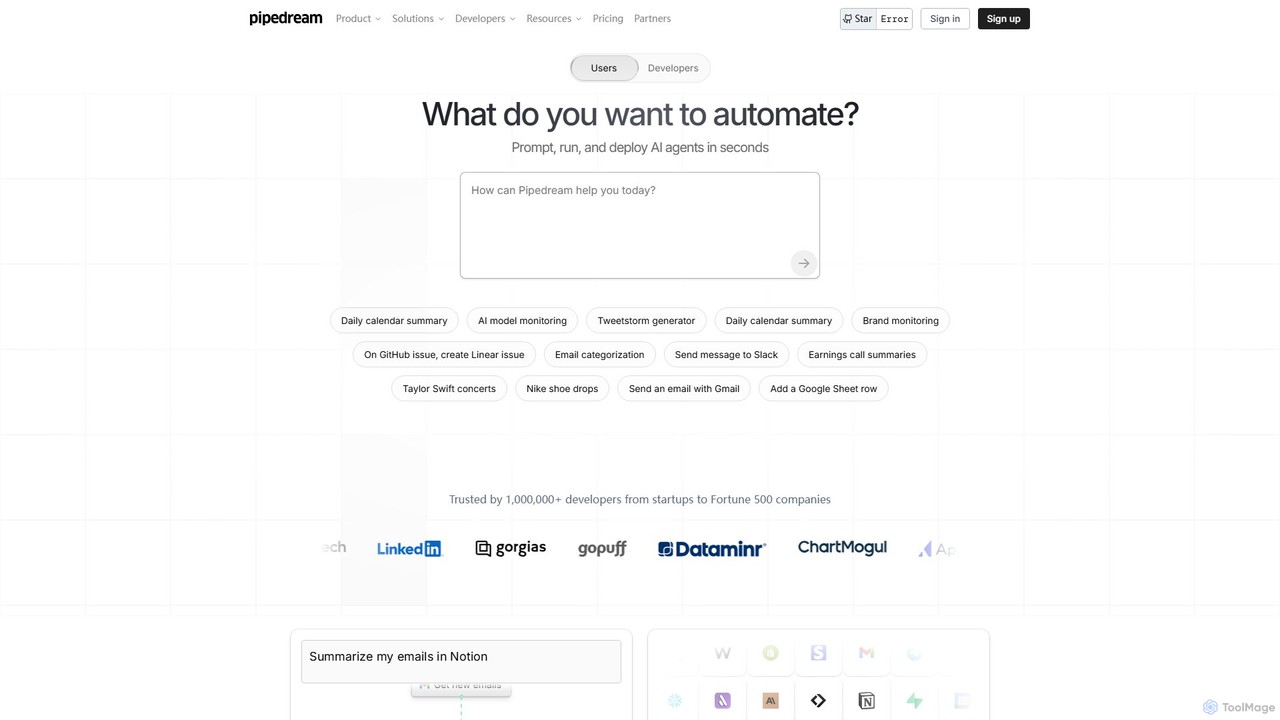
Pipedream

Pipedream

Pipedream is a developer-focused integration platform designed to automate workflows by connecting APIs, AI models, and databases with …

552.1K

About Api Management

API Management tools are a class of business solutions designed to oversee the entire lifecycle of Application Programming Interfaces (APIs). These platforms provide a centralized system for publishing, documenting, securing, monitoring, and analyzing APIs, ensuring their efficient and controlled consumption. They enable organizations to expose their digital assets securely, foster innovation, and create new revenue streams by facilitating seamless integration and collaboration with internal and external partners.

Core Features

  • API Gateway: Acts as a single entry point for all API calls, handling routing, security, and policy enforcement.
  • Security & Access Control: Implements authentication, authorization, and threat protection to safeguard APIs from misuse.
  • Monitoring & Analytics: Tracks API usage, performance, and errors, providing insights into API health and consumer behavior.
  • Developer Portal: Offers a self-service platform for developers to discover, subscribe to, test, and document APIs.
  • Lifecycle Management: Manages API versions, updates, and deprecation, ensuring smooth transitions and backward compatibility.

Use Cases

API Management is crucial for enterprises building digital ecosystems, SaaS providers monetizing their data and services, and organizations seeking to streamline internal system integrations. It supports secure data exchange between applications, enables rapid development of new digital products, and ensures compliance with data governance policies.

How to Choose

When selecting an API Management solution, consider its scalability, security features, integration capabilities with existing infrastructure, and the robustness of its developer portal. Evaluate its monitoring and analytics dashboards, support for various API protocols (REST, SOAP, GraphQL), and pricing model to align with your business needs and growth strategy.

Api ManagementUse Cases

1

Securely Exposing Internal Microservices to Partners

For large enterprises with complex microservice architectures, API Management tools enable the secure exposure of internal services to external partners or specific departments. It allows for granular access control, rate limiting, and robust authentication mechanisms, ensuring that sensitive data and functionalities are only accessed by authorized parties, while maintaining internal system integrity.

2

Monetizing Data and Services via Public APIs

SaaS companies or data providers can leverage API Management to create and manage public APIs for monetization. This involves setting up tiered access plans, usage-based billing, and a comprehensive developer portal for easy discovery and subscription. The tools handle the technical aspects of metering, billing integration, and ensuring API stability for paying customers.

3

Monitoring API Performance and Troubleshooting

Operations and development teams utilize API Management platforms to gain real-time insights into API performance, latency, and error rates. Centralized dashboards provide visibility into API health, allowing teams to quickly identify bottlenecks, diagnose issues, and proactively address problems before they impact end-users, ensuring high availability and reliability.

4

Streamlining Developer Onboarding and API Consumption

For organizations offering APIs to a broad developer community, API Management provides a self-service developer portal. This portal simplifies the onboarding process by offering interactive documentation, SDKs, code samples, and a sandbox environment. Developers can easily register, obtain API keys, and test integrations, significantly reducing support overhead and accelerating adoption.

5

Enforcing API Governance and Compliance Policies

Compliance and security teams use API Management to enforce consistent governance policies across all APIs. This includes applying standardized security protocols, data privacy rules (e.g., GDPR, CCPA), and usage policies. The platform ensures that every API adheres to organizational standards, reducing risks and maintaining regulatory compliance across the entire API ecosystem.

6

Managing API Versioning and Deprecation

Product and engineering teams manage the evolution of their APIs through versioning capabilities within API Management. This allows for the introduction of new features or breaking changes without disrupting existing consumers. The tools facilitate smooth transitions, provide clear communication channels for deprecation notices, and ensure that developers can migrate to newer versions seamlessly.

Api ManagementFrequently Asked Questions