Infragate
Infragate is an AI infrastructure platform designed to help developers build and run Model-Context-Protocol (MCP) servers rapidly. It …
Infragate is an AI infrastructure platform designed to help developers build and run Model-Context-Protocol (MCP) servers rapidly. It simplifies connecting diverse data sources, deploying AI tools, and managing scalable, secure AI workflows without complex operations.
Metorial
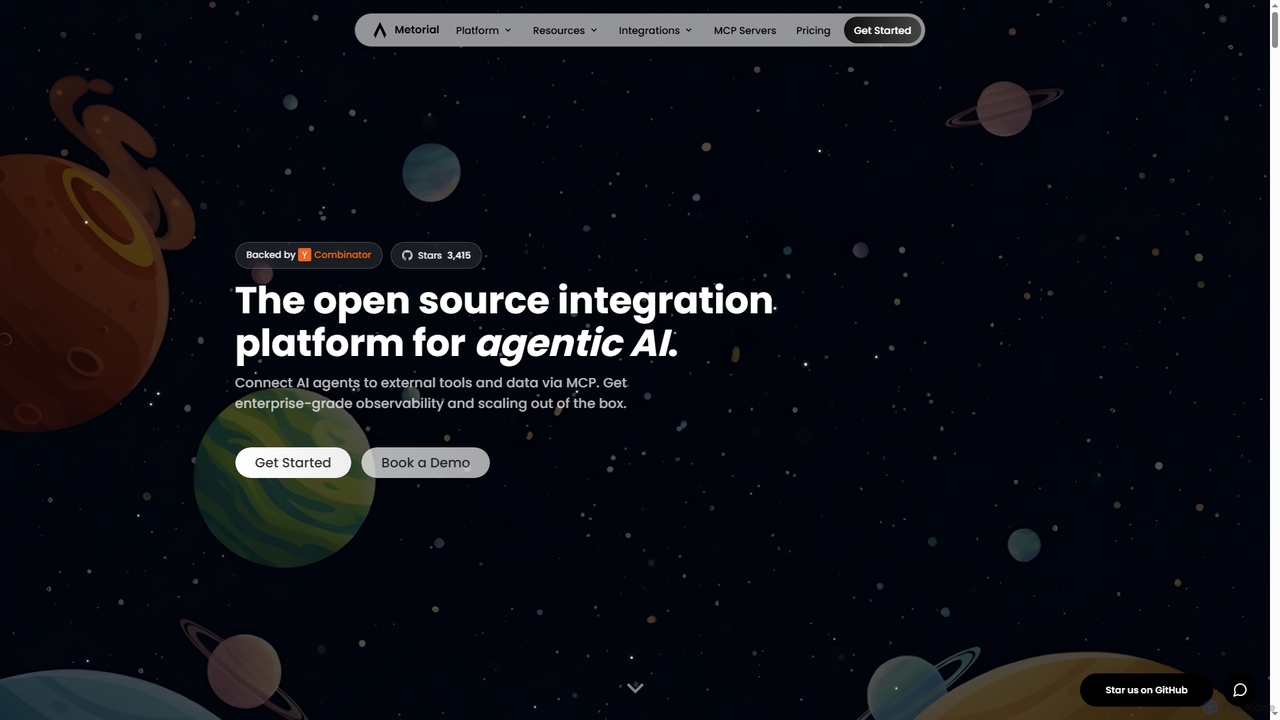
Metorial is an integration platform for AI agents, enabling developers to quickly build, deploy, and monitor powerful agentic …
Metorial is an integration platform for AI agents, enabling developers to quickly build, deploy, and monitor powerful agentic AI applications. It provides seamless connections to hundreds of tools, data sources, and APIs via its serverless Model Context Protocol (MCP) platform, offering robust SDKs, observability, and enterprise-grade security for scalable AI solutions.
Cerebrium
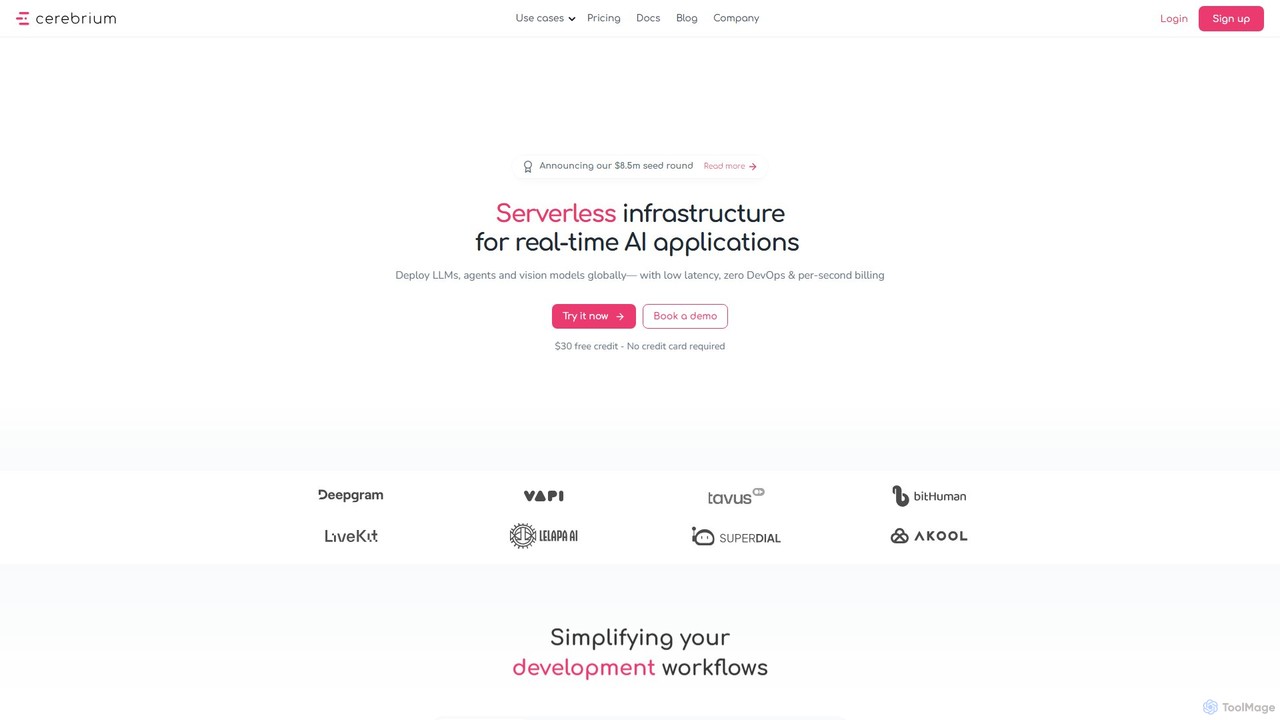
Cerebrium is a serverless AI infrastructure platform designed for developers to deploy, manage, and scale machine learning models …
Cerebrium is a serverless AI infrastructure platform designed for developers to deploy, manage, and scale machine learning models with ease. It abstracts away complex infrastructure, offering features like auto-scaling, fast cold starts, and pay-per-use GPU access, enabling teams to build high-performance AI applications without managing servers.
About Serverless
Serverless platforms are a type of cloud computing service that allows developers to build and run applications without managing the underlying server infrastructure. These platforms execute code in response to events, automatically managing the compute resources required. This event-driven, pay-per-execution model means you only pay for the resources used during code execution, eliminating costs for idle time. Serverless architecture accelerates development cycles and enables highly scalable, cost-effective solutions for variable workloads.
Core Features
- Event-Driven Execution: Code is triggered automatically by events such as HTTP requests, database changes, or file uploads.
- Automatic Scaling: Resources scale seamlessly from zero to thousands of concurrent requests based on real-time demand.
- No Server Management: Eliminates the need to provision, patch, or manage servers, operating systems, or software.
- Pay-Per-Use Pricing: Billing is based on the number of executions and the precise compute time consumed, not on pre-allocated server capacity.
Use Cases
Serverless is ideal for building API backends for web and mobile applications, real-time data processing pipelines, and IoT applications. It is also commonly used for creating microservices, automating scheduled tasks (cron jobs), and powering chatbot backends where traffic can be unpredictable.
How to Choose
When selecting a Serverless tool, consider factors like supported programming languages, performance metrics such as cold start times, execution duration limits, and integration capabilities with other cloud services (e.g., databases, storage, messaging queues). Also, evaluate the platform's monitoring, logging, and debugging tools to ensure operational visibility.

ServerlessUse Cases
Building Scalable API Backends
A mobile app development team needs to create a backend for user authentication, data storage, and processing. Instead of provisioning and managing a fleet of servers, they use a serverless platform. Each API endpoint (e.g., /login, /getProfile) is mapped to a separate function. When a user interacts with the app, it triggers the corresponding function, which executes its logic and returns a response. The platform automatically scales the number of function instances to handle thousands of concurrent users during peak hours and scales down to zero when there is no traffic, significantly reducing infrastructure costs and operational overhead.
Real-time Image and Data Processing
A social media platform needs to process user-uploaded images instantly. They configure a serverless function to trigger whenever a new image is uploaded to their cloud storage bucket. This function automatically performs tasks like resizing the image into multiple formats (thumbnail, web, mobile), applying watermarks, and running it through an AI service for content moderation. The entire process is event-driven and completes in seconds. This approach avoids maintaining a dedicated fleet of processing servers that would sit idle most of the time, ensuring high performance and cost-efficiency.
Automating Scheduled Tasks and Cron Jobs
A financial services company needs to generate and email a daily performance report at the end of each business day. Instead of running a dedicated server 24/7 just for this task, they use a serverless function scheduled to run at a specific time (e.g., 5 PM daily). The function queries databases, aggregates data, generates the report, and sends it to a distribution list. This 'serverless cron job' costs only a few cents per day to run, as they only pay for the few minutes of execution time, compared to the significant cost of an always-on server. This is a highly efficient solution for periodic and automated backend tasks.
IoT Data Ingestion and Processing
An agricultural technology company deploys thousands of sensors in fields to monitor soil moisture and temperature. Each sensor sends data every few minutes. A serverless architecture is used to handle this massive, intermittent flow of data. An IoT message broker receives the data and triggers a serverless function for each incoming message. The function validates the data, transforms it into a standard format, and stores it in a time-series database for analysis. This pattern scales effortlessly to handle millions of devices without the need to provision or manage a complex data ingestion infrastructure.
Powering Chatbot and Voice Assistant Backends
A customer service company develops a chatbot for its website to answer common user queries. The backend logic for the chatbot is built using serverless functions. When a user sends a message, an API gateway routes the request to a function. This function processes the text, potentially calls an external AI service for natural language understanding, queries a knowledge base, and returns a formatted response. The serverless model is perfect for this use case because chatbot traffic is often bursty and unpredictable. The backend can scale instantly during high-traffic periods and incur zero cost during idle times.
Orchestrating Event-Driven Workflows
An e-commerce platform needs to process new orders through a multi-step workflow: validate the order, process payment, update inventory, and notify the shipping department. This entire process is orchestrated using serverless functions. A new order event triggers the first function (validation). Upon successful validation, it triggers the payment function. Each step is a small, independent function that performs a single task and then passes the result to the next step. This microservices-based approach is highly resilient, as a failure in one step can be easily retried or handled without affecting the entire system. It also allows for easy modification or addition of new steps to the workflow.