ToolMage
Sign in

Best 2 Idea Generation AI tools for Brainstorming

Popular Idea Generation AI tools in Brainstorming include Twigg and Moka, helping you work more efficiently.

Moka

Moka

Moka is an AI assistant developed in Turkey, designed to help users with a wide range of tasks including code writing, creative content generation, idea brainstorming, and educational support. It aims to streamline projects and enhance productivity through intelligent chat interactions.

Idea Generation
Visits 4.9KFavorites 168Likes 167
Twigg
Freemium

Twigg

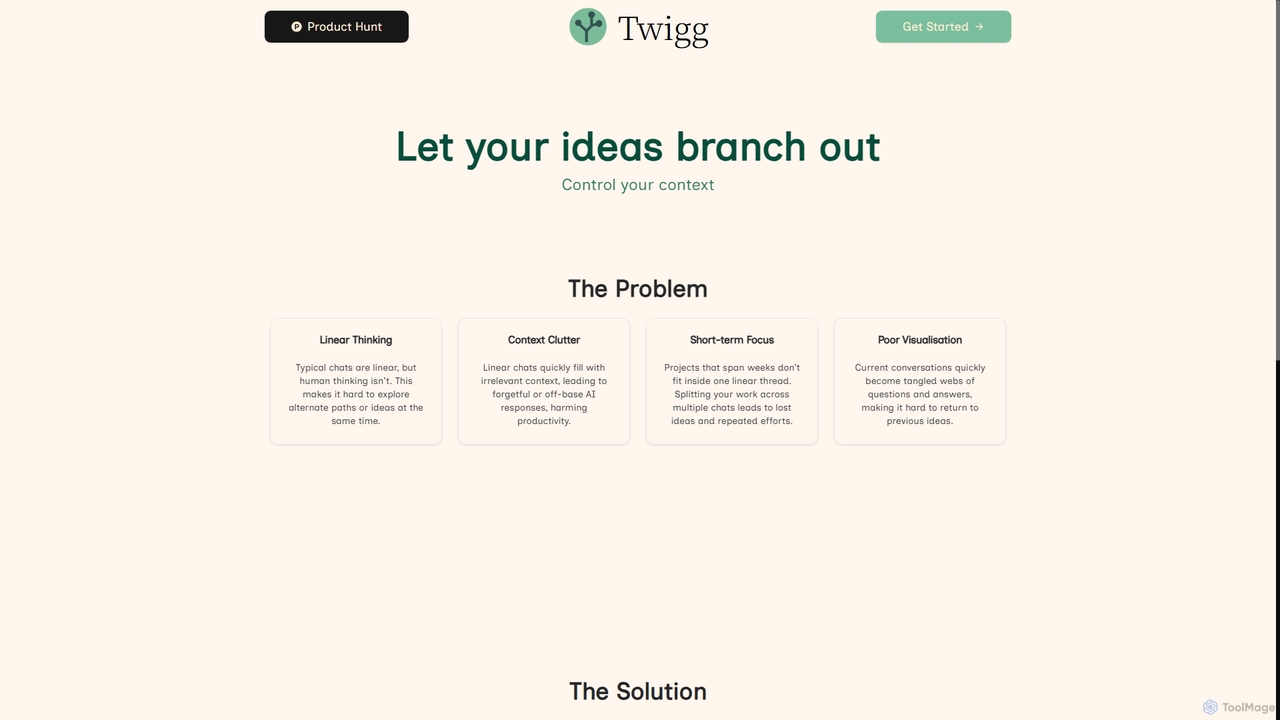
Twigg is an innovative AI chat interface that transforms linear conversations into interactive, branching idea trees. It helps users manage context, explore tangents, and visualize complex projects, making long-term collaboration with LLMs more efficient and intuitive.

Context Management
Visits 6.6KFavorites 181Likes 167

About Idea Generation

Idea Generation tools are a category of AI-powered applications designed to stimulate creativity and produce novel concepts, topics, or solutions. Leveraging advanced natural language processing and machine learning, these tools analyze inputs to suggest diverse ideas, outlines, and content prompts. They empower users to overcome creative blocks and accelerate the initial phase of any project, serving as a specialized segment within broader brainstorming methodologies.

Core Features

  • Keyword-based Idea Expansion: Generates related concepts, questions, or topics from a given keyword or phrase.
  • Content Outline Generation: Creates structured outlines for articles, presentations, or marketing campaigns based on a theme.
  • Problem-Solving Brainstorming: Offers diverse solutions or approaches to defined problems by exploring various angles.
  • Creative Prompt Generation: Produces unique prompts for artistic projects, writing, or design challenges.
  • Audience-Specific Idea Tailoring: Adapts idea suggestions to target specific demographics or user interests.

Use Cases

Content creators, marketers, product developers, and researchers frequently utilize Idea Generation tools. They are invaluable for kickstarting new projects, exploring uncharted territories, or diversifying existing content strategies. For instance, a marketing team might use them to generate fresh campaign slogans, while a product manager could explore innovative feature ideas for a new software release.

How to Choose

When selecting an Idea Generation tool, consider its versatility in handling different input types and output formats. Evaluate the quality and originality of the generated ideas, as well as the tool's ability to learn from user feedback. Integration with existing workflows and the availability of customization options for idea refinement are also crucial factors. Finally, assess the pricing model and the level of support offered.


Idea Generation use cases

1

Developing Unique Blog Post Topics

A content marketer struggling with writer's block can input a broad subject like 'sustainable living' into an AI idea generator. The tool then provides a list of specific, engaging blog post titles and sub-topics, such as 'Zero-Waste Kitchen Hacks' or 'The Future of Eco-Friendly Fashion,' saving hours of manual brainstorming and ensuring a steady stream of fresh content ideas.

2

Generating Innovative Product Features

Product managers can leverage these tools to explore new functionalities for their software or hardware. By inputting core product capabilities and user pain points, the AI can suggest novel features, user interface improvements, or even entirely new product lines, helping to differentiate offerings and meet evolving market demands without extensive manual research.

3

Crafting Engaging Social Media Campaigns

Social media managers often need a constant flow of creative ideas for posts, stories, and ad copy. An Idea Generation tool can take a campaign theme, like 'summer travel,' and produce a variety of catchy captions, interactive poll questions, and visual concepts, ensuring a diverse and engaging social media presence across multiple platforms.

4

Overcoming Creative Blocks in Writing

Authors and screenwriters facing a creative slump can use AI to generate plot twists, character backstories, or dialogue prompts. By feeding the tool existing story elements, it can offer unexpected narrative directions or develop rich character arcs, helping to reignite inspiration and move the storytelling process forward efficiently.

5

Brainstorming Business Startup Concepts

Aspiring entrepreneurs can utilize Idea Generation tools to explore viable business concepts. By inputting personal interests, market trends, or societal problems, the AI can suggest innovative startup ideas, potential target markets, and even preliminary business models, providing a strong foundation for further development and validation.

6

Designing Educational Course Outlines

Educators and course developers can use these tools to structure new curricula or workshops. By providing the core subject and learning objectives, the AI can generate detailed module outlines, lesson plans, and activity suggestions, ensuring comprehensive coverage and a logical flow of information for students.

Idea Generation FAQ

What are Idea Generation tools?

Idea Generation tools are AI-powered applications specifically designed to help users create new concepts, topics, or solutions. They leverage algorithms to analyze inputs and suggest diverse, relevant ideas, effectively overcoming creative blocks. These tools are distinct from general brainstorming software by actively generating content rather than just facilitating human collaboration, making them invaluable for kickstarting creative processes.

How do Idea Generation tools differ from traditional brainstorming?

Traditional brainstorming relies on human group dynamics to spontaneously generate ideas, often involving discussions and sticky notes. Idea Generation tools, however, use AI to actively produce suggestions based on algorithms, data analysis, and user prompts. While traditional methods foster human interaction, AI tools offer rapid, diverse, and often unexpected ideas, complementing or even initiating the creative process before human refinement.

Who benefits most from using AI Idea Generation tools?

A wide range of professionals benefits from AI Idea Generation tools, including content creators, marketers, product developers, writers, and entrepreneurs. Anyone who regularly needs to produce fresh concepts, overcome creative blocks, or explore new angles for projects will find these tools invaluable. They are particularly useful for individuals or small teams looking to accelerate their creative output and diversify their ideas.

What features should I look for in an Idea Generation tool?

When choosing an Idea Generation tool, prioritize features like the ability to generate ideas from various input types (keywords, sentences, topics), the diversity and originality of the output, and options for refining or filtering suggestions. Look for tools that offer content outlines, prompt generation, and audience-specific tailoring. User-friendliness, integration capabilities, and the quality of AI models are also crucial for an effective experience.

Can Idea Generation tools replace human creativity?

No, Idea Generation tools are designed to augment, not replace, human creativity. They serve as powerful assistants that can provide a starting point, offer diverse perspectives, and help overcome creative blocks. While AI can generate ideas rapidly, human insight, critical thinking, emotional intelligence, and the ability to refine and connect ideas in meaningful ways remain indispensable for truly innovative and impactful creative work.