Freemium
TraceUI
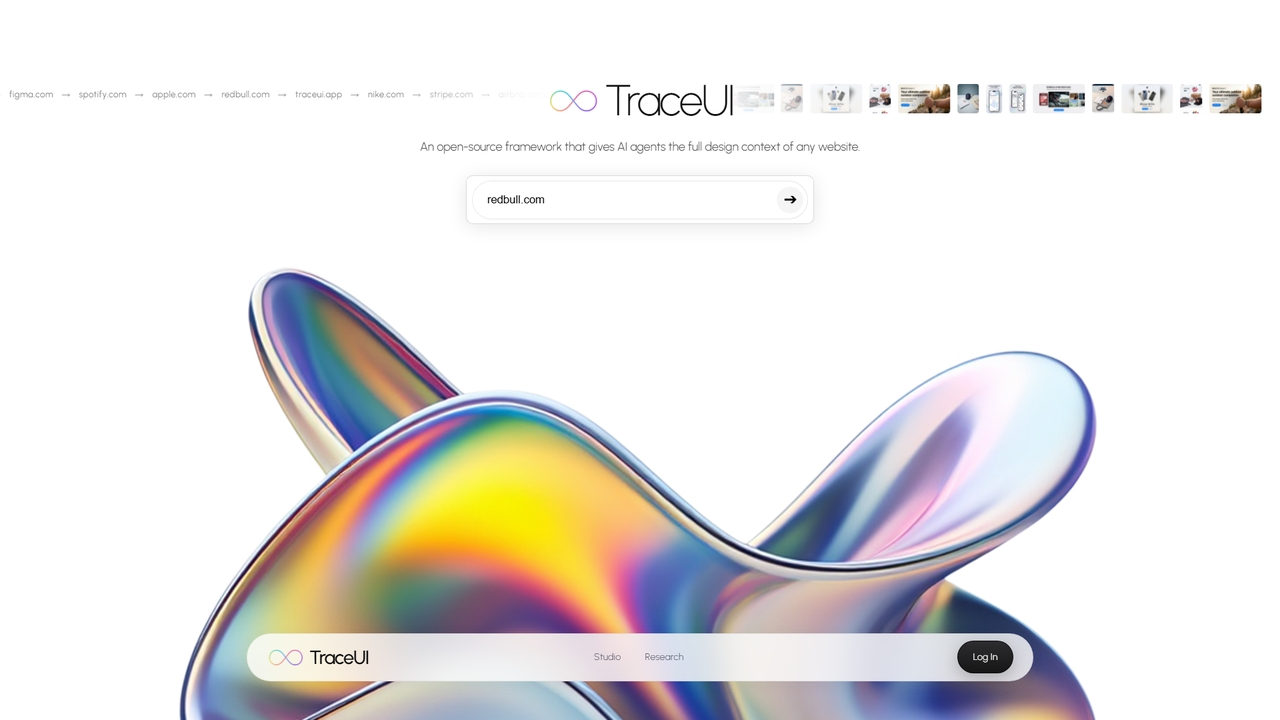
An open-source framework that gives AI agents the full design context of any website, enabling brand-consistent ad generation and mockup creation.
Design ToolsVisits 6.4KFavorites 38Likes 27
Popular Frameworks AI tools in Developer Tools include Mastra, phidata, SuperAGI, OpenServ, smolagents, askmarvin, Mindverse.ai, CrewAI, BaseAI, and Hexabot, helping you work more efficiently.
An open-source framework that gives AI agents the full design context of any website, enabling brand-consistent ad generation and mockup creation.
Design Tools
A powerful, open-source conversational AI platform from Cisco, designed for developers. It provides a comprehensive Python-based framework for building deep-domain voice interfaces and chatbots with advanced Natural Language Processing (NLP) capabilities, offering full control and on-premise deployment.
Chatbot Builder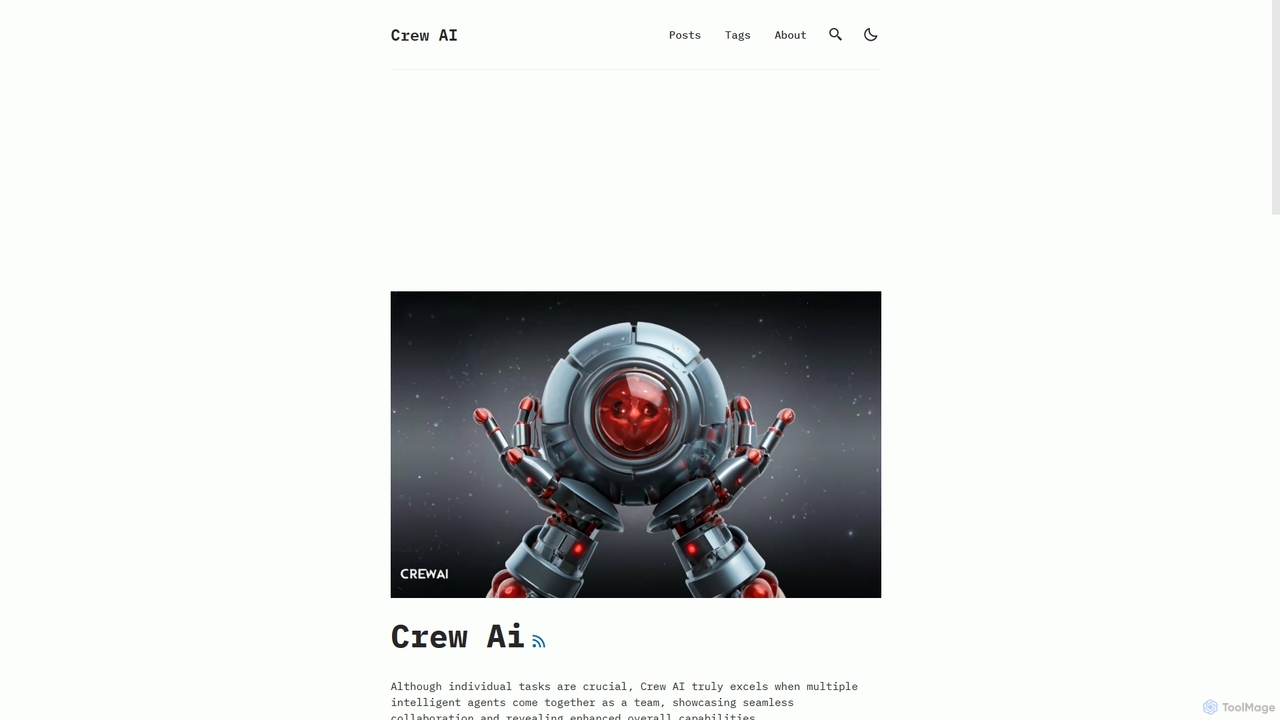
CrewAI is an advanced open-source framework for orchestrating role-playing, autonomous AI agents. By fostering collaborative intelligence, it enables agents with distinct roles and tools to work together seamlessly to solve complex tasks. This multi-agent system simplifies the development of sophisticated applications, from automated content creation to complex data analysis, by managing agent interactions, task delegation, and workflow processes.
Agent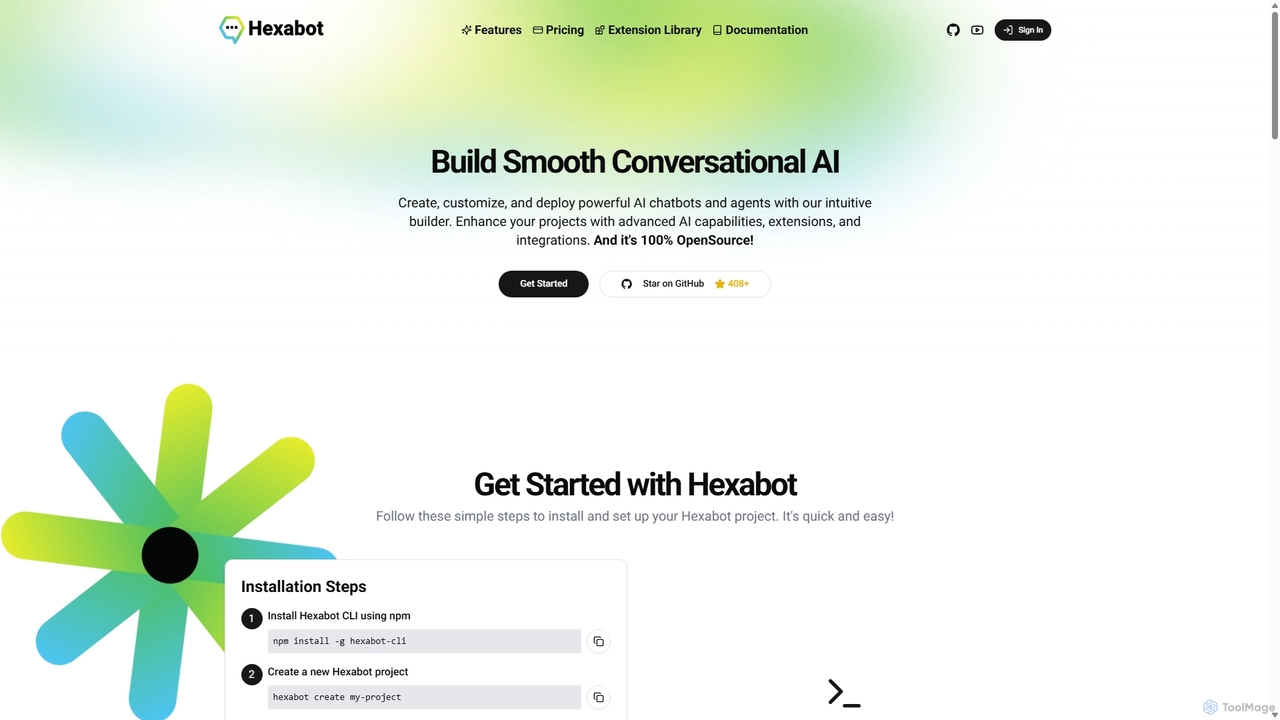
Hexabot is a 100% open-source platform for building, customizing, and deploying powerful AI chatbots and agents. It offers an intuitive low-code builder, on-premise hosting for data privacy, and a vast library of extensions. Ideal for developers and businesses seeking to enhance customer experience and automate workflows across multiple channels and languages.
Chatbot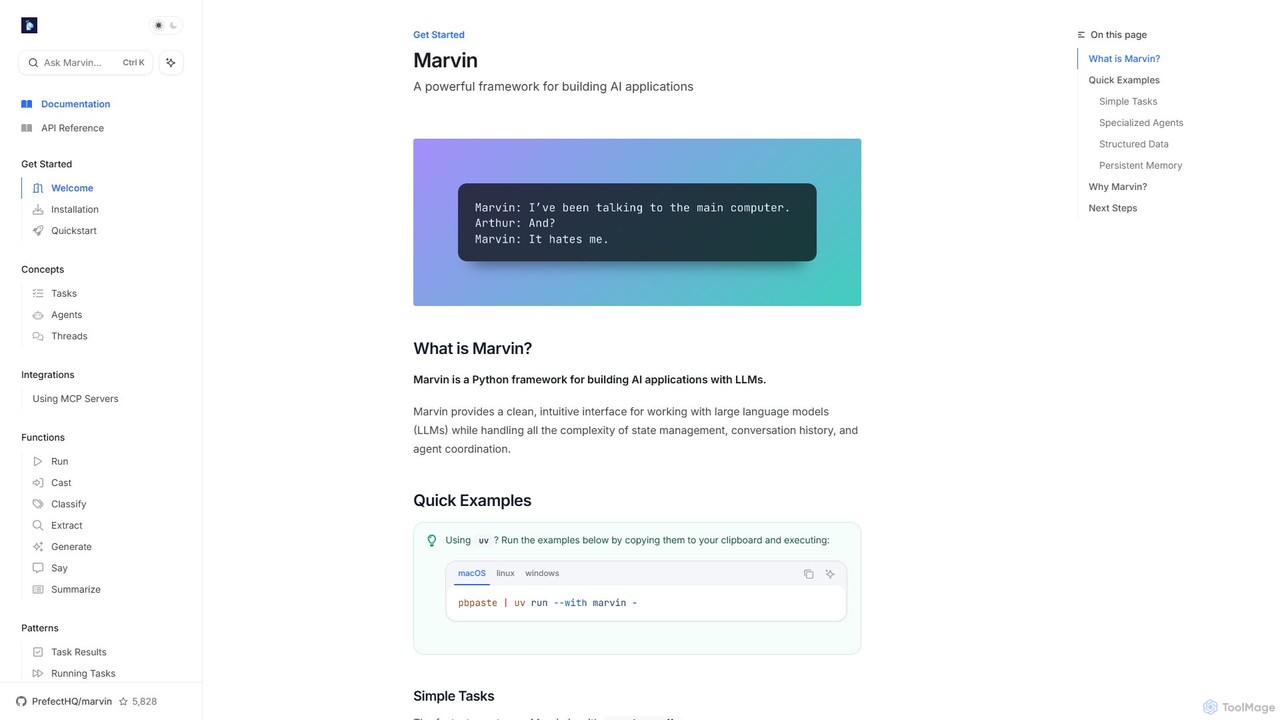
askmarvin is a powerful open-source Python framework for building AI applications. It simplifies interaction with LLMs, enabling developers to create specialized agents, manage conversation history, enforce structured data outputs, and integrate external tools with minimal code. Ideal for rapidly prototyping and scaling complex AI-powered workflows.
Code Assistant
smolagents is a minimalist, open-source AI agent framework developed by Hugging Face. It empowers developers to build and deploy powerful, code-first AI agents with minimal Python code. By focusing on simplicity and efficiency, it enables Large Language Models (LLMs) to interact with tools and the real world seamlessly, supporting a wide range of models and secure execution environments.
Development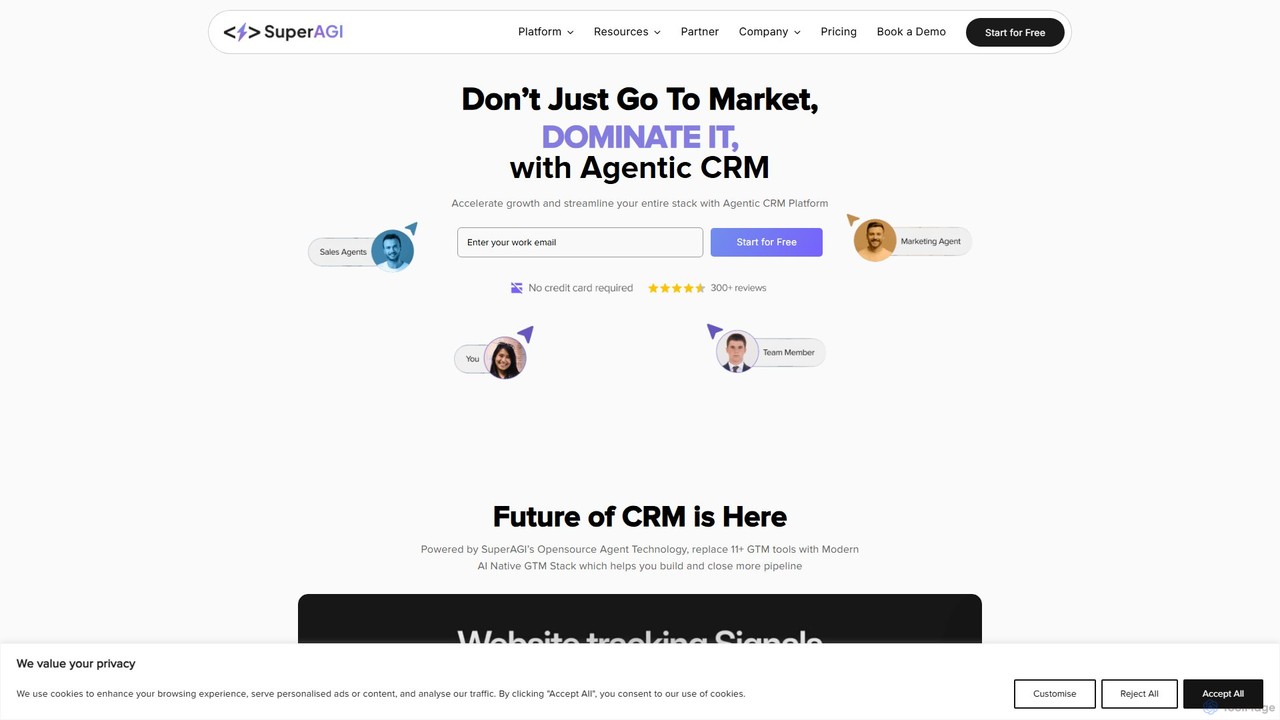
SuperAGI is an all-in-one Agentic CRM platform that leverages autonomous AI agents to automate sales, marketing, and operational tasks. It combines an open-source framework for building custom agents with a user-friendly cloud platform to streamline lead generation, outreach, and data management, boosting team productivity and efficiency.
Frameworks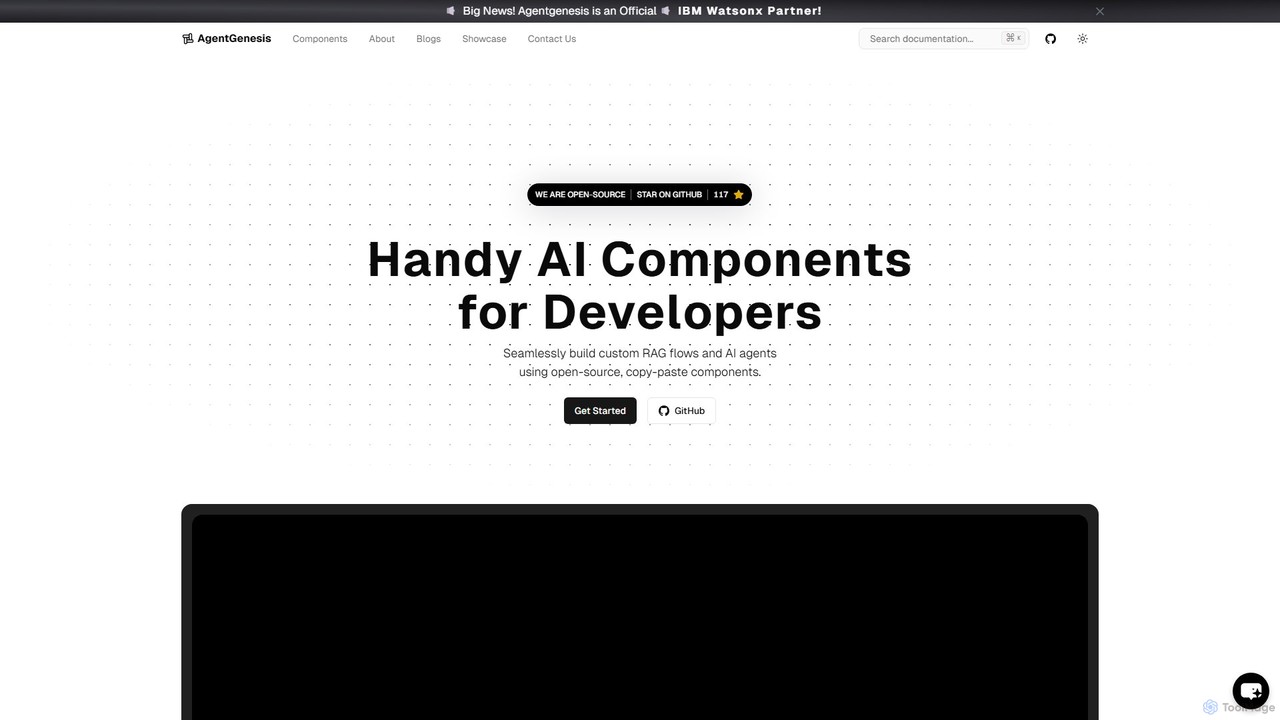
AgentGenesis is an open-source developer framework for rapidly building and deploying AI applications. It offers a comprehensive library of reusable code snippets, templates, and pre-built components like a LinkedIn Agent, RAG flows, and QnA bots, enabling developers to accelerate their AI development workflow and create custom solutions with ease.
Frameworks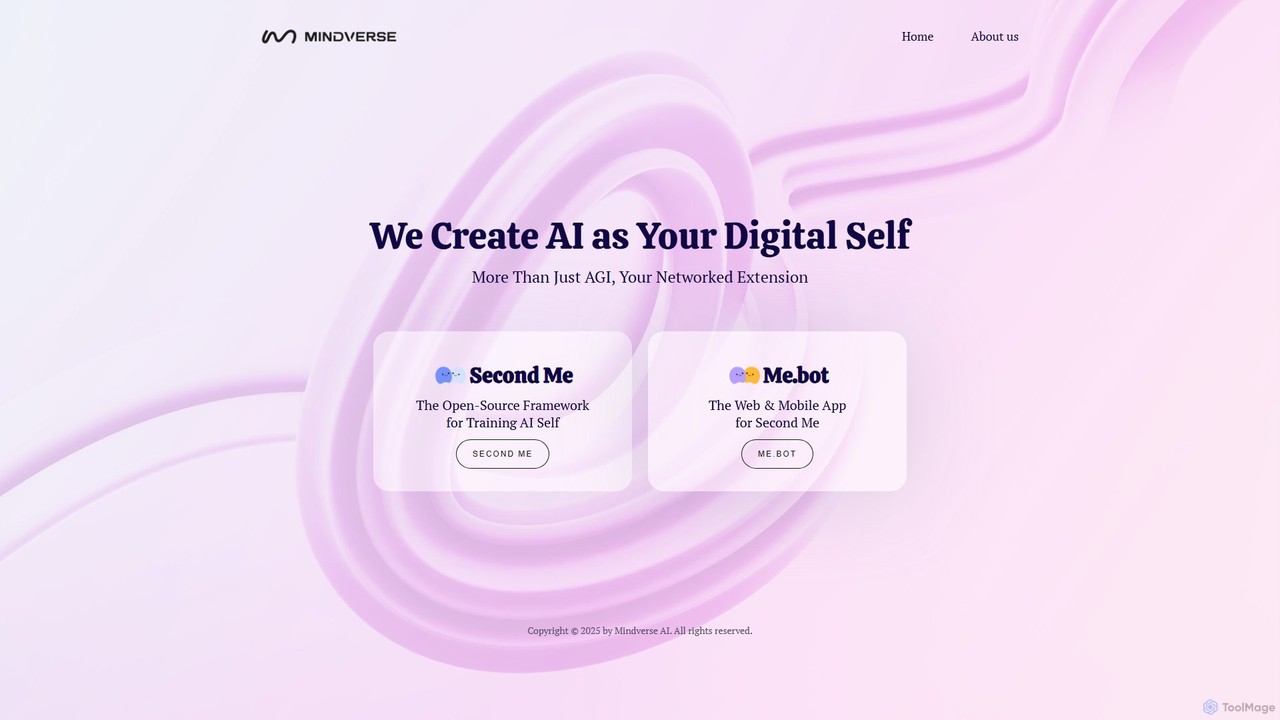
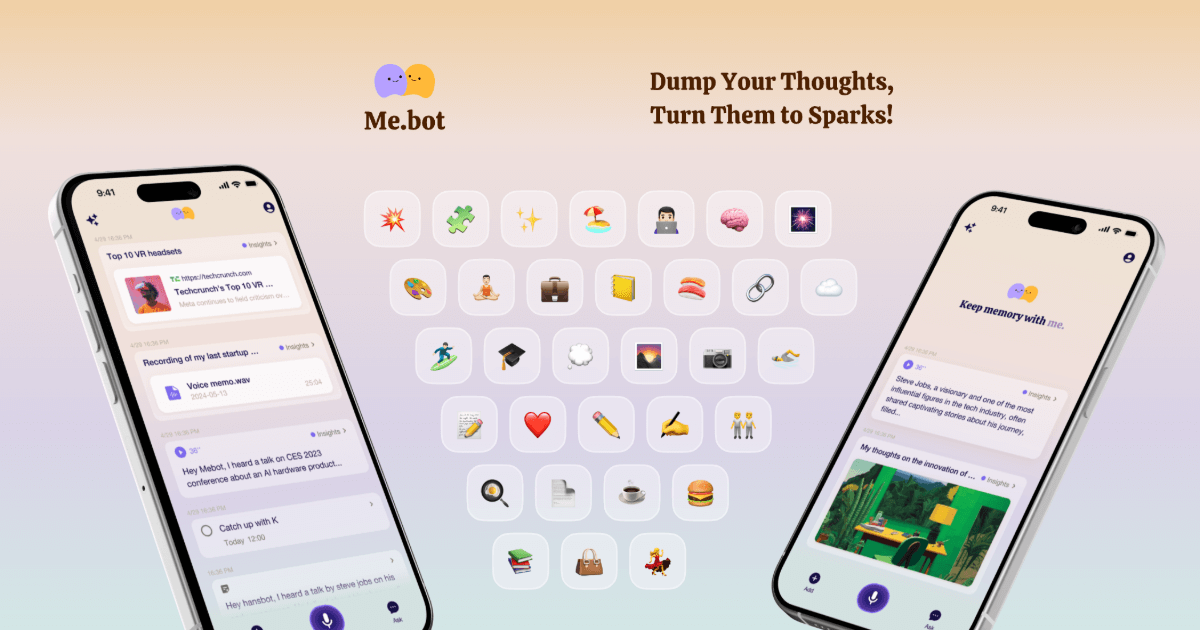
Mindverse.ai is a platform for creating your 'Digital Self'—a personalized AI that acts as your networked extension. It features 'Second Me,' an open-source framework for training your AI, and 'Me.bot,' a user-friendly web and mobile app to interact with your digital twin for enhanced productivity and automation.
Personalized Avatars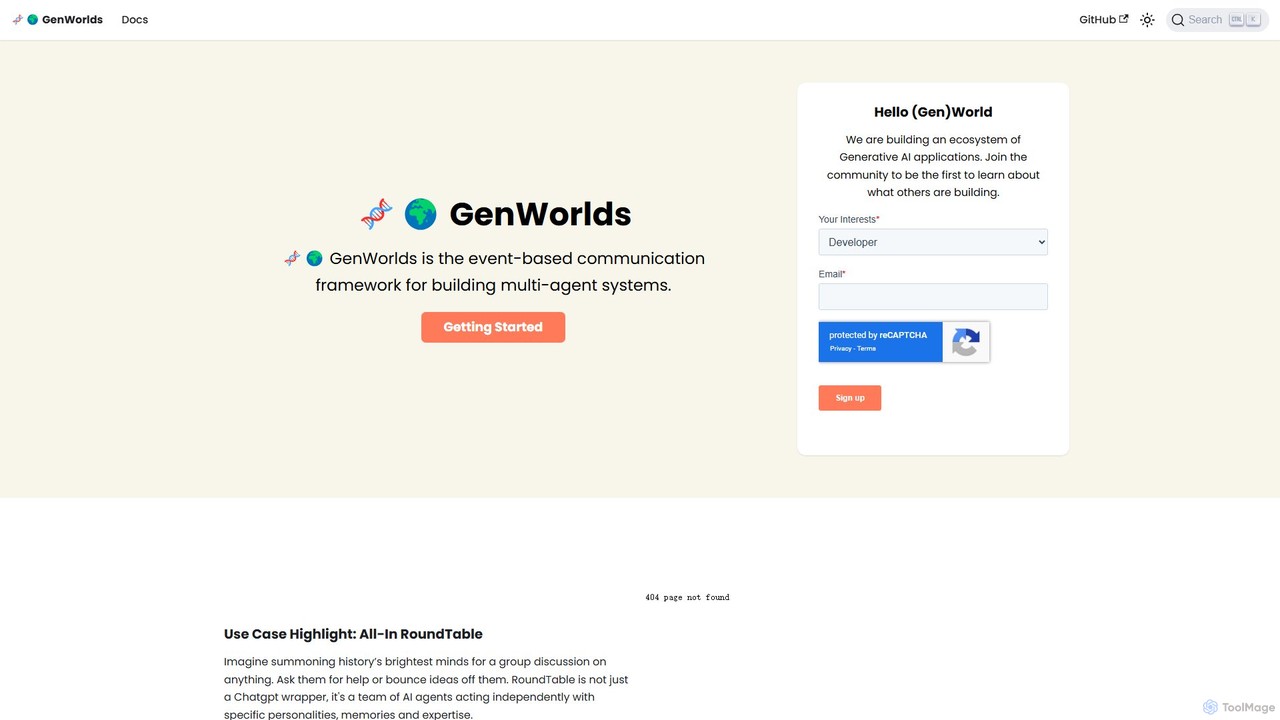
GenWorlds is an open-source, event-based framework for building and coordinating complex multi-agent AI systems. It allows developers to create customizable worlds where multiple AI agents, each with unique personalities, memories, and cognitive processes, can collaborate to perform complex tasks. It's built on LangChain and uses Qdrant for long-term memory.
Multi Agent Systems
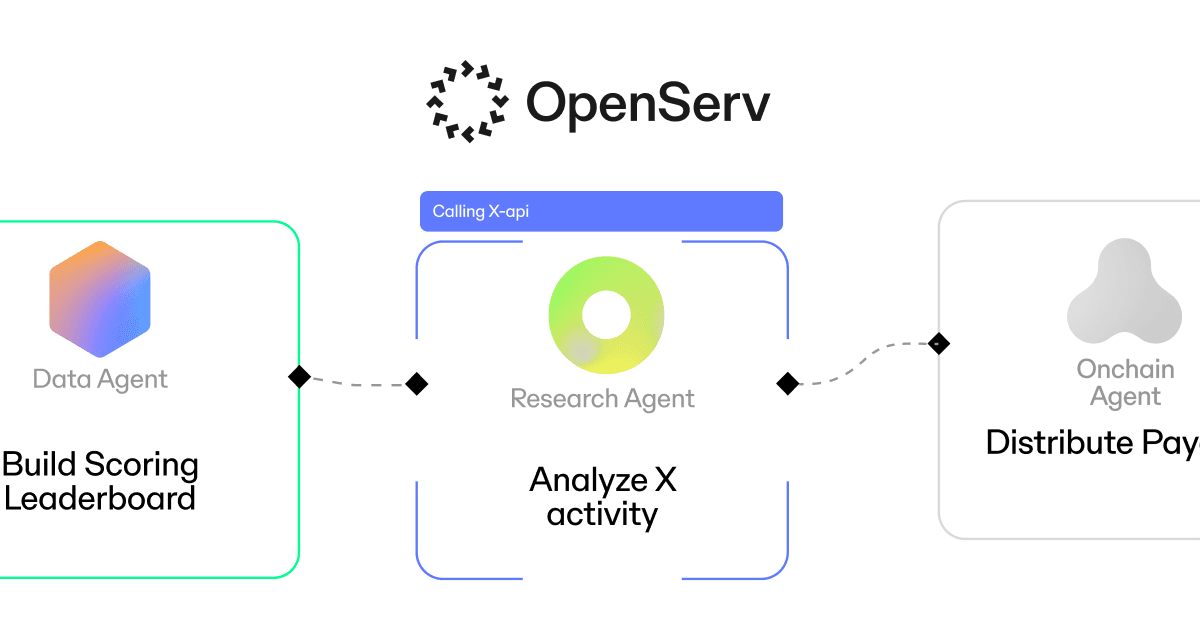
OpenServ is a comprehensive platform for developers to rapidly build, deploy, and monetize decentralized, multi-agent AI applications (aApps). It combines a flexible SDK, a low-code orchestration canvas, and a Web3-based economic ecosystem to accelerate the journey from idea to revenue-generating product.
Frameworks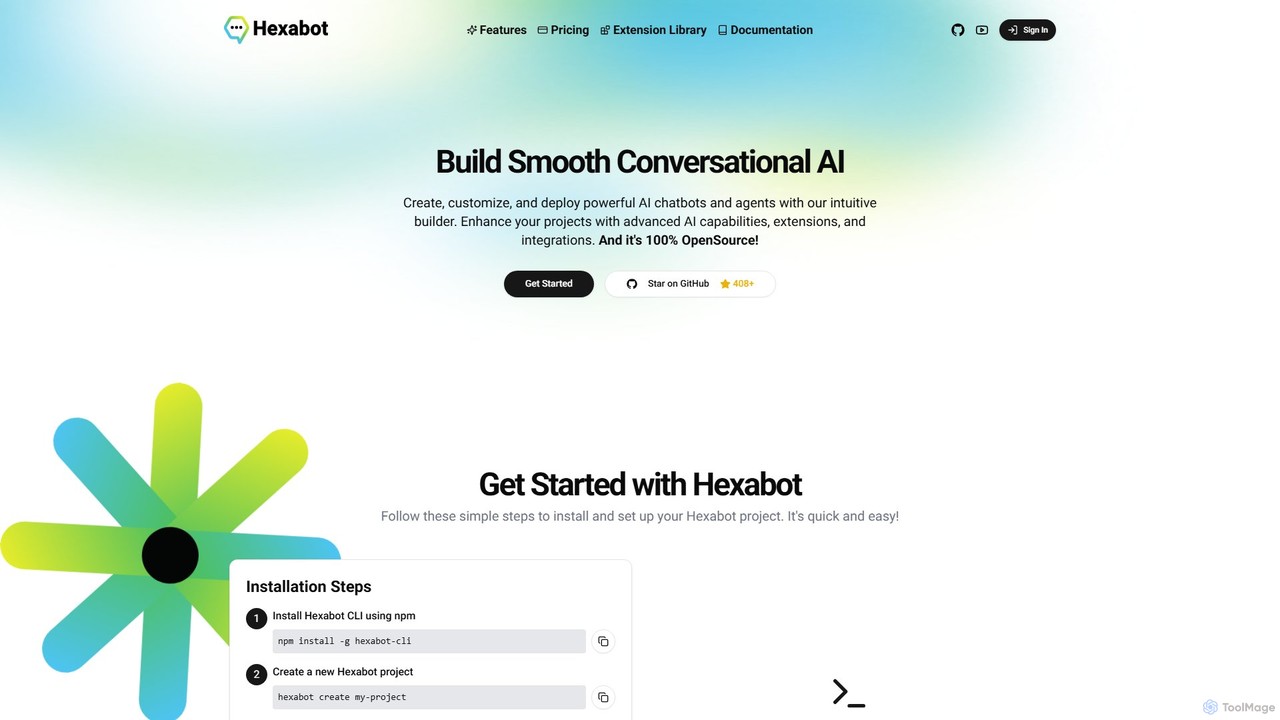
Hexabot is an open-source platform for building, customizing, and deploying powerful AI chatbots and agents. It offers a developer-friendly environment with a low-code visual editor, extensive extension library, and multi-channel integration, allowing for on-premise hosting to ensure full data privacy and control.
Chatbot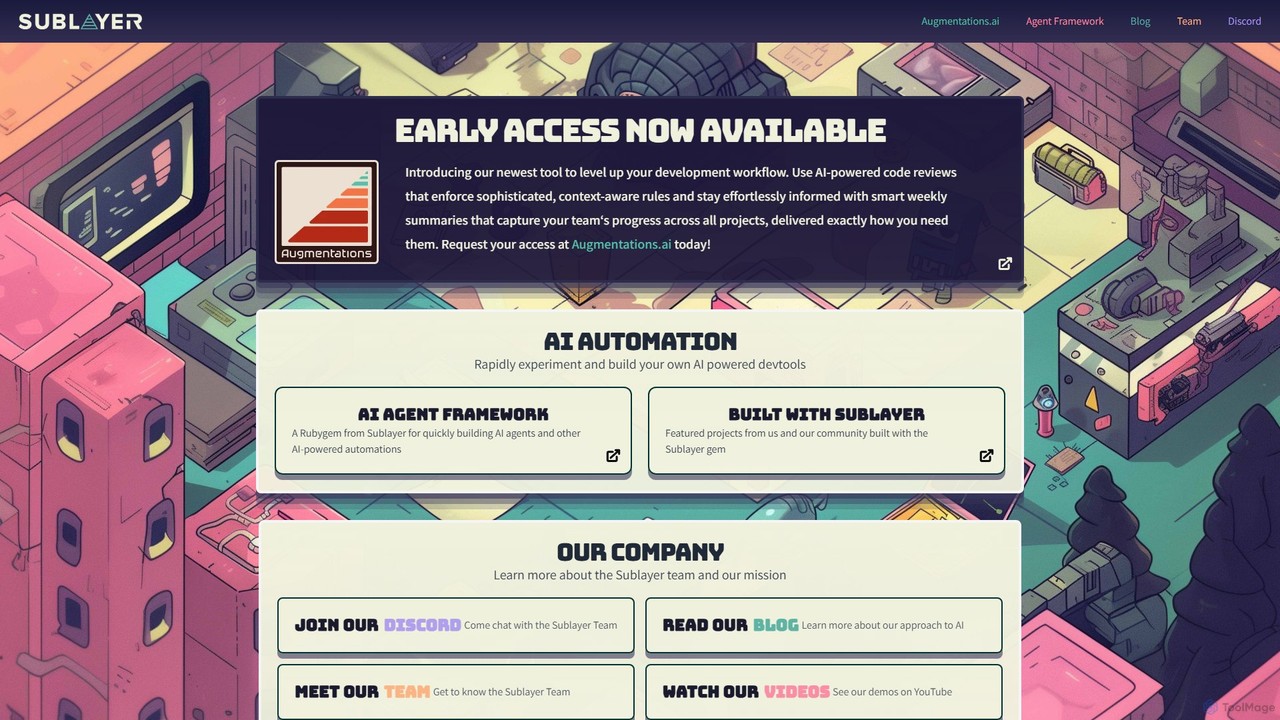
Sublayer is a model-agnostic AI agent framework for Ruby developers. It provides a powerful Rubygem to rapidly build, experiment with, and deploy AI agents and custom developer tools, enabling personalized and context-aware automation for software development workflows.
Code Assistant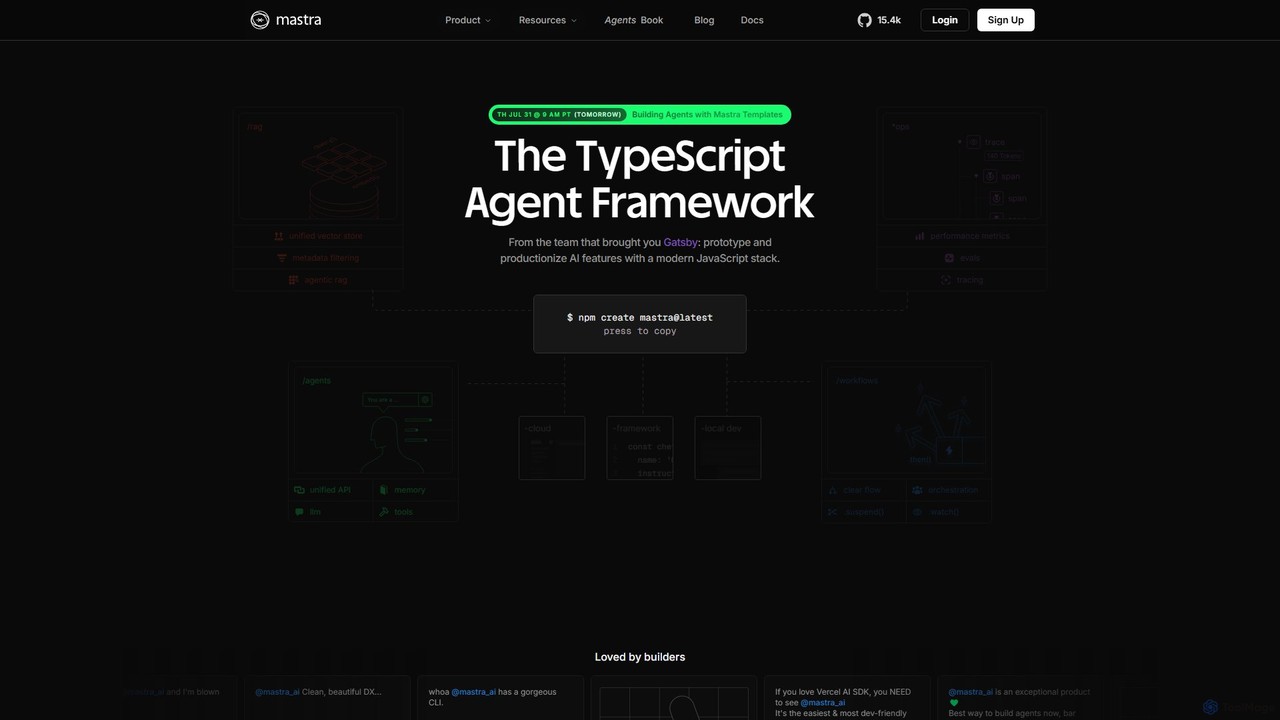
Mastra is an open-source TypeScript framework designed for developers to build, deploy, and manage sophisticated AI agents and complex workflows. It provides a developer-friendly SDK with features like persistent memory, tool calling, Retrieval-Augmented Generation (RAG), and deterministic workflow graphs. Built by the team behind Gatsby, Mastra simplifies creating production-ready AI applications within the JavaScript ecosystem.
Agent Builder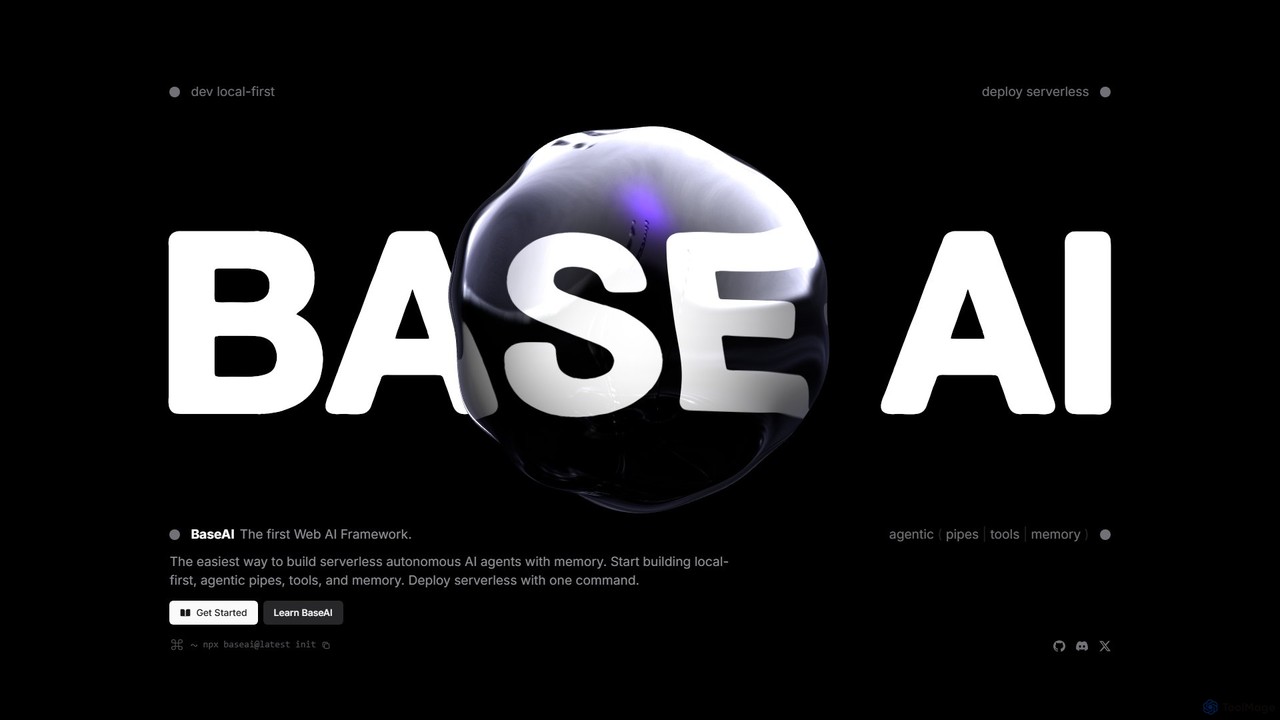
BaseAI is the first open-source Web AI Framework designed for developers to build, test, and deploy serverless autonomous AI agents with memory. Using Node.js and TypeScript, it offers a local-first development experience, composable components like Pipes (agents), Tools, and Memory (RAG), and seamless one-command deployment to the cloud.
Frameworks
phidata is an open-source Python framework for building autonomous AI Assistants. It simplifies the integration of LLMs with memory, knowledge bases, and external tools, enabling developers to create powerful, stateful AI applications with ease.
FrameworksAI Frameworks are foundational software libraries and toolkits that provide a structured environment for building, training, and deploying machine learning models. They abstract complex mathematical operations and hardware interactions through high-level APIs, enabling developers to work more efficiently. These tools are essential for creating everything from simple predictive models to complex deep neural networks. By offering pre-built components, optimization algorithms, and support for GPU acceleration, AI frameworks significantly reduce development time and lower the barrier to entry for creating sophisticated AI applications.
AI Frameworks are primarily used by machine learning engineers, data scientists, and AI researchers. They are fundamental in industries like technology, healthcare, finance, and autonomous systems for tasks such as developing computer vision systems, building natural language processing models for chatbots, or creating recommendation engines for e-commerce platforms.
When selecting an AI Framework, consider the project's complexity, your team's programming language proficiency (most are Python-based), and the target deployment platform (cloud, mobile, edge). Evaluate the framework's ecosystem, including community support, available pre-trained models, and documentation. For production applications, scalability and performance are critical, while for research, flexibility and ease of experimentation might be more important.
A data scientist at an e-commerce company needs to create a system that automatically categorizes new product images. Using a framework like TensorFlow or PyTorch, they can design, train, and evaluate a custom convolutional neural network (CNN). The framework's tools for data augmentation, model building with pre-built layers, and GPU-accelerated training allow them to iterate quickly. The final model, once deployed, can process thousands of images daily, ensuring products are listed correctly and improving user search experience.
A developer at a SaaS company wants to build an intelligent chatbot that can answer specific questions about their product using internal documentation. Instead of building from scratch, they use a framework like LangChain or LlamaIndex. This framework provides components to connect a large language model (LLM) to their private data sources (e.g., PDFs, databases). The developer can easily create a retrieval-augmented generation (RAG) pipeline, enabling the chatbot to provide accurate, context-aware answers, significantly reducing the burden on the human support team.
A marketing analyst needs to analyze thousands of customer reviews to gauge public opinion on a new product. Using a framework like Hugging Face Transformers, they can take a powerful, pre-trained language model (like BERT) and fine-tune it on their specific dataset of reviews. The framework simplifies the process of loading the model, preparing the data, and running the training loop. The resulting specialized model can classify review sentiment with high accuracy, providing actionable insights much faster than manual analysis.
A mobile developer is creating an app with a real-time object detection feature. The initial model is too large and slow to run on a smartphone. Using a framework's deployment toolkit, such as TensorFlow Lite or PyTorch Mobile, the developer can convert the model into a highly optimized format. This process involves techniques like quantization (reducing numerical precision) and pruning (removing unnecessary parameters), which are handled by the framework. The result is a smaller, faster model that can run directly on the device, providing a smooth user experience without relying on a server.
An AI researcher at a university is developing a novel neural network architecture. They need a flexible environment to implement custom layers, loss functions, and training procedures. A framework like PyTorch provides this flexibility with its dynamic computation graph, allowing for easy debugging and modification of the model on the fly. The researcher can quickly prototype their ideas, run experiments on large datasets using university compute clusters, and publish their findings, contributing to the advancement of the field. The framework handles the low-level GPU programming, letting the researcher focus on the science.
An engineer at an online retail platform is tasked with improving user engagement by providing personalized recommendations. They use an AI framework to implement a collaborative filtering model. The framework provides efficient data loaders for handling large user-item interaction datasets and includes built-in layers and functions suitable for recommendation systems. By training the model on historical purchase and browsing data, the system can predict which products a user is likely to be interested in, leading to increased sales and customer satisfaction.
An AI Framework is a software library that provides developers with a structured and simplified way to build and train machine learning models. It acts as a foundation, offering pre-built, optimized components for common tasks like data manipulation, model definition, and training. Key features often include automatic differentiation for training neural networks, GPU acceleration for faster computation, and tools for deploying models into production environments. Essentially, they handle the complex underlying math and engineering, allowing developers to focus on the high-level model architecture.
Choosing the right AI framework depends on several factors. Consider the following:
The terms are often used interchangeably, but there's a subtle distinction. A Machine Learning Library (e.g., Scikit-learn, Pandas) typically provides specific tools or algorithms for a part of the ML workflow, like data processing or classical algorithms. An AI Framework (e.g., TensorFlow, PyTorch) is more comprehensive. It provides an end-to-end ecosystem for building, training, and deploying models, especially complex deep learning models. A framework often dictates the structure of your application and may use various libraries internally, offering a complete, integrated development environment.
Not necessarily for basic to intermediate use. Modern AI frameworks with high-level APIs (like Keras) abstract away most of the complex calculus, linear algebra, and probability theory. You can build and train powerful models by understanding concepts like layers, loss functions, and optimizers without implementing the math yourself. However, a deeper understanding of the underlying mathematics is highly beneficial for advanced tasks, such as designing novel model architectures, creating custom components, or effectively troubleshooting training issues.
While many of the most popular frameworks like TensorFlow and PyTorch are renowned for their deep learning capabilities, the term can be broader. Some frameworks are specifically designed for other areas of AI. For example, frameworks like LangChain are built for creating applications with large language models (LLMs). Others might focus on reinforcement learning or classical machine learning. However, deep learning frameworks are often flexible enough to implement a wide variety of models, not just neural networks, making them versatile tools for many AI tasks.