

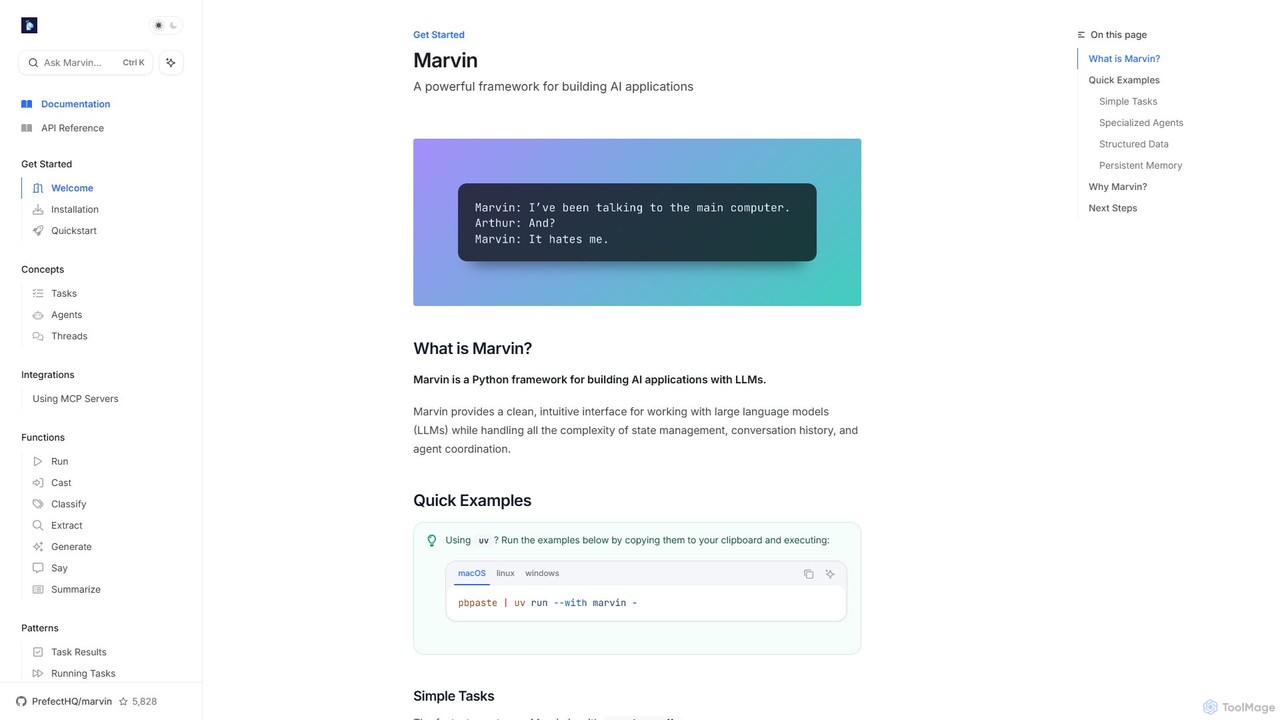
askmarvin Overview
askmarvin, often referred to as Marvin, is a sophisticated, open-source Python framework designed to streamline the development of applications powered by Large Language Models (LLMs). Developed by the team at Prefect, Marvin provides a clean, intuitive interface that abstracts away the complexities of working with LLMs, such as state management, conversation history, and agent coordination. It's built with a 'batteries-included' philosophy, offering smart defaults that work out-of-the-box, while remaining highly customizable for advanced use cases.
The framework is designed to be both powerful and easy to use, allowing developers to scale from simple, single-line AI function calls to complex, multi-agent systems that can collaborate on tasks. Marvin's core strength lies in its ability to produce reliable and predictable results, particularly through its robust support for structured data outputs.
How to use askmarvin
Using askmarvin involves integrating its Python library into your development projects. The process is straightforward for Python developers:
- Installation: First, install the library into your Python environment using pip:
pip install marvin. - Simple Tasks: For quick, one-off tasks, you can use the
marvin.run()function. This is the fastest way to get a response from an LLM. For example:marvin.run("Write a haiku about artificial intelligence"). - Specialized Agents: For more complex tasks, you can create specialized agents with specific instructions and personalities. Define an agent using
marvin.Agent(name="Poet", instructions="You are an expert poet...")and then use its.run()method. - Structured Data Output: To get results in a specific format, define a Pydantic
BaseModeland pass it as theresult_typeargument. Marvin will ensure the LLM's output conforms to your defined schema. - Advanced Workflows: For full control, use
marvin.Taskto define instructions, tools, and context. This allows you to build complex, multi-step AI workflows. - Conversation Management: Use
marvin.Threadto maintain conversation history and context, enabling multi-turn dialogues with agents. - Tool Integration: You can provide your own Python functions as tools for an agent to use, or connect to external tools via the Model Context Protocol (MCP) for capabilities like running code or interacting with Git.
Core Features of askmarvin
- Intuitive Interface: Start with a single line of code using
marvin.run()and scale to complex applications with dedicated classes for Agents, Tasks, and Threads. - Specialized AI Agents: Create and manage agents with unique instructions, personalities, and tools, allowing for task-specific expertise.
- Structured Data Extraction: Reliably get LLM outputs in Pydantic models, lists, or other specific data types, eliminating the need for manual parsing of unstructured text.
- Persistent Memory & State Management: Built-in capabilities for agents to remember context across conversations using
marvin.Memoryandmarvin.Thread. - Tool & Function Integration: Seamlessly provide your own Python functions as tools for agents to use, enabling them to interact with APIs, databases, or other systems.
- Multi-Agent Collaboration: Design systems where multiple specialized agents can collaborate on a single, complex task, passing information between each other.
- Model Context Protocol (MCP) Support: Connect to a growing ecosystem of external tools and data sources via a standardized protocol, enhancing agent capabilities.
Use Cases for askmarvin
askmarvin is versatile and can be applied to a wide range of development scenarios:
- Data Processing & Classification: Build automated pipelines to classify text (e.g., sentiment analysis), extract entities (e.g., names, dates), or summarize documents into structured formats.
- AI-Powered Chatbots & Assistants: Create specialized assistants with long-term memory and specific skills, such as a coding assistant that can write and execute code, or a research analyst that can browse sources and compile reports.
- Automated Content Generation: Generate structured content like product descriptions, social media posts, marketing emails, or even code snippets based on high-level prompts.
- Function Calling & Automation: Build agents that can interact with external APIs, databases, or local file systems to perform complex, multi-step automation tasks.
- Rapid Prototyping: Quickly test AI-driven features and build proof-of-concept applications with minimal boilerplate code, accelerating the innovation cycle.
Advantages of askmarvin
- Developer-Friendly: Designed with smart defaults that work out of the box, significantly reducing the initial setup and configuration effort.
- Simplicity at Scale: The framework's architecture allows you to start simple and progressively add complexity without needing to refactor your entire application.
- Reliable & Predictable Outputs: The strong focus on structured data via Pydantic makes LLM outputs predictable and easy to integrate into larger software systems.
- Open Source & Extensible: As a free, open-source project under the Apache 2.0 License, it benefits from community contributions and allows for deep customization.
- Part of the Prefect Ecosystem: Being developed by Prefect, it adheres to high engineering standards and has the potential for seamless integration with workflow orchestration tools.
Pricing and Plans
askmarvin is a completely free and open-source framework, licensed under the Apache 2.0 License. There are no paid plans or hidden costs associated with using the library itself. As it is hosted on GitHub, developers can freely use, modify, and contribute to the project. Users are only responsible for the costs associated with the underlying LLM APIs (e.g., OpenAI, Anthropic) they choose to connect to.
Traffic
Latest traffic
Status
Monthly traffic trend
- 2026-1: 5.8K
- 2026-2: 4.9K
- 2026-3: 6.9K
- 2026-4: 6.6K
- 2026-5: 6.2K
Geography
Top 5 countries / regions
- 🇭🇺Hungary56.3%
- 🇺🇸United States31.7%
- 🇮🇳India12.1%
Traffic sources
| Source type | Percentage |
|---|---|
Direct | 98.8% |
Referral | 1.2% |
Top keywords
| Keyword | Cost per click |
|---|---|
| marvin | $1.43 |
| marvin ai | $10.44 |
| marvin mcp | $0.00 |
| marvins agent | $0.00 |
| vanny marvin | $0.00 |
askmarvin Alternatives
Sublayer
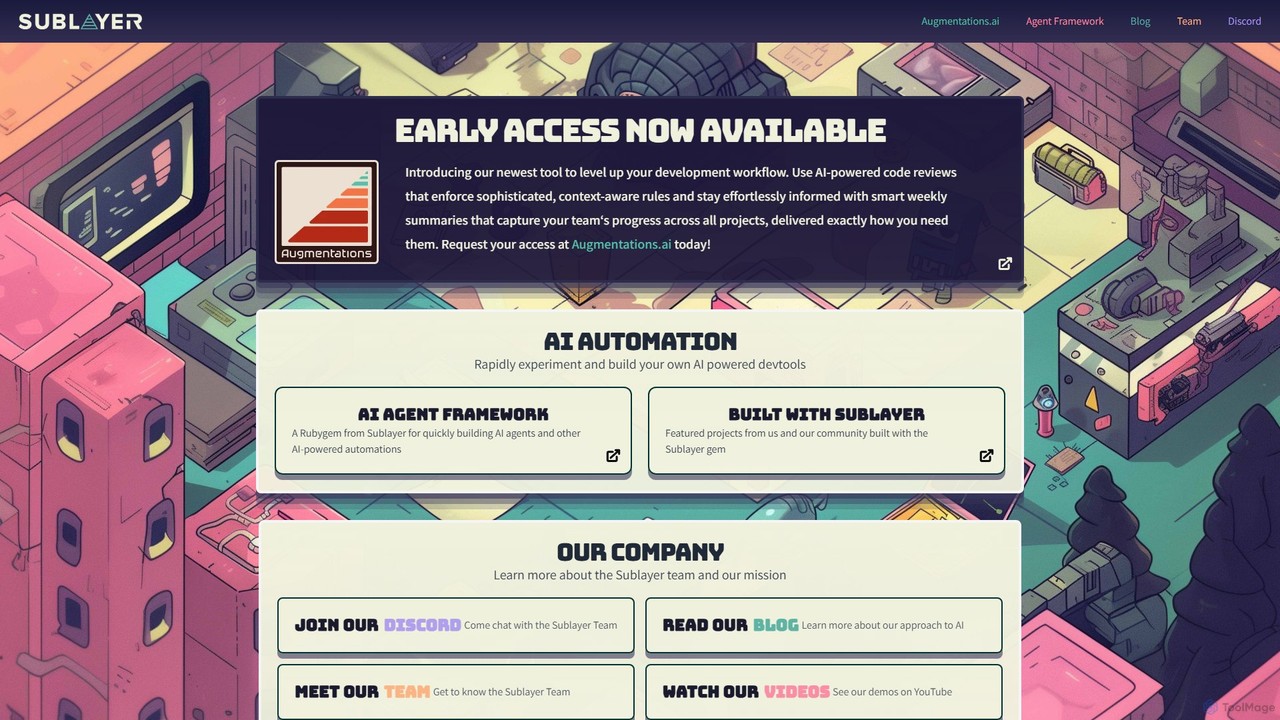
Sublayer is a model-agnostic AI agent framework for Ruby developers. It provides a powerful Rubygem to rapidly build, experiment with, and deploy AI agents and custom developer tools, enabling personalized and context-aware automation for software development workflows.
Code Assistant
smolagents
smolagents is a minimalist, open-source AI agent framework developed by Hugging Face. It empowers developers to build and deploy powerful, code-first AI agents with minimal Python code. By focusing on simplicity and efficiency, it enables Large Language Models (LLMs) to interact with tools and the real world seamlessly, supporting a wide range of models and secure execution environments.
Development
CrewAI
CrewAI is an advanced open-source framework for orchestrating role-playing, autonomous AI agents. By fostering collaborative intelligence, it enables agents with distinct roles and tools to work together seamlessly to solve complex tasks. This multi-agent system simplifies the development of sophisticated applications, from automated content creation to complex data analysis, by managing agent interactions, task delegation, and workflow processes.
Agent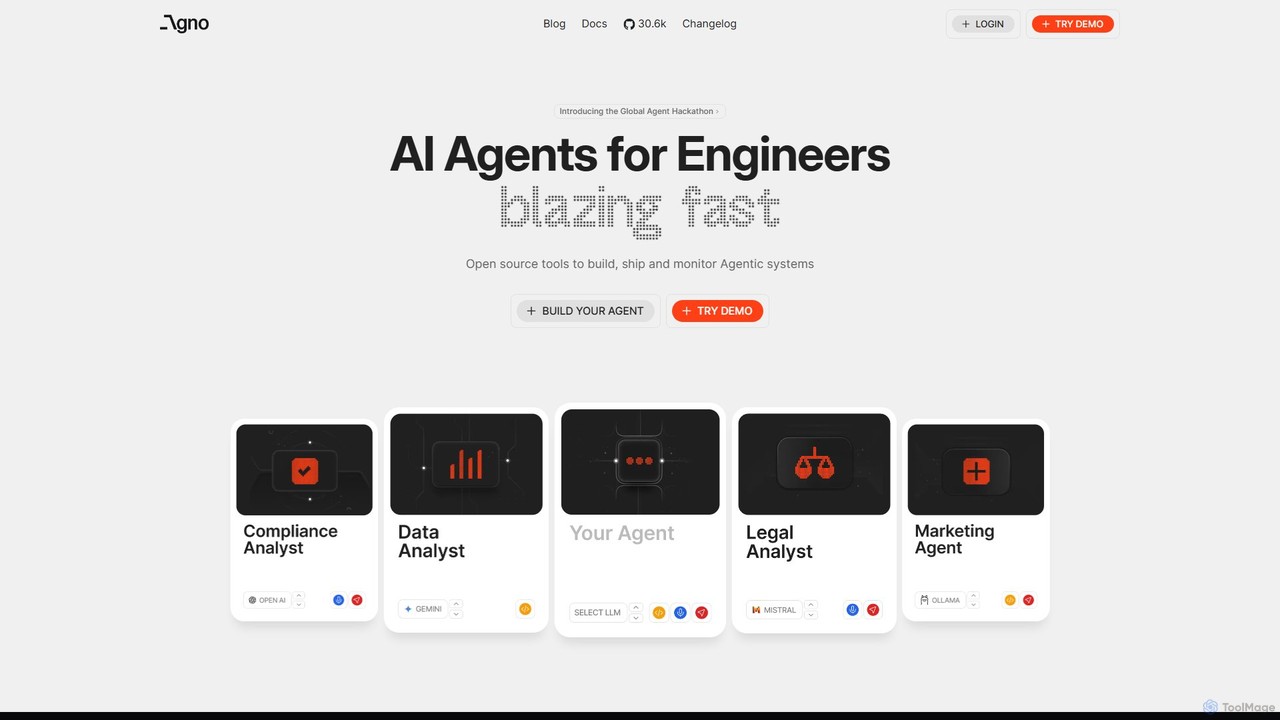
phidata
phidata is an open-source Python framework for building autonomous AI Assistants. It simplifies the integration of LLMs with memory, knowledge bases, and external tools, enabling developers to create powerful, stateful AI applications with ease.
Frameworks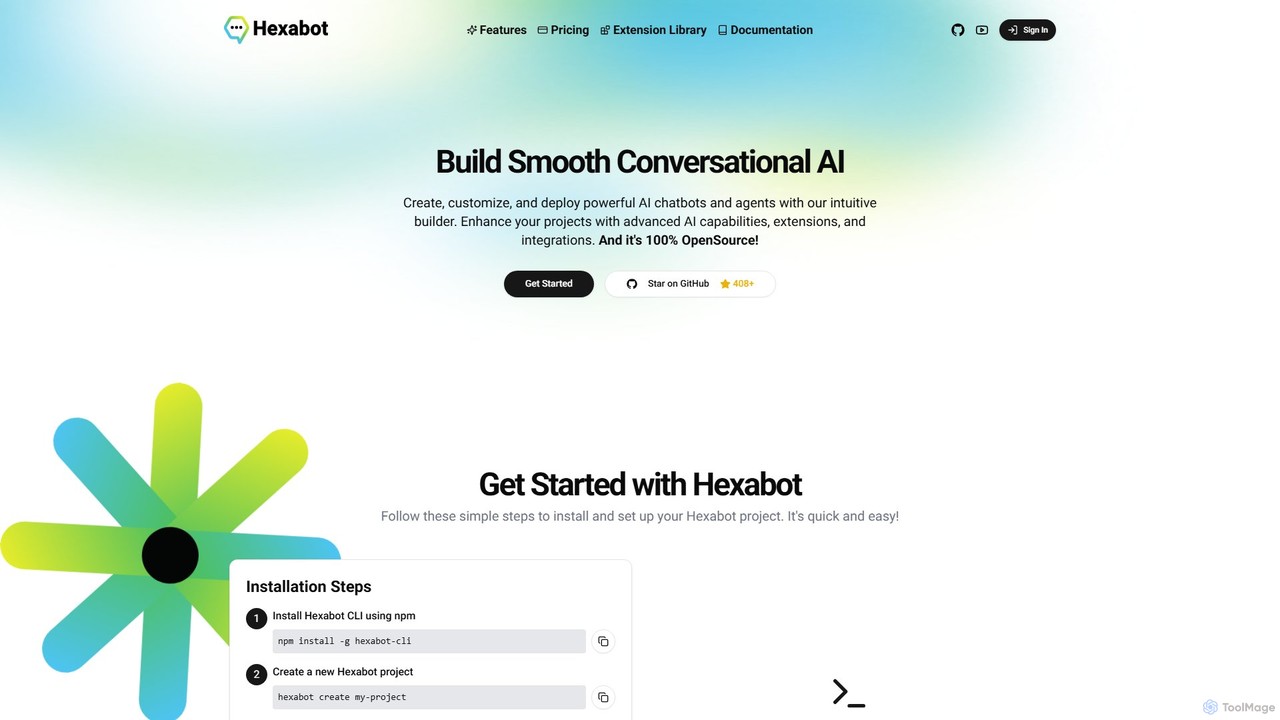
Hexabot
Hexabot is an open-source platform for building, customizing, and deploying powerful AI chatbots and agents. It offers a developer-friendly environment with a low-code visual editor, extensive extension library, and multi-channel integration, allowing for on-premise hosting to ensure full data privacy and control.
Chatbotaskmarvin Categories
askmarvin Embed Widget
Copy this embed code to place the badge on your blog, article, or product site and send readers directly to this ToolMage detail page.

Related AI tools
smolagents
smolagents is a minimalist, open-source AI agent framework developed by Hugging Face. It empowers developers to build and deploy powerful, code-first AI agents with minimal Python code. By focusing on simplicity and efficiency, it enables Large Language Models (LLMs) to interact with tools and the real world seamlessly, supporting a wide range of models and secure execution environments.
DevelopmentCrewAI
CrewAI is an advanced open-source framework for orchestrating role-playing, autonomous AI agents. By fostering collaborative intelligence, it enables agents with distinct roles and tools to work together seamlessly to solve complex tasks. This multi-agent system simplifies the development of sophisticated applications, from automated content creation to complex data analysis, by managing agent interactions, task delegation, and workflow processes.
Agent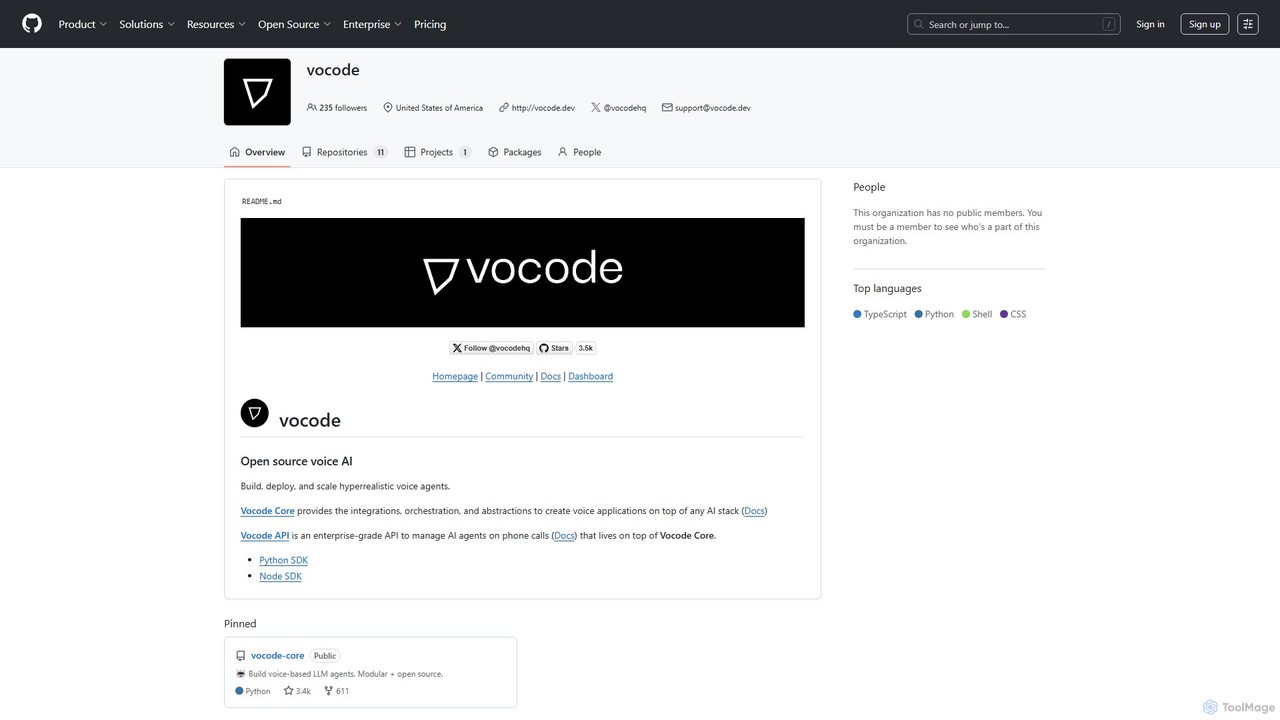
vocode
Vocode is an open-source platform for building, deploying, and scaling hyperrealistic voice AI agents. It provides developers with a core framework and an enterprise-grade API to create sophisticated voice-based LLM applications for tasks like automated customer service, sales calls, and interactive voice response (IVR) systems.
Voicebot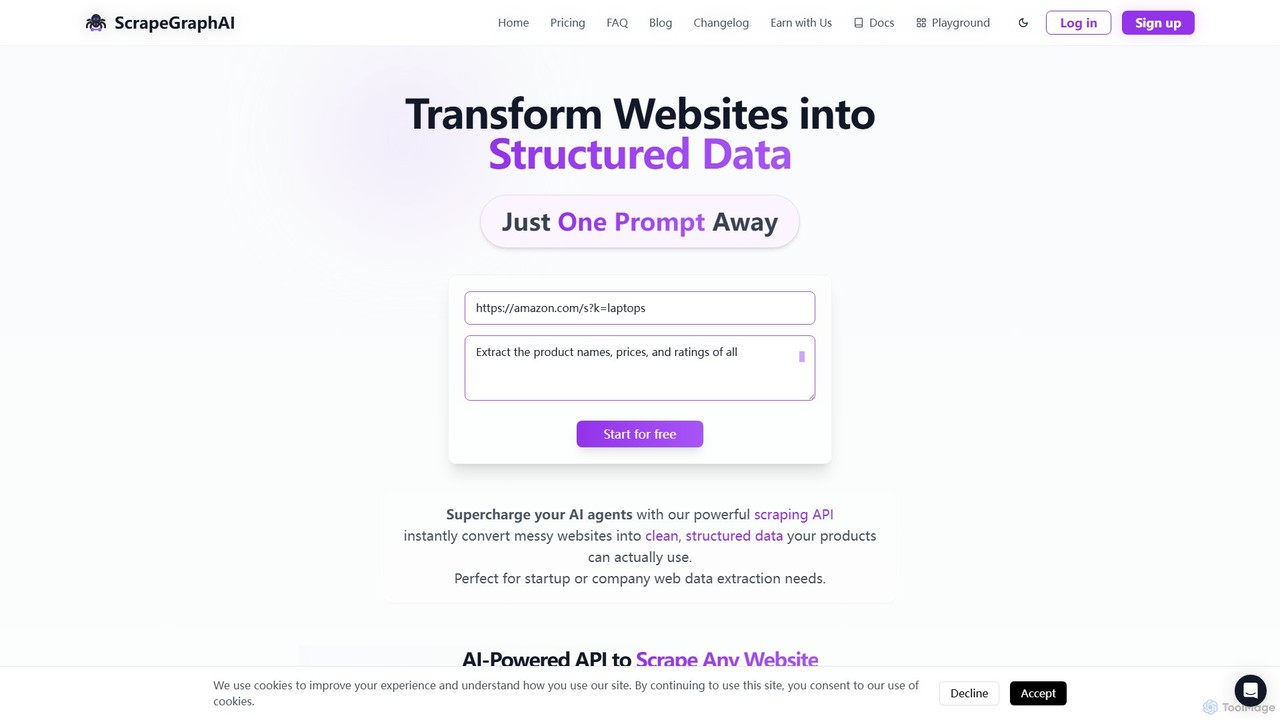
ScrapeGraphAI
ScrapeGraphAI is an AI-powered web scraping API that transforms unstructured websites into clean, structured JSON data using simple natural language prompts. Designed for developers, AI agents, and automated workflows, it simplifies data extraction without complex code.
Analytics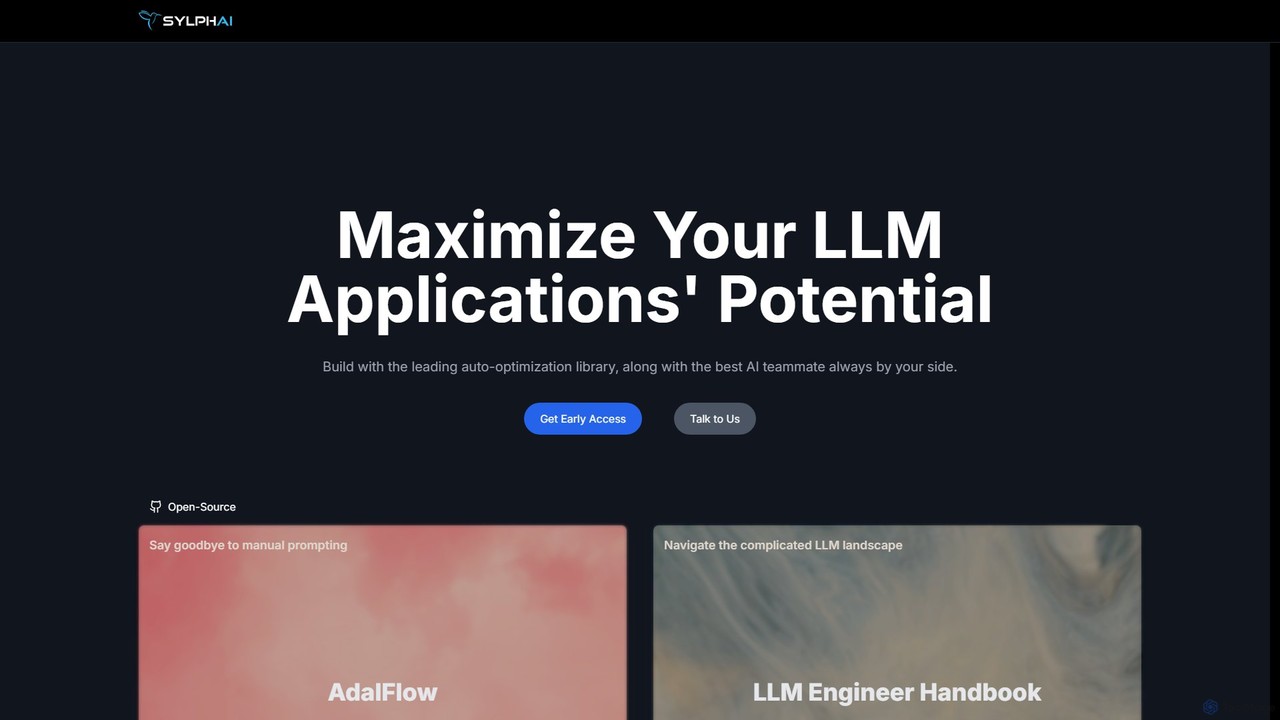
Sylph AI
Sylph AI is a development platform designed to maximize the potential of LLM applications. It features AdalFlow, a leading open-source library for building and auto-optimizing LLM task pipelines, and an AI Teammate that provides expert guidance throughout the entire development workflow, from ideation to production.
Libraries
ConnectOnion
ConnectOnion is a minimalist Python framework designed to build production-ready AI agents with significantly less code. It simplifies agent creation by combining Markdown prompts and Python functions, reducing boilerplate by up to 85% compared to other frameworks.
Libraries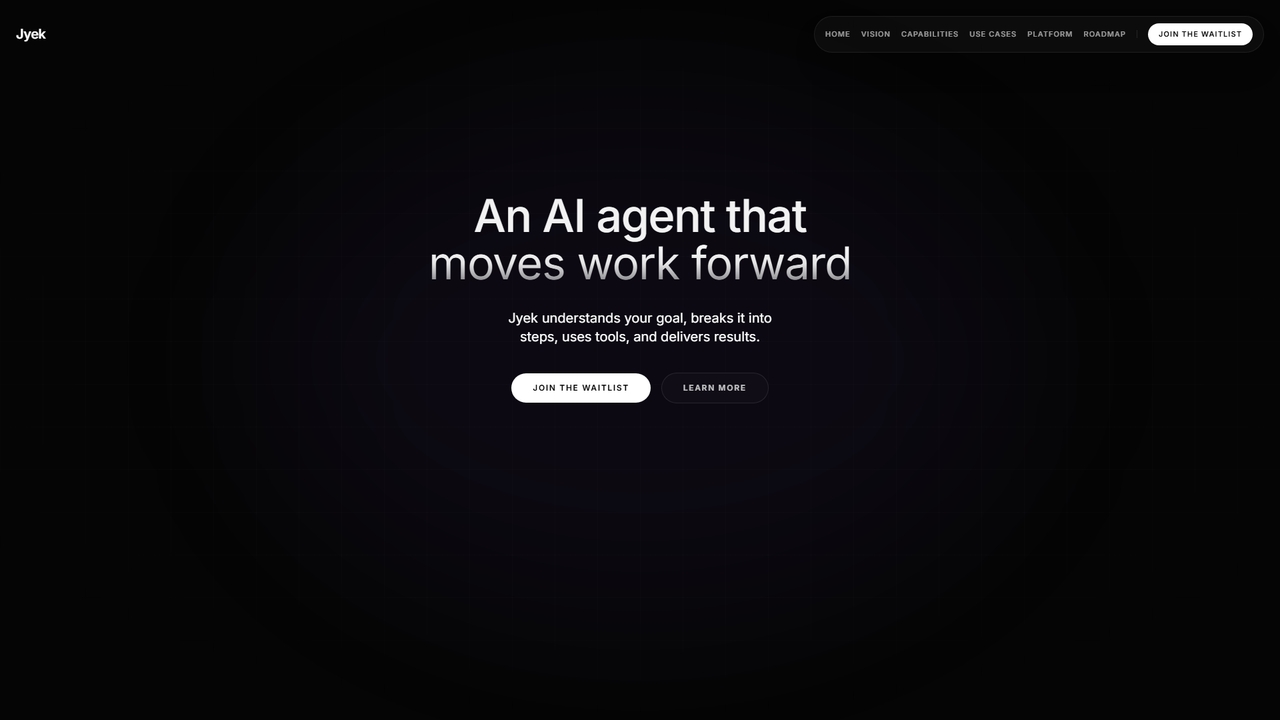
Jyek
Jyek is an AI agent platform that understands objectives, creates execution plans, uses tools, and delivers verifiable results for complex, multi-step tasks.
Automation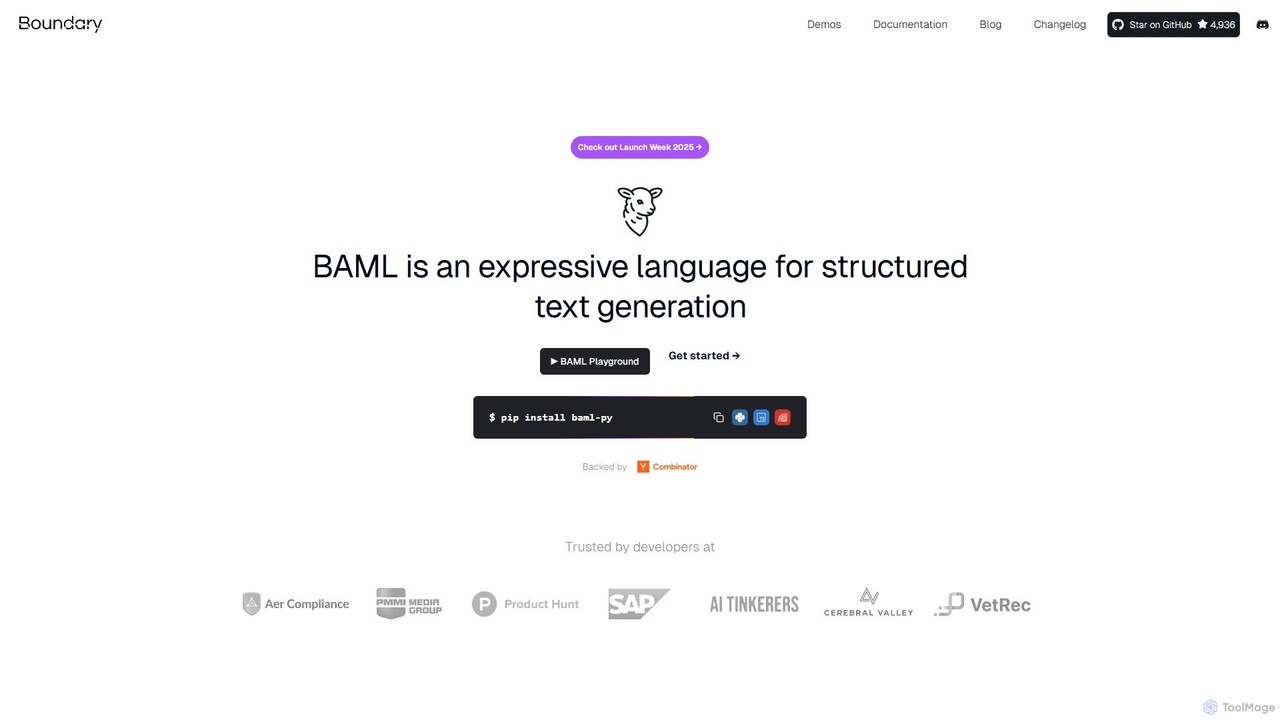
boundaryml
boundaryml (BAML) is a specialized programming language and toolkit for developers to reliably extract structured data from Large Language Models (LLMs). It transforms complex prompt engineering into a streamlined, code-like process, ensuring type-safe, error-corrected outputs across various LLMs and programming languages like Python and TypeScript. It's designed to enhance reliability, reduce costs, and accelerate development cycles for AI applications.
Apiphidata
phidata is an open-source Python framework for building autonomous AI Assistants. It simplifies the integration of LLMs with memory, knowledge bases, and external tools, enabling developers to create powerful, stateful AI applications with ease.
FrameworksHexabot
Hexabot is an open-source platform for building, customizing, and deploying powerful AI chatbots and agents. It offers a developer-friendly environment with a low-code visual editor, extensive extension library, and multi-channel integration, allowing for on-premise hosting to ensure full data privacy and control.
Chatbot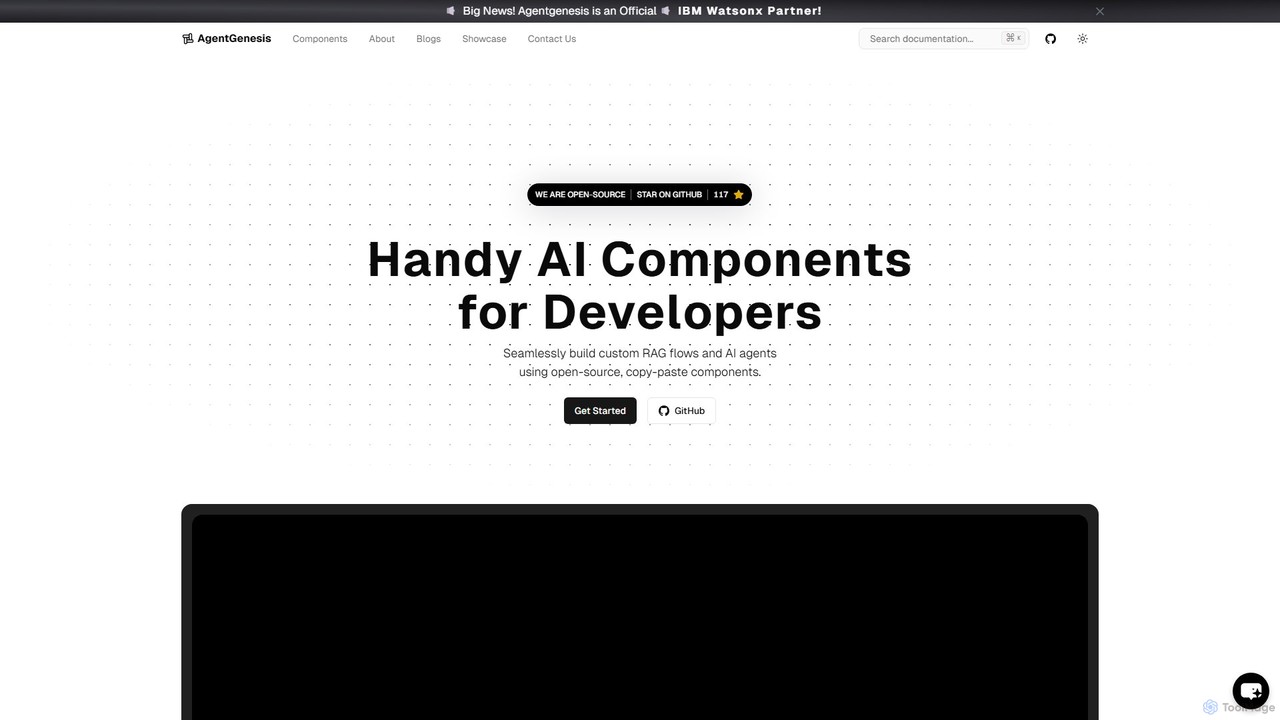
AgentGenesis
AgentGenesis is an open-source developer framework for rapidly building and deploying AI applications. It offers a comprehensive library of reusable code snippets, templates, and pre-built components like a LinkedIn Agent, RAG flows, and QnA bots, enabling developers to accelerate their AI development workflow and create custom solutions with ease.
Frameworks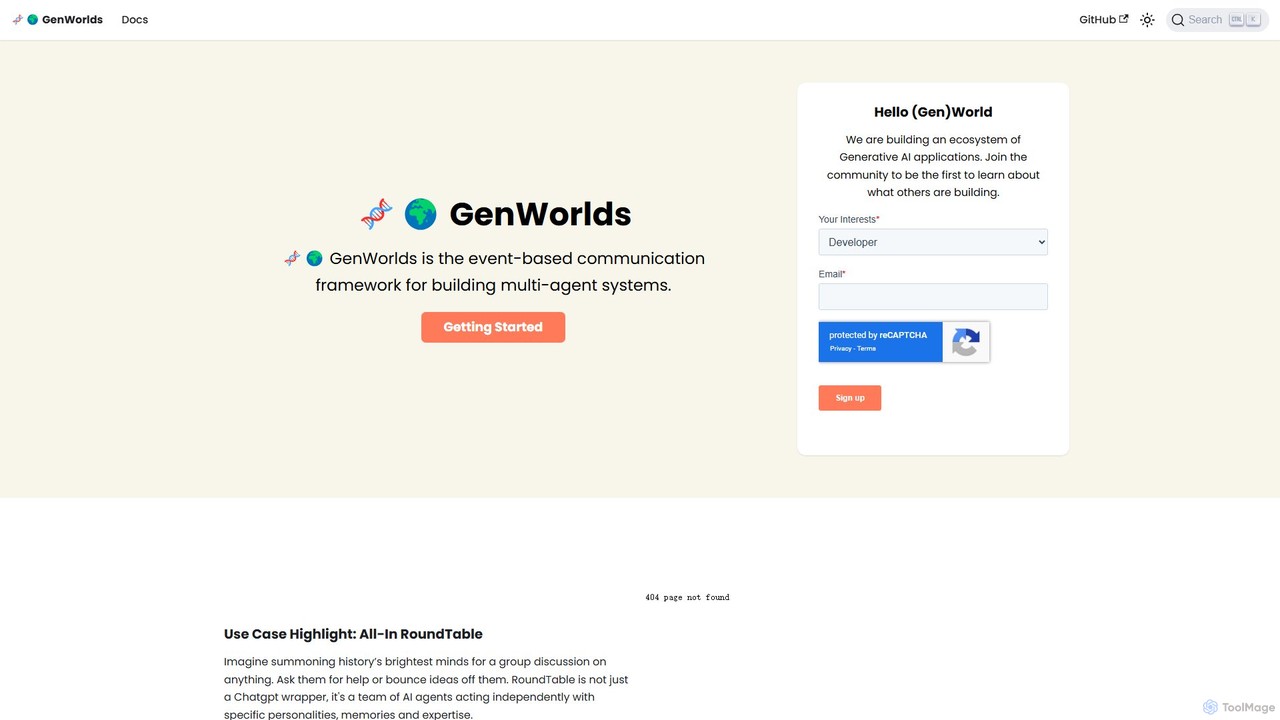
genworlds
GenWorlds is an open-source, event-based framework for building and coordinating complex multi-agent AI systems. It allows developers to create customizable worlds where multiple AI agents, each with unique personalities, memories, and cognitive processes, can collaborate to perform complex tasks. It's built on LangChain and uses Qdrant for long-term memory.
Multi Agent Systems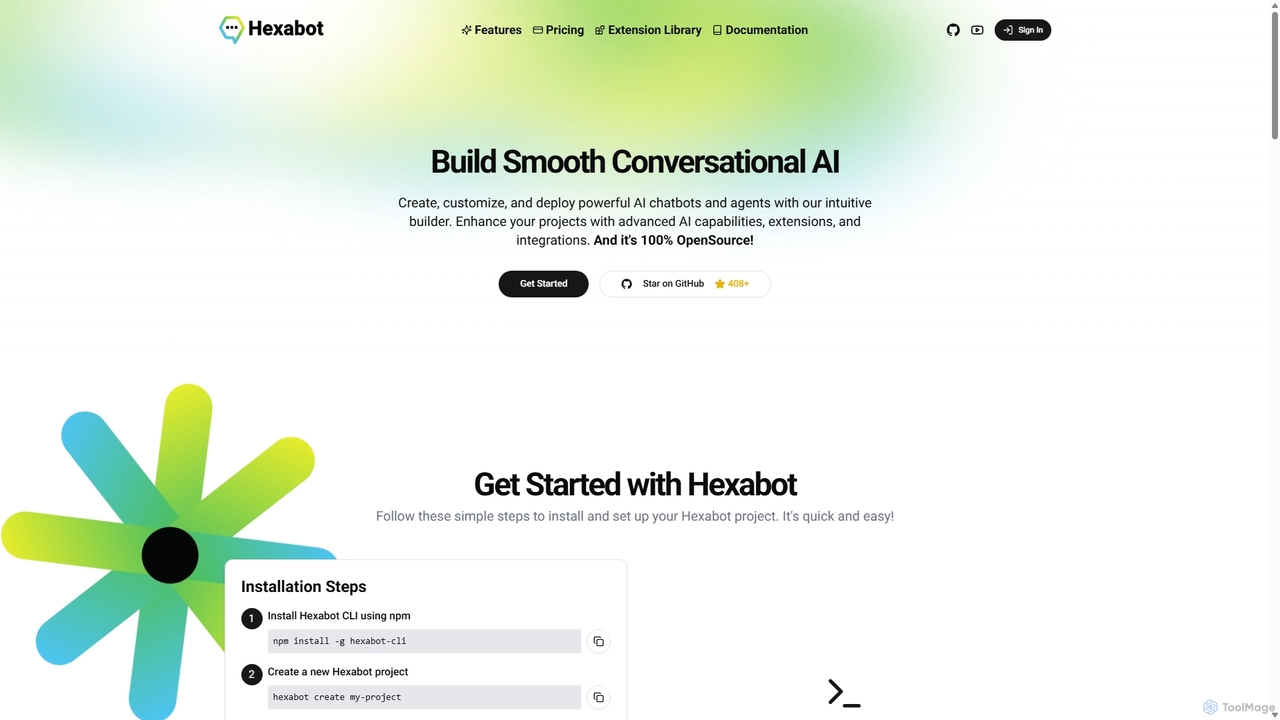
Hexabot
Hexabot is a 100% open-source platform for building, customizing, and deploying powerful AI chatbots and agents. It offers an intuitive low-code builder, on-premise hosting for data privacy, and a vast library of extensions. Ideal for developers and businesses seeking to enhance customer experience and automate workflows across multiple channels and languages.
Chatbot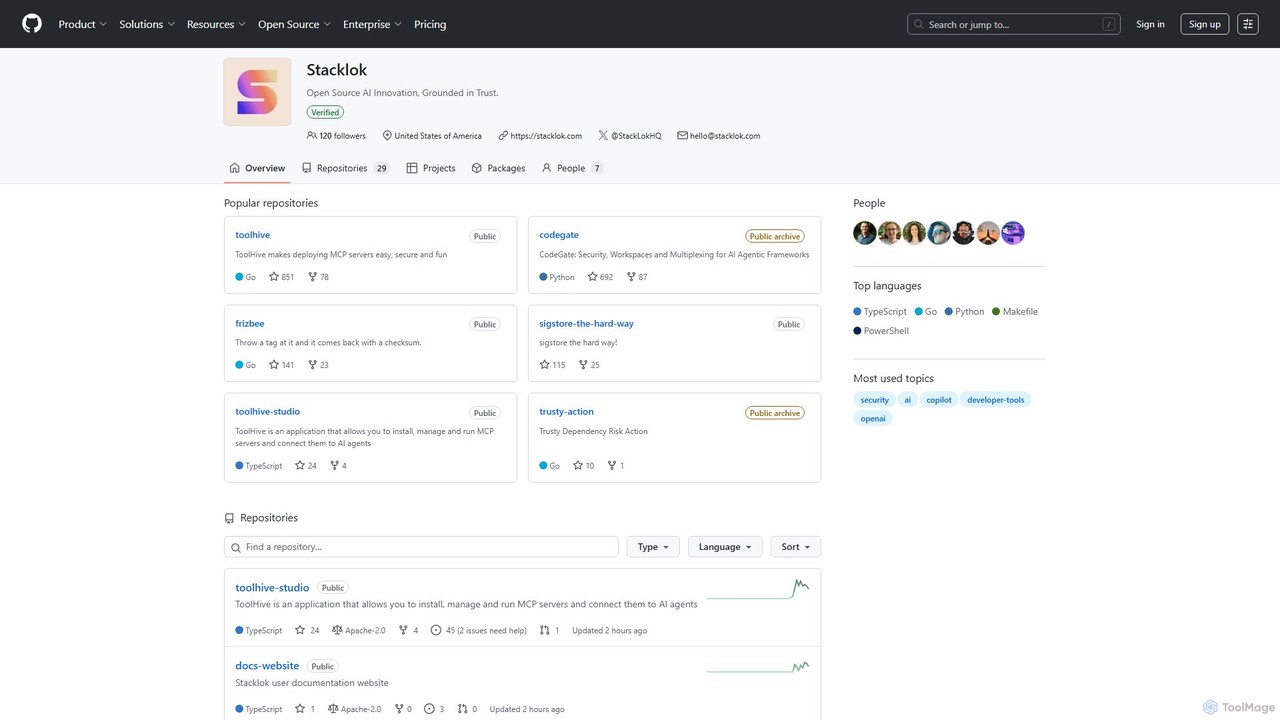
codegate
Codegate is an open-source security gateway and multiplexing framework for AI agentic systems. Developed by Stacklok, it provides secure workspaces and policy-based access control, enabling developers to build and manage complex multi-agent applications safely and efficiently.
Agentic Frameworks
pinokio
Pinokio is a desktop browser that allows you to install, run, and control AI applications and terminal-based apps on your computer with a single click. It simplifies the complex setup of open-source AI models by automating environment creation, dependency management, and execution. This empowers users of all skill levels to experiment with powerful AI tools locally, ensuring privacy and full control over their data.
Model Deployment
askmarvin Comments (0)
Sign in to comment.
Sign inNo comments yet.