Ai Models Best in category 1 results Multi Agent Systems AI Tool

Popular AI tools in the Multi Agent Systems field of Ai Models include genworlds, etc., helping you quickly improve efficiency.

Free
genworlds

genworlds

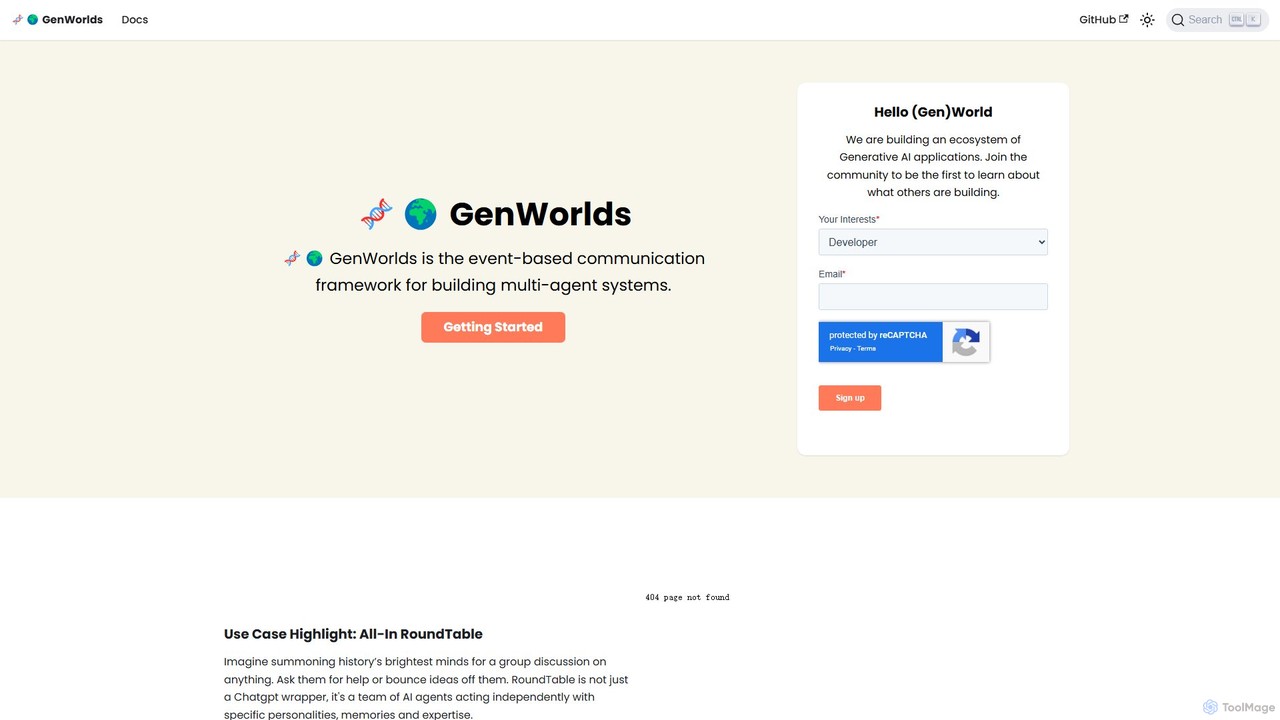
GenWorlds is an open-source, event-based framework for building and coordinating complex multi-agent AI systems. It allows developers to …

2.4K

About Multi Agent Systems

Multi Agent Systems (MAS) are a sophisticated category of AI models where multiple autonomous AI agents interact and cooperate to achieve common goals or solve complex problems. These systems are built upon principles of distributed artificial intelligence, allowing individual agents to perceive their environment, make independent decisions, and communicate with other agents. MAS excel in scenarios requiring dynamic adaptation, robust fault tolerance, and the handling of emergent behaviors that single AI models cannot address. They offer a powerful framework for modeling and managing intricate real-world systems, from smart grids to automated logistics.

Core Features

  • Autonomous Decision-Making: Each agent can independently assess situations and choose actions based on its goals and local information.
  • Inter-Agent Communication: Agents exchange information, negotiate, and coordinate their activities through defined communication protocols.
  • Collaborative Problem-Solving: Multiple agents work together, leveraging their individual capabilities to tackle problems too large or complex for a single entity.
  • Emergent Behavior: Complex system-level behaviors arise from the interactions of simpler individual agents, often leading to adaptive and robust solutions.
  • Distributed Intelligence: Intelligence is spread across multiple entities, enhancing resilience and scalability compared to centralized systems.

Use Cases

Multi Agent Systems are deployed in diverse fields such as smart city management, where agents optimize traffic flow and public services; supply chain logistics, coordinating inventory, transportation, and production; and complex industrial control, monitoring and managing interconnected processes. They provide dynamic solutions for environments requiring real-time adaptation and decentralized decision-making.

How to Choose

When selecting a Multi Agent System, consider the complexity of the problem domain, the required level of agent autonomy and interaction, and the scalability needs. Evaluate the system's communication protocols, simulation capabilities, and ease of integration with existing infrastructure. Additionally, assess the framework's support for learning and adaptation, and its robustness in handling agent failures or dynamic environmental changes.

Multi Agent SystemsUse Cases

1

Automated Supply Chain Optimization

Logistics managers and supply chain planners utilize Multi Agent Systems to dynamically optimize complex global supply chains. Individual agents representing suppliers, manufacturers, distributors, and transportation units communicate and negotiate in real-time to manage inventory levels, schedule production, and route shipments. This leads to reduced operational costs, minimized delays, and improved responsiveness to market fluctuations, ensuring efficient resource allocation across the entire network.

2

Smart City Traffic Management

Urban planners and traffic engineers deploy Multi Agent Systems to intelligently manage city traffic flow. Agents embedded in traffic lights, public transport, and emergency vehicles collaborate to detect congestion, predict bottlenecks, and dynamically adjust signal timings or suggest alternative routes. This proactive approach significantly reduces commute times, lowers fuel consumption, and improves emergency response efficiency, creating a more fluid and responsive urban environment.

3

Financial Market Simulation & Trading

Quantitative analysts and algorithmic traders leverage Multi Agent Systems to simulate complex financial markets and execute sophisticated trading strategies. Agents, each with specific trading rules or learning algorithms, interact within a simulated market environment to test hypotheses, identify arbitrage opportunities, and manage risk. This allows for the development and refinement of robust trading bots that can adapt to volatile market conditions and optimize portfolio performance.

4

Disaster Response & Resource Allocation

Emergency services and humanitarian organizations use Multi Agent Systems for coordinating disaster response efforts. Agents representing rescue teams, medical units, and resource depots collaborate to assess damage, locate victims, and efficiently allocate critical resources like food, water, and medical supplies. This distributed intelligence enhances situational awareness, speeds up response times, and optimizes resource deployment in chaotic and rapidly changing environments.

5

Personalized Learning Environments

Educators and e-learning platform developers employ Multi Agent Systems to create highly personalized and adaptive learning experiences. Individual agents monitor student progress, identify learning styles, and recommend tailored content, exercises, or collaborative activities. These systems can dynamically adjust the curriculum difficulty and pace, providing targeted support and fostering deeper engagement, ultimately improving learning outcomes for diverse student populations.

6

Complex Industrial Process Control

Industrial engineers and plant operators utilize Multi Agent Systems to monitor and control intricate manufacturing or energy production processes. Agents assigned to different machinery, sensors, and control units communicate to detect anomalies, predict equipment failures, and optimize operational parameters in real-time. This leads to enhanced efficiency, reduced downtime, improved safety, and proactive maintenance, ensuring the smooth and reliable operation of complex industrial facilities.

Multi Agent SystemsFrequently Asked Questions