Ai Models Best in category 1 results Llm Data Preparation AI Tool

Popular AI tools in the Llm Data Preparation field of Ai Models include Octro, etc., helping you quickly improve efficiency.

Octro

Octro

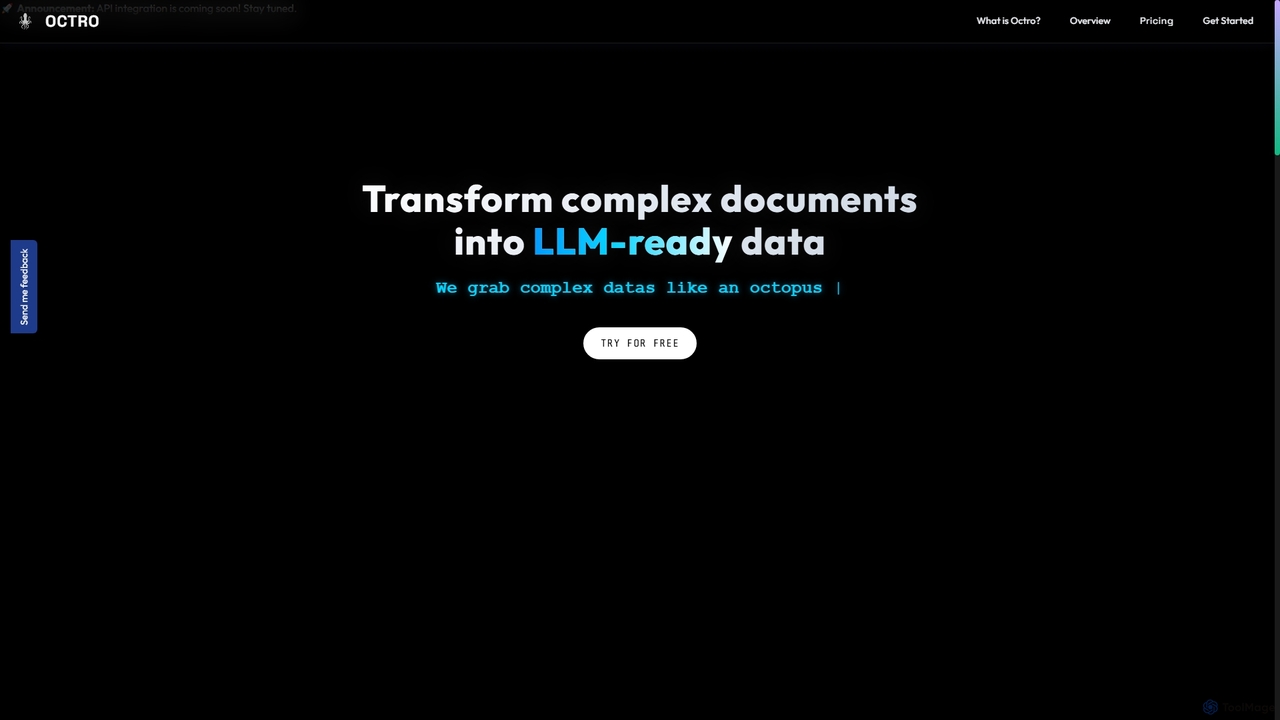
Octro is an AI-powered tool designed to transform complex documents, particularly PDFs, into structured, LLM-ready data formats like …

2.9K

About Llm Data Preparation

LLM Data Preparation tools are specialized AI solutions designed to refine, structure, and enhance datasets specifically for training and fine-tuning large language models. These platforms leverage advanced algorithms to ensure data quality, relevance, and ethical compliance, directly impacting the performance and reliability of LLMs. They are crucial for developers and researchers aiming to build high-performing, unbiased, and contextually aware AI models within the broader field of AI Models.

Core Features

  • Data Cleaning & Deduplication: Automatically identifies and removes noise, inconsistencies, and duplicate entries from raw text data.
  • Annotation & Labeling: Provides interfaces and AI-assisted features for tagging, categorizing, and labeling data with specific entities, sentiments, or intents.
  • Data Augmentation: Generates synthetic data or modifies existing data to increase dataset size and diversity, improving model robustness.
  • Bias Detection & Mitigation: Analyzes datasets for potential biases (e.g., gender, race) and suggests strategies or tools to reduce them.
  • Format Conversion & Structuring: Transforms unstructured text into structured formats (e.g., JSON, XML) suitable for LLM ingestion and training.

Applicable Scenarios

LLM Data Preparation tools are indispensable for AI teams developing custom large language models, fine-tuning existing foundation models for specific tasks, or creating domain-specific chatbots. They are used by data scientists, machine learning engineers, and AI researchers to ensure their models learn from the highest quality, most relevant, and ethically sound data possible.

How to Choose

When selecting an LLM data preparation tool, consider its compatibility with your data sources, the range of annotation and augmentation features offered, scalability for large datasets, and its capabilities for bias detection and mitigation. Evaluate integration options with your existing MLOps pipelines and the level of technical expertise required for operation.

Llm Data PreparationUse Cases

1

Refining Datasets for Custom LLM Training

AI researchers and developers often need to train LLMs on proprietary or domain-specific data. LLM data preparation tools enable them to ingest raw text, clean noise, remove duplicates, and structure it into formats suitable for model ingestion, ensuring the LLM learns from high-quality, relevant information. This process significantly reduces training errors and improves model accuracy, saving weeks of manual data curation.

2

Enhancing Data for Fine-tuning Existing LLMs

Companies often fine-tune pre-trained LLMs (like GPT-3.5 or Llama) with their specific business data to improve performance on internal tasks such as customer support or internal knowledge retrieval. LLM data preparation tools help in curating and annotating this proprietary data, ensuring it's clean, consistent, and correctly labeled for effective fine-tuning, leading to more accurate and contextually relevant model responses.

3

Creating High-Quality Datasets for AI Chatbots

For developing specialized AI chatbots, such as virtual assistants for healthcare or finance, high-quality conversational data is paramount. LLM data preparation tools facilitate the collection, cleaning, and annotation of dialogue data, including intent recognition and entity extraction. This ensures the chatbot can accurately understand user queries and provide relevant, safe, and compliant responses, reducing hallucination risks.

4

Detecting and Mitigating Bias in Training Data

Ethical AI development requires identifying and addressing biases present in training data, which can lead to unfair or discriminatory LLM outputs. LLM data preparation tools offer functionalities to analyze datasets for demographic, gender, or other societal biases. Data scientists use these tools to flag biased samples, apply re-weighting, or augment data to create a more balanced and fair dataset, promoting responsible AI.

5

Structuring Unstructured Text for LLM Ingestion

Many valuable datasets exist in unstructured formats like legal documents, research papers, or customer reviews. LLM data preparation tools can parse these diverse sources, extract key information (e.g., entities, relationships, summaries), and transform them into structured formats (e.g., JSON, CSV) that LLMs can efficiently process. This enables organizations to unlock insights from vast amounts of previously inaccessible text data.

6

Generating Synthetic Data for Scarce Resources

In scenarios where real-world data is scarce, sensitive, or expensive to acquire, LLM data preparation tools can generate high-quality synthetic data. This involves using existing data patterns to create new, artificial data points that mimic the characteristics of real data without compromising privacy or incurring high collection costs. This synthetic data can then be used to augment training sets, improving LLM performance in niche domains.

Llm Data PreparationFrequently Asked Questions