


MindMeld Overview
MindMeld is a sophisticated, open-source conversational AI platform developed by Cisco. It is specifically engineered for developers and data scientists who need to build advanced, production-quality voice assistants and chatbots. As a Python-based framework, it provides all the necessary tools to manage the entire conversational workflow, from Natural Language Understanding (NLU) to dialogue management and question answering. Acquired by Cisco for $125 million and later open-sourced, MindMeld powers key Cisco products like the Webex Assistant, demonstrating its robustness and scalability.
The platform is designed for creating applications with a deep understanding of specific, complex domains. Unlike many cloud-based NLP services that offer a general-purpose solution, MindMeld allows developers to build, train, and deploy highly customized models tailored to unique use cases, ensuring higher accuracy and better user experiences. Its architecture is composed of several key components, including a Natural Language Processor, a Question Answerer, and a Dialogue Manager, which work in concert to interpret user queries and generate intelligent responses.
How to use MindMeld
MindMeld is a developer-focused framework. The typical workflow for building a conversational application is as follows:
- Installation: Set up the MindMeld environment on a Unix-based system or using Docker. This involves installing Python, necessary dependencies like Elasticsearch, and the MindMeld package itself via pip.
- Project Scaffolding: Start a new project either from scratch or by using one of the provided "Blueprints." Blueprints are pre-configured example applications for common use cases like food ordering or home assistance, which provide a great starting point.
- Define NLP Hierarchy: Structure your application by defining its domains, intents, entities, and roles. This hierarchy helps the model understand the user's goals within specific contexts.
- Data Preparation: Create a knowledge base with relevant data and generate representative training data. This involves creating labeled query files and entity mapping files to train the machine learning models.
- Model Training: Use the MindMeld CLI or Python scripts to train the various NLP classifiers, including domain, intent, entity, and role classifiers. The platform allows for fine-tuning and evaluation to optimize performance.
- Dialogue Management: Implement the application's logic by defining dialogue state handlers in Python. These handlers control the flow of the conversation based on the user's input and the current state.
- Deployment: Once the models are trained and the logic is implemented, the application can be deployed as a REST API service, ready to be integrated with front-end interfaces like websites, mobile apps, or smart devices.
Core Features of MindMeld
- Advanced NLP Pipeline: Includes high-performance models for domain classification, intent classification, entity recognition, role classification, and entity resolution.
- Question Answering System: Capable of understanding and answering user questions by retrieving information from large-scale knowledge bases. It supports both structured and unstructured text.
- Dialogue State Management: A flexible system for controlling the conversational flow, managing context, and executing application logic.
- Blueprints for Common Use Cases: Pre-built application templates for scenarios like Food Ordering, Video Discovery, Home Assistant, Banking Assistant, and HR Assistant, which accelerate development.
- On-Premise Deployment: Offers the ability to deploy the entire platform on-premise, ensuring data privacy and security, which is critical for enterprise applications.
- Deep Learning Integration: Supports the use of deep learning models, including BERT and TensorFlow, for enhanced accuracy in classification and entity recognition tasks.
- Open Source & Python-Based: Being open-source and built on Python makes it highly accessible, customizable, and supported by a vast ecosystem of libraries and tools.
Use Cases for MindMeld
MindMeld is ideal for building specialized conversational agents in various industries:
- Enterprise IT & Operations: As demonstrated in the Cisco use case, it can be used to build assistants for Network Operations Centers (NOCs) to query network status, perform diagnostics like path traces, and create support tickets.
- Customer Support: Develop sophisticated chatbots for banking, HR, or retail that can handle complex user queries, process transactions, and answer detailed questions.
- E-commerce & Services: Create assistants for ordering food, booking appointments, or discovering products, with a deep understanding of catalogs and user preferences.
- Smart Home & IoT: Build voice interfaces for controlling smart home devices, checking weather, and managing home appliances.
- Media & Content Discovery: Develop applications that help users find movies, TV shows, or music based on complex criteria like actors, genres, and release years.
Advantages of MindMeld
MindMeld stands out from other conversational AI tools due to several key advantages:
- High Accuracy for Deep Domains: It is optimized for building applications that require a deep understanding of a specific subject matter, leading to higher accuracy than general-purpose platforms.
- Full Control and Customization: As an open-source framework, it provides developers with complete control over their data, models, and application logic.
- Cost-Effective: Being free to use, it eliminates licensing fees, making it an attractive option for startups and enterprises alike.
- Data Privacy: The on-premise deployment option is a significant advantage for organizations with strict data security and compliance requirements.
- Scalability: Proven in production at Cisco, MindMeld is built to handle large-scale, enterprise-grade conversational applications.
Pricing and Plans
MindMeld is a completely **free and open-source** framework. It was released by Cisco to empower developers to build next-generation conversational experiences without any licensing costs. All features, blueprints, and documentation are available for free.
Traffic
Latest traffic
Status
Monthly traffic trend
- 2025-9: 5.3K
- 2026-1: 3.7K
- 2026-2: 3.5K
- 2026-3: 3.2K
- 2026-4: 2.0K
- 2026-5: 486
Geography
Top 5 countries / regions
- 🇺🇸United States100.0%
Top keywords
| Keyword | Cost per click |
|---|---|
| ibes sequence labling scheme | $0.00 |
| joan device api documentation | $0.00 |
| mind meld | $0.00 |
| mindmeld | $0.00 |
| tokenizer | $2.38 |
MindMeld Alternatives

Prodigy
Prodigy is a scriptable annotation tool for AI, Machine Learning, and NLP, designed for developers. It enables rapid creation of high-quality training and evaluation data through model-assisted, human-in-the-loop workflows. It runs on your own infrastructure, ensuring complete data privacy and control.
Annotation
CrewAI
CrewAI is an advanced open-source framework for orchestrating role-playing, autonomous AI agents. By fostering collaborative intelligence, it enables agents with distinct roles and tools to work together seamlessly to solve complex tasks. This multi-agent system simplifies the development of sophisticated applications, from automated content creation to complex data analysis, by managing agent interactions, task delegation, and workflow processes.
Agent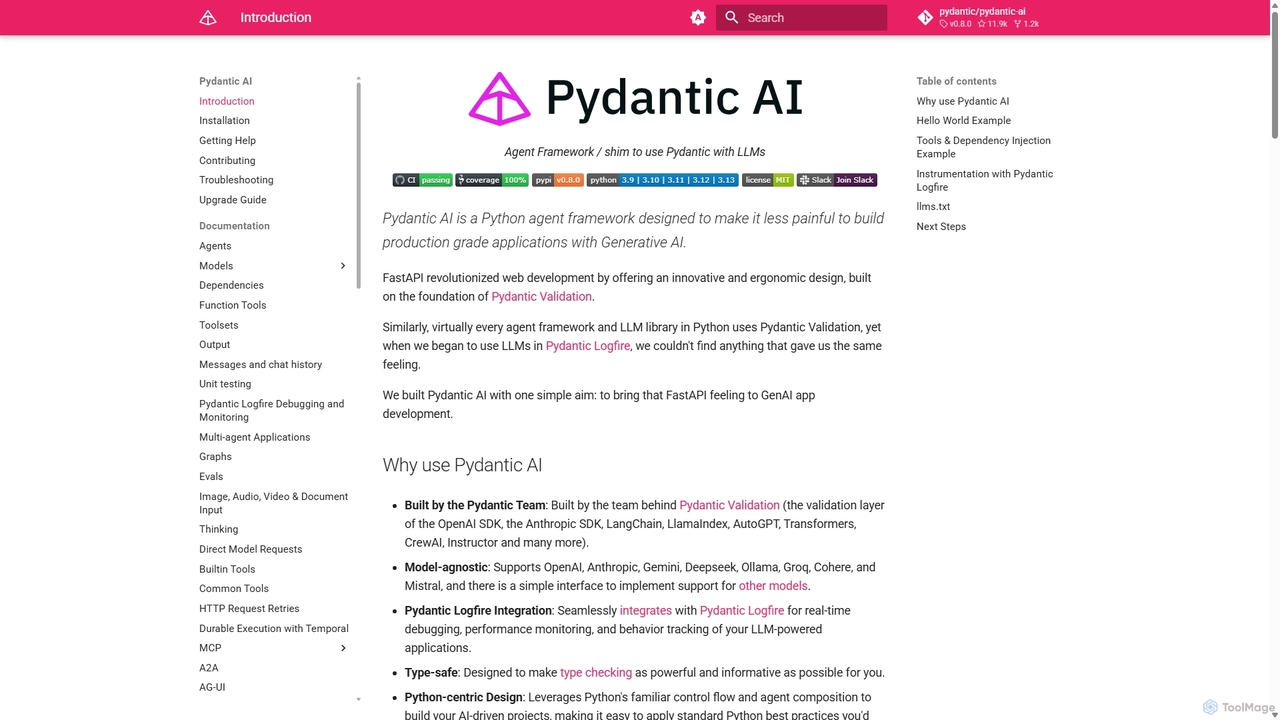
Pydantic AI
Pydantic AI is a Python agent framework from the creators of Pydantic, designed to simplify building production-grade Generative AI applications. It offers a model-agnostic approach, supporting major LLMs like OpenAI, Gemini, and Anthropic. By leveraging Pydantic's robust validation, it ensures type-safe, structured outputs, aiming to bring the ergonomic and intuitive developer experience of FastAPI to the world of AI agent development.
Agent Builder
ConnectOnion
ConnectOnion is a minimalist Python framework designed to build production-ready AI agents with significantly less code. It simplifies agent creation by combining Markdown prompts and Python functions, reducing boilerplate by up to 85% compared to other frameworks.
Libraries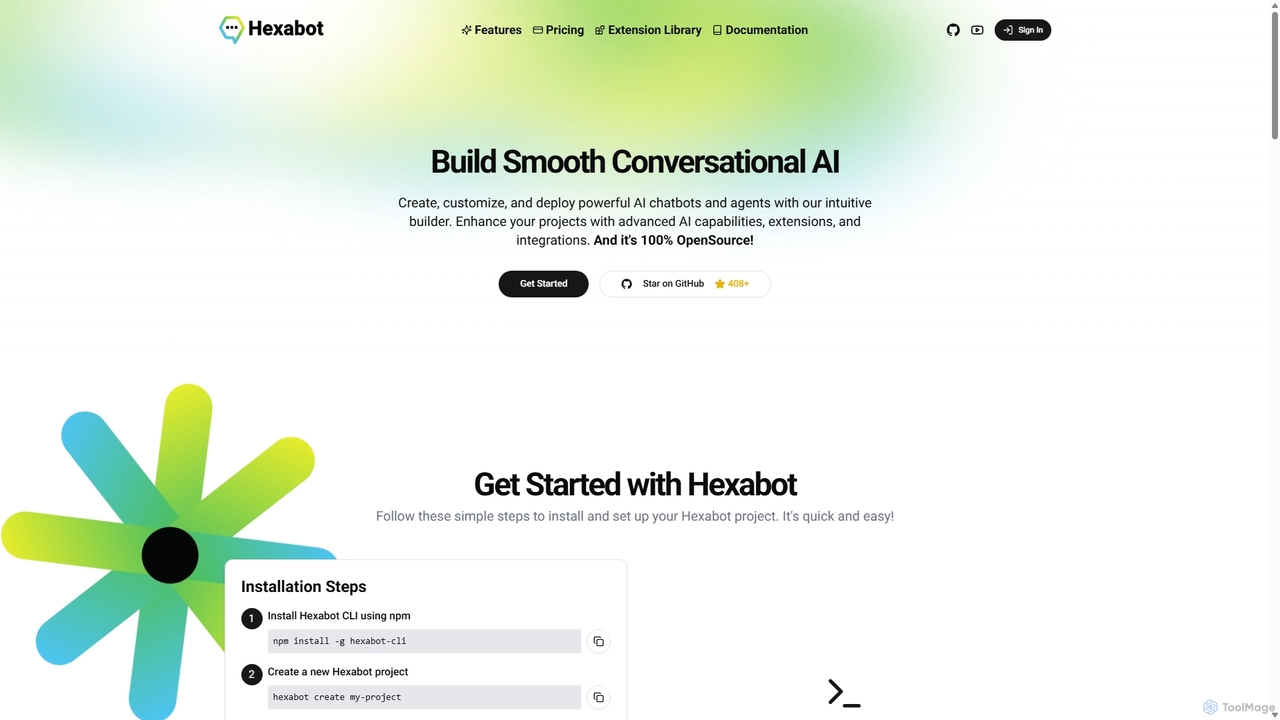
Hexabot
Hexabot is a 100% open-source platform for building, customizing, and deploying powerful AI chatbots and agents. It offers an intuitive low-code builder, on-premise hosting for data privacy, and a vast library of extensions. Ideal for developers and businesses seeking to enhance customer experience and automate workflows across multiple channels and languages.
ChatbotMindMeld Categories
MindMeld Jobs
MindMeld Embed Widget
Copy this embed code to place the badge on your blog, article, or product site and send readers directly to this ToolMage detail page.

Related AI tools
Prodigy
Prodigy is a scriptable annotation tool for AI, Machine Learning, and NLP, designed for developers. It enables rapid creation of high-quality training and evaluation data through model-assisted, human-in-the-loop workflows. It runs on your own infrastructure, ensuring complete data privacy and control.
AnnotationPydantic AI
Pydantic AI is a Python agent framework from the creators of Pydantic, designed to simplify building production-grade Generative AI applications. It offers a model-agnostic approach, supporting major LLMs like OpenAI, Gemini, and Anthropic. By leveraging Pydantic's robust validation, it ensures type-safe, structured outputs, aiming to bring the ergonomic and intuitive developer experience of FastAPI to the world of AI agent development.
Agent BuilderConnectOnion
ConnectOnion is a minimalist Python framework designed to build production-ready AI agents with significantly less code. It simplifies agent creation by combining Markdown prompts and Python functions, reducing boilerplate by up to 85% compared to other frameworks.
Libraries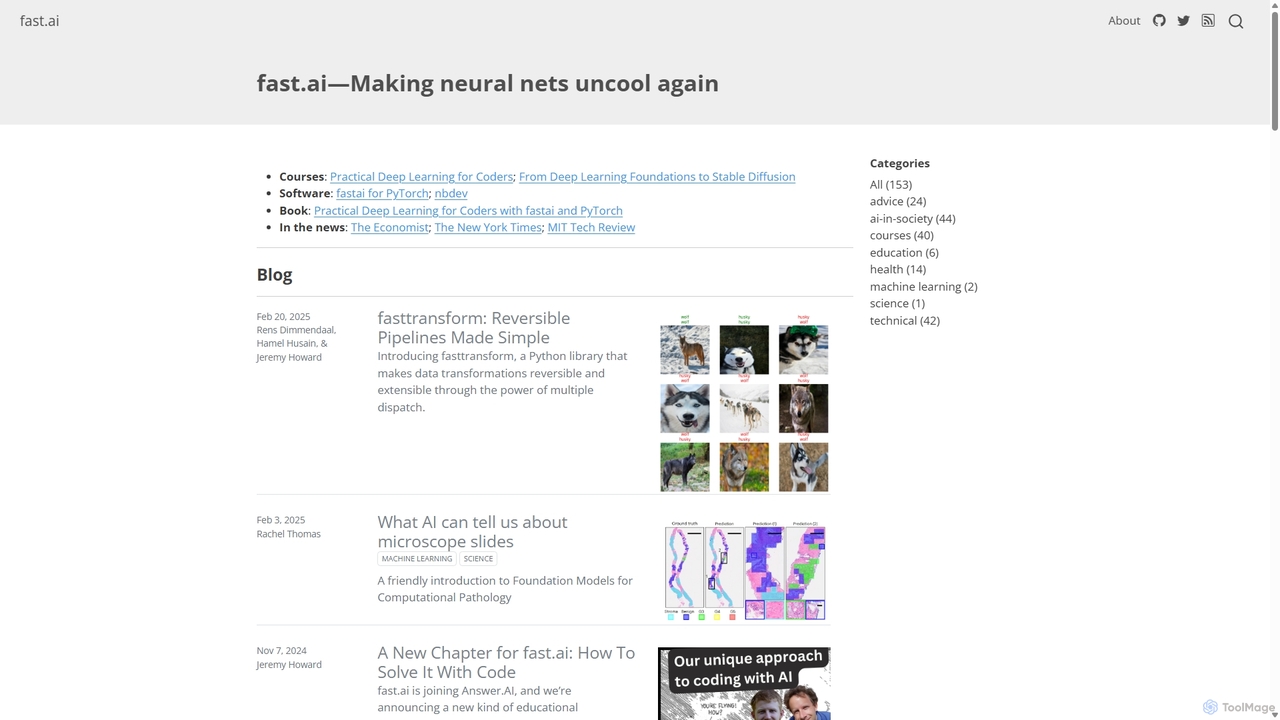
Fast.ai
Fast.ai is a research institute dedicated to making deep learning accessible to everyone. It offers free courses, an open-source software library (fastai), cutting-edge research, and a vibrant community, empowering coders of all backgrounds to become deep learning practitioners.
Machine Learning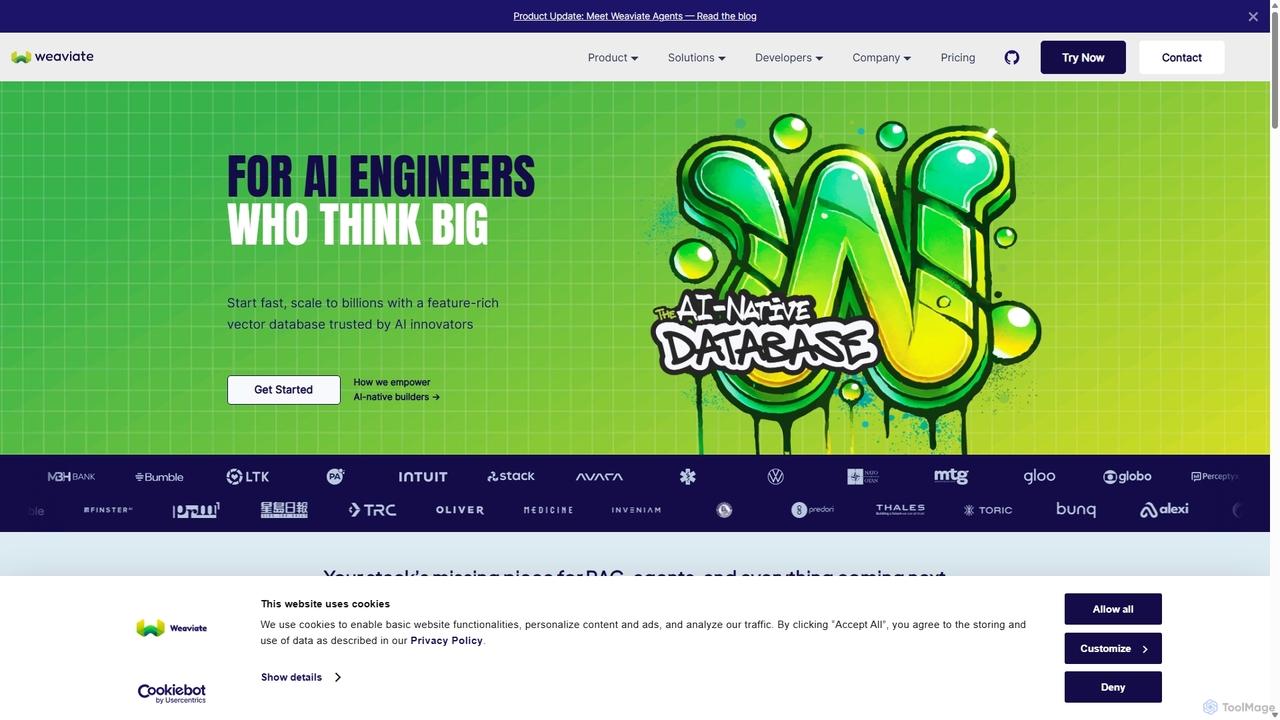
Weaviate
Weaviate is an open-source, AI-native vector database designed for developers. It enables scalable, low-latency vector, keyword, and hybrid search. Ideal for building AI applications like semantic search, recommendation engines, and Retrieval-Augmented Generation (RAG) systems, it integrates seamlessly with popular machine learning models to store and query data based on semantic meaning.
Vector Database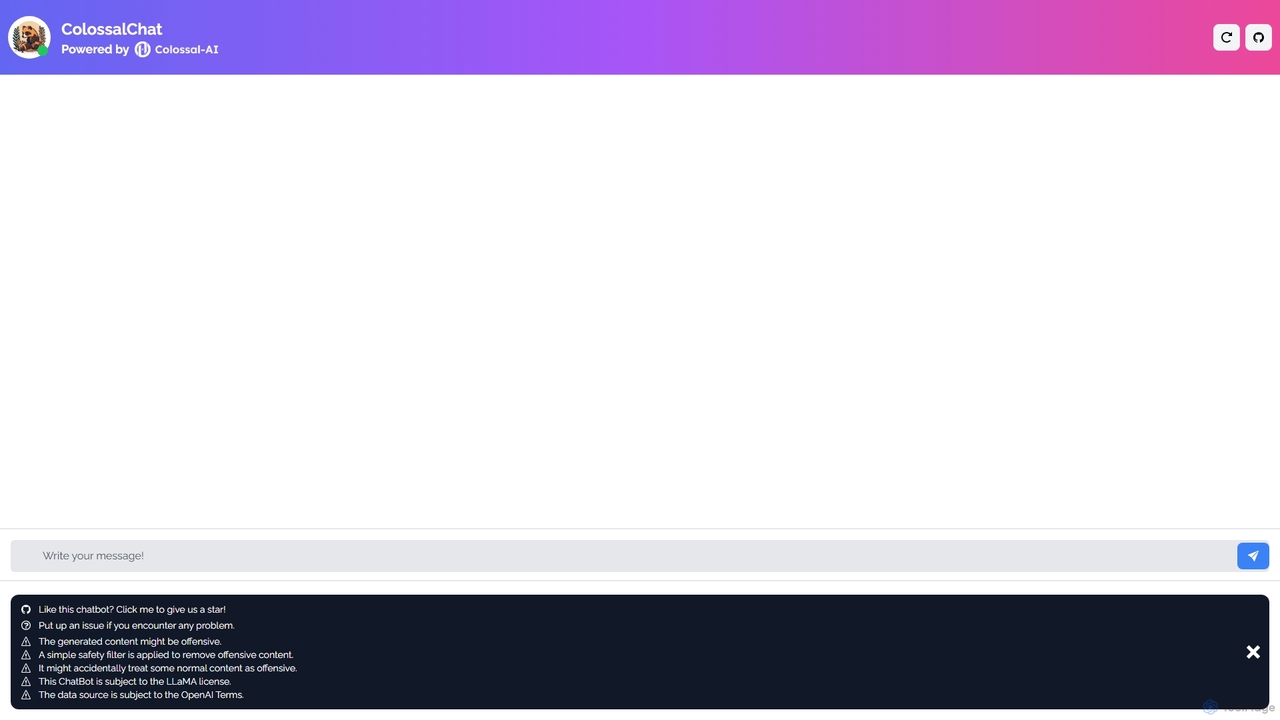
ColossalChat
An open-source conversational AI based on the LLaMA model and powered by the Colossal-AI framework. It offers a free, accessible platform for natural language interaction, text generation, and exploring the capabilities of large language models.
Language Models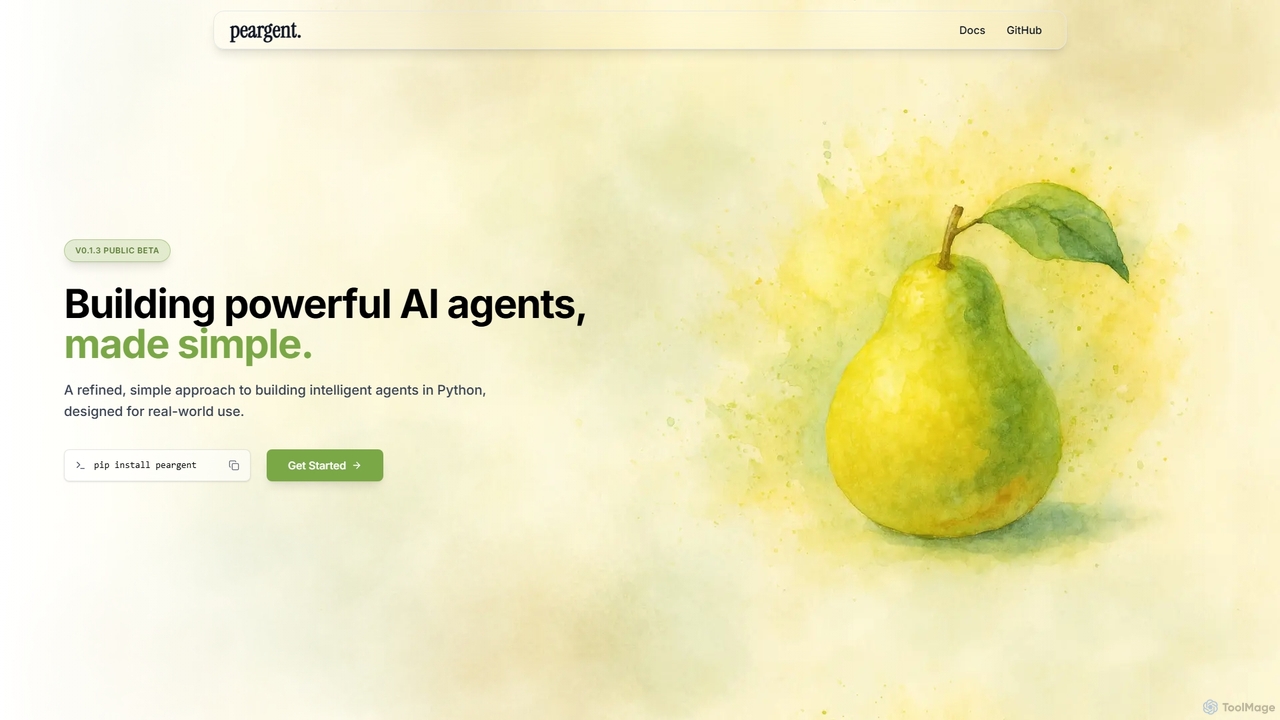
Peargent
Peargent is a modern, powerful Python framework designed for building intelligent, production-grade AI agents. It offers an intuitive API, flexible LLM support, multi-agent orchestration, and persistent memory, enabling developers to create scalable and robust AI solutions for real-world use.
Agent Development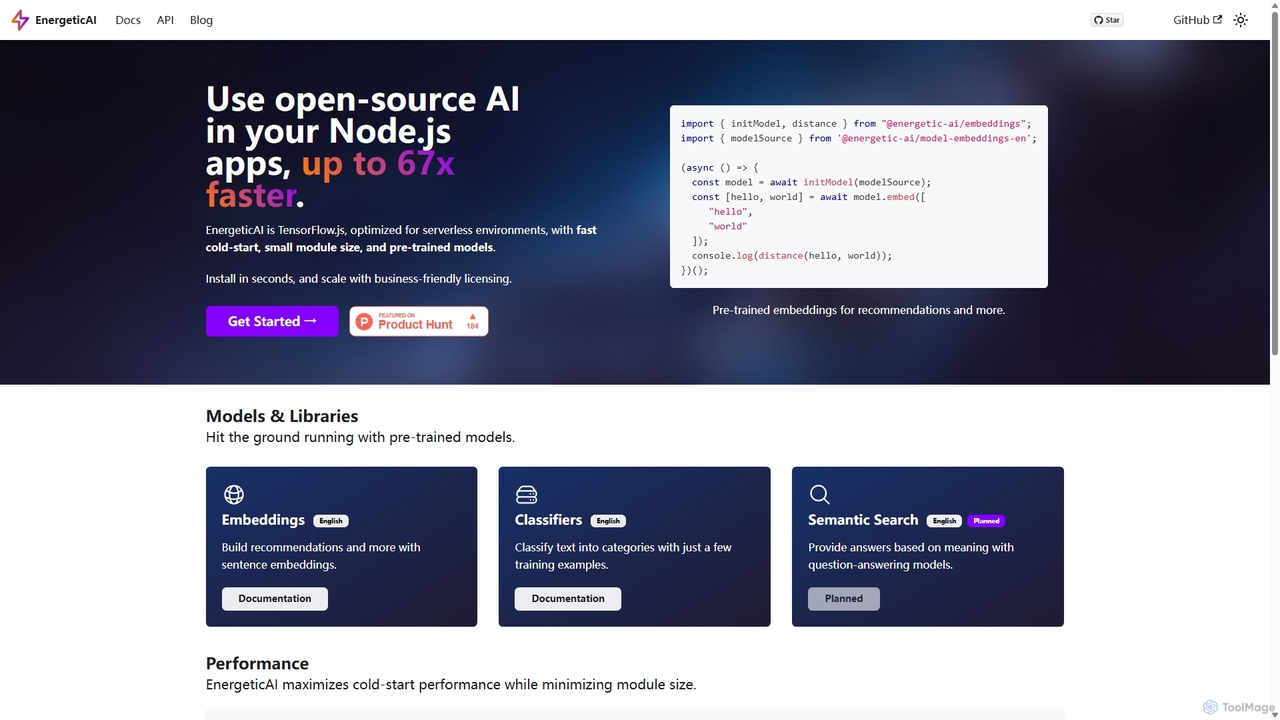
EnergeticAI
EnergeticAI is an open-source Node.js library for integrating AI models into applications, specifically optimized for serverless environments. It provides a high-performance, low-latency alternative to standard TensorFlow.js, featuring a minimal module size and rapid cold-start times. With pre-trained models for embeddings and few-shot text classification, developers can easily build features like semantic search, recommendations, and content categorization without relying on third-party APIs, ensuring data privacy and cost control.
Libraries & Frameworks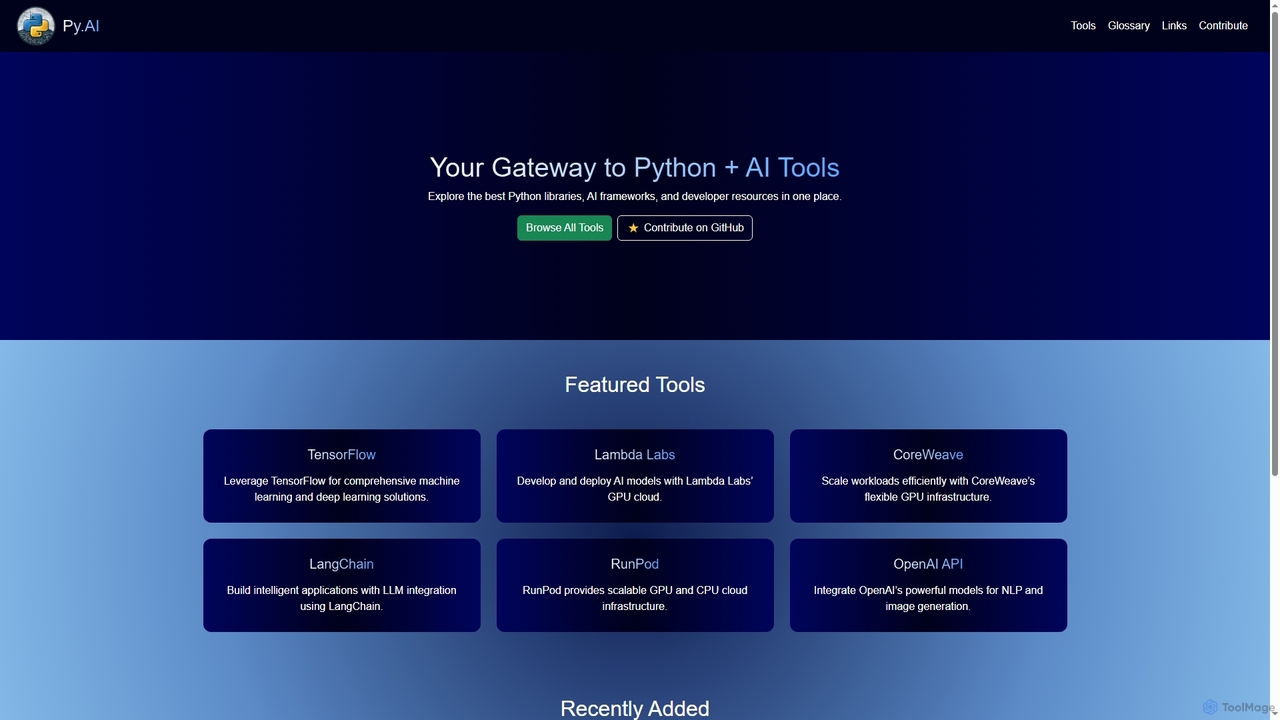
Py
Py is a curated online directory serving as a comprehensive gateway to the best Python libraries, AI frameworks, and developer resources. It helps users explore, discover, and find tools to enhance their machine learning and AI projects.
Tool Discovery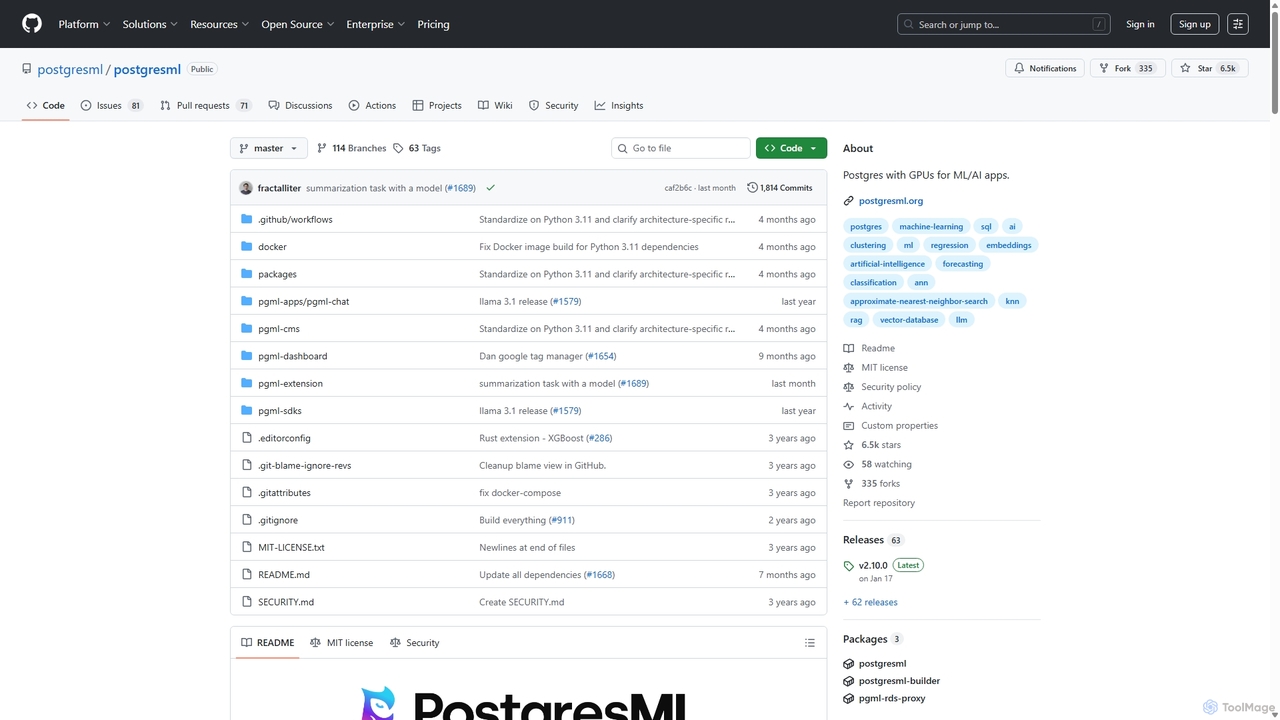
PostgresML
PostgresML is a powerful open-source extension that integrates machine learning and AI directly into your PostgreSQL database. It enables GPU-accelerated inference, vector search, and complete RAG pipelines using simple SQL commands, eliminating data movement and simplifying the MLOps stack for high-performance, scalable AI applications.
Mlops
PyTorch
PyTorch is an open-source machine learning framework based on the Torch library, used for applications such as computer vision and natural language processing. It offers a flexible, Python-first environment that accelerates the path from research prototyping to production deployment.
Deep LearningCrewAI
CrewAI is an advanced open-source framework for orchestrating role-playing, autonomous AI agents. By fostering collaborative intelligence, it enables agents with distinct roles and tools to work together seamlessly to solve complex tasks. This multi-agent system simplifies the development of sophisticated applications, from automated content creation to complex data analysis, by managing agent interactions, task delegation, and workflow processes.
Agent
Jyek
Jyek is an AI agent platform that understands objectives, creates execution plans, uses tools, and delivers verifiable results for complex, multi-step tasks.
Automation
DataCamp
DataCamp is an interactive online learning platform for data science and AI. It offers hands-on courses in Python, R, SQL, Power BI, and more. Through a 'learn-by-doing' approach with in-browser coding, real-world projects, and career tracks, it empowers individuals and businesses to build job-ready data skills, from beginner to expert level.
Data Science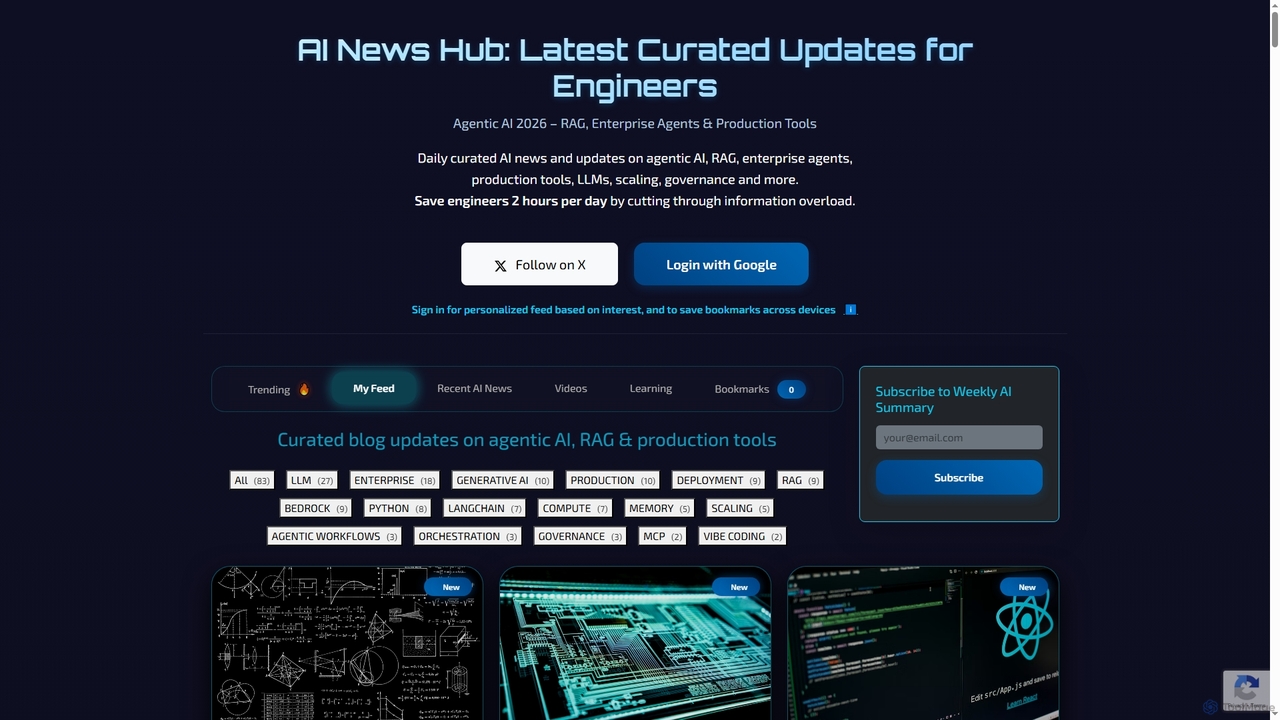
AI News Hub
AI News Hub is a comprehensive platform providing real-time AI announcements, curated blog updates on agentic AI, RAG, and production tools. It offers a personalized feed, bookmarking capabilities, and a rich collection of learning resources, including roadmaps, courses, and videos, to keep developers and enthusiasts informed and skilled in the rapidly evolving AI landscape.
Aggregation
MindMeld Comments (0)
Sign in to comment.
Sign inNo comments yet.