

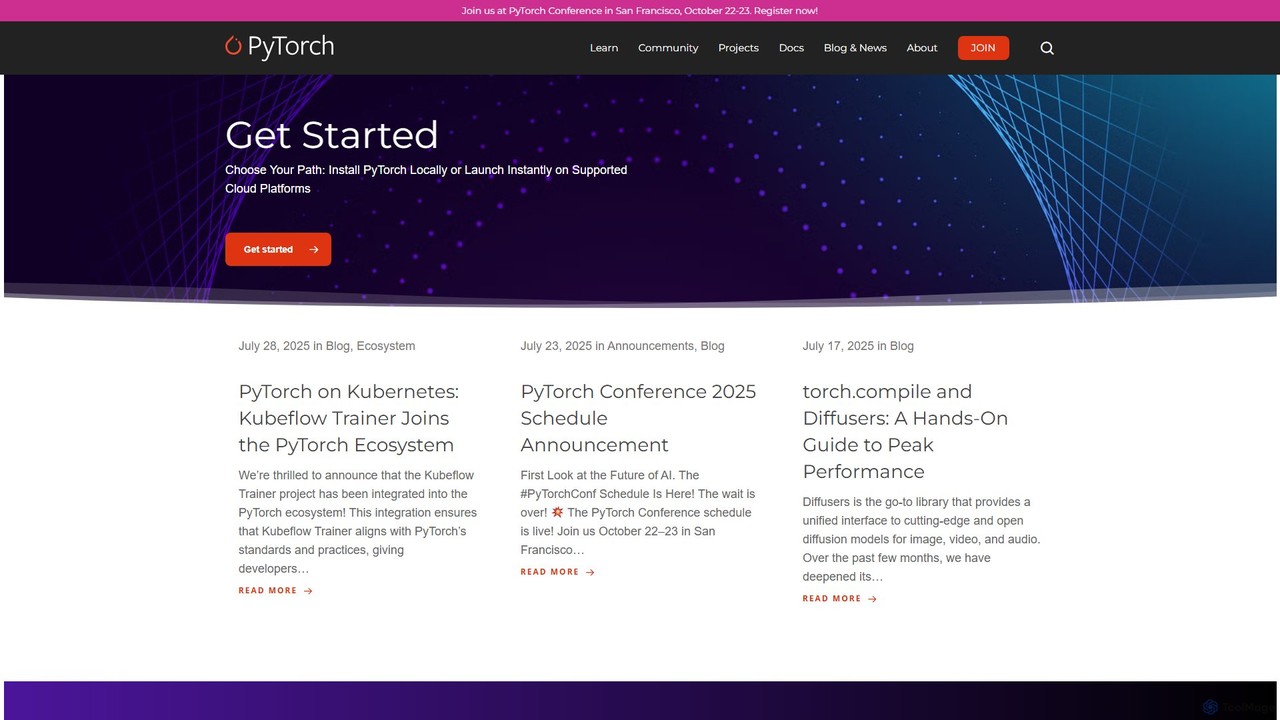
PyTorch Overview
PyTorch is a premier open-source machine learning library developed to provide a seamless path from research and prototyping to production deployment. Maintained by the PyTorch Foundation, a part of the Linux Foundation, it has become a cornerstone for AI researchers and developers worldwide. PyTorch is renowned for its Python-first integration, flexibility, and extensive ecosystem, making it a go-to choice for a wide range of deep learning applications, including computer vision, natural language processing (NLP), and generative AI.
The framework is built around the concept of tensors, which are multi-dimensional arrays similar to NumPy arrays but with the added capability of running on GPUs for accelerated computing. Its imperative programming style and dynamic computation graphs (eager execution) allow for intuitive model building and debugging, making the development process highly interactive and efficient.
How to use PyTorch
Getting started with PyTorch is straightforward for developers of all levels. You can choose between a local installation or using a pre-configured cloud environment.
- Local Installation: Visit the official PyTorch website and use the interactive installation matrix. You can select your operating system (Linux, Mac, Windows), package manager (Pip, Conda), programming language (Python, C++/Java), and compute platform (CPU, CUDA for NVIDIA GPUs, ROCm for AMD GPUs). The website will generate the precise command for a stable or nightly build installation. For example, a common command is
pip3 install torch torchvision torchaudio. - Cloud Platforms: PyTorch is extensively supported on major cloud services like Amazon Web Services (AWS), Google Cloud Platform (GCP), and Microsoft Azure. You can launch instances with PyTorch pre-installed via services like Amazon SageMaker, Google Cloud Deep Learning VMs, and Azure Machine Learning, eliminating setup friction and enabling easy scaling.
- Learning Resources: PyTorch offers comprehensive documentation, in-depth tutorials for beginners and advanced users, and practical recipes. These resources cover everything from the basics of tensors to advanced topics like distributed training and model optimization.
Core Features of PyTorch
- Dynamic Computation Graph: PyTorch's eager execution mode builds the computation graph on-the-fly, offering unparalleled flexibility and making debugging simpler.
- Production Ready with TorchScript & TorchServe: Seamlessly transition models from research (eager mode) to production (graph mode) using TorchScript for optimization. TorchServe provides a performant and scalable tool for serving PyTorch models.
- Distributed Training: The `torch.distributed` package enables scalable distributed training and performance optimization, allowing you to train large models on multiple GPUs or machines efficiently.
- Robust Ecosystem: A rich ecosystem of tools and libraries extends PyTorch's capabilities. Key projects include torchvision for computer vision, torchtext for NLP, torchaudio for audio processing, Captum for model interpretability, and PyTorch Geometric for deep learning on graphs.
- Hardware Acceleration: Excellent support for NVIDIA (CUDA) and AMD (ROCm) GPUs, as well as other accelerators, ensuring high-performance computation for demanding deep learning tasks.
- C++ Frontend (LibTorch): A pure C++ interface for PyTorch that allows for high-performance, low-latency deployment in environments where Python is not suitable.
Use Cases for PyTorch
PyTorch is versatile and powers a vast array of state-of-the-art AI applications:
- Computer Vision: Image classification, object detection, semantic segmentation, and image generation using libraries like `torchvision` and pre-trained models.
- Natural Language Processing: Building complex models for machine translation, text summarization, sentiment analysis, and question answering. It is the foundation for many Transformer-based architectures.
- Generative AI: Developing and training cutting-edge diffusion models for generating high-quality images, video, and audio, as highlighted by its integration with libraries like Diffusers.
- Academic Research: Its flexibility and ease of use make it the preferred framework for researchers prototyping and experimenting with new algorithmic approaches.
- Reinforcement Learning: Creating and training agents for tasks in gaming, robotics, and optimization.
Advantages of PyTorch
PyTorch stands out due to its developer-centric design and powerful features:
- Pythonic and Intuitive: Its API is designed to feel natural to Python developers, reducing the learning curve and improving productivity.
- Flexibility for Research: The dynamic graph system is ideal for complex architectures and research that requires a high degree of flexibility.
- Strong Community and Support: Backed by the Linux Foundation and a massive global community of developers and researchers, ensuring continuous development, a wealth of tutorials, and quick support.
- Seamless Path to Production: Tools like TorchScript and TorchServe bridge the gap between research and deployment, a historical challenge in machine learning.
Pricing and Plans
PyTorch is a completely free and open-source project licensed under a modified BSD license. It is available for anyone to use, modify, and distribute without any cost. The development is supported by the PyTorch Foundation and its members, including major technology companies, ensuring its long-term sustainability and accessibility to the community.
Traffic
Latest traffic
Status
Monthly traffic trend
- 2025-9: 2.1M
- 2026-1: 1.9M
- 2026-2: 1.7M
- 2026-3: 1.9M
- 2026-4: 1.8M
- 2026-5: 1.5M
Geography
Top 5 countries / regions
- 🇺🇸United States48.0%
- 🇨🇳China19.0%
- 🇮🇳India15.5%
- 🇬🇧United Kingdom9.8%
- 🇷🇺Russia7.7%
Traffic sources
| Source type | Percentage |
|---|---|
Direct | 73.4% |
Referral | 24.6% |
Email | 2.0% |
Top keywords
| Keyword | Cost per click |
|---|---|
| py torch | $1.21 |
| pytorch | $0.90 |
| pytorch install | $4.10 |
| torch | $0.38 |
| torch install | $0.00 |
PyTorch Videos on YouTube


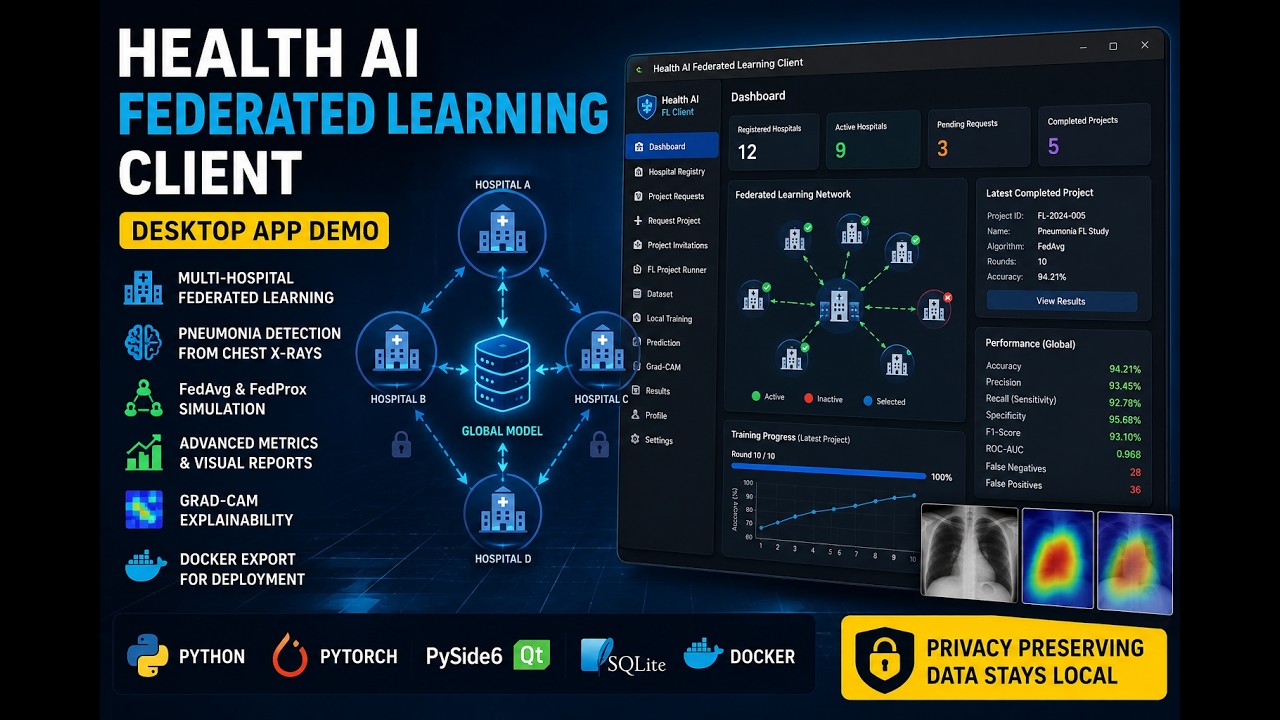
PyTorch

AI and Machine Learning Explained


Vuk Rosić
PyTorch Alternatives
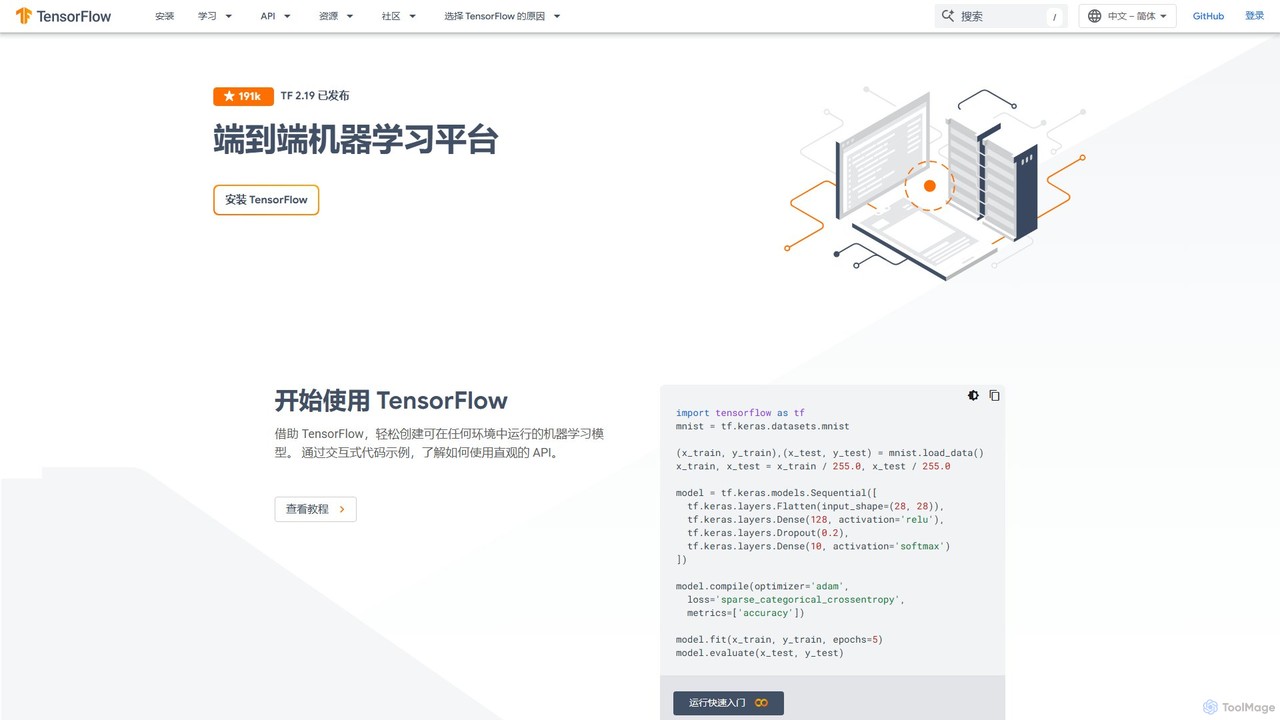
TensorFlow
TensorFlow is an end-to-end open-source platform for machine learning developed by Google. It provides a comprehensive, flexible ecosystem of tools, libraries, and community resources that lets researchers and developers build and deploy ML-powered applications. From beginners to experts, TensorFlow offers intuitive high-level APIs for easy model building and powerful low-level APIs for advanced research, enabling deployment across servers, edge devices, and browsers.
Frameworks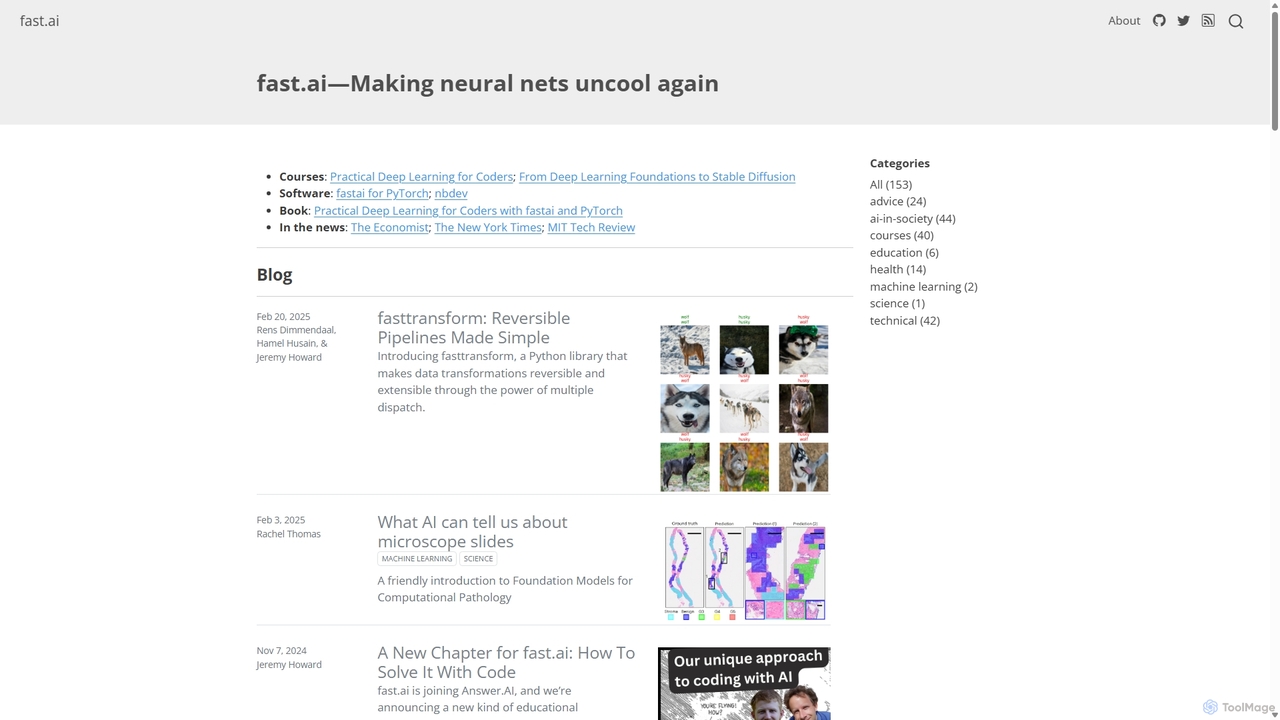
Fast.ai
Fast.ai is a research institute dedicated to making deep learning accessible to everyone. It offers free courses, an open-source software library (fastai), cutting-edge research, and a vibrant community, empowering coders of all backgrounds to become deep learning practitioners.
Machine Learning
PyBrain
PyBrain is a modular and flexible open-source Machine Learning Library for Python. It provides powerful, easy-to-use algorithms for machine learning tasks, with a particular focus on neural networks, reinforcement learning, and unsupervised learning. It is designed to be accessible for beginners while remaining powerful enough for research purposes.
Libraries & Frameworks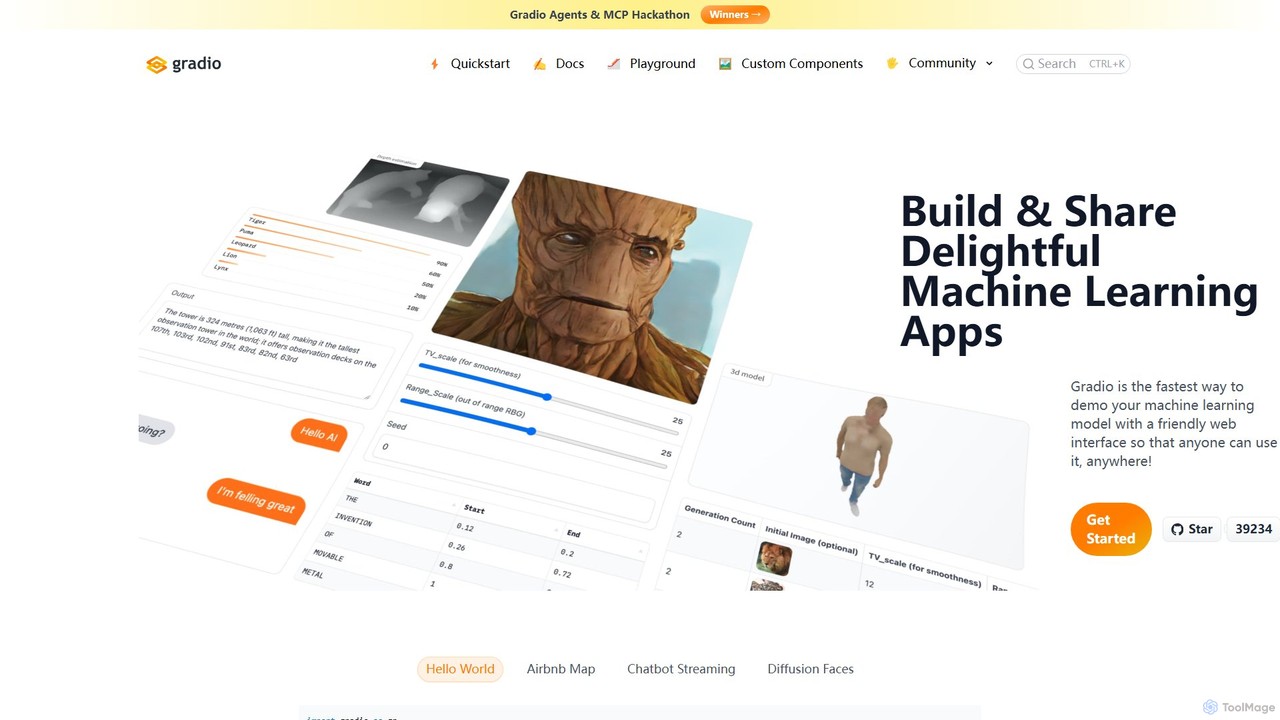
Gradio
Gradio is an open-source Python library that allows you to quickly build and share user-friendly web interfaces for your machine learning models, APIs, or any Python function. No web development experience is required.
Data Visualization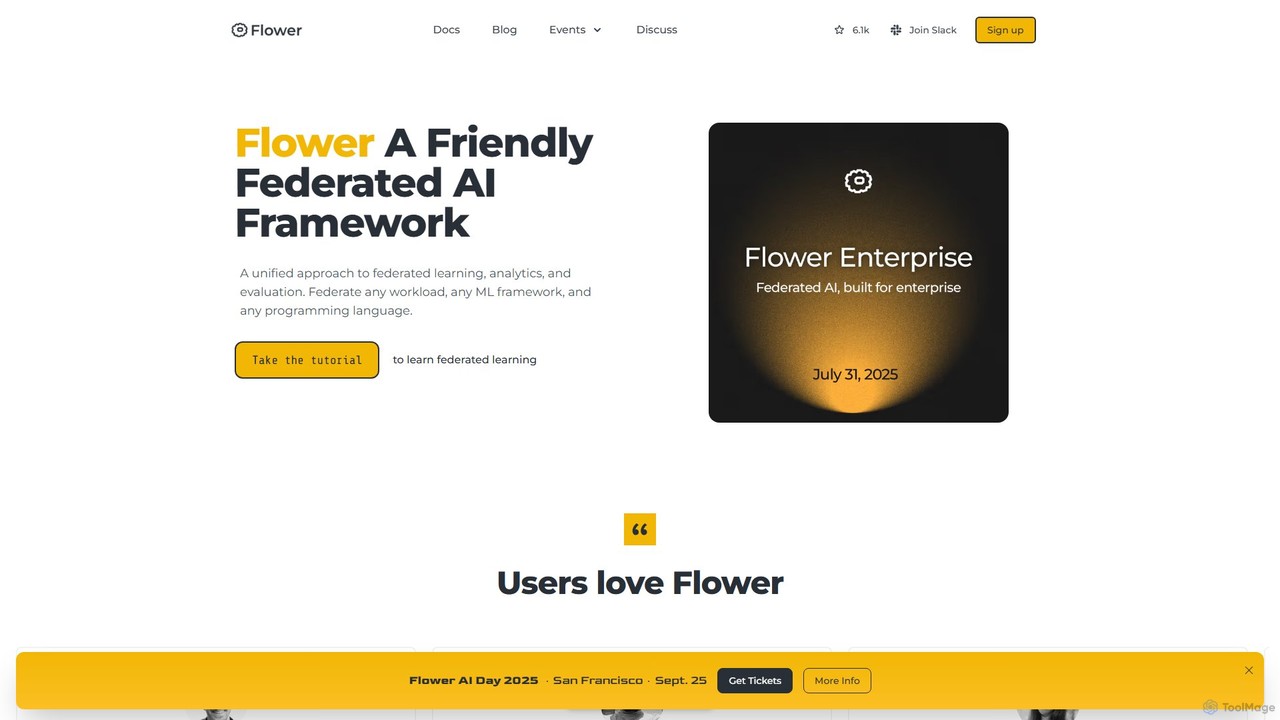
Flower
Flower is a friendly, open-source framework for federated learning, analytics, and evaluation. It enables training AI models on decentralized data across various devices and platforms without compromising privacy, supporting numerous ML frameworks like PyTorch, TensorFlow, and Hugging Face.
FrameworksPyTorch Categories
PyTorch Embed Widget
Copy this embed code to place the badge on your blog, article, or product site and send readers directly to this ToolMage detail page.

Related AI tools
TensorFlow
TensorFlow is an end-to-end open-source platform for machine learning developed by Google. It provides a comprehensive, flexible ecosystem of tools, libraries, and community resources that lets researchers and developers build and deploy ML-powered applications. From beginners to experts, TensorFlow offers intuitive high-level APIs for easy model building and powerful low-level APIs for advanced research, enabling deployment across servers, edge devices, and browsers.
FrameworksFast.ai
Fast.ai is a research institute dedicated to making deep learning accessible to everyone. It offers free courses, an open-source software library (fastai), cutting-edge research, and a vibrant community, empowering coders of all backgrounds to become deep learning practitioners.
Machine Learning
MindSpore
MindSpore is an open-source, all-scenario AI computing framework designed for developers and data scientists. It provides a developer-friendly experience with flexible deployment across cloud, edge, and device environments. It excels in distributed training for large models and offers specialized toolkits for scientific computing (AI4S), ensuring high performance and efficiency, especially on Ascend hardware.
Scientific Computing
Google Research
Google Research is a premier hub for exploring groundbreaking advancements in science and AI. It provides open access to a vast repository of research papers, project showcases, and open-source resources across diverse fields like machine learning, quantum computing, and healthcare. It's an essential platform for researchers, developers, and enthusiasts to stay at the forefront of technological innovation and understand its real-world impact.
Learning Platform
aionlinecourse
An interactive online learning platform offering free, hands-on AI projects, in-depth tutorials, and comprehensive resources. It covers Machine Learning, Generative AI, NLP, and Computer Vision, designed for learners of all levels, from beginners to experienced professionals, to build practical, industry-relevant skills.
Code Libraries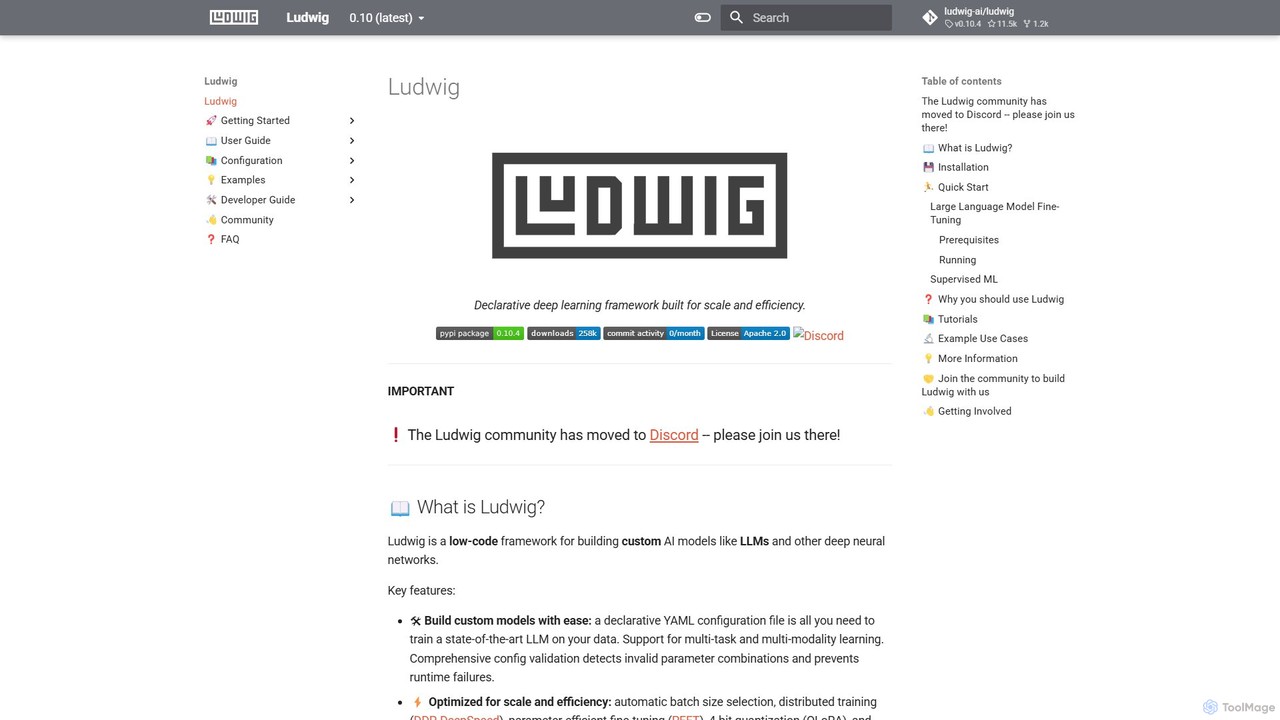
Ludwig
Ludwig is a low-code, open-source deep learning framework that simplifies building and training custom AI models. Using declarative YAML configurations, users can easily create complex models, including LLMs, for multi-modal and multi-task learning without extensive boilerplate code. It's designed for scalability, production-readiness, and integrates with popular tools like HuggingFace and MLFlow.
Model Training
MindMeld
A powerful, open-source conversational AI platform from Cisco, designed for developers. It provides a comprehensive Python-based framework for building deep-domain voice interfaces and chatbots with advanced Natural Language Processing (NLP) capabilities, offering full control and on-premise deployment.
Chatbot Builder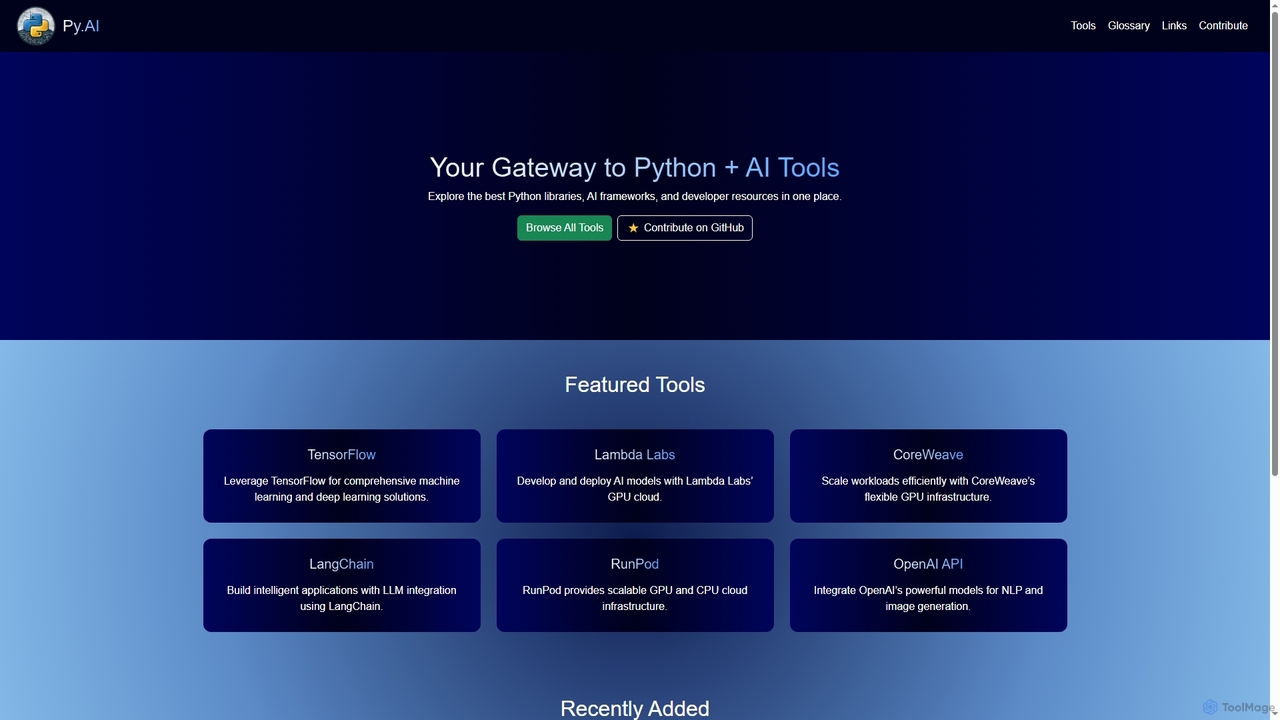
Py
Py is a curated online directory serving as a comprehensive gateway to the best Python libraries, AI frameworks, and developer resources. It helps users explore, discover, and find tools to enhance their machine learning and AI projects.
Tool Discovery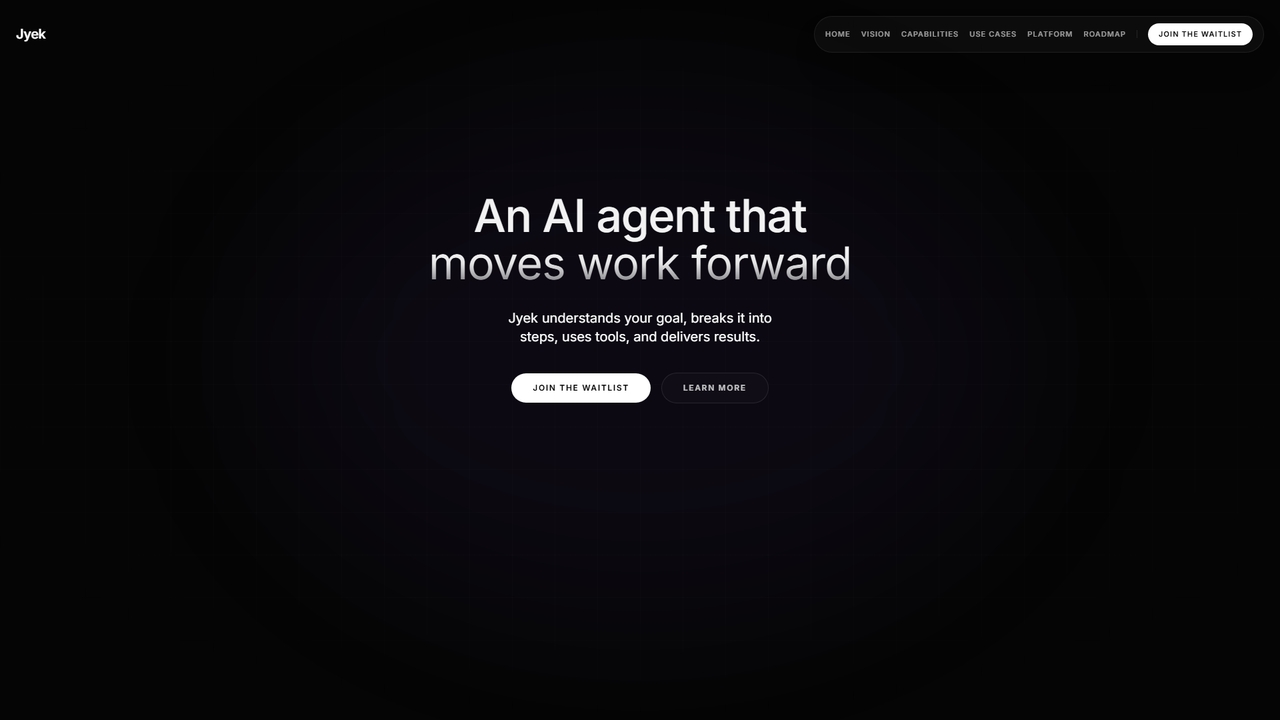
Jyek
Jyek is an AI agent platform that understands objectives, creates execution plans, uses tools, and delivers verifiable results for complex, multi-step tasks.
Automation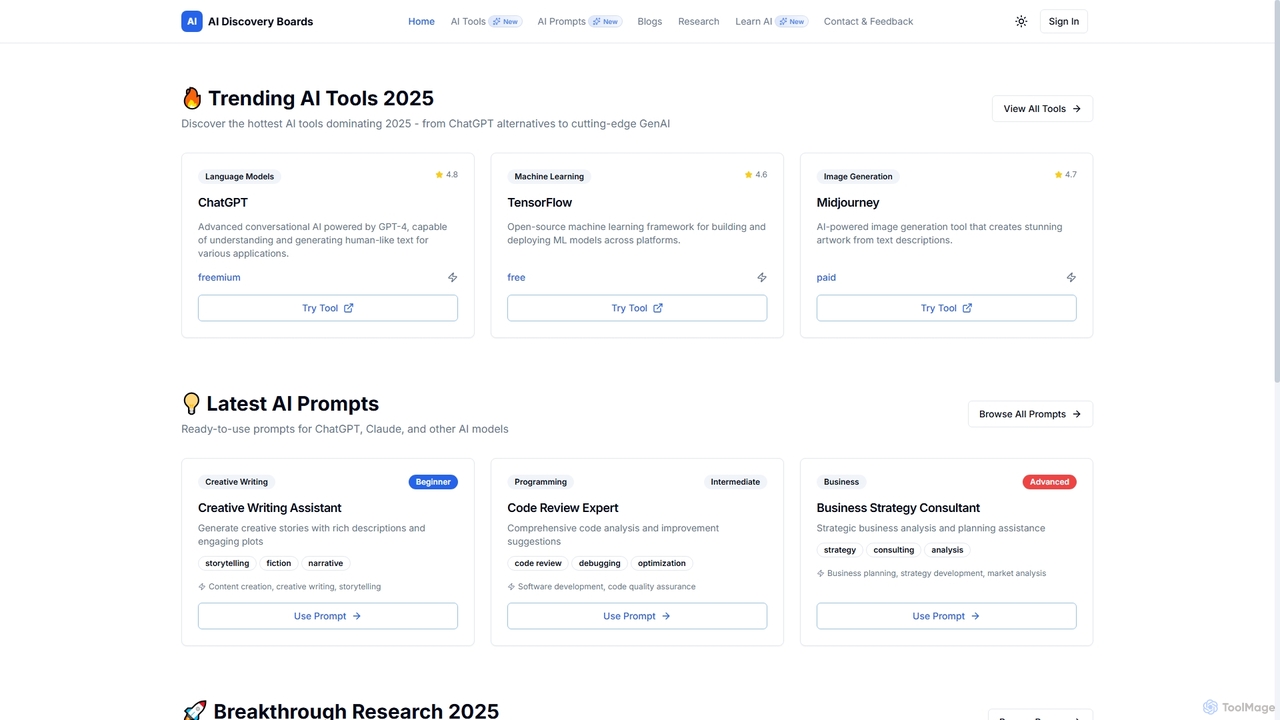
AIDiscoveryBoards
AIDiscoveryBoards is a comprehensive online platform designed to help users discover trending AI tools, explore the latest AI prompts, delve into groundbreaking AI research papers, and access curated AI learning resources. It serves as a central hub for staying updated on the rapidly evolving artificial intelligence landscape.
Tool Directory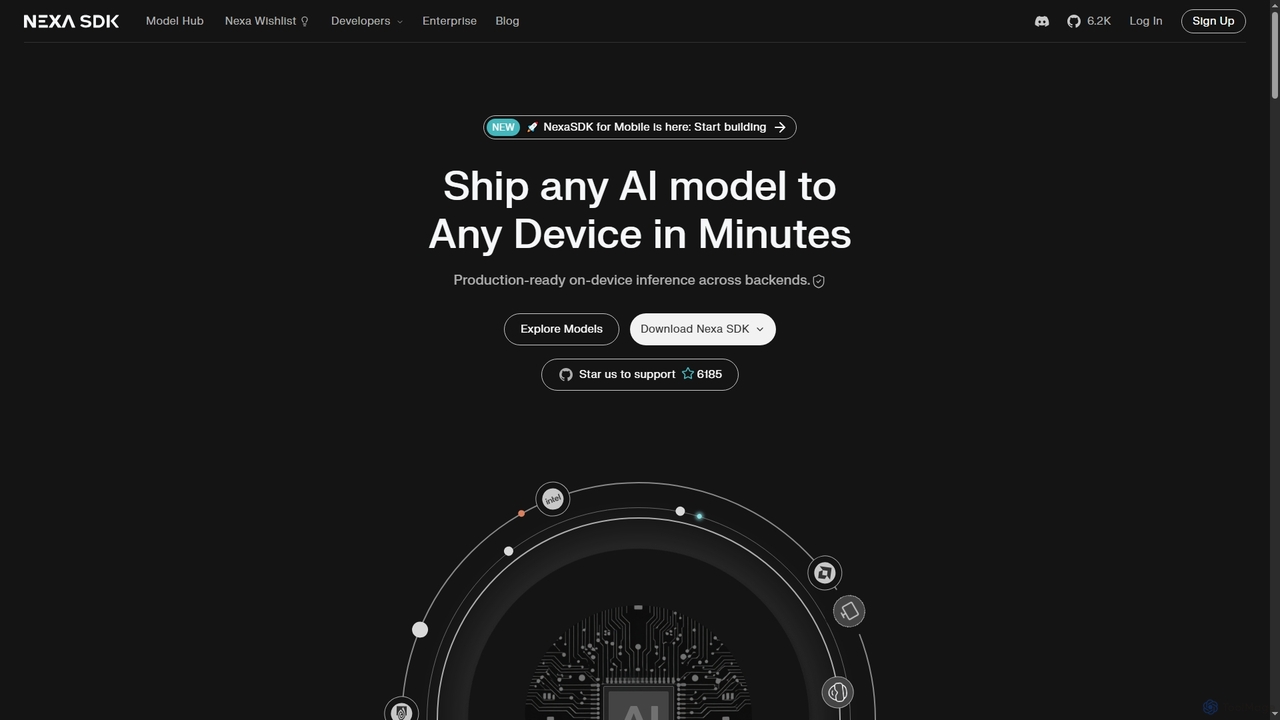
Nexa SDK
Nexa SDK is a powerful toolkit enabling developers to deploy any AI model, including frontier and state-of-the-art models, to any device (mobile, PC, IoT, automotive) in minutes. It offers production-ready on-device inference with hardware acceleration across NPUs, GPUs, and CPUs, optimized for speed and energy efficiency.
Ai Development KitPyBrain
PyBrain is a modular and flexible open-source Machine Learning Library for Python. It provides powerful, easy-to-use algorithms for machine learning tasks, with a particular focus on neural networks, reinforcement learning, and unsupervised learning. It is designed to be accessible for beginners while remaining powerful enough for research purposes.
Libraries & Frameworks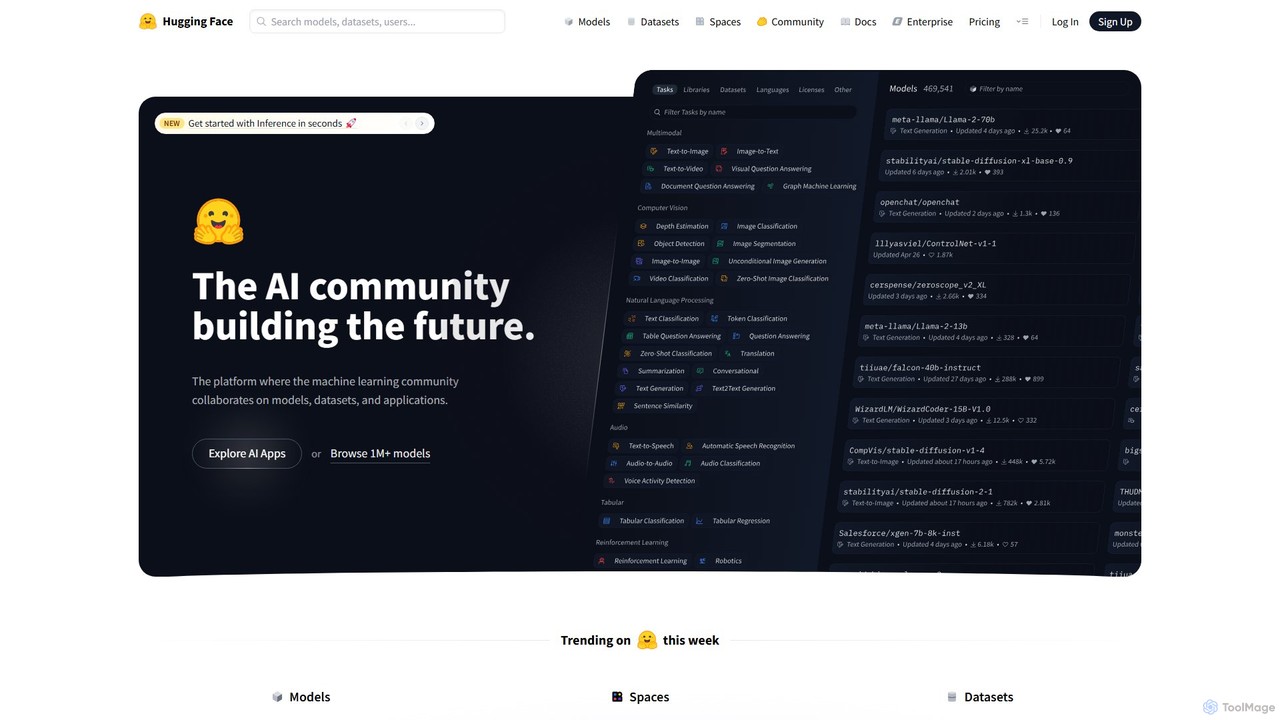
Hugging Face
Hugging Face is the leading open-source platform and community for machine learning. It provides tools for developers and researchers to build, train, and deploy state-of-the-art models, offering a vast hub of pre-trained models, datasets, and demo applications.
Dataset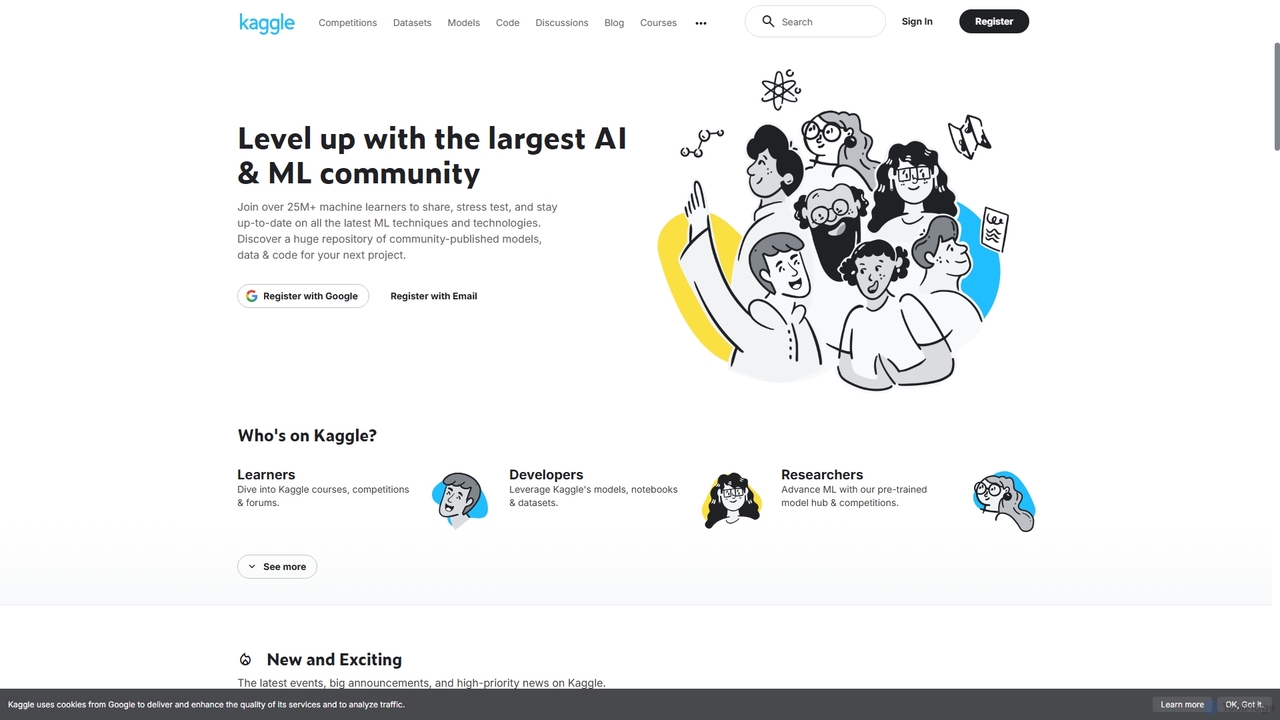
Kaggle
Kaggle is the world's largest online community for data scientists and machine learning practitioners. Owned by Google, it provides a platform to explore datasets, build models in a web-based environment, compete in machine learning challenges, and access educational resources. It offers free access to powerful computational resources, including GPUs and TPUs, making it an essential tool for anyone from beginners to seasoned experts in the AI and data science fields.
Datasets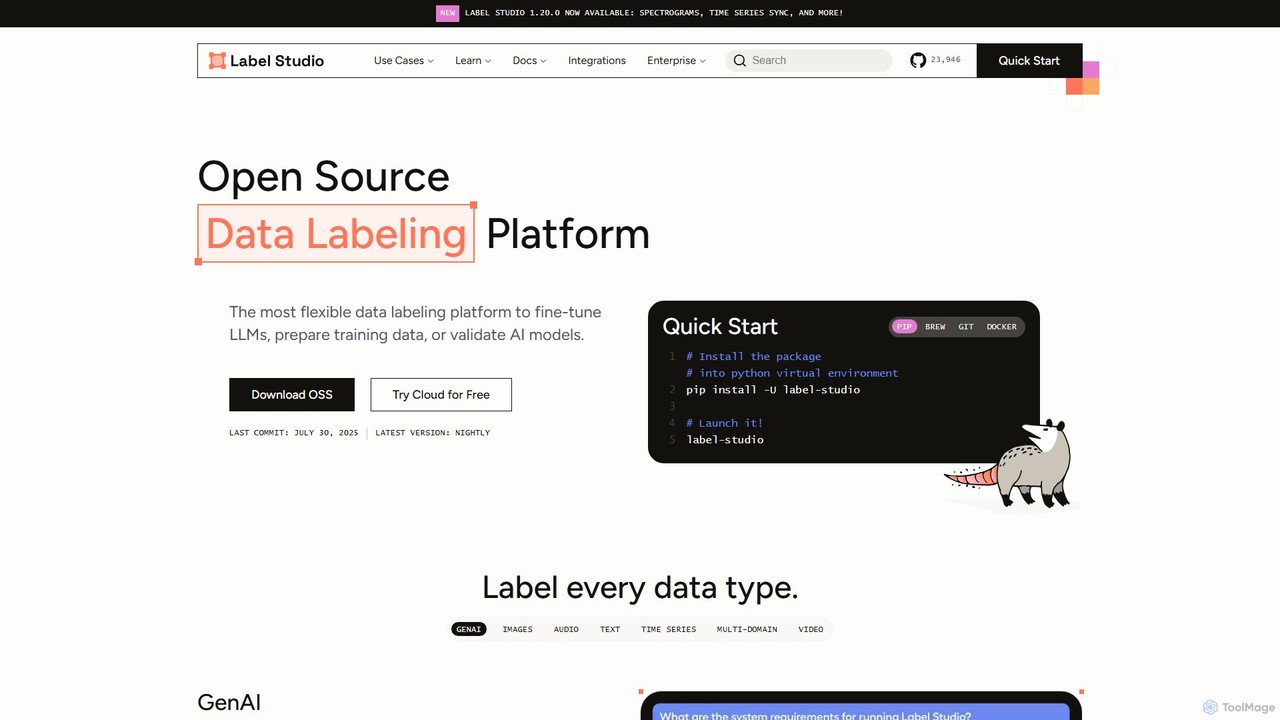
Label Studio
Label Studio is a versatile open-source data labeling platform designed for a wide range of data types. It enables users to annotate images, text, audio, video, and time-series data to fine-tune LLMs, prepare training data for machine learning, and validate AI models with human-in-the-loop feedback.
Training Data
PyTorch Comments (0)
Sign in to comment.
Sign inNo comments yet.