

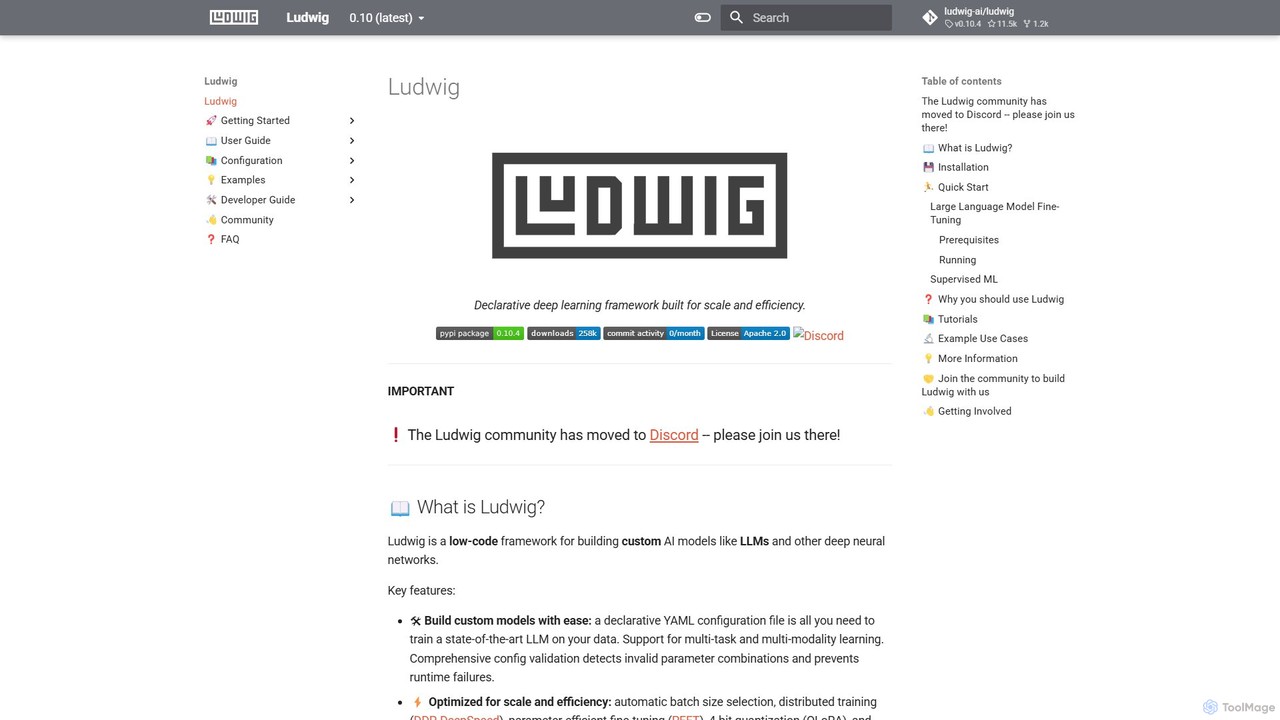
Ludwig Overview
Ludwig is a powerful, open-source, declarative deep learning framework that enables users to build, train, and deploy state-of-the-art AI models with minimal coding. Hosted by the Linux Foundation AI & Data, Ludwig empowers both researchers and practitioners to create custom models for a wide range of tasks by simply defining the model's architecture and training parameters in a straightforward YAML configuration file. This approach abstracts away the complex engineering boilerplate, allowing users to focus on the data and model design.
The framework is built on the principle of modularity and extensibility, treating deep learning components as building blocks. This allows for the easy construction of sophisticated models that can handle multiple data modalities simultaneously, such as text, images, audio, and tabular data, within a single, unified architecture. Ludwig is particularly powerful for fine-tuning large language models (LLMs) and supports advanced techniques like Parameter-Efficient Fine-Tuning (PEFT) and 4-bit quantization (QLoRA) to make training large models more accessible and efficient.
How to use Ludwig
Using Ludwig involves a simple, command-line-driven workflow that streamlines the entire machine learning lifecycle:
- Installation: Begin by installing Ludwig using pip. A full installation with all dependencies is also available.
pip install ludwigpip install ludwig[full] - Data Preparation: Prepare your dataset in a structured format like CSV, Parquet, or JSON. Ludwig automatically infers data types but allows for explicit definitions.
- Configuration: Create a YAML configuration file (e.g.,
model.yaml). In this file, you declare your input features (e.g., text, category, number) and output features (the target you want to predict). You also specify the model architecture, training parameters, and any preprocessing steps. - Training: Start the training process with a single command, pointing to your configuration file and dataset. Ludwig handles the entire training loop, including data preprocessing, model building, training, and evaluation.
ludwig train --config model.yaml --dataset /path/to/your/data.csv - Prediction & Serving: Once trained, you can use the model for predictions on new data or deploy it as a REST API for production use with simple commands.
ludwig serve --model_path /path/to/model
Core Features of Ludwig
- Declarative YAML Configuration: Build models by defining them in a simple, human-readable YAML file, eliminating the need for extensive Python code.
- Multi-Modal & Multi-Task Learning: Seamlessly combine different data types (text, images, audio, tabular) as inputs and train models to predict multiple outputs simultaneously.
- Advanced LLM Fine-Tuning: Natively supports fine-tuning large language models with techniques like LoRA and QLoRA for efficient training on consumer-grade hardware.
- AutoML Capabilities: Provides an AutoML feature that automatically finds the best model for your data given a time budget, simplifying the model selection process.
- Scalable Training: Designed for scale with built-in support for distributed training (DDP, DeepSpeed) and larger-than-memory datasets.
- Production-Ready: Easily export models to production formats like Torchscript and Triton, and deploy with Docker and Kubernetes integrations.
- Rich Integrations: Connects with popular MLOps tools like TensorBoard, Weights & Biases, MLFlow, and Comet ML for experiment tracking and visualization.
- Extensible Architecture: Offers expert-level control to customize every aspect of the model, from encoders and decoders to activation functions and training loops.
Use Cases for Ludwig
Ludwig's versatility makes it suitable for a vast array of applications across different domains:
- Natural Language Processing: Sentiment analysis, text classification, named entity recognition (NER), machine translation, and building chatbot dialogue systems.
- Computer Vision: Image classification and visual question answering.
- Tabular Data: Fraud detection, customer churn prediction, sales forecasting, and credit risk assessment.
- Time-Series Analysis: Weather prediction, stock price forecasting, and demand planning.
- Multi-Modal Applications: Combining image and text data to predict product ratings, or analyzing audio and metadata for speaker verification.
Advantages of Ludwig
Ludwig offers significant advantages for individuals and teams working with AI:
- Reduced Boilerplate: Frees developers and researchers from writing repetitive engineering code for data preprocessing, training loops, and distributed computing.
- Rapid Prototyping and Benchmarking: Quickly iterate on different model architectures and compare their performance by making simple changes to the configuration file.
- Democratization of AI: Makes advanced deep learning techniques accessible to users who are not ML programming experts.
- Reproducibility: The declarative configuration ensures that experiments are fully reproducible and easy to share.
- Scalability by Default: Seamlessly transition from training on a local machine to a multi-GPU, multi-node cluster in the cloud without changing your code.
Pricing and Plans
Ludwig is a completely free and open-source project. It is hosted by the Linux Foundation AI & Data and is licensed under the Apache 2.0 License. There are no fees, subscriptions, or paid plans associated with using the framework. Users can freely download, modify, and use it for both academic and commercial purposes.
Traffic
Latest traffic
Status
Monthly traffic trend
- 2026-1: 7.2K
- 2026-2: 5.3K
- 2026-3: 6.5K
- 2026-4: 6.3K
- 2026-5: 6.6K
Geography
Top 5 countries / regions
- 🇺🇸United States62.4%
- 🇮🇳India26.0%
- 🇨🇦Canada7.4%
- 🇻🇳Vietnam4.2%
Top keywords
| Keyword | Cost per click |
|---|---|
| in context learning | $5.39 |
| in-context learning | $0.00 |
| ludwi | $1.73 |
| ludwig | $1.07 |
| ludwig guru | $0.00 |
Ludwig Alternatives
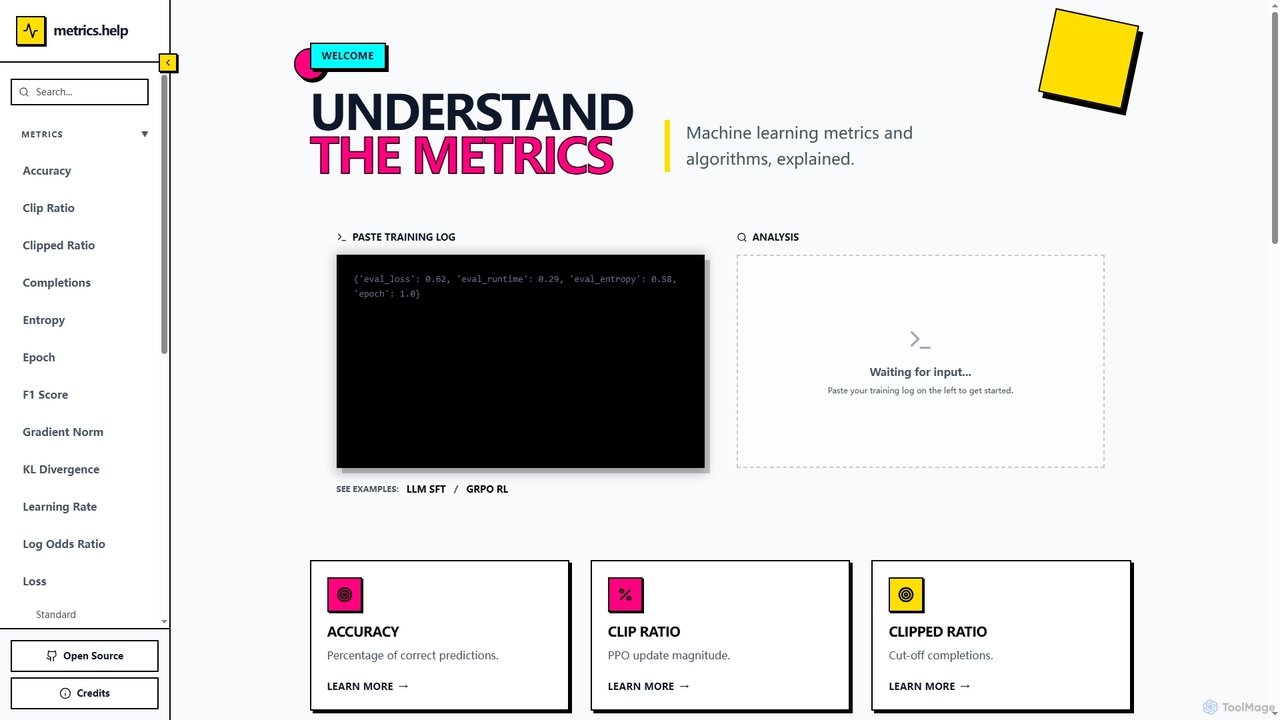
Metrics Help
Metrics Help is an open-source web tool for machine learning practitioners. It functions as a comprehensive guide and an interactive analyzer for ML training metrics. Users can paste training logs to get instant explanations for key metrics like accuracy, loss, and perplexity, aiding in model performance analysis and debugging.
Model Training
airtrain.ai
airtrain.ai is a no-code platform that empowers users to train, deploy, and manage custom AI models on their own data. It simplifies the entire machine learning workflow, enabling businesses and developers to build bespoke models for tasks like image recognition, text classification, and predictive analysis without extensive coding expertise.
Model Training
Unsloth
Unsloth is a high-performance open-source library designed to dramatically accelerate the fine-tuning of Large Language Models (LLMs). It enables training up to 30x faster while using up to 90% less memory, making advanced AI model customization accessible on standard hardware.
Machine Learning
denvrdata
Denvr Dataworks offers a high-performance AI cloud platform for training, inference, and data science. It provides vertically integrated infrastructure with on-demand and dedicated GPU compute services. Tailored for developers and startups, it features the Ascend Program, offering significant compute credits to accelerate AI innovation.
Model Training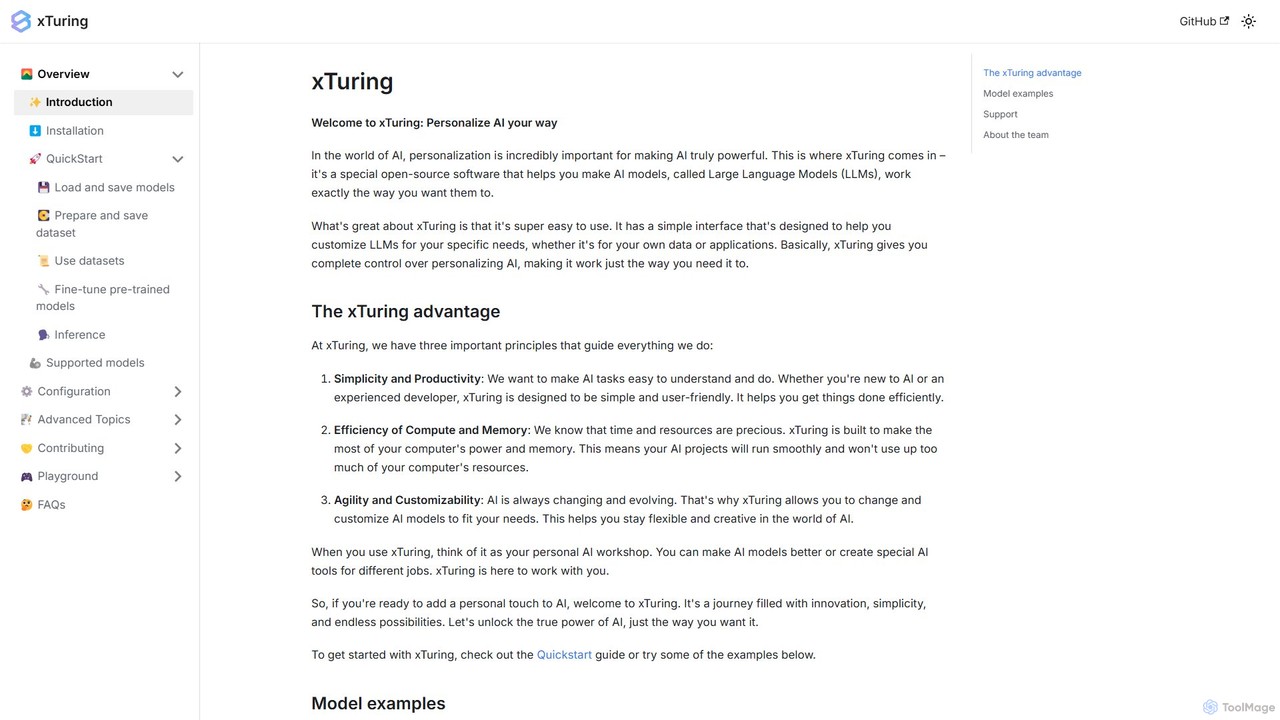
xTuring
xTuring is an open-source Python library designed to simplify the process of building, fine-tuning, and controlling Large Language Models (LLMs). It provides a user-friendly interface for developers and researchers to personalize AI models for specific data and applications with high efficiency and customizability.
Model TrainingLudwig Categories
Ludwig Embed Widget
Copy this embed code to place the badge on your blog, article, or product site and send readers directly to this ToolMage detail page.

Related AI tools
Unsloth
Unsloth is a high-performance open-source library designed to dramatically accelerate the fine-tuning of Large Language Models (LLMs). It enables training up to 30x faster while using up to 90% less memory, making advanced AI model customization accessible on standard hardware.
Machine LearningxTuring
xTuring is an open-source Python library designed to simplify the process of building, fine-tuning, and controlling Large Language Models (LLMs). It provides a user-friendly interface for developers and researchers to personalize AI models for specific data and applications with high efficiency and customizability.
Model Training
hyperficient
hyperficient is an open-source AI tool for developers and ML engineers that automates the search for the most efficient fine-tuning strategies for neural networks. It significantly reduces computational costs, GPU time, and manual effort, enabling optimal model performance on limited resources.
Libraries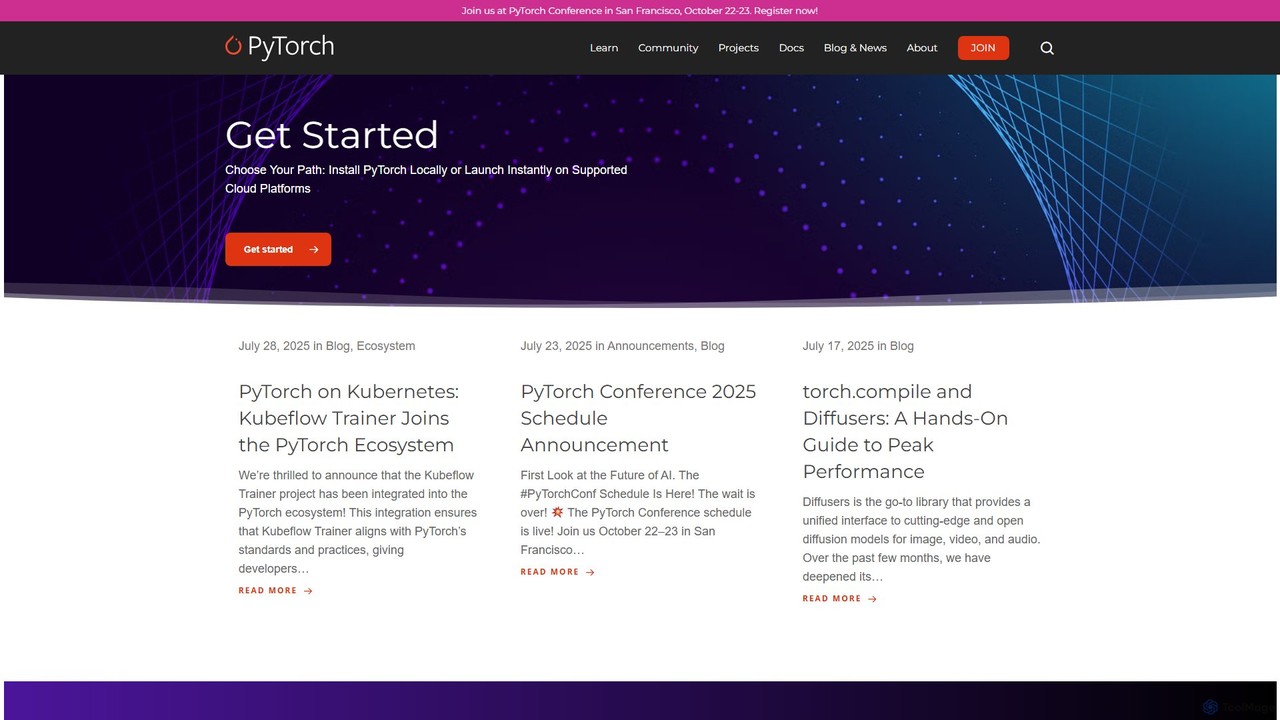
PyTorch
PyTorch is an open-source machine learning framework based on the Torch library, used for applications such as computer vision and natural language processing. It offers a flexible, Python-first environment that accelerates the path from research prototyping to production deployment.
Deep Learning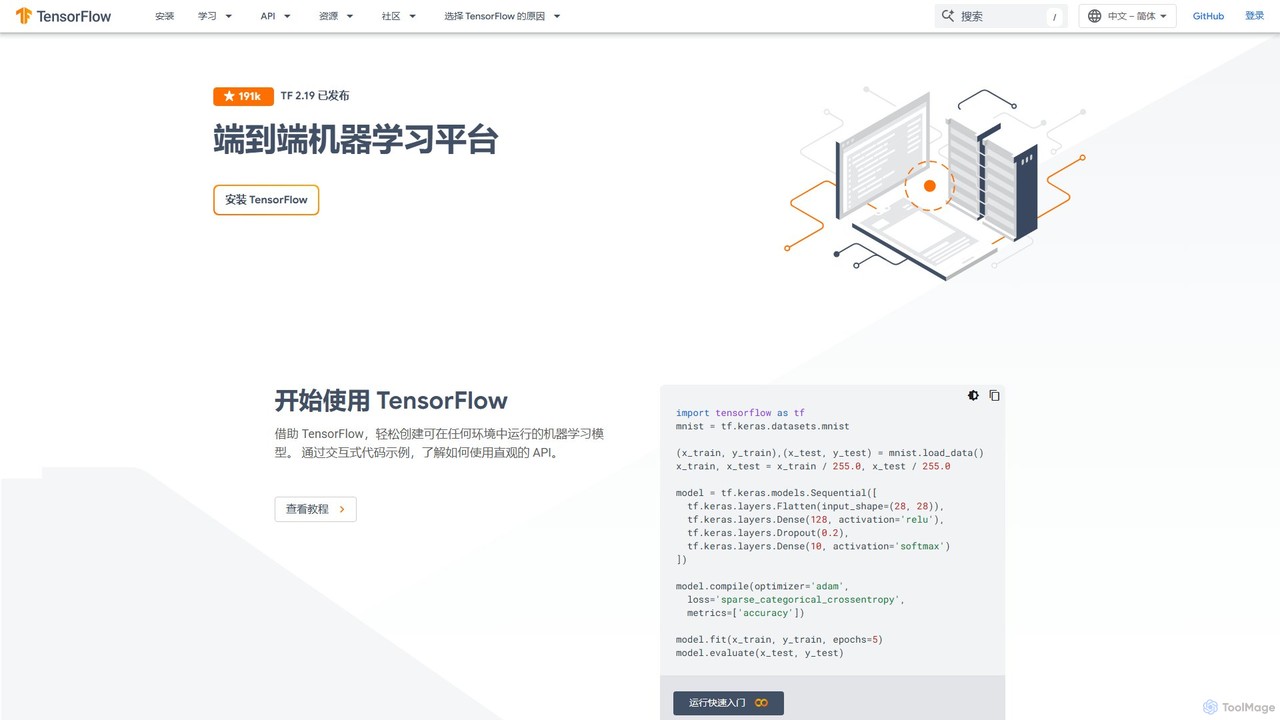
TensorFlow
TensorFlow is an end-to-end open-source platform for machine learning developed by Google. It provides a comprehensive, flexible ecosystem of tools, libraries, and community resources that lets researchers and developers build and deploy ML-powered applications. From beginners to experts, TensorFlow offers intuitive high-level APIs for easy model building and powerful low-level APIs for advanced research, enabling deployment across servers, edge devices, and browsers.
Frameworks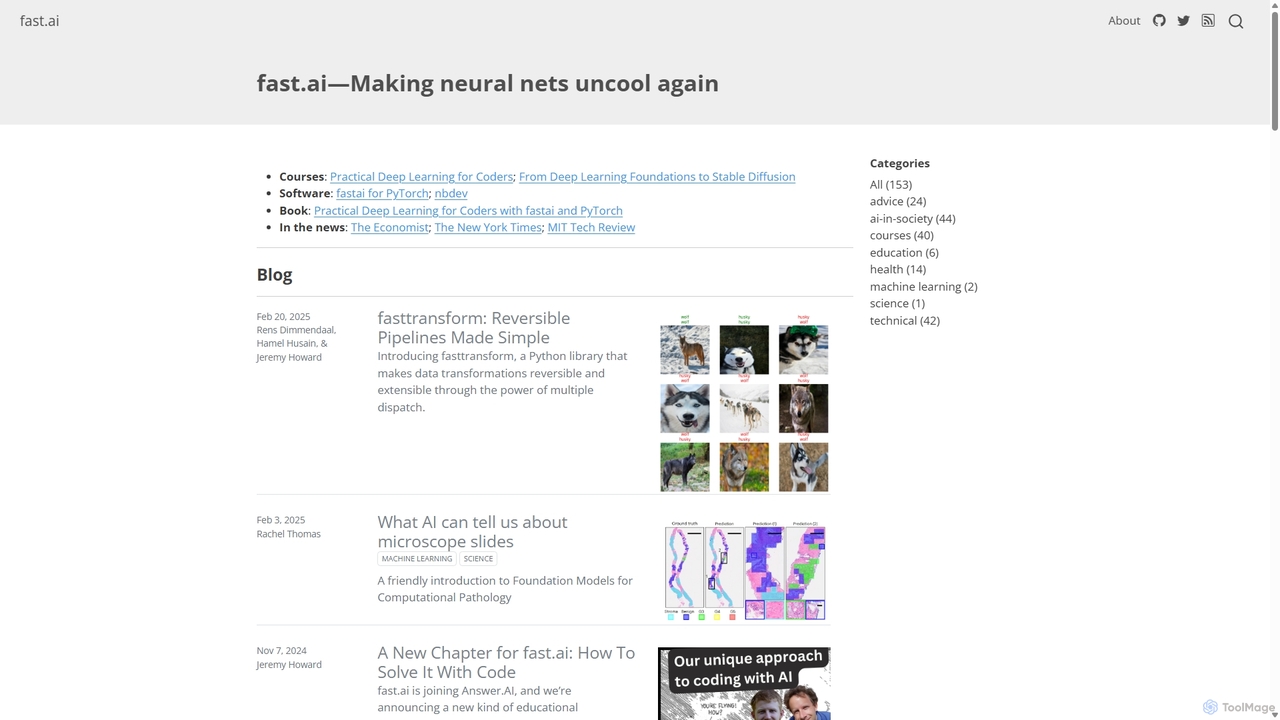
Fast.ai
Fast.ai is a research institute dedicated to making deep learning accessible to everyone. It offers free courses, an open-source software library (fastai), cutting-edge research, and a vibrant community, empowering coders of all backgrounds to become deep learning practitioners.
Machine Learning
PyBrain
PyBrain is a modular and flexible open-source Machine Learning Library for Python. It provides powerful, easy-to-use algorithms for machine learning tasks, with a particular focus on neural networks, reinforcement learning, and unsupervised learning. It is designed to be accessible for beginners while remaining powerful enough for research purposes.
Libraries & FrameworksMetrics Help
Metrics Help is an open-source web tool for machine learning practitioners. It functions as a comprehensive guide and an interactive analyzer for ML training metrics. Users can paste training logs to get instant explanations for key metrics like accuracy, loss, and perplexity, aiding in model performance analysis and debugging.
Model Training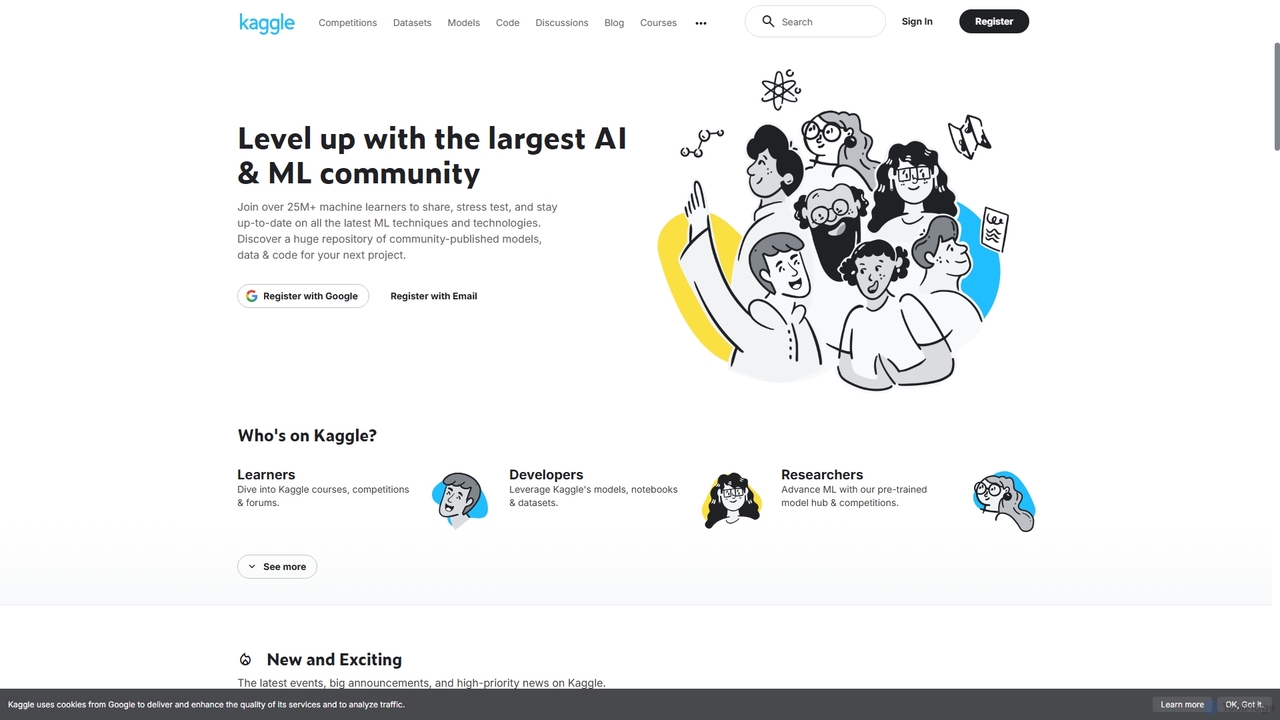
Kaggle
Kaggle is the world's largest online community for data scientists and machine learning practitioners. Owned by Google, it provides a platform to explore datasets, build models in a web-based environment, compete in machine learning challenges, and access educational resources. It offers free access to powerful computational resources, including GPUs and TPUs, making it an essential tool for anyone from beginners to seasoned experts in the AI and data science fields.
Datasets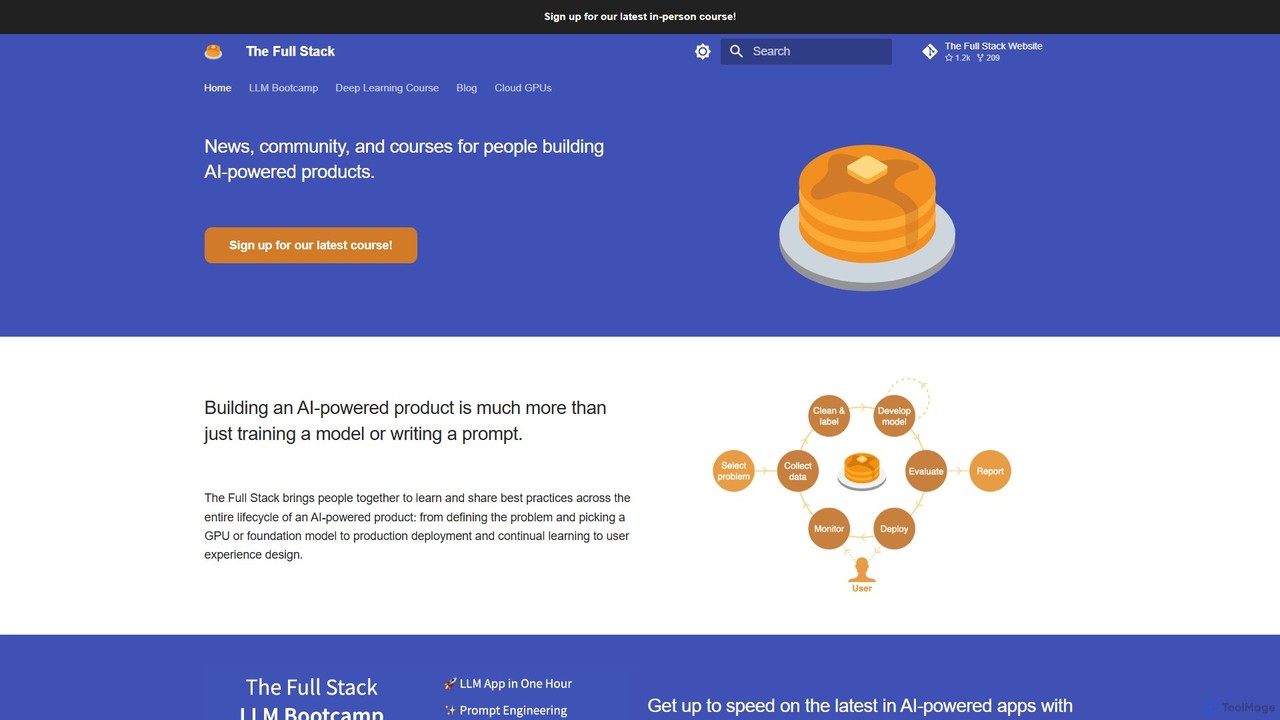
fullstackdeeplearning
An educational platform offering courses, community, and resources for professionals building real-world AI products. It covers the entire development lifecycle, from model training and MLOps to deployment and user experience design.
Tech Community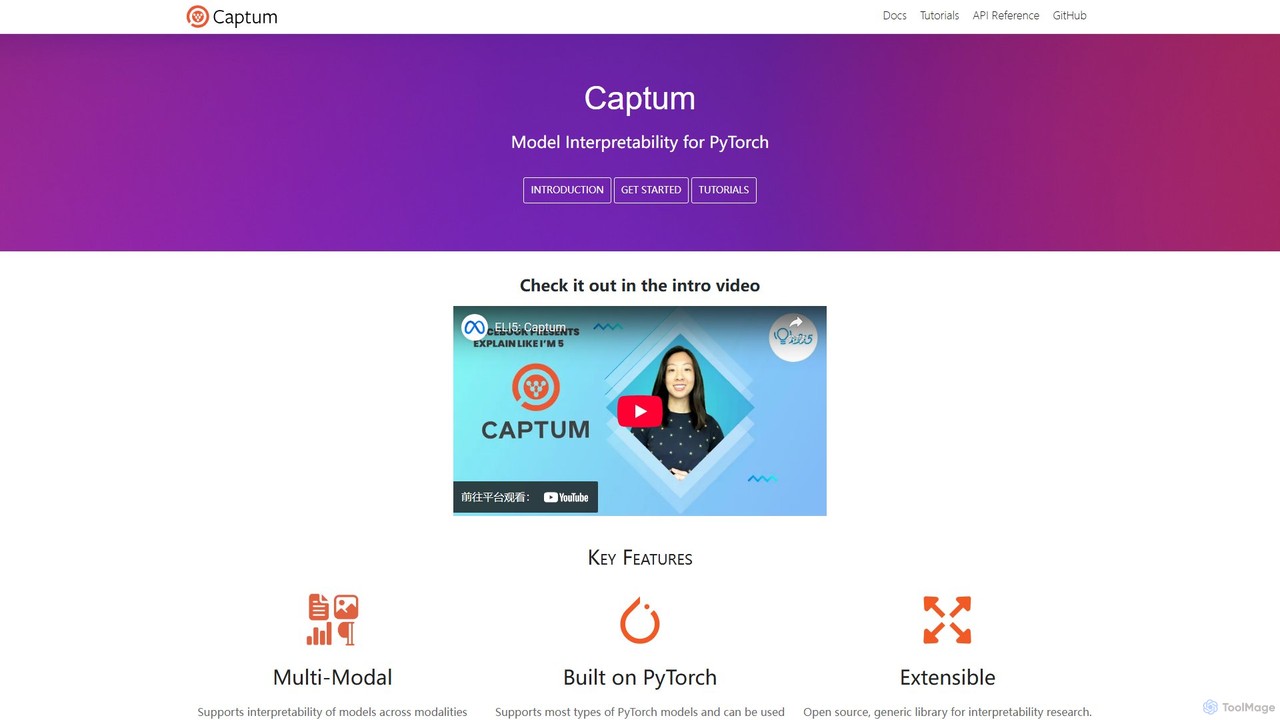
Captum
Captum is an open-source model interpretability and explainability library for PyTorch. It provides state-of-the-art algorithms to help developers and researchers understand which features influence a model's predictions. Supporting multi-modal data like text, vision, and more, Captum makes it easy to debug models, improve transparency, and benchmark new interpretability techniques within the PyTorch ecosystem.
Model Explainability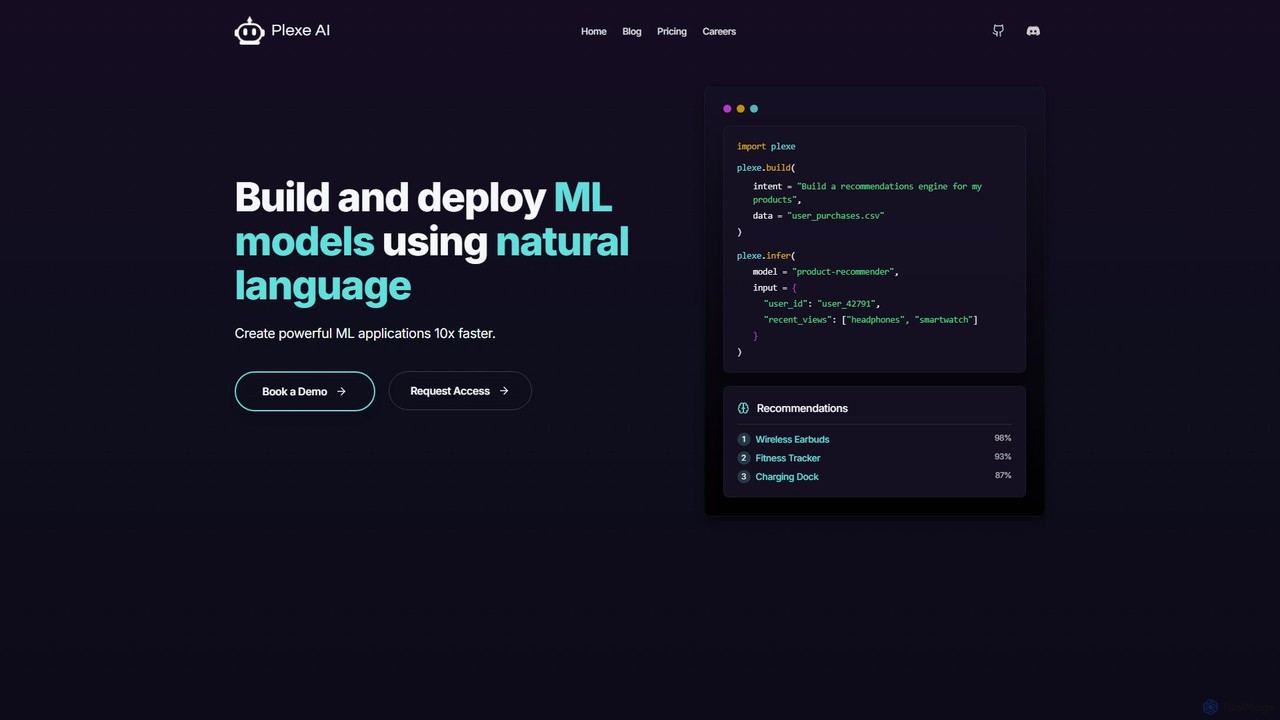
PlexeAI
PlexeAI is a no-code/low-code platform that empowers users to build, train, and deploy custom machine learning models using simple natural language commands. It automates data preprocessing and offers one-click API deployment, making it up to 10x faster to integrate powerful AI capabilities like recommendation engines or predictive analytics into applications without extensive coding knowledge.
Automl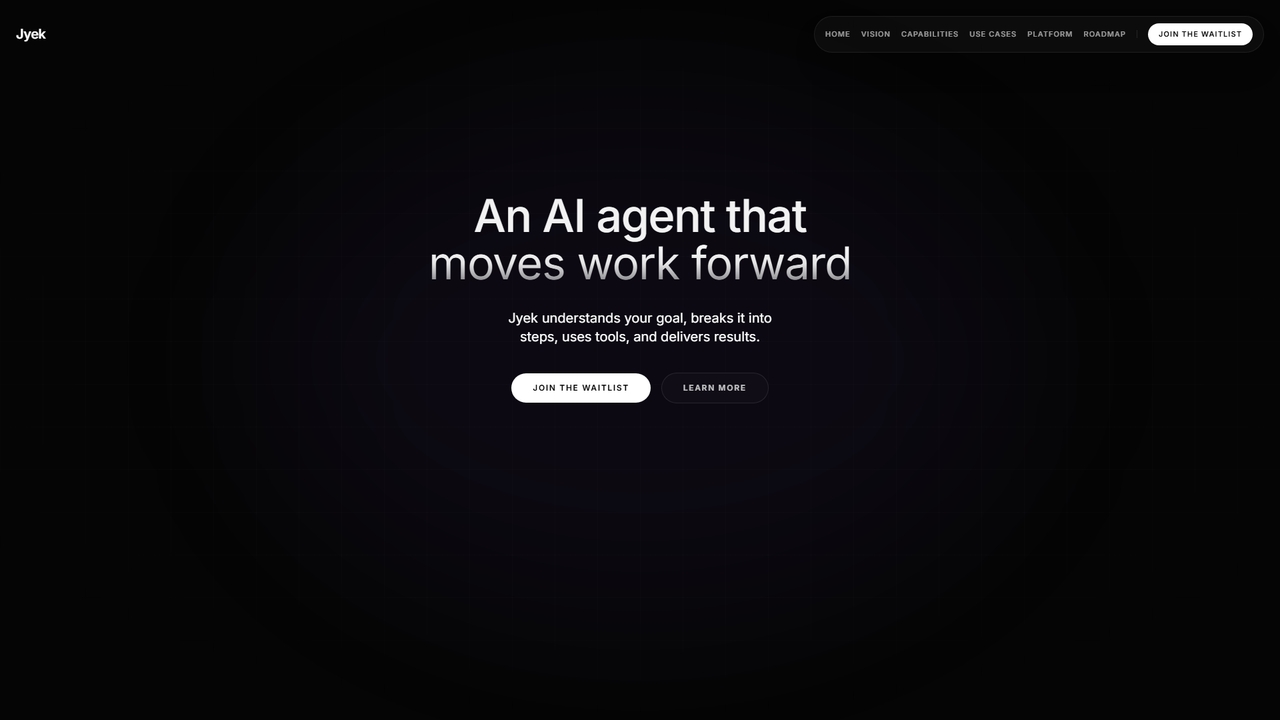
Jyek
Jyek is an AI agent platform that understands objectives, creates execution plans, uses tools, and delivers verifiable results for complex, multi-step tasks.
Automation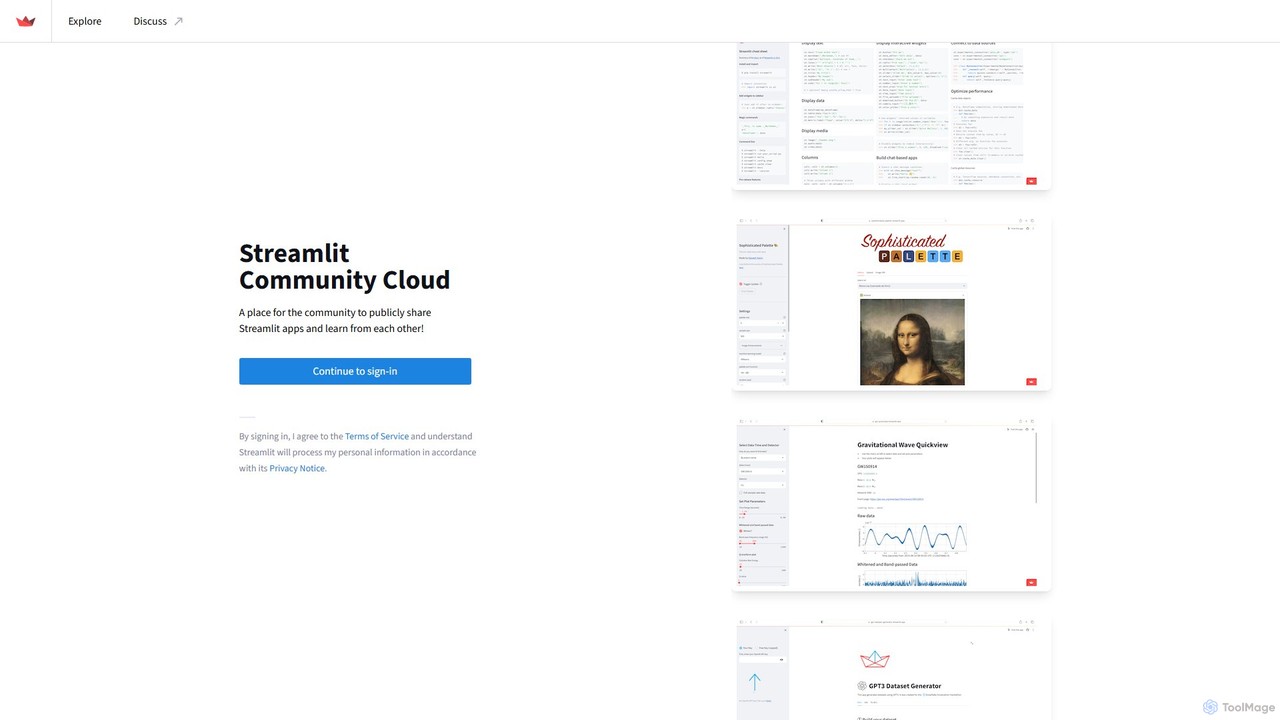
Streamlit
Streamlit is an open-source Python framework that enables developers and data scientists to build and share beautiful, custom web apps for machine learning and data science in minutes. The Streamlit Community Cloud provides a free platform to deploy, manage, and share these public applications with the world, fostering a collaborative environment for innovation.
Data Visualization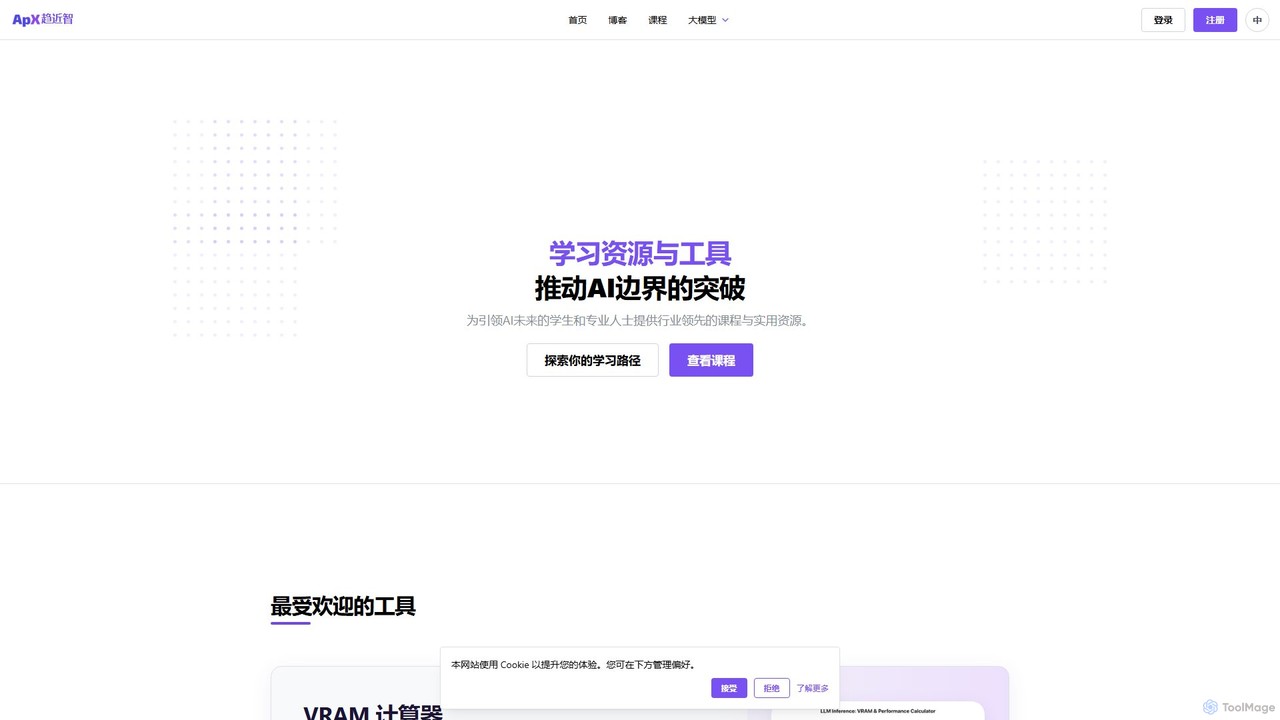
ApX Machine Learning
ApX Machine Learning is an educational platform for AI engineers and students, providing practical courses, in-depth guides, and tools like a VRAM calculator. It focuses on bridging the gap between AI theory and real-world application, covering everything from LLM construction to hardware requirements.
Resource
Ludwig Comments (0)
Sign in to comment.
Sign inNo comments yet.