Data Science Best in category 1 results Model Explainability AI Tool

Popular AI tools in the Model Explainability field of Data Science include Captum, etc., helping you quickly improve efficiency.

Free
Captum

Captum

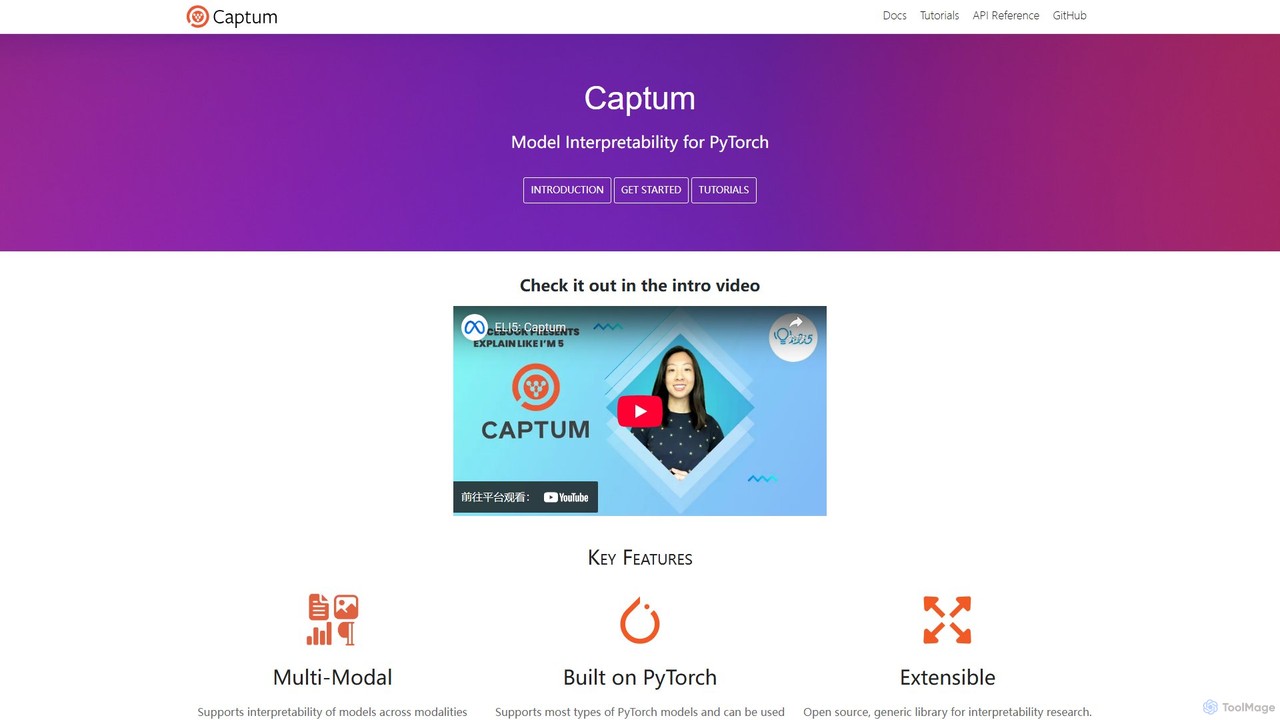
Captum is an open-source model interpretability and explainability library for PyTorch. It provides state-of-the-art algorithms to help developers …

19.0K

About Model Explainability

Model Explainability tools are designed to uncover the internal workings and decision-making processes of complex AI models. These tools provide crucial insights into why a model makes specific predictions, transforming opaque 'black-box' models into transparent, understandable systems. They are essential for fostering trust, ensuring compliance, and enabling effective debugging within the broader data science landscape.

Core Features

  • Feature Importance: Quantifies the contribution of each input feature to a model's predictions.
  • Local Explanations: Provides specific reasons for individual predictions, often using methods like LIME or SHAP.
  • Global Explanations: Offers an overall understanding of how the model behaves across its entire dataset.
  • Bias Detection: Identifies and quantifies potential biases in model decisions based on sensitive attributes.
  • Counterfactual Explanations: Shows what minimal changes to inputs would alter a model's prediction.

Applicable Scenarios

Model Explainability is vital in fields requiring high transparency and accountability. Financial institutions use these tools to explain loan approval or denial decisions to regulators and customers. Healthcare professionals leverage them to understand AI-driven diagnostic recommendations, ensuring patient safety and building physician trust. Data scientists also use them for debugging models, identifying performance bottlenecks, and improving overall model robustness.

How to Choose

When selecting a Model Explainability tool, consider its compatibility with your existing AI models (e.g., deep learning, tree-based). Evaluate the range of explanation methods supported (e.g., SHAP, LIME, PDP) and their suitability for your specific use cases. Assess the quality of visualization and reporting features, as clear communication of insights is paramount. Finally, consider ease of integration into your data science workflow and the potential impact on model inference performance.

Model ExplainabilityUse Cases

1

Ensuring Regulatory Compliance in Financial Services

A financial institution uses Model Explainability tools to justify AI-driven loan approval or denial decisions. By generating local explanations for each applicant, they can demonstrate to regulators and customers precisely which factors (e.g., credit score, income stability) led to a specific outcome, ensuring transparency and adherence to fair lending practices.

2

Debugging and Improving AI Model Performance

Data scientists leverage Model Explainability tools to diagnose why an AI model is making incorrect predictions or underperforming in specific scenarios. By analyzing feature importance and local explanations for misclassified instances, they can identify problematic data inputs, biases, or model architecture flaws, leading to targeted improvements and more robust models.

3

Building Trust in AI-Powered Medical Diagnosis

Medical professionals use Model Explainability to understand the reasoning behind an AI system's diagnostic recommendations. If an AI suggests a particular disease, the tool can highlight which patient symptoms, lab results, or imaging features were most influential in that prediction, allowing doctors to critically evaluate the AI's advice and build confidence in its utility for patient care.

4

Identifying and Mitigating Bias in AI Models

Organizations use Model Explainability tools to detect and quantify biases in AI models, particularly in sensitive applications like hiring or credit scoring. By analyzing global explanations and feature importance across different demographic groups, data scientists can pinpoint where the model might be unfairly discriminating and take corrective actions to promote fairness and ethical AI deployment.

5

Communicating AI Decisions to Non-Technical Stakeholders

Business leaders and product managers use Model Explainability to understand and communicate the rationale behind AI-driven recommendations or automated decisions to non-technical audiences. Clear visualizations and simplified explanations help build confidence in AI systems, facilitate adoption, and enable informed strategic planning based on model insights, without requiring deep technical knowledge.

6

Optimizing Marketing Campaigns with Explainable AI

Marketing analysts utilize Model Explainability to understand which customer attributes and interactions are most influential in predicting purchase behavior or campaign engagement. By gaining insights into the 'why' behind customer segmentation or recommendation engine outputs, they can refine targeting strategies, personalize content more effectively, and optimize ad spend for higher ROI.

Model ExplainabilityFrequently Asked Questions