Data Science Best in category 1 results Data Collection AI Tool

Popular AI tools in the Data Collection field of Data Science include Datalis, etc., helping you quickly improve efficiency.

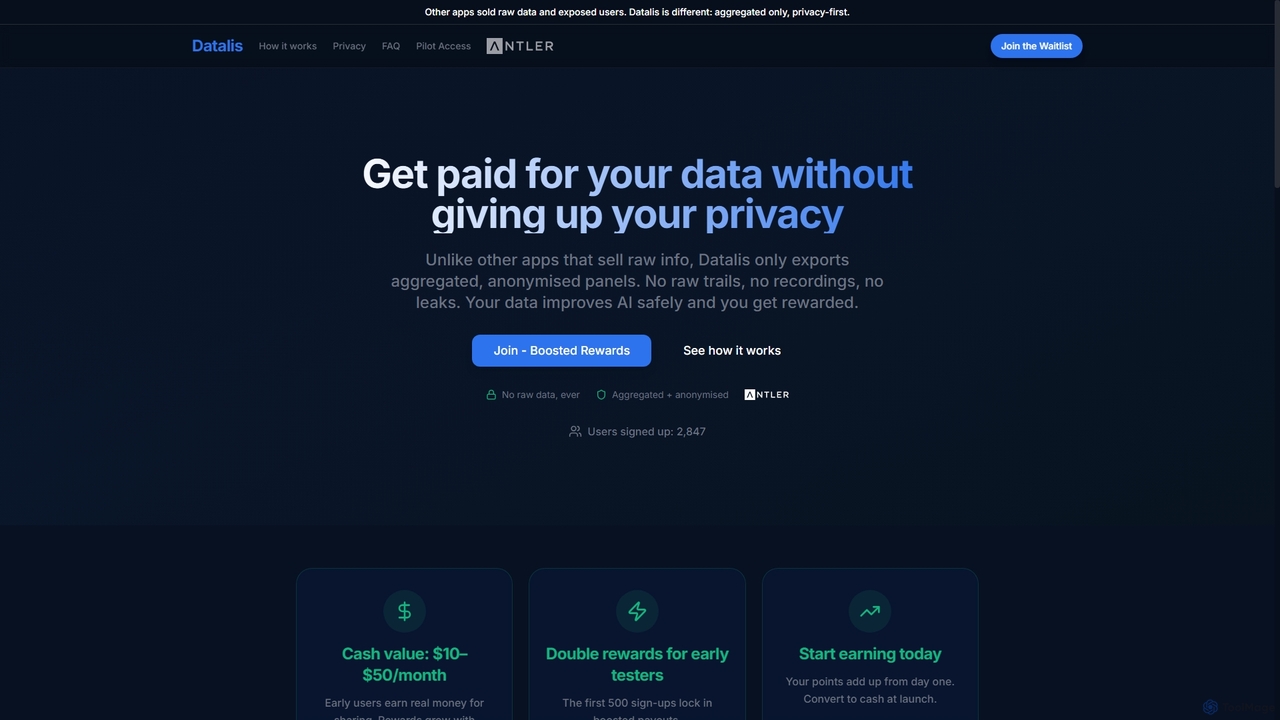
Datalis

Datalis

Datalis is a privacy-first platform that allows users to get paid for their data safely. It provides AI …

2.4K

About Data Collection

AI Data Collection tools are applications that use artificial intelligence to automate and enhance the gathering of information from diverse sources like websites, documents, and APIs. These tools leverage machine learning to perform tasks such as intelligent web scraping, data extraction from complex formats, and real-time data aggregation. They serve as the foundational step in the data science lifecycle, providing the high-quality, structured data necessary for analysis, model training, and business intelligence. By handling dynamic content and overcoming anti-scraping measures, they offer a more robust and scalable solution than traditional methods.

Core Features

  • Intelligent Web Scraping: Automatically extracts data from websites, adapting to layout changes and navigating complex JavaScript-driven pages.
  • Document Data Extraction: Uses Optical Character Recognition (OCR) and Natural Language Processing (NLP) to pull structured information from PDFs, invoices, and images.
  • Real-time Data Aggregation: Connects to APIs and data streams to continuously gather up-to-date information from multiple sources.
  • Automated Data Cleansing: Automatically formats, cleans, and structures raw data into ready-to-use formats like JSON or CSV, ensuring data quality.
  • Scalable Crawling: Manages large-scale data collection tasks efficiently, often using cloud infrastructure to handle high volumes of requests.

Use Cases

These tools are widely used in market research for competitor analysis, in finance for aggregating market data and news, and by sales teams for automated lead generation. In the field of data science, they are essential for assembling large datasets required to train and validate machine learning models.

How to Choose

When selecting an AI Data Collection tool, consider the types of data sources it supports (websites, documents, APIs), its scalability to handle your data volume, and its ease of use (e.g., no-code interface vs. developer-centric API). Also, evaluate its data structuring capabilities and integration options with your existing analytics platforms.

Data CollectionUse Cases

1

Automated Competitor Price Monitoring

E-commerce managers use AI data collection tools to automatically scrape pricing, stock levels, and promotional information from competitor websites on a daily basis. The tool is configured to identify specific product pages and extract relevant data fields, even if the site's layout changes. This structured data is then fed directly into a dynamic pricing engine or a business intelligence dashboard, allowing the company to adjust its prices competitively and react to market changes in near real-time without extensive manual effort.

2

Building Datasets for Machine Learning

A data scientist training a sentiment analysis model needs a large dataset of product reviews. They use an AI data collection tool to crawl thousands of pages from multiple e-commerce sites. The tool is instructed to extract the review text, star rating, and date for each product. Its AI capabilities help it navigate through pagination, handle dynamically loaded content (AJAX), and avoid getting blocked. The result is a clean, structured CSV file containing tens of thousands of reviews, ready for preprocessing and model training, a process that would have taken weeks to complete manually.

3

Automated Financial Data Aggregation

A financial analyst needs to track quarterly earnings reports and related news for a portfolio of 50 companies. Instead of manually visiting each company's investor relations page and financial news sites, they set up an AI data collection tool. The tool monitors these sources and uses document extraction features to pull key figures like revenue, net income, and EPS from PDF earnings reports as soon as they are published. It also aggregates news headlines and summaries, providing the analyst with a consolidated, real-time feed of critical information for faster, more informed decision-making.

4

Real Estate Market Trend Analysis

A real estate agency wants to provide clients with up-to-date market analysis. They use an AI data collection tool to scrape property listings from major real estate portals in a specific city. The tool gathers data points such as price, square footage, number of bedrooms, and location daily. This data is then imported into an analytics platform to visualize trends, identify undervalued neighborhoods, and generate comprehensive market reports. The automation saves hundreds of hours of manual data entry and allows the agency to offer a data-driven advisory service that sets them apart from competitors.

5

Automated Lead Generation for Sales

A B2B sales team needs to identify potential leads in the software industry. They use an AI data collection tool to scan online business directories, professional networking sites, and conference attendee lists. They set up criteria such as 'CTO' or 'Head of Engineering' at companies with over 100 employees. The tool automatically extracts names, job titles, company names, and sometimes contact information, compiling it into a structured list. This process automates the top of the sales funnel, providing the sales team with a continuous stream of qualified leads to engage with, drastically reducing prospecting time.

6

Academic Research Data Gathering

A sociologist is studying online discourse around a specific social issue. To gather a large corpus of data, they use an AI data collection tool to archive discussions from public forums and social media platforms over a six-month period. The tool is set to capture the post content, user handles (anonymized), timestamps, and reply threads. This automated approach allows the researcher to collect a dataset far larger and more comprehensive than what could be gathered manually, enabling more robust quantitative and qualitative analysis of communication patterns and evolving narratives.

Data CollectionFrequently Asked Questions