Datalis
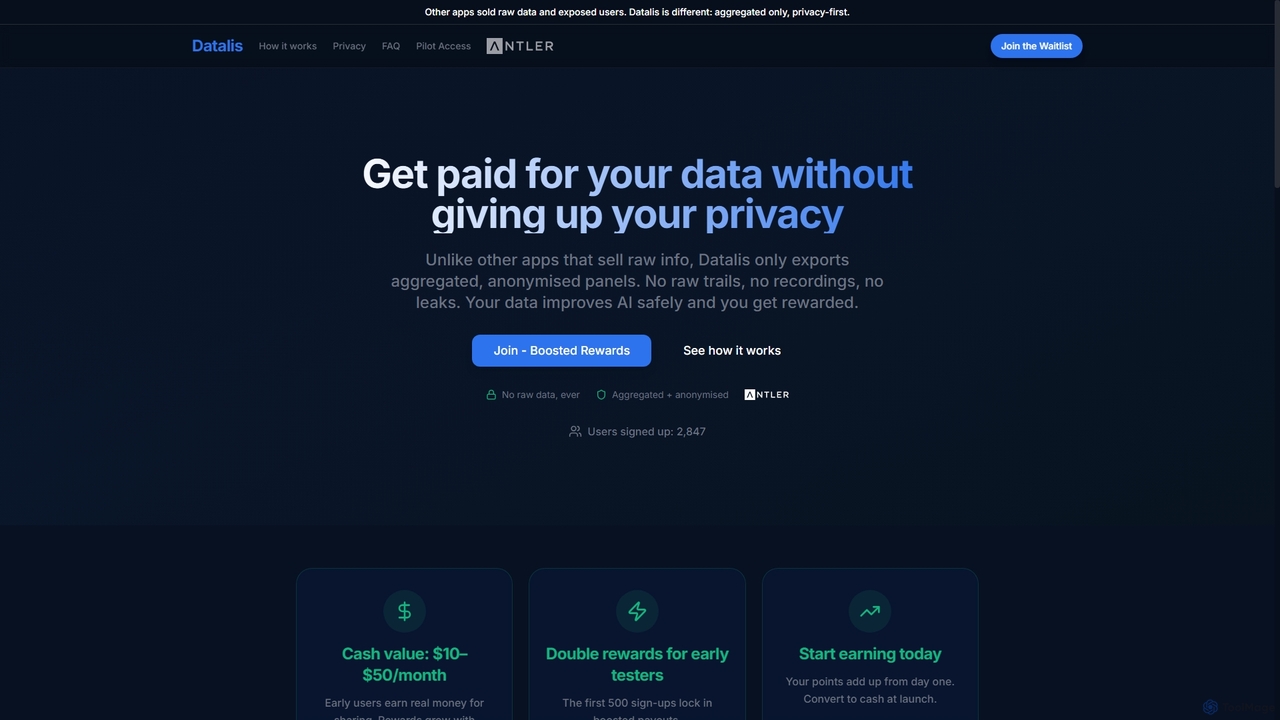
Datalis is a privacy-first platform that allows users to get paid for their data safely. It provides AI …
Datalis is a privacy-first platform that allows users to get paid for their data safely. It provides AI developers with aggregated, anonymized, and consent-verified datasets to test for bias and improve model fairness, ensuring user privacy is never compromised.
About Ethical Ai
Ethical AI refers to the development and deployment of artificial intelligence systems that adhere to moral principles and societal values. These tools focus on ensuring fairness, transparency, accountability, and privacy throughout the AI lifecycle. They aim to mitigate risks such as algorithmic bias, discrimination, and unintended societal harm, fostering trust and responsible innovation within AI development.
Core Features
- Bias Detection & Mitigation: Identifies and reduces unfair biases in AI models and data.
- Explainable AI (XAI): Provides insights into how AI models make decisions, enhancing transparency.
- Privacy-Preserving AI: Implements techniques to protect sensitive data during AI training and inference.
- Fairness Metrics & Auditing: Quantifies and monitors the equitable performance of AI systems across different groups.
- Compliance & Governance: Helps organizations align AI systems with ethical guidelines and regulatory standards.
Applicable Scenarios
Ethical AI tools are crucial for organizations developing AI in sensitive sectors like finance, healthcare, and criminal justice. They are used by data scientists to audit models for bias, by privacy officers to ensure data protection, and by compliance teams to meet regulatory requirements, ensuring AI systems are deployed responsibly and equitably.
How to Choose
When selecting Ethical AI tools, consider their ability to integrate with your existing AI development pipeline, the specific types of bias detection and mitigation techniques offered, and their support for various explainability methods. Evaluate their compliance features for relevant industry regulations and the robustness of their privacy-preserving capabilities to match your data sensitivity needs.

Ethical AiUse Cases
Detecting and Mitigating Algorithmic Bias in Hiring
HR professionals and AI developers can use Ethical AI tools to scan AI-powered resume screening systems and interview analysis models for inherent biases. By identifying patterns that unfairly disadvantage certain demographic groups, these tools help refine algorithms and data, ensuring a more equitable and diverse hiring process, potentially increasing candidate diversity by 15-20%.
Ensuring Data Privacy in AI-Powered Healthcare Diagnostics
Healthcare providers and data privacy officers leverage privacy-preserving AI techniques like federated learning or differential privacy to train diagnostic AI models. This allows models to learn from sensitive patient data across multiple institutions without centralizing or directly exposing individual patient records, ensuring compliance with regulations like HIPAA and maintaining patient trust while improving diagnostic accuracy.
Generating Explainable AI (XAI) Insights for Loan Approvals
Financial institutions and compliance officers use XAI tools to provide clear, understandable reasons for AI-driven loan approval or denial decisions. Instead of a 'black box' outcome, the system can explain which factors (e.g., credit score, income stability, debt-to-income ratio) most influenced a decision, fulfilling regulatory requirements for transparency and helping customers understand how to improve their eligibility.
Monitoring AI System Fairness in Public Service Applications
Government agencies and public service providers utilize Ethical AI tools to continuously monitor the fairness metrics of deployed AI systems, such as those used for resource allocation or social welfare assessments. This ensures that the AI does not inadvertently create or exacerbate inequalities, allowing for proactive adjustments and maintaining public trust in automated decision-making processes.
Developing AI Governance Frameworks for Enterprise AI Adoption
Enterprise architects and legal teams leverage Ethical AI platforms to establish robust AI governance frameworks. This involves defining clear ethical guidelines, implementing compliance checks for new AI projects, and creating audit trails for AI decisions. Such frameworks ensure responsible AI adoption across the organization, mitigating legal and reputational risks, and fostering a culture of ethical innovation.
Assessing AI Risk and Compliance in Autonomous Driving Systems
Automotive manufacturers and regulatory bodies employ Ethical AI tools to rigorously assess the risks and compliance of autonomous driving systems. This involves evaluating the AI's decision-making processes in complex scenarios, ensuring it adheres to safety standards, ethical driving principles (e.g., minimizing harm), and legal frameworks. Such assessments are critical for gaining public acceptance and regulatory approval for self-driving vehicles.