

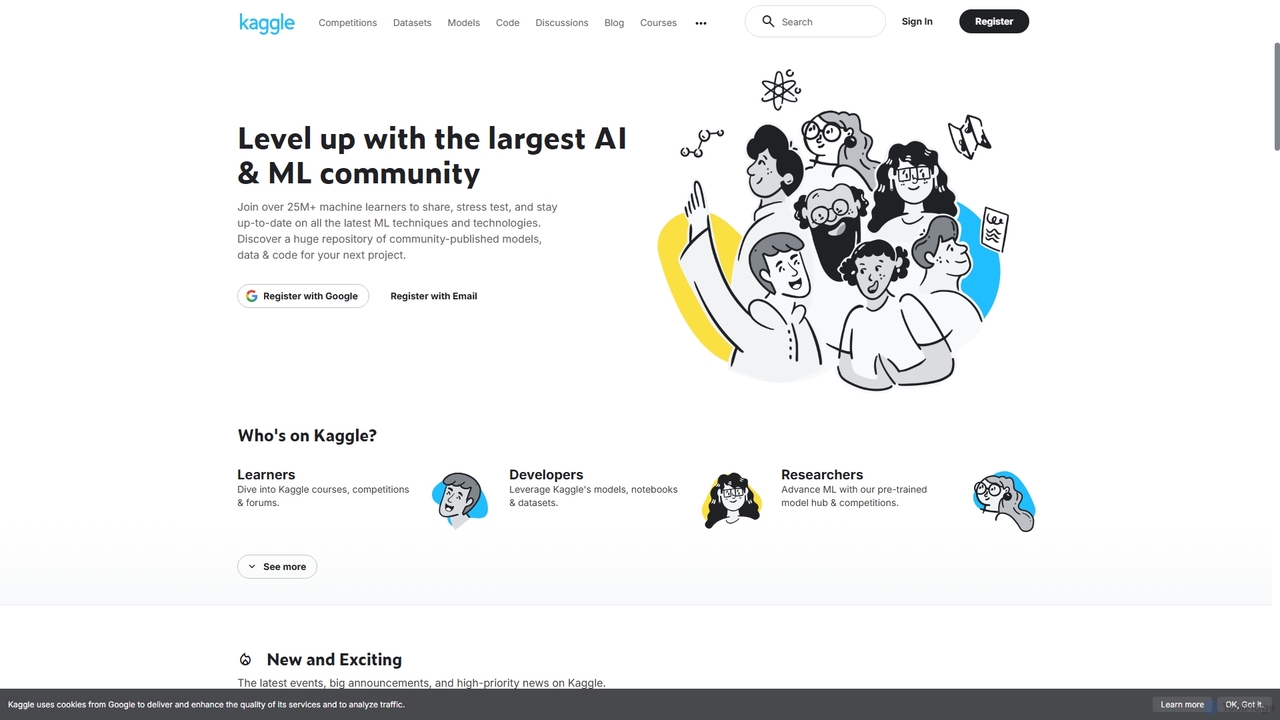
Kaggle Overview
Kaggle, a subsidiary of Google, stands as the premier online platform and community for data science and machine learning enthusiasts. With a global community of over 25 million users, it serves as a comprehensive ecosystem where individuals and teams can discover and publish datasets, explore and build models using a powerful, free notebook environment, compete in challenging machine learning competitions, and learn from a vast collection of educational resources. Kaggle's mission is to help data scientists and machine learning engineers at all stages of their careers to learn, grow, and make an impact.
How to use Kaggle
Getting started with Kaggle is a straightforward process designed to onboard users quickly into the world of data science:
- Create an Account: Register for a free account on the Kaggle website using a Google account or an email address.
- Learn the Basics: For newcomers, Kaggle offers a series of free, hands-on courses called Kaggle Learn. These cover essential topics like Python, Pandas, Data Visualization, and Intro to Machine Learning.
- Explore Datasets: Navigate to the Datasets section to browse over 500,000 public datasets. You can find data on virtually any topic, from avocado prices to medical imaging, to use in your personal projects.
- Utilize Notebooks: Launch a free Kaggle Notebook, a cloud-based Jupyter environment. It comes pre-installed with major data science libraries. You can write and execute code, and most importantly, enable free GPU or TPU accelerators for computationally intensive tasks.
- Enter a Competition: The heart of Kaggle is its competitions. Beginners can start with 'Getting Started' competitions like the famous 'Titanic: Machine Learning from Disaster'. In a competition, you download the data, build a predictive model in a Notebook, generate a submission file with your predictions, and upload it to see your real-time ranking on the leaderboard.
- Collaborate and Share: Engage with the community through discussion forums, comment on public notebooks, or fork (copy) a notebook to build upon someone else's work. You can also form teams to tackle competitions together.
- Leverage Pre-trained Models: Explore the Models hub to find thousands of pre-trained models, such as Google's Gemma or Meta's Llama 2, which you can use as a starting point for your own projects.
Core Features of Kaggle
- Machine Learning Competitions: Kaggle is renowned for hosting ML competitions sponsored by companies and research organizations, with prize pools reaching up to $1 million. These challenges cover a wide range of problems, including classification, regression, and computer vision.
- Vast Public Datasets Repository: A collection of over 525,000 datasets, making it one of the largest resources for finding high-quality, diverse data for any project.
- Kaggle Notebooks: A free, cloud-based coding environment that supports Python and R. It offers free access to powerful hardware, including NVIDIA GPUs and Google's TPUs, which significantly speeds up model training.
- Pre-trained Models Hub: A growing library of over 28,000 ready-to-deploy ML models that can be easily integrated into Kaggle Notebooks, saving time and computational resources.
- Kaggle Learn Courses: A suite of free, interactive micro-courses designed to teach practical data science skills quickly and efficiently, from data manipulation to deep learning.
- Global Community and Discussion Forums: An active community of millions of users who share code, offer advice, and discuss the latest trends in AI and machine learning.
- Progression System: A gamified system that rewards users with medals and tiers (Novice, Contributor, Expert, Master, Grandmaster) for their achievements in competitions, datasets, notebooks, and discussions, providing a clear path for skill recognition.
Use Cases for Kaggle
Kaggle is a versatile platform that caters to a wide audience:
- Students and Aspiring Data Scientists: A perfect environment to learn practical skills, apply theoretical knowledge to real-world problems, build a professional portfolio, and gain visibility in the data science community.
- Professional Data Scientists and ML Engineers: A place to benchmark skills against the best in the world, experiment with new techniques on unique datasets, win substantial cash prizes, and stay at the forefront of the industry.
- Academic Researchers: A platform to host research-oriented competitions, crowdsource solutions to complex scientific problems, and access a vast array of public data for studies.
- Businesses and Organizations: A way to crowdsource innovative and highly accurate predictive models for challenging business problems by hosting 'Featured Competitions', effectively tapping into a global pool of top data science talent.
Advantages of Kaggle
The key advantages of using Kaggle include:
- Democratized Access to Compute Power: The provision of free GPUs and TPUs levels the playing field, allowing anyone to work on large-scale machine learning projects without needing expensive hardware.
- Unmatched Learning Opportunities: The combination of real-world competitions, extensive datasets, shared code, and active forums creates an unparalleled learning environment.
- Career Advancement: A strong Kaggle profile, especially with high rankings in competitions, is a highly respected credential that can significantly boost career prospects in the data science field.
- Real-World Problem Solving: Competitions are based on actual business and research challenges, providing invaluable hands-on experience that is directly applicable in a professional setting.
Pricing and Plans
Kaggle's pricing model is designed to be accessible to individuals while offering premium services for organizations.
- For Individuals (Learners, Practitioners): The platform is completely free. This includes participation in competitions, access to all datasets, use of Kaggle Notebooks with free GPU/TPU quotas, and all Kaggle Learn courses.
- For Competition Hosts:
- Community Competitions: Free to set up for educational purposes, small businesses, or ML enthusiasts.
- Featured Competitions: A paid service for businesses looking to solve complex problems with cash prizes and dedicated support from the Kaggle team. Pricing is variable and tailored to the project's needs.
- Research Competitions: Designed for academic and non-profit institutions, with potential grants available to cover costs.
Traffic
Latest traffic
Status
Monthly traffic trend
- 2025-9: 10.4M
- 2026-1: 10.5M
- 2026-2: 10.4M
- 2026-3: 12.8M
- 2026-4: 13.2M
- 2026-5: 12.4M
Geography
Top 5 countries / regions
- 🇮🇳India47.8%
- 🇺🇸United States30.2%
- 🇨🇳China9.3%
- 🇮🇩Indonesia8.2%
- 🇬🇧United Kingdom4.5%
Traffic sources
| Source type | Percentage |
|---|---|
Direct | 83.0% |
Referral | 14.0% |
Email | 3.0% |
Top keywords
| Keyword | Cost per click |
|---|---|
| anigum | $0.00 |
| imdb | $0.32 |
| kaggle | $0.75 |
| kaggle datasets | $1.68 |
| keggle | $0.89 |
Kaggle Videos on YouTube


ProgrammingKnowledge



Prompt Engineer

SHAGUN SINGH IITM

Kaggle Alternatives
Grably
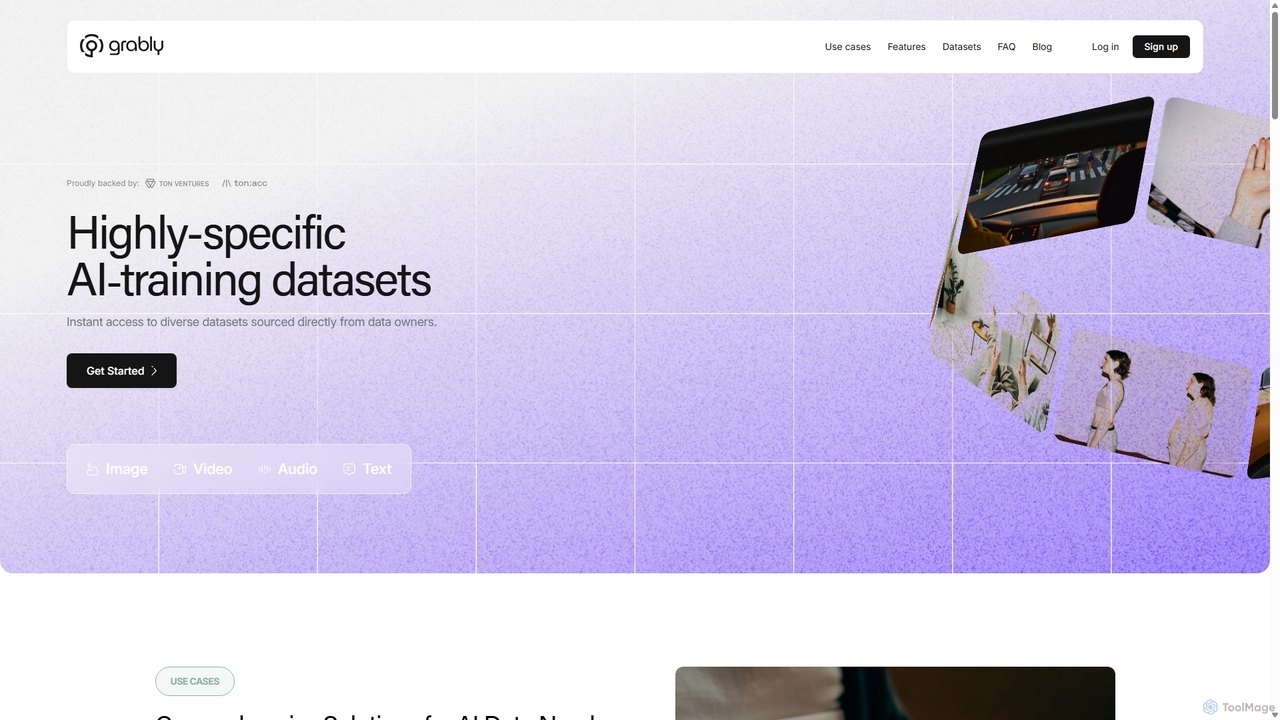
Grably is a decentralized data ownership network (DeDON) providing high-quality, ethically sourced AI training data. It offers a vast collection of off-the-shelf datasets, custom data collection, curation, and annotation services to accelerate AI development while allowing users to monetize their data securely and transparently.
Data Labeling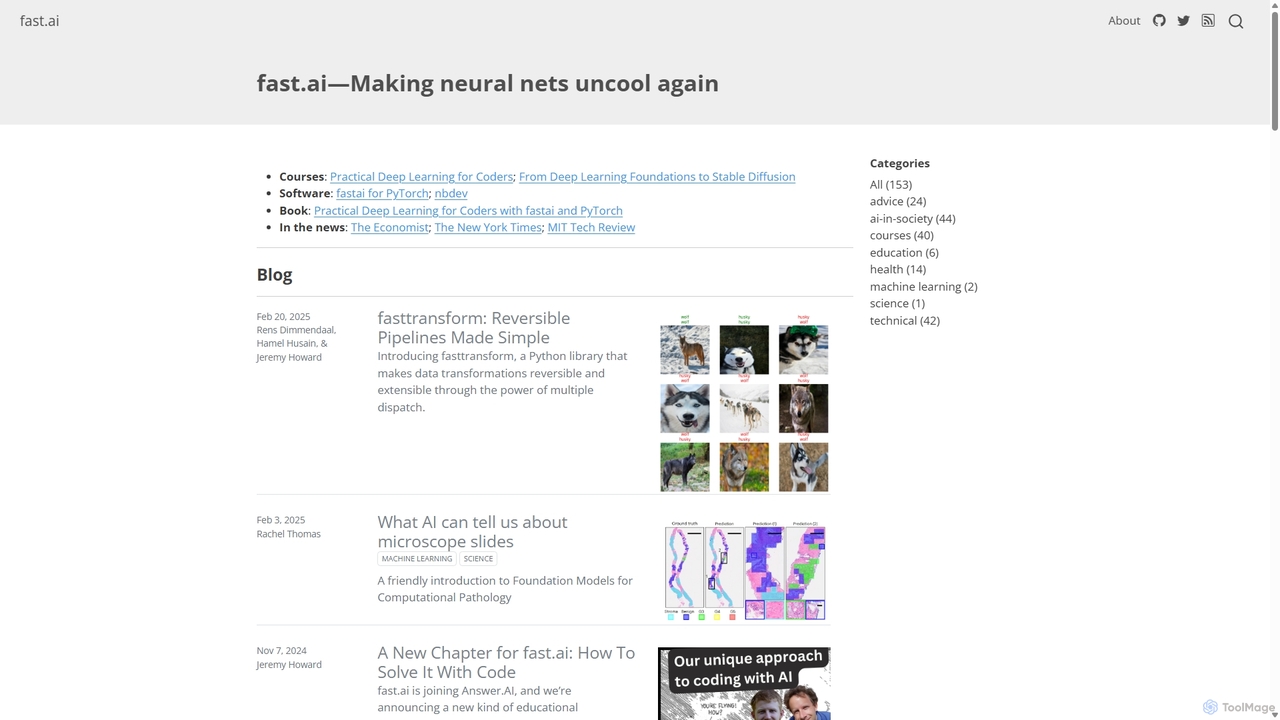
Fast.ai
Fast.ai is a research institute dedicated to making deep learning accessible to everyone. It offers free courses, an open-source software library (fastai), cutting-edge research, and a vibrant community, empowering coders of all backgrounds to become deep learning practitioners.
Machine Learning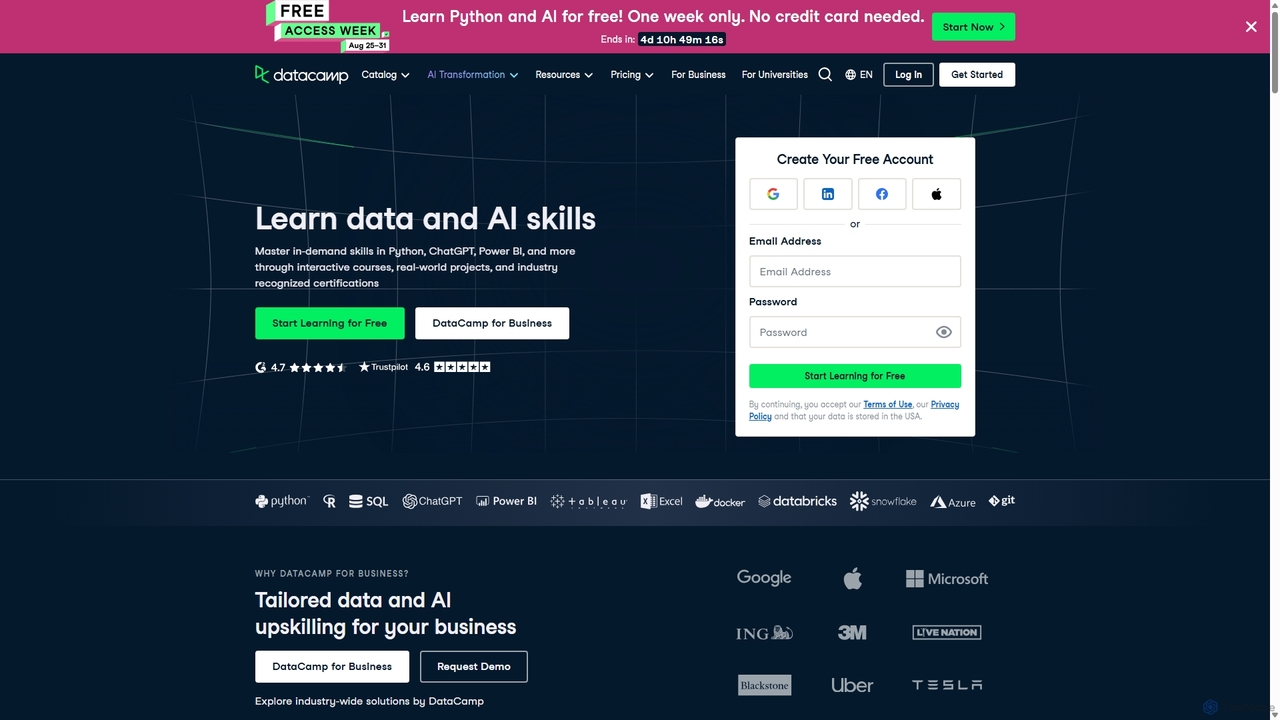
DataCamp
DataCamp is an interactive online learning platform for data science and AI. It offers hands-on courses in Python, R, SQL, Power BI, and more. Through a 'learn-by-doing' approach with in-browser coding, real-world projects, and career tracks, it empowers individuals and businesses to build job-ready data skills, from beginner to expert level.
Data Science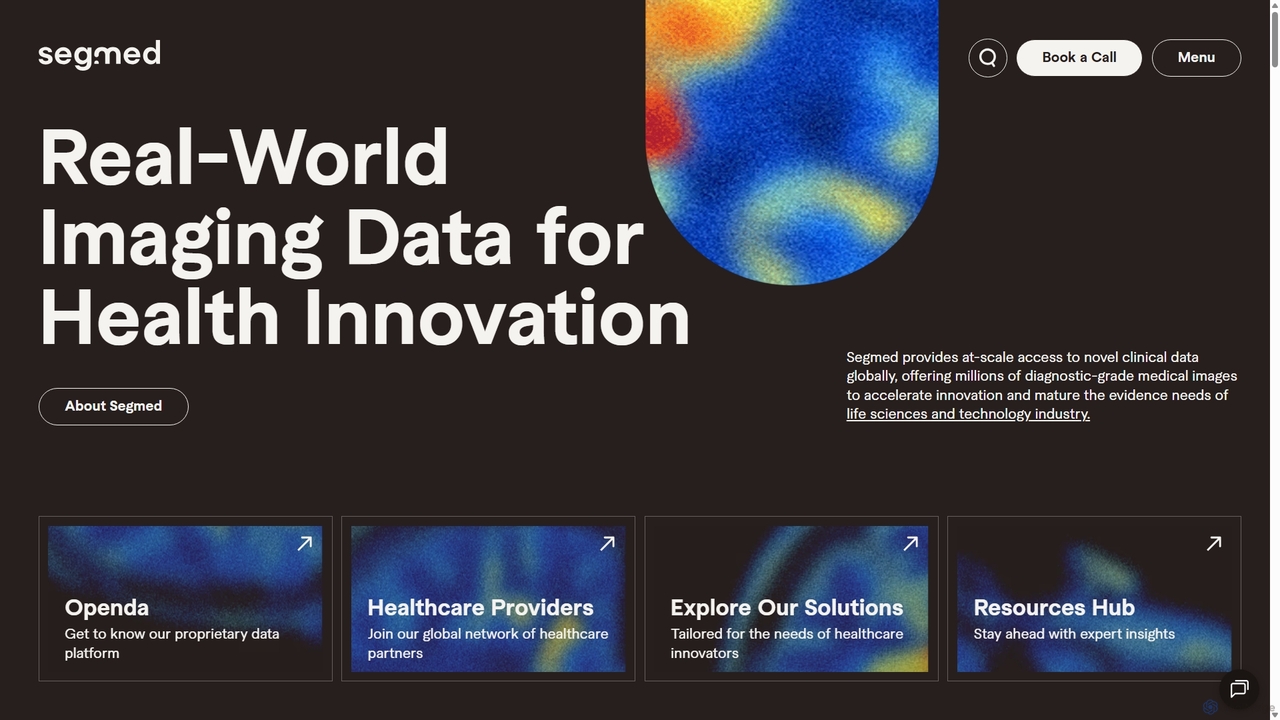
Segmed
Segmed provides large-scale access to de-identified, diagnostic-grade medical imaging data for AI development and clinical research. Its platform, Openda, offers millions of tokenized studies from a diverse global network of healthcare providers. Segmed accelerates innovation for life sciences, medical device, and technology companies by providing regulatory-grade, multimodal datasets crucial for training AI models, validation, and securing FDA/CE clearance.
Datasets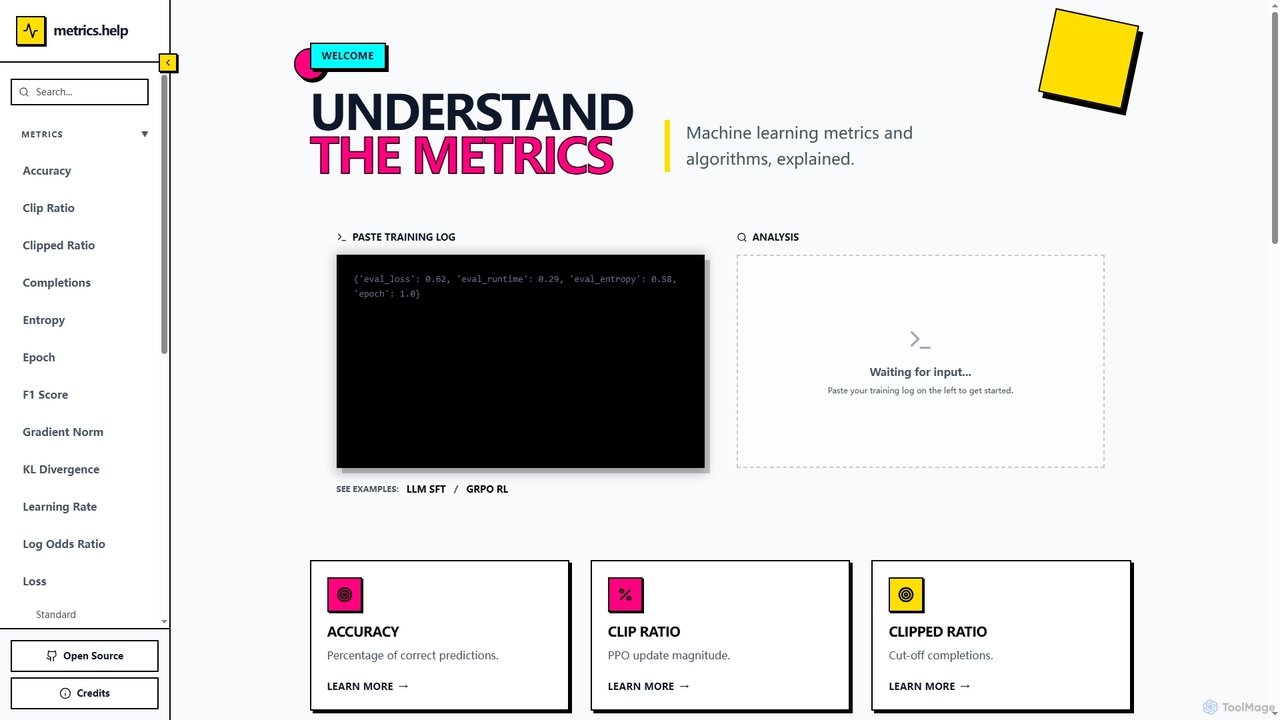
Metrics Help
Metrics Help is an open-source web tool for machine learning practitioners. It functions as a comprehensive guide and an interactive analyzer for ML training metrics. Users can paste training logs to get instant explanations for key metrics like accuracy, loss, and perplexity, aiding in model performance analysis and debugging.
Model TrainingKaggle Categories
Kaggle Jobs
Kaggle Embed Widget
Copy this embed code to place the badge on your blog, article, or product site and send readers directly to this ToolMage detail page.

Related AI tools
Fast.ai
Fast.ai is a research institute dedicated to making deep learning accessible to everyone. It offers free courses, an open-source software library (fastai), cutting-edge research, and a vibrant community, empowering coders of all backgrounds to become deep learning practitioners.
Machine LearningDataCamp
DataCamp is an interactive online learning platform for data science and AI. It offers hands-on courses in Python, R, SQL, Power BI, and more. Through a 'learn-by-doing' approach with in-browser coding, real-world projects, and career tracks, it empowers individuals and businesses to build job-ready data skills, from beginner to expert level.
Data Science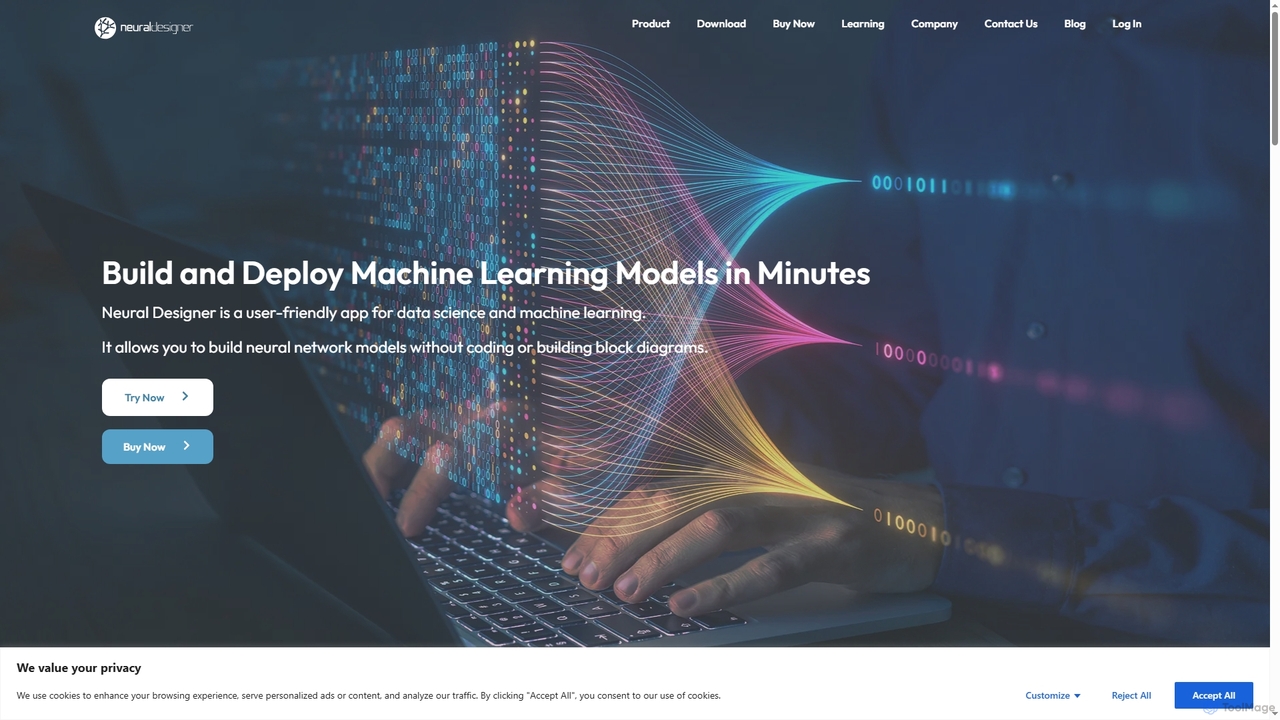
Neural Designer
Neural Designer is a user-friendly, no-code machine learning platform specializing in neural networks. It enables users to build, train, and deploy advanced AI models for approximation, classification, and forecasting without writing any code or complex block diagrams. Designed for data scientists and organizations, it offers high performance, energy efficiency, and superior accuracy across various industries.
Predictive Analytics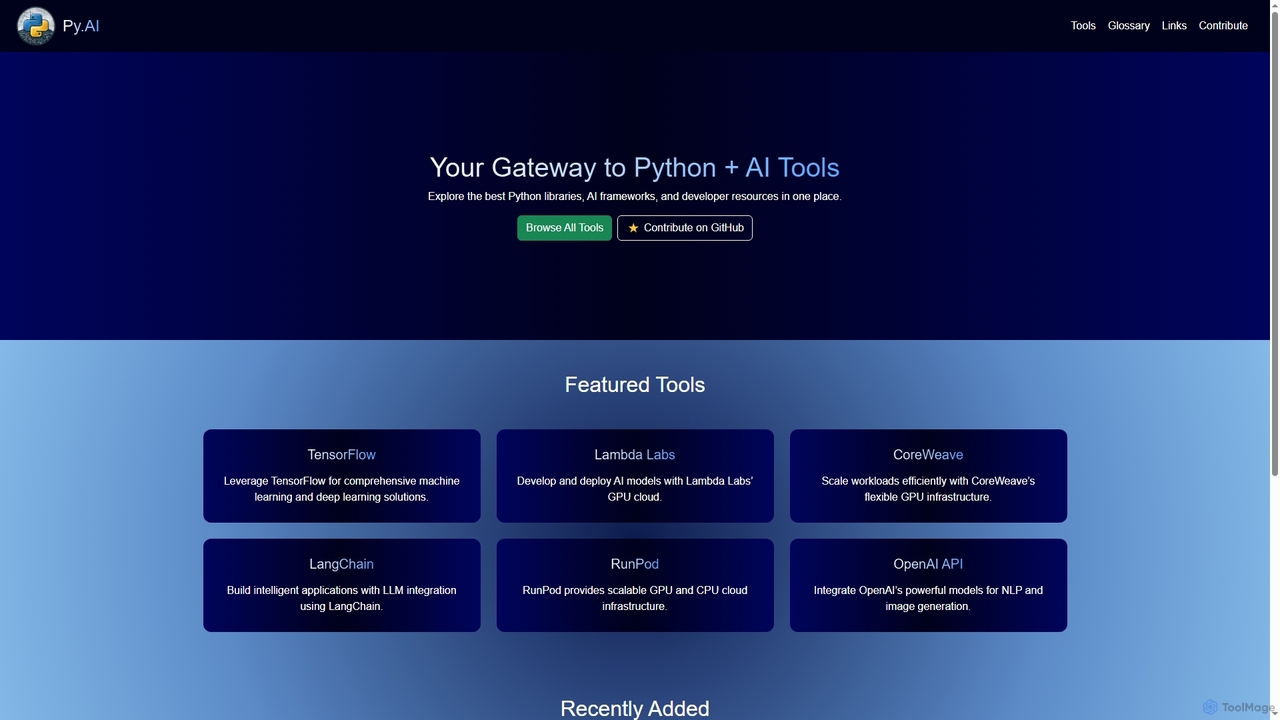
Py
Py is a curated online directory serving as a comprehensive gateway to the best Python libraries, AI frameworks, and developer resources. It helps users explore, discover, and find tools to enhance their machine learning and AI projects.
Tool DiscoveryMetrics Help
Metrics Help is an open-source web tool for machine learning practitioners. It functions as a comprehensive guide and an interactive analyzer for ML training metrics. Users can paste training logs to get instant explanations for key metrics like accuracy, loss, and perplexity, aiding in model performance analysis and debugging.
Model Training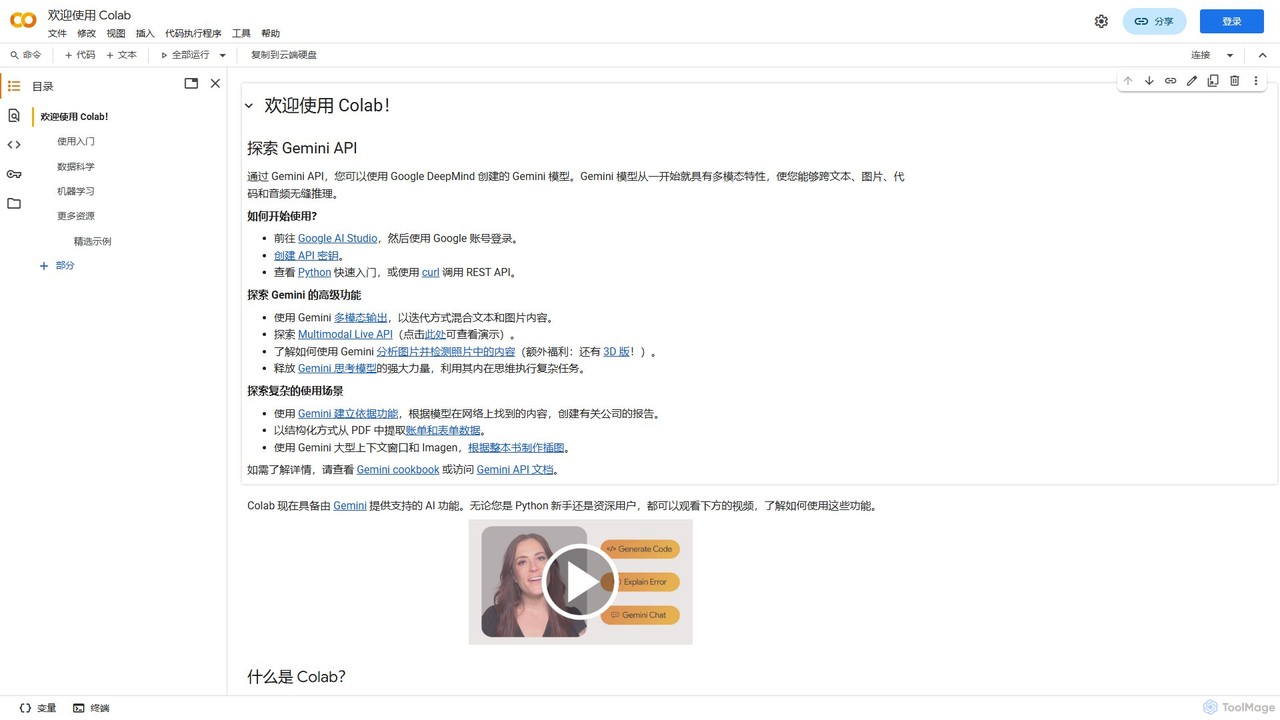
Colab
Colab (Google Colaboratory) is a free, browser-based interactive environment that allows you to write and execute Python code. It requires no setup and provides free access to powerful computing resources like GPUs and TPUs. Ideal for students, data scientists, and AI researchers, Colab facilitates machine learning, data analysis, and education, with seamless collaboration and Google Drive integration.
Data Science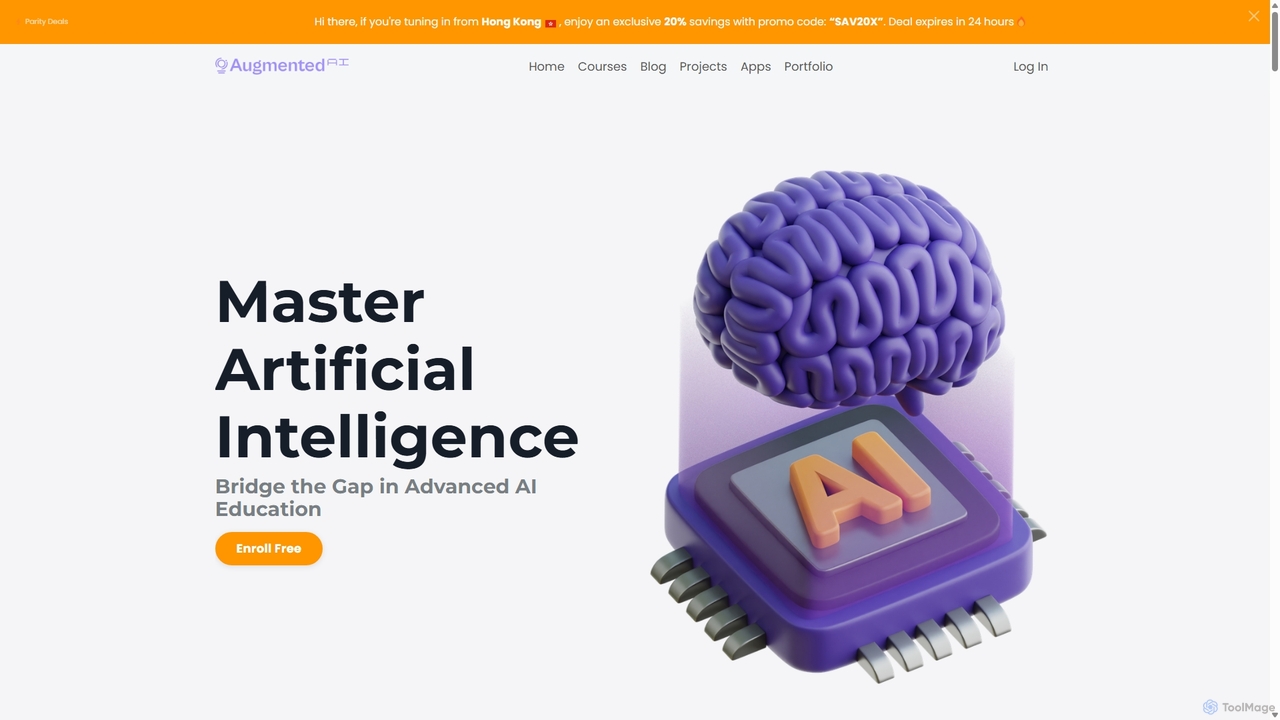
Augmented Startups
Augmented Startups is an online AI university offering practical, project-based courses for all skill levels. It specializes in advanced topics like Computer Vision, Large Language Models (LLMs), Robotics, and Autonomous Vehicles. The platform provides comprehensive learning paths with code, datasets, and expert support to help students and professionals build real-world AI applications and bridge the gap between theory and practical implementation.
Code Libraries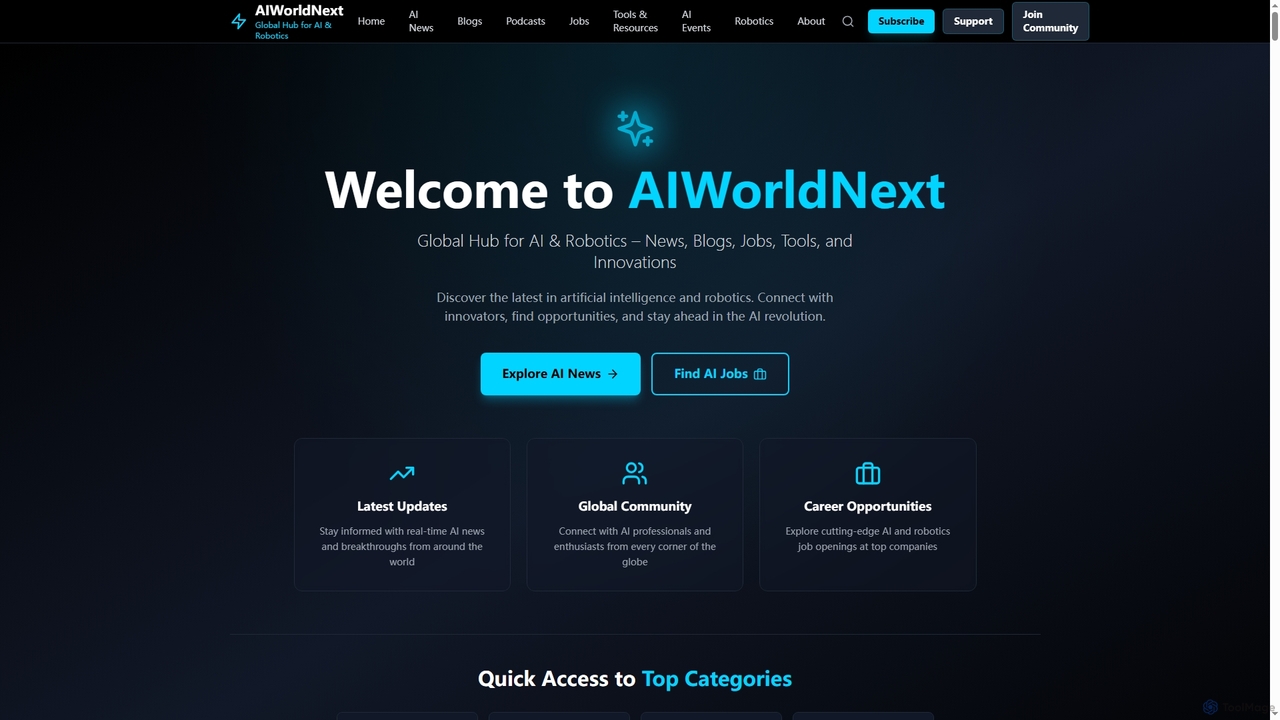
AIWorldNext
AIWorldNext is a premier global hub for artificial intelligence and robotics, offering a comprehensive platform for news, expert blogs, job opportunities, AI tool directories, and community engagement. It serves as a vital resource for professionals, researchers, and enthusiasts to stay informed and connected in the rapidly evolving AI landscape.
Job Board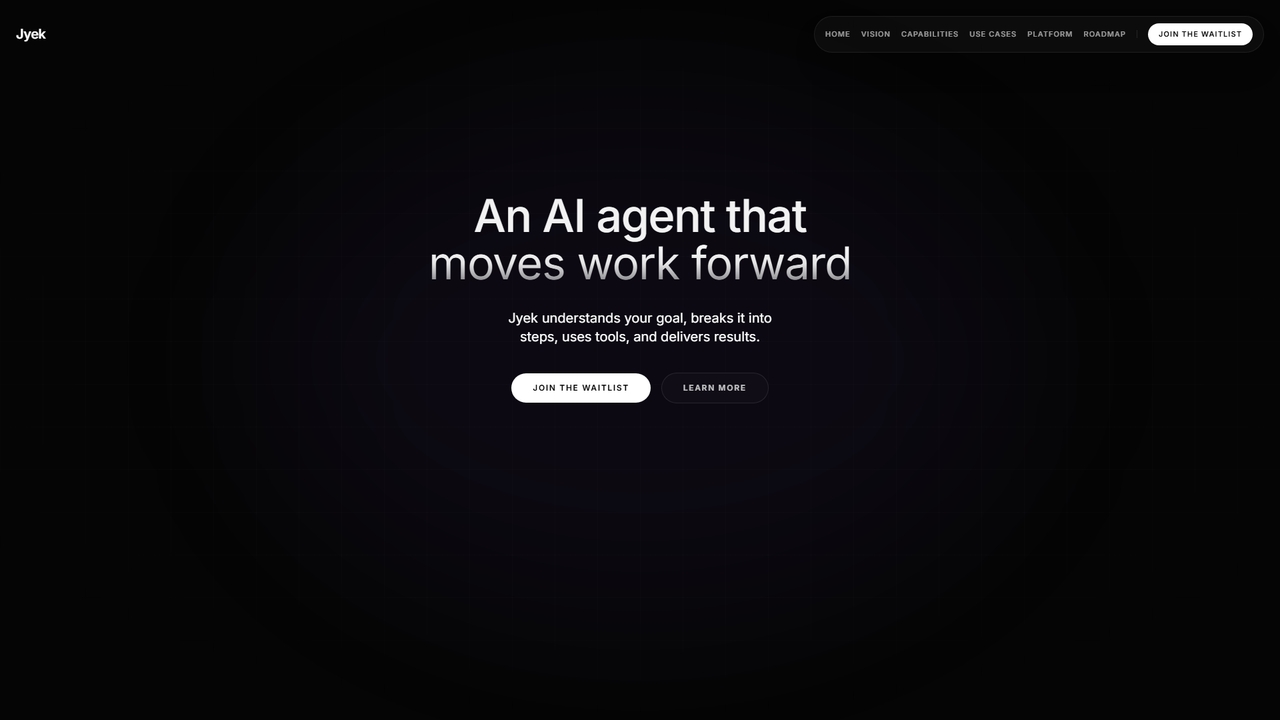
Jyek
Jyek is an AI agent platform that understands objectives, creates execution plans, uses tools, and delivers verifiable results for complex, multi-step tasks.
Automation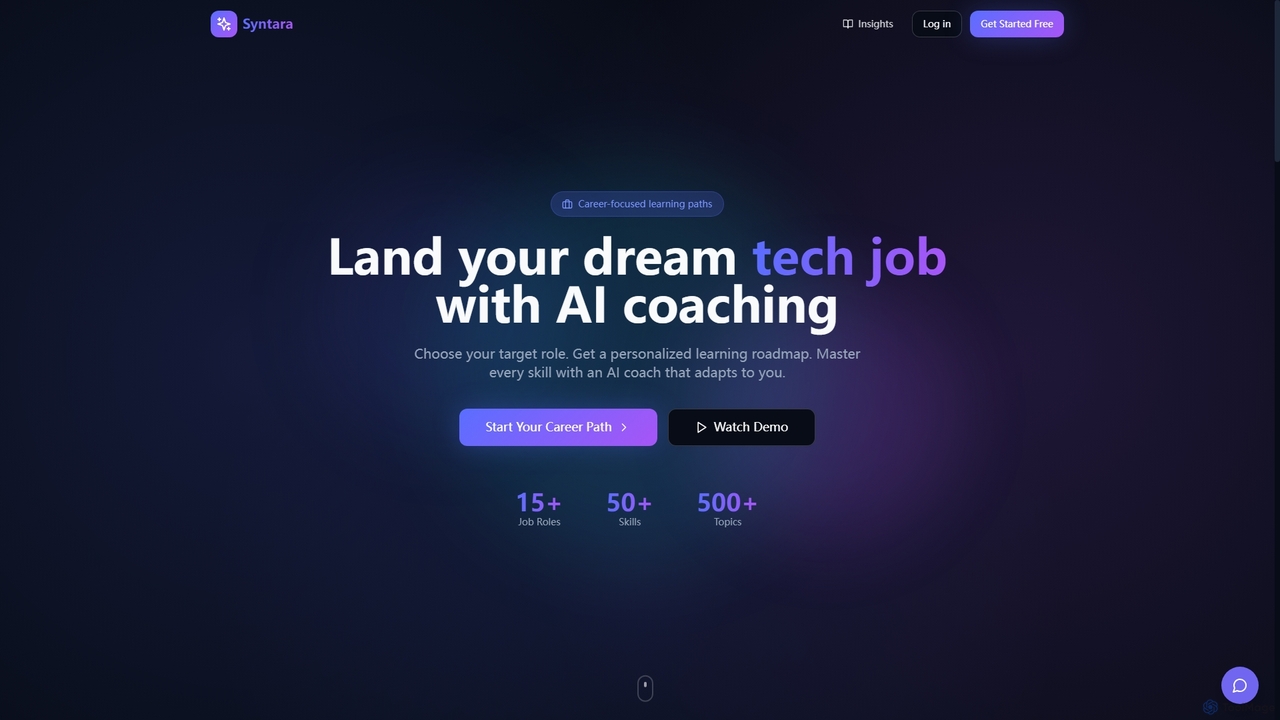
Syntara
Syntara is an AI-powered learning platform designed to accelerate tech careers. It offers personalized learning roadmaps, adaptive AI coaching, and structured skill paths to help individuals master in-demand tech skills like AI/ML, prompt engineering, and data science, and ultimately land their dream jobs.
Machine Learning Education
The AI Times Newsletter
The AI Times is a curated newsletter delivering the latest news, trends, and tool discoveries in the world of artificial intelligence. It's designed for professionals, enthusiasts, and anyone looking to stay ahead in the fast-paced AI landscape, offering concise summaries and expert insights directly to your inbox.
NewsletterGrably
Grably is a decentralized data ownership network (DeDON) providing high-quality, ethically sourced AI training data. It offers a vast collection of off-the-shelf datasets, custom data collection, curation, and annotation services to accelerate AI development while allowing users to monetize their data securely and transparently.
Data Labeling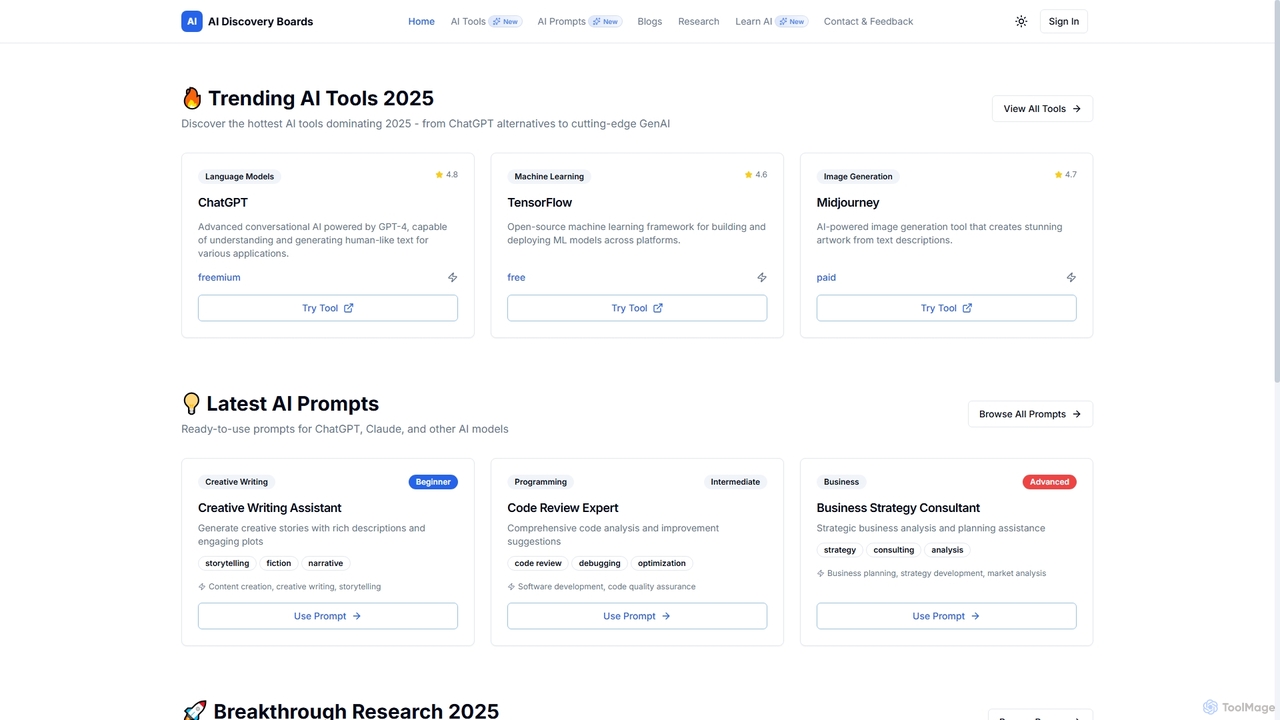
AIDiscoveryBoards
AIDiscoveryBoards is a comprehensive online platform designed to help users discover trending AI tools, explore the latest AI prompts, delve into groundbreaking AI research papers, and access curated AI learning resources. It serves as a central hub for staying updated on the rapidly evolving artificial intelligence landscape.
Tool Directory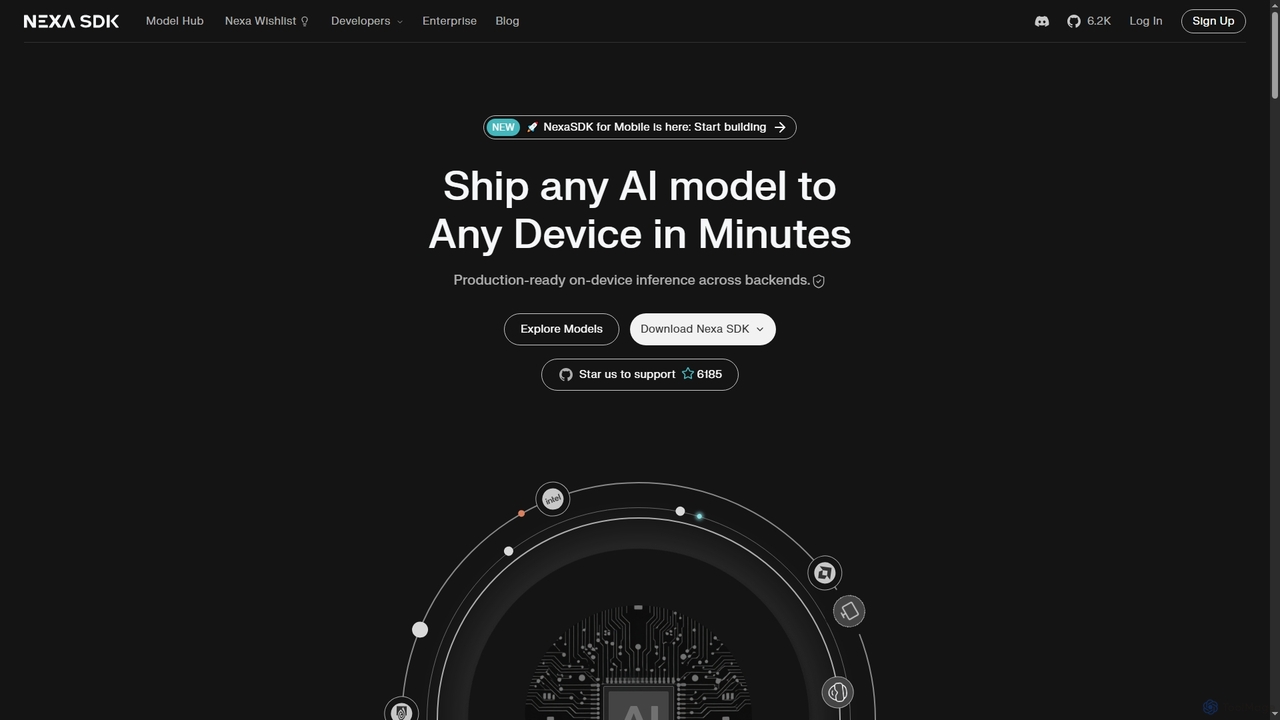
Nexa SDK
Nexa SDK is a powerful toolkit enabling developers to deploy any AI model, including frontier and state-of-the-art models, to any device (mobile, PC, IoT, automotive) in minutes. It offers production-ready on-device inference with hardware acceleration across NPUs, GPUs, and CPUs, optimized for speed and energy efficiency.
Ai Development Kit
Prodigy
Prodigy is a scriptable annotation tool for AI, Machine Learning, and NLP, designed for developers. It enables rapid creation of high-quality training and evaluation data through model-assisted, human-in-the-loop workflows. It runs on your own infrastructure, ensuring complete data privacy and control.
Annotation
Kaggle Comments (0)
Sign in to comment.
Sign inNo comments yet.