ToolMage
Sign in

Best 9 Annotation AI tools for Data

Popular Annotation AI tools in Data include Appen, Playment, OpenTrain AI, Encord, Prodigy, BasicAI, Athina, SmartOne.ai, and balise, helping you work more efficiently.

Prodigy
Paid

Prodigy

Prodigy is a scriptable annotation tool for AI, Machine Learning, and NLP, designed for developers. It enables rapid creation of high-quality training and evaluation data through model-assisted, human-in-the-loop workflows. It runs on your own infrastructure, ensuring complete data privacy and control.

Annotation
Visits 50.9KFavorites 146Likes 137
SmartOne.ai
Paid

SmartOne.ai

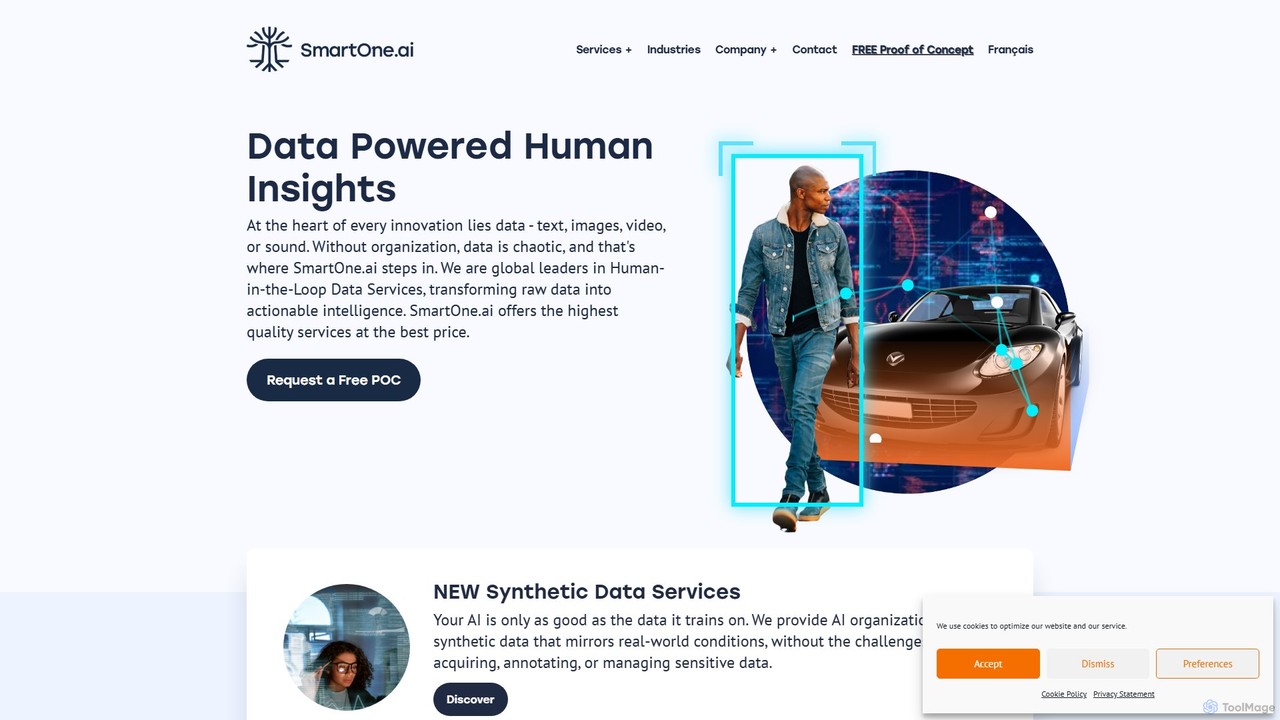
SmartOne.ai provides high-quality, scalable data annotation and labeling services for AI and machine learning models. Specializing in image, video, audio, and text data, they offer a fully managed, expert workforce to handle complex annotation tasks. With a focus on social impact, SmartOne.ai delivers accurate training data while creating professional opportunities in developing communities.

Annotation
Visits 13KFavorites 170Likes 163
BasicAI
Paid

BasicAI

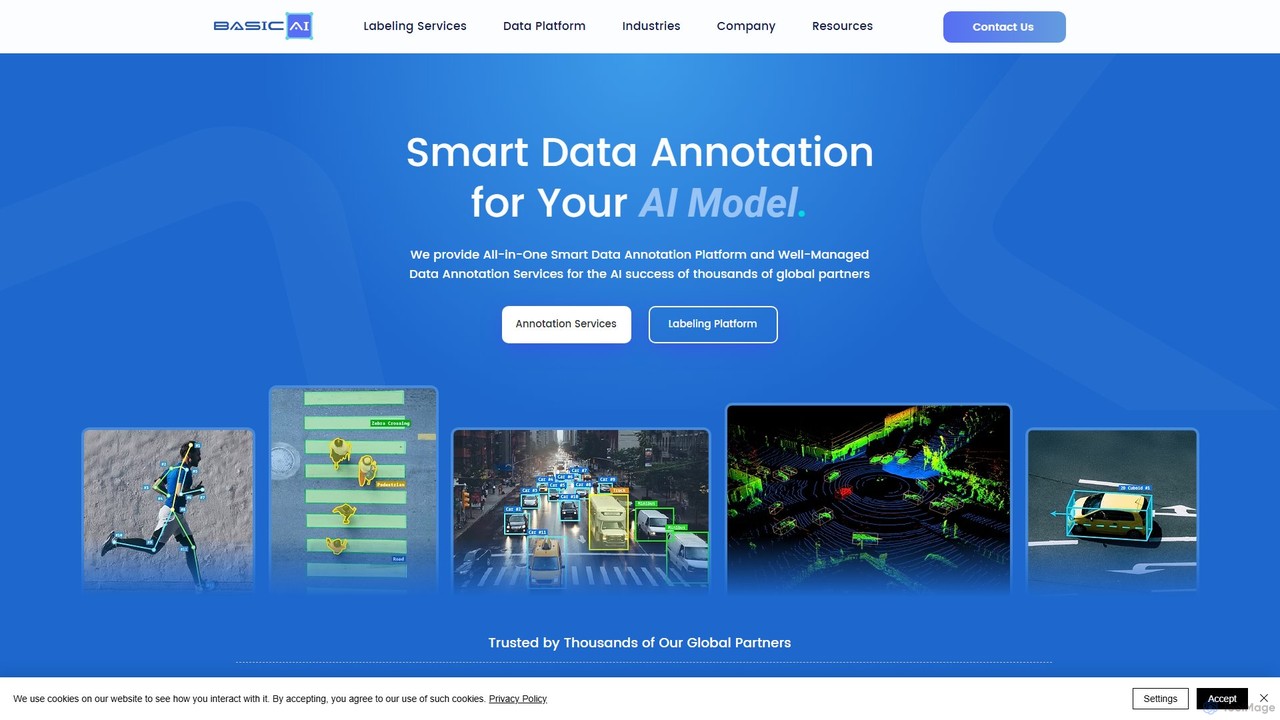
BasicAI offers a comprehensive data annotation platform and managed services to create high-quality training data for AI models. It specializes in 3D LiDAR, image, video, and NLP data, providing AI-assisted tools, scalable workflows, and enterprise-grade security to accelerate AI development.

Data Labeling
Visits 28.5KFavorites 139Likes 132
Athina
Freemium

Athina

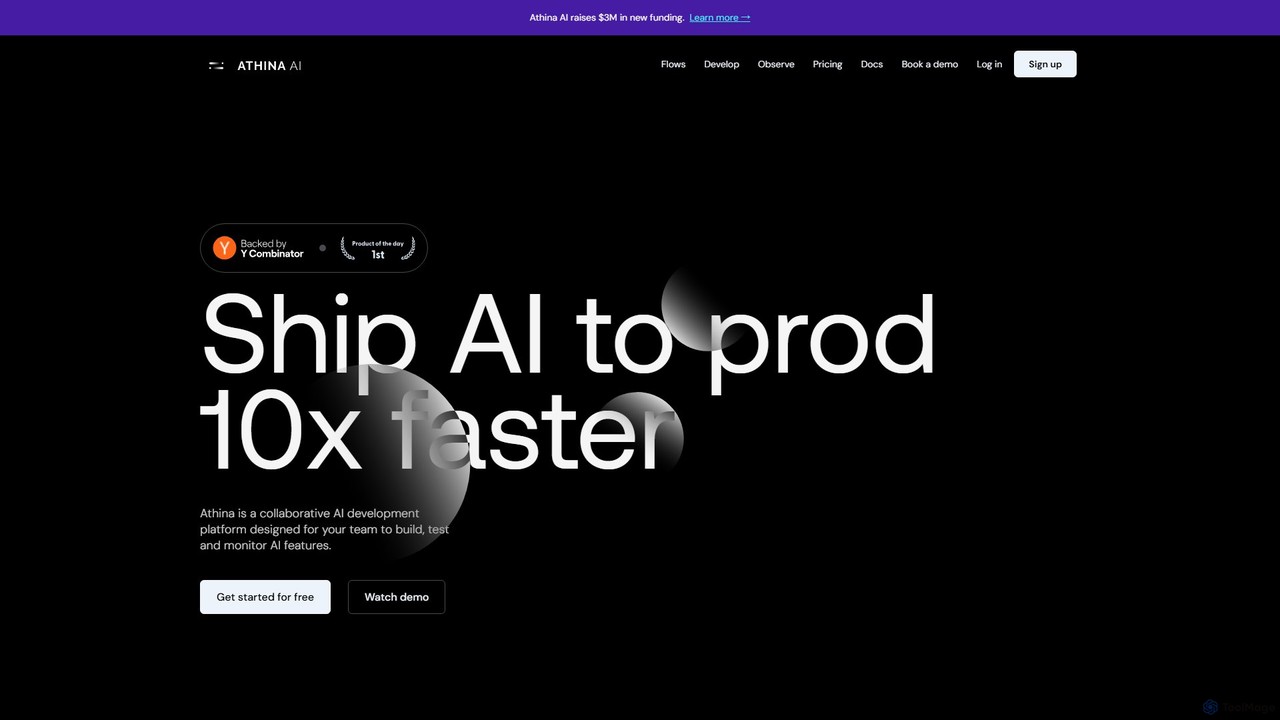
Athina is a collaborative AI development platform designed to help teams build, test, and monitor LLM applications 10x faster. It provides a comprehensive suite of tools for prompt engineering, evaluation, experimentation, annotation, and production monitoring. Athina supports both technical and non-technical users, ensuring seamless collaboration and the deployment of high-quality, reliable AI systems.

Annotation
Visits 13.1KFavorites 115Likes 104
balise
Freemium

balise

Balise is an AI-powered data annotation platform designed to streamline the creation of high-quality training data for machine learning models. It offers a collaborative environment with intelligent tools for labeling images, text, video, and audio, accelerating the development cycle for computer vision and NLP projects.

Annotation
Visits 6.3KFavorites 159Likes 135
OpenTrain AI
Freemium

OpenTrain AI

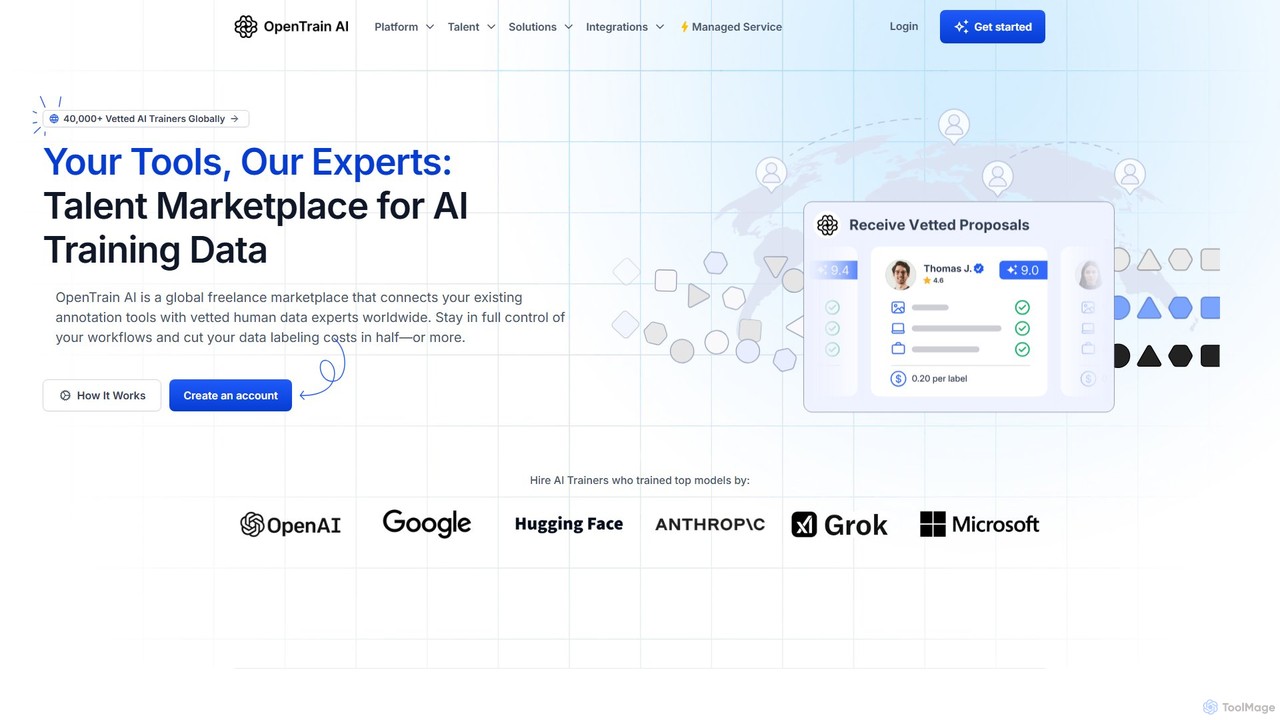
OpenTrain AI is a global talent marketplace connecting businesses with over 40,000 vetted human data experts for AI training and data annotation. It allows you to use your existing annotation tools while hiring specialized freelancers or managed teams from 110+ countries. This flexible approach helps you maintain full control over your workflows, improve data quality, and significantly reduce labeling costs.

Annotation
Visits 580.4KFavorites 137Likes 153
Playment
Paid

Playment

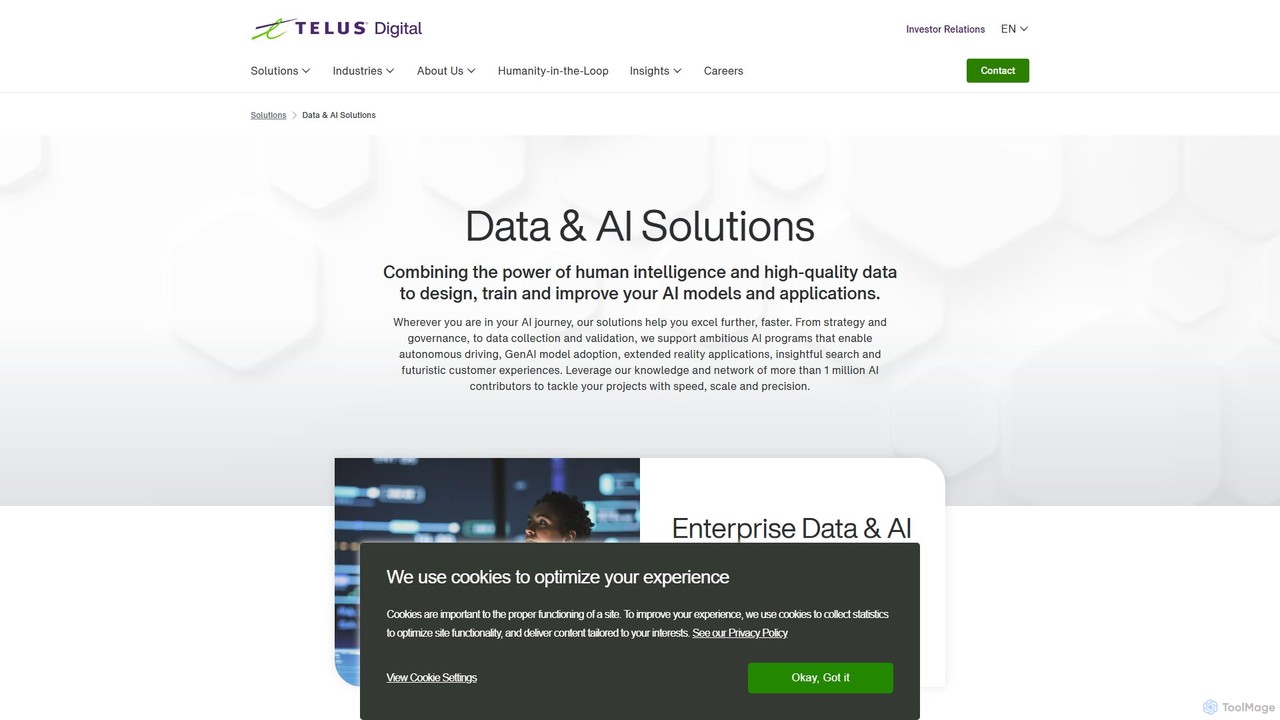
Playment is an enterprise-grade data solutions platform, now part of TELUS International. It specializes in providing high-quality, human-annotated data for training and validating AI and machine learning models. Leveraging a global community of over one million contributors, Playment offers services like data collection, annotation, and validation for computer vision, NLP, and generative AI, ensuring speed, scale, and precision for ambitious AI projects.

Model Training
Visits 937.1KFavorites 162Likes 147
Encord
Freemium

Encord

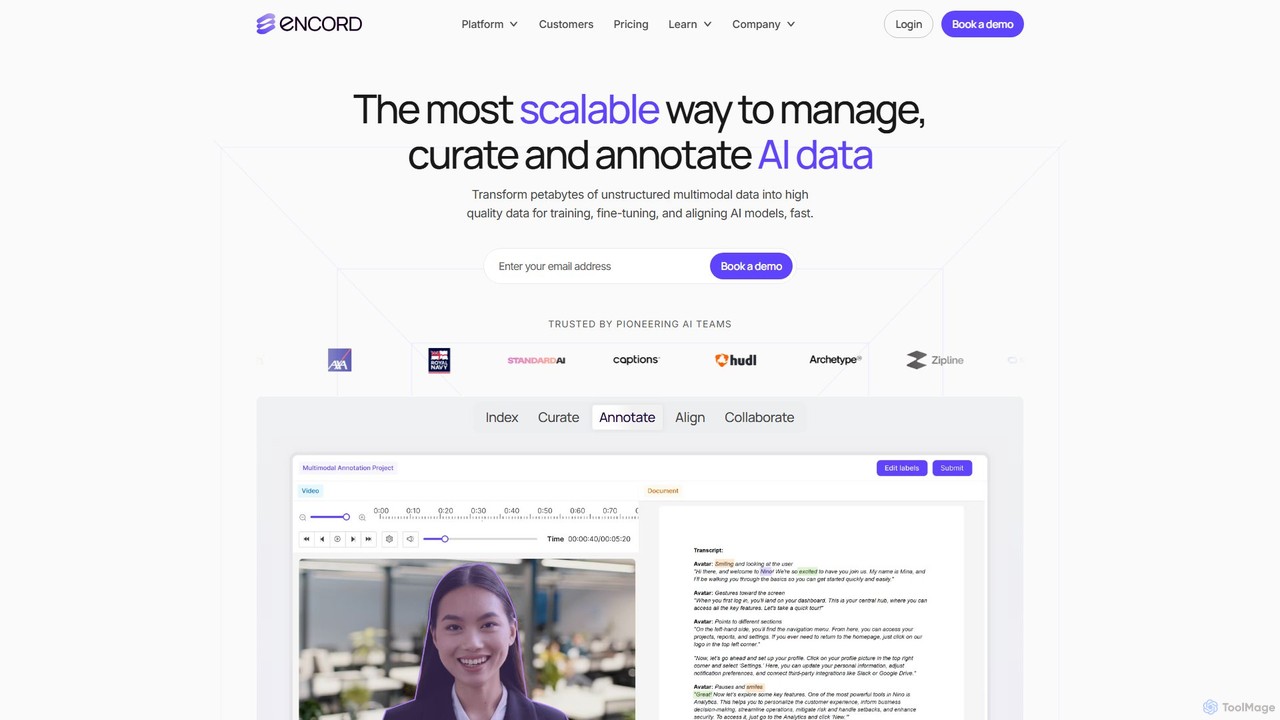
Encord is a comprehensive data development platform for visual and multimodal AI. It provides tools for managing, curating, and annotating large-scale, unstructured data like images, videos, and DICOM files. The platform helps AI teams build high-quality datasets, improve model performance, and accelerate the deployment of production-ready AI applications through advanced labeling, model evaluation, and human-in-the-loop workflows.

Annotation
Visits 273.5KFavorites 150Likes 131
Appen
Paid

Appen

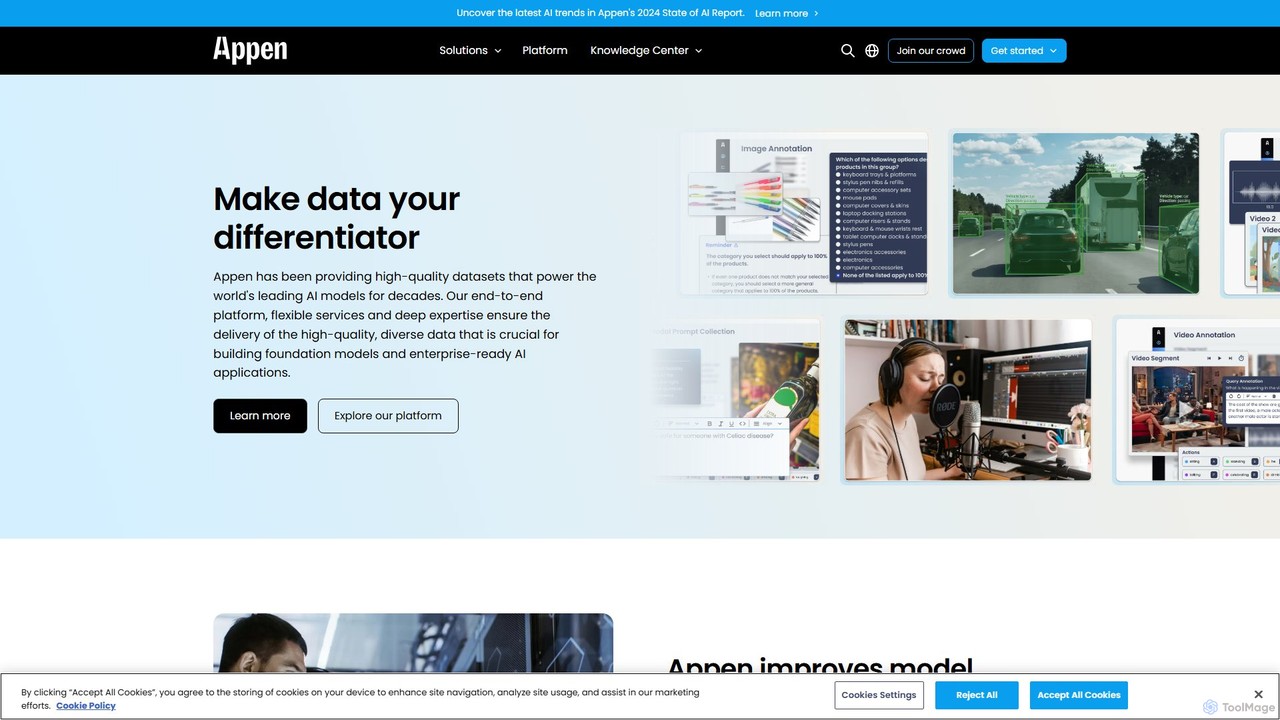
Appen is a global leader in providing high-quality, human-annotated data for AI and machine learning models. It offers data collection and annotation services at scale, leveraging a global crowd to power AI applications in computer vision, NLP, and more for the world's leading brands.

Enterprise Solutions
Visits 1.2MFavorites 143Likes 138

About Annotation

Annotation tools are specialized platforms for labeling data, such as images, text, and audio, to create high-quality training datasets for machine learning models. These tools provide a structured interface and specialized functionalities to accurately tag, classify, or segment raw data, transforming it into a format that AI algorithms can understand. They are a fundamental part of the Data pipeline for supervised learning, directly impacting the performance and accuracy of AI systems. Many modern annotation platforms incorporate AI-assisted features to accelerate the otherwise time-consuming manual labeling process.

Core Features

  • Multi-modal Labeling: Support for various annotation types like bounding boxes, polygons, semantic segmentation, keypoints, and named entity recognition (NER).
  • Workflow Management: Tools for assigning tasks, tracking progress, and implementing multi-stage review and quality assurance (QA) cycles.
  • AI-Assisted Annotation: Features like pre-labeling with existing models, interactive segmentation, and object tracking to automate parts of the labeling process.
  • Data Format Compatibility: Ability to import raw data and export labeled datasets in standard formats like COCO, YOLO, Pascal VOC, or JSON.
  • Collaboration & Quality Control: Functionality for multiple annotators to work on projects with clear guidelines, consensus mechanisms, and performance analytics.

Use Cases

Annotation tools are critical in industries developing AI solutions. In autonomous driving, they are used to label pedestrians and vehicles. In healthcare, they help segment medical images for diagnostics. For natural language processing (NLP), they are used to tag text for sentiment analysis and chatbot training. E-commerce platforms use them to categorize products from images and descriptions.

How to Choose

When selecting an annotation tool, first consider the data types and annotation complexity it supports. Evaluate its collaboration and project management features for team-based workflows. Assess the effectiveness of its AI-assisted labeling capabilities to gauge potential time savings. Finally, check its integration options and ensure it can export data in formats compatible with your model training pipeline and security requirements.

Annotation use cases

1

Training Computer Vision for Autonomous Vehicles

Data annotation teams at automotive and tech companies use these tools to process vast amounts of video and LiDAR data from test vehicles. Annotators meticulously draw bounding boxes around cars, pedestrians, and cyclists, apply semantic segmentation to roadways and lane markings, and track objects across multiple frames. This highly accurate, labeled data is essential for training the perception models that allow self-driving cars to understand their environment and make safe driving decisions. The quality of annotation directly correlates to the safety and reliability of the autonomous system.

2

Developing AI for Medical Image Analysis

Radiologists and medical researchers use specialized annotation tools to analyze medical scans like X-rays, CTs, and MRIs. They carefully outline tumors, lesions, or other abnormalities using polygon or segmentation tools. These annotations create datasets for training AI models that can assist in early disease detection, diagnosis, and treatment planning. The tools often need to support specific medical imaging formats like DICOM and provide high-precision instruments to ensure the accuracy required for clinical applications. Collaboration features allow for peer review and validation by multiple experts.

3

Building Datasets for Conversational AI Chatbots

Natural Language Processing (NLP) specialists and linguists use text annotation tools to prepare data for training chatbots and virtual assistants. They perform tasks like Named Entity Recognition (NER) to identify names, locations, and dates, and intent classification to understand the user's goal (e.g., 'book a flight', 'check balance'). By labeling thousands of user queries, they create a structured dataset that teaches the AI to understand diverse phrasing and respond accurately. This process is crucial for building conversational agents that feel natural and are genuinely helpful to users.

4

Enhancing E-commerce Product Search with AI

E-commerce data scientists use annotation tools to improve product discovery and recommendation engines. They label product images with attributes like 'color: red', 'style: casual', or 'material: cotton'. They also classify product titles and descriptions into a structured taxonomy. This enriched data allows AI models to understand product features more deeply, leading to more relevant search results and personalized recommendations. For example, a user searching for a 'red summer dress' is more likely to find exactly what they want, improving user experience and conversion rates.

5

Automating Quality Control in Manufacturing

In industrial settings, AI engineers use annotation tools to build visual inspection systems. They label images of products on an assembly line, marking defects such as scratches, cracks, or misalignments. An AI model trained on this data can then automatically identify faulty items in real-time, far exceeding the speed and consistency of human inspectors. This application of computer vision helps manufacturers improve product quality, reduce waste, and increase overall production efficiency. The annotation process is critical for teaching the AI to distinguish between acceptable variations and actual defects.

6

Creating Datasets for Content Moderation AI

Trust and safety teams at social media companies and online platforms use annotation tools to build AI-powered content moderation systems. Annotators review user-generated content (text, images, videos) and label it according to specific policies, such as 'hate speech', 'spam', or 'graphic content'. This labeled data is used to train machine learning models that can automatically flag or remove harmful content at scale. This process is vital for maintaining a safe online environment and requires tools that can handle large volumes of diverse content types while ensuring annotator well-being.

Annotation FAQ

What are AI Annotation tools?

AI Annotation tools are software platforms designed to label raw data like images, text, or audio, making it understandable for machine learning models. They provide a user interface and specialized features to add metadata, such as drawing boxes around objects in an image or tagging parts of speech in a sentence. This labeled data, known as training data, is essential for supervised machine learning, as it teaches the AI algorithm what patterns to look for. Essentially, these tools bridge the gap between unstructured human-world data and the structured format required by AI.

How do I choose the right Annotation tool?

Choosing the right annotation tool depends on several factors. Consider the following points:

  • Data Type and Annotation Complexity: Ensure the tool supports your specific data format (e.g., images, video, text, DICOM) and the required annotation types (e.g., bounding boxes, polygons, NER).
  • Scalability and Collaboration: If you have a team, look for robust project management, user roles, and quality assurance (QA) workflows to manage large-scale projects efficiently.
  • AI-Assisted Features: Evaluate if the tool offers automation like pre-labeling or interactive segmentation, which can significantly reduce manual effort and time.
  • Integration and Export Options: Check if it can integrate with your existing data storage and MLOps pipeline, and if it exports labels in the format required by your machine learning framework (e.g., COCO, YOLO).
  • Security and Compliance: For sensitive data, ensure the tool meets necessary security standards and compliance regulations like GDPR or HIPAA.
What's the difference between an Annotation tool and a general Data Management platform?

While both are part of the broader data pipeline, they serve different primary functions. A general Data Management platform focuses on storing, versioning, discovering, and governing large datasets. Its main goal is to provide a centralized and organized repository for all data assets. In contrast, an Annotation tool is a specialized application focused specifically on the task of creating training data. It provides the interactive interfaces and workflows needed to apply labels to data. While some advanced annotation tools include data management features, their core strength lies in the efficiency and quality of the labeling process itself.

What are the common types of data annotation?

Data annotation varies depending on the data type and the goal of the AI model. Some common types include:

  • Image/Video Annotation: Includes bounding boxes (drawing rectangles around objects), polygons (outlining irregular shapes), semantic segmentation (pixel-level classification), and keypoint annotation (marking specific points like facial features).
  • Text Annotation: Involves tasks like Named Entity Recognition (NER) to tag entities (people, places), sentiment analysis to label text as positive/negative, and text classification to assign categories.
  • Audio Annotation: This can include audio transcription (converting speech to text), speaker diarization (identifying who is speaking), and sound event detection (labeling specific sounds like 'glass breaking').
Who are the primary users of Annotation tools?

The primary users of annotation tools are individuals and teams involved in building machine learning models. This includes data scientists who design the models and labeling strategies, machine learning engineers who build and deploy the AI systems, and dedicated data annotators or labelers who perform the manual task of labeling the data. Additionally, subject matter experts (e.g., doctors for medical imaging, linguists for text) are often involved to ensure the accuracy and quality of the labels, as their domain knowledge is crucial for creating a reliable training dataset.