DataGalaxy
DataGalaxy is a comprehensive Value Governance Platform designed to bridge the gap between data assets and business outcomes. …
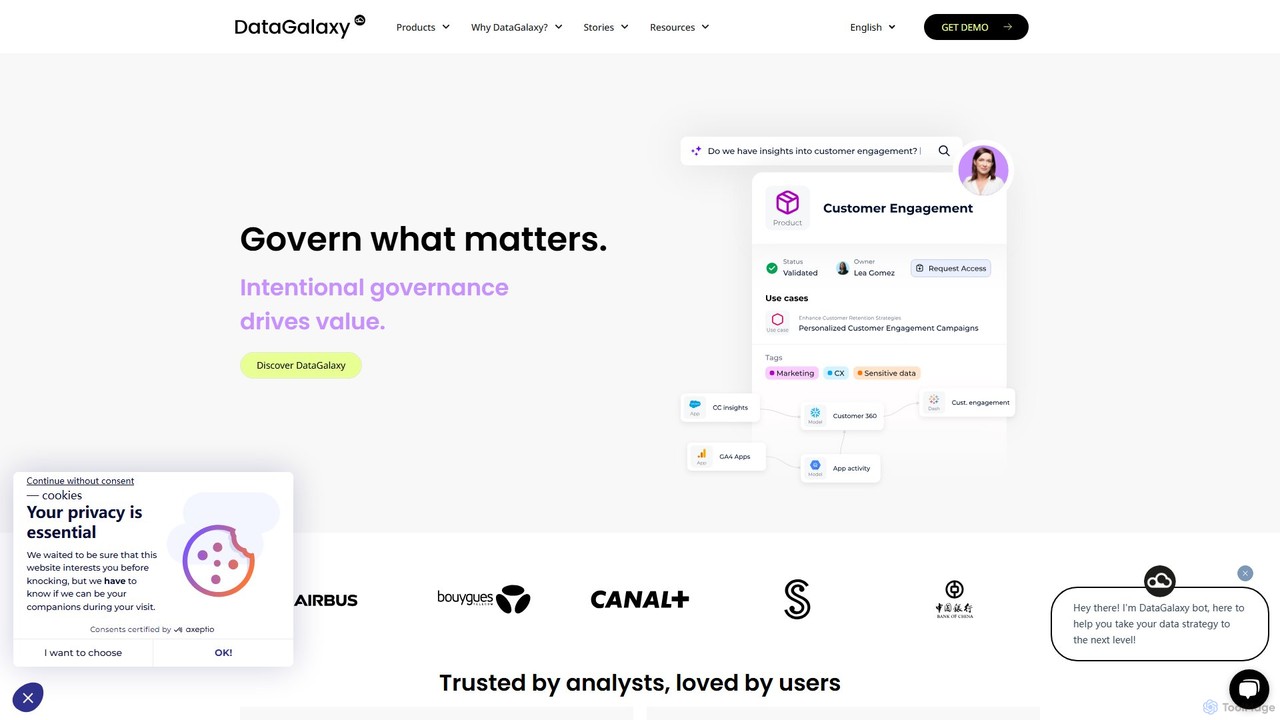
DataGalaxy is a comprehensive Value Governance Platform designed to bridge the gap between data assets and business outcomes. It empowers all data users, from executives to analysts, with an automated data catalog, AI-driven governance, and a data product marketplace. By centralizing data strategy, tracking value, and ensuring quality, DataGalaxy helps organizations transform their data into governed, reusable, and scalable products, driving informed decisions and maximizing data ROI.
About Cataloging
AI Cataloging tools are intelligent platforms that automate the process of discovering, organizing, and understanding an organization's data assets. They leverage machine learning and natural language processing to automatically scan data sources, apply metadata tags, and map data lineage. This creates a searchable, centralized inventory that enhances data governance, accelerates analytics, and promotes data literacy across the enterprise. These tools transform raw data into well-documented, trusted assets for informed decision-making.
Core Features
- Automated Data Discovery: Scans and profiles data sources like databases, data lakes, and cloud storage to identify all assets automatically.
- Intelligent Classification: Uses AI to tag data with business terms, sensitivity labels (e.g., PII), and quality scores without manual input.
- Data Lineage Visualization: Traces and visualizes the complete flow of data from its origin to its destination, including all transformations.
- Semantic Search: Enables users to find data using natural language or business concepts, not just technical table or column names.
- Collaboration Hub: Provides a platform for data stewards and users to comment on, rate, and certify data assets to build collective knowledge.
Use Cases
These tools are crucial for organizations in data-intensive industries like finance, healthcare, and e-commerce. Data governance teams use them to enforce policies and ensure compliance (e.g., GDPR, CCPA). Data analysts and scientists rely on them for self-service data discovery, significantly reducing the time spent searching for trustworthy data for their projects.
How to Choose
When selecting an AI Cataloging tool, consider its range of connectors to your existing data sources. Evaluate the sophistication of its AI/ML capabilities for classification and recommendations. Assess its collaboration features, integration with other data stack tools like BI platforms, and the overall total cost of ownership, including implementation and maintenance.

CatalogingUse Cases
Automating GDPR & CCPA Compliance
A financial services company uses an AI Cataloging tool to continuously scan its data warehouses and cloud storage. The AI automatically identifies and tags Personally Identifiable Information (PII) like names and addresses. This creates a real-time map of sensitive data, allowing compliance officers to easily generate audit reports, manage access policies, and respond to data subject requests, ensuring adherence to regulations with minimal manual effort.
Enabling Self-Service Analytics for Business Teams
A marketing department needs reliable customer data for a new campaign analysis. Instead of filing a ticket with IT, analysts use the AI Catalog's semantic search to look for 'active customers in the last 90 days.' The tool returns certified datasets with business definitions and quality scores. This empowers the team to find and trust data independently, accelerating the time from question to insight from weeks to hours.
Organizing and Governing a Corporate Data Lake
A large enterprise struggles with a massive, disorganized data lake. A data engineering team deploys an AI Cataloging tool to automatically crawl the lake, profile files (like Parquet, JSON), and infer schemas. The AI suggests business context and tags, transforming the 'data swamp' into a well-organized, searchable repository. This makes the data accessible and useful for data scientists building machine learning models.
Accelerating Cloud Data Migration
An IT team is planning to migrate on-premise databases to a cloud platform. They use an AI Cataloging tool to first discover all data assets and map their dependencies. The tool's automated lineage feature reveals how data flows between applications, identifying critical systems. This insight helps them prioritize migration waves, avoid breaking business processes, and accurately estimate the project's scope and complexity.
Creating a Single Source of Truth for Metrics
A global retail company has conflicting definitions for key metrics like 'net sales' across departments. A data governance team uses the AI Catalog to establish a centralized business glossary. The tool links these official business terms to the specific tables and columns in the data warehouse. When analysts search for 'net sales,' they are directed to the certified, official data source, ensuring consistent and trustworthy reporting across the organization.
Enhancing Data Literacy Across the Organization
A healthcare provider wants to foster a data-driven culture but finds many employees are intimidated by technical jargon. The AI Cataloging tool provides a user-friendly interface where any employee can search for data in plain language. Each data asset is enriched with descriptions, owner information, and user ratings. This 'Google for data' experience lowers the barrier to entry, encouraging more employees to explore and utilize company data in their daily work.