

balise Overview
Balise is a comprehensive, AI-driven data annotation platform built to accelerate the development of machine learning and deep learning models. Understanding that high-quality training data is the cornerstone of any successful AI system, Balise provides a suite of powerful tools within a collaborative, cloud-based environment. It is designed for data science teams, researchers, and enterprises who need to produce accurate labeled datasets at scale.
The platform supports a wide array of data types, including images, videos, text, and audio, making it a versatile solution for diverse projects. Whether you are working on object detection for autonomous vehicles, named entity recognition for legal documents, or audio transcription, Balise offers specialized annotation tools to fit your needs. Its intuitive interface minimizes the learning curve for annotators, while its robust project management features give managers full control over workflows, quality, and team performance.
How to use balise
Using Balise follows a streamlined, multi-step process designed for efficiency and quality control:
- Project Setup: Begin by creating a new project. Define your data type (e.g., image, text) and configure the labeling schema. This includes creating classes, tags, and attributes that your annotators will use.
- Data Upload: Upload your raw data directly to the platform. Balise supports bulk uploads and integration with cloud storage services like AWS S3, Google Cloud Storage, and Azure Blob Storage.
- Team Collaboration: Invite your team members, assigning them roles such as annotator, reviewer, or project manager. This ensures a clear separation of duties and a structured workflow.
- Annotation with AI-Assist: Annotators use the powerful editor to label the data. Balise's key advantage is its AI-assisted labeling, which can pre-annotate data, suggest labels, or provide smart tools like interactive segmentation, significantly reducing manual effort.
- Quality Assurance (QA): Once labeled, data enters a review queue. Reviewers can approve, reject, or provide specific feedback on annotations. This iterative process ensures the highest level of accuracy.
- Export and Integrate: After the QA process is complete, export the finished dataset in various standard formats (e.g., COCO, YOLO, Pascal VOC, JSONL). The data is now ready to be used for training your machine learning model. Balise also offers an API for seamless integration into your MLOps pipeline.
Core Features of balise
- Multi-Modal Annotation: Supports images, videos, text, audio, and DICOM formats with specialized labeling tools for each.
- AI-Assisted Labeling: Utilizes models for pre-labeling, active learning, and interactive segmentation (smart polygons) to speed up annotation by up to 80%.
- Integrated Quality Assurance: Customizable QA workflows, consensus scoring, and detailed feedback loops to ensure data accuracy and consistency.
- Collaborative Environment: Real-time collaboration, role-based access control (RBAC), and performance analytics for efficient team management.
- Project Management Dashboard: A centralized dashboard to monitor project progress, annotator productivity, and overall data quality in real-time.
- API and SDK: A robust API and Python SDK for programmatic project management, data upload/download, and integration with existing data pipelines.
- Security and Compliance: Enterprise-grade security features, ensuring data privacy and compliance with standards like GDPR and HIPAA.
Use Cases for balise
Balise is versatile enough to support a wide range of industries and applications:
- Autonomous Vehicles: Annotating video and LiDAR data with bounding boxes, polygons, and semantic segmentation for training perception models.
- Healthcare: Labeling medical images (X-rays, MRIs) to detect and segment tumors, organs, or anomalies.
- Retail & E-commerce: Object detection for inventory management, product categorization from images, and sentiment analysis from customer reviews.
- Fintech & Legal: Named Entity Recognition (NER) to extract key information from financial reports, contracts, and legal documents.
- Agriculture: Analyzing drone imagery to monitor crop health, identify weeds, and estimate yield.
Advantages of balise
Balise stands out by focusing on three core pillars: speed, accuracy, and scalability. The AI-powered tools don't just make labeling faster; they also improve consistency. The integrated QA system is fundamental to producing reliable, model-ready data. For organizations, the platform's ability to scale from small teams to large, distributed workforces without sacrificing control or quality is a significant advantage. Its API-first approach ensures it can be a flexible component in a modern MLOps stack rather than a siloed tool.
Pricing and Plans
Balise offers a flexible pricing structure to cater to different needs, typically following a freemium model:
- Free Plan: Ideal for individuals, students, or small-scale experiments. Includes core annotation features with limitations on the number of users, projects, and data volume.
- Team Plan: A per-user, per-month subscription designed for small to medium-sized teams. It offers increased data limits, advanced collaboration features, and priority support.
- Enterprise Plan: Custom pricing for large organizations with specific needs. This plan includes unlimited usage, dedicated support, on-premise deployment options, advanced security features, and custom integrations.
For detailed and up-to-date pricing, it is recommended to visit the official Balise website or contact their sales team.
balise Alternatives
Appen
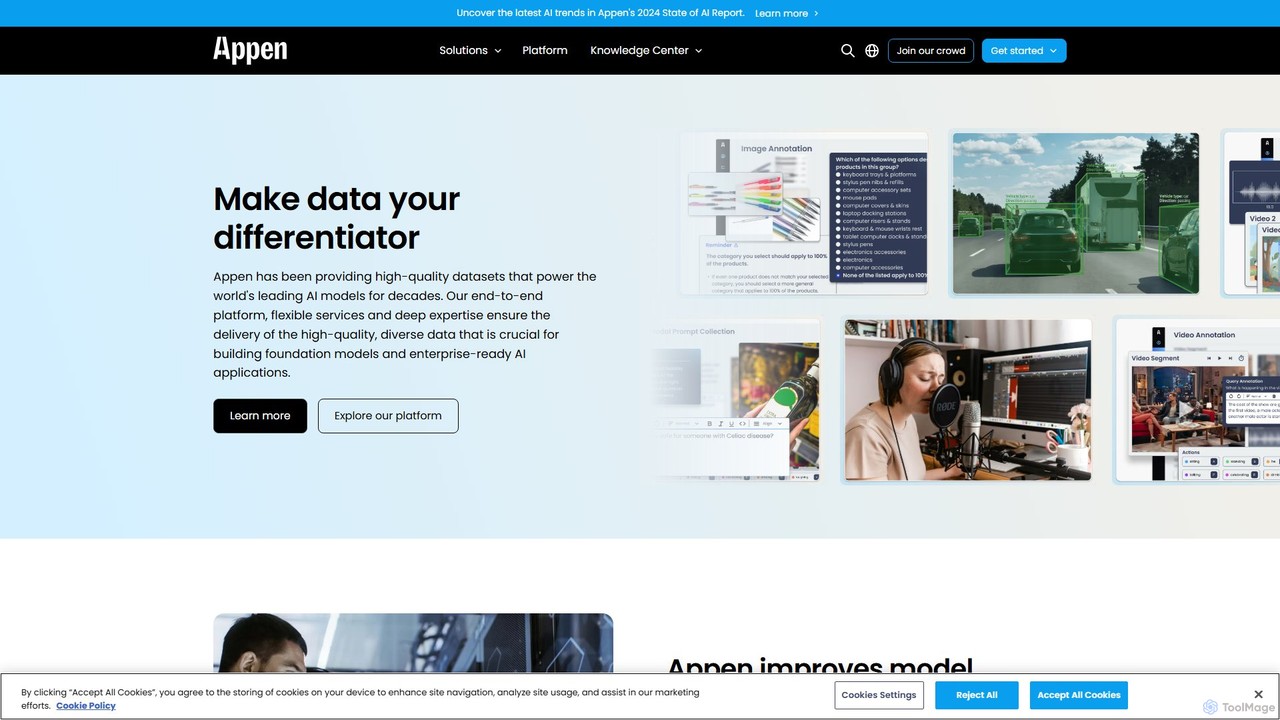
Appen is a global leader in providing high-quality, human-annotated data for AI and machine learning models. It offers data collection and annotation services at scale, leveraging a global crowd to power AI applications in computer vision, NLP, and more for the world's leading brands.
Enterprise Solutions
Prodigy
Prodigy is a scriptable annotation tool for AI, Machine Learning, and NLP, designed for developers. It enables rapid creation of high-quality training and evaluation data through model-assisted, human-in-the-loop workflows. It runs on your own infrastructure, ensuring complete data privacy and control.
Annotation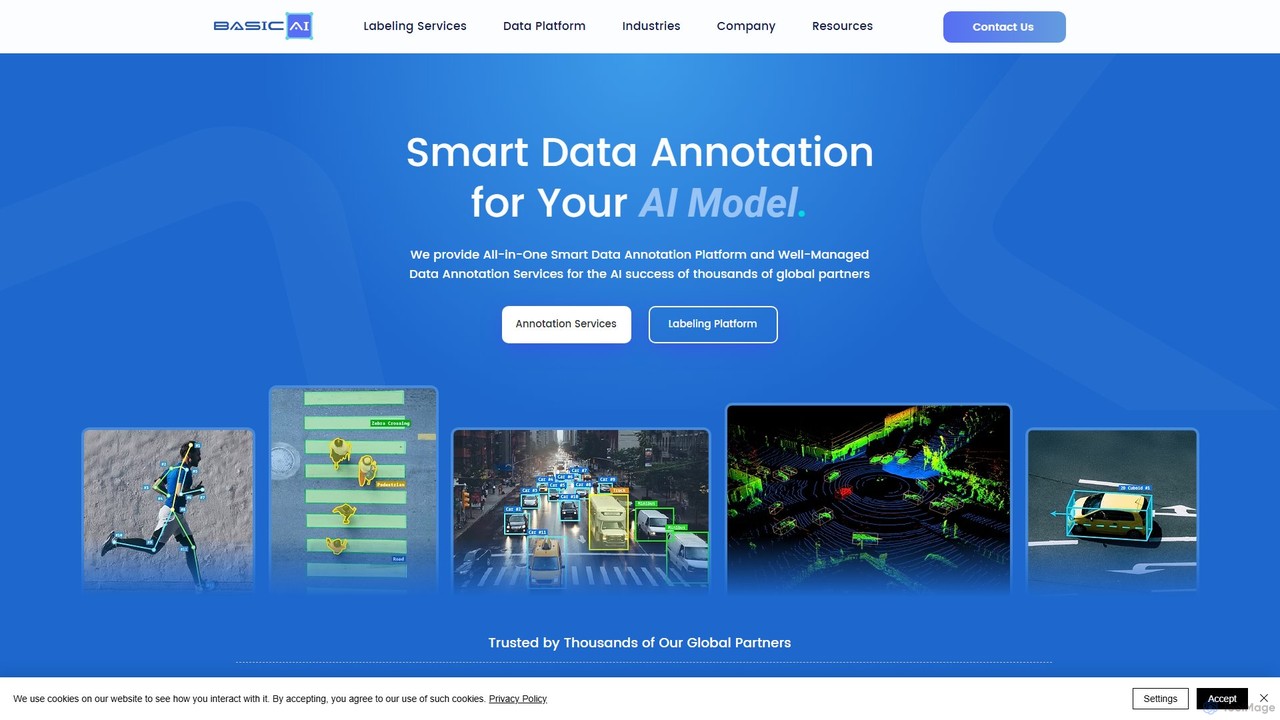
BasicAI
BasicAI offers a comprehensive data annotation platform and managed services to create high-quality training data for AI models. It specializes in 3D LiDAR, image, video, and NLP data, providing AI-assisted tools, scalable workflows, and enterprise-grade security to accelerate AI development.
Data Labeling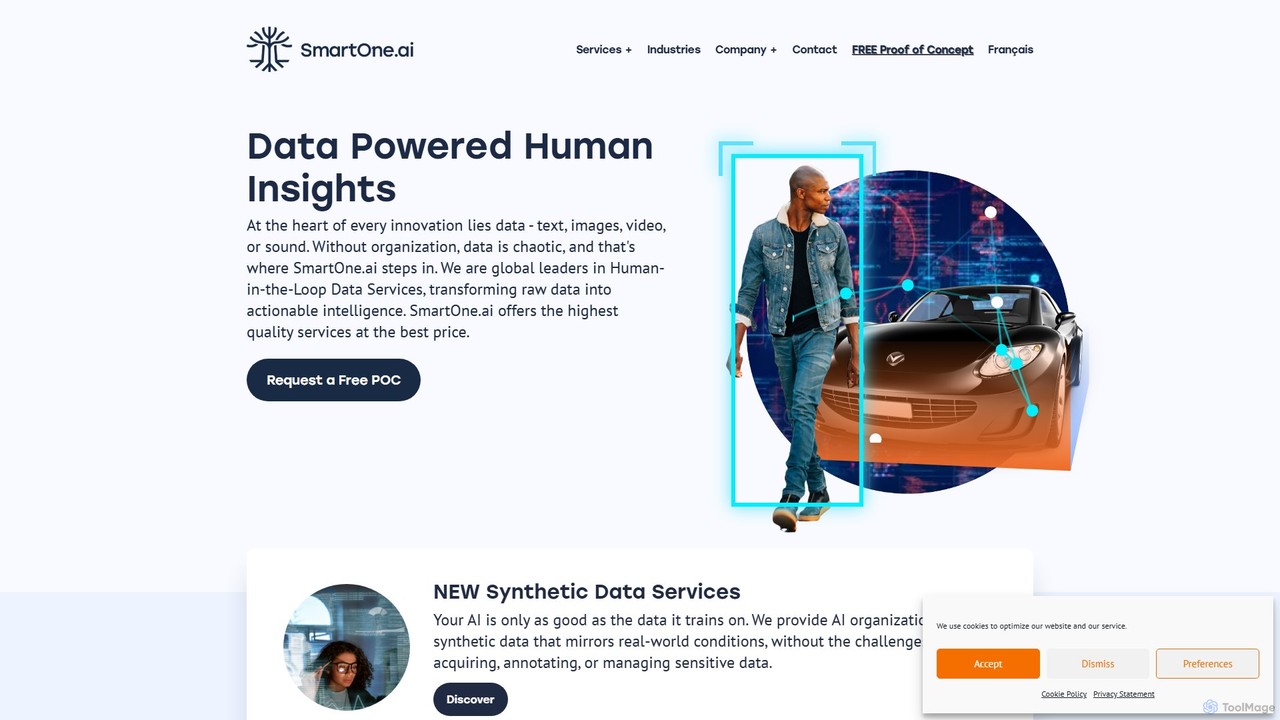
SmartOne.ai
SmartOne.ai provides high-quality, scalable data annotation and labeling services for AI and machine learning models. Specializing in image, video, audio, and text data, they offer a fully managed, expert workforce to handle complex annotation tasks. With a focus on social impact, SmartOne.ai delivers accurate training data while creating professional opportunities in developing communities.
Annotation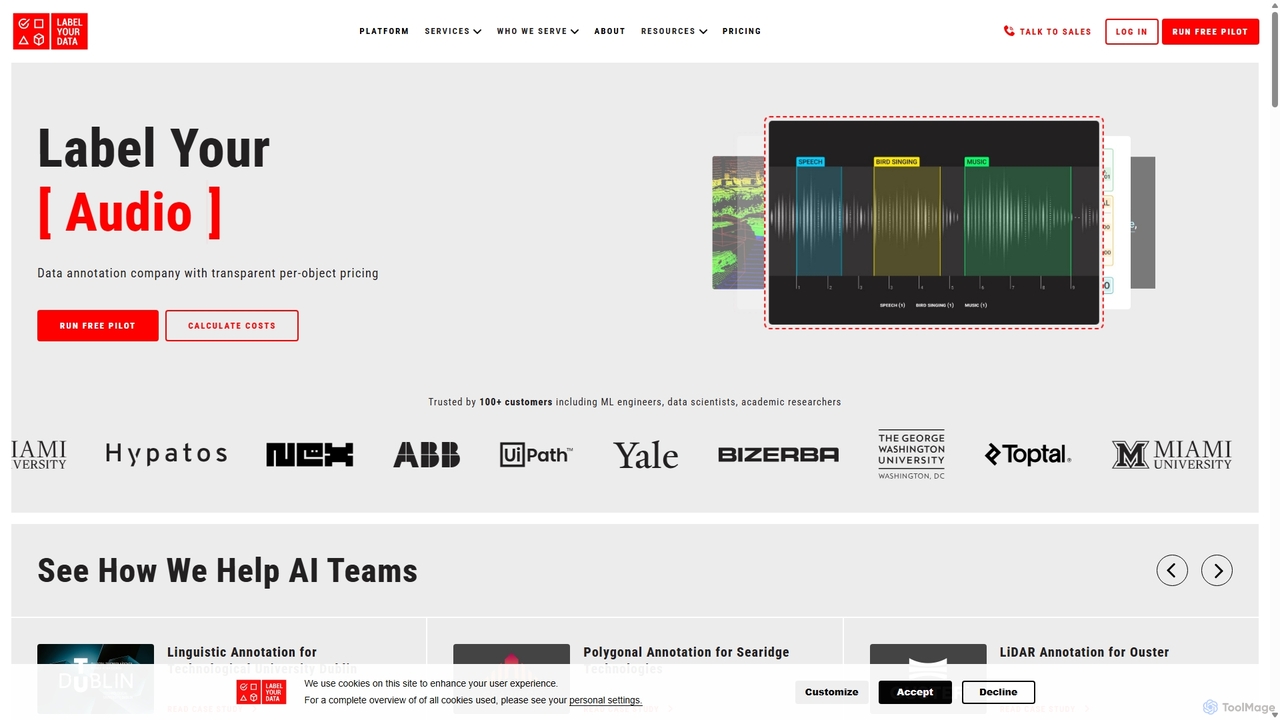
Label Your Data
A professional data annotation service and platform providing high-quality, accurate labeled datasets for machine learning. It supports diverse data types like images, video, text, and audio, offering flexible pricing, a self-serve platform, and fully managed services to scale AI projects of any size.
Data Managementbalise Categories
balise Embed Widget
Copy this embed code to place the badge on your blog, article, or product site and send readers directly to this ToolMage detail page.

Related AI tools
Label Your Data
A professional data annotation service and platform providing high-quality, accurate labeled datasets for machine learning. It supports diverse data types like images, video, text, and audio, offering flexible pricing, a self-serve platform, and fully managed services to scale AI projects of any size.
Data Management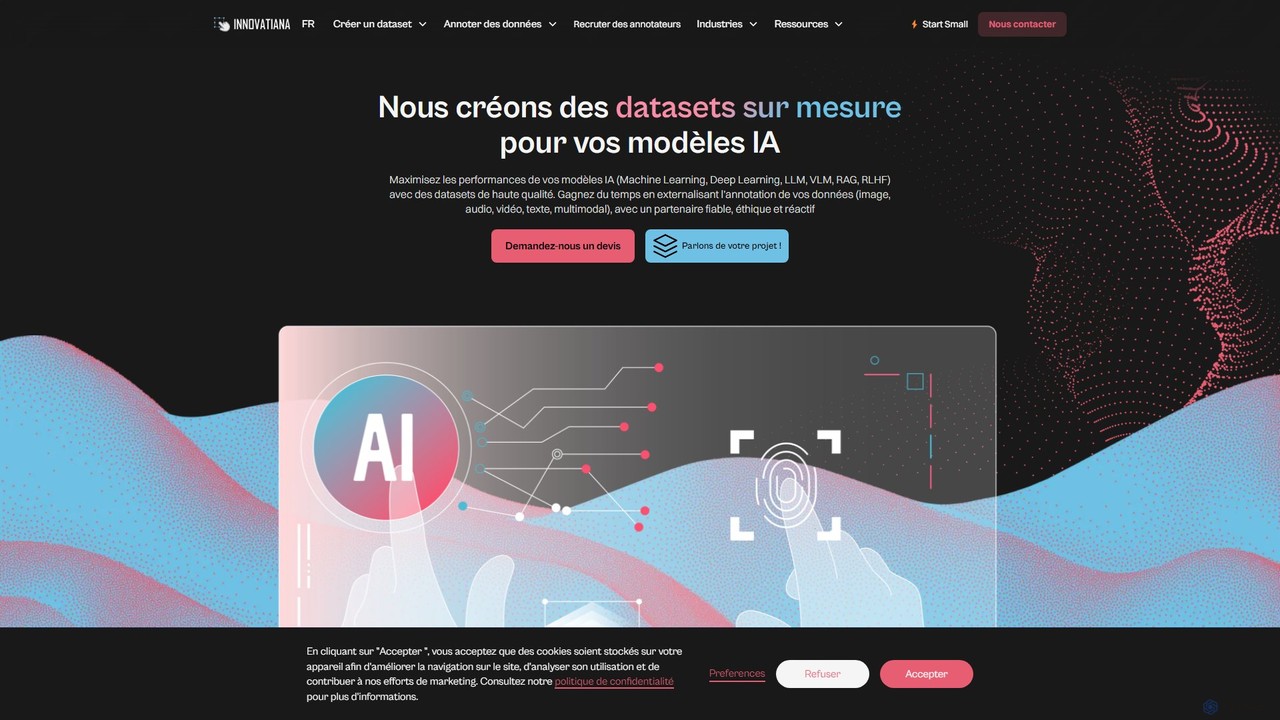
Innovatiana
Innovatiana is a specialized service providing high-quality, ethically-sourced training data for AI models. They offer custom dataset creation and data labeling for computer vision, NLP, generative AI, and document processing. By employing dedicated, trained teams instead of crowdsourcing, Innovatiana ensures superior data accuracy, security, and responsible AI development, helping companies build more robust and unbiased models.
Dataset Creation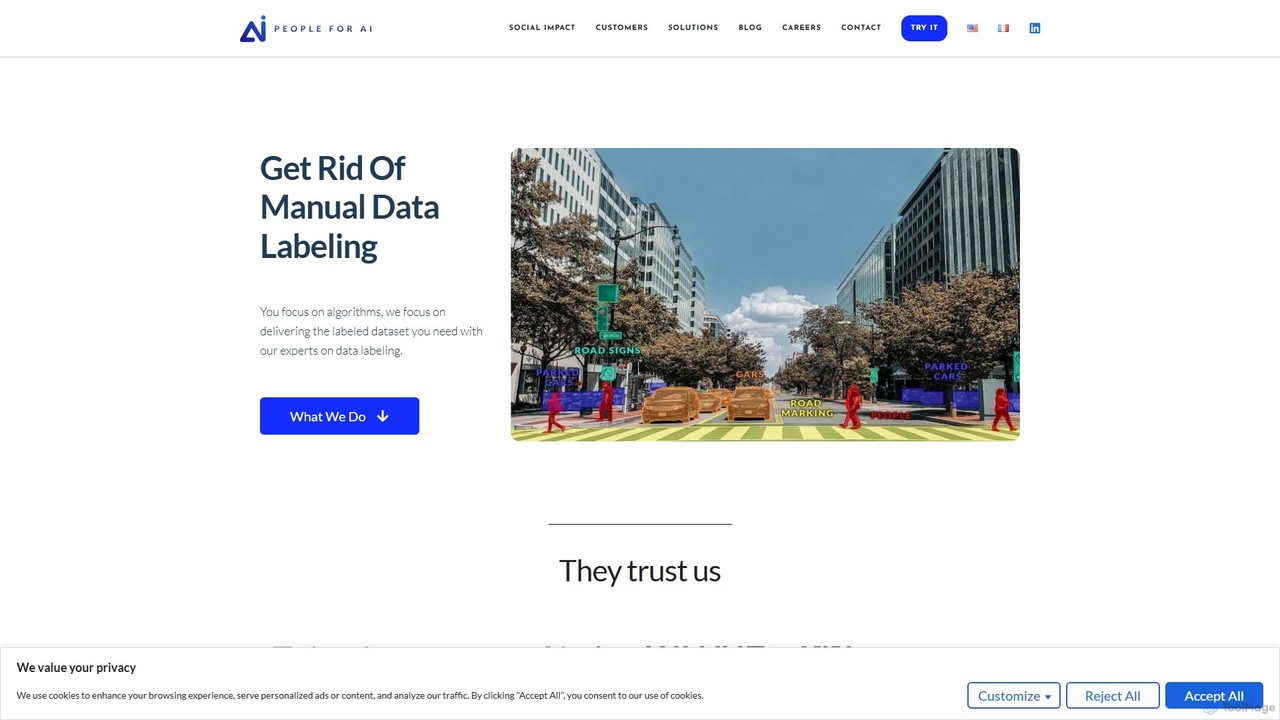
People For AI
People For AI provides expert-driven data labeling services for machine learning projects. They specialize in high-quality, secure annotation for complex image and text datasets. By using in-house, long-term labelers instead of crowdsourcing, they ensure superior accuracy, flexibility, and data security. Their services cater to various industries, including autonomous vehicles, microscopy, retail, and infrastructure, helping companies accelerate their AI development by delivering reliable training data.
Training Data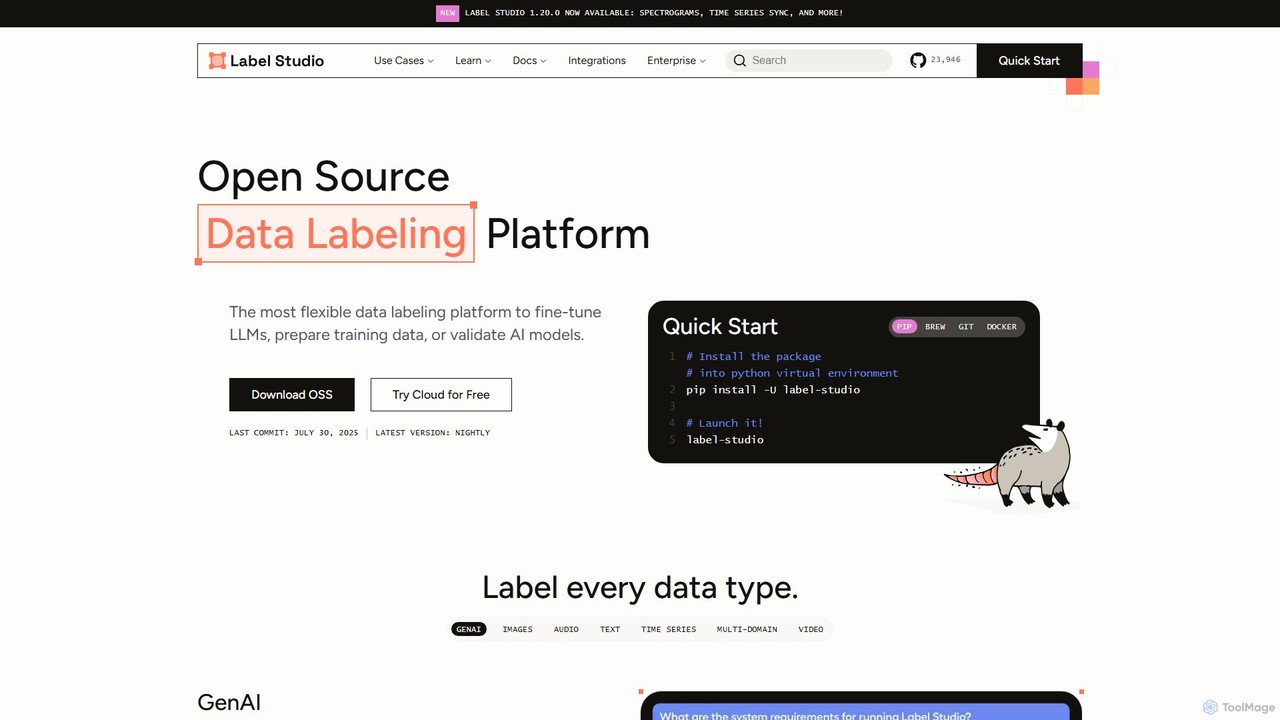
Label Studio
Label Studio is a versatile open-source data labeling platform designed for a wide range of data types. It enables users to annotate images, text, audio, video, and time-series data to fine-tune LLMs, prepare training data for machine learning, and validate AI models with human-in-the-loop feedback.
Training DataAppen
Appen is a global leader in providing high-quality, human-annotated data for AI and machine learning models. It offers data collection and annotation services at scale, leveraging a global crowd to power AI applications in computer vision, NLP, and more for the world's leading brands.
Enterprise SolutionsProdigy
Prodigy is a scriptable annotation tool for AI, Machine Learning, and NLP, designed for developers. It enables rapid creation of high-quality training and evaluation data through model-assisted, human-in-the-loop workflows. It runs on your own infrastructure, ensuring complete data privacy and control.
AnnotationBasicAI
BasicAI offers a comprehensive data annotation platform and managed services to create high-quality training data for AI models. It specializes in 3D LiDAR, image, video, and NLP data, providing AI-assisted tools, scalable workflows, and enterprise-grade security to accelerate AI development.
Data LabelingSmartOne.ai
SmartOne.ai provides high-quality, scalable data annotation and labeling services for AI and machine learning models. Specializing in image, video, audio, and text data, they offer a fully managed, expert workforce to handle complex annotation tasks. With a focus on social impact, SmartOne.ai delivers accurate training data while creating professional opportunities in developing communities.
Annotation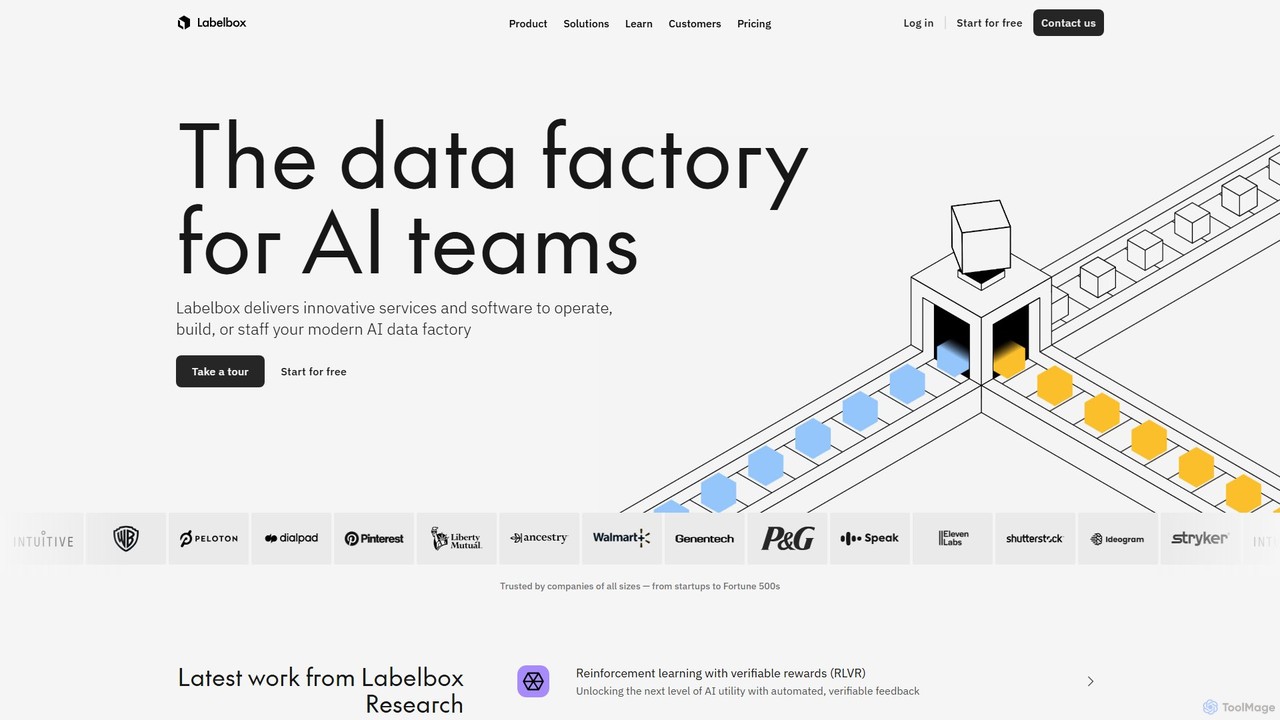
Labelbox
Labelbox is a comprehensive data-centric AI platform, or "Data Factory," designed for AI teams. It provides integrated software, expert services, and a talent marketplace to create, manage, and evaluate high-quality training data for advanced AI models, including LLMs and multimodal systems.
Labeling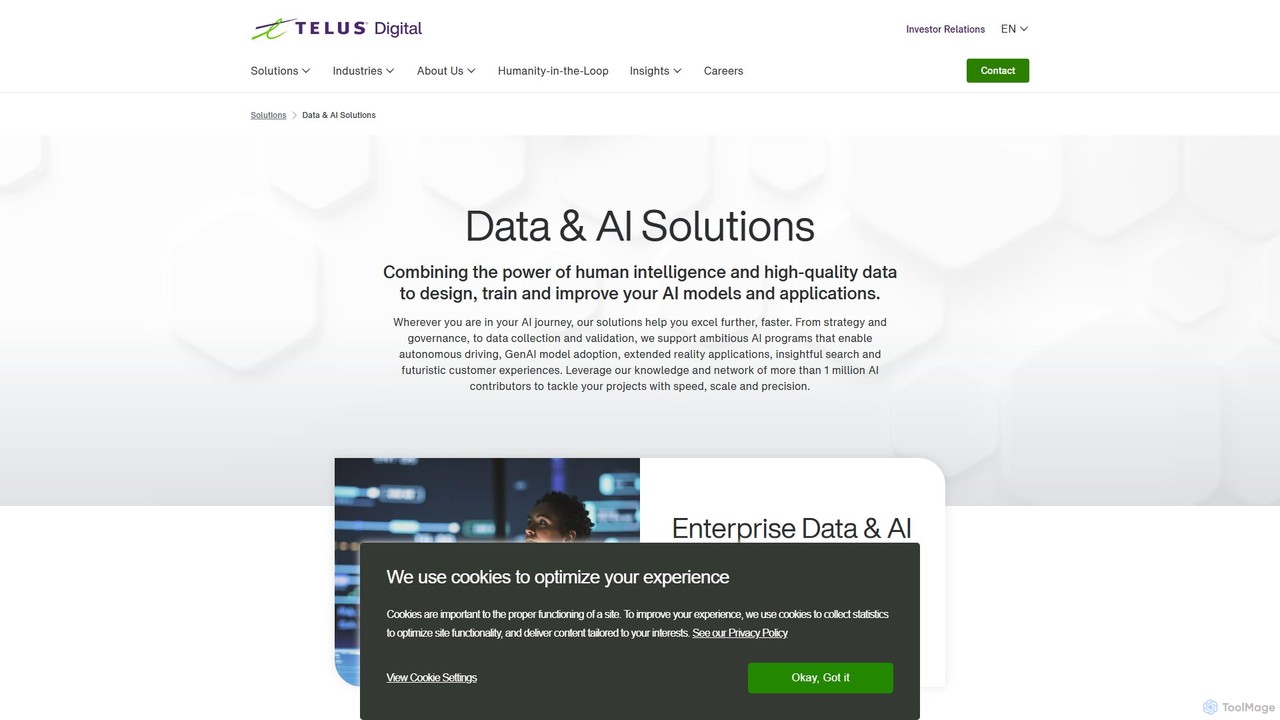
Playment
Playment is an enterprise-grade data solutions platform, now part of TELUS International. It specializes in providing high-quality, human-annotated data for training and validating AI and machine learning models. Leveraging a global community of over one million contributors, Playment offers services like data collection, annotation, and validation for computer vision, NLP, and generative AI, ensuring speed, scale, and precision for ambitious AI projects.
Model Training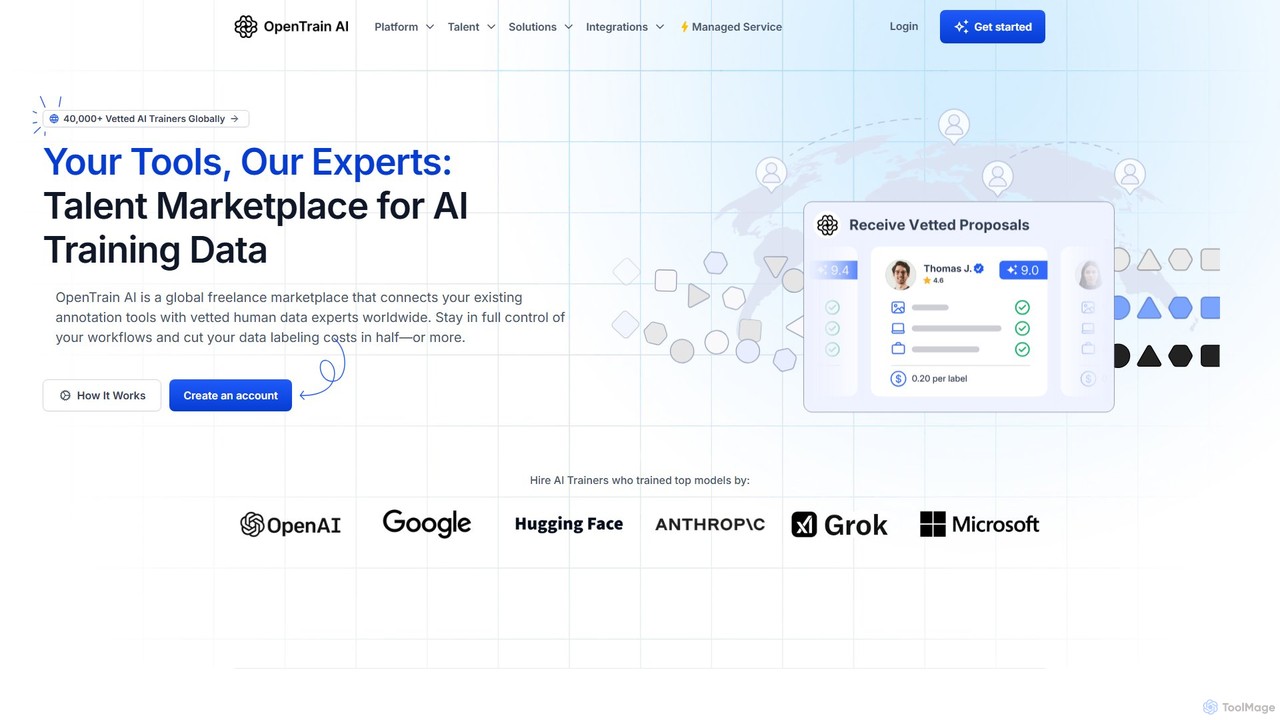
OpenTrain AI
OpenTrain AI is a global talent marketplace connecting businesses with over 40,000 vetted human data experts for AI training and data annotation. It allows you to use your existing annotation tools while hiring specialized freelancers or managed teams from 110+ countries. This flexible approach helps you maintain full control over your workflows, improve data quality, and significantly reduce labeling costs.
Annotation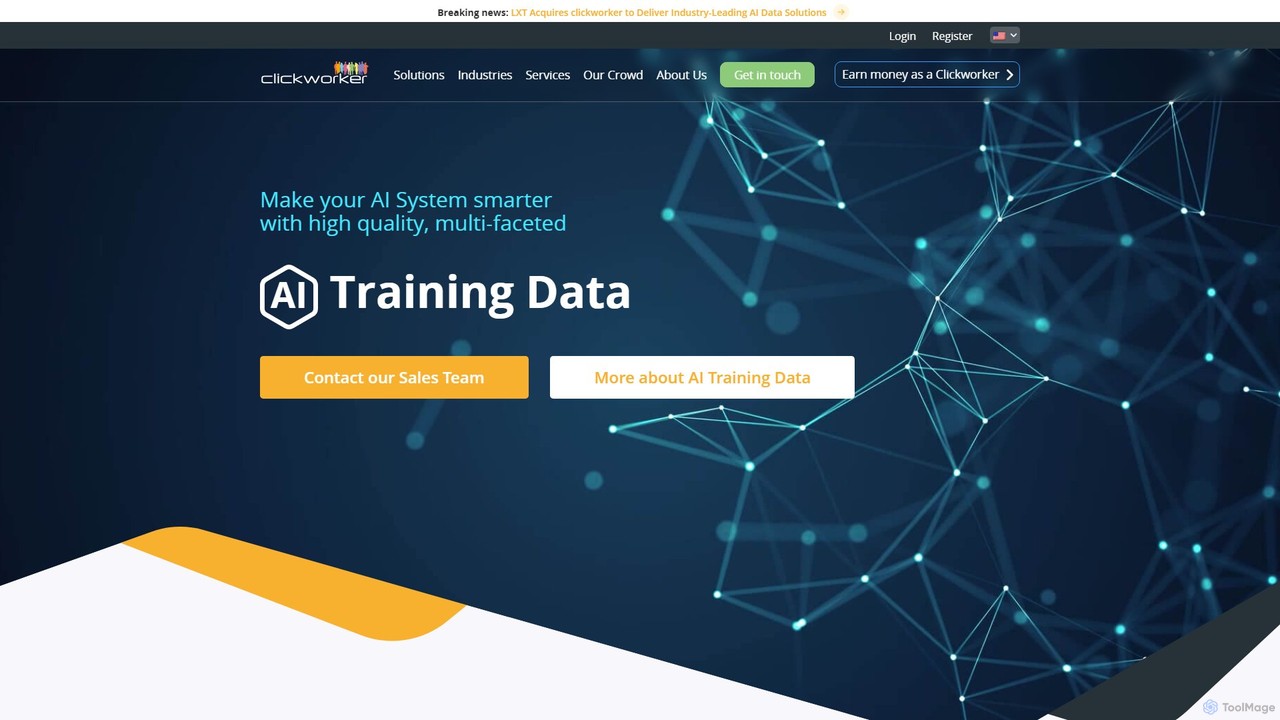
clickworker
clickworker is a leading crowdsourcing platform that provides high-quality, diverse, and scalable data for training AI and machine learning models. It leverages a global community of over 7 million freelancers to generate, validate, and label data, including images, videos, audio, and text, tailored to specific project needs.
Data Collection
Jyek
Jyek is an AI agent platform that understands objectives, creates execution plans, uses tools, and delivers verifiable results for complex, multi-step tasks.
Automation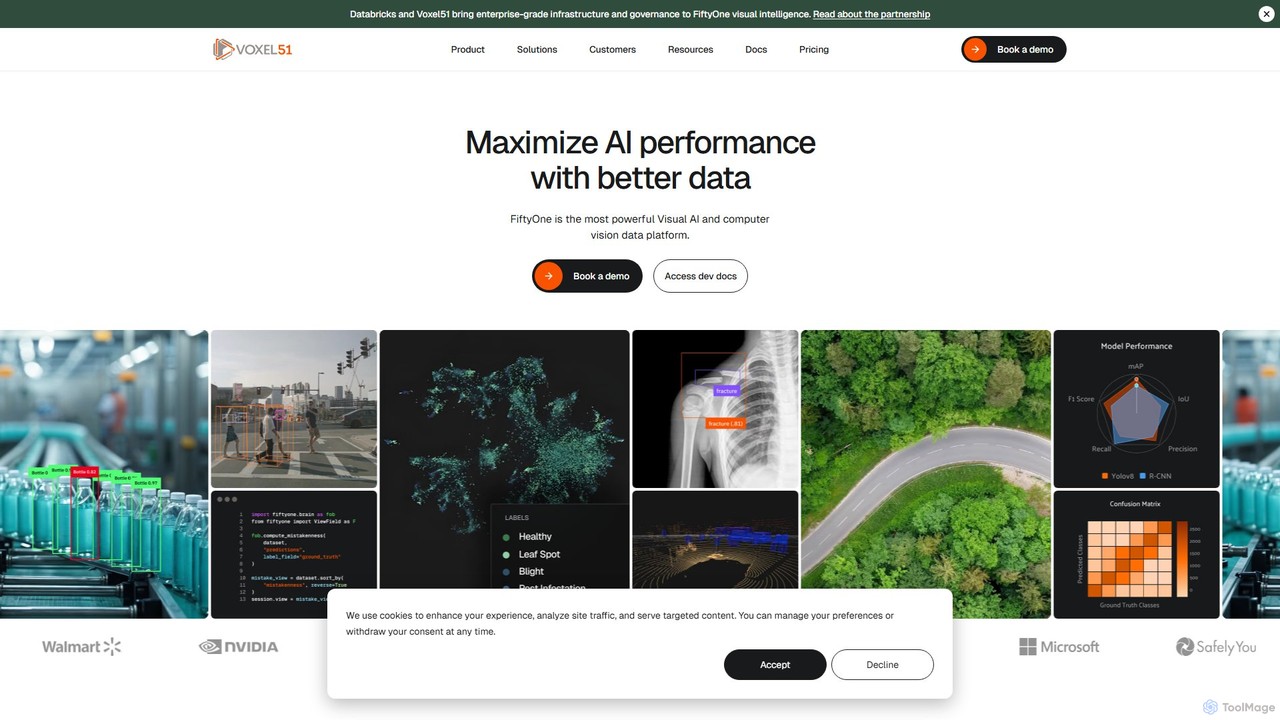
Voxel51
Voxel51 provides FiftyOne, an enterprise-grade computer vision and multimodal AI platform. It empowers developers and data scientists to curate, visualize, and evaluate complex datasets, leading to higher-performing models. By focusing on data-centric AI, FiftyOne streamlines workflows for data annotation, quality improvement, and model analysis, accelerating the entire development lifecycle.
Mlops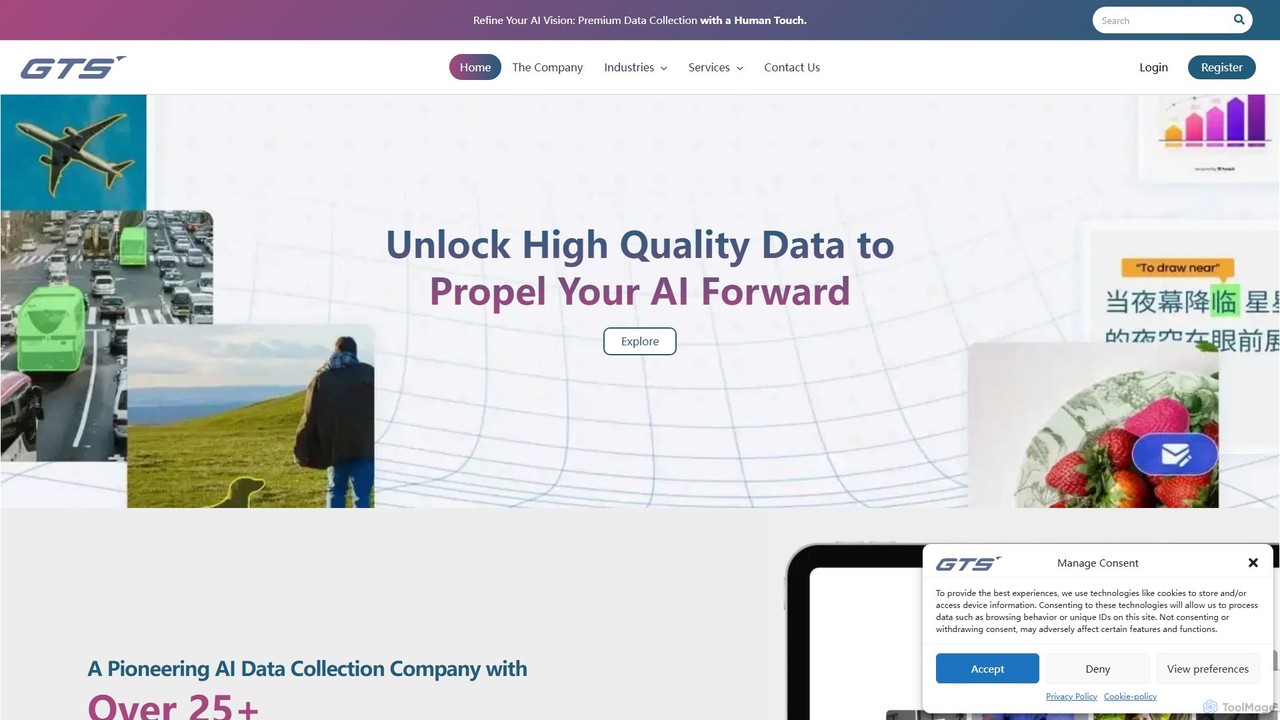
gts.ai
GTS.ai is a leading AI data solutions provider with over 25 years of experience. They offer high-quality, customized datasets for machine learning, including image, video, speech, and text data. Leveraging a global workforce of over 4.5 million, GTS provides comprehensive services from data collection and annotation to transcription and data management. They ensure data accuracy, security (ISO, GDPR, HIPAA compliant), and scalability for AI projects across various industries, helping businesses propel their AI initiatives forward with reliable data.
Data Annotation
balise Comments (0)
Sign in to comment.
Sign inNo comments yet.