Grably
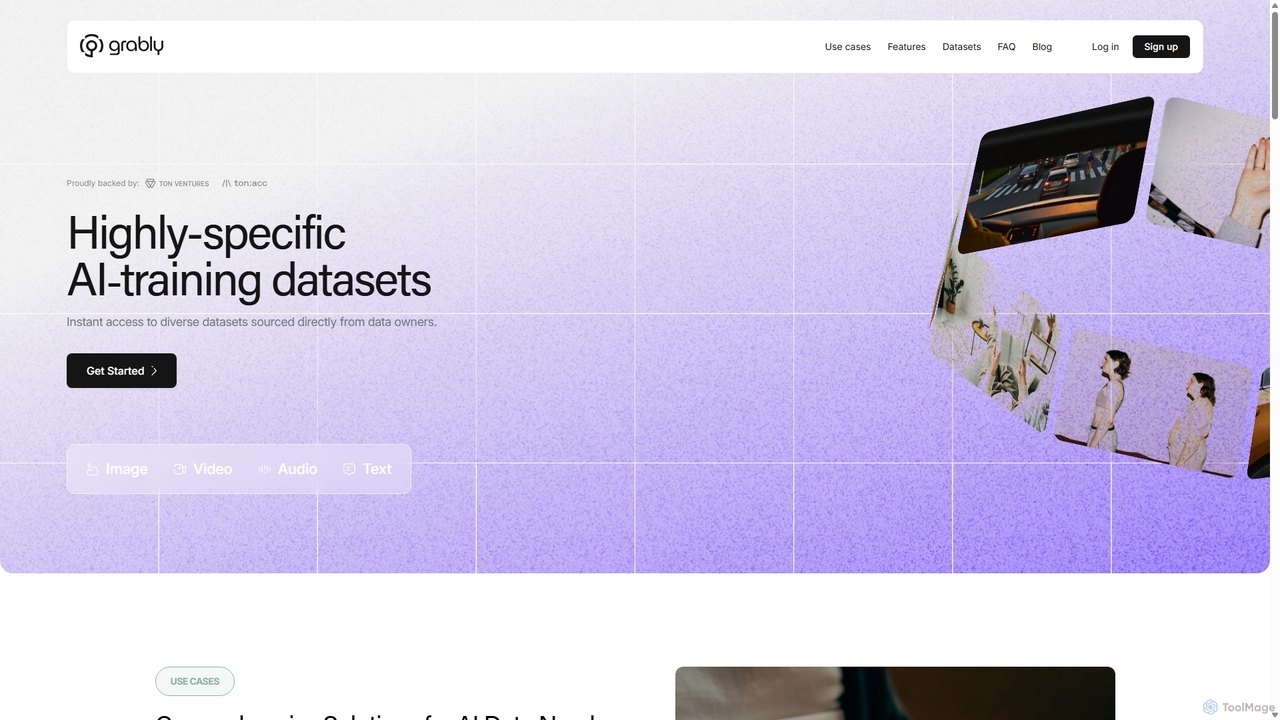
Grably is a decentralized data ownership network (DeDON) providing high-quality, ethically sourced AI training data. It offers a …
Grably is a decentralized data ownership network (DeDON) providing high-quality, ethically sourced AI training data. It offers a vast collection of off-the-shelf datasets, custom data collection, curation, and annotation services to accelerate AI development while allowing users to monetize their data securely and transparently.
BasicAI
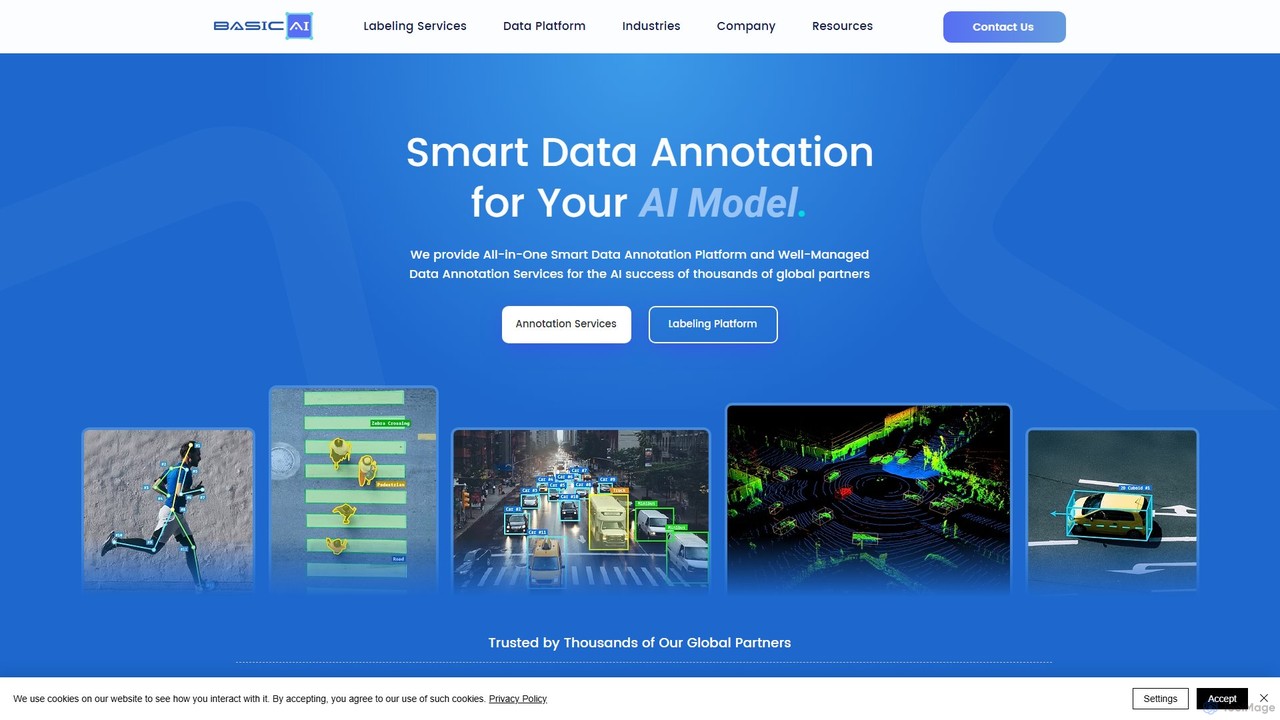
BasicAI offers a comprehensive data annotation platform and managed services to create high-quality training data for AI models. …
BasicAI offers a comprehensive data annotation platform and managed services to create high-quality training data for AI models. It specializes in 3D LiDAR, image, video, and NLP data, providing AI-assisted tools, scalable workflows, and enterprise-grade security to accelerate AI development.
About Data Labeling
Data Labeling tools are a crucial component of AI Infrastructure, providing the annotated datasets necessary to train and validate machine learning models. These tools enable the precise identification and categorization of raw data, transforming it into structured information that AI algorithms can learn from. By meticulously labeling data, they ensure the high quality and accuracy of AI systems across various applications, from computer vision to natural language processing.
Core Features
- Image & Video Annotation: Tools for bounding boxes, polygons, keypoints, semantic segmentation, and object tracking.
- Text Labeling: Capabilities for sentiment analysis, named entity recognition (NER), text classification, and intent detection.
- Audio Transcription & Tagging: Features for speech-to-text conversion, speaker diarization, and sound event detection.
- Data Quality Control: Mechanisms for review, consensus, and validation to ensure annotation accuracy and consistency.
- Workflow Management: Tools for task assignment, progress tracking, and project management for large-scale labeling efforts.
Use Cases
Data Labeling tools are indispensable for organizations developing AI solutions. They are used by data scientists to prepare training data for new models, by AI engineers to refine existing models, and by researchers to build robust datasets for academic studies. Industries like autonomous driving, healthcare, e-commerce, and finance heavily rely on these tools to power their AI initiatives.
How to Choose
When selecting a Data Labeling tool, consider the types of data you need to annotate (images, text, audio), the complexity of the annotation tasks, and the required accuracy levels. Evaluate the tool's scalability, integration capabilities with your existing AI pipeline, and its support for human-in-the-loop processes. Cost-effectiveness, user interface intuitiveness, and vendor support are also critical factors.

Data LabelingUse Cases
Autonomous Driving Sensor Data Annotation
Automotive engineers use data labeling platforms to annotate vast amounts of sensor data (Lidar, Radar, Camera) from self-driving vehicles. This involves drawing precise bounding boxes around objects like cars, pedestrians, and traffic signs, segmenting road surfaces, and tracking object movement over time. Accurate labels are vital for training perception models that enable safe and reliable autonomous navigation, directly impacting vehicle safety and performance.
Medical Image Segmentation for Diagnosis
Healthcare AI developers utilize data labeling tools to segment specific regions of interest in medical images such as X-rays, MRIs, and CT scans. Radiologists or medical experts outline tumors, organs, or anomalies, creating ground truth data for training AI models to assist in early disease detection, diagnosis, and treatment planning. This accelerates research and improves diagnostic accuracy.
E-commerce Product Attribute Extraction
E-commerce businesses employ data labeling to extract and categorize product attributes from images and text descriptions. Annotators identify features like color, material, brand, and style from product photos, and label key information from product titles and descriptions. This structured data enhances product search, recommendation systems, and inventory management, leading to improved customer experience and sales.
Sentiment Analysis for Customer Feedback
Customer experience teams use data labeling to annotate customer reviews, social media comments, and support tickets for sentiment (positive, negative, neutral) and topic. Human annotators read and classify text snippets, providing labeled data to train natural language processing (NLP) models. These models then automate sentiment analysis, helping businesses understand customer satisfaction and identify emerging issues at scale.
Video Surveillance Object Tracking
Security and smart city developers leverage data labeling for object tracking in video surveillance footage. Annotators draw bounding boxes around specific objects (e.g., people, vehicles) and track their movement across frames. This labeled data trains AI models for anomaly detection, crowd analysis, and security monitoring, enhancing public safety and operational efficiency.
Speech-to-Text Transcription for Voice Assistants
AI companies developing voice assistants or transcription services use data labeling for accurate speech-to-text transcription. Human transcribers listen to audio recordings and meticulously convert spoken words into text, often also tagging speaker identities or specific sound events. This high-quality labeled audio data is crucial for training robust automatic speech recognition (ASR) models, improving the accuracy and naturalness of voice interactions.