Neural Designer
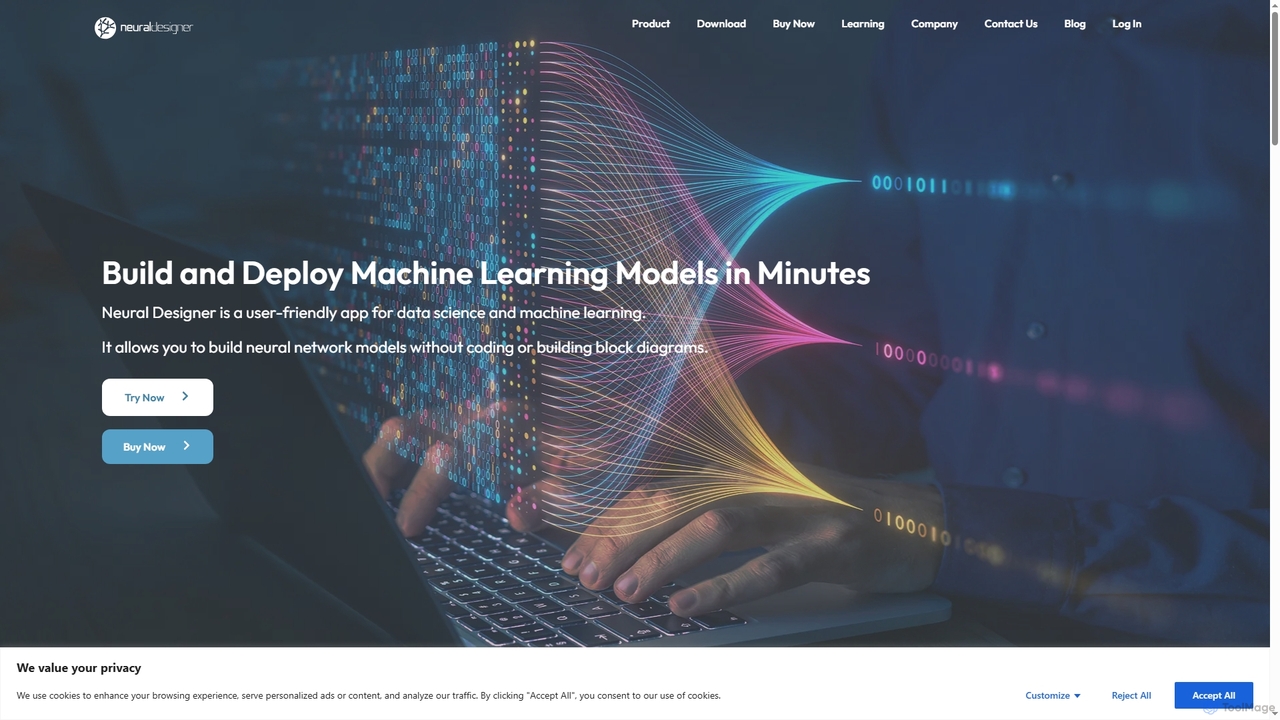
Neural Designer is a user-friendly, no-code machine learning platform specializing in neural networks. It enables users to build, …
Neural Designer is a user-friendly, no-code machine learning platform specializing in neural networks. It enables users to build, train, and deploy advanced AI models for approximation, classification, and forecasting without writing any code or complex block diagrams. Designed for data scientists and organizations, it offers high performance, energy efficiency, and superior accuracy across various industries.
QuData
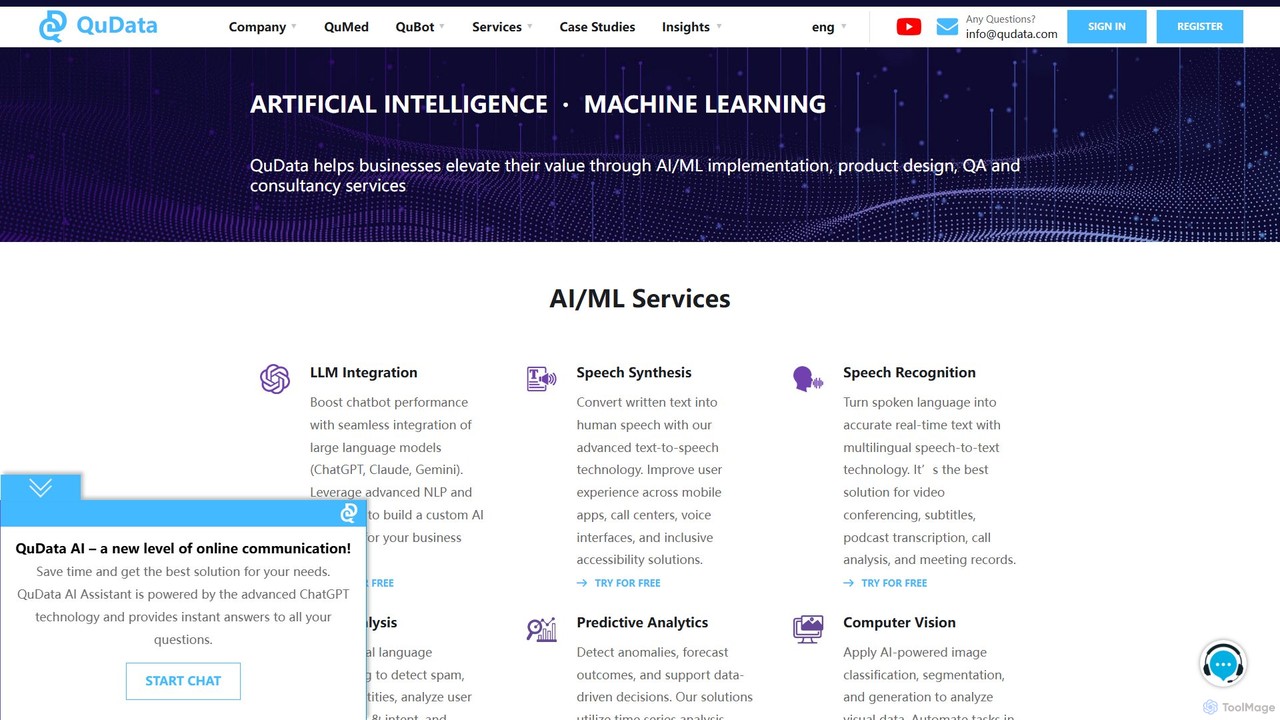
QuData is a specialized AI and Machine Learning solutions provider that helps businesses with custom development, implementation, and …
QuData is a specialized AI and Machine Learning solutions provider that helps businesses with custom development, implementation, and consultancy. They offer a wide range of services, including LLM integration for advanced chatbots like their QuBot platform, computer vision, predictive analytics, speech synthesis, and big data processing, delivering tailored solutions to meet specific industry needs.
Lunit
Lunit is a medical AI company dedicated to conquering cancer. It provides AI-powered solutions for cancer diagnostics and …
Lunit is a medical AI company dedicated to conquering cancer. It provides AI-powered solutions for cancer diagnostics and therapeutics, helping clinicians detect early-stage cancer with greater accuracy and predict patient response to treatment. Its products analyze medical images and tissue data to improve clinical outcomes.
About Predictive Analytics
Predictive Analytics tools are AI-powered solutions that leverage historical data, statistical algorithms, and machine learning to forecast future outcomes and trends. These platforms analyze complex datasets to identify patterns, probabilities, and potential risks or opportunities. They empower businesses and researchers to make proactive, data-driven decisions across various domains, moving beyond descriptive analysis to foresight. As a vital component of Data Science, they transform raw information into actionable predictions.
Core Features
- Data Preprocessing & Feature Engineering: Automate data cleaning, transformation, and extraction of key features required for predictive models.
- Model Building & Training: Support various machine learning algorithms (e.g., regression, classification, time series) to quickly build and train predictive models.
- Prediction Visualization: Visually display prediction results, confidence intervals, and key influencing factors through charts and dashboards.
- Model Evaluation & Optimization: Provide multiple metrics to assess model performance and support parameter tuning to improve prediction accuracy.
- Real-time Prediction Deployment: Deploy trained models into production environments for automated or on-demand real-time predictions.
Applicable Scenarios
Predictive Analytics tools are crucial for industries needing to anticipate future events. Retailers use them to forecast demand and optimize inventory. Financial institutions apply them for credit risk assessment and fraud detection. Manufacturers leverage them for predictive maintenance to minimize downtime.
How to Choose
When selecting a Predictive Analytics tool, consider its support for various algorithms (regression, classification, time series), data integration capabilities with existing systems, ease of use and visualization features, and scalability for large datasets and real-time processing. Evaluate the interpretability of models and deployment options.
Predictive AnalyticsUse Cases
Forecasting Sales & Market Demand
Retail businesses utilize historical sales data, seasonal trends, and marketing campaign information to predict future product sales volumes for the coming weeks or months. This helps optimize inventory levels, preventing overstocking or stockouts, and guides procurement and marketing strategies, thereby increasing revenue and customer satisfaction.
Identifying High-Risk Customers for Retention
Telecommunications, finance, or subscription service companies analyze customer behavior patterns, service usage frequency, and complaint history to predict which customers are at a higher risk of churning. Through early warning, businesses can proactively offer personalized incentives or improve services, effectively reducing customer churn rates.
Optimizing Supply Chain & Inventory Management
Manufacturers or logistics companies, based on historical orders, shipping data, weather patterns, and economic indicators, predict future specific demands for raw materials and finished goods. This enables businesses to plan production and schedule logistics more precisely, and maintain optimal inventory levels, significantly reducing operational costs.
Predicting Equipment Failure for Proactive Maintenance
Enterprises in industrial manufacturing, energy, or transportation monitor equipment sensor data (e.g., temperature, vibration, operating hours) to predict when machine components are likely to fail. This allows maintenance teams to intervene before a breakdown occurs, avoiding unexpected downtime, extending equipment life, and ensuring production continuity.
Assessing Credit Risk & Detecting Fraud
Financial institutions utilize applicants' historical transaction data, credit records, and behavioral patterns to predict their probability of default or identify potential fraudulent transactions. This helps banks and lending institutions make more informed lending decisions and block suspicious activities in real-time, thereby protecting assets and reducing financial risks.
Personalized Recommendations & Content Delivery
E-commerce platforms or media companies analyze users' browsing history, purchasing behavior, preferences, and interaction data to predict products or content users might be interested in. By providing highly personalized recommendations, they can significantly enhance user experience, increase purchase conversion rates, and extend content consumption time.