Developer Tools Best in category 1 results Resource AI Tool

Popular AI tools in the Resource field of Developer Tools include ApX Machine Learning, etc., helping you quickly improve efficiency.

ApX Machine Learning

ApX Machine Learning

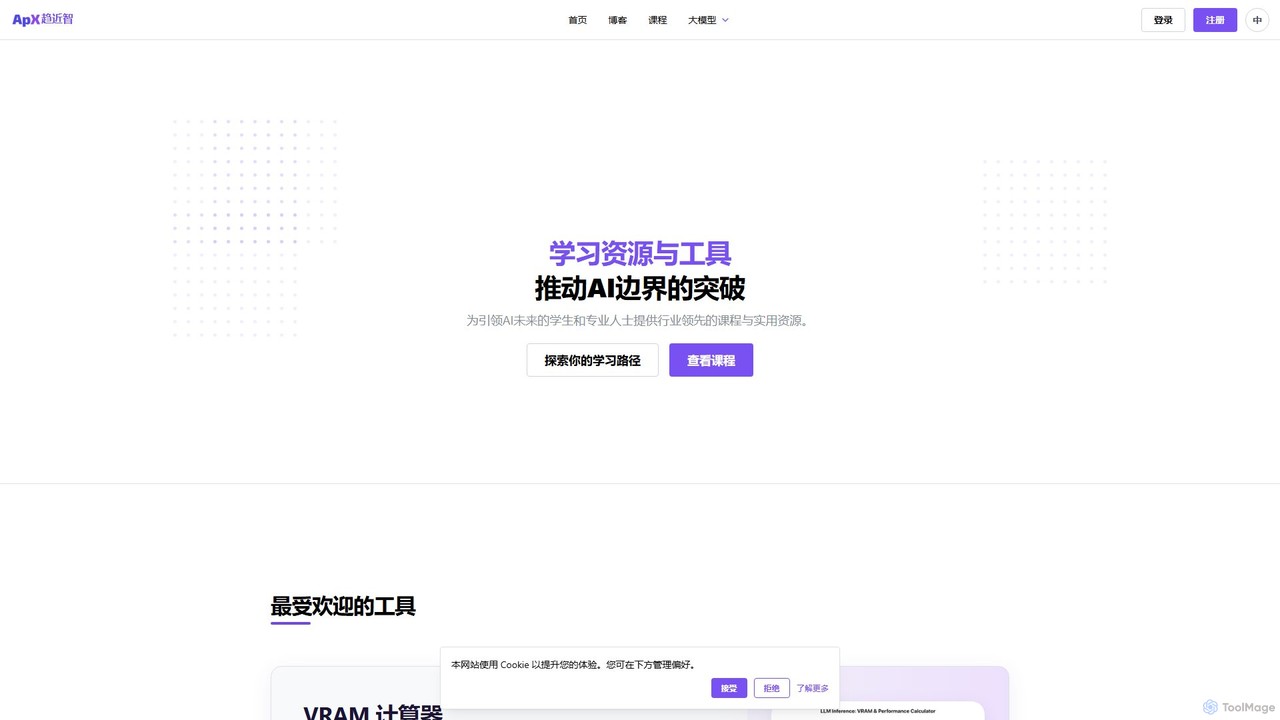
ApX Machine Learning is an educational platform for AI engineers and students, providing practical courses, in-depth guides, and …

391.0K

About Resource

AI Resources are foundational assets such as pre-trained models, datasets, and APIs that accelerate the development of artificial intelligence applications. These components provide developers with ready-to-use building blocks, eliminating the need to create complex systems from scratch. By leveraging these resources, developers can rapidly prototype, train custom models, and integrate sophisticated AI capabilities like natural language processing or computer vision into their software. They serve as a critical catalyst for innovation and efficiency in the AI development lifecycle.

Core Features

  • Pre-trained Models: Access models already trained on vast amounts of data, ready for fine-tuning or direct deployment.
  • Annotated Datasets: Utilize high-quality, labeled data for training and validating machine learning algorithms.
  • SDKs & APIs: Integrate powerful AI functionalities through well-documented software development kits and application programming interfaces.
  • Technical Documentation & Tutorials: Comprehensive guides and examples that explain how to effectively use the resources.

Use Cases

AI Resources are essential for machine learning engineers, data scientists, and application developers. They are used for tasks such as fine-tuning a language model for a specific industry, building a recommendation engine with a public dataset, or adding image recognition to a mobile app via an API. Research institutions also rely on standardized datasets for benchmarking new algorithms.

How to Choose

When selecting an AI Resource, consider the license type (e.g., open-source, commercial) to ensure it aligns with your project's usage rights. Evaluate the quality, relevance, and size of datasets or the performance of pre-trained models. For APIs and SDKs, assess the clarity of documentation, rate limits, and pricing structure. Finally, consider the level of community or enterprise support available.

ResourceUse Cases

1

Fine-tuning a Language Model for Customer Support

A development team at a SaaS company needs to build a specialized chatbot to handle industry-specific customer queries. Instead of training a model from scratch, which is time-consuming and expensive, they select a powerful pre-trained language model like GPT or BERT. They then use an internal dataset of past customer support tickets to fine-tune the model. This process adapts the general model to understand the company's specific terminology and common user problems, resulting in a highly accurate and context-aware support bot deployed in weeks instead of months.

2

Integrating Computer Vision via an API

A mobile app developer wants to add a feature that identifies objects in photos taken by the user. Lacking deep expertise in computer vision, they choose to integrate a third-party Vision API. By using the provided SDK, they can send images from the app to the API endpoint and receive structured JSON data in return, which includes object labels and confidence scores. This allows them to build a complex feature quickly without needing to manage GPU infrastructure or develop their own computer vision models, significantly reducing development time and technical overhead.

3

Prototyping a Recommendation Engine with Public Datasets

A data scientist at an e-commerce startup is tasked with building a product recommendation system. To validate their initial algorithms and ideas without waiting for large amounts of internal user data, they use publicly available datasets like the Amazon product co-purchasing network dataset. This resource provides a realistic, large-scale graph of product relationships. They can test different recommendation algorithms (e.g., collaborative filtering, graph-based methods) on this data, benchmark performance, and present a working prototype to stakeholders, all before implementing the system on live production data.

4

Benchmarking a New Machine Learning Algorithm

A researcher at a university has developed a novel image classification algorithm. To prove its effectiveness and compare it against state-of-the-art methods, they need a standardized evaluation framework. They use a well-known public dataset like ImageNet or CIFAR-10. These resources provide a large, diverse set of labeled images and established testing protocols. By running their algorithm on this dataset and comparing its accuracy, speed, and resource consumption to published results of other models, they can objectively demonstrate the advantages of their new approach in a peer-reviewed paper.

5

Building a Voice-Controlled Application with an SDK

An IoT developer is creating a smart home device that responds to voice commands. Developing speech recognition technology in-house is highly complex. Instead, they use a Speech-to-Text SDK from a major cloud provider. The SDK provides libraries and code samples that simplify the process of capturing audio from the device's microphone, streaming it to the provider's API, and receiving a text transcription in near real-time. This allows the developer to focus on the device's core logic and user experience, rather than the underlying complexities of speech processing, accelerating the product's time-to-market.

6

Accessing Real-time Data for Financial Models

A fintech developer is building an AI model to predict stock market trends. To be effective, the model requires a constant stream of up-to-the-minute financial data, including stock prices, news sentiment, and economic indicators. They subscribe to a specialized financial data API. This resource provides clean, structured, and low-latency data feeds. By integrating this API, the developer avoids the immense challenge of collecting, cleaning, and normalizing data from hundreds of disparate sources, allowing them to focus entirely on model architecture, training, and validation.

ResourceFrequently Asked Questions