
Rerun Overview
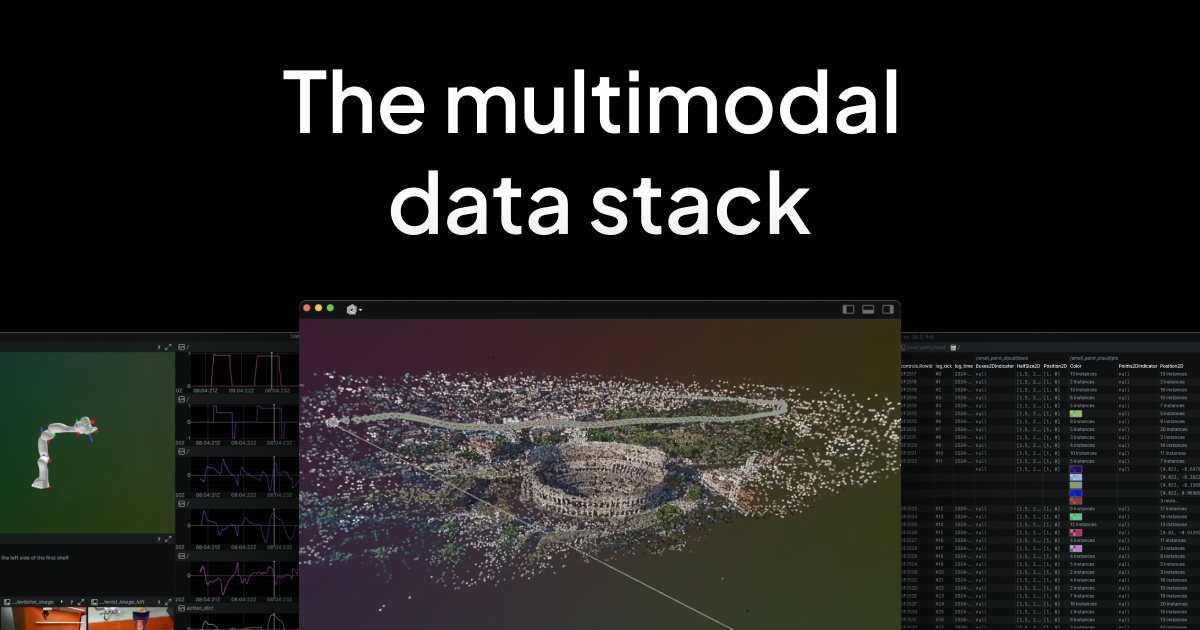
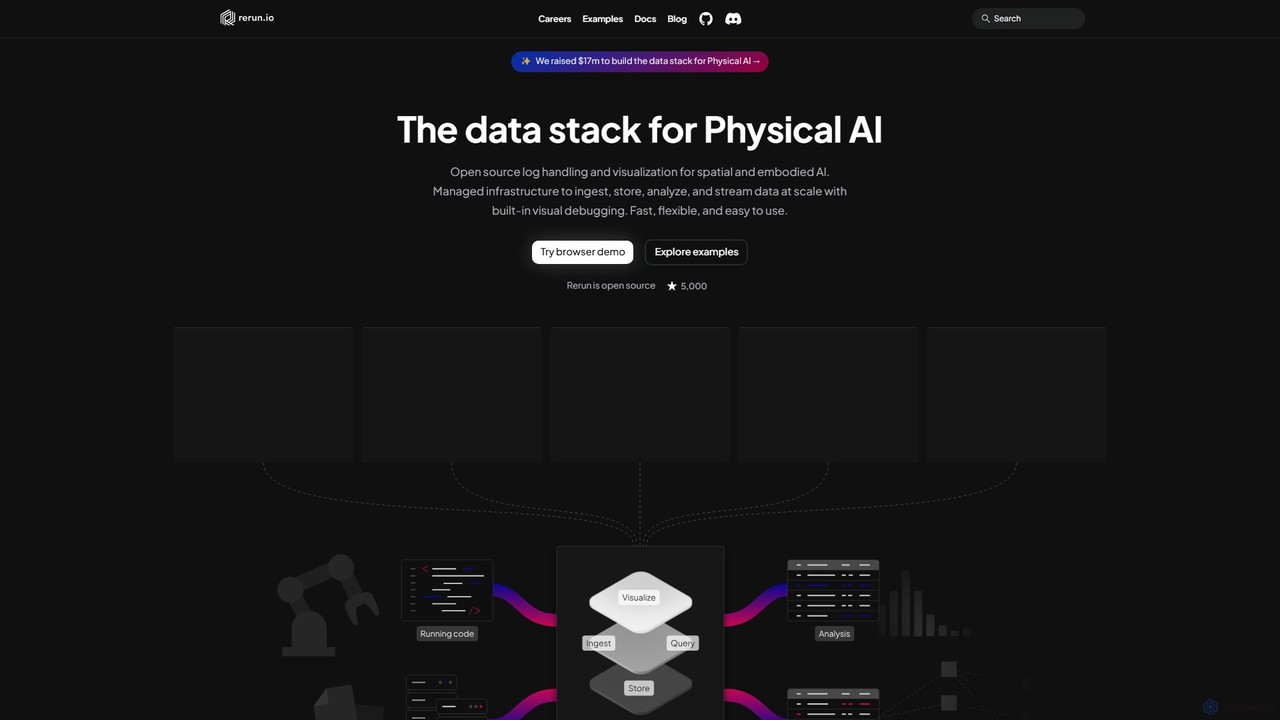
Rerun is a specialized data stack engineered for the emerging field of Physical AI, which encompasses robotics, spatial computing, and embodied AI. It offers a comprehensive suite of open-source tools designed to handle the complexities of multimodal, time-series data. At its core, Rerun provides a powerful visualization and logging solution that enables developers and researchers to see, understand, and debug their systems with unprecedented clarity. By offering SDKs in popular languages like Python, C++, and Rust, Rerun integrates seamlessly into existing development workflows, making it an essential tool for anyone working with complex sensor data, simulations, or AI models that interact with the physical world.
The platform is built around a time-aware Entity Component System (ECS) data model, which is uniquely suited for handling streams of heterogeneous data (e.g., 3D point clouds, images, transforms, video streams) while keeping them perfectly synchronized in time. This allows for intuitive 'time-travel' debugging, where users can scrub through a recording to pinpoint the exact moment an issue occurred. The Rerun Viewer is a high-performance, interactive application that runs natively, in the browser, or can be embedded directly into Jupyter notebooks and other applications, offering maximum flexibility.
How to use Rerun
Using Rerun is designed to be straightforward, allowing you to start visualizing data in minutes. Here’s a typical workflow:
- Installation: Install the Rerun SDK for your preferred language. For Python, it's as simple as running
pip install rerun-sdk. - Initialization: In your application code, initialize the Rerun library and connect to a viewer. You can spawn a new viewer process, connect to a remote one, or log to a file for later viewing. Example:
rr.init("my_application", spawn=True). - Logging Data: Use the
rr.log()function to send data to the viewer. Rerun provides built-in archetypes for common data types like 3D points (rr.Points3D), images (rr.Image), 3D transforms (rr.Transform3D), and even live video streams (rr.VideoStream). You can log positions, colors, text, tensors, and more. - Visualization: The Rerun Viewer will automatically display your logged data. You can interact with the visualization by rotating, panning, and zooming. Use the timeline slider at the bottom to navigate through time, play back the sequence, or jump to specific events.
- Customization and Analysis: Customize layouts and visualizations directly in the UI or programmatically via the SDK. For deeper analysis, use Rerun's query APIs to extract time-aligned data from your recordings into formats like Apache Arrow, which can be easily loaded into data analysis libraries like Pandas or Polars.
Core Features of Rerun
- Multimodal Visualization: Natively supports a wide range of data types including 3D point clouds, images, text, tensors, 3D/2D geometric shapes, and transforms.
- Time-Series Focus: A central timeline allows for intuitive scrubbing and playback of data, which is crucial for debugging dynamic systems.
- Multi-Language SDKs: Provides easy-to-use SDKs for Python, Rust, and C++, ensuring broad compatibility with most robotics and AI projects.
- High-Performance Viewer: Built from the ground up in Rust for performance, the viewer can handle large datasets smoothly. It runs natively on major OSes, in modern web browsers via WebAssembly, and can be embedded.
- Flexible Data Model: The Entity Component System (ECS) model allows for logging complex, evolving data structures without rigid schemas.
- Live Streaming & Recording: Supports both live streaming of data for real-time debugging and recording to efficient
.rrdfiles for offline analysis and sharing. - Robotics-Ready: Includes built-in features for robotics, such as a URDF (Unified Robot Description Format) data loader to visualize and animate robot models.
- Data Querying API: Enables programmatic extraction of clean, time-aligned datasets from messy log files, bridging the gap between debugging and model training.
Use Cases for Rerun
Rerun is versatile and used across various domains:
- Robotics: Debugging robot perception stacks, visualizing sensor fusion (LIDAR, camera, IMU), animating robot arm kinematics, and analyzing simulation logs. The Hugging Face LeRobot project uses Rerun for its visualization tools.
- Computer Vision: Visualizing the intermediate steps and final outputs of algorithms for object detection, semantic segmentation, SLAM (Simultaneous Localization and Mapping), and 3D reconstruction.
- Spatial & Embodied AI: Understanding the behavior of AI agents in simulated or real-world environments by logging their perceptions, states, and actions over time.
- Generative Media: Visualizing the evolution of generative models, such as viewing the diffusion process in image generation models frame by frame.
- Simulations: Logging and replaying complex physical or multi-agent simulations to understand emergent behaviors and debug system dynamics.
Advantages of Rerun
Rerun offers significant advantages for developers in the Physical AI space:
- Intuitive Debugging: The 'time-travel' feature transforms debugging from a tedious, print-based process into an intuitive, visual exploration.
- Accelerated Development: By making it easy to 'see' what your code is doing, Rerun drastically reduces the time it takes to identify and fix bugs in complex systems.
- Improved Collaboration: Rerun's
.rrdlog files are self-contained and portable, making it easy to share complex scenarios with teammates for collaborative debugging. - Open Source and Community-Driven: The core visualization tools are free, open-source (MIT/Apache 2 licensed), and actively developed with input from a growing community.
- Scalable Architecture: The platform is designed to scale from a simple script on a laptop to a large-scale data management solution with its upcoming commercial offering.
Pricing and Plans
Rerun operates on a freemium model:
- Open Source: The core Rerun SDKs and Viewer are completely free and open source. This includes all visualization, logging, and simple log handling functionalities. It is dual-licensed under MIT and Apache 2.
- Commercial: Rerun is developing a commercial cloud platform designed for data management at scale. This will provide managed infrastructure for ingestion, storage, indexing, and streaming of large-scale Physical AI data. This product is currently under development with select design partners, and interested parties can sign up for a waitlist.
Traffic
Latest traffic
Status
Monthly traffic trend
- 2025-9: 57.2K
- 2026-1: 72.5K
- 2026-2: 65.4K
- 2026-3: 58.9K
- 2026-4: 56.9K
- 2026-5: 87.9K
Geography
Top 5 countries / regions
- 🇨🇳China53.3%
- 🇺🇸United States21.3%
- 🇮🇳India13.4%
- 🇰🇷South Korea6.3%
- 🇺🇿Uzbekistan5.7%
Traffic sources
| Source type | Percentage |
|---|---|
Direct | 65.8% |
Referral | 34.2% |
Top keywords
| Keyword | Cost per click |
|---|---|
| rerun | $0.74 |
| rerun io | $6.72 |
| rerun mcap support | $0.00 |
| rerun sdk | $0.00 |
| rerun sdk c enable disable | $0.00 |
Rerun Videos on YouTube


Rerun Alternatives
Captum
Captum is an open-source model interpretability and explainability library for PyTorch. It provides state-of-the-art algorithms to help developers and researchers understand which features influence a model's predictions. Supporting multi-modal data like text, vision, and more, Captum makes it easy to debug models, improve transparency, and benchmark new interpretability techniques within the PyTorch ecosystem.
Model Explainability
Milvus
Milvus is a high-performance, open-source vector database built for AI applications. It enables developers to manage and search through billions of high-dimensional vectors with minimal latency. Ideal for building scalable systems like retrieval-augmented generation (RAG), recommendation engines, and semantic search, Milvus offers flexible deployment options from local prototyping to large-scale distributed clusters.
Machine Learning
Beam
Beam is a serverless cloud platform designed for developers to run, scale, and deploy AI/ML models and applications on GPUs with ease. It offers instant autoscaling, pay-per-second billing, and a streamlined workflow, allowing you to go from code to a scalable API in minutes without managing complex infrastructure.
Machine Learning
MindsDB
MindsDB is an open-source AI layer for databases, enabling developers to build, train, and deploy AI models and agents using standard SQL. It connects to hundreds of data sources, unifies structured and unstructured data into knowledge bases, and allows you to get AI-powered answers directly from your data without complex ETL pipelines.
Machine Learning
PyTorch
PyTorch is an open-source machine learning framework based on the Torch library, used for applications such as computer vision and natural language processing. It offers a flexible, Python-first environment that accelerates the path from research prototyping to production deployment.
Deep LearningRerun Categories
Rerun Embed Widget
Copy this embed code to place the badge on your blog, article, or product site and send readers directly to this ToolMage detail page.

Related AI tools
PyTorch
PyTorch is an open-source machine learning framework based on the Torch library, used for applications such as computer vision and natural language processing. It offers a flexible, Python-first environment that accelerates the path from research prototyping to production deployment.
Deep Learning
Streamlit
Streamlit is an open-source Python framework that enables developers and data scientists to build and share beautiful, custom web apps for machine learning and data science in minutes. The Streamlit Community Cloud provides a free platform to deploy, manage, and share these public applications with the world, fostering a collaborative environment for innovation.
Data Visualization
TensorFlow
TensorFlow is an end-to-end open-source platform for machine learning developed by Google. It provides a comprehensive, flexible ecosystem of tools, libraries, and community resources that lets researchers and developers build and deploy ML-powered applications. From beginners to experts, TensorFlow offers intuitive high-level APIs for easy model building and powerful low-level APIs for advanced research, enabling deployment across servers, edge devices, and browsers.
Frameworks
Fast.ai
Fast.ai is a research institute dedicated to making deep learning accessible to everyone. It offers free courses, an open-source software library (fastai), cutting-edge research, and a vibrant community, empowering coders of all backgrounds to become deep learning practitioners.
Machine Learning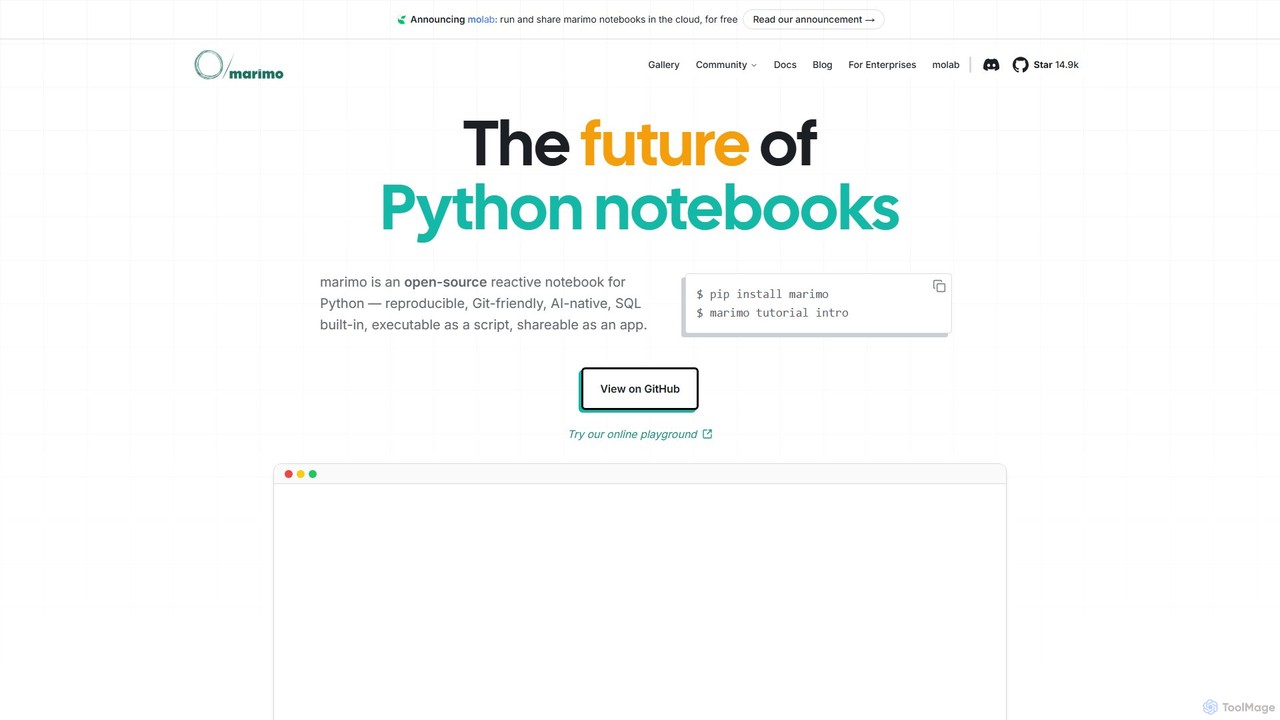
marimo
marimo is an open-source reactive Python notebook for modern data science and AI. It offers a reproducible, Git-friendly, and interactive environment where notebooks are pure Python scripts. Features include built-in AI assistance, SQL cells, and the ability to share notebooks as web apps, streamlining the workflow from experiment to production.
Data Visualization
MindSpore
MindSpore is an open-source, all-scenario AI computing framework designed for developers and data scientists. It provides a developer-friendly experience with flexible deployment across cloud, edge, and device environments. It excels in distributed training for large models and offers specialized toolkits for scientific computing (AI4S), ensuring high performance and efficiency, especially on Ascend hardware.
Scientific Computing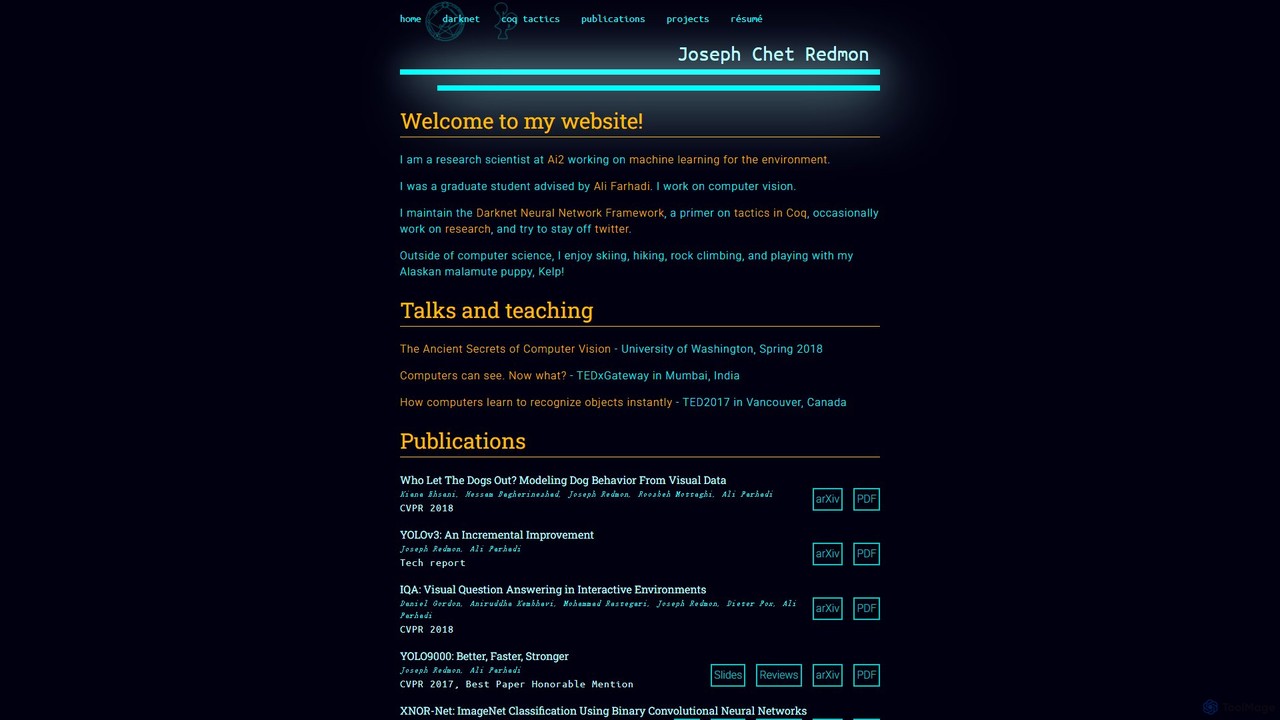
Darknet
Darknet is a high-performance, open-source neural network framework written in C and CUDA. Created by Joseph Redmon, it is renowned for its speed and efficiency, famously powering the YOLO (You Only Look Once) real-time object detection system. It's designed to be small, easy to install, and supports both CPU and GPU computations, making it a popular choice for researchers and developers in computer vision.
Object Detection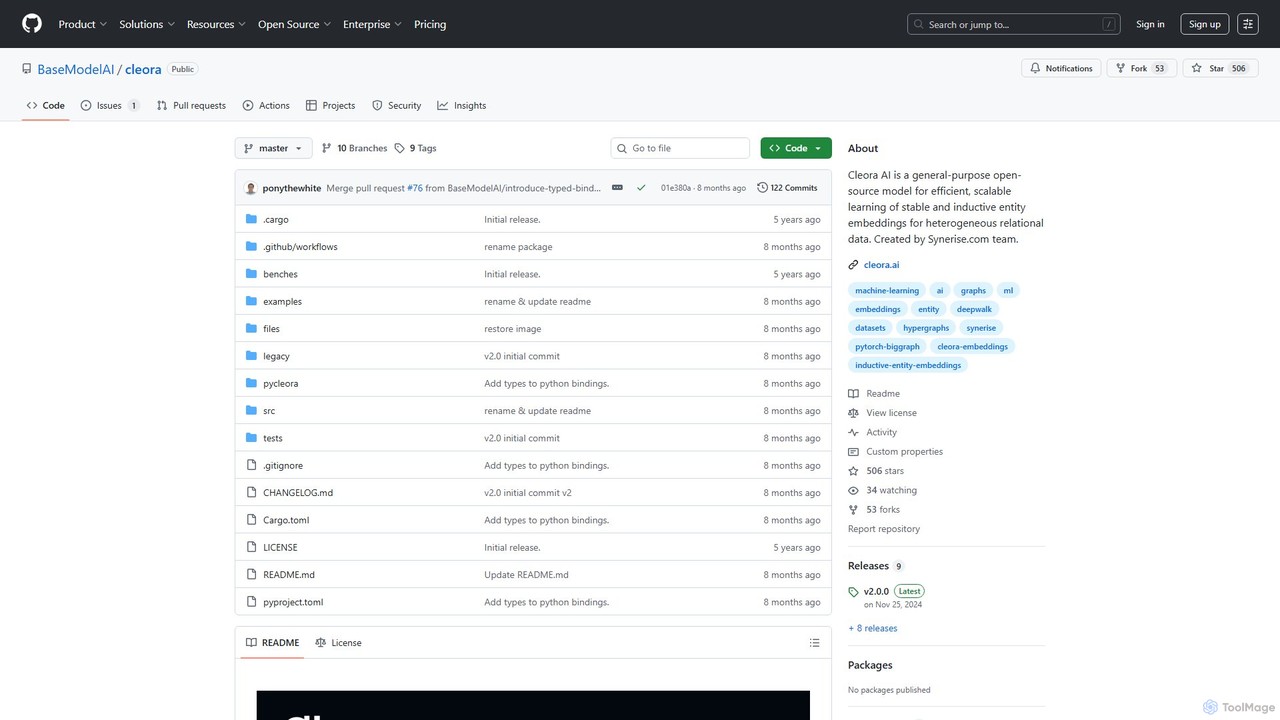
Cleora
Cleora is an open-source, high-performance model for creating stable and inductive entity embeddings from large-scale, heterogeneous relational data and hypergraphs. Written in Rust with a Python API, it offers unparalleled speed and scalability for tasks like recommendation systems and graph analytics.
Embedding Models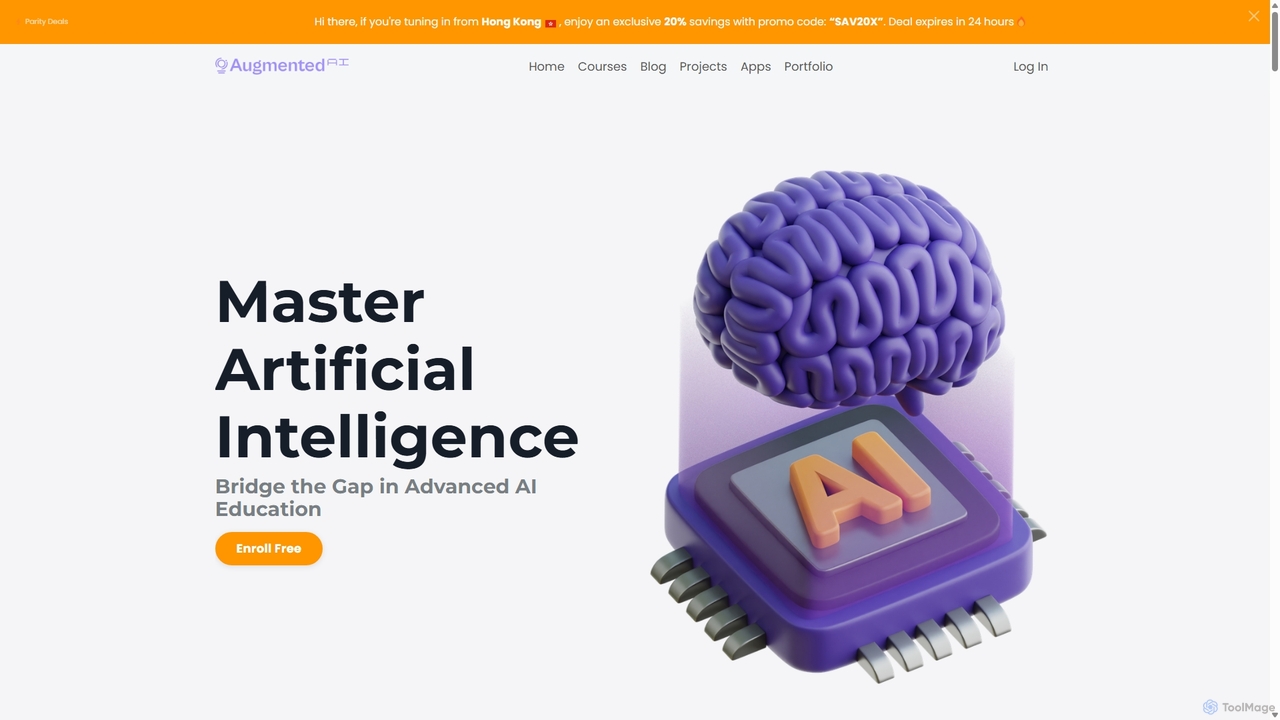
Augmented Startups
Augmented Startups is an online AI university offering practical, project-based courses for all skill levels. It specializes in advanced topics like Computer Vision, Large Language Models (LLMs), Robotics, and Autonomous Vehicles. The platform provides comprehensive learning paths with code, datasets, and expert support to help students and professionals build real-world AI applications and bridge the gap between theory and practical implementation.
Code Libraries
Eventual
Eventual is building the future of data infrastructure with Daft, a high-performance, open-source query engine for multimodal data. It enables engineers to process petabyte-scale images, video, audio, and text with the simplicity of SQL, drastically accelerating AI and ML workflows without the need for deep distributed systems expertise.
Machine LearningCaptum
Captum is an open-source model interpretability and explainability library for PyTorch. It provides state-of-the-art algorithms to help developers and researchers understand which features influence a model's predictions. Supporting multi-modal data like text, vision, and more, Captum makes it easy to debug models, improve transparency, and benchmark new interpretability techniques within the PyTorch ecosystem.
Model Explainability
Hugging Face
Hugging Face is the leading open-source platform and community for machine learning. It provides tools for developers and researchers to build, train, and deploy state-of-the-art models, offering a vast hub of pre-trained models, datasets, and demo applications.
Dataset
Zed
Zed is a high-performance, collaborative, and AI-powered code editor built from scratch in Rust. Designed for speed and efficiency, it offers real-time collaboration, deep integration with LLMs for agentic editing, and a comprehensive set of built-in tools including a debugger and native Git support. Zed is open-source and available for macOS and Linux, with Windows support coming soon.
Code Generation
Google Research
Google Research is a premier hub for exploring groundbreaking advancements in science and AI. It provides open access to a vast repository of research papers, project showcases, and open-source resources across diverse fields like machine learning, quantum computing, and healthcare. It's an essential platform for researchers, developers, and enthusiasts to stay at the forefront of technological innovation and understand its real-world impact.
Learning Platform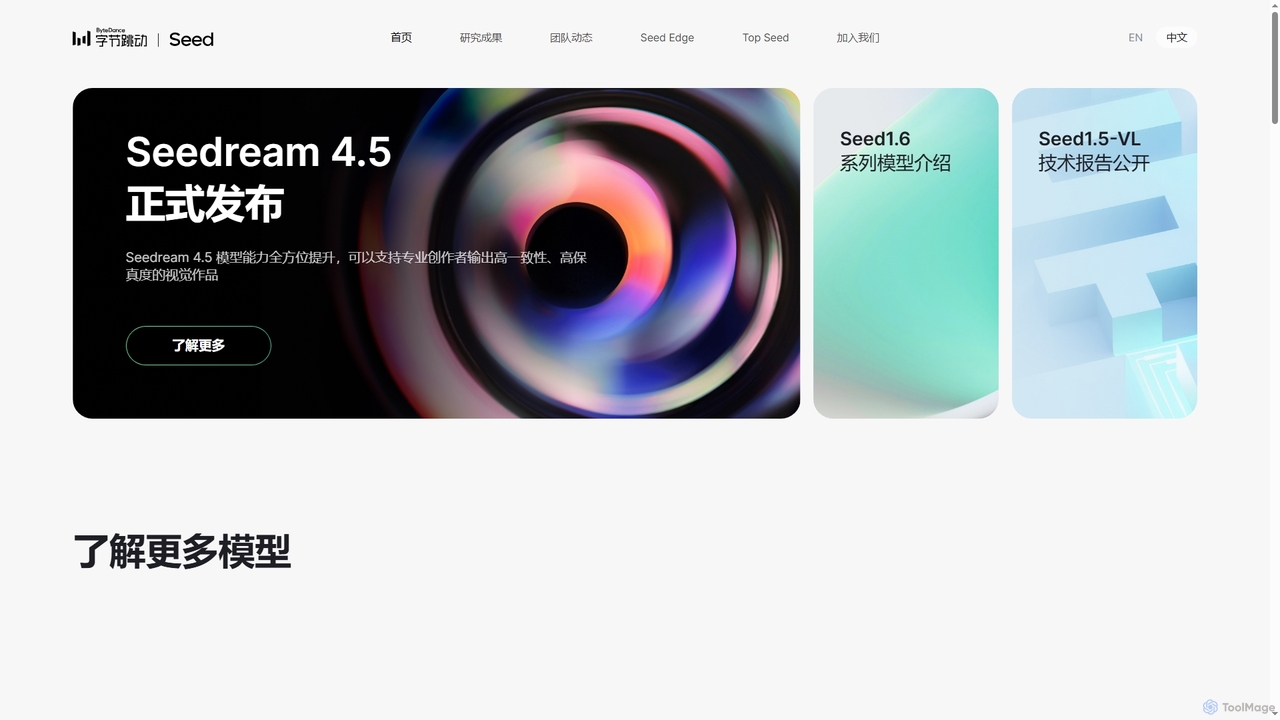
Seed
Seed is ByteDance's advanced AI research initiative focused on building general artificial intelligence. They develop foundational models across various domains including multimodal, vision, speech, robotics, and LLMs, driving innovation in both academic research and real-world applications.
Foundational Models
Rerun Comments (0)
Sign in to comment.
Sign inNo comments yet.