
Cleora Overview
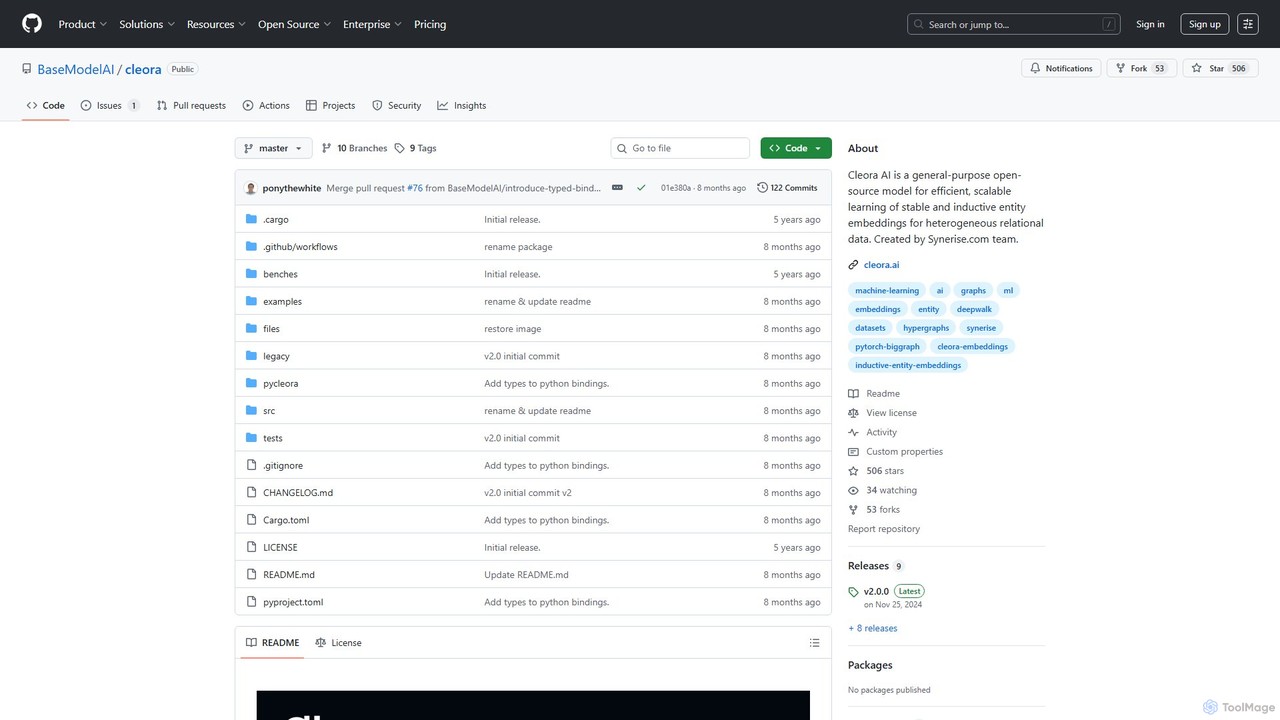
Cleora is a general-purpose, open-source model developed by the Synerise.com team, designed for the efficient and scalable learning of entity embeddings from complex, heterogeneous relational data. It excels at transforming entities and their interactions—such as products in a shopping cart, users on a social network, or proteins in a biological system—into meaningful numerical vectors. These vectors, or embeddings, capture the underlying relationships and similarities, making them invaluable for downstream machine learning tasks.
Built with a high-performance Rust core and exposed through a user-friendly Python package (pycleora), Cleora achieves processing speeds that are orders of magnitude faster than traditional methods like DeepWalk or PyTorch-BigGraph. It operates on the principle of iterative random projections on a Markov transition matrix derived from the data, a method that avoids the noise and inefficiency of negative sampling. This allows it to process extremely large graphs and hypergraphs on a single machine, a significant advantage for real-world applications.
How to use Cleora
Using Cleora is straightforward for developers and data scientists familiar with Python. The process generally involves these steps:
- Installation: Install the Python package directly using pip:
pip install pycleora. - Data Preparation: Structure your data as a series of hyperedges. A hyperedge is a group of co-occurring entities. For example, a line in your input file could represent all products bought in a single transaction, separated by spaces. This can be prepared from a pandas DataFrame or any Python iterator.
- Matrix Creation: Use the
SparseMatrix.from_iterator()function to convert your prepared data into a sparse Markov transition matrix. This matrix represents the relationships within your hypergraph. - Embedding Initialization: You can either let Cleora initialize the embedding vectors deterministically or provide your own initial vectors. This unique feature allows you to incorporate external information, such as embeddings from text (e.g., Sentence-BERT) or images (e.g., ViT), into the graph structure.
- Propagation: Perform a few iterations of Markov propagation using
mat.left_markov_propagate(embeddings). Typically, 3 to 7 iterations are sufficient. Fewer iterations capture direct co-occurrence, while more iterations capture deeper, contextual similarity. - Normalization: Normalize the resulting embedding vectors, usually with an L2 norm, to ensure they reside on a hypersphere. This makes them comparable using cosine similarity or dot product.
- Usage: The final normalized vectors are your entity embeddings, ready to be used for recommendation, classification, clustering, or similarity search tasks.
Core Features of Cleora
- Extreme Performance: Written in Rust and optimized for concurrency and cache coherence, making it exceptionally fast.
- Scalability: Capable of embedding extremely large graphs and hypergraphs with billions of edges on a single commodity machine.
- Inductive Learning: Can generate embeddings for new, previously unseen entities on-the-fly without retraining the entire model, effectively solving the cold-start problem.
- Stable & Deterministic: Unlike methods like Node2vec, Cleora produces the same embeddings for the same input data across multiple runs, ensuring reproducibility and stability.
- Hypergraph Support: Natively handles hypergraphs (e.g., products in a basket, users in a group), which is more powerful than simple pairwise graph decomposition.
- Python Integration: Offers a seamless Python API (pycleora) with deep integration with NumPy for easy use in data science workflows.
- Custom Initialization: Allows users to initialize embeddings with vectors from other sources (e.g., text, image models), enabling multi-modal analysis.
Use Cases for Cleora
Cleora's versatility makes it suitable for a wide range of applications across various industries:
- E-commerce: Creating powerful product embeddings for recommendation systems (e.g., 'customers who bought this also bought...'), product similarity, and basket analysis.
- Social Network Analysis: Embedding users and content to identify communities, predict connections, and recommend content.
- Bioinformatics: Analyzing interactions between proteins, drugs, and genes by embedding them based on co-occurrence in biological pathways.
- Financial Services: Detecting fraudulent activity by identifying unusual patterns in transaction graphs.
- Academic Research: Analyzing co-authorship networks to discover research communities and influential authors.
Advantages of Cleora
Cleora stands out from other embedding frameworks due to several key advantages:
- Unmatched Speed: It is significantly faster (e.g., over 190x faster than DeepWalk in benchmarks) than many popular alternatives.
- Production-Ready: Its stability, inductivity, and real-time updatability make it ideal for deployment in live production environments.
- High-Quality Embeddings: The method of explicit random walks on a full transition matrix, without negative sampling, leads to higher-quality and more accurate embeddings.
- Resource Efficiency: It is designed to run efficiently on a single machine, reducing the need for expensive distributed computing clusters.
- Simplicity and Flexibility: The model is conceptually simple yet powerful, offering flexibility in data input and embedding initialization.
Pricing and Plans
Cleora is a fully open-source project released under the MIT License. This means it is completely free to use for both academic and commercial purposes. There are no paid plans or hidden costs. The source code is publicly available on GitHub for anyone to use, inspect, or contribute to.
Cleora Alternatives
Streamlit
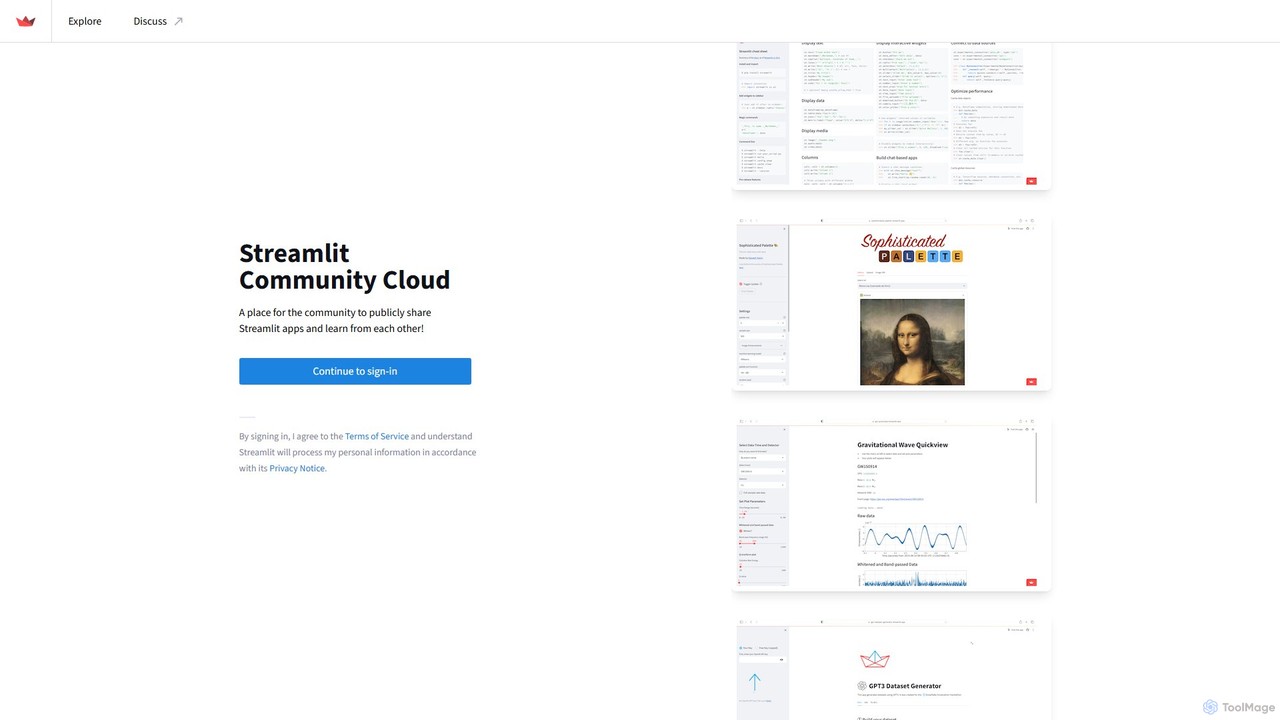
Streamlit is an open-source Python framework that enables developers and data scientists to build and share beautiful, custom web apps for machine learning and data science in minutes. The Streamlit Community Cloud provides a free platform to deploy, manage, and share these public applications with the world, fostering a collaborative environment for innovation.
Data Visualization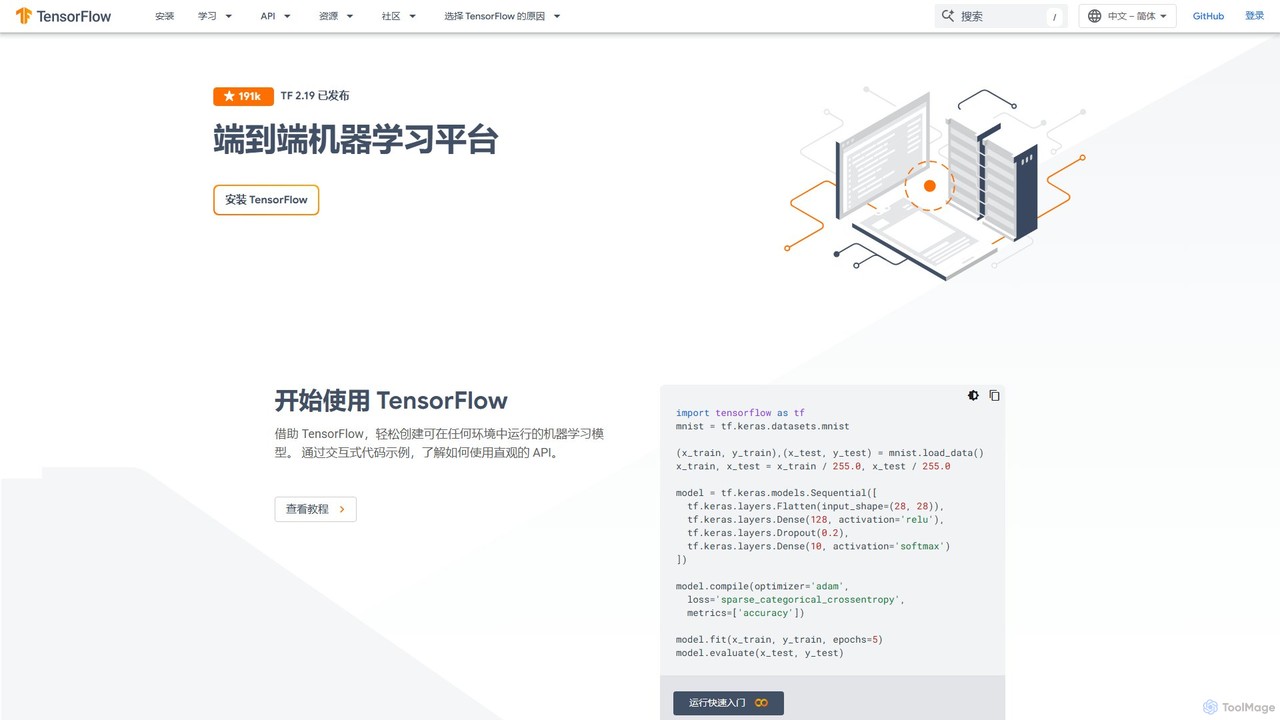
TensorFlow
TensorFlow is an end-to-end open-source platform for machine learning developed by Google. It provides a comprehensive, flexible ecosystem of tools, libraries, and community resources that lets researchers and developers build and deploy ML-powered applications. From beginners to experts, TensorFlow offers intuitive high-level APIs for easy model building and powerful low-level APIs for advanced research, enabling deployment across servers, edge devices, and browsers.
Frameworks
Fast.ai
Fast.ai is a research institute dedicated to making deep learning accessible to everyone. It offers free courses, an open-source software library (fastai), cutting-edge research, and a vibrant community, empowering coders of all backgrounds to become deep learning practitioners.
Machine Learning
Gradio
Gradio is an open-source Python library that allows you to quickly build and share user-friendly web interfaces for your machine learning models, APIs, or any Python function. No web development experience is required.
Data Visualization
marimo
marimo is an open-source reactive Python notebook for modern data science and AI. It offers a reproducible, Git-friendly, and interactive environment where notebooks are pure Python scripts. Features include built-in AI assistance, SQL cells, and the ability to share notebooks as web apps, streamlining the workflow from experiment to production.
Data VisualizationCleora Categories
Cleora Embed Widget
Copy this embed code to place the badge on your blog, article, or product site and send readers directly to this ToolMage detail page.

Related AI tools
Streamlit
Streamlit is an open-source Python framework that enables developers and data scientists to build and share beautiful, custom web apps for machine learning and data science in minutes. The Streamlit Community Cloud provides a free platform to deploy, manage, and share these public applications with the world, fostering a collaborative environment for innovation.
Data VisualizationTensorFlow
TensorFlow is an end-to-end open-source platform for machine learning developed by Google. It provides a comprehensive, flexible ecosystem of tools, libraries, and community resources that lets researchers and developers build and deploy ML-powered applications. From beginners to experts, TensorFlow offers intuitive high-level APIs for easy model building and powerful low-level APIs for advanced research, enabling deployment across servers, edge devices, and browsers.
FrameworksFast.ai
Fast.ai is a research institute dedicated to making deep learning accessible to everyone. It offers free courses, an open-source software library (fastai), cutting-edge research, and a vibrant community, empowering coders of all backgrounds to become deep learning practitioners.
Machine LearningGradio
Gradio is an open-source Python library that allows you to quickly build and share user-friendly web interfaces for your machine learning models, APIs, or any Python function. No web development experience is required.
Data Visualization
Jyek
Jyek is an AI agent platform that understands objectives, creates execution plans, uses tools, and delivers verifiable results for complex, multi-step tasks.
Automationmarimo
marimo is an open-source reactive Python notebook for modern data science and AI. It offers a reproducible, Git-friendly, and interactive environment where notebooks are pure Python scripts. Features include built-in AI assistance, SQL cells, and the ability to share notebooks as web apps, streamlining the workflow from experiment to production.
Data Visualization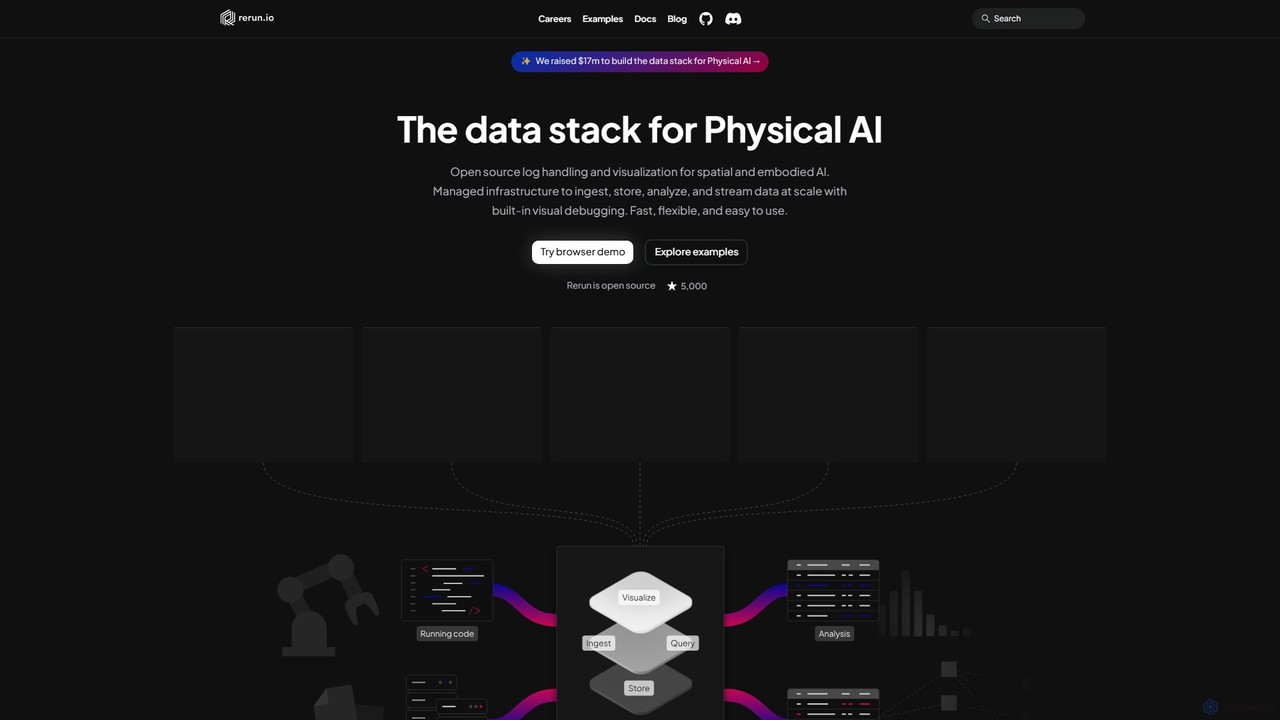
Rerun
Rerun is an open-source data stack for Physical AI, providing powerful logging and visualization tools for multimodal, time-series data. Designed for robotics, computer vision, and spatial computing, it helps developers understand and debug complex systems with SDKs for Python, Rust, and C++.
Machine Learning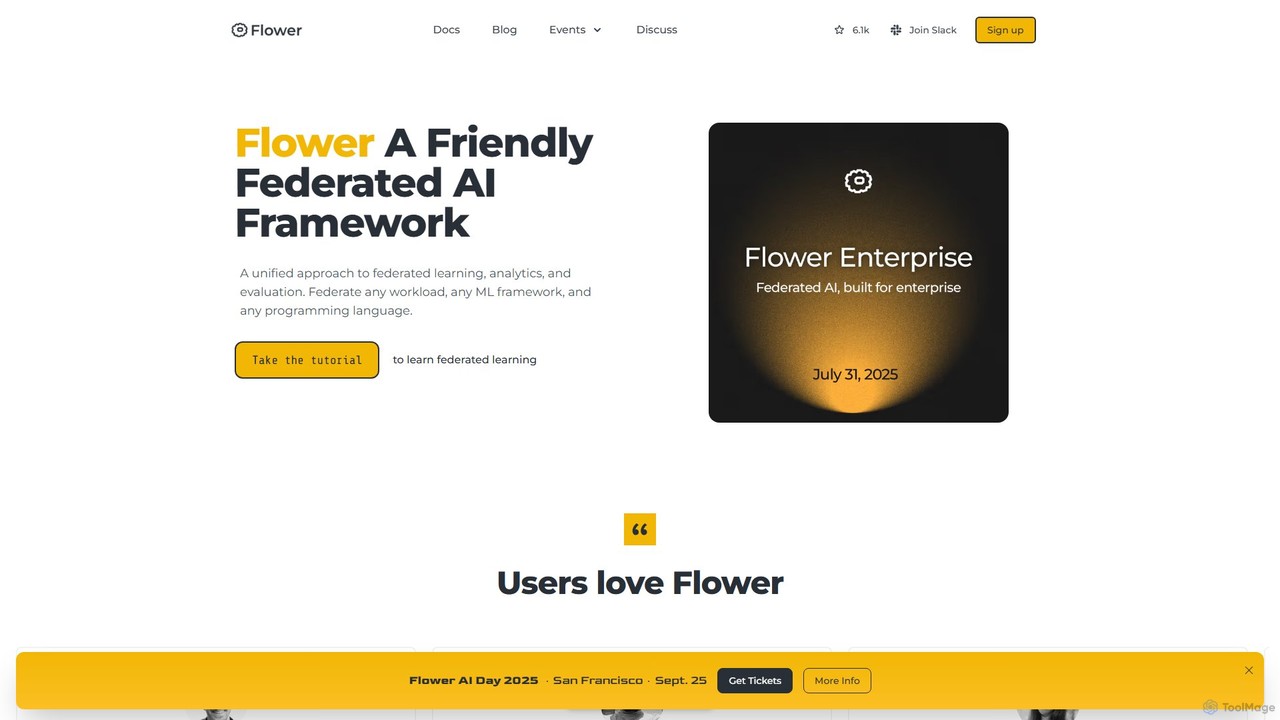
Flower
Flower is a friendly, open-source framework for federated learning, analytics, and evaluation. It enables training AI models on decentralized data across various devices and platforms without compromising privacy, supporting numerous ML frameworks like PyTorch, TensorFlow, and Hugging Face.
Frameworks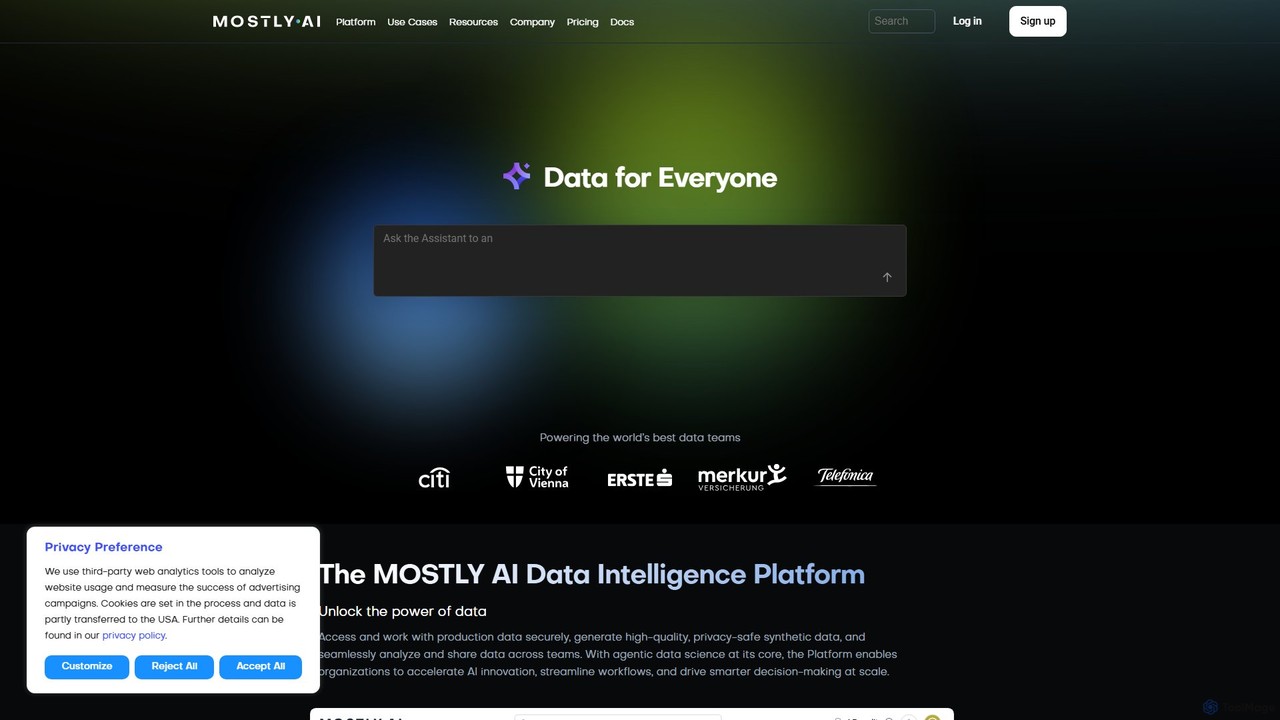
MOSTLY AI
MOSTLY AI is a Data Intelligence Platform that specializes in generating high-quality, privacy-safe synthetic data. It enables organizations to securely access, analyze, and share data, accelerating AI innovation and streamlining workflows while ensuring full compliance with privacy regulations.
Machine Learning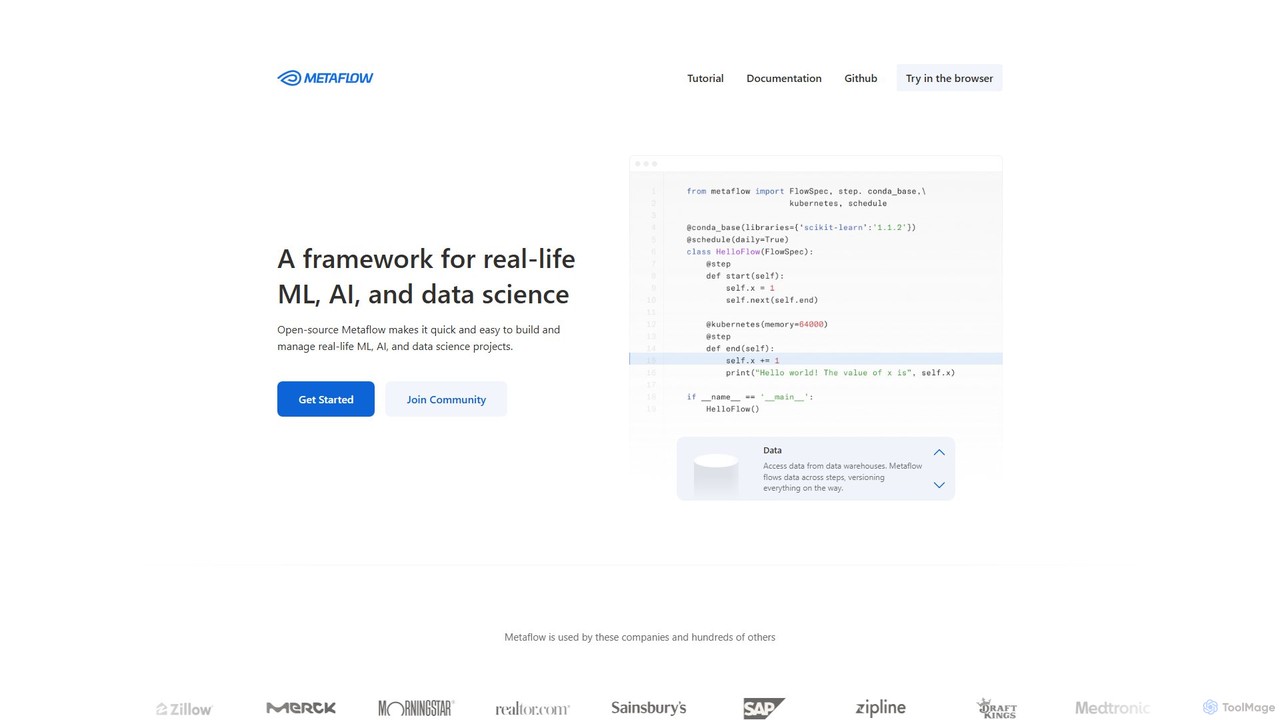
Metaflow
A human-centric Python framework, originally from Netflix, for building and managing real-life data science, ML, and AI projects. It simplifies workflow orchestration, data management, and model deployment, enabling rapid prototyping and scalable production pipelines.
Mlops
Eventual
Eventual is building the future of data infrastructure with Daft, a high-performance, open-source query engine for multimodal data. It enables engineers to process petabyte-scale images, video, audio, and text with the simplicity of SQL, drastically accelerating AI and ML workflows without the need for deep distributed systems expertise.
Machine Learning
Ludwig
Ludwig is a low-code, open-source deep learning framework that simplifies building and training custom AI models. Using declarative YAML configurations, users can easily create complex models, including LLMs, for multi-modal and multi-task learning without extensive boilerplate code. It's designed for scalability, production-readiness, and integrates with popular tools like HuggingFace and MLFlow.
Model Training
PyBrain
PyBrain is a modular and flexible open-source Machine Learning Library for Python. It provides powerful, easy-to-use algorithms for machine learning tasks, with a particular focus on neural networks, reinforcement learning, and unsupervised learning. It is designed to be accessible for beginners while remaining powerful enough for research purposes.
Libraries & Frameworks
Kaggle
Kaggle is the world's largest online community for data scientists and machine learning practitioners. Owned by Google, it provides a platform to explore datasets, build models in a web-based environment, compete in machine learning challenges, and access educational resources. It offers free access to powerful computational resources, including GPUs and TPUs, making it an essential tool for anyone from beginners to seasoned experts in the AI and data science fields.
Datasets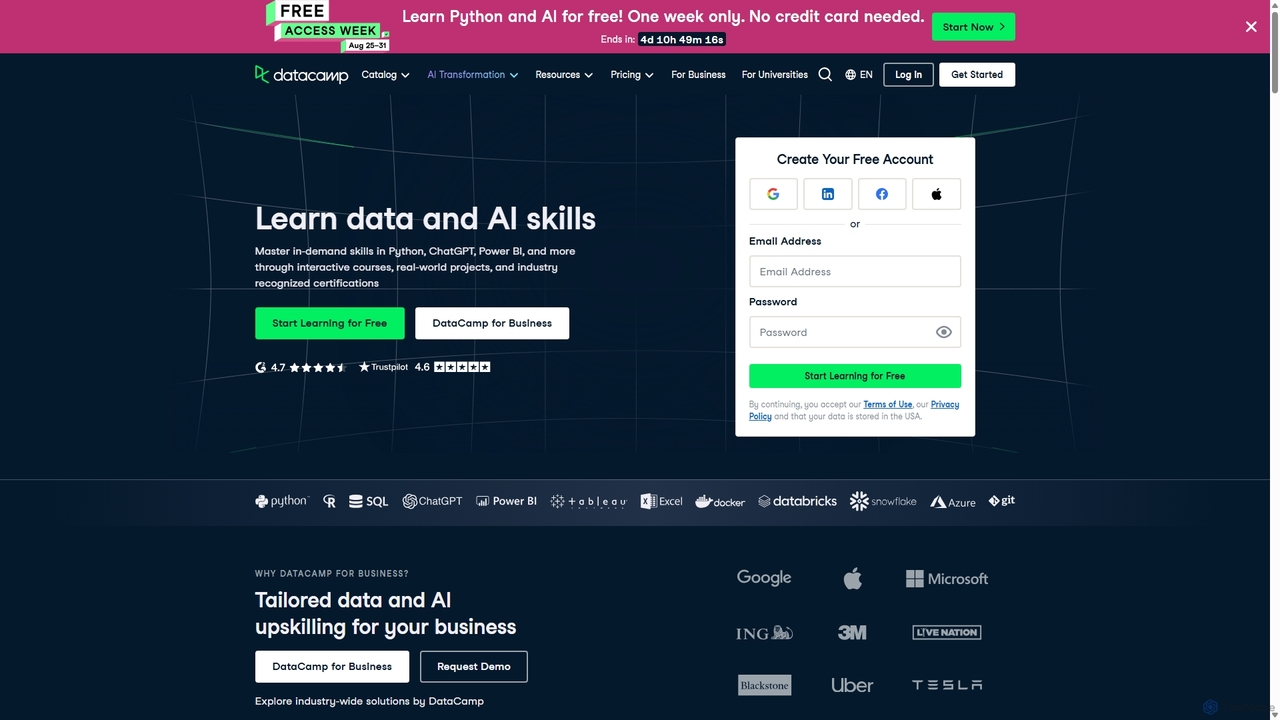
DataCamp
DataCamp is an interactive online learning platform for data science and AI. It offers hands-on courses in Python, R, SQL, Power BI, and more. Through a 'learn-by-doing' approach with in-browser coding, real-world projects, and career tracks, it empowers individuals and businesses to build job-ready data skills, from beginner to expert level.
Data Science
Cleora Comments (0)
Sign in to comment.
Sign inNo comments yet.