


MindSpore Overview
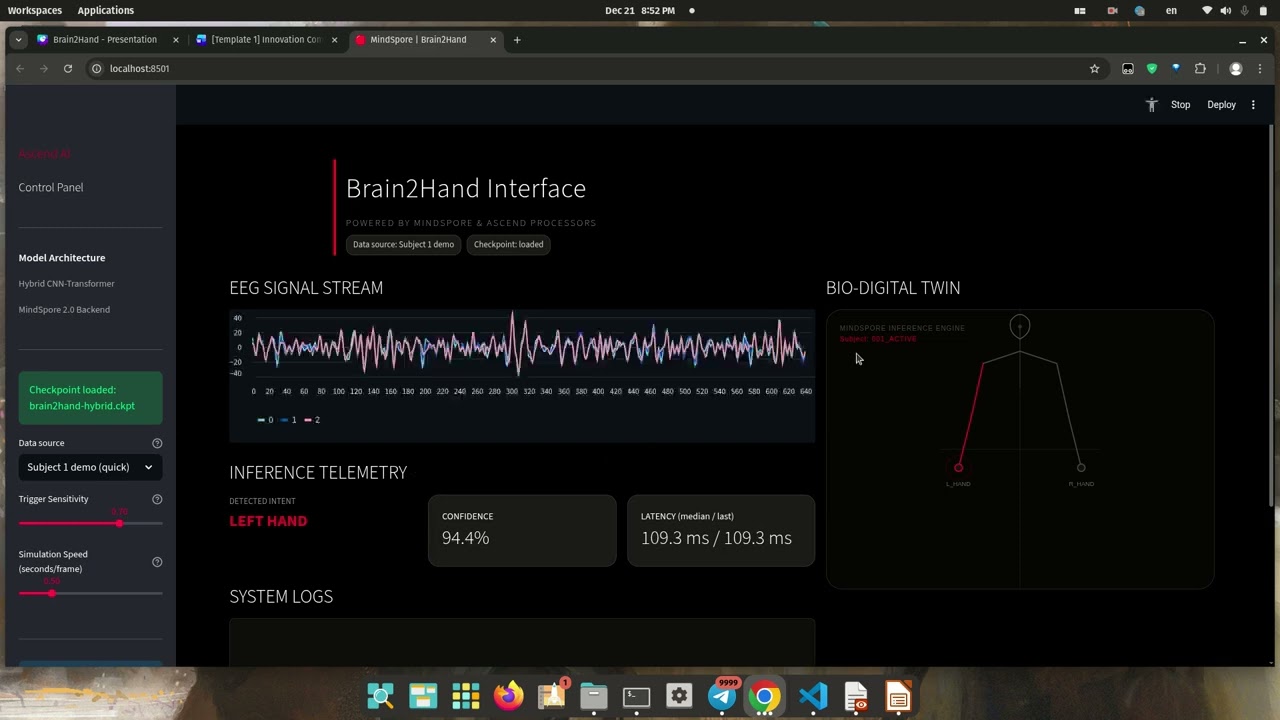
MindSpore is a cutting-edge, open-source AI computing framework designed to support development across all scenarios, from large-scale cloud data centers to edge and mobile devices. Developed with a vision to be developer-friendly, efficient, and flexible, MindSpore provides a unified architecture for training, inference, and deployment. It is particularly optimized for Huawei's Ascend AI processors but also offers excellent support for GPU and CPU, making it a versatile choice for a wide range of AI tasks. The framework is built around a vibrant community, encouraging collaboration and contribution to foster the growth of the AI software and hardware ecosystem.
How to use MindSpore
Getting started with MindSpore involves a straightforward workflow, from installation to model training and deployment. Here's a typical process based on the official tutorials:
- Installation: MindSpore can be installed on various operating systems (Linux, Windows, MacOS) and hardware platforms (Ascend, GPU, CPU). The most common installation method is via Pip. For example, to install the CPU version for Python 3.9 on Linux, you would use a command like:
pip install mindspore
Users need to select the correct wheel package based on their system architecture, Python version, and hardware. - Data Processing: MindSpore provides a powerful data processing pipeline,
mindspore.dataset, to efficiently load and preprocess data. This involves creating a dataset object (e.g.,MnistDataset), applying a series of transformations (like resizing, normalization), and batching the data for training. - Network Construction: Models in MindSpore are built by creating a class that inherits from
nn.Cell. The network layers are defined in the__init__method, and the forward computation logic is specified in theconstructmethod. This object-oriented approach allows for modular and easily understandable model definitions. - Model Training: The training process involves defining a loss function (e.g.,
nn.CrossEntropyLoss) and an optimizer (e.g.,nn.SGD). MindSpore uses a functional automatic differentiation mechanism. A gradient function is created usingmindspore.value_and_grad, which computes both the loss and the gradients. The training loop then iterates through the dataset, executes the forward and backward passes, and updates the model's parameters using the optimizer. - Saving and Loading: After training, the model's parameters can be saved to a checkpoint file using
mindspore.save_checkpoint(model, "model.ckpt"). To perform inference or resume training, you can load these parameters back into a model instance withmindspore.load_param_into_net(model, param_dict).
Core Features of MindSpore
- All-Scenario Support: A unified framework that supports deployment on cloud servers, edge devices, and mobile phones (via MindSpore Lite), enabling a seamless 'train once, deploy anywhere' experience.
- Native Distributed Training: Features built-in support for various parallel training strategies (data, model, pipeline), simplifying the process of training large-scale models efficiently across multiple devices.
- AI for Science (AI4S): Offers a suite of specialized toolkits for scientific computing, including MindSpore Flow (fluid simulation), MindSpore Elec (electromagnetic simulation), and MindSpore SPONGE (computational biology), bridging the gap between AI and traditional scientific domains.
- Hardware Optimization: Deeply optimized for Ascend AI processors to unlock maximum hardware potential, while also providing high performance on GPUs and CPUs.
- Comprehensive Ecosystem: Includes a rich set of tools and libraries such as MindSpore Insight for debugging and visualization, MindSpore Armour for security and privacy, MindSpore Golden Stick for model compression, and domain-specific kits for CV, NLP, and OCR.
- Dynamic and Static Graph Modes: Supports both dynamic graphs for flexible programming and debugging, and static graphs (Graph Mode) which are compiled and optimized for high performance and efficient deployment.
Use Cases for MindSpore
MindSpore is versatile and can be applied to a wide array of AI applications:
- Large Language Models (LLMs): With native distributed training and support for models like DeepSeek, MindSpore is ideal for developing and training large-scale language models. Its integration with quantization libraries like BitsAndBytes further enables efficient inference on consumer-grade hardware.
- Computer Vision: The MindSpore CV toolkit provides models and algorithms for tasks like image classification, object detection, and segmentation. The framework's tutorials often use datasets like MNIST and CIFAR-10 to demonstrate these capabilities.
- Natural Language Processing: The MindSpore NLP toolkit supports various NLP tasks, from sentiment analysis to machine translation, offering pre-trained models and easy-to-use APIs.
- Scientific Computing: A key differentiator is its application in scientific research. It's used to accelerate simulations in fields like chemistry, materials science, earth sciences, and fluid dynamics, enabling new discoveries.
- On-Device AI: MindSpore Lite allows developers to deploy lightweight models on mobile and embedded devices for applications like real-time image recognition, voice assistants, and smart IoT solutions.
Advantages of MindSpore
MindSpore offers several key advantages for AI developers and researchers:
- High Performance: Achieves state-of-the-art performance through co-optimization of software and hardware, especially within the Ascend ecosystem.
- Developer-Friendly: Features a Python-based API that is intuitive and easy to learn, along with comprehensive documentation, tutorials, and a supportive community.
- Flexible Deployment: Its all-scenario architecture simplifies the process of deploying models across diverse hardware and platforms.
- Open and Collaborative: As an open-source project, it benefits from a global community of contributors, ensuring rapid innovation, transparency, and a rich ecosystem of shared models and tools.
Pricing and Plans
MindSpore is a completely free and open-source software framework released under the Apache License 2.0. There are no fees or licensing costs associated with downloading, using, or modifying the framework. Costs may only be incurred when using cloud computing resources (e.g., on platforms like Huawei Cloud's ModelArts) or purchasing specialized hardware (like Ascend processors) to run MindSpore.
Traffic
Latest traffic
Status
Monthly traffic trend
- 2025-9: 104.9K
- 2026-1: 94.3K
- 2026-2: 59.6K
- 2026-3: 62.0K
- 2026-4: 53.6K
- 2026-5: 61.6K
Geography
Top 5 countries / regions
- 🇨🇳China69.0%
- 🇺🇸United States10.3%
- 🇦🇺Australia8.7%
- 🇳🇬Nigeria7.5%
- 🇷🇺Russia4.5%
Traffic sources
| Source type | Percentage |
|---|---|
Direct | 58.8% |
Referral | 41.3% |
Top keywords
| Keyword | Cost per click |
|---|---|
| first and second order oprimizers | $0.00 |
| fuxi | $0.00 |
| mindspore | $0.00 |
| resnet50 dataset | $0.00 |
| 量子神经网络原理 | $0.00 |
MindSpore Videos on YouTube



MindSpore Alternatives
MONAI
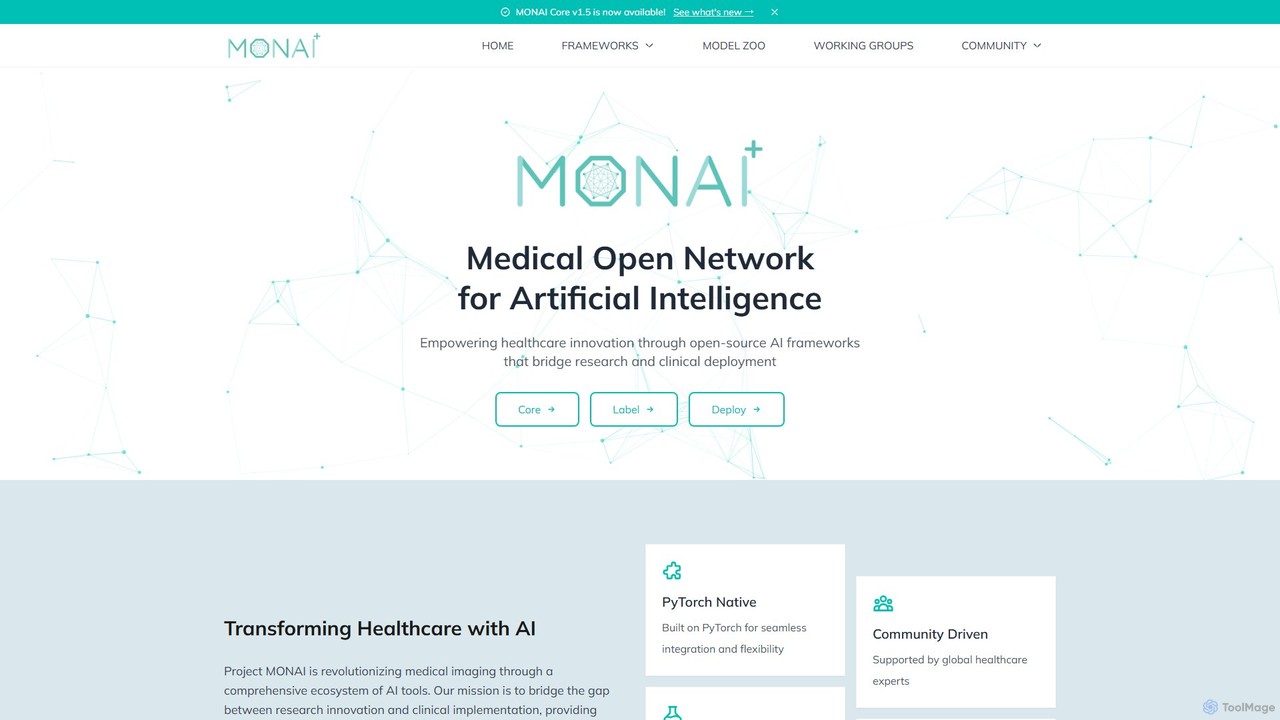
MONAI (Medical Open Network for AI) is a free, open-source, PyTorch-based framework designed to accelerate AI in healthcare. It provides a comprehensive ecosystem of tools for researchers and clinicians, covering the entire AI lifecycle from data annotation and model training (MONAI Core, MONAI Label) to clinical deployment (MONAI Deploy), bridging the gap between research and real-world application.
Data Annotation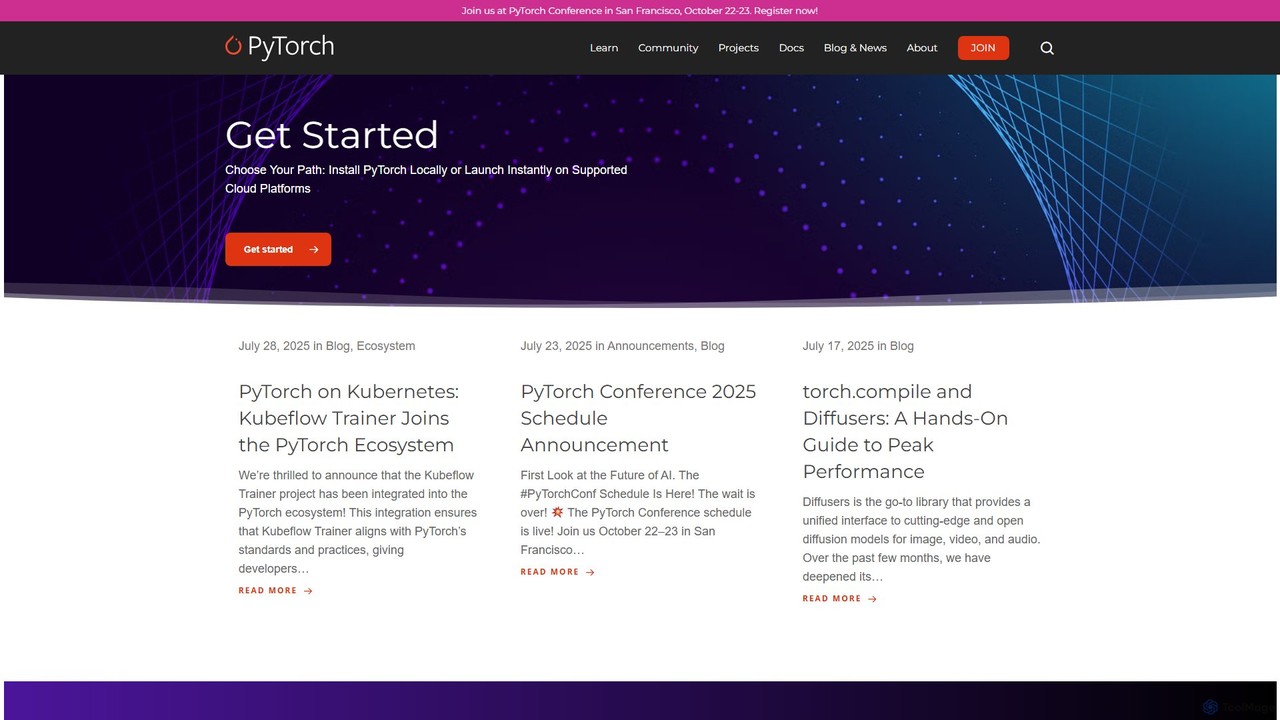
PyTorch
PyTorch is an open-source machine learning framework based on the Torch library, used for applications such as computer vision and natural language processing. It offers a flexible, Python-first environment that accelerates the path from research prototyping to production deployment.
Deep Learning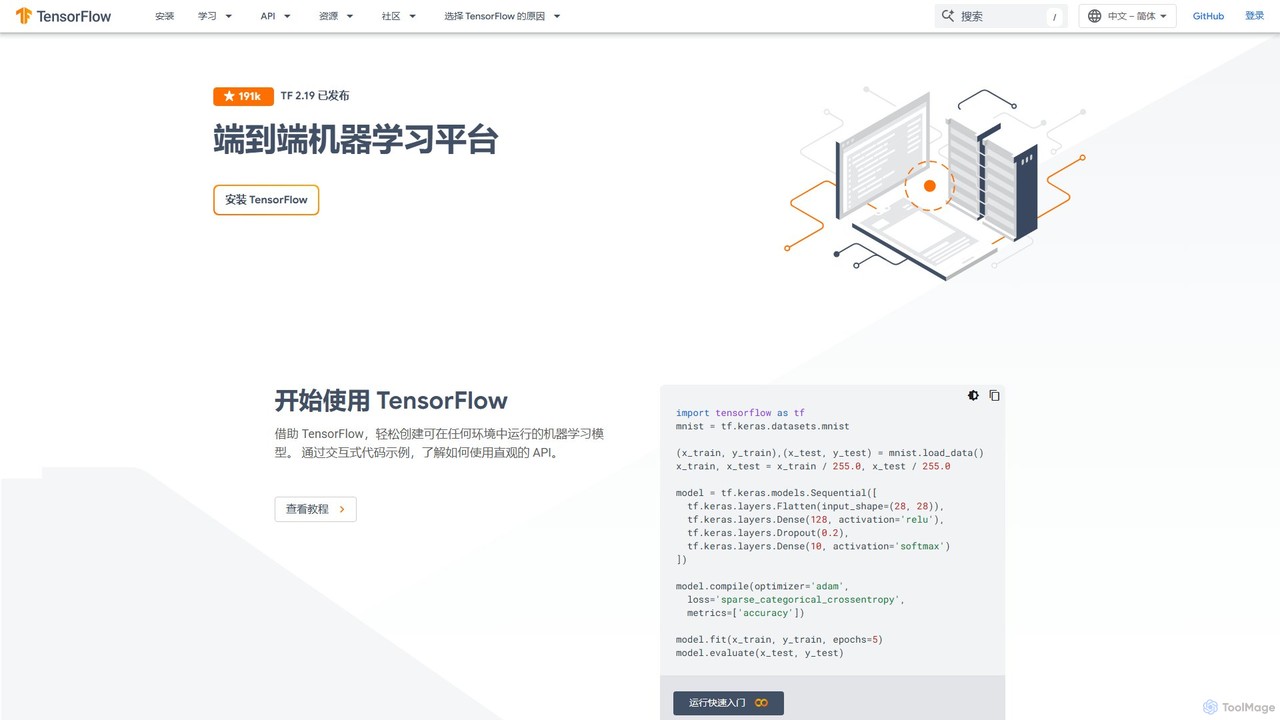
TensorFlow
TensorFlow is an end-to-end open-source platform for machine learning developed by Google. It provides a comprehensive, flexible ecosystem of tools, libraries, and community resources that lets researchers and developers build and deploy ML-powered applications. From beginners to experts, TensorFlow offers intuitive high-level APIs for easy model building and powerful low-level APIs for advanced research, enabling deployment across servers, edge devices, and browsers.
Frameworks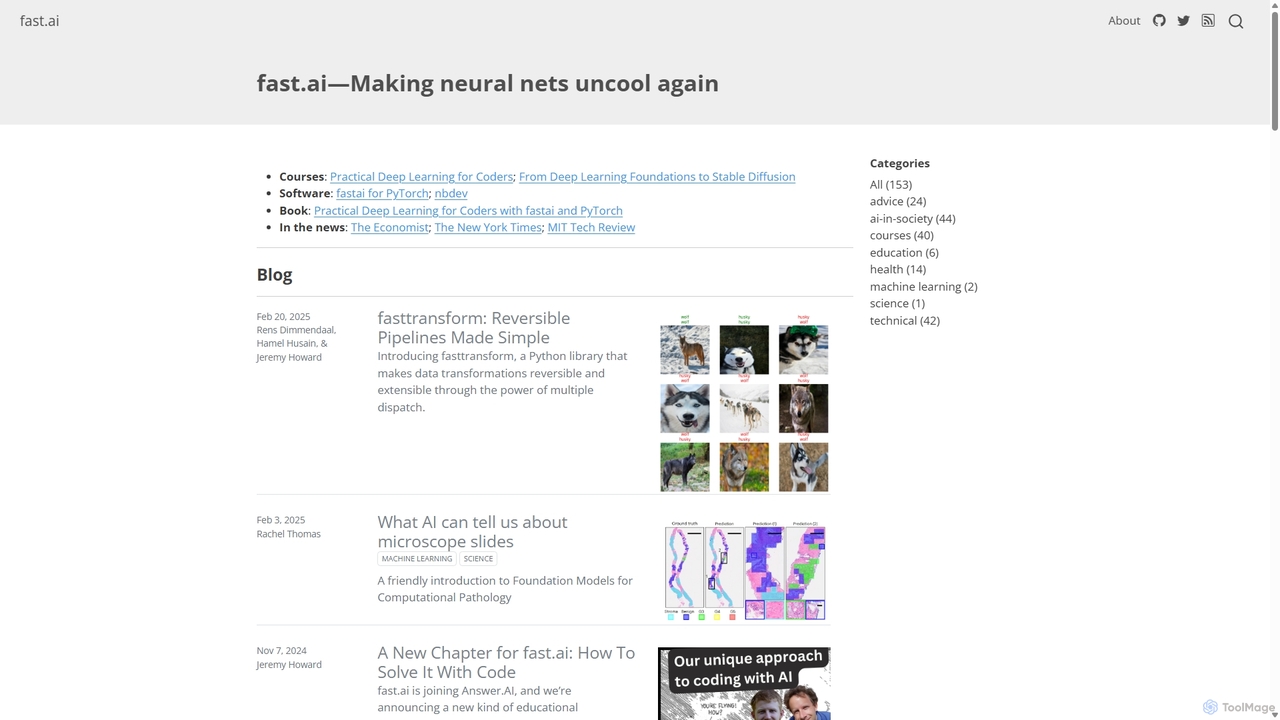
Fast.ai
Fast.ai is a research institute dedicated to making deep learning accessible to everyone. It offers free courses, an open-source software library (fastai), cutting-edge research, and a vibrant community, empowering coders of all backgrounds to become deep learning practitioners.
Machine Learning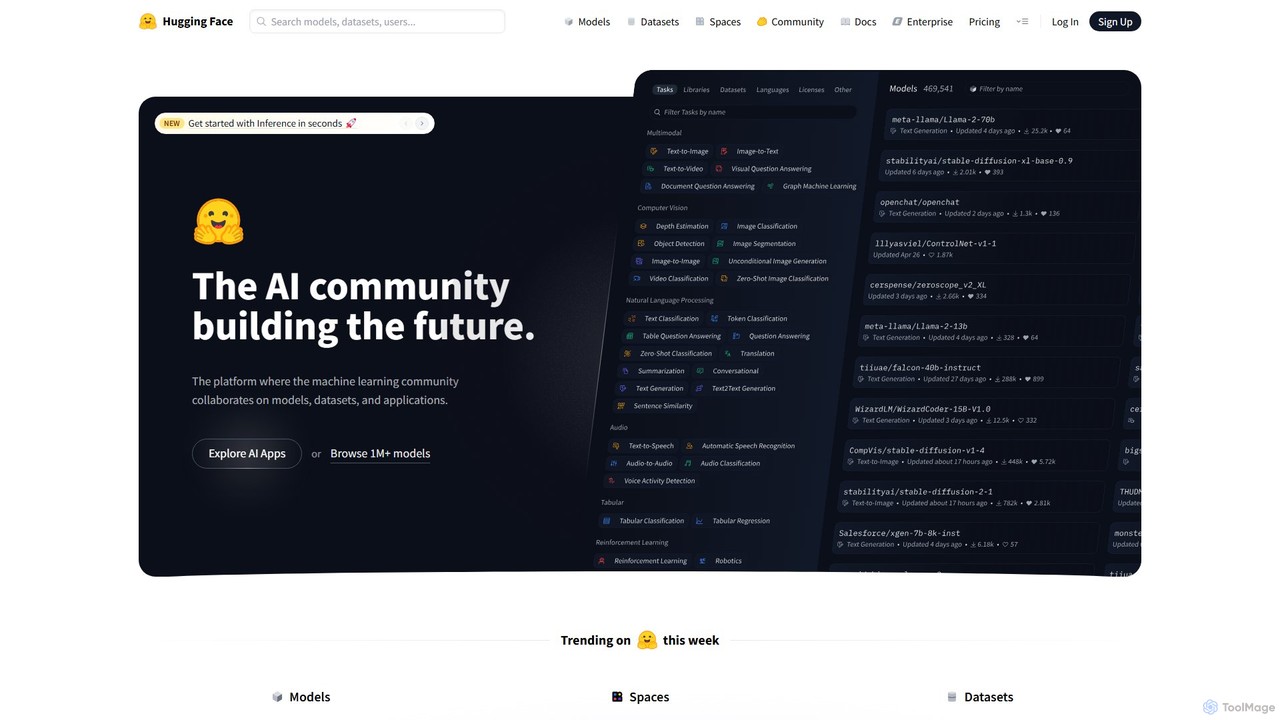
Hugging Face
Hugging Face is the leading open-source platform and community for machine learning. It provides tools for developers and researchers to build, train, and deploy state-of-the-art models, offering a vast hub of pre-trained models, datasets, and demo applications.
DatasetMindSpore Categories
MindSpore Embed Widget
Copy this embed code to place the badge on your blog, article, or product site and send readers directly to this ToolMage detail page.

Related AI tools
PyTorch
PyTorch is an open-source machine learning framework based on the Torch library, used for applications such as computer vision and natural language processing. It offers a flexible, Python-first environment that accelerates the path from research prototyping to production deployment.
Deep LearningTensorFlow
TensorFlow is an end-to-end open-source platform for machine learning developed by Google. It provides a comprehensive, flexible ecosystem of tools, libraries, and community resources that lets researchers and developers build and deploy ML-powered applications. From beginners to experts, TensorFlow offers intuitive high-level APIs for easy model building and powerful low-level APIs for advanced research, enabling deployment across servers, edge devices, and browsers.
FrameworksFast.ai
Fast.ai is a research institute dedicated to making deep learning accessible to everyone. It offers free courses, an open-source software library (fastai), cutting-edge research, and a vibrant community, empowering coders of all backgrounds to become deep learning practitioners.
Machine LearningHugging Face
Hugging Face is the leading open-source platform and community for machine learning. It provides tools for developers and researchers to build, train, and deploy state-of-the-art models, offering a vast hub of pre-trained models, datasets, and demo applications.
Dataset
Google Research
Google Research is a premier hub for exploring groundbreaking advancements in science and AI. It provides open access to a vast repository of research papers, project showcases, and open-source resources across diverse fields like machine learning, quantum computing, and healthcare. It's an essential platform for researchers, developers, and enthusiasts to stay at the forefront of technological innovation and understand its real-world impact.
Learning Platform
aionlinecourse
An interactive online learning platform offering free, hands-on AI projects, in-depth tutorials, and comprehensive resources. It covers Machine Learning, Generative AI, NLP, and Computer Vision, designed for learners of all levels, from beginners to experienced professionals, to build practical, industry-relevant skills.
Code Libraries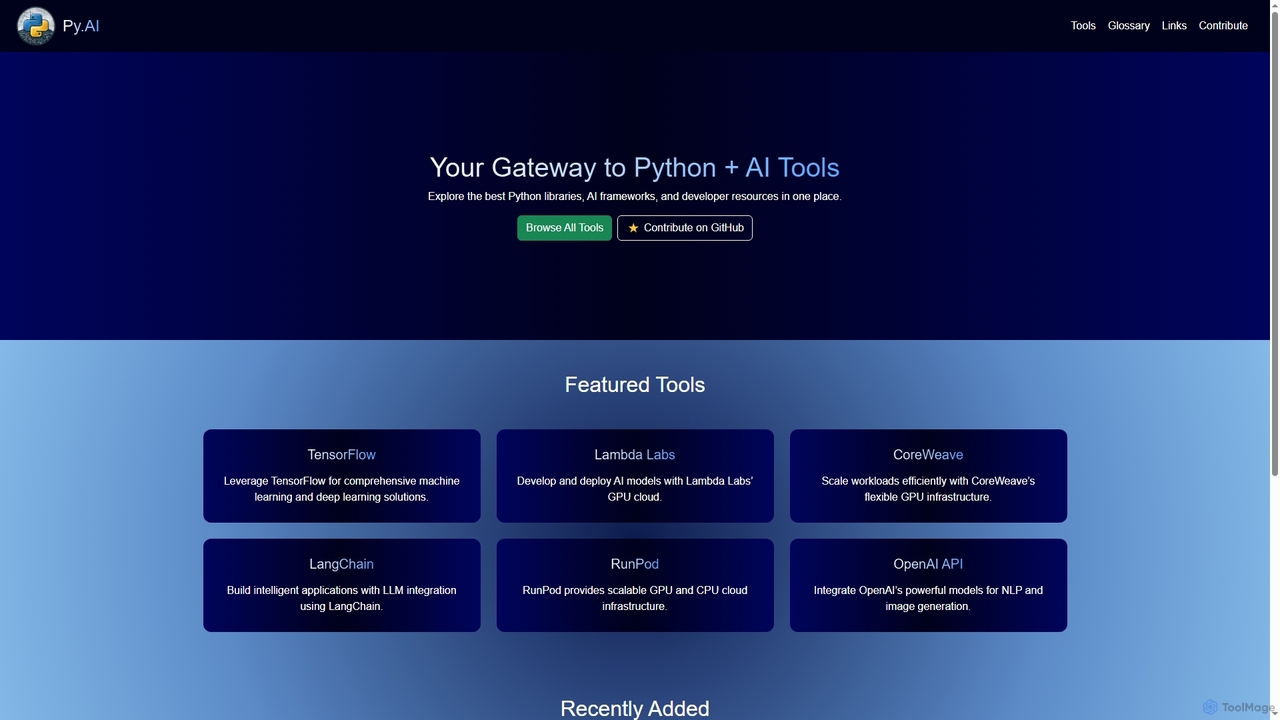
Py
Py is a curated online directory serving as a comprehensive gateway to the best Python libraries, AI frameworks, and developer resources. It helps users explore, discover, and find tools to enhance their machine learning and AI projects.
Tool DiscoveryMONAI
MONAI (Medical Open Network for AI) is a free, open-source, PyTorch-based framework designed to accelerate AI in healthcare. It provides a comprehensive ecosystem of tools for researchers and clinicians, covering the entire AI lifecycle from data annotation and model training (MONAI Core, MONAI Label) to clinical deployment (MONAI Deploy), bridging the gap between research and real-world application.
Data Annotation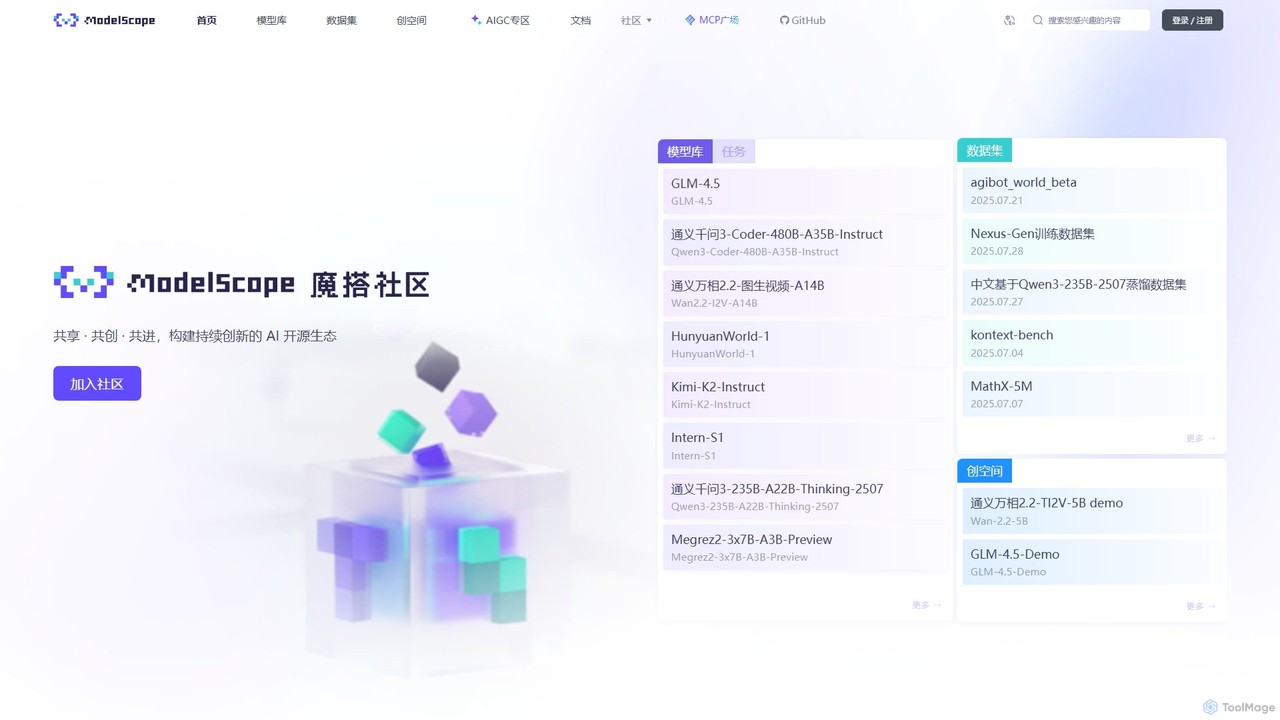
ModelScope
ModelScope is an open-source AI model community and platform, offering a vast library of models and datasets. It provides a "Model-as-a-Service" (MaaS) ecosystem with tools for easy model training, inference, and application development, supported by free computing resources.
Model Hub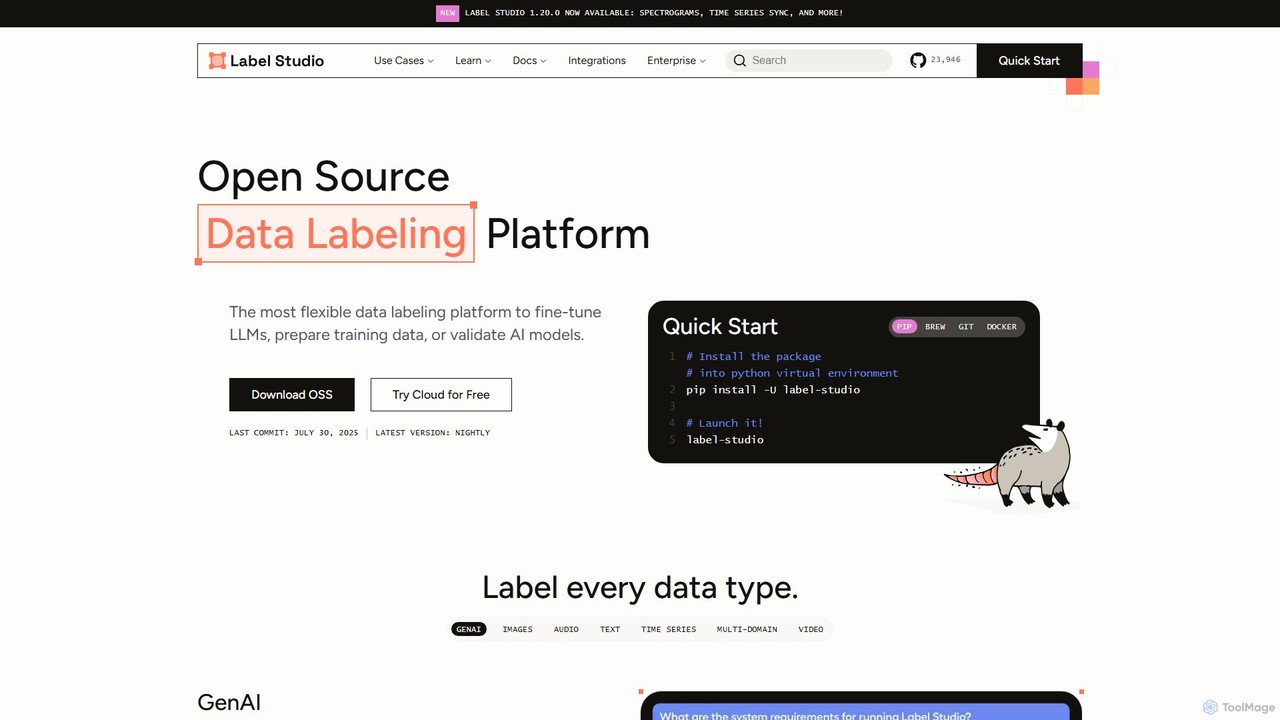
Label Studio
Label Studio is a versatile open-source data labeling platform designed for a wide range of data types. It enables users to annotate images, text, audio, video, and time-series data to fine-tune LLMs, prepare training data for machine learning, and validate AI models with human-in-the-loop feedback.
Training Data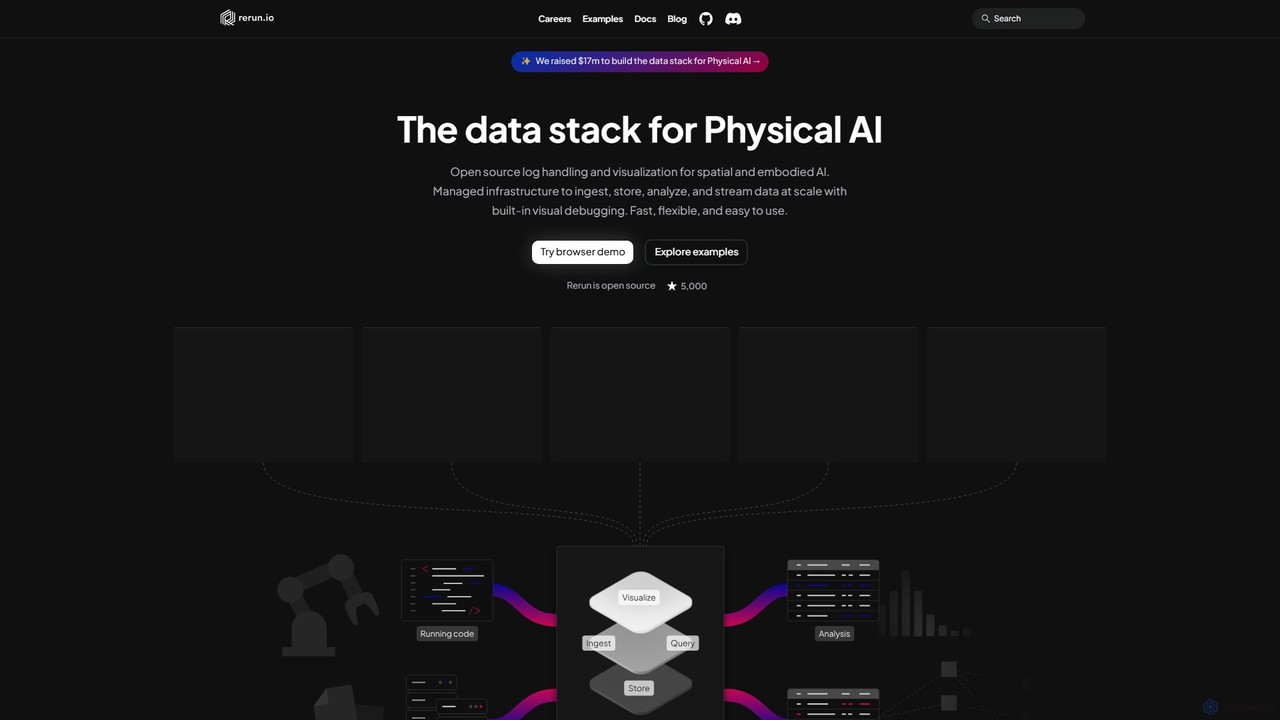
Rerun
Rerun is an open-source data stack for Physical AI, providing powerful logging and visualization tools for multimodal, time-series data. Designed for robotics, computer vision, and spatial computing, it helps developers understand and debug complex systems with SDKs for Python, Rust, and C++.
Machine Learning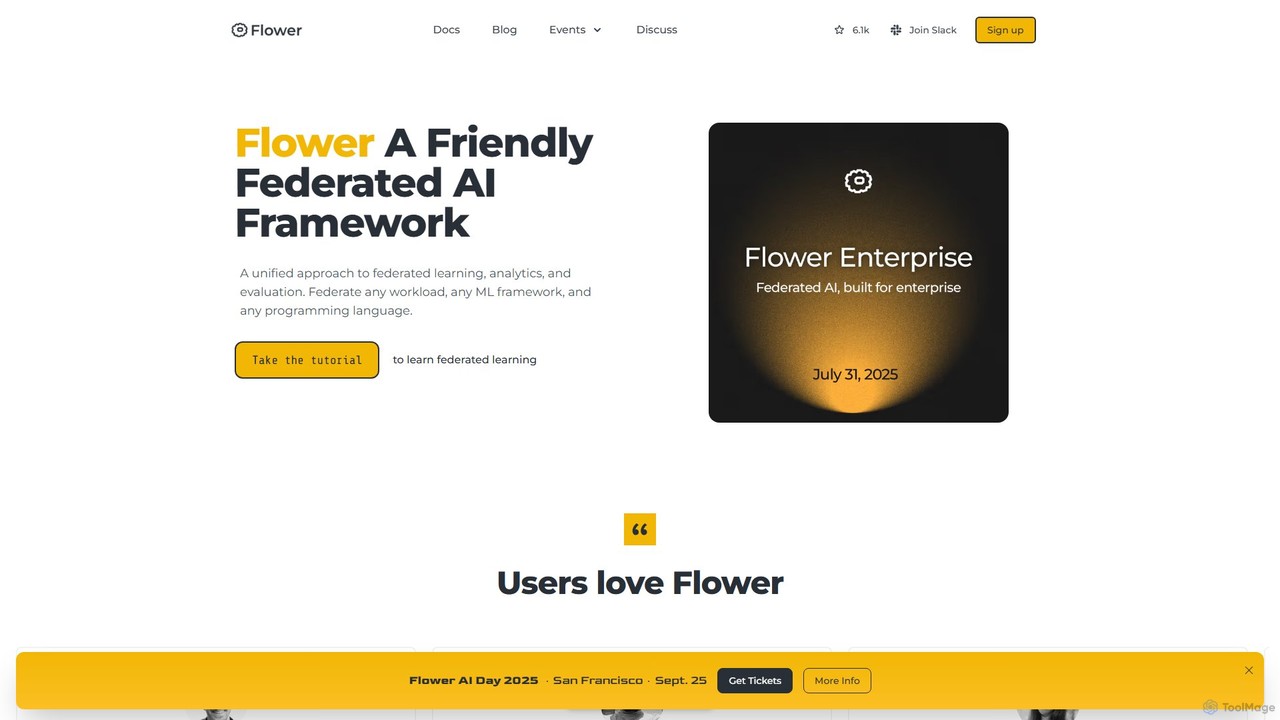
Flower
Flower is a friendly, open-source framework for federated learning, analytics, and evaluation. It enables training AI models on decentralized data across various devices and platforms without compromising privacy, supporting numerous ML frameworks like PyTorch, TensorFlow, and Hugging Face.
Frameworks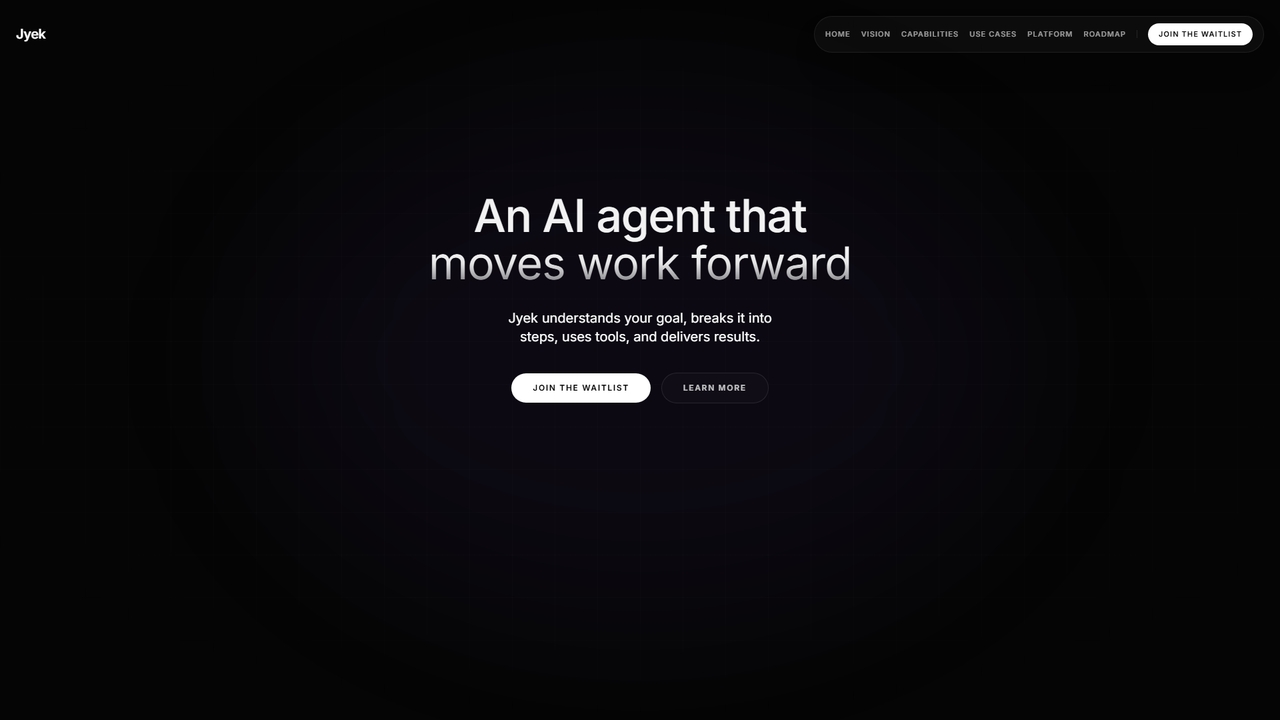
Jyek
Jyek is an AI agent platform that understands objectives, creates execution plans, uses tools, and delivers verifiable results for complex, multi-step tasks.
Automation
Prodigy
Prodigy is a scriptable annotation tool for AI, Machine Learning, and NLP, designed for developers. It enables rapid creation of high-quality training and evaluation data through model-assisted, human-in-the-loop workflows. It runs on your own infrastructure, ensuring complete data privacy and control.
Annotation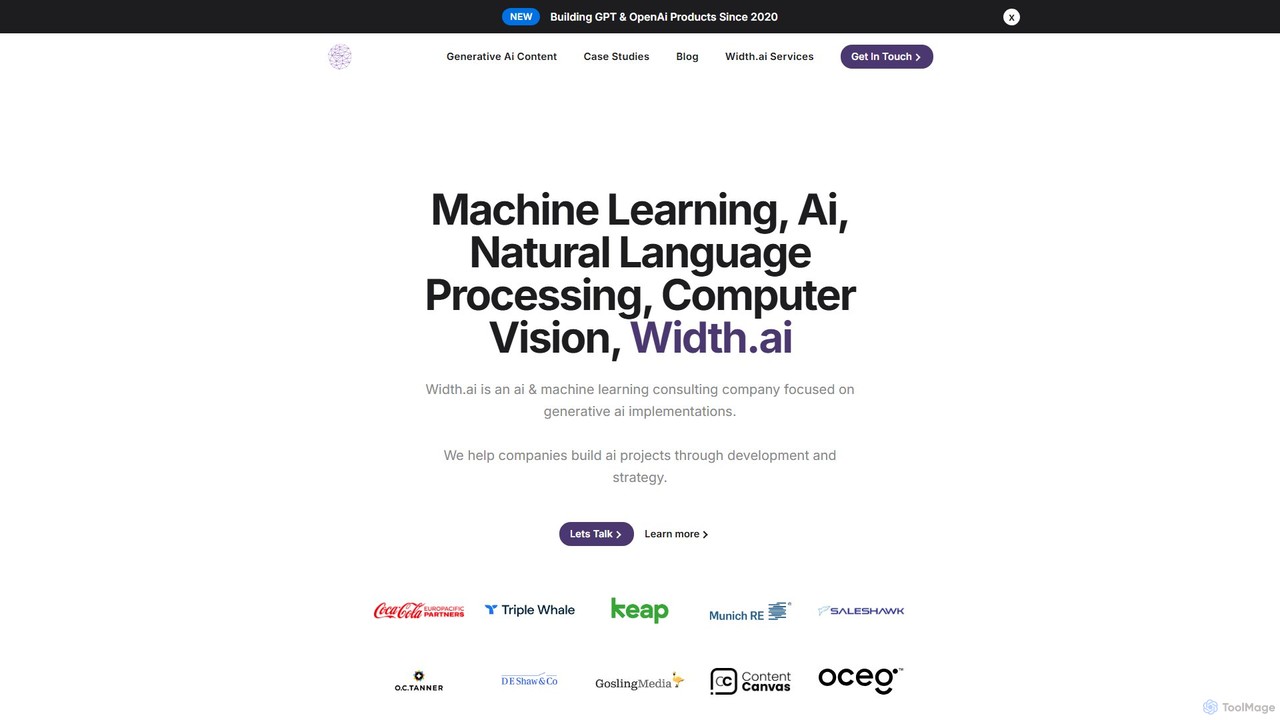
Width.ai
Width.ai is a specialized AI and machine learning consulting firm that provides custom solutions for businesses. They leverage cutting-edge technologies like GPT, NLP, and computer vision to solve complex problems, automate workflows, and drive growth. Their services range from developing advanced summarizers and chatbots to building high-accuracy product categorization and computer vision systems.
Ai Consulting
MindSpore Comments (0)
Sign in to comment.
Sign inNo comments yet.