

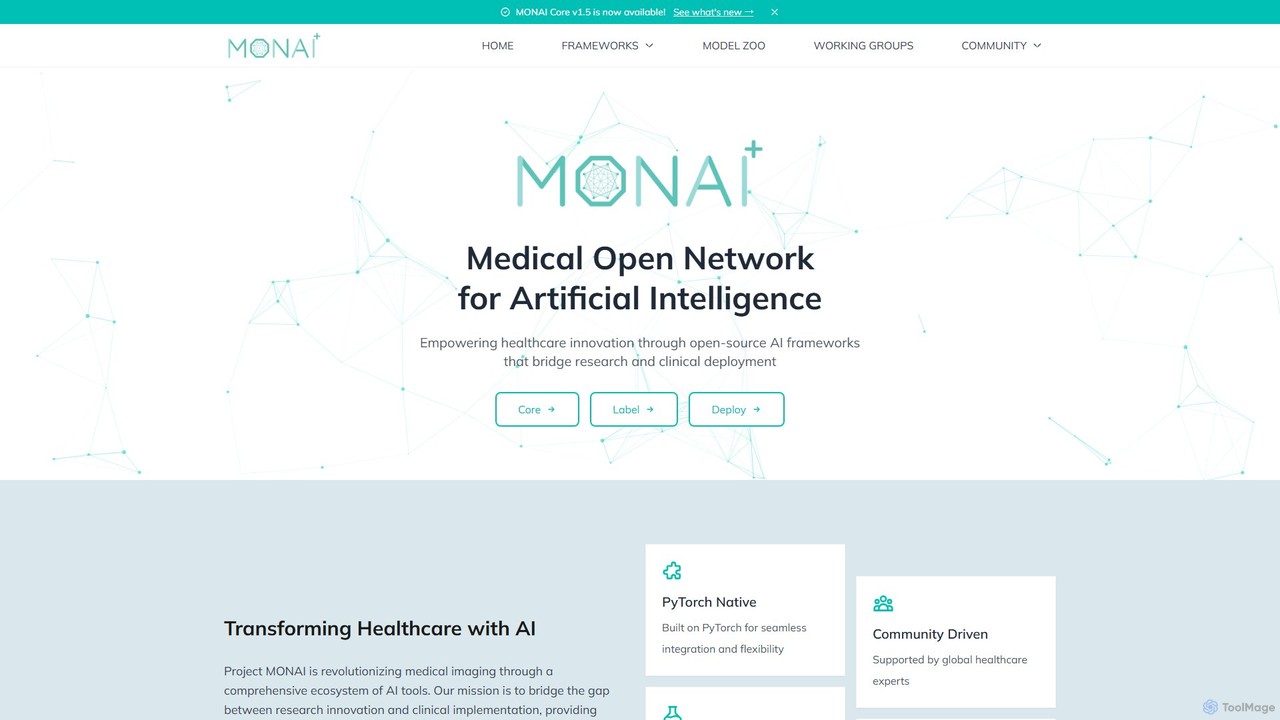
MONAI Overview
MONAI (Medical Open Network for AI) is a collaborative, open-source project that provides a comprehensive, PyTorch-based framework to advance the development and deployment of artificial intelligence in healthcare imaging. Initiated by NVIDIA and King's College London, MONAI has grown into a vibrant global community of researchers, clinicians, and industry experts. Its core mission is to bridge the gap between academic research and clinical implementation by providing standardized, enterprise-grade tools that accelerate innovation in medical technology.
The MONAI ecosystem is built on three main pillars, each addressing a critical stage of the medical AI lifecycle:
- MONAI Core: A domain-specific framework for training state-of-the-art medical imaging AI models. It offers medical-specific data transforms, cutting-edge architectures like UNETR, a zoo of pre-trained models, and automated machine learning pipelines.
- MONAI Label: An intelligent, AI-assisted image annotation tool. It significantly speeds up the creation of high-quality training datasets by using active learning strategies and integrating seamlessly with popular medical viewers like 3D Slicer, OHIF, and QuPath.
- MONAI Deploy: A robust framework for packaging and deploying AI models into clinical environments. It supports clinical standards like DICOM and FHIR and enables containerized deployment through MONAI Application Packages (MAPs) for seamless integration into existing workflows.
How to use MONAI
Getting started with MONAI depends on your specific needs, whether it's training a model or annotating data.
For Model Training with MONAI Core:
- Installation: Install the core library using pip.
pip install monai - Develop Your Workflow: Create a Python script to define your data loading and preprocessing pipeline using MONAI's rich set of transforms. For example:
from monai.transforms import Compose, LoadImage, ScaleIntensity, AddChannel
transforms = Compose([LoadImage(image_only=True), AddChannel(), ScaleIntensity()])
image = transforms(image_path) - Train a Model: Utilize MONAI's network architectures, loss functions, and training loops, or leverage the Auto3DSeg feature for an automated, state-of-the-art 3D segmentation pipeline.
For AI-Assisted Annotation with MONAI Label:
- Installation: Install the MONAI Label package.
pip install monailabel - Download a Sample App & Data: Quickly get started by downloading a pre-configured application and sample dataset.
monailabel apps --download --name radiology --output appsmonailabel datasets --download --name Task09_Spleen --output datasets - Launch the Server: Start the MONAI Label server with your chosen app and data.
monailabel start_server --app apps/radiology --studies datasets/Task09_Spleen/imagesTr - Connect and Annotate: Connect your preferred medical imaging viewer (e.g., 3D Slicer) to the server and begin annotating with real-time AI assistance.
Core Features of MONAI
- End-to-End Medical AI Workflow: Provides a unified toolkit for the entire process, from data annotation and preprocessing to model training, validation, and clinical deployment.
- Medical-Specific Toolkit: Offers highly specialized transforms for 2D, 3D, and 4D medical data, along with domain-specific loss functions and evaluation metrics (e.g., Dice, Hausdorff distance).
- State-of-the-Art Models: Includes a zoo of over 30 pre-trained models and cutting-edge architectures like UNETR and the award-winning Auto3DSeg pipeline for automated segmentation.
- Intelligent Annotation (MONAI Label): Features AI-assisted labeling and active learning to reduce annotation time by 50-80% while improving model performance.
- Clinical Deployment Framework (MONAI Deploy): Simplifies the integration of AI models into clinical settings with support for DICOM, FHIR, and containerized MONAI Application Packages (MAPs).
- Community-Driven and Open Source: Licensed under Apache 2.0, fostering collaboration and innovation with strong support from a global community via GitHub, Slack, and discussion forums.
Use Cases for MONAI
MONAI is being implemented by leading healthcare institutions and industry partners to transform medical imaging workflows.
- Radiology: Used for automated segmentation of organs (e.g., kidneys, spleen) and detection of tumors in CT and MRI scans. The Mayo Clinic has integrated MONAI-compatible models into its clinical radiology workflows to enhance efficiency and decision-making.
- Pathology: Specialized for analyzing whole slide images, including cell detection and tissue classification. It integrates with viewers like QuPath to accelerate pathology workflows.
- Endoscopy: Optimized for real-time applications like polyp detection and surgical tool tracking in video sequences.
- Enterprise Deployment: Siemens Healthineers adopted MONAI Deploy for their Digital Marketplace, enabling standardized, enterprise-scale deployment of AI solutions across their global healthcare network.
Advantages of MONAI
- Accelerated Innovation: Drastically reduces the time required to develop, validate, and deploy medical AI models.
- Standardization and Reproducibility: Promotes best practices and provides reproducible pipelines, ensuring that research is reliable and transferable.
- Bridging Research and Clinical Practice: Offers a clear and robust pathway to move AI models from the research lab into real-world clinical use.
- Flexibility and Power: Built on PyTorch, it provides a flexible, modular design that caters to both beginners and experts, allowing for easy customization.
- Enterprise-Grade: Designed for scalability, robustness, and seamless integration, making it suitable for demanding clinical environments.
Pricing and Plans
Project MONAI is a completely free and open-source initiative. All its tools and frameworks, including MONAI Core, MONAI Label, and MONAI Deploy, are available under the permissive Apache 2.0 license, encouraging maximum flexibility, collaboration, and adoption in both academic and commercial settings.
Traffic
Latest traffic
Status
Monthly traffic trend
- 2025-9: 83.9K
- 2026-1: 18.1K
- 2026-2: 12.1K
- 2026-3: 11.8K
- 2026-4: 18.4K
- 2026-5: 18.2K
Geography
Top 5 countries / regions
- 🇻🇳Vietnam52.1%
- 🇺🇸United States22.2%
- 🇹🇷Türkiye9.8%
- 🇮🇳India8.9%
- 🇸🇬Singapore7.0%
Top keywords
| Keyword | Cost per click |
|---|---|
| model zoo monai | $0.00 |
| mon ai | $1.60 |
| monai | $3.45 |
| monai preprocessing | $0.00 |
| randrotate monai | $0.00 |
MONAI Alternatives
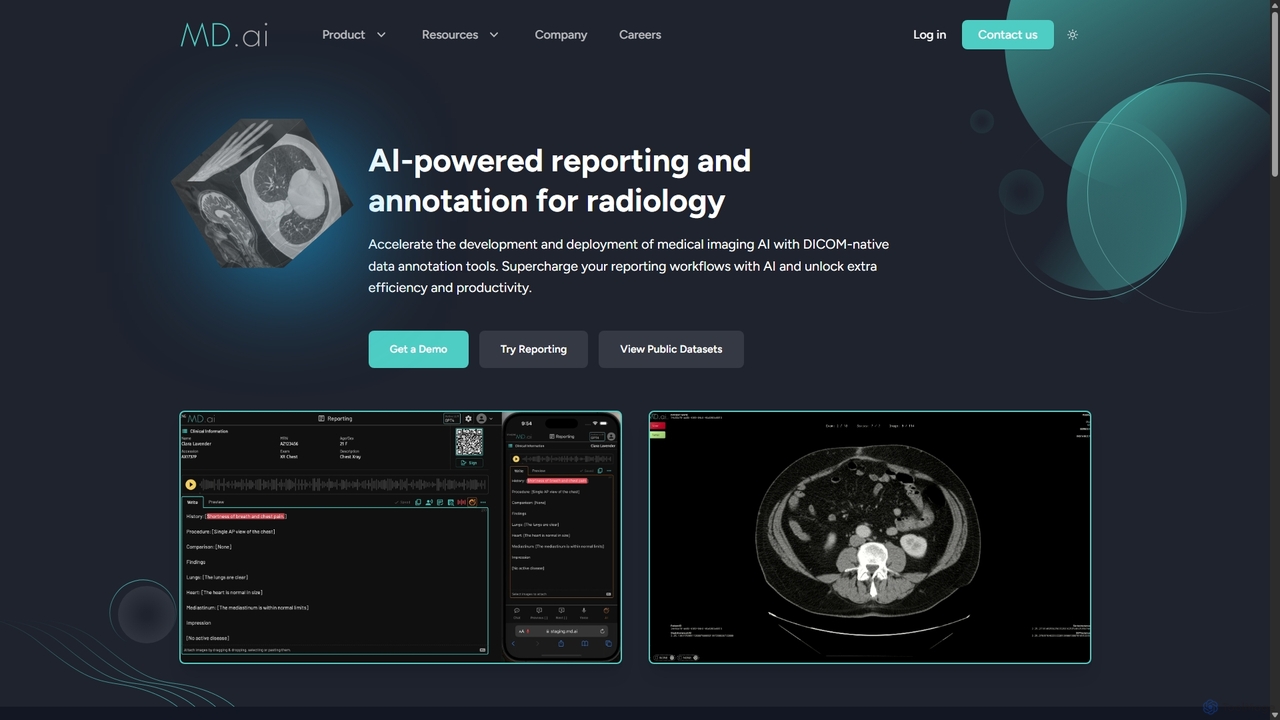
MD.ai
MD.ai is a comprehensive AI platform for radiology, offering DICOM-native data annotation tools to build and validate medical imaging AI models, and an LLM-powered reporting system to supercharge clinical workflows for radiologists, ensuring efficiency, accuracy, and compliance.
Data Annotation
MindSpore
MindSpore is an open-source, all-scenario AI computing framework designed for developers and data scientists. It provides a developer-friendly experience with flexible deployment across cloud, edge, and device environments. It excels in distributed training for large models and offers specialized toolkits for scientific computing (AI4S), ensuring high performance and efficiency, especially on Ascend hardware.
Scientific Computing
Neural4D
Neural4D is an advanced AI platform for 4D medical imaging analysis. It leverages deep learning to process spatio-temporal data from dynamic CT, MRI, and PET scans, enabling faster diagnostics, precise tumor tracking, and quantitative analysis of physiological functions for healthcare professionals and researchers.
Data Visualization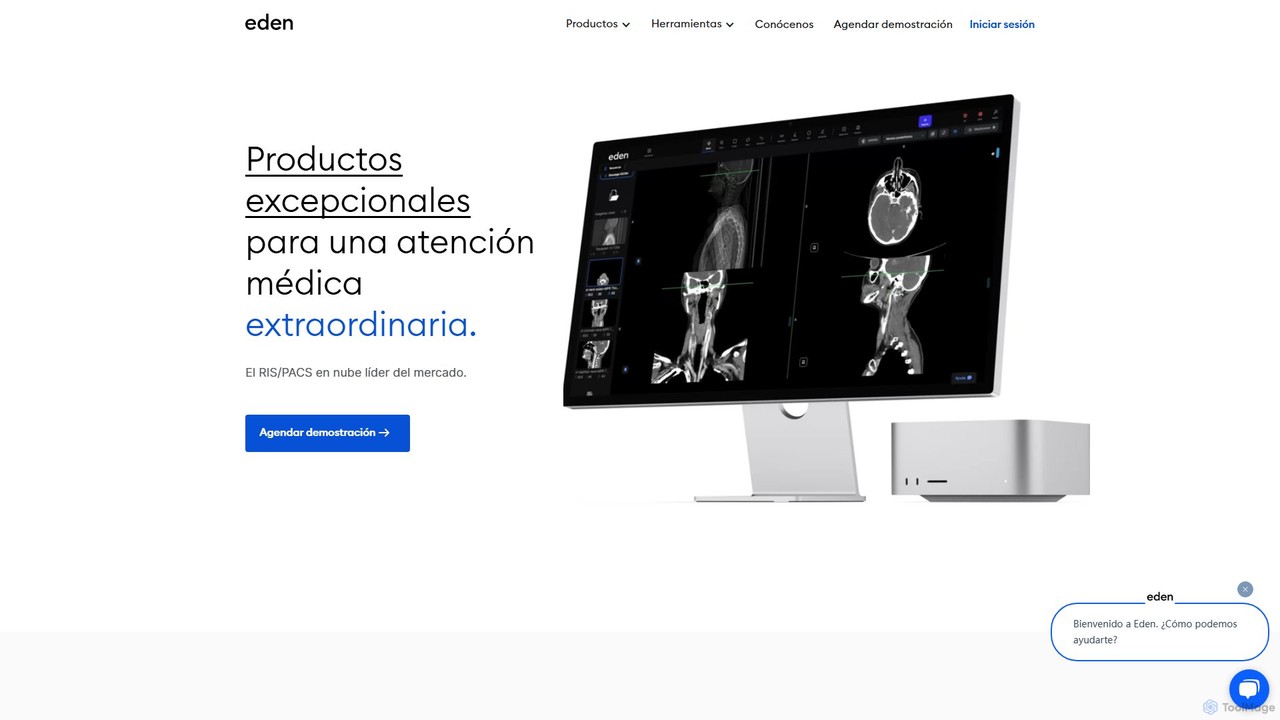
edenmed
edenmed is an AI-powered, cloud-native healthcare platform designed for medical institutions. It offers an integrated suite of tools including an ultra-fast PACS for medical imaging, an AI diagnostic assistant, a comprehensive management system (RIS), and business intelligence analytics to streamline operations, enhance diagnostic accuracy, and improve the patient experience.
Medical Imaging
Lunit
Lunit is a medical AI company dedicated to conquering cancer. It provides AI-powered solutions for cancer diagnostics and therapeutics, helping clinicians detect early-stage cancer with greater accuracy and predict patient response to treatment. Its products analyze medical images and tissue data to improve clinical outcomes.
Predictive AnalyticsMONAI Categories
MONAI Embed Widget
Copy this embed code to place the badge on your blog, article, or product site and send readers directly to this ToolMage detail page.

Related AI tools
MindSpore
MindSpore is an open-source, all-scenario AI computing framework designed for developers and data scientists. It provides a developer-friendly experience with flexible deployment across cloud, edge, and device environments. It excels in distributed training for large models and offers specialized toolkits for scientific computing (AI4S), ensuring high performance and efficiency, especially on Ascend hardware.
Scientific Computing
Fast.ai
Fast.ai is a research institute dedicated to making deep learning accessible to everyone. It offers free courses, an open-source software library (fastai), cutting-edge research, and a vibrant community, empowering coders of all backgrounds to become deep learning practitioners.
Machine LearningMD.ai
MD.ai is a comprehensive AI platform for radiology, offering DICOM-native data annotation tools to build and validate medical imaging AI models, and an LLM-powered reporting system to supercharge clinical workflows for radiologists, ensuring efficiency, accuracy, and compliance.
Data AnnotationNeural4D
Neural4D is an advanced AI platform for 4D medical imaging analysis. It leverages deep learning to process spatio-temporal data from dynamic CT, MRI, and PET scans, enabling faster diagnostics, precise tumor tracking, and quantitative analysis of physiological functions for healthcare professionals and researchers.
Data Visualizationedenmed
edenmed is an AI-powered, cloud-native healthcare platform designed for medical institutions. It offers an integrated suite of tools including an ultra-fast PACS for medical imaging, an AI diagnostic assistant, a comprehensive management system (RIS), and business intelligence analytics to streamline operations, enhance diagnostic accuracy, and improve the patient experience.
Medical ImagingLunit
Lunit is a medical AI company dedicated to conquering cancer. It provides AI-powered solutions for cancer diagnostics and therapeutics, helping clinicians detect early-stage cancer with greater accuracy and predict patient response to treatment. Its products analyze medical images and tissue data to improve clinical outcomes.
Predictive Analytics
RSIP Vision
RSIP Vision is a world-class leader in providing custom AI and computer vision R&D solutions for medical imaging. With over 25 years of experience, they partner with medical device companies to develop innovative, clinically-proven software for diagnostics, surgical guidance, and image analysis across various medical fields.
Image Analysis
Azyri
Azyri is an AI-powered medical assistant designed for healthcare professionals, students, and researchers. It functions as a copilot, offering advanced analysis of medical images, such as fracture detection and pediatric bone age assessment, to enhance diagnostic accuracy and efficiency. Accessible via a web platform and API, Azyri aims to make high-quality healthcare technology affordable and universally available.
Api
Google Research
Google Research is a premier hub for exploring groundbreaking advancements in science and AI. It provides open access to a vast repository of research papers, project showcases, and open-source resources across diverse fields like machine learning, quantum computing, and healthcare. It's an essential platform for researchers, developers, and enthusiasts to stay at the forefront of technological innovation and understand its real-world impact.
Learning Platform
PyTorch
PyTorch is an open-source machine learning framework based on the Torch library, used for applications such as computer vision and natural language processing. It offers a flexible, Python-first environment that accelerates the path from research prototyping to production deployment.
Deep Learning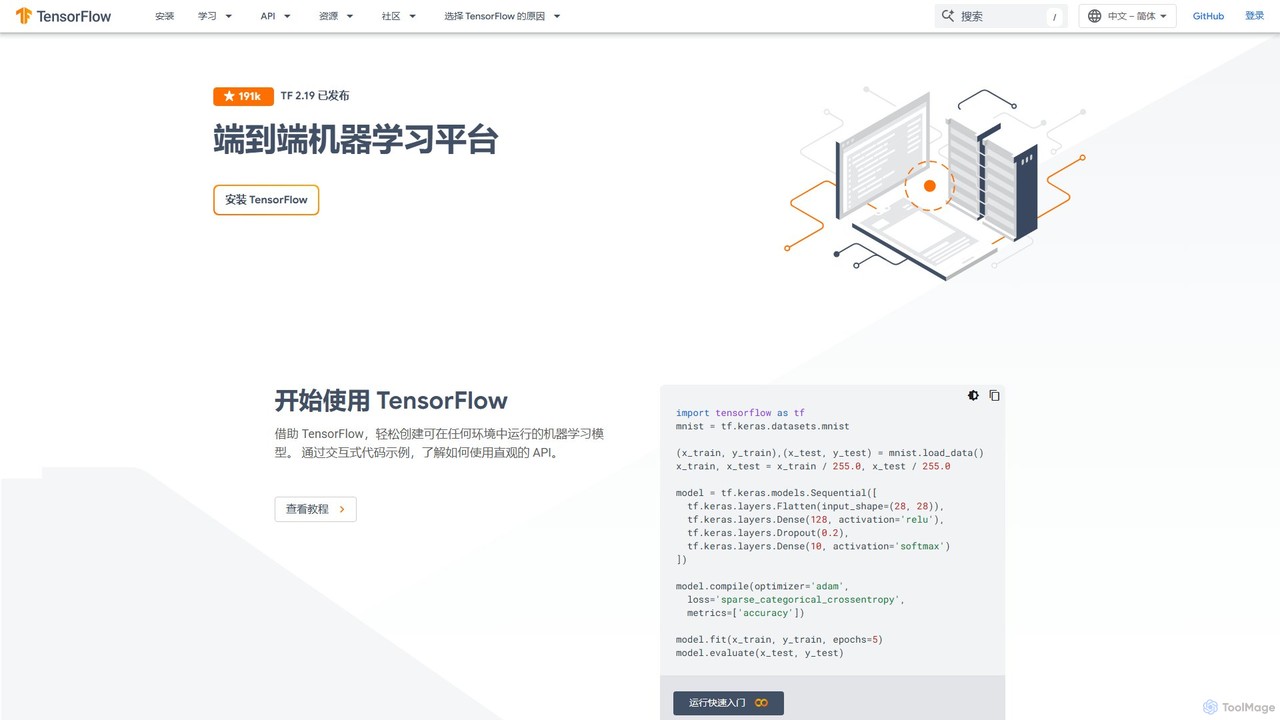
TensorFlow
TensorFlow is an end-to-end open-source platform for machine learning developed by Google. It provides a comprehensive, flexible ecosystem of tools, libraries, and community resources that lets researchers and developers build and deploy ML-powered applications. From beginners to experts, TensorFlow offers intuitive high-level APIs for easy model building and powerful low-level APIs for advanced research, enabling deployment across servers, edge devices, and browsers.
Frameworks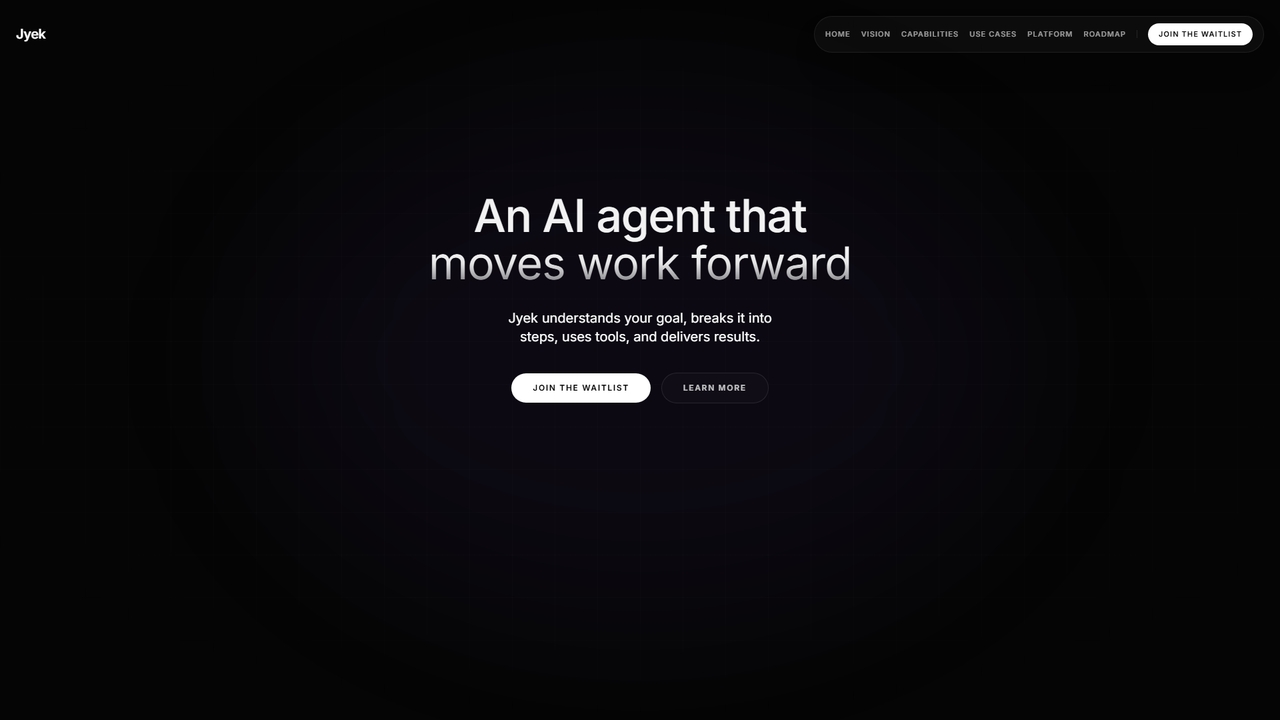
Jyek
Jyek is an AI agent platform that understands objectives, creates execution plans, uses tools, and delivers verifiable results for complex, multi-step tasks.
Automation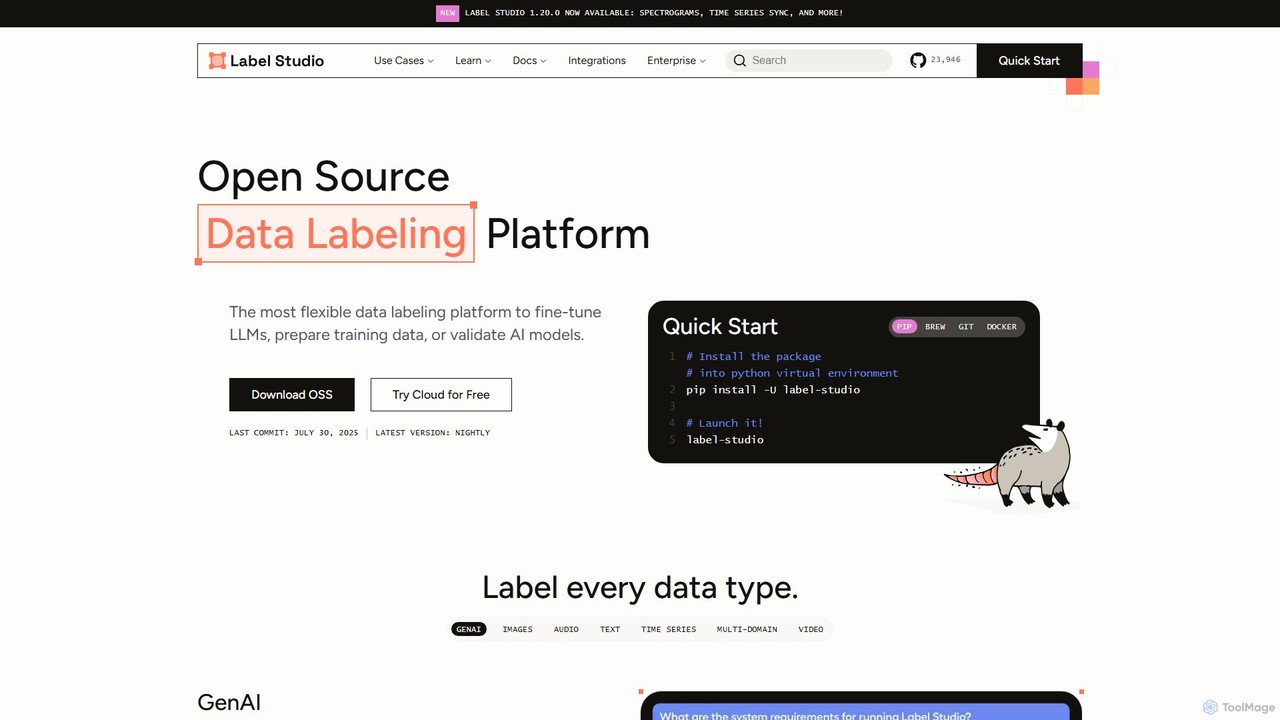
Label Studio
Label Studio is a versatile open-source data labeling platform designed for a wide range of data types. It enables users to annotate images, text, audio, video, and time-series data to fine-tune LLMs, prepare training data for machine learning, and validate AI models with human-in-the-loop feedback.
Training Data
Pearl
Pearl is a leading AI platform for dentistry, utilizing advanced computer vision to analyze dental X-rays and 3D imagery. It provides dentists with real-time diagnostic assistance, enhances patient communication, and optimizes practice management, aiming to elevate the standard of dental care globally.
Practice Management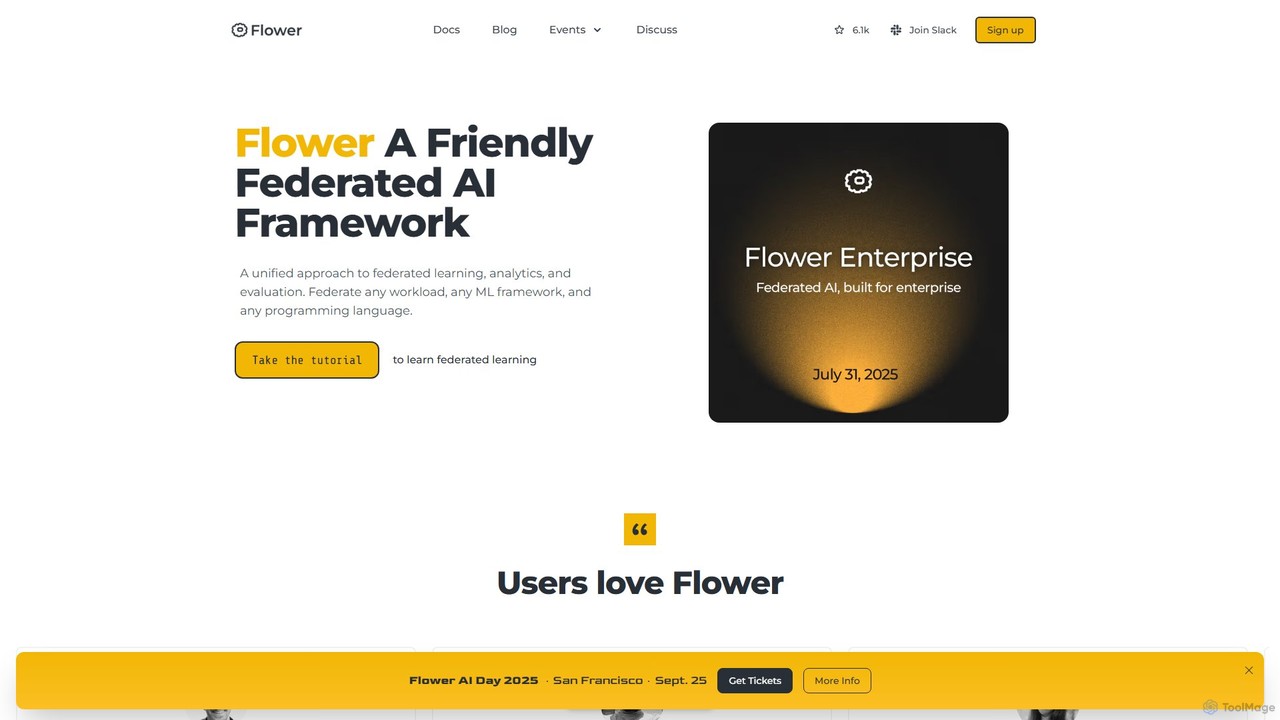
Flower
Flower is a friendly, open-source framework for federated learning, analytics, and evaluation. It enables training AI models on decentralized data across various devices and platforms without compromising privacy, supporting numerous ML frameworks like PyTorch, TensorFlow, and Hugging Face.
Frameworks
MONAI Comments (0)
Sign in to comment.
Sign inNo comments yet.