
Reshape Biotech
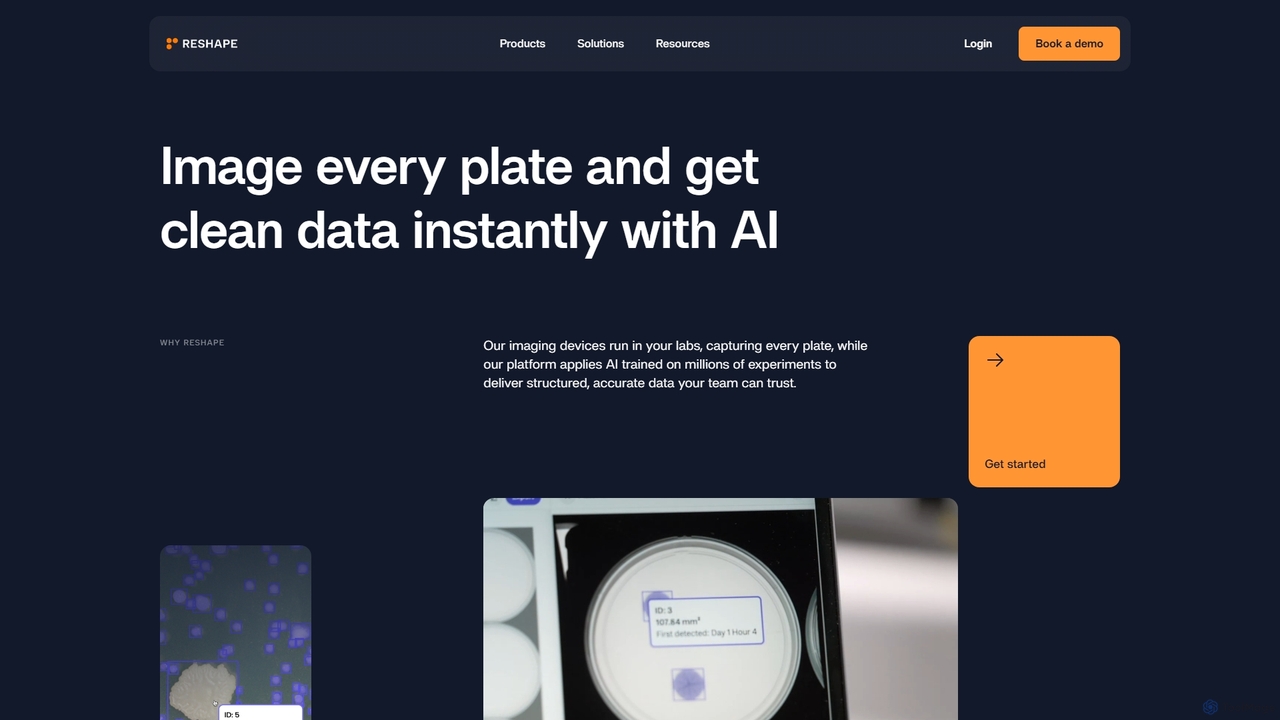
Reshape Biotech provides an AI-powered lab automation platform that combines automated imaging hardware with a cloud-based analysis system. …
Reshape Biotech provides an AI-powered lab automation platform that combines automated imaging hardware with a cloud-based analysis system. It's designed for R&D and QC labs in biotechnology, agriculture, and food science to automate plate imaging, analyze experiments with AI, and generate structured, reproducible data, significantly accelerating research and development cycles.
RSIP Vision
RSIP Vision is a world-class leader in providing custom AI and computer vision R&D solutions for medical imaging. …
RSIP Vision is a world-class leader in providing custom AI and computer vision R&D solutions for medical imaging. With over 25 years of experience, they partner with medical device companies to develop innovative, clinically-proven software for diagnostics, surgical guidance, and image analysis across various medical fields.
About Image Analysis
Image Analysis refers to AI-powered tools that process and interpret visual data from images or videos. These tools leverage computer vision and machine learning algorithms to extract meaningful insights, patterns, and information. As a specialized branch of data analysis, image analysis is crucial for automating visual inspections, enhancing diagnostic capabilities, and understanding complex visual environments across various industries.
Core Features
- Object Detection: Identifies and locates specific objects within an image or video frame.
- Image Classification: Categorizes entire images into predefined classes based on their content.
- Facial Recognition: Detects and identifies human faces, often used for authentication or security.
- Anomaly Detection: Pinpoints unusual patterns or defects that deviate from normal visual data.
- Optical Character Recognition (OCR): Extracts text from images, converting it into machine-readable format.
Use Cases
Image Analysis tools are widely adopted in sectors requiring automated visual interpretation. For instance, in manufacturing, they monitor product quality by detecting defects on assembly lines. In healthcare, they assist radiologists in analyzing medical scans for early disease detection. Retailers use them to understand customer traffic patterns and optimize store layouts.
How to Choose
When selecting an Image Analysis tool, consider its accuracy and reliability for your specific visual data types. Evaluate its real-time processing capabilities, especially for applications like surveillance or autonomous systems. Assess integration options with existing platforms and the level of customization offered for specific analytical tasks. Finally, review data privacy and security protocols, particularly for sensitive visual information.
Image AnalysisUse Cases
Manufacturing Quality Control
Manufacturing engineers utilize image analysis tools to automate the inspection of products on production lines. By deploying cameras and AI, the system can detect subtle defects, misalignments, or missing components in real-time, significantly reducing manual inspection time and improving product consistency. This leads to fewer faulty products reaching the market and substantial cost savings.
Medical Diagnostic Assistance
Radiologists and pathologists employ image analysis AI to enhance the detection of anomalies in medical scans such as X-rays, MRIs, and microscopic slides. The AI can highlight suspicious areas, quantify changes over time, and provide a second opinion, helping clinicians make more accurate and timely diagnoses for conditions like tumors or cellular abnormalities, ultimately improving patient outcomes.
Retail Customer Behavior Analysis
Retail store managers and marketing teams use image analysis to understand customer movement, dwell times, and interactions with products. By analyzing video feeds, the AI can identify popular store sections, measure queue lengths, and assess the effectiveness of display placements, providing actionable insights to optimize store layout, staffing, and marketing strategies to boost sales.
Security and Surveillance Monitoring
Security personnel and facility managers leverage image analysis for enhanced surveillance and threat detection. These tools can automatically identify unauthorized access, detect suspicious objects left behind, or recognize specific individuals from watchlists in real-time video feeds. This capability significantly improves response times to potential security breaches and reduces the need for constant human monitoring.
Agricultural Crop Health Monitoring
Farmers and agricultural scientists utilize image analysis, often from drone or satellite imagery, to monitor crop health and identify issues across large fields. The AI can detect early signs of disease, pest infestations, or nutrient deficiencies by analyzing changes in plant color, growth patterns, and leaf density. This enables targeted interventions, optimizing resource use and maximizing yields.
Autonomous Vehicle Perception
Engineers developing autonomous vehicles rely heavily on image analysis for environmental perception. AI algorithms process real-time camera feeds to detect and classify other vehicles, pedestrians, traffic signs, lane markings, and obstacles. This critical information allows the vehicle to understand its surroundings, navigate safely, and make informed driving decisions, ensuring passenger safety.