OptiPrice
OptiPrice is an automated competitor price tracking platform for e-commerce businesses. It helps you monitor, analyze, and manage …
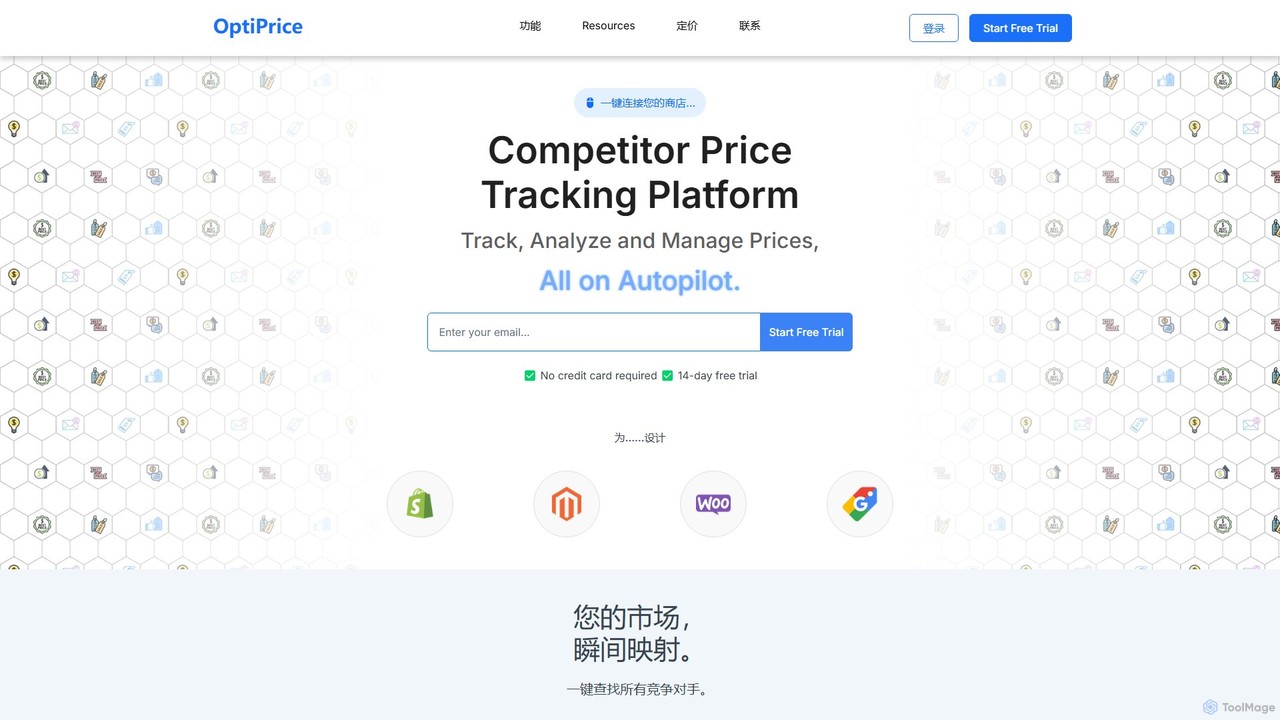
OptiPrice is an automated competitor price tracking platform for e-commerce businesses. It helps you monitor, analyze, and manage competitor pricing and stock levels on autopilot. With one-click store integration, it discovers your competitors, tracks their data 24/7, and provides actionable insights through email alerts and a comprehensive dashboard. Stay ahead of the market, optimize your pricing strategy, and maximize your profits effortlessly.
About Competitor Analysis
AI Competitor Analysis tools are a specialized category of data analysis software designed to automatically gather, process, and interpret data about business rivals. These platforms leverage technologies like machine learning, natural language processing (NLP), and automated web scraping to monitor a competitor's digital footprint in real-time. They provide actionable insights into marketing strategies, product pricing, SEO performance, and customer sentiment. This enables businesses to make informed, data-driven decisions to maintain a competitive edge.
Core Features
- SEO & Content Analysis: Identifies competitors' top keywords, backlink strategies, and highest-performing content to uncover opportunities.
- Social Media Monitoring: Tracks competitors' social media activity, engagement rates, campaign performance, and share of voice.
- Ad Intelligence: Uncovers competitors' advertising strategies, including ad spend, creatives, and targeted channels.
- Pricing & Product Tracking: Automatically monitors changes in competitors' product features, pricing models, and promotional offers.
- Sentiment Analysis: Analyzes customer reviews and online mentions to gauge public perception of competitor brands and products.
Use Cases
These tools are primarily used by marketing teams to refine campaigns, product managers to inform roadmaps, and business strategists to identify market trends and threats. E-commerce businesses also rely on them for dynamic pricing and assortment planning.
How to Choose
When selecting a tool, consider the scope of data sources (e.g., social, web, ads), the depth of analysis required, real-time alerting capabilities for immediate updates, and integration options with your existing marketing or BI stack. Also, evaluate the user interface's intuitiveness against your team's technical skills.

Competitor AnalysisUse Cases
Optimize SEO and Content Strategy
A digital marketing manager for a SaaS company uses an AI competitor analysis tool to identify 'content gaps'. The tool scans the top three competitors' blogs and resource centers, mapping their keyword rankings against the company's own. It automatically generates a report highlighting high-volume keywords that competitors rank for but the company does not. Based on this data, the manager prioritizes creating a series of articles and a webinar targeting these specific keywords, aiming to capture qualified traffic and improve their search engine visibility within two quarters.
Inform Product Development Roadmap
A product manager at a mobile app company subscribes to a service that tracks competitor app updates, feature releases, and user reviews across app stores. The AI tool aggregates and analyzes thousands of reviews, identifying the most requested features for competing apps and common complaints about their usability. This intelligence is used to validate the product roadmap, helping the team prioritize features that address known market needs and avoid pitfalls that competitors have faced, ultimately leading to a more successful product launch with higher user satisfaction.
Adjust E-commerce Pricing Strategies
An e-commerce manager for an online electronics store uses an AI tool to monitor the prices of 50 key products across five major competitor websites. The system provides daily reports and sends real-time alerts when a competitor initiates a sale or drops a price below a certain threshold. This allows the manager to react swiftly, either by matching the price to remain competitive or by holding the price and highlighting other value propositions like free shipping or a better warranty. This dynamic pricing strategy helps maximize revenue while protecting profit margins.
Benchmark Social Media Performance
A social media strategist for a fashion brand uses a competitor analysis tool to benchmark their performance on Instagram and TikTok. The tool automatically tracks follower growth, engagement rates (likes, comments, shares), and video view counts for five key competitors. It visualizes this data in a comparative dashboard, revealing that a competitor's recent success is driven by user-generated content campaigns. Armed with this insight, the strategist launches a similar campaign, providing clear data to justify the new strategy to leadership and setting realistic performance goals based on competitor benchmarks.
Uncover Competitors' Advertising Strategies
A performance marketing agency uses an ad intelligence tool to analyze a new client's main competitor. The tool reveals the competitor's estimated ad spend on Google and Facebook, their most effective ad copy and visuals, and the primary demographics they are targeting. The analysis shows the competitor is heavily investing in video ads targeting a younger audience. This insight allows the agency to advise their client to either compete directly with a better video campaign or to focus on a different, underserved demographic, thereby avoiding a costly head-to-head battle and optimizing their ad budget for a higher ROI.
Identify Emerging Market Trends
A business strategist at a consumer goods company uses an AI tool to monitor the online discourse surrounding their industry, including competitors' announcements, industry news, and consumer forums. The tool's NLP capabilities detect a rising trend in discussions about 'sustainable packaging' across all major competitor channels. It quantifies this trend, showing a 300% increase in mentions over six months. This early detection allows the company to proactively invest in sustainable packaging research and development, positioning them as a market leader when the trend becomes mainstream, rather than reacting to competitors' moves.