Data Analysis Best in category 1 results Anomaly Detection AI Tool

Popular AI tools in the Anomaly Detection field of Data Analysis include Anomify, etc., helping you quickly improve efficiency.

Anomify

Anomify

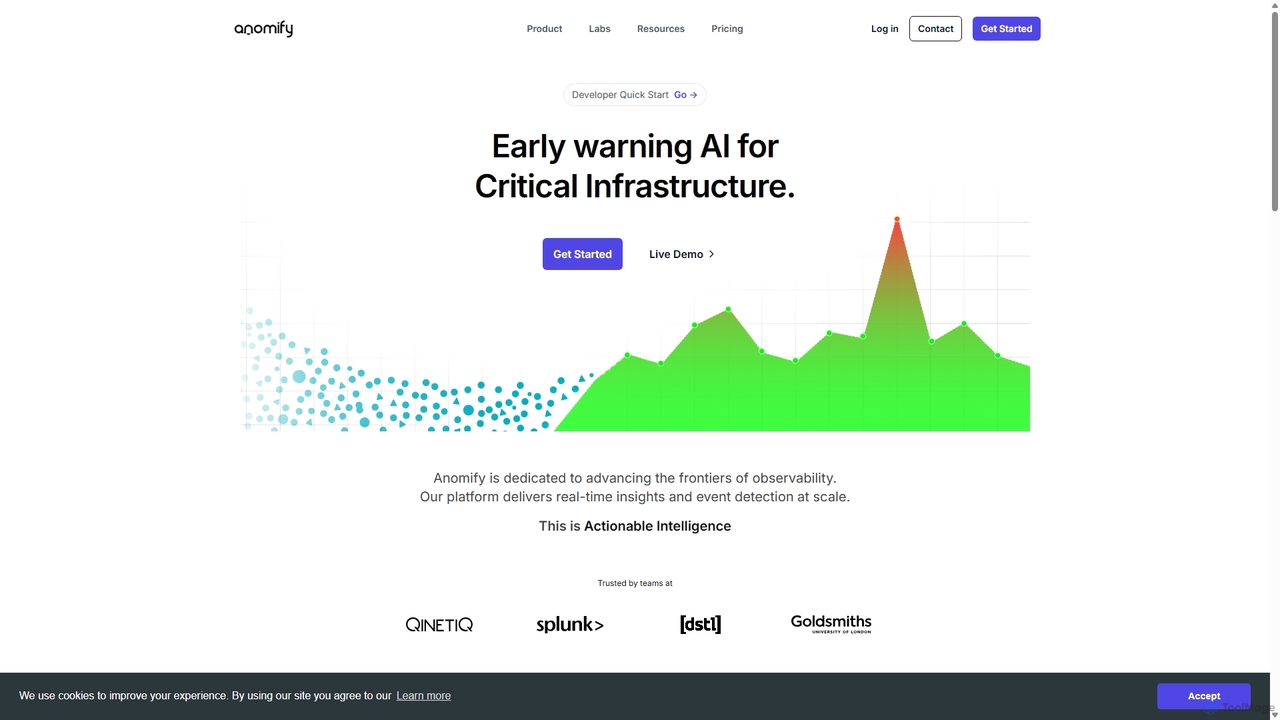
Anomify is an AI-powered early warning platform for critical infrastructure, offering real-time anomaly detection and observability at scale. …

4.5K

About Anomaly Detection

Anomaly Detection tools are a specialized category of data analysis software that use AI to automatically identify rare items, events, or observations that deviate significantly from the majority of the data. They employ statistical methods and machine learning algorithms to establish a baseline of normal behavior and flag any patterns that do not conform. These tools are crucial for proactively identifying critical incidents such as network intrusions, financial fraud, or system failures before they escalate. Unlike traditional rule-based systems, AI-powered anomaly detection can uncover novel and unforeseen issues in complex, high-volume datasets without requiring pre-defined thresholds.

Core Features

  • Real-time Monitoring: Continuously analyzes data streams to detect anomalies as they happen, enabling immediate response.
  • Automated Baselining: Automatically learns and establishes a dynamic model of normal system or user behavior from historical data.
  • Multivariate Analysis: Correlates multiple data sources and metrics to identify complex anomalies that are invisible when looking at single metrics.
  • Alerting & Root Cause Indication: Provides intelligent alerts with context to help users quickly understand and investigate the potential cause of an anomaly.

Use Cases

Anomaly Detection tools are widely used in industries like cybersecurity, finance, IT operations (AIOps), industrial manufacturing (IoT), and e-commerce. Key users include security analysts hunting for threats, DevOps engineers ensuring system reliability, and fraud investigators protecting assets.

How to Choose

When selecting an Anomaly Detection tool, consider its data compatibility with your sources (logs, metrics, transactions), the sophistication of its detection algorithms (statistical vs. machine learning), its scalability to handle your data volume, and its integration capabilities with your existing monitoring and incident response platforms.

Anomaly DetectionUse Cases

1

Cybersecurity Threat Detection

A Security Operations Center (SOC) analyst uses an anomaly detection tool to monitor network traffic in real-time. The AI establishes a baseline of normal communication patterns. It then flags a sudden, unusual data transfer from a critical server to an unknown external IP address late at night, a pattern that signature-based firewalls missed. This alert allows the analyst to immediately investigate a potential data exfiltration attempt, isolating the server and preventing a major security breach before significant data is lost.

2

Financial Transaction Fraud Prevention

A financial institution integrates an anomaly detection tool with its payment processing system. The tool learns each customer's typical transaction behavior, including amounts, locations, and frequency. When a transaction occurs that drastically deviates from this learned profile—such as a large purchase from a foreign country for a customer who has never transacted abroad—the system flags it as a high-risk anomaly. This triggers an immediate automated block and a notification to the customer for verification, preventing fraudulent charges from being completed.

3

IT Operations and Application Performance Monitoring

A Site Reliability Engineering (SRE) team uses an anomaly detection tool to monitor thousands of metrics from their cloud applications. The tool identifies a subtle, correlated increase in memory usage and API error rates across a specific cluster of microservices. This collective anomaly, not severe enough to trigger individual static alerts, indicates an early-stage memory leak. The SRE team is alerted proactively, allowing them to deploy a fix during a low-traffic period and prevent a future site-wide outage that would have impacted thousands of users.

4

Industrial IoT Predictive Maintenance

A manufacturing plant manager uses an anomaly detection system connected to IoT sensors on a critical assembly line machine. The system analyzes real-time data on vibration, temperature, and power consumption. It detects a gradual, combined drift in vibration frequency and temperature that deviates from the machine's normal operating baseline. This pattern is a known precursor to bearing failure. The system generates a maintenance alert, allowing technicians to schedule a replacement before a catastrophic failure occurs, preventing costly unplanned downtime and equipment damage.

5

Detecting E-commerce Promotion Abuse

An e-commerce marketing manager launches a 'new customer' discount campaign. They use an anomaly detection tool to monitor sign-ups and order patterns. The tool identifies a collective anomaly: a large cluster of new accounts created within a short time frame, all using similar disposable email domains and shipping to a small number of addresses. While each individual order seems legitimate, the collective pattern is highly anomalous and indicates a coordinated effort to abuse the promotion. The platform can then block these accounts, preserving the campaign's budget for genuine new customers.

6

Monitoring Patient Vitals in Healthcare

In a hospital's intensive care unit (ICU), an anomaly detection system continuously monitors real-time streams of patient vital signs like heart rate, blood pressure, and oxygen saturation. The system learns the unique baseline for each patient. It then flags a subtle but persistent deviation in a patient's heart rate variability that falls outside their normal pattern, even if it's still within clinically 'safe' ranges. This contextual anomaly alerts the medical staff to a potential early sign of sepsis or cardiac distress, enabling earlier intervention than would be possible with traditional threshold-based alarms.

Anomaly DetectionFrequently Asked Questions