ToolMage
Sign in

Best 1 Conversational Analytics AI tools for Data Analysis

Popular Conversational Analytics AI tools in Data Analysis include Storytell.ai, helping you work more efficiently.

Storytell.ai
Freemium

Storytell.ai

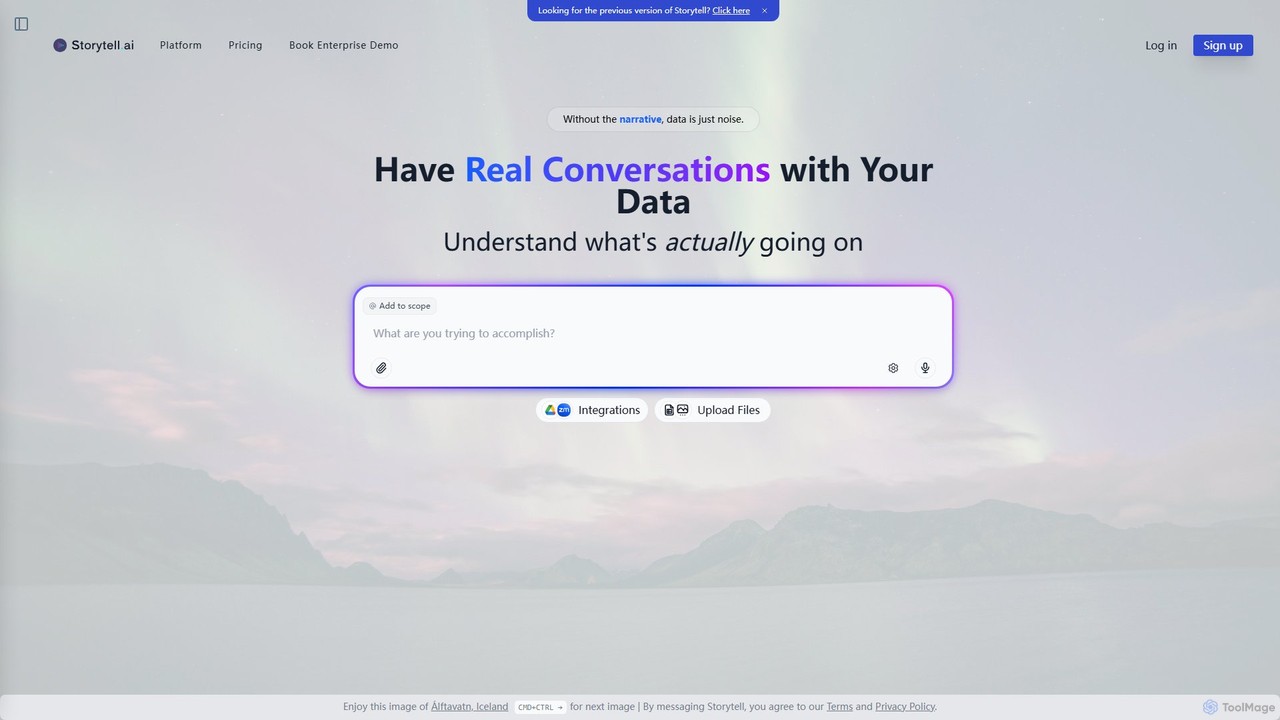
Storytell.ai is a conversational AI platform that transforms raw data into understandable narratives. Interact with your data through natural language to uncover insights, generate summaries, and understand complex information without needing technical expertise. Simply upload files or connect data sources and start asking questions.

Business Intelligence
Visits 31.3KFavorites 101Likes 99

About Conversational Analytics

Conversational Analytics are AI-powered tools designed to extract insights from spoken and written customer interactions. These tools leverage natural language processing (NLP) and machine learning to analyze dialogues from calls, chats, emails, and social media. They provide deep understanding into customer sentiment, intent, pain points, and emerging trends, enabling businesses to enhance customer experience and operational efficiency. By transforming unstructured conversational data into actionable intelligence, they empower data-driven decision-making across various departments.

Core Features

  • Sentiment Analysis: Automatically detects and quantifies the emotional tone (positive, negative, neutral) within customer conversations.
  • Intent Recognition: Identifies the underlying purpose or goal of customer inquiries, such as "technical support," "billing query," or "product inquiry."
  • Topic Extraction: Automatically discovers and categorizes recurring themes and subjects discussed across a large volume of interactions.
  • Keyword Spotting: Pinpoints specific words or phrases that indicate compliance issues, product mentions, or critical feedback.
  • Agent Performance Monitoring: Evaluates agent effectiveness, adherence to scripts, and identifies coaching opportunities based on interaction quality.

Use Cases

Conversational Analytics tools are invaluable for organizations seeking to understand and improve their customer interactions. They are widely adopted in customer service centers to optimize agent performance and identify common customer issues. Marketing teams use them to gauge campaign effectiveness and understand brand perception. Product development teams leverage insights from customer feedback to prioritize feature enhancements and identify unmet needs, ensuring products align with user expectations.

How to Choose

When selecting a Conversational Analytics tool, consider its data source compatibility (e.g., call recordings, chat logs, email). Evaluate the accuracy and depth of its NLP capabilities, including sentiment analysis and intent recognition for your specific language needs. Assess its integration capabilities with existing CRM or contact center platforms. Finally, review its reporting and visualization features to ensure insights are presented clearly and are actionable for your team.

Featured tool rankings

Conversational Analytics use cases

1

Optimizing Call Center Agent Performance

Call center managers utilize conversational analytics to automatically review thousands of agent-customer interactions. By analyzing sentiment, adherence to scripts, and resolution rates, they can identify top-performing agents, pinpoint common training gaps, and provide targeted coaching. This leads to improved service quality, reduced call handling times, and higher customer satisfaction scores.

2

Enhancing Chatbot and Virtual Assistant Effectiveness

AI product teams deploy conversational analytics to evaluate the performance of their chatbots and virtual assistants. The tools identify frequently asked questions that chatbots fail to answer, common points of user frustration, and opportunities to refine dialogue flows. This data-driven approach helps improve chatbot accuracy, reduce escalation rates to human agents, and enhance the overall user experience.

3

Gauging Customer Sentiment Across Channels

Customer experience (CX) professionals use conversational analytics to monitor and understand customer sentiment across all touchpoints, including social media, reviews, and support tickets. By aggregating sentiment scores and identifying key drivers of positive or negative feedback, businesses can proactively address issues, celebrate successes, and make strategic decisions to improve overall brand perception and loyalty.

4

Identifying Emerging Product Feedback and Feature Requests

Product managers leverage conversational analytics to automatically extract and categorize product-related feedback from customer support interactions, online forums, and user communities. This allows them to quickly identify emerging bugs, popular feature requests, and unmet user needs. By prioritizing development based on real customer input, they can build products that truly resonate with their user base.

5

Personalizing Sales and Marketing Communications

Sales and marketing teams employ conversational analytics to gain deeper insights into individual customer preferences and buying signals from past interactions. By understanding specific needs, pain points, and preferred communication styles, they can tailor personalized outreach messages, product recommendations, and marketing campaigns. This leads to higher engagement rates, improved conversion, and stronger customer relationships.

6

Ensuring Compliance and Risk Management in Regulated Industries

Organizations in highly regulated sectors, such as finance or healthcare, use conversational analytics for compliance monitoring. The tools automatically scan and flag conversations for specific keywords, phrases, or topics that indicate potential regulatory violations, security risks, or inappropriate agent behavior. This helps ensure adherence to industry standards, mitigate legal risks, and protect sensitive customer data.

Conversational Analytics FAQ

What is Conversational Analytics?

Conversational Analytics is an AI-driven approach that analyzes spoken and written customer interactions to extract valuable insights. It uses natural language processing (NLP) and machine learning to understand sentiment, intent, topics, and patterns within dialogues from sources like calls, chats, and emails, transforming unstructured data into actionable intelligence for businesses.

How does Conversational Analytics differ from traditional Data Analysis?

While traditional data analysis often focuses on structured numerical data, Conversational Analytics specifically targets unstructured textual and voice data from human interactions. It goes beyond simple metrics to understand the 'why' behind customer behavior, extracting qualitative insights like sentiment and intent that traditional methods cannot easily capture, providing a deeper, more nuanced view of customer experience.

What are the key benefits of using Conversational Analytics tools?

The key benefits include improved customer satisfaction by understanding pain points, enhanced operational efficiency through identifying common issues and agent training needs, better product development by surfacing direct customer feedback, and increased sales and marketing effectiveness through personalized insights. It empowers data-driven decisions across customer-facing functions.

What types of data can Conversational Analytics process?

Conversational Analytics tools can process a wide range of unstructured data sources. This primarily includes audio recordings of customer calls (often transcribed first), text-based interactions such as live chat transcripts, email exchanges, social media comments, customer reviews, and survey open-ended responses. Essentially, any form of direct customer communication can be analyzed.

How can I choose the right Conversational Analytics tool for my business?

To choose the right tool, first assess your primary data sources (e.g., call center, website chat). Look for robust NLP capabilities that accurately handle your specific languages and dialects, including sentiment and intent analysis. Consider integration with your existing CRM or contact center software, scalability for your data volume, and the clarity of its reporting and visualization dashboards. Finally, evaluate pricing models and support.