Quick, Draw!
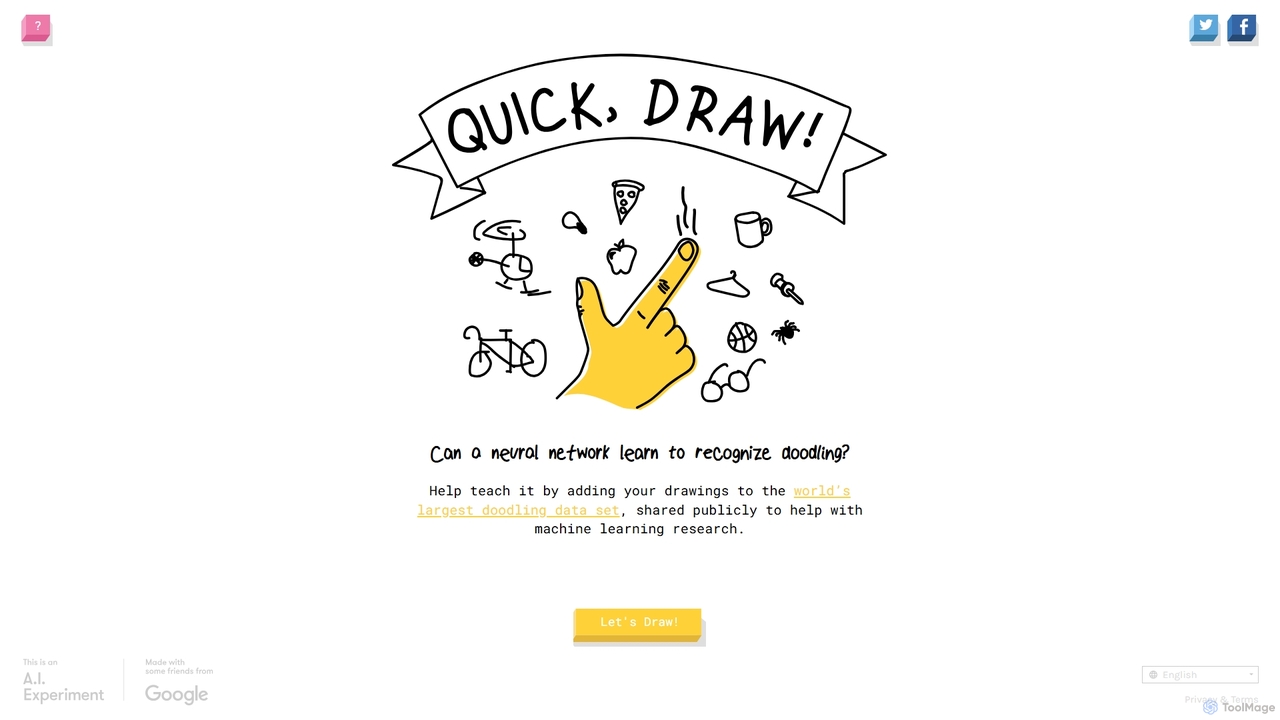
Quick, Draw! is an interactive AI experiment and game from Google where you draw an object, and a …
Quick, Draw! is an interactive AI experiment and game from Google where you draw an object, and a neural network tries to guess what it is. It's a fun way to interact with machine learning while contributing to the world's largest open-source doodling dataset for research.
Hugging Face
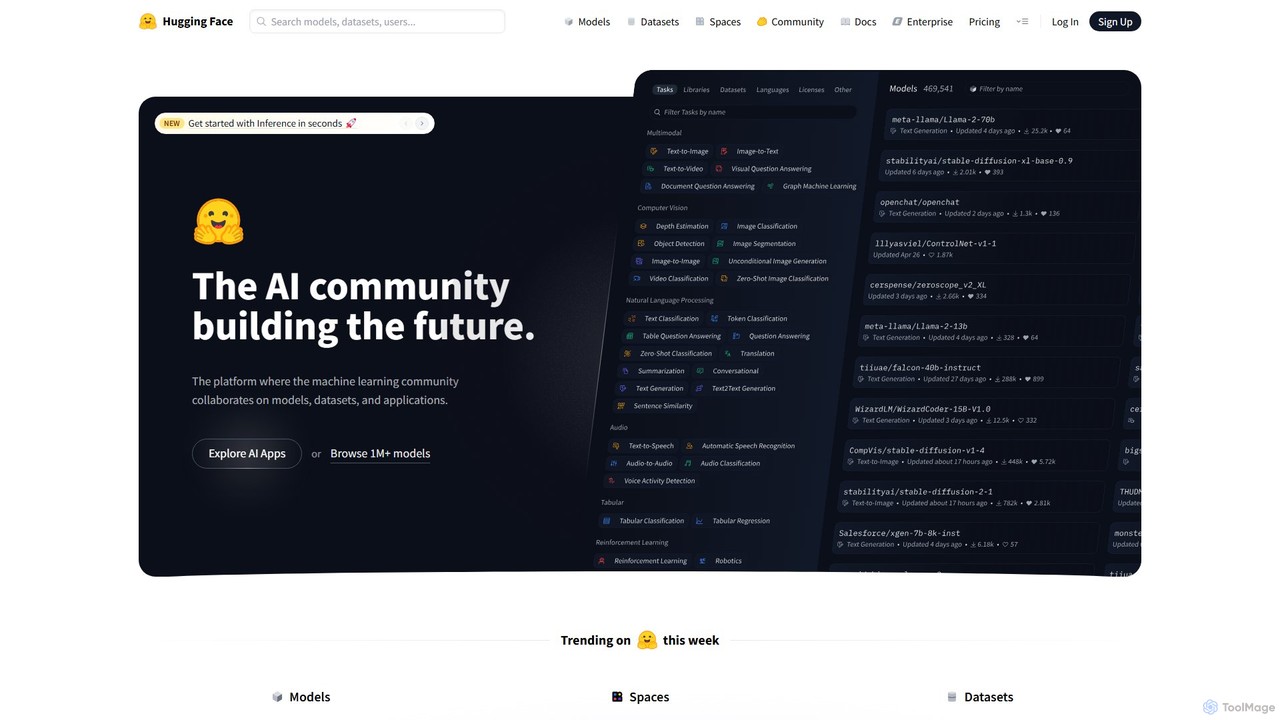
Hugging Face is the leading open-source platform and community for machine learning. It provides tools for developers and …
Hugging Face is the leading open-source platform and community for machine learning. It provides tools for developers and researchers to build, train, and deploy state-of-the-art models, offering a vast hub of pre-trained models, datasets, and demo applications.
David AI
David AI provides high-quality, research-grade audio datasets for training advanced speech and conversational AI models. It offers diverse, …
David AI provides high-quality, research-grade audio datasets for training advanced speech and conversational AI models. It offers diverse, large-scale datasets, including multilingual conversations, multi-speaker audio, and expert dialogues, with options for custom dataset creation to unlock new AI capabilities.
gts.ai
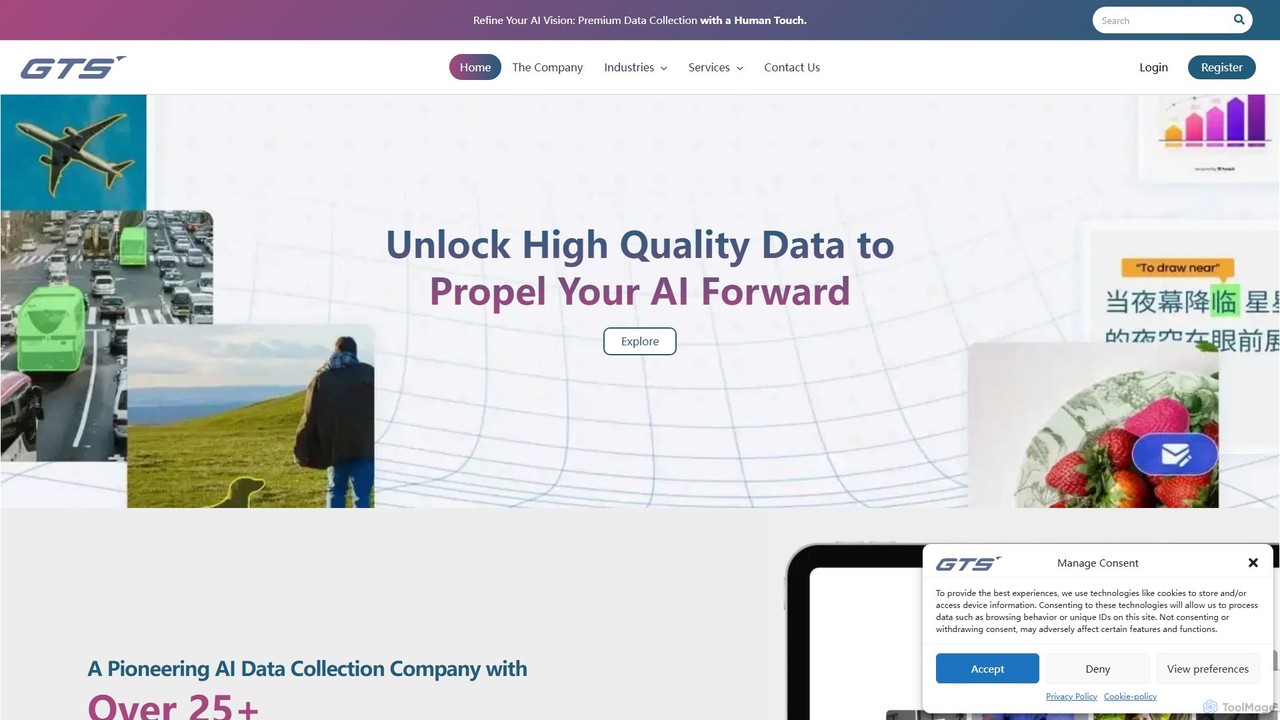
GTS.ai is a leading AI data solutions provider with over 25 years of experience. They offer high-quality, customized …
GTS.ai is a leading AI data solutions provider with over 25 years of experience. They offer high-quality, customized datasets for machine learning, including image, video, speech, and text data. Leveraging a global workforce of over 4.5 million, GTS provides comprehensive services from data collection and annotation to transcription and data management. They ensure data accuracy, security (ISO, GDPR, HIPAA compliant), and scalability for AI projects across various industries, helping businesses propel their AI initiatives forward with reliable data.
About Dataset
Dataset tools are specialized platforms and services designed to create, manage, and optimize collections of data for artificial intelligence and machine learning models. These tools facilitate the crucial processes of data acquisition, annotation, cleaning, and augmentation, ensuring high-quality input for model training. They are indispensable for developers, researchers, and data scientists aiming to build robust and accurate AI systems across various domains.
Core Features
- Data Collection & Ingestion: Efficiently gather and import raw data from diverse sources, including web scraping, APIs, and databases.
- Data Annotation & Labeling: Manually or semi-automatically tag, categorize, and draw boundaries on data (images, text, audio) to create ground truth for supervised learning.
- Data Cleaning & Preprocessing: Identify and rectify errors, inconsistencies, and missing values, transforming raw data into a usable format for models.
- Data Augmentation: Generate synthetic variations of existing data to expand dataset size and diversity, improving model generalization.
- Dataset Versioning & Management: Track changes, manage different versions of datasets, and ensure reproducibility and collaboration among teams.
Applicable Scenarios
Dataset tools are vital for AI development teams in tech companies, research institutions, and startups. They are used by data scientists, machine learning engineers, and AI researchers to prepare the foundational data required for training and validating AI models. This includes tasks from developing new AI applications to continuously improving existing ones.
How to Choose
When selecting dataset tools, consider the types of data you work with (e.g., images, text, tabular), the complexity of annotation required, and the scalability for large volumes of data. Evaluate integration capabilities with your existing ML pipelines and cloud platforms, as well as features for data quality assurance, collaboration, and cost-effectiveness for annotation services.

DatasetUse Cases
Training Computer Vision Models for Autonomous Driving
AI engineers utilize dataset tools to meticulously annotate vast quantities of images and video frames, marking vehicles, pedestrians, traffic signs, and lane lines. This precisely labeled data is then used to train high-accuracy perception models for autonomous driving systems, enabling vehicles to safely navigate complex road environments and make informed decisions.
Building Multilingual Sentiment Analysis Text Datasets
Data scientists leverage dataset platforms to collect and annotate multilingual text data from social media, customer reviews, and forums. By labeling the sentiment (positive, negative, neutral) of these texts, they create robust datasets for training Natural Language Processing (NLP) models. This enables businesses to accurately gauge public opinion and improve customer service strategies across different languages.
E-commerce Product Categorization and Recommendation Datasets
E-commerce data teams use dataset tools to categorize millions of product images and descriptions, assigning relevant tags and attributes. This structured data is crucial for training AI models that power product search, personalized recommendations, and inventory management systems. Accurate datasets lead to improved user experience and increased sales conversion rates.
Preparing Medical Imaging Datasets for AI Diagnostics
Medical researchers collaborate with clinicians to use dataset tools for annotating X-rays, CT scans, and MRI images, precisely outlining regions of interest like tumors or anomalies. This highly specialized and carefully curated dataset is then used to train AI models that assist in early disease detection and diagnosis, significantly improving accuracy and potentially saving lives.
Annotating Financial Transaction Data for Fraud Detection
Financial institutions employ dataset tools to meticulously annotate historical transaction data, identifying patterns of fraudulent activities and anomalies. Data analysts label suspicious transactions, creating a robust dataset that trains AI models to detect and prevent financial fraud in real-time. This proactive approach safeguards customer assets and maintains trust in banking services.
Optimizing Multilingual Speech Datasets for Voice Assistants
Smart voice product teams use dataset tools to collect and transcribe diverse multilingual speech data, accounting for various accents, dialects, and speaking speeds. This data undergoes noise reduction and precise annotation, creating high-quality datasets that significantly improve the accuracy and user experience of voice assistants, making them more effective for a global audience.