Odyssey
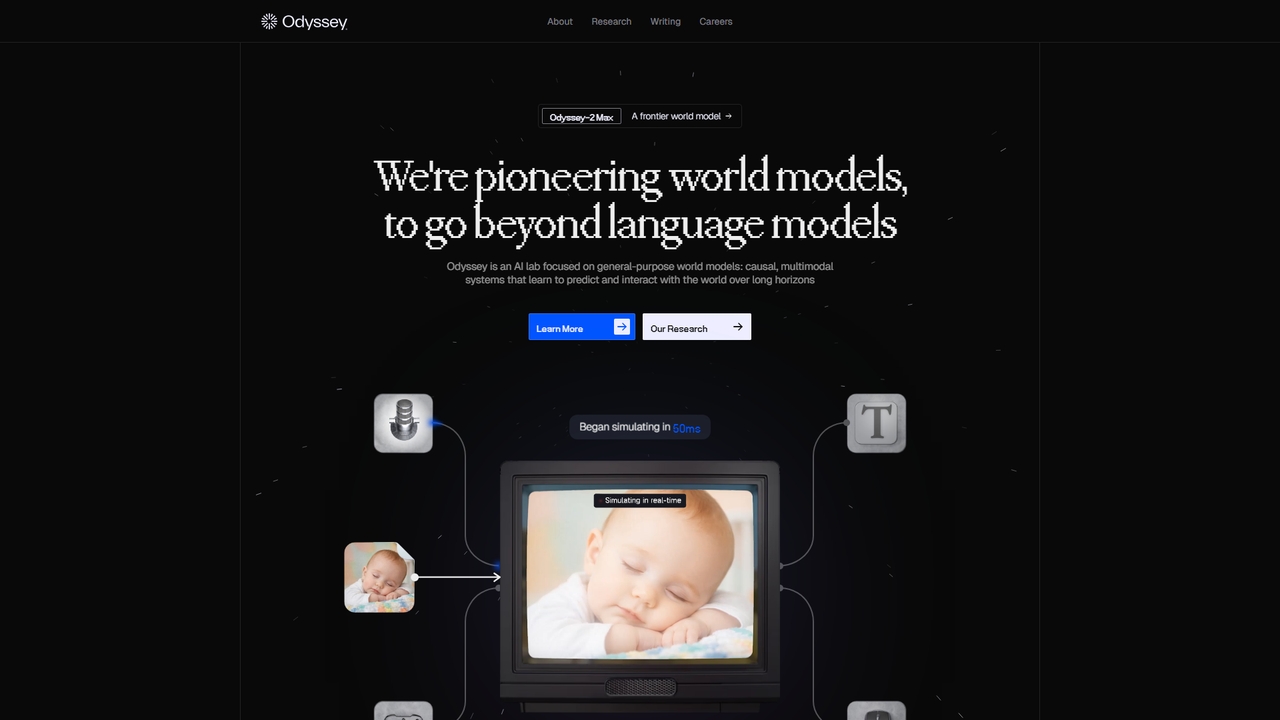
Odyssey is an AI lab pioneering general-purpose world models that learn to predict and interact with the world over long horizons, enabling real-time interactive video simulation through its Odyssey-2 platform and API.
Foundation ModelsPopular Simulation AI tools in Robotics include Odyssey, Rerun, Maihem, and Seed3D, helping you work more efficiently.

Odyssey is an AI lab pioneering general-purpose world models that learn to predict and interact with the world over long horizons, enabling real-time interactive video simulation through its Odyssey-2 platform and API.
Foundation Models
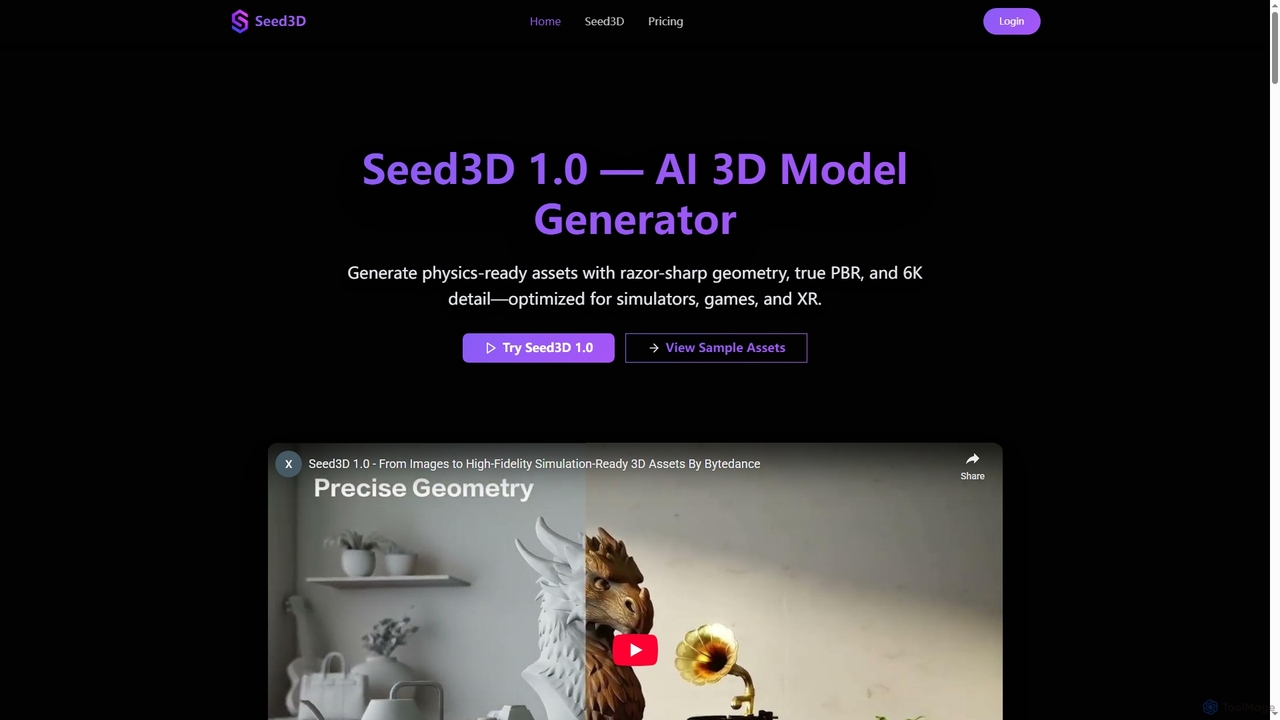
Seed3D is an AI-powered 3D model generator that creates high-fidelity, physics-ready 3D assets from a single image. It delivers razor-sharp geometry, true PBR materials, and 6K textures, optimized for simulators, games, and XR applications.
3D Modeling
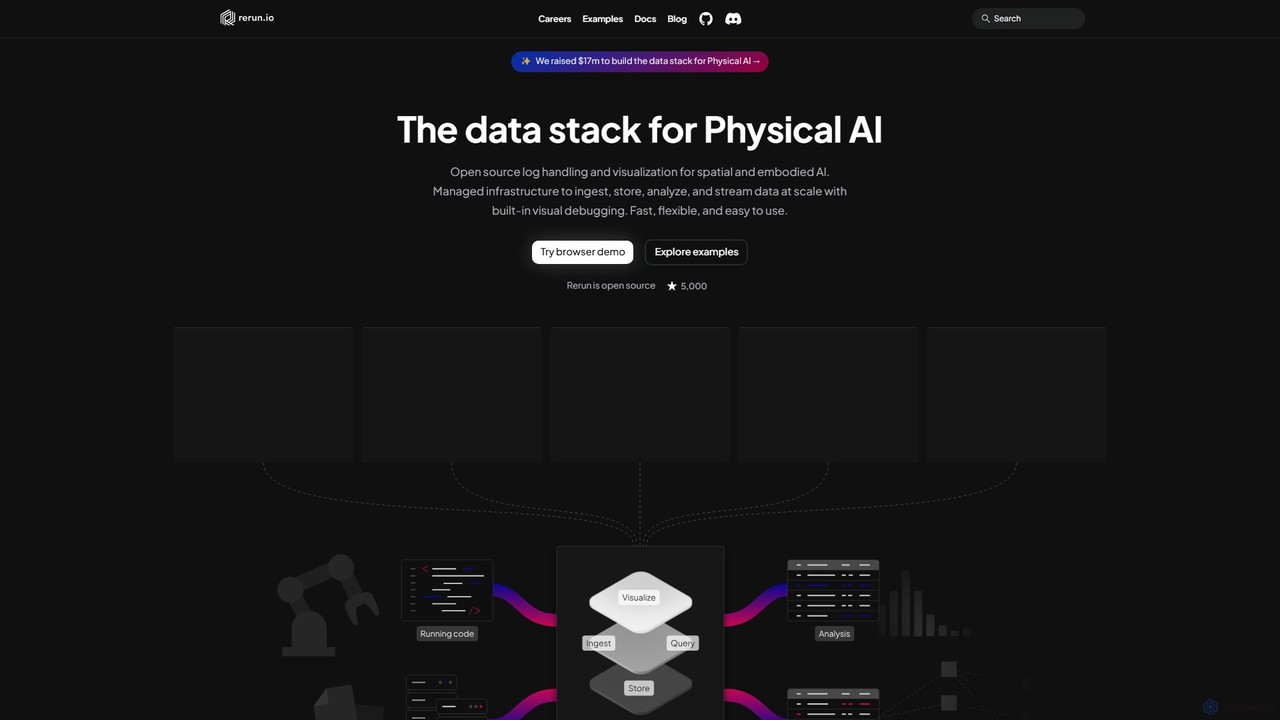
Rerun is an open-source data stack for Physical AI, providing powerful logging and visualization tools for multimodal, time-series data. Designed for robotics, computer vision, and spatial computing, it helps developers understand and debug complex systems with SDKs for Python, Rust, and C++.
Machine Learning
Maihem is an advanced platform for AI security and robotics, specializing in automated red teaming and vulnerability testing for Large Language Model (LLM) applications. It systematically tests for the OWASP Top 10 LLM vulnerabilities, such as prompt injection and data poisoning, to ensure the safe, reliable, and compliant deployment of AI systems.
TestingAI Simulation tools are specialized platforms that create virtual environments to model, train, and test artificial intelligence systems, particularly within the field of robotics. These tools leverage advanced physics engines and AI algorithms to generate realistic scenarios, predict outcomes, and optimize the behavior of AI agents without the risks or costs associated with real-world experimentation. They are essential for accelerating the development, validation, and deployment of autonomous systems, robotic control algorithms, and complex AI models across various industries.
AI Simulation tools are widely adopted in sectors requiring rigorous testing and iterative development of intelligent systems. They are crucial for robotics engineers testing new navigation and manipulation algorithms, autonomous vehicle developers training self-driving AI in diverse traffic and weather conditions, and industrial automation specialists optimizing factory layouts and robot task sequences in a risk-free virtual space.
When selecting an AI Simulation tool, prioritize the realism and accuracy of its physics engine and environmental rendering. Evaluate its integration capabilities with your existing AI frameworks (e.g., ROS, TensorFlow, PyTorch) and development pipelines. Consider its scalability for running multiple complex simulations concurrently and the availability of pre-built assets, libraries, and community support. Finally, assess the cost-effectiveness, licensing model, and vendor support to ensure it meets your project's long-term needs.

Automotive engineers use AI simulation platforms to train self-driving car AI models across millions of miles of virtual roads. They simulate diverse scenarios like heavy traffic, adverse weather conditions (rain, snow, fog), unexpected pedestrian behavior, and complex intersections, allowing the AI to learn robust decision-making and perception without real-world risks or high costs. This accelerates development and enhances safety significantly.
Manufacturing engineers leverage AI simulation to design and optimize the precise movements and task sequences for robotic arms on an assembly line. By simulating different layouts, part placements, and robot configurations, they can identify potential collisions, minimize cycle times, and improve overall efficiency before deploying physical robots, reducing costly errors and downtime.
Logistics and infrastructure companies utilize AI simulation to develop and test AI algorithms for autonomous drones. They simulate complex urban environments, varying wind conditions, and dynamic obstacles to optimize flight paths for package delivery or infrastructure inspection. This ensures safe and efficient operation, allowing for rapid iteration of navigation and obstacle avoidance strategies.
Robotics researchers use AI simulation to virtually prototype and test new designs and control algorithms for humanoid robots. They can simulate complex movements, balance control, and human-robot interaction scenarios in a safe environment. This allows for rapid iteration of mechanical designs and AI behaviors, significantly reducing the time and cost of physical prototyping.
Warehouse managers and automation specialists employ AI simulation to model and evaluate the performance of automated guided vehicles (AGVs) and robotic picking systems within a virtual warehouse. They simulate various order volumes, inventory layouts, and robot fleet sizes to optimize traffic flow, task allocation, and overall operational efficiency, ensuring maximum throughput and minimal bottlenecks.
Emergency services and research teams use AI simulation to train and test AI-powered robots designed for disaster response. They simulate collapsed buildings, hazardous environments, and search-and-rescue scenarios to develop robust navigation, mapping, and object detection algorithms. This prepares robots to operate effectively in dangerous, unpredictable real-world situations, enhancing safety for human responders.
AI Simulation tools are specialized software platforms that create virtual environments to model, train, and test artificial intelligence systems, particularly in fields like robotics and autonomous systems. They allow developers to safely and cost-effectively experiment with AI algorithms, replicate real-world physics and interactions, and gather extensive data for performance optimization without the need for physical prototypes or risky real-world trials.
In robotics development, AI Simulation tools are indispensable for testing new navigation, manipulation, and interaction algorithms without risking damage to expensive hardware or endangering personnel. They enable rapid iteration of robot designs, collection of diverse training data under controlled conditions, and validation of complex robot behaviors across numerous scenarios, significantly accelerating the development cycle and reducing overall project costs.
AI Simulation provides a controlled, repeatable, and highly scalable environment for initial development and extensive testing, allowing for rapid iteration, synthetic data generation, and exploration of edge cases without physical constraints or risks. Real-world testing, while crucial for final validation and deployment, is often expensive, time-consuming, and carries inherent risks. Simulation complements real-world testing by pre-validating systems, making physical tests more efficient, safer, and more focused.
When selecting an AI Simulation platform, key features to consider include the realism and accuracy of its physics engine and graphical rendering, its compatibility with your existing AI frameworks (e.g., ROS, TensorFlow, PyTorch), and the availability of extensive pre-built assets, environments, and sensor models. Additionally, evaluate its scalability for running parallel simulations, robust data logging and analysis capabilities, and support for hardware-in-the-loop (HIL) testing for comprehensive system validation.
Yes, AI Simulation tools are critically important for training autonomous vehicles. They enable the simulation of an almost infinite variety of driving conditions, traffic patterns, adverse weather events, and unexpected scenarios that would be impractical, dangerous, or too costly to replicate in the real world. This allows autonomous vehicle AI models to learn robust perception, prediction, and decision-making skills, significantly enhancing their safety and reliability before public road deployment.