Segments.ai
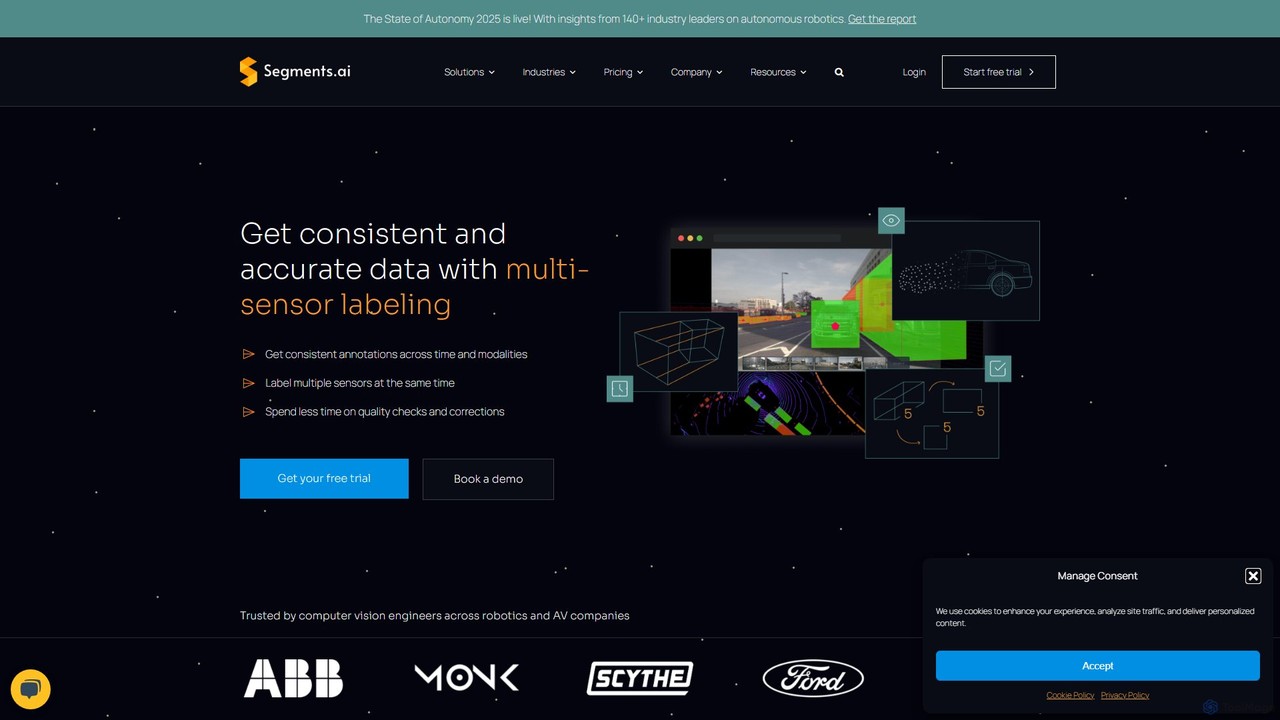
Segments.ai is an advanced data labeling platform designed for multi-sensor data, specializing in robotics and autonomous vehicles. It …
Segments.ai is an advanced data labeling platform designed for multi-sensor data, specializing in robotics and autonomous vehicles. It streamlines the annotation of 2D images and 3D point clouds with ML-powered tools, ensuring high-quality, consistent data to accelerate computer vision model development.
splash9
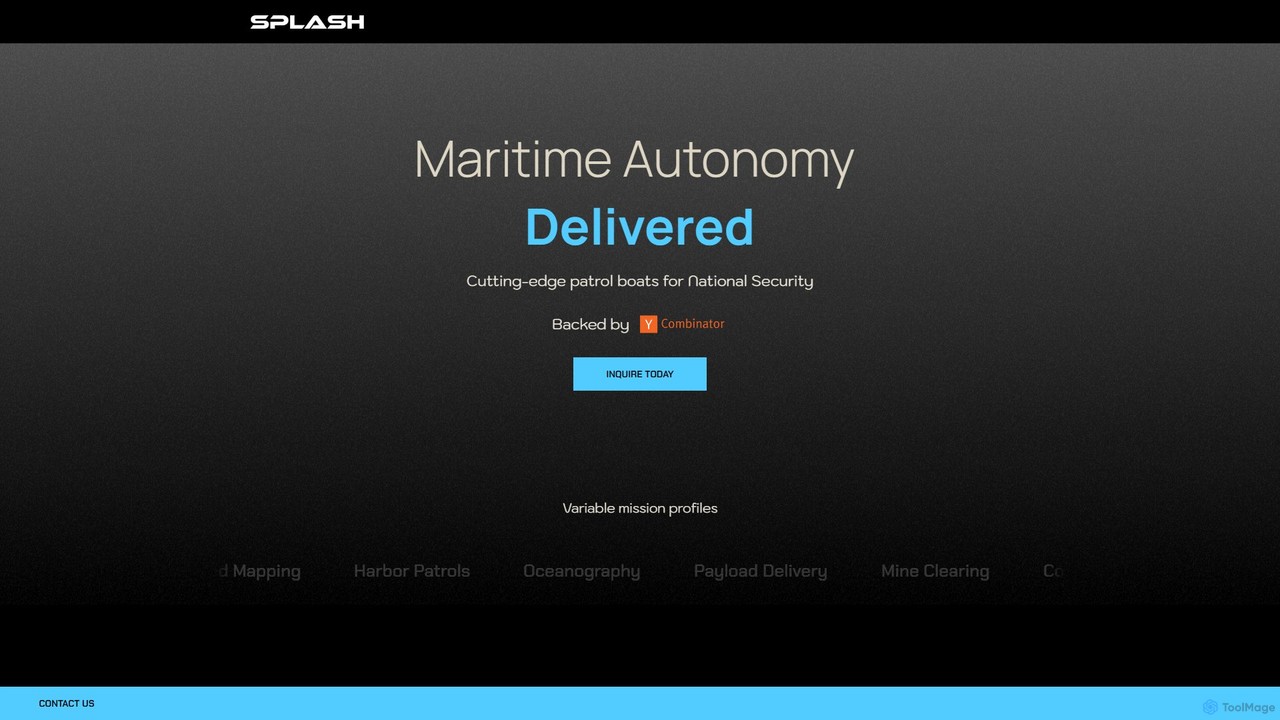
splash9 by Splash Industries provides cutting-edge autonomous surface vessels (ASVs) for national security, commercial, and research missions. These …
splash9 by Splash Industries provides cutting-edge autonomous surface vessels (ASVs) for national security, commercial, and research missions. These high-performance drone-boats offer complete autonomy, long-range capabilities, and multi-mission versatility for tasks like coastal patrol, infrastructure security, and seabed mapping.
About Autonomous Vehicles
Autonomous Vehicles are a specialized application of robotics, utilizing AI to perceive their environment and navigate without human input. These systems integrate a suite of sensors like LiDAR, cameras, and radar with advanced algorithms for real-time perception, decision-making, and control. Their primary value lies in enhancing safety, improving efficiency, and creating new mobility solutions across various industries. Unlike simpler automated systems, true autonomous vehicles are designed to handle the complexities and unpredictability of real-world environments dynamically.
Core Features
- Perception System: Uses sensor fusion to combine data from cameras, LiDAR, and radar to build a comprehensive 360-degree model of the surroundings.
- Path Planning & Navigation: Employs algorithms to calculate the safest and most efficient route to a destination while dynamically avoiding obstacles.
- AI Decision-Making Engine: Makes real-time driving decisions, such as accelerating, braking, turning, and lane changes, based on predictive models.
- Localization & Mapping: Determines the vehicle's precise position on a high-definition map for accurate navigation.
- Simulation & Validation Platforms: Provide virtual environments to safely test, train, and validate driving algorithms across millions of scenarios.
Use Cases
This technology is pivotal in logistics for autonomous trucking, in urban mobility for robotaxi services, and in manufacturing for automated guided vehicles (AGVs). It's also applied in precision agriculture with self-driving tractors and in last-mile delivery with autonomous robots.
How to Choose
When selecting autonomous vehicle software or systems, evaluate the required SAE Level of Autonomy (from 1 to 5), the specific Operational Design Domain (ODD) it's built for, its sensor compatibility, and the robustness of its simulation and safety validation tools.
Autonomous VehiclesUse Cases
Automating Long-Haul Trucking Logistics
Logistics companies deploy autonomous trucks for highway routes to enhance efficiency and safety. The AI system manages steering, speed, and lane-keeping for thousands of miles, operating nearly 24/7. This reduces operational costs by optimizing fuel consumption and minimizing reliance on human drivers for long, monotonous stretches. The system's sensors continuously monitor traffic and road conditions, allowing for predictive braking and acceleration, which leads to safer transit and reduced wear on the vehicle.
Managing Urban Robotaxi Fleets
Mobility service providers use autonomous vehicle platforms to operate fleets of robotaxis in complex urban environments. The AI is responsible for navigating dense traffic, intersections, pedestrians, and cyclists safely. A central fleet management system optimizes dispatching, routing, and battery charging schedules to maximize vehicle uptime and service availability. This application aims to provide a more affordable, accessible, and safer alternative to traditional ride-hailing services, reducing urban congestion and emissions.
Developing Algorithms in Virtual Simulation
Automotive engineers and AI researchers use simulation platforms to test and validate self-driving software. These virtual environments replicate real-world physics, sensor data (camera, LiDAR), and an infinite variety of traffic and weather scenarios. Developers can safely test 'edge cases', such as a pedestrian suddenly crossing the road, without physical risk. This process accelerates development cycles, allows for massive-scale testing, and helps ensure the AI's reliability and safety before it is deployed in a physical vehicle.
Automating Warehouse and Factory Logistics
Manufacturers and distribution centers use Autonomous Guided Vehicles (AGVs) to transport materials, components, and finished goods within their facilities. These vehicles follow digital paths, using sensors to navigate around obstacles and interact with workers and machinery. By automating repetitive transport tasks, companies can increase throughput, reduce the risk of workplace accidents, and free up human workers for more complex, value-added activities. The system optimizes internal logistics for a more efficient production line.
Enhancing Precision Agriculture
In large-scale farming, autonomous tractors and combines perform tasks like planting, spraying, and harvesting with centimeter-level accuracy. Guided by GPS and computer vision, these vehicles follow optimized paths to minimize soil compaction and ensure precise application of seeds, fertilizers, and pesticides. This technology allows a single operator to manage multiple vehicles, increasing productivity and enabling 24-hour operations. The result is higher crop yields, reduced resource waste, and more sustainable farming practices.
Streamlining Last-Mile Delivery Services
E-commerce and food delivery companies use small autonomous robots to handle the final leg of delivery in urban and suburban areas. These robots navigate sidewalks and pedestrian crossings to bring packages or meals directly to a customer's location. Their AI is trained to safely interact with pedestrians, avoid obstacles, and operate in various weather conditions. This automates a costly and labor-intensive part of the supply chain, offering a scalable solution for increasing delivery volumes and faster service times.