Robotics Best in category 6 results Humanoid Robots AI Tool

Popular AI tools in the Humanoid Robots field of Robotics include Unitree、1X、Figure、Clone Robotics、Sanctuary AI、kscale, etc., helping you quickly improve efficiency.

Unitree

Unitree

Unitree is a world-renowned robotics company specializing in the R&D, production, and sales of high-performance legged and humanoid …

538.2K
kscale

kscale

kscale by K-Scale Labs is an open-source, full-stack humanoid robot platform, K-Bot, designed for developers and researchers. It …

8.8K
Figure

Figure

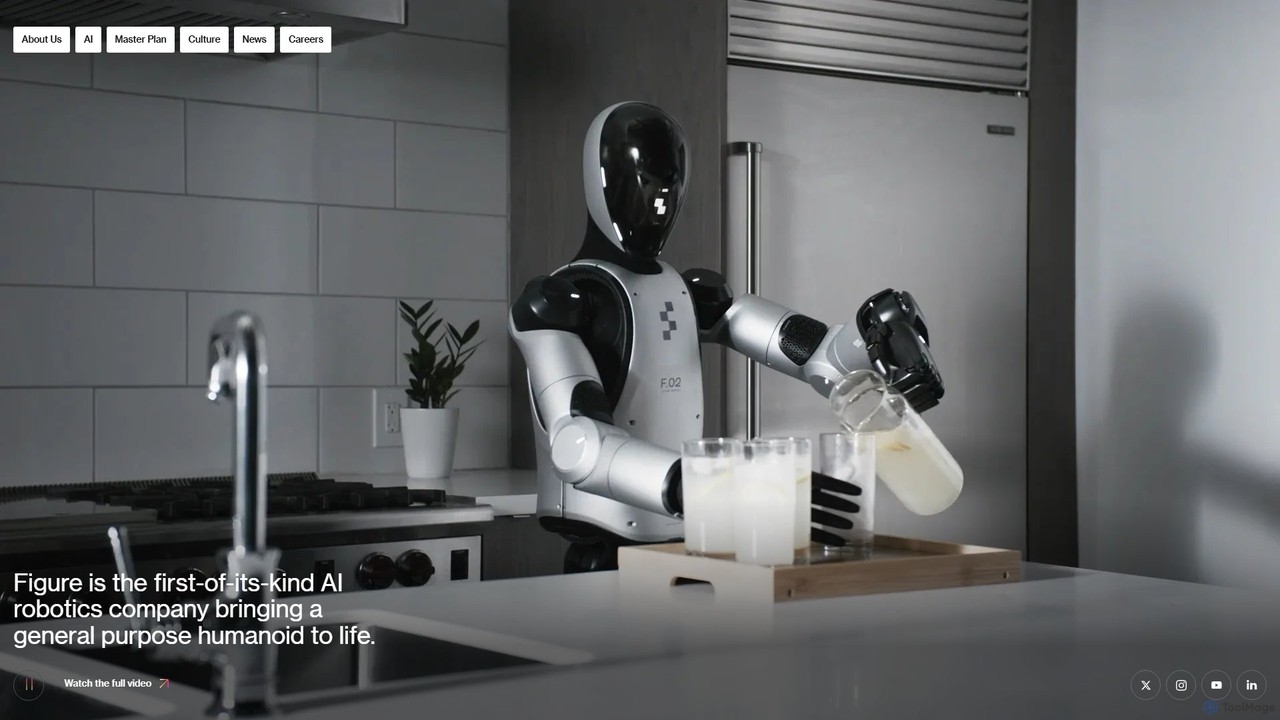
Figure is an AI robotics company developing general-purpose humanoid robots. Its flagship robot, Figure 02, is designed to …

268.7K
1X

1X

1X is an AI and robotics company developing general-purpose humanoid robots to assist with everyday tasks. Their flagship …

306.4K
Sanctuary AI

Sanctuary AI

Sanctuary AI is a robotics and physical AI company developing Phoenix, an industrial-grade, general-purpose humanoid robot. Powered by …

33.2K
Clone Robotics

Clone Robotics

Clone Robotics is developing advanced, musculoskeletal humanoid androids designed to assist with daily life tasks for both individuals …

35.0K

About Humanoid Robots

Humanoid Robots are a specialized category of robots designed to replicate the human body's structure and movement. They typically feature a torso, head, two arms, and two legs, enabling them to navigate and interact with environments built for humans. Their operation relies on advanced AI, complex sensor fusion (vision, balance, touch), and sophisticated actuators to achieve bipedal locomotion and dexterous manipulation. This human-like form allows them to use human tools and operate in spaces like stairs or cluttered rooms, where wheeled robots might struggle, making them ideal for assistance, exploration, and collaborative tasks.

Core Features

  • Bipedal Locomotion: The ability to walk, run, and balance on two legs, enabling movement across uneven terrain and stairs.
  • Dexterous Manipulation: Multi-fingered hands that can grasp and manipulate a wide variety of objects and tools designed for humans.
  • Human-Robot Interaction (HRI): Advanced capabilities for understanding and responding to human speech, gestures, and social cues for natural collaboration.
  • Sensor Fusion: Integration of multiple sensors like cameras, LiDAR, IMUs, and tactile sensors to create a comprehensive awareness of their surroundings.
  • Autonomous Navigation: The capacity to map, localize, and move through complex, dynamic human environments without direct control.

Use Cases

Humanoid Robots are increasingly deployed in sectors requiring interaction within human-centric spaces. In healthcare, they can assist with patient mobility and elderly care. For disaster response, their form allows them to traverse rubble and perform rescue tasks in hazardous environments. They also serve as advanced research platforms in universities and corporate labs for studying AI, machine learning, and biomechanics. In logistics and manufacturing, they can perform complex assembly or handling tasks alongside human workers.

How to Choose

When selecting a Humanoid Robot, consider its specific application. Key factors include the degrees of freedom (DoF) and payload capacity of its limbs, which determine its dexterity and strength. Evaluate the sophistication of its sensor suite and the robustness of its autonomous navigation software. For developers, the availability of an open and well-documented Software Development Kit (SDK), often with ROS (Robot Operating System) support, is crucial. Finally, assess the robot's power efficiency, operational duration, and safety features designed for human collaboration.


Humanoid RobotsUse Cases

1

Assistance in Healthcare and Elderly Care

Healthcare professionals and caregivers use humanoid robots to support patients and the elderly. For instance, a robot can be tasked with fetching medication, water, or personal items for a patient with limited mobility. Using its vision sensors to identify objects and dexterous hands to grasp them gently, the robot can complete these tasks safely. This reduces the physical strain on nursing staff, allowing them to focus on more complex medical duties, and provides the elderly with greater independence and timely assistance around the clock.

2

Hazardous Environment Operations and Disaster Response

Rescue teams and industrial maintenance crews deploy humanoid robots in environments unsafe for humans. In a post-earthquake scenario, a robot can navigate through unstable debris, using its bipedal locomotion to step over obstacles. Equipped with thermal cameras and microphones, it can search for survivors and relay real-time data to the command center. This application keeps human rescuers out of immediate danger while accelerating the search process. Similarly, they can perform inspection and repair tasks in areas with high radiation or chemical contamination.

3

Advanced Research and Development Platform

Researchers in AI, robotics, and cognitive science use humanoid robots as physical platforms to test complex algorithms. For example, a university lab might develop a new machine learning model for dynamic balancing. They can implement this model on a humanoid robot and test its ability to walk on a balance beam or withstand pushes. The robot provides immediate, real-world feedback that simulations cannot fully replicate. This accelerates innovation in areas like human motor control, autonomous systems, and physical human-robot interaction, pushing the boundaries of what is possible in robotics.

4

Customer Service and Engagement in Retail

Retail stores and event organizers use humanoid robots as brand ambassadors or information concierges. A robot positioned at a store entrance can greet customers, answer frequently asked questions about product locations or store hours using natural language processing, and even guide them to the correct aisle. Its novel, human-like appearance attracts attention and creates a memorable experience. This not only enhances customer engagement but also frees up human staff to handle more complex inquiries, such as providing detailed product advice or processing sales.

5

Collaborative Assembly in Manufacturing

In advanced manufacturing, humanoid robots work alongside human technicians on complex assembly lines. Unlike traditional industrial robots fixed in one place, a humanoid robot can move between workstations and use human-oriented tools. For a task like installing a component in a tight space within a car chassis, the robot can use its slender arms and dexterous fingers to perform the operation, collaborating with a human worker who might be securing another part. This creates a flexible, hybrid workforce that combines human problem-solving skills with the precision and endurance of a robot.

6

Entertainment and Public Engagement

Companies and event organizers leverage humanoid robots for entertainment and marketing purposes. At a technology conference, a humanoid robot can act as a host, perform choreographed dances, or interact with attendees, drawing significant attention to a booth. Its ability to perform human-like movements and engage in simple conversations makes it a powerful tool for creating a futuristic and engaging brand image. This application showcases technological prowess and provides a unique, memorable experience for the public that traditional marketing materials cannot match.

Humanoid RobotsFrequently Asked Questions