Robotics Best in category 1 results Field Automation AI Tool

Popular AI tools in the Field Automation field of Robotics include BurnBot, etc., helping you quickly improve efficiency.

BurnBot

BurnBot

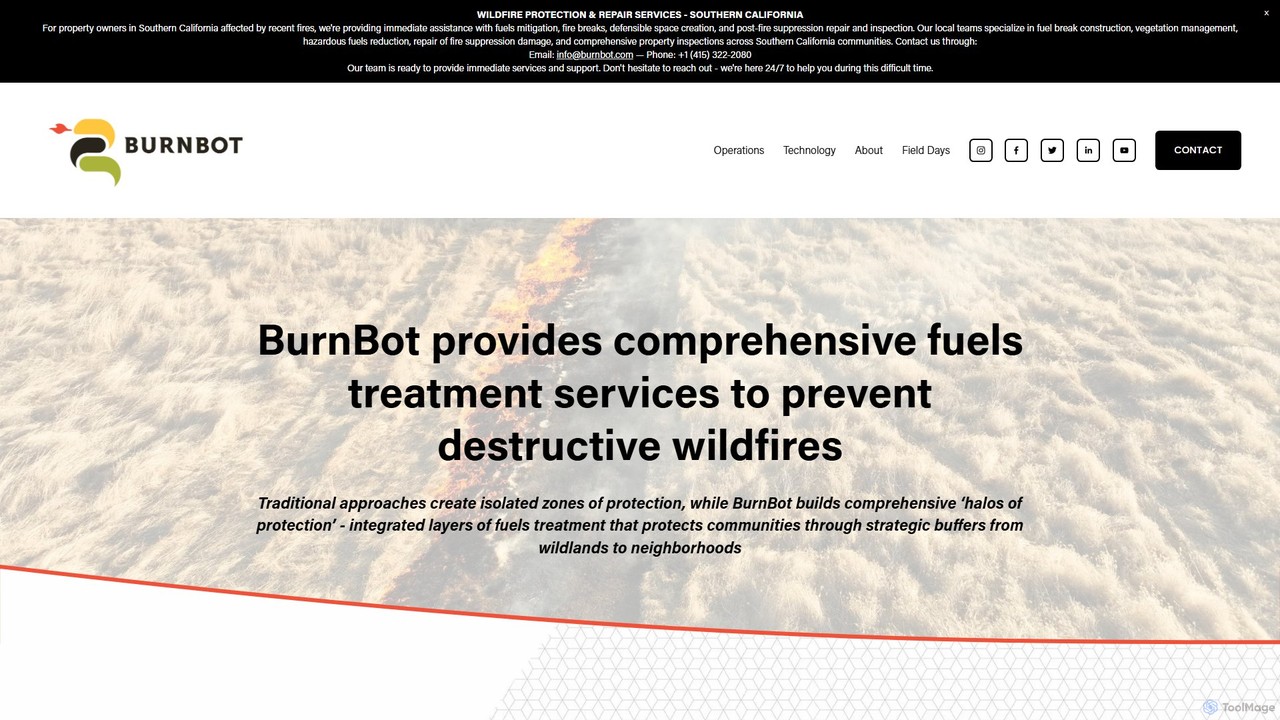
BurnBot provides innovative, technology-driven solutions for wildfire risk reduction. It utilizes remote-controlled robotics for vegetation management and prescribed …

6.9K

About Field Automation

Field Automation tools are AI-powered robotic systems designed to operate autonomously in outdoor, unstructured environments. They leverage advanced technologies like GPS, LiDAR, and computer vision for precise navigation and environmental perception. These tools are engineered to perform complex physical tasks, gather critical data, and withstand challenging conditions where traditional automation is impractical. The primary value of Field Automation lies in bringing enhanced safety, precision, and operational efficiency to industries such as agriculture, construction, and mining.

Core Features

  • Autonomous Navigation: Navigates complex and dynamic terrains without direct human control, using sensor fusion and pathfinding algorithms.
  • Environmental Perception: Senses and interprets the surrounding area to identify obstacles, targets, and terrain changes for safe operation.
  • Remote Task Execution: Performs physical actions like planting, spraying, inspecting, or transporting materials based on pre-defined missions.
  • Field Data Analytics: Collects large volumes of data via sensors and uses AI to generate actionable insights on crop health, structural integrity, or site progress.
  • Ruggedized Hardware: Built to endure harsh weather, dust, moisture, and vibrations typical of outdoor field operations.

Use Cases

Field Automation is primarily adopted in sectors that involve large-scale, remote, or hazardous outdoor work. For instance, in precision agriculture, autonomous tractors and drones manage crop monitoring and targeted treatments. Construction sites deploy robotic systems for surveying, earthmoving, and material transport. In the energy and mining sectors, these tools conduct inspections and operations in areas unsafe for human personnel.

How to Choose

When selecting a Field Automation solution, first assess the specific operational environment and its unique challenges. Key factors include the required level of autonomy, the types of data collection sensors needed, and integration capabilities with your existing software platforms. Also, evaluate the system's durability, power efficiency (battery or fuel), and the reliability of the vendor's technical support.

Field AutomationUse Cases

1

Automated Crop Monitoring in Precision Agriculture

An agronomist or large-scale farm manager uses an autonomous drone equipped with multispectral sensors for field automation. The drone flies pre-programmed routes over hundreds of acres, capturing high-resolution imagery. AI software then processes this data to identify areas of stress, disease, or nutrient deficiency with pinpoint accuracy. This allows for targeted application of water, fertilizer, or pesticides, reducing waste by up to 30% and improving overall crop yield. The system replaces weeks of manual scouting with a daily automated health report.

2

Construction Site Surveying and Progress Tracking

A construction project manager uses an autonomous rover or drone for daily site surveys. The robot navigates the entire construction site, using LiDAR and high-definition cameras to create a detailed 3D map. This map is compared against the Building Information Modeling (BIM) plans to automatically detect discrepancies, track progress, and verify material placement. This field automation tool provides daily, objective progress reports, helping to identify potential delays early and ensuring the project stays on schedule and within budget, while also improving safety by reducing human presence in active work zones.

3

Autonomous Inspection of Energy Infrastructure

A maintenance engineer for a utility company deploys a quadruped robot (like Boston Dynamics' Spot) for inspecting a remote substation. The robot autonomously navigates the hazardous environment, using thermal and acoustic sensors to detect overheating components or unusual vibrations in machinery. It can also read analog gauges and transmit real-time video feeds to the control center. This automated process allows for more frequent and consistent inspections without exposing personnel to high-voltage risks, leading to predictive maintenance and reduced downtime.

4

Automated Haulage in Open-Pit Mining

An operations manager at a mining company implements a fleet of autonomous haul trucks. These massive vehicles operate 24/7, following optimized routes from a loading shovel to a crusher without a human driver. Using high-precision GPS and obstacle detection systems, they navigate the complex and changing mine environment safely. This form of field automation significantly increases productivity, reduces fuel consumption through optimized driving patterns, and drastically improves safety by removing drivers from one of the most dangerous jobs in mining.

5

Environmental Monitoring of Water Bodies

An environmental scientist uses an Autonomous Surface Vehicle (ASV) to monitor a large lake's water quality. The solar-powered robotic boat is equipped with sensors to measure pH, dissolved oxygen, temperature, and turbidity. It autonomously follows a grid pattern across the lake, collecting data continuously and transmitting it to a cloud platform for analysis. This field automation tool provides a far more comprehensive and consistent dataset than manual sampling, enabling early detection of pollution events or harmful algal blooms and helping to protect aquatic ecosystems.

6

Automated Yard Management in Logistics Hubs

A logistics coordinator at a large port or distribution center uses autonomous yard trucks to manage shipping containers. These trucks, guided by a central AI management system, pick up containers from ships or storage stacks and transport them to their designated spots for loading onto trains or trucks. The system optimizes routes in real-time to avoid congestion and maximize throughput. This application of field automation operates around the clock, reduces container handling times, minimizes human error, and improves worker safety in a busy, high-traffic industrial environment.

Field AutomationFrequently Asked Questions