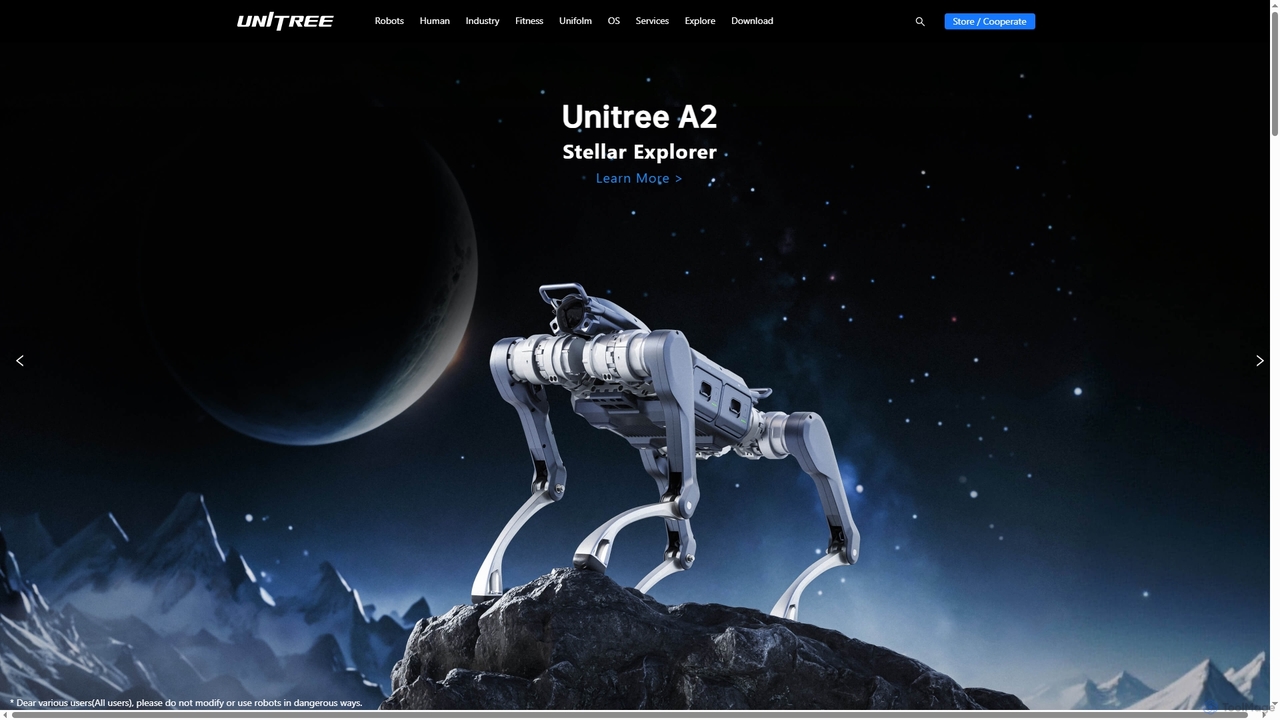
Quadruped Robots are a class of highly mobile robots that use four legs for locomotion, mimicking the movement of animals to navigate complex environments. These robots leverage advanced dynamic balancing algorithms and sophisticated sensor fusion to maintain stability on uneven, sloped, or shifting surfaces. Their primary value lies in traversing terrain inaccessible to wheeled or tracked vehicles, such as stairs, rubble, and natural landscapes. This unique mobility makes them exceptionally suited for tasks in inspection, public safety, and logistics where agility and adaptability are critical.
Core Features
- All-Terrain Mobility: Ability to walk, run, and climb over obstacles and uneven ground.
- Dynamic Stabilization: Actively balances itself to resist pushes and maintain posture on unstable surfaces.
- Payload Integration: Capable of carrying and powering various sensors, cameras, or robotic arms.
- Autonomous Navigation: Uses LiDAR, cameras, and AI to map environments and navigate without human intervention.
- Teleoperation: Allows for remote control by a human operator for complex or critical tasks.
Use Cases
Quadruped robots are increasingly deployed in sectors requiring access to challenging locations. In industrial settings, they perform inspections on oil rigs, in power plants, and on construction sites. For public safety, they are used by first responders for search and rescue in disaster zones and for hazardous material detection. They also find applications in logistics for last-mile delivery in difficult urban or rural areas and in academic research for studying locomotion and AI.
How to Choose
When selecting a quadruped robot, consider the specific operational environment; assess its ingress protection (IP) rating for dust and water resistance. Evaluate the payload capacity and compatibility with the sensors or tools you need to mount. Analyze battery life and charging options for mission duration. Finally, examine the control software's ease of use, API availability for custom development, and the level of autonomy required for your tasks.