Proception
Proception develops advanced humanoid hands, merging robotics and AI to achieve unprecedented dexterity. Their flagship product, ProHand, features …
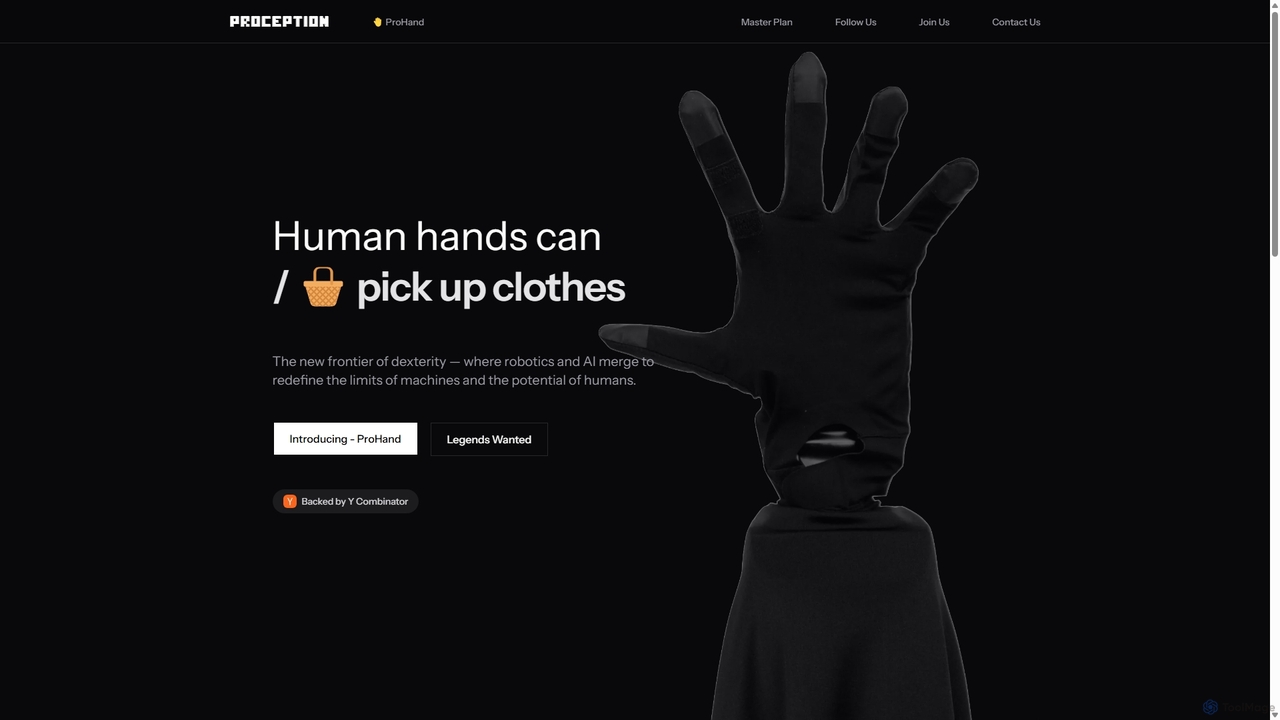
Proception develops advanced humanoid hands, merging robotics and AI to achieve unprecedented dexterity. Their flagship product, ProHand, features human-like precision, adaptive grip, and tactile sensing. Backed by Y Combinator, Proception aims to revolutionize industries like manufacturing, healthcare, and research by enabling robots to perform complex, delicate tasks previously exclusive to humans.
About Humanoid
Humanoid AI tools are advanced robotic systems designed to mimic human form and movement, often integrated with artificial intelligence for autonomous operation. These sophisticated machines leverage complex algorithms and sensor arrays to perceive, interact with, and navigate human-centric environments. Their primary value lies in performing tasks that require human-like dexterity, social interaction, or operation in spaces built for humans, offering solutions for research, service, and hazardous environments.
Core Features
- Human-like Form and Movement: Possess a bipedal structure and articulated limbs, enabling locomotion and manipulation similar to humans.
- Advanced AI & Autonomy: Integrate machine learning, computer vision, and natural language processing for intelligent decision-making and independent task execution.
- Perception and Interaction: Equipped with sensors (cameras, lidar, haptics) to understand surroundings and interact safely with objects and people.
- Dexterous Manipulation: Capable of fine motor skills for handling tools, assembling components, or performing delicate operations.
- Social & Emotional Intelligence: Designed to interpret and respond to human cues, facilitating natural communication and collaboration.
Applicable Scenarios
Humanoid robots are deployed in diverse settings where their human-like attributes are advantageous. This includes assisting in elder care facilities, performing complex assembly tasks in manufacturing, or acting as interactive guides in public spaces. They are also invaluable for research into human-robot interaction and for exploring dangerous or inaccessible environments where human presence is risky.
How to Choose
Selecting a humanoid AI tool requires evaluating its intended application, focusing on dexterity, autonomy level, and social interaction capabilities. Consider the robot's physical robustness and safety features for its operational environment. Assess the integration with existing systems, ease of programming, and the availability of development kits or customization options. Finally, factor in the total cost of ownership, including maintenance and potential upgrades, to ensure long-term viability.

HumanoidUse Cases
Providing Companionship and Assistance in Elder Care
Humanoid robots can offer companionship to seniors, engaging in conversations, reminding them about medication, and assisting with light tasks like fetching objects. Their human-like appearance and voice can reduce feelings of isolation and provide a sense of presence, improving the quality of life for elderly individuals while supporting caregivers.
Performing Complex Assembly in Manufacturing
In advanced manufacturing, humanoid robots can execute intricate assembly tasks that require high dexterity and precision, such as wiring electronic components or handling delicate materials. Their ability to use standard human tools and adapt to varying workstation layouts makes them versatile for flexible production lines, reducing manual labor and improving consistency.
Exploring and Operating in Dangerous Environments
Humanoid robots are ideal for exploring and performing operations in environments too dangerous for humans, such as disaster zones, nuclear facilities, or space. Their bipedal locomotion allows them to navigate uneven terrain and climb stairs, while their manipulators can operate valves, clear debris, or collect samples, minimizing risk to human lives.
Enhancing Customer Interaction in Service Roles
Deployed in retail, hospitality, or corporate reception areas, humanoid robots can greet customers, provide information, answer common questions, and guide visitors. Their engaging and interactive nature creates a novel customer experience, streamlines routine inquiries, and frees human staff to focus on more complex service needs.
Facilitating Research and Education in Robotics
Humanoid robots serve as invaluable platforms for academic research in areas like human-robot interaction, bipedal locomotion, and AI development. In educational settings, they provide hands-on learning experiences for students in robotics, programming, and artificial intelligence, inspiring future innovators and advancing scientific understanding.
Engaging Audiences in Entertainment and Performance
With their expressive capabilities and ability to perform complex movements, humanoid robots are increasingly used in entertainment, such as theme parks, stage shows, and interactive exhibits. They can dance, tell stories, or engage in playful interactions, offering unique and memorable experiences that captivate audiences of all ages.